Technical Knowledge
Introduction to the construction process and precautions of laser leveling machine
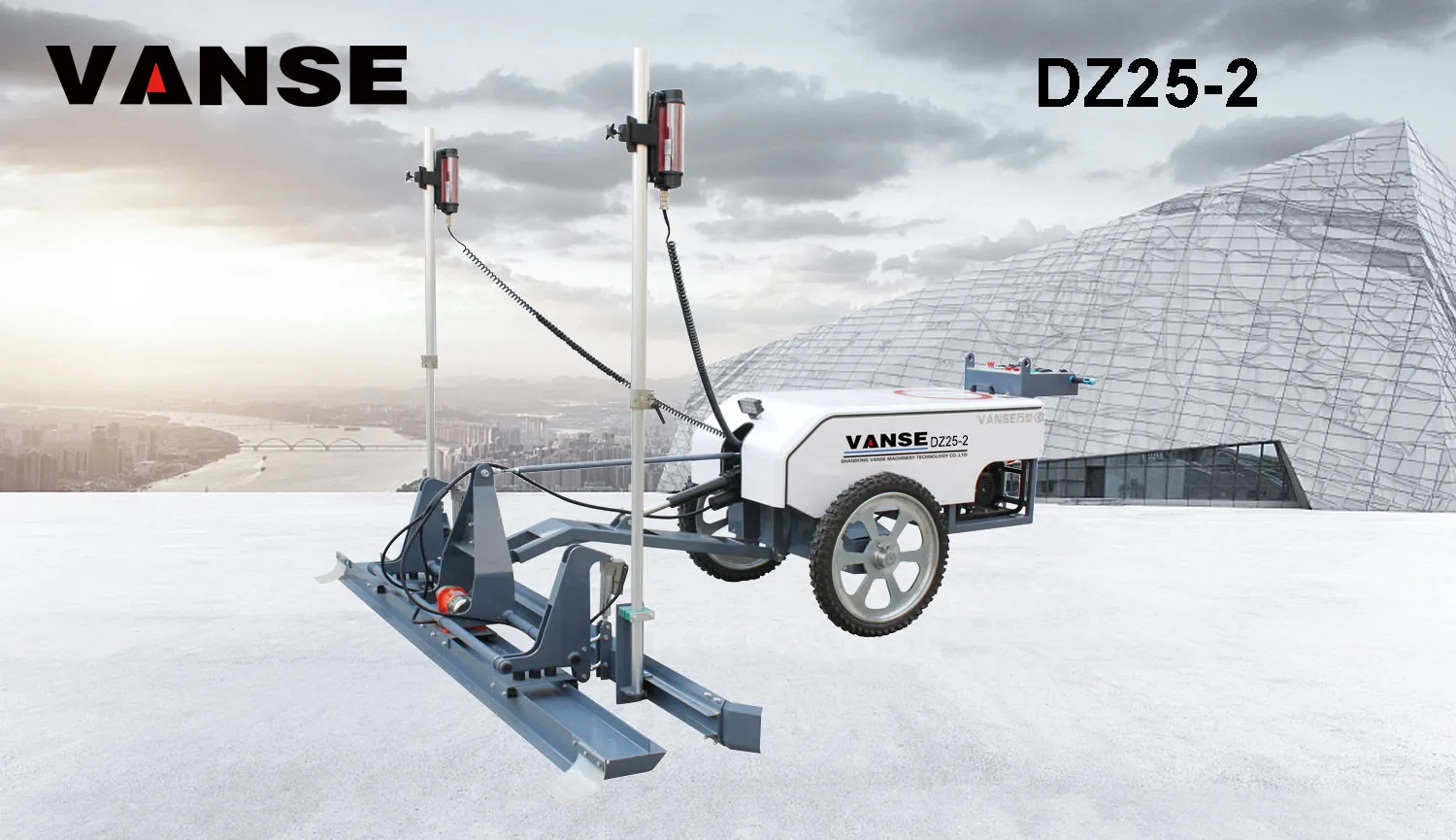
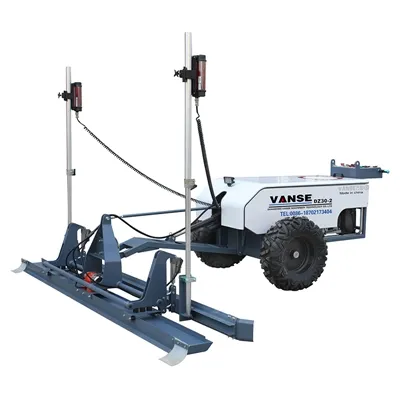
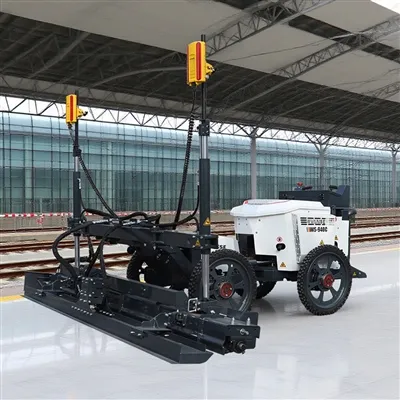
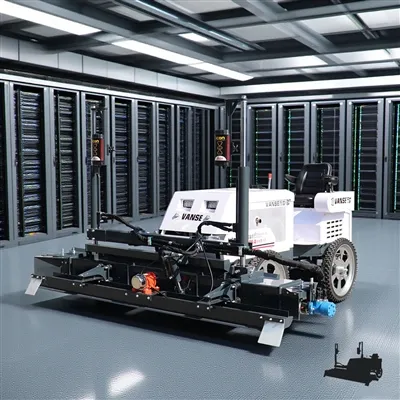
Regarding the construction process and precautions of the laser leveling machine, I believe this is also a question that operators are more concerned about. We all know that if we want to use the laser leveling machine better, we need to understand its construction process and precautions. In order to help everyone use the equipment better, we will introduce this aspect to you in the next article. I hope you will be interested in it.
Construction process of laser leveling machine
Check whether the outer template has been fully supported, confirm that the laser leveling construction equipment is intact, find the specified elevation, and install the laser transmitter; check whether the slump of the concrete on site meets the requirements of laser leveling. When using the precision laser leveling machine, the slump of the concrete is required to be 160±10mm; and confirm that the concrete can be supplied continuously.
Precautions
Be careful to avoid obstacles when installing the laser transmitter; the speed of the laser leveling machine should not be too fast during leveling; the concrete should be initially leveled before leveling, and the concrete after initial leveling should be higher than the established elevation.
Operation method of laser leveling machine
1. Before starting work, one operator shall check the machine equipment, set up the transmitter with the operator, and install the handheld receiver; adjust the scraper of the floor machine in a static state, and there shall be no error at two points; operate the laser leveling machine, observe whether the machine is working properly, check whether the laser receiver is in a horizontal position, and supervise whether the material replenisher is scraping and filling in time; at the end of the construction on the same day, clean the machine after the machine cools down, and check whether the functions of the machine are normal; check the power of the transmitter.
2. One operator shall assist the operator in installing and debugging the machine, and set up the transmitter with the main operator and install the handheld receiver. Check whether the transmitter is placed safely; measure the height of the concrete after preliminary paving; measure the height of the concrete after leveling. Focus: the edge of the concrete and the concrete surface scraped by hand; at the end of the construction on the same day, clean the machine after the laser leveling machine cools down, and check the power of the handheld receiver.
3. When the laser leveling machine is not operated, two material replenishers shall perform preliminary leveling of the concrete with the paving worker. When following the machine, they shall obey the instructions of the main operator and scrape and fill the machine scraper position.
4. 2-4 pavers need to follow the command of the operator and perform preliminary leveling of the concrete.
The above are the precautions and construction processes for the use of laser leveling machines introduced by the manufacturer. I hope it can provide you with some effective reference opinions. If you have any questions or don’t understand the above issues, you can call us for consultation. We will patiently answer your questions.
Thanks to All the Friends Who Support and Trust Shandong Vanse Machinery Technology Co., Ltd.
If you want to know more about Shandong Vanse Machinery Technology Co., Ltd. or have any questions, please feel free to contact us:
Our Factory
Shandong Vanse Machinery Technology Co., Ltd.








Share this article

About the Author: Shandong Vanse Machinery Technology Co., Ltd.
Shandong Vanse Machinery Technology Co., Ltd. is a high-tech manufacturer specializing in concrete construction machinery, including laser screeds and related equipment. The company integrates R&D, production, and global sales, with products exported to over 60 countries and widely used in infrastructure projects worldwide.
Previous Post
Next Post
Related Articles
You Might Also Like
Large area concrete floor laser leveling machine and driving mechanical troweling construction
•◆• Introduction With the continuous development of the construction industry and the continuous advancement of technology, the construction quality requirements for large-area concrete floors are also increasing. Traditional concrete floor construction methods often have problems such as low efficiency and insufficient accuracy. The emergence of laser leveling and driving mechanical troweling technology has brought new solutions to the construction of large-area concrete floors. This article will deeply explore the characteristics, advantages and application of these two construction technologies in actual projects. •◆• Laser leveling technology 1.Technical principles Laser leveling technology uses the principle of laser ranging to emit a laser beam through a laser transmitter installed at a reference point and project it onto the concrete floor to be leveled. After receiving the laser signal, the laser receiver measures the elevation data of each point on the ground in real time and transmits the data to the control system. The control system adjusts the lifting device of the leveling machine to achieve smoothing of the concrete floor according to the preset flatness requirements. precise leveling. 2. Advantages and features Laser leveling technology has the advantages of high precision, high efficiency, and easy operation. First of all, laser leveling technology can achieve millimeter-level high-precision leveling to ensure that the flatness of the concrete floor meets the design requirements. Secondly, laser leveling technology can greatly improve construction efficiency, reduce manual operations, and reduce labor intensity. Finally, laser leveling technology is easy to operate. You only need to set the leveling parameters to achieve automated leveling operations. 3. Application examples In a large-scale commercial complex project, laser leveling technology was used to construct large-area concrete floors. Laser leveling technology not only ensures the flatness of the ground, but also improves construction efficiency and shortens the construction period. At the same time, laser leveling technology also reduces labor costs and material waste, achieving a win-win situation of economic and social benefits. •◆• Driving mechanical polishing construction 1.Technical principles The driving-type mechanical troweling construction refers to the use of a driving-type troweling machine to smooth, compact and lift the concrete floor. The trowel uses a high-speed rotating trowel to smooth the concrete floor, and at the same time uses a vibration device to compact the ground to improve the compactness and strength of the ground. During the smoothing process, the trowel can also lift the ground to make it smoother and more beautiful. 2. Advan tages and features Driving mechanical troweling construction has the advantages of high operating efficiency, good construction quality, and wide application range. First of all, the driving mechanical trowel can quickly smooth, compact and lift large areas of mixed soil. Significantly improve construction efficiency. Secondly, mechanical troweling construction can ensure that the flatness, compactness and smoothness of the ground meet the design requirements, and improve the performance and aesthetics of the ground. Finally, the driving mechanical trowel is suitable for different types of concrete floor construction, including indoor and outdoor floors, parking lots, squares, etc. 3. Application examples In a residential community project, a driving mechanical troweling construction was used to treat the concrete floor. Through the high-speed rotation and vibration compaction of the ride-on trowel, it not only improves the compactness and strength of the ground, but also achieves rapid smoothing and slurry lifting of the ground. The concrete floor after mechanical polishing construction is smooth and beautiful, which greatly improves the overall environmental quality of the community. 4. Combined use of laser leveling and driving mechanical troweling construction During the construction process of large-area concrete floors, laser leveling and driving mechanical troweling construction can be used in conjunction with each other to achieve better construction results. First, use laser leveling technology to perform preliminary leveling operations on the ground to ensure that the flatness of the ground meets the design requirements. Then, based on the preliminary leveling, a driving mechanical trowel is used to further smooth, compact and pulp the ground. Through the combined use of the two, rapid, efficient and precise construction of large-area concrete floors can be achieved. •◆• Summary As important technical means for modern concrete floor construction, laser leveling and driving mechanical troweling construction have significant advantages and application value in the construction of large-area concrete floors. Through an in-depth discussion of the principles, characteristics and application examples of these two construction technologies, we can provide useful reference and reference for the construction of similar projects. At the same time, with the continuous advancement of technology and the expansion of application scope, it is believed that these two construction technologies will play a more important role in the future construction industry.What matters should be noted in the daily maintenance of Concrete Laser Leveling What consequences will there be if it is not maintained in time
The daily maintenance of Concrete Laser Leveling is a very important topic, directly related to the service life of the equipment, construction efficiency and project quality. Below, I will provide you with a detailed review of the precautions for daily maintenance and the serious consequences that may arise from failure to maintain it in a timely manner. Daily maintenance should follow the eight-character guideline of "cleaning, inspection, tightening and lubrication", and can be divided into three stages: before construction, during construction and after construction. Overall appearance inspection of the machine Cleaning: Remove cement slurry, oil stains and debris from the machine, especially the accumulated materials on the scraper, vibrator, traveling wheels and frame, to ensure there are no hard lumps. Structural components: Inspect the main structural components (such as the frame and hydraulic arm) for any cracks, deformations or damages. Fasteners: Check all bolts and nuts for looseness, especially the connecting bolts at key parts such as the vibrator, scraper, and walking system. Laser system inspection Cleaning: Use a soft dry cloth to clean the lenses of the laser transmitter and laser receiver, ensuring there is no dust or oil stains. Battery power: Check if the battery power of the laser transmitter is sufficient. Functional test: Turn on the machine to test whether the laser system is working properly and whether the receiver signal is sensitive and stable. Hydraulic system inspection Oil level: Check whether the oil level in the hydraulic oil tank is within the standard range. If it is insufficient, add the same grade of hydraulic oil in time. Leakage: Check the hydraulic oil pipes, joints and cylinders for any signs of leakage or damage. Abnormal noise: Start the engine and listen for any abnormal noises when the hydraulic pump and motor are working. Vibration system inspection Check the oil level of the lubricating oil in the vibration box. Check if there are any abnormal noises from the vibration motor and transmission components. Inspection of the walking system Check the wear condition of the tracks or tires and adjust the tension of the tracks to an appropriate state. Clear the debris entangled on the tracks or walking wheels. Engine inspection (if diesel-powered) Check the levels of engine oil, coolant and fuel. Check if the air filter is clogged and clean or replace it if necessary. Operation monitoring: During the construction process, pay attention to listening for any abnormal vibration or noise from the operation of the leveling machine. Temperature monitoring: Pay attention to whether the temperatures of the hydraulic system and the engine are within the normal range. Timely cleaning: When excessive concrete is found adhering to the scraper or track, the machine should be stopped immediately for cleaning to avoid affecting the flatness or increasing the load. Thorough cleaning: This is the most crucial daily maintenance step. The entire machine must be thoroughly rinsed with water before the concrete is fully hardened, especially the scraper, vibrator, tracks/tires and the underside of the frame. Prevent the concrete from solidifying and damaging the components and affecting the machine balance. Rust prevention treatment: After cleaning, dry the water stains with a dry cloth or blow dry them with compressed air. For exposed metal surfaces (such as scrapers and hydraulic rods), apply a small amount of lubricating oil or anti-rust oil. Parking environment: Park the equipment in a flat, dry and cool place, avoiding direct sunlight and rain. Battery: If not in use for a long time, the negative terminal of the battery should be disconnected. In addition to daily maintenance, regular maintenance should also be carried out in accordance with the requirements of the equipment's user manual, such as: Regular replacement: hydraulic oil, engine oil, and filters (hydraulic oil filter, engine oil filter, air filter). Regular lubrication: Apply the specified grease to all lubrication points (such as bearings and pins). System inspection: Regularly have professionals inspect the hydraulic system and control system. If daily maintenance is neglected, it will lead to a series of problems, ranging from increased costs to causing serious safety accidents. Non-compliance with flatness/smoothness standards: Dirt on the laser head can cause unstable signal reception, hard concrete adhering to the scraper can damage the already leveled surface, and vibrator failure can lead to uneven concrete density. All these will directly cause the ground to be uneven, wavy or rough. Failure to operate normally: Failure of key components can cause the leveling to be unable to execute precise instructions, seriously affecting the construction progress and quality. Core component scrapping: Impurities entering the hydraulic system will wear out the oil pump, motor and valve group, and the replacement cost is extremely high. Solidified concrete will increase the load on the vibration system and the walking system, leading to motor burnout and bearing damage. Structural damage: Long-term lack of cleaning and tightening may cause structural components to crack due to uneven force, leading to deformation of the entire machine. A minor issue can turn into a major one: A loose bolt may cause damage to a component, eventually triggering a chain reaction, with maintenance costs and downtime doubling. Work efficiency has decreased and the project schedule has been delayed Frequent equipment malfunctions can lead to construction interruptions, requiring a significant amount of time for maintenance, seriously slowing down the project progress and causing a huge waste of human and material resources. Hydraulic oil leakage may cause a fire. Sudden breakage of structural components, detachment of bolts or loss of control of the walking system may all cause personal injury to on-site operators. Machines that lack maintenance and operate in a "sub-health" state for a long time will experience a sharp decline in their overall performance and may be scrapped prematurely after only a few years. In contrast, well-maintained equipment can be used for more than ten years. In conclusion, the maintenance of Concrete Laser Leveling is a crucial task that requires a small investment to prevent significant losses. Establishing a strict daily maintenance and regular upkeep system, and ensuring that every operator is proficient in and implements it, is the fundamental prerequisite for guaranteeing the efficient, long-term and safe operation of the equipment and ultimately achieving high-quality concrete floors. Note: The parameters provided in this document are for reference only and are not mandatory. Due to differences in technical characteristics between different brands and models of laser levelers, please consult the manufacturer for a suitable solution before actual operation. This reference document assumes no responsibility for any issues arising from failure to follow the manufacturer's instructions.How should maintenance standards for equipment used in concrete construction be established?
When developing maintenance standards for concrete construction equipment, it's necessary to consider the technical characteristics of each equipment type (such as mixing equipment, conveying equipment, pouring equipment, and vibrating equipment), construction scenario requirements, and industry standards. This approach aims to create a systematic standard that covers the entire lifecycle, is quantifiable and implementable, and assigns specific responsibilities. The following is the specific framework and core content: Before developing standards, it's important to first clarify the underlying foundations to ensure they are legally compliant, practical, and avoid being divorced from equipment characteristics or industry requirements. Equipment Technical Documentation Based on the manufacturer's operating and maintenance manuals, key parameters (such as lubrication cycles, replacement thresholds for wearing parts, and maintenance tool models) are extracted. For example, for a mixer, "mixing blades should be replaced if wear is ≤3mm" and "gear oil should be changed every 500 hours for the reducer" are standard "technical baselines." Industry and national standards Reference mandatory or recommended specifications, such as: Technical Regulations for Safety in the Use of Construction Machinery (JGJ33-2012): Clarifies safety requirements for equipment maintenance (such as powering off before maintenance and posting warning signs); Technical Specifications for Concrete Mixing Plants (Buildings) (GB/T 10171-2021): Specifies maintenance cycles and performance testing indicators for mixing equipment; Technical Specifications for Concrete Pumps (GB/T 13333-2014): Clarifies maintenance requirements for the hydraulic system and piping of concrete pumps. Construction scenarios and equipment load Based on project specific adjustments (e.g., high temperature, high humidity, or high-frequency construction scenarios require shortened maintenance intervals): For example, for concrete mixer trucks in tropical regions, the hydraulic oil filter replacement interval needs to be shortened from the standard 1,000 hours to 800 hours. For example, when continuously pouring large volumes of concrete, the insulation layer of the vibrator needs to be inspected every 8 hours instead of every 8-hour shift. Concrete construction equipment varies greatly. Based on the principle of "classification and standardization," the standard should be broken down into "equipment classification modules." Each module covers four dimensions: daily maintenance, scheduled maintenance, fault prevention, and safety requirements, ensuring coverage of the entire equipment lifecycle. Using the four most critical types of equipment in concrete construction as examples, this standard specifies specific maintenance content, cycles, standards, and responsible individuals: Device Type Maintenance Dimension Maintenance cycle Core maintenance content (quantifiable standards) 1. Mixing equipment (mixing machine, batching machine, cement silo) Daily Maintenance Daily before/after construction 1. Mixer: Clean any remaining concrete in the drum (no lumps or adhesion), and check the blade/liner fastening bolts (no looseness, torque ≥ 80 N·m). 2. Batching machine: Clean any debris from the hopper, and check the conveyor belt for deviation (≤ 50 mm/10 m). 3. Cement silo: Check the sensitivity of the level gauge (analog signal response time ≤ 2 seconds), and the safety valve for leaks. Periodic Maintenance (Medium Repair) Every 300-500 man-hours 1. Replace the mixer liner (if wear ≥ 5 mm). 2. Change the gear oil in the reducer (oil quality test: viscosity ≥ 220 cSt, no metal debris). 3. Adjust the tension of the batching machine conveyor belt (deflection ≤ 15 mm/1 m span). Periodic Maintenance (Major Repair) Every 2000-3000 man-hours 1. Disassemble the mixer shaft and check the bearing clearance (≤ 0.05 mm). 2. Calibrate the batching scale for accuracy (error ≤ ±1%). 3. Repair the anti-corrosion coating on the cement silo interior (no rust on ≥ 0.1 m2). 2. Conveying equipment (concrete pump trucks, trailer pumps, mixer trucks) Daily Maintenance Daily after construction 1. Pump Truck: Flush the delivery pipeline (no concrete residue, smooth water flow), check the outrigger cylinder seals (no oil leakage, no scratches on the piston rod); 2. Mixer Truck: Clean the tank (no hardening on the tank wall), check the tire pressure (±0.2 bar). Periodic Maintenance Every 1000 km / 500 man-hours 1. Pump Truck: Replace the hydraulic oil filter (pressure differential ≥ 0.3 MPa), inspect the boom welds (no cracks, weld height ≥ 8 mm); 2. Mixer Truck: Replace the tank liner (wear ≥ 10 mm), and maintain the drive system (bearing temperature ≤ 60°C). 3. Vibrating equipment (insertion vibrator, flat plate vibrator) Daily Maintenance Every 8-hour shift 1. Check the cable insulation (no damage, ground resistance ≤ 4Ω); 2. Vibrator: Test run (amplitude ≥ 0.8 mm, no abnormal noise), and check the connectors for looseness. Periodic Maintenance Every 50 shifts 1. Replace the vibrator bearing (clearance ≥ 0.1 mm); 2. Clean the motor cooling vents (no dust blockage, temperature rise ≤ 40°C). 4. Measuring equipment (sand and gravel scales, cement scales, admixture scales) Daily Maintenance Daily 1. Clear the scale hopper of any accumulated material (no material hanging, no skew); 2. Calibrate the zero point (error ≤ ±0.5kg) and check the sensor wiring (no looseness). Periodic Maintenance Every 30 days 1. Perform dynamic calibration (load 100% of the rated weight, error ≤ ±1%); 2. Check the sensor protection (no moisture, no deformation due to impact). Lubrication Management Standards Follow the "Equipment Lubrication Chart" (specify the lubricant type, filling point, cycle, and amount). For example, use 3# lithium-based grease for the mixer bearings, refilling every 100 working hours at a rate of 50g each time. After lubrication, record the "lubrication time, person performing the lubrication, and oil quality" to avoid over-lubrication or under-lubrication. Consumable Parts Management Standards Maintain a "consumable parts ledger" (including model, inventory threshold, and replacement cycle), such as for agitator blades, conveyor belts, vibrators, and cables, with a minimum inventory of three sets. When replacing consumable parts, "model matching" is required. Substitution with non-genuine parts is prohibited (exceptional circumstances require approval from the technical director). After replacement, a test run is required to confirm compliance. Safety Maintenance Standards Before maintenance, power and gas must be turned off, and a warning sign must be posted (e.g., "Equipment under maintenance, do not start"). Safety belts must be worn and a warning area must be set up for overhead work (e.g., pump truck boom maintenance). Electrical equipment maintenance requires a "certified operator" (electrician's license). Hydraulic system maintenance must be depressurized (reduced to 0 MPa) to prevent hydraulic fluid spray and injury. Record and traceability standards Establish an "Equipment Maintenance Record Form" (electronic or paper) that includes: equipment number, maintenance date, maintenance items, test data, abnormalities, person responsible, and inspector. Record retention period should be ≥ the equipment's service life to facilitate tracing the cause of a malfunction (e.g., if a mixer blade breaks, the record can be used to verify whether it has not been replaced beyond the specified time limit). Clarify the responsibility system Responsibilities are divided into different levels: Operators are responsible for "daily maintenance" (cleaning, inspection, and simple tightening); repair workers are responsible for "regular maintenance" (disassembly, replacement, and calibration); technical leaders are responsible for "standard review and exception handling"; and project managers are responsible for "resource support (spare parts, tools, and funding)." A "Equipment Maintenance Responsibility Letter" is signed, linking maintenance effectiveness to performance appraisals (e.g., if equipment failure occurs due to inadequate maintenance, the responsible individual's performance will be deducted). Supervision and Inspection Mechanism Daily Inspections: Technicians will spot-check the Maintenance Record Form daily and verify maintenance effectiveness on-site (e.g., randomly checking the wear of the mixer blades to see if it matches the records). Regular Assessments: Monthly "Equipment Maintenance Evaluations" are conducted, rewarding teams/individuals with a maintenance compliance rate ≥95%. Those failing to meet the standards will be given a deadline to rectify the situation. Fault Review: After equipment failure, analysis will be conducted to determine whether the cause was maintenance failure, and standards will be updated (e.g., if a crack on a pump truck boom was caused by untimely weld inspection, the weld inspection cycle will be shortened). Personnel Training Standards New employees must pass "equipment maintenance training + practical assessment" (e.g., identifying wearing parts of the mixing unit and completing maintenance records) before they can begin work. Maintenance skills training is organized quarterly (manufacturer technicians are invited to explain key maintenance points and common troubleshooting for new equipment) to ensure personnel skills meet standard requirements. Concrete construction equipment technology evolves rapidly (e.g., new intelligent mixing plants and electric pump trucks), necessitating regular standard updates: Update Cycle: A comprehensive review is conducted annually. Revisions are required immediately if equipment upgrades, construction scenarios change, or industry standards are updated. Update Process: The technical department collects equipment failure data, maintenance feedback, and new regulatory requirements. Discussions are held with maintenance workers, operators, and manufacturer representatives. After revisions are made public, training sessions are held to ensure full awareness. The standards established through the above framework can not only cover the technical requirements of equipment, but also be implemented in specific positions and operations, avoiding "empty" concepts and ultimately achieving the goal of "reducing equipment failures, extending service life, and ensuring construction continuity." Note: The parameters provided in this document are for reference only and are not mandatory. Due to differences in technical characteristics between different brands and models of laser levelers, please consult the manufacturer for a suitable solution before actual operation. This reference document assumes no responsibility for any issues arising from failure to follow the manufacturer's instructions.