Technical Knowledge
How to keep the laser leveling machine safe at work?
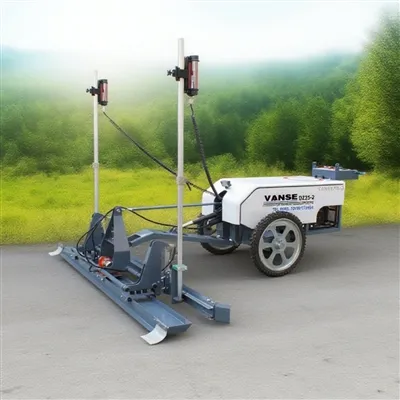
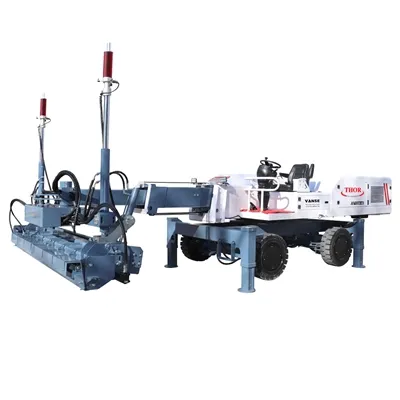
Recently, some users have received feedback that there are still some dangers in the process of using the laser leveling machine. In fact, the leveling machine does have some dangers, so this actually requires everyone to use the laser leveling machine. When leveling the machine, we must always put safety first. Only in this way can we avoid danger. So how to ensure the safety of laser leveling machine operation? See below for the answer.
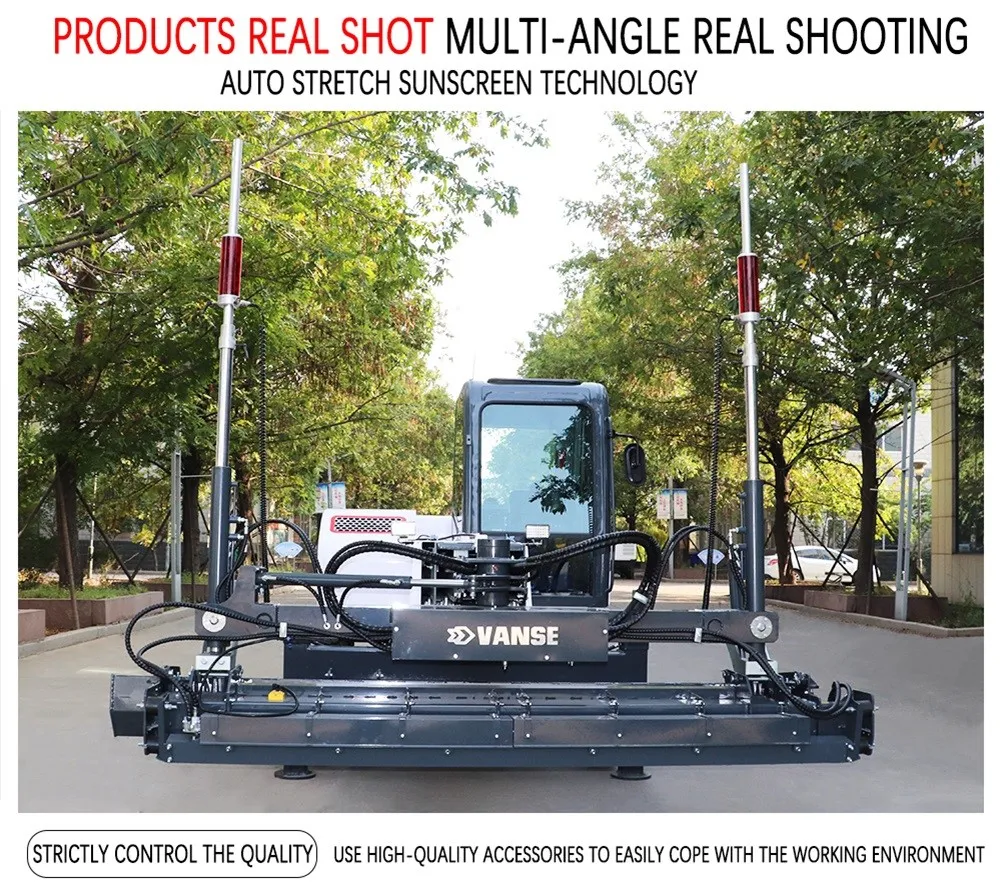
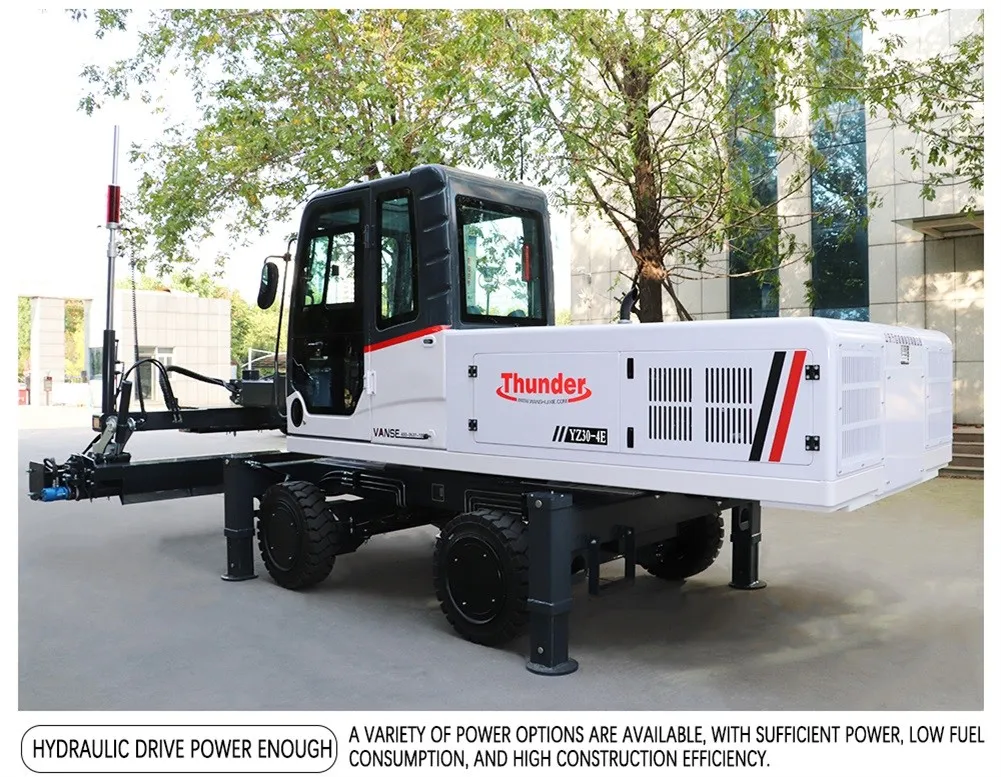
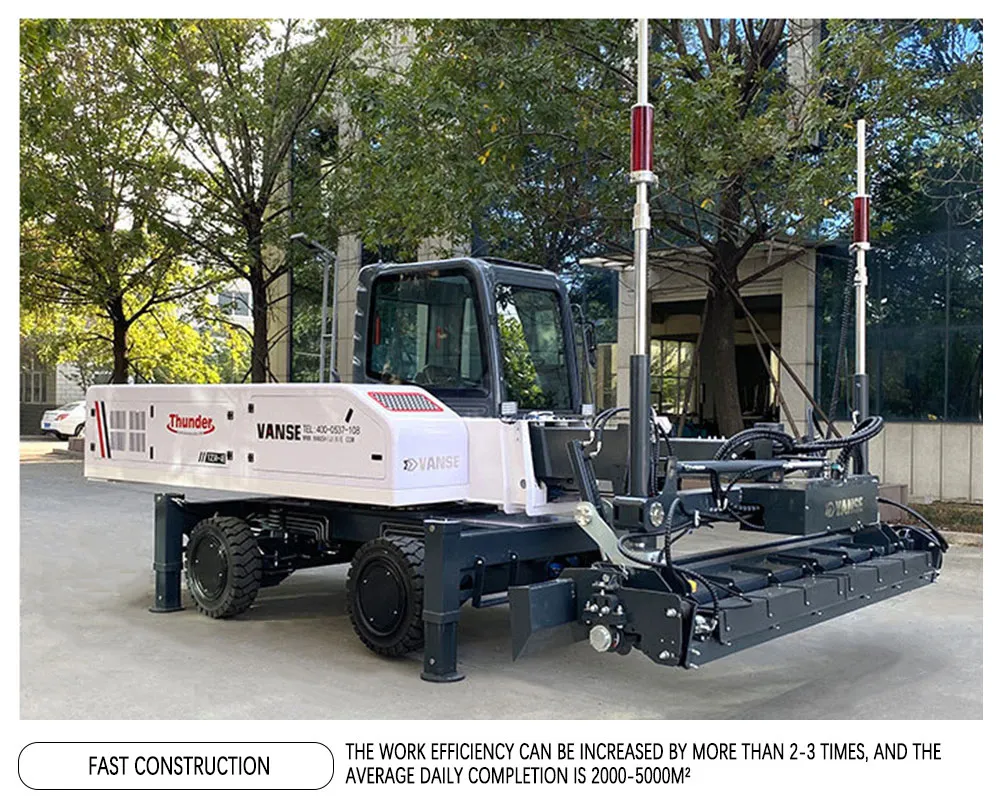
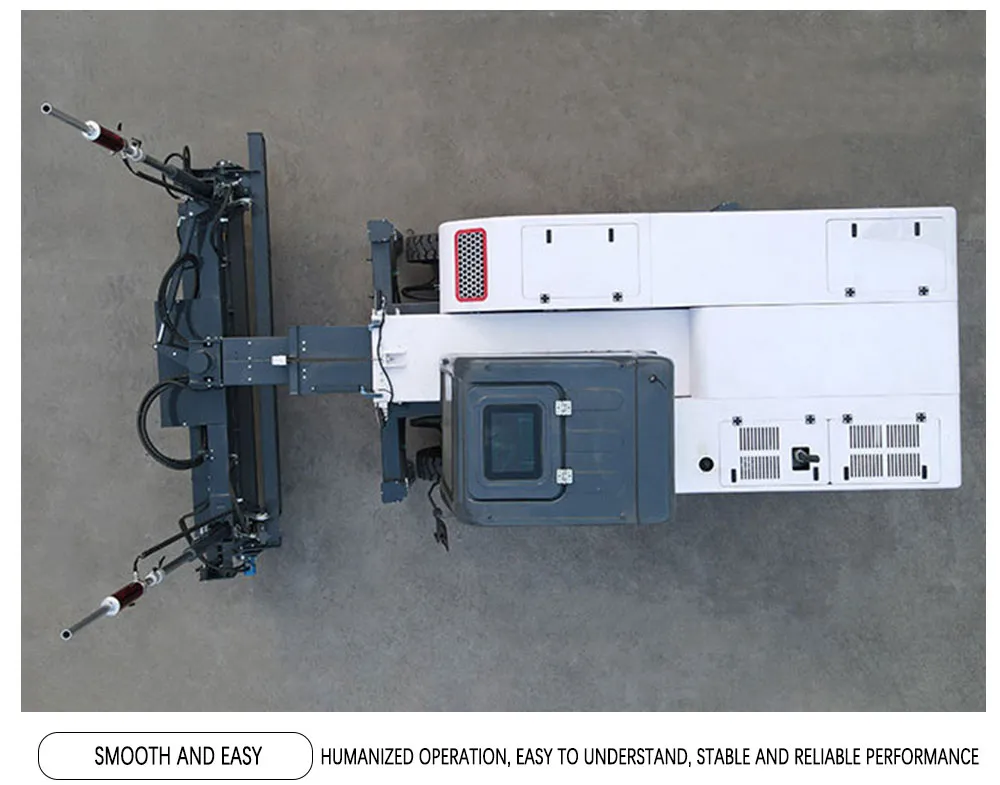
If the laser leveling machine is difficult to level during use or the material is too high, it must be stopped first, and the road surface should be further sorted before continuing to use. It cannot be used forcibly, otherwise the equipment will be damaged and the road will be damaged. Construction is also bad. Therefore, it is necessary to ensure the normal operation of the equipment and ensure the stability and smoothness of the road surface.
In the construction of high-grade pavement, mechanized construction runs through the whole process, and the cooperation and coordination between various machines is especially important. Once a problem occurs, the work will be stopped. Therefore, the performance of the laser leveling machine needs to meet the use standards, and the construction must be carried out in strict accordance with the operation, and overall arrangements should be made to maximize the benefits of construction and equipment, and to better complete tasks.
After manually laying the concrete material on the built formwork, it is placed on the road by the crane or the walking mechanism of the leveling machine itself, the laser leveling machine walks along the track, and the screw propeller moves the horizontal axis of the frame back and forth Then, the vibrator immediately behind the screw propeller vibrates and lifts the road surface; then, the roller of the machine performs multiple back and forth rolling on the road surface for leveling work, and the completion The pavement is leveled.
Before using the laser leveling machine, pay attention to check whether the power wiring is safe, whether the machine parts are tightened, whether the control system is working, and whether the lubrication of the bearing shaft is in place. During the operation, it is necessary to pay attention to whether the placement of the laser leveling machine on the track is balanced. Before starting work, the power supply should be connected to the line for trial operation.
70% of the completion of pavement engineering tasks depends on the allocation of mechanical equipment resources. The strength of the laser leveling machine, its performance, the reasonableness of the configuration, and the level of mechanized construction directly restrict the project quality and economic benefits.
The above method of safe operation of the laser leveling machine is introduced here for everyone. I hope you can get some substantial reference value from our article. If you have any other questions, please feel free to consult us. We will answer them one by one.
Thanks to All the Friends Who Support and Trust Shandong Vanse Machinery Technology Co., Ltd.
If you want to know more about Shandong Vanse Machinery Technology Co., Ltd. or have any questions, please feel free to contact us:
Our Factory
Shandong Vanse Machinery Technology Co., Ltd.








Share this article

About the Author: Shandong Vanse Machinery Technology Co., Ltd.
Shandong Vanse Machinery Technology Co., Ltd. is a high-tech manufacturer specializing in concrete construction machinery, including laser screeds and related equipment. The company integrates R&D, production, and global sales, with products exported to over 60 countries and widely used in infrastructure projects worldwide.
Previous Post
Next Post
Related Articles
You Might Also Like
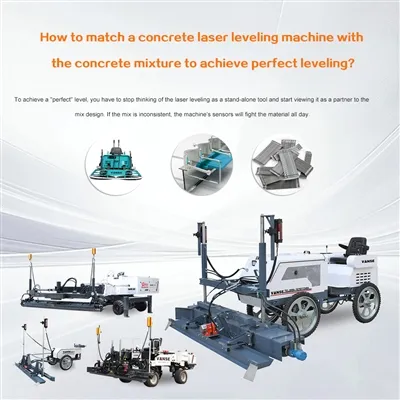
How to match a concrete laser leveling machine with the concrete mixture to achieve perfect leveling?
To achieve a "perfect" level, you have to stop thinking of the laser leveling as a stand-alone tool and start viewing it as a partner to the mix design. If the mix is inconsistent, the machine's sensors will fight the material all day. Here is how to calibrate your mix to your machine for maximum precision. For laser leveling, consistency is more important than the actual slump number. However, there is a "sweet spot" for machine performance. The Target: 4" to 5" (100mm – 125mm) slump. Too Wet (>6"): The leveling head will "sink" or create a wake like a boat. When the water evaporates, the "perfect" level you just pulled will settle and dip, ruining your FF (Floor Flatness) numbers. Too Stiff (<3"): The vibrator won't be able to liquefy the paste enough to close the surface, leaving "honeycombs" or tears that the machine can't fix. The auger on the front of the leveling head is designed to move excess concrete out of the way. The Mix: Use a well-graded aggregate (a mix of large, medium, and small stones). The Logic: If you use only large 1" stones (Gap-graded), the auger will "catch" them and drag them, creating gouges in the subgrade. A well-graded mix creates a "lubricated" matrix that the auger can trim precisely to the millimeter. Adjustment: If your mix is "rocky," increase your sand-to-aggregate ratio slightly (usually by 1-2%) to provide a "cream" cushion for the leveling head to glide on. The laser leveling needs the concrete to stay "live" long enough to finish a full pass, but not so long that it bleeds excessively. Avoid Sugar-Based Retarders: These can make the concrete "sticky." Sticky concrete clings to the back of the leveling head, causing it to "pull" the surface rather than shaving it. Use Mid-Range Water Reducers (MRWR): These provide workability (flow) without the massive water content that causes shrinkage. This ensures that the elevation the laser sets stays the same elevation after the concrete cures. Different mixes require different "energy" to settle. Air-Entrained Concrete (Exterior): Air bubbles act like tiny ball bearings. You should lower the vibrator frequency on the leveling. If you vibrate air-entrained concrete too hard, you'll pull the air out of the top 1/2 inch, leading to surface scaling later. Dense Interior Mixes: Use high frequency. You want to "liquefy" the paste immediately as the head passes over so the trailing edge can seal the surface perfectly. Element Specification for Laser leveling Water/Cement Ratio 0.45 to 0.50 (ideal for strength and minimal shrinkage) Air Content Interior: < 3% Sand Content 42% – 45% of total aggregate volume Chemicals Polycarboxylate-based superplasticizers (for flow without sag) The first truck of the day is often slightly different than the rest. Always check your grade with a manual stick after the first 20 feet of the first load. If the machine is struggling to "cut" the concrete, tell the plant to add a small dose of plasticizer to the remaining trucks to increase "cream" without adding water. Would you like me to help you draft a "Mix Design Requirement" sheet to send to your concrete supplier for your next high-tolerance job? Contact us NOW Note: The parameters provided in this document are for reference only and are not mandatory. Due to differences in technical characteristics between different brands and models of laser levelers, please consult the manufacturer for a suitable solution before actual operation. This reference document assumes no responsibility for any issues arising from failure to follow the manufacturer's instructions.How do the concrete laser leveling machines improve the flatness?
The ability of the concrete laser leveler to improve flatness is its core advantage. It fundamentally changes the traditional way of concrete leveling by combining modern laser technology, hydraulic systems and precision mechanical control. To improve the smoothness of construction,Equipment principles, pre-construction preparation, construction process control and post-construction maintenanceThe following is a detailed explanation of the key measures and principles: Erect alaser transmitter, it will produce a very thin, constantly rotating laser plane (360°). This laser plane is the entire field. Absolute horizontal reference, its accuracy is very high (usually up to ±1mm/10m). On the leveling machineLaser receiver, This laser signal will be captured in real time. The receiver transmits the signal to the leveler in real time.Vehicle control system (computer). The control system compares the actual height received with the preset design elevation and calculates the height difference within milliseconds. The control system immediately passes the calculated dropHydraulic valvesdrive. Hydraulic cylinder, to precisely adjust the height of the scraper. This process is Continuous automatic, the machine is always leveling dynamically and in real time, replacing reliance on human judgment and manual operation and eliminating human errors. Foundation treatment: The compaction and smoothness of the base layer (usually crushed stone or stabilized soil) are crucial. While a laser machine can compensate for minor undulations in the base layer, large undulations can significantly impact the concrete usage and overall quality. The base layer should be evenly compacted with no noticeable bumps or indentations. Laser transmitter installation: The laser transmitter must be firmly installed in a place with minimal interference from construction. Use a precise level to ensure it is absolutely level. Input and verification of elevation: Accurately input the design elevation into the control system. Before construction, the site should be tested at multiple points (especially corners and center) withLaser receiving poleVerify the accuracy of the laser signal to ensure that the entire construction surface is within the effective laser scanning range. Formwork (formwork) control: The top surface elevation and rigidity of the template must meet the requirements. Large errors in template elevation or deformation during pouring will directly affect the operating benchmark of the laser leveling machine. Slump: This is a key metric. The slump of each truckload of concrete must be uniform. Excessive slump variation can lead to varying degrees of aggregate segregation after paving, with some areas being too thin and others too dry. Laser leveling cannot effectively treat this uniformly, resulting in poor flatness after hardening. The ideal slump should be determined based on the floor thickness and reinforcement. Generally, a slump of 140-160mm is recommended for pumped concrete. Adequate concrete supply: Ensure the continuous supply of concrete to avoid the situation where the first poured concrete has initially set due to long waiting time, resulting in cold joints between the concrete and the later poured concrete, thus affecting the overall flatness. Paving thickness: The initial paving concrete material should be 2-3 cm higher than the design elevation to leave operating margin for the leveling machine. Routing method: The operator should be experienced and control the leveling machine to move forward smoothly and at a constant speed, avoiding sudden stops and sudden movements. The paths of adjacent milling discs (scrapers) should overlap to avoid missing parts. Bleeding water treatment: If the concrete bleeds severely, the surface water should be scraped off in time before leveling, otherwise a weak layer will be formed on the surface, affecting the final surface strength and flatness. Timely grinding (milling): For floors with ultra-high flatness requirements (such as ultra-flat floors), after the laser leveling machine completes the operation and the concrete reaches the initial setting (people step on it and there is a footprint about 3-5mm deep), it will be used. Double disc driving trowel. Perform overall grinding (milling). This step can eliminate the tiny marks left by the laser leveling machine scraper and the unevenness caused by individual aggregates. It is a key step in achieving extremely high flatness. Slit: Expansion joints must be cut in time within the specified time (when the concrete strength reaches 25-30% of the design strength) to avoid irregular cracking that damages the flatness. Maintenance: Use plastic film to fully cover or spray curing agent to provide sufficient moisturizing maintenance to prevent shrinkage cracks and peeling due to rapid water loss on the surface, there by protecting the flatness that has been achieved. Characteristic Concrete laser leveling machine Traditional manual leveling Benchmark Fixed absolute laser plane (precise) Moving channel steel, rulers, or workers' sight lines (prone to error accumulation) Control method Computer real-time calculation, automatic hydraulic adjustment (intelligent, continuous) Human judgment based on experience and manual operation (subjective, intermittent) Flatness Very high, can reach±2mm within 2 meters Even higher Low, usually only reach4-5mm/2m Efficiency Extremely high, 10-20 times that of manual labor Low, depends on the number and skill of workers Artificial Dependency Low, 1 operator and a few assistants High, requires a large number of skilled workers In short, to improve the flatness of the concrete laser leveling machine, it must be recognized that it is a systematic project: Relying on its high-tech "brain" (control system) and "eyes" (laser system) is a prerequisite, but the final effect also depends on a qualified "foundation" (base and formwork), uniform and stable "ingredients" (concrete), standardized "cooking techniques" (operating technology) and proper "post-processing" (polishing and maintenance).Only when every link is done well can the highest standard of flat floor be produced.Exploring the excellent technology of concrete laser leveling machine in floor construction: Taking Shandong VANSE Machinery as an example
In the field of modern floor construction, technological innovation continues to promote the development of the industry. As a revolutionary technology, the concrete laser leveling machine is gradually becoming the preferred equipment for floor construction, especially the concrete laser leveling machine series of Shandong Vanse Machinery Technology Co., Ltd., which has attracted worldwide attention with its advanced technology and excellent performance. Laser leveling machine, also known as automatic laser concrete leveling machine, has a core working principle based on high-precision measurement and automatic control of laser technology. Shandong Vanse Machinery's laser leveling machine emits a precise horizontal laser beam through a laser transmitter to establish an absolutely horizontal reference plane for the entire construction area. The laser receiver captures the laser signal in real time. Once the deviation between the leveling machine scraper and the laser plane is detected, the automatic control system will respond quickly and accurately adjust the height of the scraper through the hydraulic system to ensure that the scraper always moves along the laser plane, thereby achieving high-precision leveling of the concrete surface. This advanced working principle gives the laser leveling machine a significant technical advantage. Compared with traditional floor construction methods, laser leveling machines can achieve higher flatness accuracy, and the error can be controlled within a very small range, meeting the construction needs of places such as industrial plants and logistics warehouses that have extremely high requirements for ground flatness. At the same time, its automated construction process greatly reduces the error and time cost of manual operation, significantly improves construction efficiency, and is a truly automatic concrete leveling machine. The use of Shandong Vanse Machinery's concrete laser leveling machine for floor construction has a set of scientific and rigorous process flows. In the construction preparation stage, the construction site must first be fully cleaned and leveled to ensure that the flatness of the base meets the requirements. Then, according to the size and shape of the construction site, the laser transmitter is reasonably installed and calibrated to establish an accurate reference plane for the entire construction process. At the same time, prepare concrete raw materials that meet the design requirements, and strictly control its slump and other indicators. During the concrete pouring process, the concrete is evenly poured into the construction area, and the method of pouring in compartments is adopted. The area of each compartment is reasonably divided according to the actual situation, and generally should not exceed a certain range to ensure the pouring quality of the concrete. After the initial vibration of the concrete, the laser leveling machine (concrete laser leveling floors machine) is started immediately. According to the feedback signal from the laser receiver, the operator accurately controls the walking speed and scraper height of the leveling machine, so that the scraper moves at a uniform speed along the laser plane and accurately level the concrete. During the leveling process, the operator should pay close attention to the flatness of the concrete surface and the working status of the leveling machine, and make adjustments in time. Shandong Vanse Machinery's concrete laser leveling machine performs well in construction efficiency and quality assurance. In terms of construction efficiency, due to its high degree of automation, it can achieve rapid leveling of a large area, which greatly shortens the construction period compared with traditional construction methods. For example, in a floor construction project of a large industrial plant, the use of Shandong Vanse Machinery's laser leveling machine has increased the construction efficiency several times compared with traditional methods, providing a strong guarantee for the early delivery and use of the project. In terms of quality assurance, the high-precision control of the laser leveling machine ensures that the flatness error of the concrete surface is extremely small. Through strict construction process monitoring and quality inspection, each construction link has been effectively controlled to ensure that the quality of the floor meets high standards. At the same time, Shandong Vanse Machinery also provides perfect after-sales service and technical support, regularly maintains and calibrates the equipment to ensure that the equipment is always in the best working condition, providing long-term guarantee for construction quality. In short, the concrete laser leveling machine series of Shandong Vanse Machinery Technology Co., Ltd. has shown excellent performance and advantages in the application of floor construction technology. Whether in terms of construction efficiency or quality, it provides more advanced and reliable solutions for modern floor construction and has become the preferred equipment for many construction companies. With the continuous advancement and innovation of technology, it is believed that laser leveling machines will play a more important role in the future floor construction field.