Technical Knowledge
Maintenance knowledge of concrete laser leveling machine
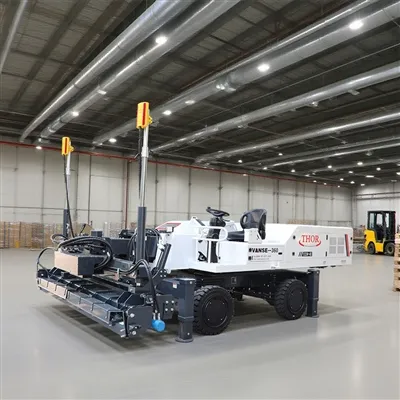
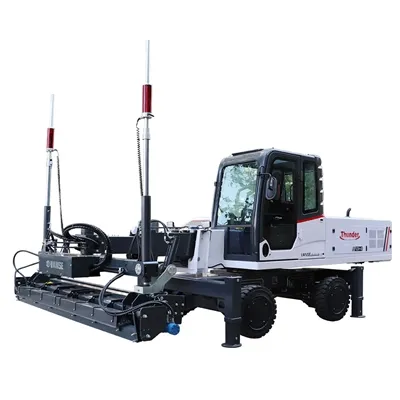
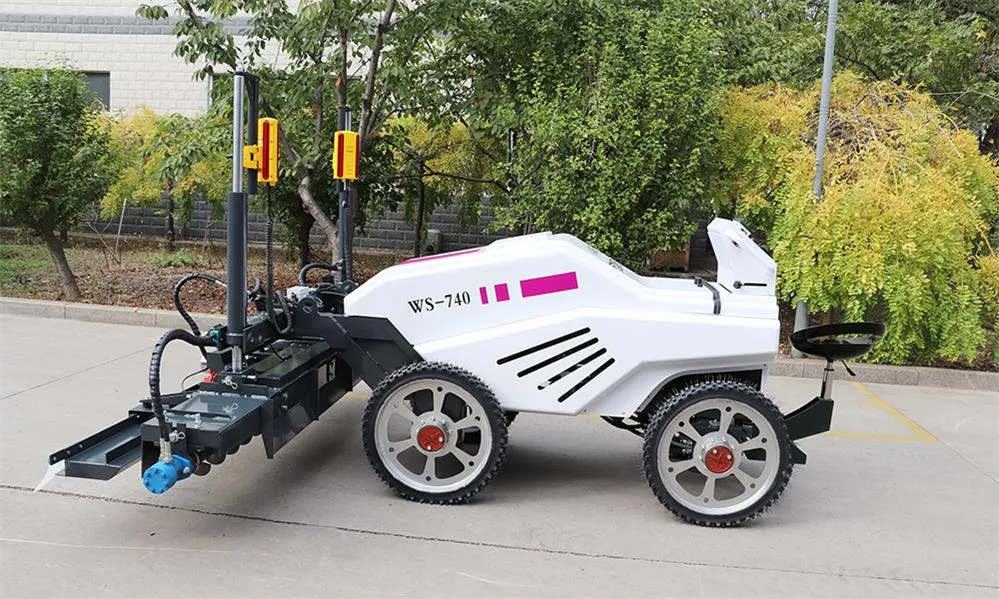
Concrete laser leveling machine is a high-precision construction equipment used to achieve high flatness and high precision requirements on concrete surfaces. In order to ensure the long-term use and reliability of the concrete laser leveling, regular inspection and maintenance are necessary. The following is an introduction to the maintenance knowledge of concrete laser leveling machines, including the necessity of regular inspection and maintenance.
1. The necessity of regular inspections
1) Failure prevention:
Regular inspections can detect potential problems or failures in time and avoid equipment downtime or major failures during the production process. Through regular inspections, problems can be repaired before they occur, ensuring the stable operation of the equipment.
2) Ensure safety:
The concrete laser leveling is a heavy-duty equipment with potential safety risks. Regular inspections can ensure that the equipment's safety devices and protective devices are working properly and prevent accidents.
3) Optimize performance:
Regular inspections can ensure that each component of the concrete laser leveling is in good working condition and improve the overall performance of the equipment. This includes inspections and adjustments to transmission systems, hydraulic systems, electrical systems, and more.
4) Extend life:
Regular inspections can detect and repair potential wear or damage in time to avoid larger problems during the operation of the equipment. This helps extend the life of the concrete laser leveling and reduces replacement costs.
2. The necessity of regular maintenance
1) Cleaning and Cleaning:
Regularly cleaning the surface and internal parts of the concrete laser leveling can remove dust, dirt and other impurities. This helps improve the cooling performance of the device and reduces the risk of failure.
2) Check the hydraulic system:
The hydraulic system is an important part of the concrete laser leveling machine. Regularly check various components of the hydraulic system, including oil tanks, oil pumps, hydraulic cylinders, etc., to ensure that there are no leaks, no abnormal sounds, and no abnormal vibrations.
3) Check the electrical system:
The electrical system is an important control system for the concrete laser leveling machine. Regularly check all components of the electrical system, including cables, plugs, terminals, etc., to ensure that they are not damaged, loose, or abnormally hot.
4) Check the transmission system:
The transmission system is an important power transmission system for the concrete laser leveling. Regularly check various components of the transmission system, including gears, chains, bearings, etc., to ensure that there is no abnormal noise, abnormal vibration, or excessive wear.
5) Lubrication:
Regularly adding appropriate lubricants to each lubrication point of the concrete laser leveling can reduce the friction and wear of the equipment and improve the operating efficiency and service life of the equipment.
6) Check the hydraulic oil:
Hydraulic oil is an important part of the hydraulic system of the concrete laser leveling machine. Regularly check the quality and quantity of hydraulic oil to ensure it meets requirements. If the hydraulic oil deteriorates or is insufficient, it should be replaced or added in time.
7) Check the coolant:
The concrete laser leveling machine will generate a lot of heat during operation. Regularly check the quality and quantity of coolant to ensure it meets requirements. If the coolant is insufficient or deteriorates, it should be replaced or added in time.
In short, in order to ensure the long-term use and reliability of the concrete laser leveling, regular inspection and maintenance are necessary. Through regular inspections, potential problems or faults can be discovered in time and corresponding measures can be taken to repair them; through maintenance, the equipment can be kept in good condition and its performance and service life can be improved. It is recommended to formulate an appropriate maintenance plan and perform maintenance work on time under the guidance of the equipment instruction manual or professionals.
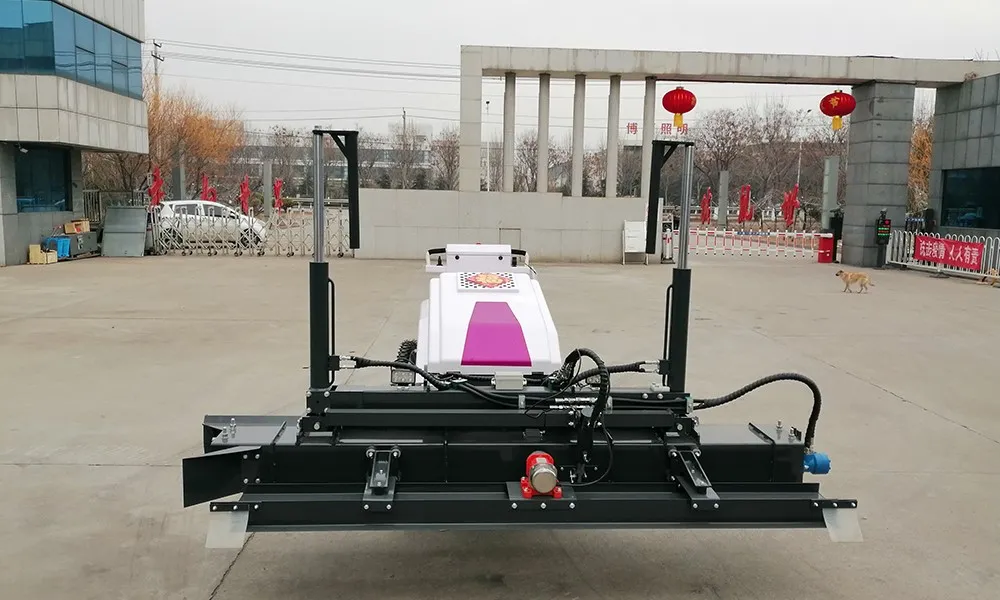
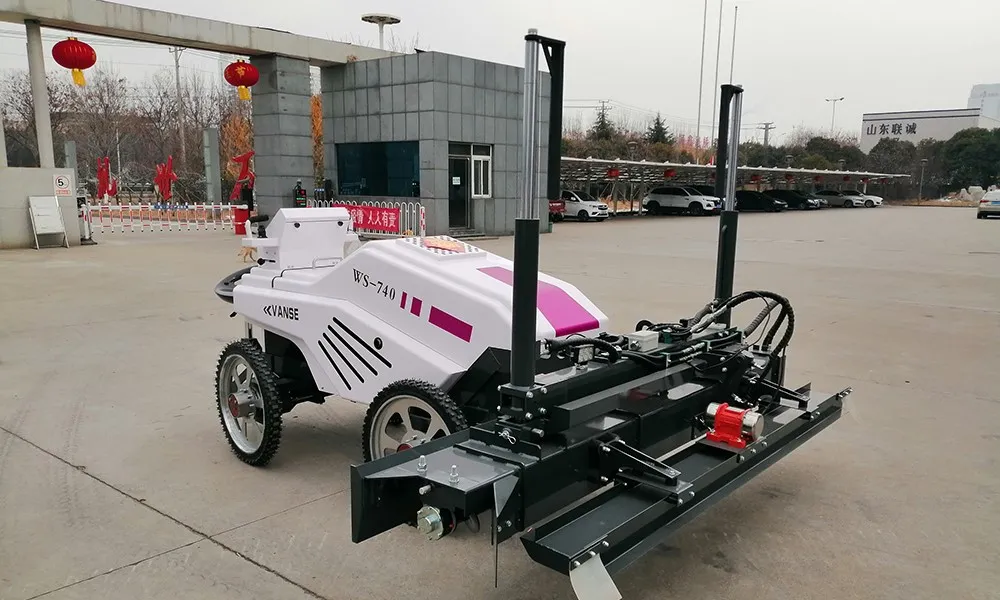
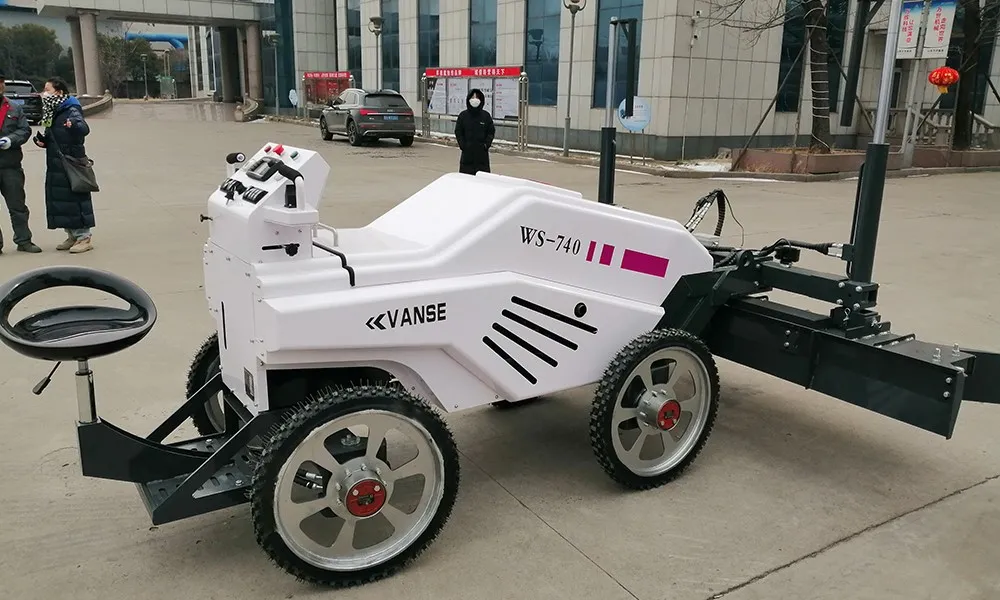
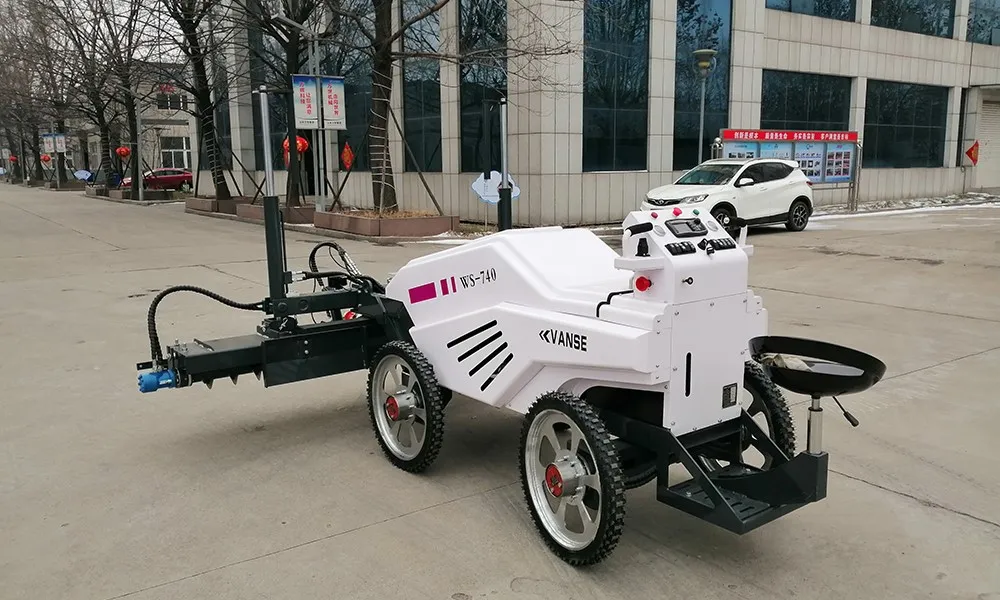
Thanks to All the Friends Who Support and Trust Shandong Vanse Machinery Technology Co., Ltd.
If you want to know more about Shandong Vanse Machinery Technology Co., Ltd. or have any questions, please feel free to contact us:
Our Factory
Shandong Vanse Machinery Technology Co., Ltd.








Share this article

About the Author: Shandong Vanse Machinery Technology Co., Ltd.
Shandong Vanse Machinery Technology Co., Ltd. is a high-tech manufacturer specializing in concrete construction machinery, including laser screeds and related equipment. The company integrates R&D, production, and global sales, with products exported to over 60 countries and widely used in infrastructure projects worldwide.
Previous Post
Next Post
Related Articles
You Might Also Like
How can maintenance of concrete laser leveling machines improve construction efficiency and quality
As a core piece of equipment for concrete surface leveling, the quality of a concrete laser leveling directly impacts construction efficiency and concrete quality. Scientific maintenance can directly and indirectly improve overall construction efficiency by reducing equipment failures, stabilizing operational performance, and extending equipment life. The specific mechanisms are as follows: Concrete construction is highly continuous and time-sensitive (for example, leveling must be completed before initial setting of concrete, otherwise construction joints and reduced strength are likely to occur). A laser leveling failure during construction not only interrupts the current process but can also delay subsequent steps (such as finishing and curing) and even result in wasted concrete material. Scientific maintenance can avoid such problems through "preventive maintenance", which is specifically reflected in: Regularly inspect key components, such as the laser transmitter's calibration accuracy, the hydraulic system's tightness (e.g., leaks in the oil pipes and cylinders), the wear of the travel wheels, and the lubrication status of the motor and reducer. This can proactively identify potential problems (such as insufficient hydraulic oil or laser head misalignment) and prevent sudden equipment downtime during construction. For example, if worn travel wheels are not replaced promptly, the equipment may stall. Leveling an area that normally takes one hour may take two to three hours, directly reducing construction efficiency. Complete maintenance records (recording equipment model, replacement cycles for wearing parts, and historical faults) help maintenance personnel quickly identify the cause of a fault. For example, if the hydraulic filter of a certain laser leveler needs to be replaced every 300 hours, stocking spare parts in advance and replacing them on schedule can avoid long downtime caused by waiting for spare parts. The core function of a laser leveling is to achieve high concrete surface flatness (error is typically required to be ≤3mm/2m) through laser positioning and hydraulic leveling. The stability of the equipment's performance directly determines the leveling quality, and maintenance is key to ensuring stable performance: The laser transmitter is the core benchmark for leveling accuracy. If it's not calibrated for an extended period, the laser line may deviate. Regularly calibrating the laser transmitter and checking its signal strength (for example, before daily construction and every 100 hours) ensures the laser line is always level, preventing uneven concrete surfaces caused by laser deviation. For example, a miscalibrated laser head on a project resulted in a 5mm uneven surface. This required manual grinding to correct the problem, increasing rework costs and potentially affecting the wear resistance and aesthetics of the concrete surface. The hydraulic system controls the lift and pressure of the leveling blades. If the hydraulic oil is contaminated or the oil lines are clogged, uneven lift speed and insufficient pressure can occur, leading to problems like sanding and denting on the leveling surface. Repair, maintenance, or adjustment of working components such as the roller and scraper blades is strictly prohibited while the equipment is operating. Regularly changing the hydraulic oil (usually every 500 hours, as recommended by the manufacturer), cleaning the hydraulic filter, and checking the oil line seals ensures stable hydraulic system pressure. This allows the scrapers to apply uniform pressure, ensuring even distribution of concrete aggregate and consistent surface density, thereby improving the strength and smoothness of the finished concrete. Uneven travel speeds (e.g., faster on one side and slower on the other) can cause inconsistent rubbing force from the leveling blades on the concrete, resulting in surface ripples. Regularly checking the travel motor speed, drive wheel engagement, and track tension will ensure a uniform travel speed and ensure a consistent and smooth surface. High-quality laser leveling machines are expensive (typically tens to hundreds of thousands of yuan). Extending equipment life through effective maintenance can reduce the frequency of equipment upgrades, lowering long-term investment costs and indirectly ensuring construction efficiency (avoiding process continuity issues caused by frequent equipment replacements due to aging). Reduce wear on core components: For example, regularly adding specialized lubricants to motors and reducers can reduce frictional losses in mechanical components. This can extend the lifespan of equipment from five years to seven to eight years through maintenance. Prevent minor problems from becoming major ones: Ignoring minor faults (such as minor oil leaks or unusual noises) can lead to escalating problems (e.g., hydraulic pump damage due to oil depletion), increasing repair costs from a few hundred yuan to tens of thousands of yuan, while also causing extended downtime and impacting the overall project schedule. Maintenance and repair priorities Impact on construction efficiency Impact on construction quality Laser system calibration Avoid rework due to precision issues, shortening construction time Ensures surface leveling tolerances meet specifications Hydraulic system maintenance Reduce downtime, ensuring process continuity Avoids surface dents and sanding, improving density Travel system inspection Ensure consistent equipment operation, improving individual machine efficiency Avoids surface ripples, ensuring flatness Regular replacement of wearing parts Shorten maintenance time, reducing unplanned downtime Maintains stable equipment output and consistent quality In summary, the maintenance of concrete laser leveling machines is not an "extra cost", but directly improves construction efficiency and ensures quality by "preventing failures, stabilizing performance, and extending life". It is an indispensable core link in concrete construction. Note: The parameters provided in this document are for reference only and are not mandatory. Due to differences in technical characteristics between different brands and models of laser levelers, please consult the manufacturer for a suitable solution before actual operation. This reference document assumes no responsibility for any issues arising from failure to follow the manufacturer's instructions.Is a concrete laser leveling practical? Any highlights?
Must be practical! Let me tell you about it~ Let's talk about the advantages first: it is simply the favorite of all major "contractors". First, compare with humans. 1. Save more labor costs. Anyone who has done construction knows that if the concrete leveling work is done manually, at least 15 people will be needed. If calculated according to the current manual labor cost, the daily labor cost will be more than 3,000 yuan. If the latter is used, the labor required is doubled, and 8 people can complete the job, which greatly saves labor costs. 2. Save more construction time. If manual construction is used, the amount that 15 people can complete per day is relatively limited, less than 800 square meters. If time is limited, this cannot meet the completion progress requirements at all. But if you use the latter, its construction speed is faster, several times that of manual construction. In this way, its construction period is shortened a lot, and you don't need to worry about asking for help from everywhere if it can't be completed within the construction period. 3. Better guarantee the construction quality. If manual labor is used, the construction is mostly based on one's own experience. If there is insufficient experience, there will often be some cracking and other substandard quality. If a laser leveling machine is used, its construction procedures have been input into the program before the machine is completed. It is constructed according to free procedures, and the quality can be said to be relatively standard, which greatly saves the need for rework. cost. And the flatness is very good, the error is within 3 mm. Then there are the advantages of construction. First: The working principle of the laser leveling machine is mainly through its own various equipment, such as more advanced laser technology, which enables it to perform hundreds of data calculations and feedback within a minute, and also uses Complex closed-loop control technology accurately reflects various construction conditions to the brain of the equipment through the closed-loop system, and then responds quickly through the program set by the equipment personnel. There is also a very excellent hydraulic control system that reflects the equipment. Various electrical signals can be processed very quickly. This process is automatically completed on the computer. This is the biggest construction feature of the laser leveling machine. It is fully automatic and does not require human help. It only requires preliminary work. Set standard parameters. Second: The laser leveling machine can automatically control the plane, whether it is horizontal or vertical. This means that after setting the parameters on a plane, you do not need to manually control the machine. It automatically searches and positions within this working range, and then performs leveling and vibration through its own equipment, so that the construction can achieve various desired indicators. The accident personnel only need to perform simple operations and care to complete the project plan. It is a construction machine that can free the hands of construction workers. This is the second construction feature of the laser leveling machine, which can effectively release the labor intensity of construction workers, thereby reducing the construction party's expenditure on employees to a certain extent. Third: When using the laser leveling machine, you only need to let the workers place the equipment and set all the parameters in the equipment. After turning on the machine, the construction staff can perform simple controls to complete a very large area. Construction processing, because it uses modern laser equipment. It is easy to operate and uses an electronically controlled operating system. Only one staff member is required to operate and perform timely maintenance at the construction site. The daily working efficiency is 3000 to 5000 square meters. This is his third characteristic: simplicity and efficiency. To put it simply, it saves time, effort, worry, and is very efficient! ! ! If you want to know more you can follow us! ! !Which components of the concrete laser leveling are most prone to damage and need to be stocked in advance?
As a high-precision and high-strength construction equipment, the wear and damage of the components of the concrete laser leveling machine are inevitable. To minimize downtime and ensure construction progress, it is a very wise move to stock up on key vulnerable components in advance. Based on the structure and working principle of the equipment, the following components are the most prone to damage. It is recommended that you stock up in advance according to the construction intensity and project conditions These are the "legs and feet" of the leveling, which have the highest working intensity and come into direct contact with the concrete, making them the most prone to wear and tear. The reason is that it directly rubs against and flattens the concrete aggregates, making it the component that wears out the fastest. It is usually made of wear-resistant steel plates, but after long-term use, it will inevitably wear out and become thinner, losing its smooth effect. Suggestion: This is a component that must be stocked in stock, and 2-3 sets of spare parts with different degrees of wear and tear should be prepared according to the scale of the project. The reason is that walking on unsolidified concrete makes it easy to be scratched or punctured by sharp aggregates such as stones and steel bar ends. Although most of them are solid tires, the rubber itself can also wear out. It is highly recommended to have a complete set of tire assemblies for the entire vehicle (usually four), especially for construction sites with complex ground environments and exposed steel bars. Reason: The load is heavy when driving the entire machine to move. Although it is not prone to damage itself, the internal drive gears, bearings, seals and other components are vulnerable points. Especially when the sealing parts age and cause oil leakage, it will accelerate internal wear. Suggestion: It is advisable to prepare a set of reducer assembly as a core backup, or at least a set of drive gear and seal maintenance kits for quick repair. This is the "blood circulation system" of the leveling machine. Faults often lead to the paralysis of the entire machine. The reason is that there are a large number of seals at all parts of the hydraulic system (cylinders, motors, valve block interfaces). Due to long-term operation under high pressure and high temperature, rubber will age and wear out, leading to oil leakage, which is the most common hydraulic failure. Suggestion: Purchase a set of maintenance kits for the entire machine's sealing parts. It is not expensive, but it can quickly solve the problem when oil leakage occurs, making it the spare part with the best cost performance. The reason is that the cleanliness of the hydraulic oil is directly related to the lifespan of the entire hydraulic system. Regular replacement of the filter element is a necessary maintenance item. If the filter element is clogged or fails, it will cause severe wear of core components such as hydraulic pumps and motors. Suggestion: According to the equipment maintenance manual, always keep at least one set (such as return oil filter elements, suction oil filter elements, etc.) on hand. The reason is that the drive shaft connecting the engine (or hydraulic motor) and the hydraulic pump operates under high torque. If it is poorly lubricated or subjected to shock, the universal joint bearing is prone to damage. Suggestion: Prepare a complete drive shaft assembly or at least a universal joint maintenance kit. This is the "eyes and brain" of the leveling, where the precision lies and requires careful protection. Reason: Although it is an electronic component itself, the construction site environment is harsh and it may be damaged due to collision or splashing concrete. It is the key to ensuring flatness.Suggestion: This is a core electronic component that is strongly recommended as a backup. Once damaged, the entire machine will not be able to level itself automatically. Reason: As a precision optical instrument, it is vulnerable to dropping, shock and dust. Although it is more durable than the receiver, once a problem occurs, it will affect the entire working area.Suggestion: If the project is of great significance and the schedule is tight, it is advisable to consider having one as a backup. For construction sites where multiple leveling machines work in coordination, having a spare transmitter is a standard operation. The reason is that there are a large number of seals at all parts of the hydraulic system (cylinders, motors, valve block interfaces). Due to long-term operation under high pressure and high temperature, rubber will age and wear out, leading to oil leakage, which is the most common hydraulic failure. Suggestion: Purchase a set of maintenance kits for the entire machine's sealing parts. It is not expensive, but it can quickly solve the problem when oil leakage occurs, making it the spare part with the best cost performance. The reason is that the cleanliness of the hydraulic oil is directly related to the lifespan of the entire hydraulic system. Regular replacement of the filter element is a necessary maintenance item. If the filter element is clogged or fails, it will cause severe wear of core components such as hydraulic pumps and motors. Suggestion: According to the equipment maintenance manual, always keep at least one set (such as return oil filter elements, suction oil filter elements, etc.) on hand. The reason is that the drive shaft connecting the engine (or hydraulic motor) and the hydraulic pump operates under high torque. If it is poorly lubricated or subjected to shock, the universal joint bearing is prone to damage. Suggestion: Prepare a complete drive shaft assembly or at least a universal joint maintenance kit. Priority Component name Stock preparation suggestions ★★★★★ (Highest) Scraper bottom plate It is necessary to stock up. Prepare 2 to 3 sets according to the project volume Hydraulic seal kit It offers the best cost performance and must be stocked Walking tire It is strongly recommended to prepare a complete set ★★★★ (High) Laser receiver It is recommended to have one core electronic component Hydraulic filter element Essential maintenance items should be stocked according to the maintenance cycle Reducer gears/seals It is determined based on the historical failure conditions of the equipment ★★★ (Middle) Universal joint for drive shaft Maintenance kits or assemblies are available Vibrating rod/bearing It is determined by the frequency of equipment usage Laser emitter Large or key projects are recommended as backups ★★ (Low) Battery It depends on the condition of the old battery Here's a tip for you finally: When purchasing equipment, one should ask the manufacturer or supplier for a recommended list of vulnerable parts and understand the expected service life of these components. At the same time, establish maintenance files for your own equipment, recording the replacement times of each component. Only in this way can you carry out predictive stocking more scientifically, ensuring that your equipment is always in the best condition and creating the greatest value for the project. Note: The parameters provided in this document are for reference only and are not mandatory. Due to differences in technical characteristics between different brands and models of laser levelers, please consult the manufacturer for a suitable solution before actual operation. This reference document assumes no responsibility for any issues arising from failure to follow the manufacturer's instructions.