Technical Knowledge
How to improve construction efficiency of concrete laser leveling machine in special environment?
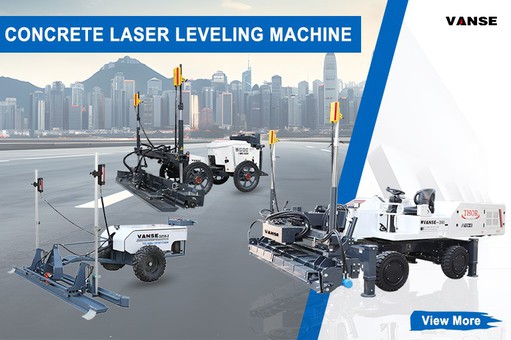
Concrete laser levelings are indispensable and important equipment in modern building construction. However, in special environments, such as extreme climate conditions such as high temperature, low temperature, humidity, and dryness, as well as complex terrain, tight construction schedules, and other construction environments, concrete laser levelings The construction efficiency of the leveling machine is often affected to a certain extent. Therefore, how to improve the construction efficiency of concrete laser leveling machines in special environments has become a question worth exploring.
•••◀◆▶••• The impact of special environment on the construction efficiency of compacted soil laser levelinging machine
The impact of special environments on the construction efficiency of concrete laser levelings is mainly reflected in the following aspects:
1. Climatic conditions:
High temperature will cause the equipment to overheat and affect the performance of the equipment; low temperature may cause difficulty in starting the equipment and unstable operation. A humid environment may cause the equipment to become damp and cause electrical failure, while a dry environment may cause excessive wear and tear on the equipment and shorten its service life.
2. Terrain conditions:
Complex terrain, such as slopes, potholes, etc., requires more adjustments and operations of the leveling machine, which reduces construction efficiency.
3. Construction schedule pressure:
When the construction schedule is tight, there may be multiple types of cross-cutting operations at the construction site, requiring the concrete laser leveling to complete more workload within a limited time.
•••◀◆▶••• Measures to improve the construction efficiency of concrete laser leveling
In view of the impact of special environments on the construction efficiency of compacted soil laser leveling machines, the following measures can be taken to improve construction efficiency:
1. Equipment adaptability improvement:
* Climate adaptability:
Make climate adaptable modifications to the equipment, such as installing protective devices on the equipment to prevent moisture and dryness from damaging the equipment; optimizing the heat dissipation system to ensure stable operation of the equipment in high temperature environments.
* Terrain adaptability:
According to the terrain characteristics of the construction site, the equipment is adaptively adjusted, such as installing a climbing device to improve the stability and construction efficiency of the equipment on slopes.
2. Optimize construction technology:
* Preparation before construction:
Conduct detailed topographic measurement and assessment of the construction site before construction, formulate a reasonable construction plan, and avoid unnecessary adjustments and operations.
* Construction process optimization:
According to the construction progress and construction period requirements, the construction sequence and operation time should be reasonably arranged to reduce equipment idleness and waiting time.
3. Improve operational level:
* Operation training:
Provide regular professional training to operators to improve their operating skills and ability to cope with special environments.
* Operating specifications:
Develop detailed operating specifications and safety procedures to ensure that operators can operate in accordance with the prescribed procedures during the construction process to reduce misoperations and malfunctions.
4. Strengthen maintenance:
* Regular maintenance:
Carry out regular maintenance and upkeep on the equipment according to the equipment manufacturer's recommendations to ensure that the equipment is always in good working condition.
* Emergency treatment:
Establish an emergency treatment mechanism to quickly respond and handle equipment failures to reduce construction interruptions caused by equipment failures.
5. Application of intelligent technology:
* Automatic control system:
Adopt advanced automatic control system to achieve precise control and intelligent management of equipment, improving construction accuracy and efficiency.
* Data analysis and optimization:
Use big data analysis and artificial intelligence technology to monitor and analyze the construction process in real time, discover potential problems and make timely optimization adjustments to improve construction efficiency and quality.
•••◀◆▶••• Implement effectiveness evaluation and continuous improvement
After the above measures are implemented, construction efficiency needs to be regularly evaluated to understand the actual effect of the measures. Evaluation can be carried out by comparing construction efficiency data before and after implementation, collecting feedback from operators, and analyzing equipment operating status. Based on the evaluation results, measures will be continuously optimized and improved to adapt to the needs of different special environments.
•••◀◆▶••• Conclusion
The special environment has a significant impact on the construction efficiency of the compacted soil laser leveling machine. However, through measures such as improving equipment adaptability, optimizing construction processes, improving operation levels, strengthening maintenance, and applying intelligent technology, the compacted soil can be effectively improved. The construction efficiency of laser leveling machine in special environments. Implementation effect evaluation and continuous improvement are key links to ensure the effectiveness of measures. Through the implementation of these measures, strong support can be provided for the healthy development of the building construction industry.
Thanks to All the Friends Who Support and Trust Shandong Vanse Machinery Technology Co., Ltd.
If you want to know more about Shandong Vanse Machinery Technology Co., Ltd. or have any questions, please feel free to contact us:
Our Factory
Shandong Vanse Machinery Technology Co., Ltd.
Share this article

About the Author: Shandong Vanse Machinery Technology Co., Ltd.
Shandong Vanse Machinery Technology Co., Ltd. is a high-tech manufacturer specializing in concrete construction machinery, including laser screeds and related equipment. The company integrates R&D, production, and global sales, with products exported to over 60 countries and widely used in infrastructure projects worldwide.
Previous Post
Next Post
Related Articles
You Might Also Like
In order to reduce the probability of accidents, the laser leveling machine should be operated in this way
If the laser leveler is used improperly, it is easy to cause danger, especially if it rolls over, it is likely to cause casualties. Therefore, when using the leveler, you should always maintain the correct operation method, because only in this way can the safety of the laser leveler be guaranteed to the greatest extent, and the construction quality of the leveler can be well exerted. Please see the following for the correct operation method. ◀ Before the laser leveler moves, check the road conditions, remove obstacles on the road, keep irrelevant personnel away from the leveler, and then retract the telescopic arm to start. ◀ Check the direction of travel, determine the position of the drive wheel, and then honk the horn, and the laser leveler will start to move slowly. ◀ When reversing the laser leveler, estimate the space behind the car in advance. If the blind spot is too large, ask a special person to direct and coordinate behind. ◀ The driver controls the walking speed according to the road conditions. When walking on an open flat ground, you can select "1" gear, and the walking speed of the laser leveler will automatically increase or decrease according to the working pressure of the hydraulic walking circuit; when going up and downhill, you can select "0" gear, and the laser leveler will walk at a low speed and high torque. ◀ Try to choose a flat road when the laser leveler is walking. ◀ Avoid walking the leveler in water as much as possible. If you must wade, remember to explore the water depth and the soft and hard platform of the bottom of the water in advance. It is not suitable to walk if the underwater silt is too deep or the water surface exceeds the wheels The above is the correct operation method of the laser leveler. I hope you can get some substantial reference value from this article. If you have other questions, please feel free to consult us at any time, and we will answer them one by one.How should the emery floor be maintained before and after construction?
Emery floor is widely used in industrial plants, parking lots, warehouses and other places due to its high wear resistance, high strength, anti-slip and beautiful appearance. However, in order for the emery floor to achieve the expected use effect and life, in addition to high-quality materials and scientific construction technology, maintenance work before and after construction is also crucial. This article will conduct an in-depth discussion on the maintenance of diamond floor before and after construction, in order to provide valuable reference for relevant practitioners. 1. Foundation treatment before construction The foundation treatment before the construction of diamond floor is a key step to ensure the quality and service life of the floor. First, the base floor should be thoroughly cleaned to remove oil, dust, debris, etc., to ensure that the surface of the base is dry, flat and free of slurry. Secondly, the strength and density of the base should be checked. If there are defects such as cracks and potholes, they should be repaired and leveled in time. In addition, for the newly poured concrete base, the diamond floor should be fully maintained to sufficient strength before the construction of diamond floor. During the foundation treatment process, the following points should also be noted: First, ensure that the bonding performance between the base layer and the diamond floor material is good to avoid problems such as delamination and sanding; second, control the moisture content of the base layer to avoid excessive or low moisture content affecting the quality of the floor; third, for special base layers, such as renovation of old floors, appropriate treatment plans should be formulated according to specific circumstances. 2. Preparation of construction materials The construction materials of diamond floor mainly include diamond aggregate, cementitious materials, additives, etc. During the material preparation stage, it should be ensured that the selected materials meet the design requirements and have good wear resistance, compression resistance, anti-slip properties, etc. At the same time, strict quality inspections should be carried out on the materials to ensure that there are no impurities, no lumps, no expiration, etc. During the transportation and storage of materials, attention should be paid to moisture-proof, sun-proof, and anti-pollution measures to prevent the materials from being damp, lumped or polluted and affecting the use effect. In addition, during the material mixing process, the water-cement ratio and mixing time should be strictly controlled to ensure the uniformity and fluidity of the mixture. 3. Construction process control The construction process of diamond floor includes primer construction, diamond aggregate laying, compaction, maintenance and other steps. During the construction process, the construction specifications and process flow should be strictly followed to ensure quality control of each link. First, the primer construction should be uniform and without omission to enhance the adhesion between the base and the diamond floor. Secondly, when laying diamond aggregate, the laying thickness and uniformity should be controlled to avoid uneven thickness or hollowing. At the same time, compaction should be carried out in time after laying to improve the density and strength of the floor. Finally, during the maintenance stage, the maintenance time and method should be reasonably controlled according to the ambient temperature and humidity conditions to ensure that the floor is fully hardened and dried. 4. Initial maintenance and protection After the construction of diamond floor is completed, initial maintenance is an important link to ensure the quality of the floor and extend its service life. During the maintenance period, heavy objects should be avoided from rolling on the floor or scratching with sharp objects to avoid damage to the floor. At the same time, the floor surface should be kept clean and dry to prevent moisture and dirt from penetrating and affecting the quality of the floor. In the initial maintenance stage, some measures can also be taken to improve the performance and aesthetics of the floor. For example, applying a layer of transparent or colored coating on the floor surface can increase the gloss and wear resistance of the floor; setting angle steel or corner guard strips on the edge of the floor can prevent damage caused by the impact of equipment such as forklifts. 5. Long-term maintenance and care The long-term maintenance and care of diamond sand floor is the key to ensuring its performance and service life. In daily use, the floor surface should be cleaned regularly to remove oil, dust and other debris to keep the floor clean and beautiful. At the same time, avoid using corrosive substances such as strong acids and alkalis to clean the floor to avoid damage to the floor. For floor areas with wear, scratches and other problems, they should be repaired and renovated in time. When repairing, the repair material compatible with the original floor material should be selected, and the operation should be carried out in accordance with the construction specifications to ensure the quality of the repair. In addition, according to the use and wear of the floor, the overall renovation can be carried out regularly to restore the performance and aesthetics of the floor. 6. Problem Solving and Prevention During the use of diamond sand floor, some problems may occur, such as delamination, sanding, cracking, etc. For these problems, the causes should be analyzed in time and corresponding solutions should be taken. For example, for delamination problems, it may be caused by improper base treatment or poor material quality. Therefore, the base treatment and material quality control should be strengthened; for cracking problems, it may be caused by improper construction or changes in ambient temperature. Therefore, the construction process should be optimized and the ambient temperature should be controlled. At the same time, in order to prevent the occurrence of problems, daily inspections and maintenance should be strengthened. During inspections, attention should be paid to changes in the flatness, glossiness, wear resistance, etc. of the floor, and potential problems should be discovered and dealt with in a timely manner. During maintenance, a reasonable maintenance plan should be formulated according to the use and wear of the floor, and regular cleaning, repairs and renovations should be carried out. 7. Summary and Precautions In summary, the maintenance work before and after the construction of diamond sand floor is of great significance to ensure the quality and service life of the floor. In actual operation, attention should be paid to the basic treatment before construction, the preparation of construction materials and the control of construction process to ensure the quality of construction; at the same time, it is necessary to strengthen the initial maintenance and long-term maintenance and maintenance work, and timely discover and deal with problems; finally, through the implementation of problem solving and preventive measures, ensure that the diamond floor always maintains good performance and appearance. It should be noted that when carrying out the maintenance of diamond floor, relevant specifications and safety requirements should be followed to ensure the safety of operators. In addition, a reasonable maintenance plan should be formulated according to the specific use environment and requirements to ensure that the diamond floor can meet the needs of long-term use. When summarizing the key points of maintenance before and after the construction of diamond floor, we can summarize the following points: First, ensure that the base is properly treated, which is the basis for ensuring the quality of the floor. The flatness, strength, moisture content and other indicators of the base must meet the construction requirements, otherwise it will have an adverse effect on the subsequent use of the floor. Secondly, pay attention to the selection and quality control of materials. High-quality materials are the key to ensuring the performance and service life of the floor. When selecting materials, full consideration should be given to performance indicators such as wear resistance, compression resistance, and anti-slip properties, and the supplier should be ensured to have a good reputation and stable supply capacity. Furthermore, the control of the construction process is also crucial. During the construction process, operations should be carried out strictly in accordance with the construction specifications and process flow to ensure quality control at each link. In particular, the compaction and maintenance links are of great significance for improving the density and strength of the floor. In addition, daily maintenance and care work should not be ignored. Regular cleaning, inspection of the wear of the floor, and timely repair and renovation can effectively extend the service life of the floor. At the same time, the use of corrosive substances such as strong acids and alkalis to clean the floor should be avoided to avoid damage to the floor. Finally, it is equally important to prevent the occurrence of problems. By strengthening daily inspections, optimizing construction processes, and controlling ambient temperature, potential problems can be discovered and dealt with in a timely manner to avoid the expansion and deterioration of problems. To sum up, the maintenance work of diamond abrasive floor before and after construction is a systematic and complex task, which requires comprehensive consideration of multiple factors. By strengthening the work in grassroots treatment, material selection, construction process control, daily maintenance and care, as well as problem prevention, the quality and service life of diamond abrasive floor can be guaranteed to the greatest extent.Summarization and Application of Reinforced Concrete Cutting Technology
Concrete cutting process With the accelerated pace of urbanization, urban construction with each passing day. In the big city, the ground has been unable to meet the traffic requirements, urban traffic up to the elevated, light rail, down to the subway. Some elevated posts now seem to be factors that constrain urban development. It is inevitable that some of the elevated structures are to be demolished, and that part of it is not affected and reused, which has become a problem before us. In the traditional demolition of this construction can not do anything, advanced reinforced concrete cutting method is safe, efficient and environmentally friendly features. Reinforced concrete cutting technology mainly disc cutting method and diamond wire cutting method. Diamond wire cutting method has faster speed, greater flexibility and lower construction noise. Especially in the construction renovation project has been more and more applications. Disc cutting method to break the traditional wind pick chisel after the gas cutting or directional blasting construction methods, with diamond particles with cutting disc cutting, construction incision neatly, straight, without post-processing, free from construction sites, environmental protection , Duration, safety reasons and other conditions, is widely used in various types of large-scale building structural transformation and cutting construction. The steel wire cutting method is composed of high power hydraulic press, transmission locating pulley and steel wire with diamond sawtooth. The hydraulic motor drives the steel wire around the cutting object to rotate at high speed through the drive pulley. It has the advantages of fast construction and noise Low, no vibration, no dust and other advantages of waste gas pollution, and incision straight and smooth, no need to do after the processing. The use of the technology, for some of the special requirements of the construction of the project, such as tight schedule, high environmental requirements, as well as some large concrete structure demolition, cutting works, these problems can be solved.