Technical Knowledge
How does the laser leveling machine ensure the uniform distribution and flatness of the concrete during the leveling process?
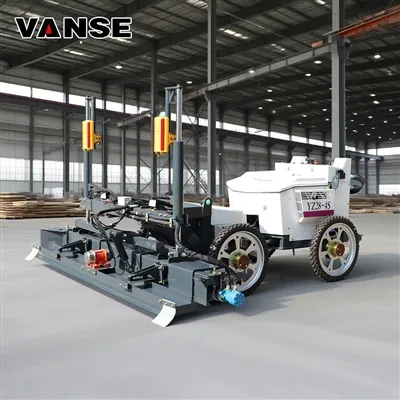
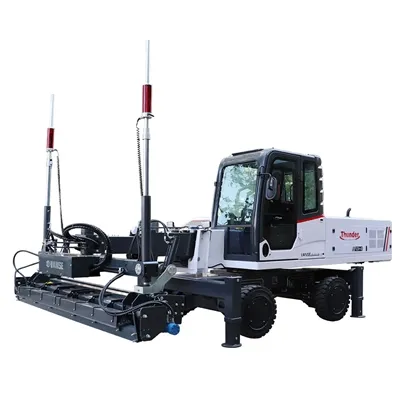
As an advanced construction equipment, laser leveling machine is widely used in concrete floor leveling operations. It utilizes laser technology for precise control, enabling efficient and precise leveling operations. However, ensuring even distribution and flatness of concrete is a crucial challenge during the leveling process. This article will explore in detail how laser levelings ensure uniform distribution and flatness of concrete, and analyze the key factors that influence these two factors and the corresponding solutions.
••• ★ ••• The importance of uniform distribution of concrete and its influencing factors
1. Importance:
Uniform distribution of concrete is essential to ensure the quality and service life of the ground. If the concrete is unevenly distributed, it may cause cracks, settlement and other problems on the ground, seriously affecting the use effect and safety.
2. Influencing factors:
Factors affecting the uniform distribution of concrete mainly include the material properties of concrete, construction technology and the performance of the leveler. For example, the water-cement ratio and aggregate particle size of concrete will affect its fluidity and distribution effect; the rationality of the construction process, such as the execution of steps such as spreading and vibration, will also have a direct impact on the uniform distribution of concrete; In addition, performance parameters such as laser leveling accuracy, power and vibration frequency will also have an impact on the uniform distribution of concrete.
••• ★ ••• The importance of flatness control and its influencing factors
1. Importance:
Flatness is one of the important indicators to measure the quality of concrete floor. Good flatness can not only improve the aesthetics of the floor, but also ensure the functionality and safety of the floor. If the ground flatness is insufficient, it may lead to problems such as uneven
ground and water accumulation, which will affect the use effect.
2. Influencing factors:
Factors affecting flatness include the accuracy of the leveler, the skill level of the operator, the construction environment, etc. The accuracy of the leveler directly determines the smoothness of the ground, while the skill level of the operator affects the performance of the leveler. In addition, the construction environment such as temperature, humidity, etc. will also have an impact on flatness.
••• ★ ••• Laser leveling's specific measures to ensure uniform distribution and flatness of concrete
1. Equipment selection and calibration:
Select a laser leveler with stable performance and high precision, and perform regular equipment calibration and maintenance to ensure that the equipment is in optimal working condition.
2. Optimize the construction process:
Develop a reasonable construction process, including spreading, vibrating, leveling and other steps to ensure uniform distribution of concrete. At the same time, the construction process parameters, such as cloth speed, vibration frequency, etc., are adjusted according to the actual conditions on site to obtain the best leveling effect.
3. Improve the skill level of the selected characters:
Strengthen the training and education of the operating characters, improve their skill level and professional knowledge, and ensure that the selected characters can be practiced through regular skill assessment and practical work drills The operating skills of leather grip laser leveling machine ensure the uniform distribution and flatness of concrete.
4. Environmental monitoring and adjustment:
Pay close attention to changes in the construction environment during the construction process, such as temperature, humidity, etc. Timely adjust construction technology and equipment parameters according to environmental changes to ensure the stability and reliability of leveling operations.
••• ★ ••• Implement effectiveness evaluation and continuous improvement
After the above measures are implemented, the leveling effect needs to be regularly evaluated to understand the actual effect of the measures. Evaluation can be carried out by observing the appearance quality of the ground, measuring flatness indicators, collecting usage feedback, etc. Based on the evaluation results, measures are continuously optimized and improved to adapt to different engineering needs and construction environments.
••• ★ ••• Conclusion
During the leveling process, the laser leveling machine can effectively ensure the uniform distribution and flatness of concrete through reasonable equipment selection, calibration, optimization of construction technology, improvement of operator skills, and environmental monitoring and adjustment. The implementation of these measures requires comprehensive consideration of multiple factors, including equipment performance, construction technology, operator skill level, and construction environment. By continuously improving and optimizing these measures, the leveling effect of the laser leveling machine can be further improved, providing strong support for the healthy development of the construction industry.


Thanks to All the Friends Who Support and Trust Shandong Vanse Machinery Technology Co., Ltd.
If you want to know more about Shandong Vanse Machinery Technology Co., Ltd. or have any questions, please feel free to contact us:
Our Factory
Shandong Vanse Machinery Technology Co., Ltd.








Share this article

About the Author: Shandong Vanse Machinery Technology Co., Ltd.
Shandong Vanse Machinery Technology Co., Ltd. is a high-tech manufacturer specializing in concrete construction machinery, including laser screeds and related equipment. The company integrates R&D, production, and global sales, with products exported to over 60 countries and widely used in infrastructure projects worldwide.
Previous Post
Next Post
Related Articles
You Might Also Like
In the actual case analysis of the concrete laser leveling machine construction, how did the supplier deal with the acceptance problem?
In actual concrete laser leveling installation cases, suppliers typically take the following measures to address acceptance issues: Proactive Response and Communication: Upon receiving feedback from the acceptance party regarding issues with the concrete laser leveling, the supplier should respond immediately and conduct an internal investigation as soon as possible to understand the cause of the problem. At the same time, the supplier should maintain close communication with the acceptance party, remaining calm and objective, avoiding emotional outbursts, to ensure both parties can discuss the issue rationally, jointly analyze the cause, and negotiate a solution. Develop and Implement Corrective Action Plans: Based on the nature of the issue, the supplier should develop a detailed corrective action plan, including corrective measures, a timeline, and responsible individuals. The corrective action plan should be feasible and ensure completion within the specified timeframe. For example, if the laser leveling fails to meet flatness standards, the supplier may need to adjust the laser system parameters or calibrate the mechanical structure of the equipment. Upon completion, the supplier should promptly provide feedback to the acceptance party on the corrective actions and provide relevant documentation, such as test reports and commissioning records, for re-inspection. Provide Technical Support and Services: During the acceptance process, the supplier should arrange for professional technicians to be on-site to assist the acceptance party in testing and acceptance work. If the equipment requires performance testing, the supplier's technical staff should assist the acceptance party in developing a test plan and provide necessary technical guidance and support. During the installation and commissioning phases, the supplier's technical staff should also provide technical briefings to the construction personnel, explaining the equipment's operation and maintenance procedures to ensure proper operation. Strictly Control Product Quality: The supplier should strictly control quality during the equipment production process, sampling and testing raw materials and conducting quality inspections to ensure compliance with relevant standards and requirements. Furthermore, the supplier should conduct quality monitoring on the finished concrete laser levelings, including testing and evaluating various performance indicators such as flatness, slope control accuracy, and equipment stability, to ensure that product quality meets acceptance standards. Improve Contract Management and Risk Management: During the contract signing phase, the supplier should clarify with the acceptance party key details such as acceptance standards, acceptance methods, objection deadlines, and warranty period. Any issues discovered during the acceptance process should be handled in accordance with the contractual agreement, such as responsibility for rectification costs and compensation for losses. If the parties disagree on the nature of the issue or the solution, they may consider engaging a third-party for appraisal or evaluation, or seeking legal resolution. Click the below to jump immediately!!! Shandong Vanse Machinery Technology Co.,Ltd ARMOUR JOINT view more CONCRETE LASER LEVELING MACHINE view more POWER TROWEL view more SLIPFORM MACHINE view more STEEL FIBER view more TOPPING SPREADER view moreLaser leveling machine provides more accurate and efficient services for construction
Engineers provide door-to-door service to customers in time. The Large laser leveling machine is a high-precision, high-efficiency measuring instrument, which uses laser beam technology for measurement, and has the advantages of fast, accurate, and high degree of automation. It is mainly used for level control in civil engineering, which can measure the difference in ground height and provide an accurate level reference for building construction. Compared with the traditional level, t he Large las er leveling machine has greatly improved the measurement speed and accuracy. The Large laser leveling machine has a wide range of measurement and can be used to measure the level of various places such as roads, bridges, tunnels, airport runways, expressways, and large warehouses. It can quickly measure the difference in ground height, and automatically process the data, and finally output accurate horizontal data. In construction projects, Large laser leveling machines can improve construction speed and quality, reduce construction costs and waste of human resources, and can also improve project reliability and safety. The operation of the large laser leveling machine is very simple and only needs one person to complete it. It uses laser beam technology for measurement, real-time display of measurement results and automatic data processing. At the same time, it can also be set according to actual needs, including parameters such as measurement range and accuracy. During use, you only need to place the Large l aser leveler at the measurement position, turn on the switch, and adjust the appropriate height to start the measurement. The entire measurement process is very simple and does not require additional manpower and time costs. To sum up, the large laser leveling machine is a very practical measuring instrument with the advantages of high precision, high efficiency and high degree of automation. It can be widely used in level control in civil engineering, providing accurate level reference for building construction. In the future, with the continuous development of science and technology, Large laser leveling machines will be more intelligent and convenient, providing more accurate and efficient services for construction.How Does The Concrete Laser Leveling Machine Ensure The Flatness And Smoothness Of The Concrete During The Construction Process?
With the continuous advancement of modern construction technology, concrete laser levelings have become an efficient tool to ensure the flatness and smoothness of the ground. During the construction process, how to make full use of this technology to ensure the quality of concrete is the key that every construction worker needs to study and master in depth. This article will cover an overview of laser leveling machine technology, pre-construction preparation and material selection, laser leveling machine operation points, flatness control technical measures, smoothness improvement methods, construction quality inspection and evaluation, common problems and preventive measures, and construction safety and Environmental protection and other aspects, discuss how to ensure the flatness and smoothness of concrete during the construction process. ✔ Laser Leveling Machine Technology Overview The concrete laser leveling machine uses laser technology to perform precision leveling, which has the advantages of high efficiency, high precision and high stability. During the construction process, the laser leveling machine can adjust the height and position of the leveling tool in real time through the laser beam emitted by the laser transmitter to ensure that the flatness of the ground meets the design requirements. ✔ Pre-construction preparation and material selection Before construction, adequate preparations need to be made, including cleaning the construction site, ensuring the ground is solid and flat, and selecting appropriate concrete materials. The selection of concrete materials has a direct impact on flatness and smoothness. Concrete materials with stable quality and excellent performance should be selected, and the mix ratio of concrete should be adjusted according to the construction environment and requirements. ✔ Key points for laser leveling machine operation When operating the laser leveling machine, you need to pay attention to the following points: 1. Strictly follow the equipment instructions to ensure normal operation of the equipment. 2. Adjust the parameters of the laser leveler according to the construction requirements, such as leveling speed, leveling height, etc. 3. During the leveling process, keep driving at a constant speed and avoid sudden acceleration or braking. 4. Regularly check the wear of leveling tools and replace seriously worn tools in a timely manner. ✔ Technical measures for flatness control To ensure the flatness of concrete, the following technical measures can be taken: 1. Use a laser leveling machine for multiple levels to ensure that the flatness of the ground gradually improves. 2. During the leveling process, debris and accumulated water on the ground should be cleaned up in time to avoid affecting the leveling effect. 3. For areas with uneven ground, local leveling can be used. ✔ How to improve smoothness To improve the smoothness of concrete, you can do the following: 1. Before the initial setting of the concrete, use a professional trowel to perform troweling treatment to make the ground smoother. 2. During the troweling process, pay attention to controlling the speed and angle of the troweling machine to avoid excessive scratches. 3. For floors with special requirements, an appropriate amount of lubricant can be added to the concrete to improve the smoothness of the ground. ✔ Construction quality inspection and evaluation During the construction process, the construction quality should be regularly tested and evaluated. Specific contents include: 1. Use a spirit level, laser rangefinder and other equipment to check the flatness of the ground to ensure it meets the design requirements. 2. Observe the smoothness of the ground and check whether there are obvious scratches or pitting. 3. Record and analyze the test results, discover problems in a timely manner and take measures to improve them. ✔ Frequently asked questions and preventive measures During the construction process, some common problems may occur, such as sanding and cracking on the ground. To address these issues, the following preventive measures can be taken: 1. Control the concrete mix ratio and water-cement ratio to prevent the concrete from being too dry or too wet. 2. During the leveling process, avoid excessive vibration or impact on the ground to avoid cracking the ground. 3. For areas prone to sanding, you can increase the number of times of troweling or use professional sand control agents. ✔ Construction safety and environmental protection During the construction process, attention should be paid to construction safety and environmental protection. Specific measures include 1. Construction workers should wear safety protective equipment, such as hard hats, protective glasses, etc. 2. Obvious safety warning signs should be set up at the construction site to remind personnel to pay attention to safety. 3. To avoid noise, dust and other pollution during the construction process, noise reduction, dust reduction and other measures can be taken to reduce the impact on the surrounding environment. To sum up, ensuring the flatness and smoothness of concrete requires many aspects, including selecting appropriate materials, correct equipment, taking technical measures, conducting quality inspection and evaluation, and doing a good job in construction safety and environmental protection. Only by comprehensively considering and strictly implementing these measures can we ensure that the construction quality meets the expected requirements. At the same time, with the continuous advancement of technology and the accumulation of experience, we have reason to believe that concrete laser levelings will play a greater role in future construction. , providing a more reliable guarantee for improving the flatness and smoothness of the ground.