Technical Knowledge
How to ensure the smooth progress of the laser leveling machine leveling work
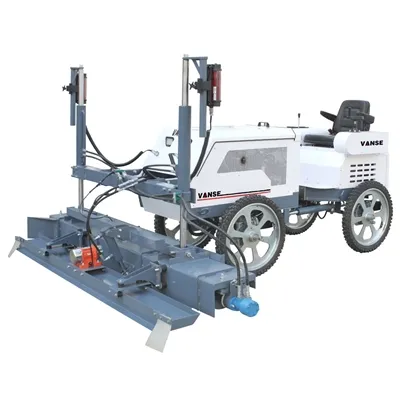
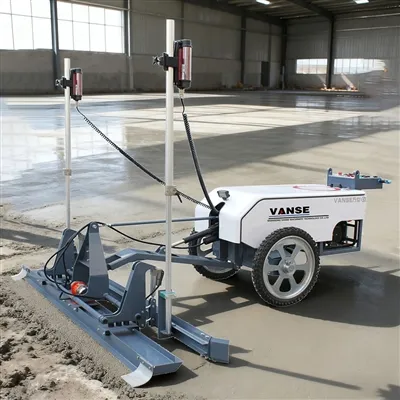
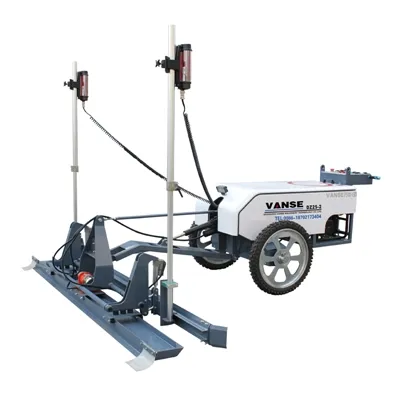
When you use a laser leveler for floor construction, you will definitely hope that the leveler can run smoothly, because only in this way can the completion of the floor construction be guaranteed, but it is easier said than done, and many people are controlling The laser leveling machine often fails to master the skills, which will lead to some errors in the construction of the floor and affect the construction effect. So how can we ensure the smooth operation of the laser leveling machine?

1. The laser leveling machine should stand flat
First observe the ground that needs to be leveled, visually measure the high point and location of the ground, then find a reference point at the high end of the ground, and level from the high place to the low place in turn. Excavate the soil higher than the reference point, and fill in the low-lying areas, which are roughly leveled by visual inspection. The first step in leveling is to level and stabilize the station. Before leveling, first level the position under the track. Let the laser leveling machine track stand on a flat and solid ground, so as to ensure that the driver will not make mistakes in visual inspection, and the leveling work is half successful.
2. Select the reference
Reference objects are commonly known as elevations. For novices who are not sure, you can increase the density of elevation points, such as one five meters, or even one three meters. For the situation that the original ground is generally higher than the actual elevation, the elevation should be increased uniformly, such as 30 cm or 50 cm. For experienced drivers, you can choose the ground that has been leveled or the ground with different colors as a reference. The choice of reference directly affects the overall flatness of the ground.
3. Don’t be greedy for too much and too fast
After determining the reference object, the rest is to dig slowly with the laser leveling machine. If you are not sure, don’t dig too much each time, rather dig several times instead of digging too much. For large area leveling, do not dig too wide each time, generally the width of two cars is almost the same, and the error will become larger when the width is widened.
4. Believe in the laser leveling machine, don't trust your eyes too much
If you stare at the ground for a long time, it is easy to deviate. Use a level as much as possible as a reference if possible. In addition, if the laser leveling machine is standing flat and the bucket is close to the ground, you can see the drop of the nearby highlands by turning 180 degrees. After the fine leveling is completed, leveling is completed for individual high or low points depending on the specific situation, and finally the entire site is leveled.
The little knowledge about the smooth operation of the laser leveling machine will be shared here first, and we will continue to update it for you in the future. We hope that the shared content can help you better solve the problem. If you still want to know more exciting information about levelings, please feel free to visit our official website for inquiries.
Thanks to All the Friends Who Support and Trust Shandong Vanse Machinery Technology Co., Ltd.
If you want to know more about Shandong Vanse Machinery Technology Co., Ltd. or have any questions, please feel free to contact us:
Our Factory
Shandong Vanse Machinery Technology Co., Ltd.








Share this article

About the Author: Shandong Vanse Machinery Technology Co., Ltd.
Shandong Vanse Machinery Technology Co., Ltd. is a high-tech manufacturer specializing in concrete construction machinery, including laser screeds and related equipment. The company integrates R&D, production, and global sales, with products exported to over 60 countries and widely used in infrastructure projects worldwide.
Previous Post
Next Post
Related Articles
You Might Also Like
The Laser leveling machine manufacturers: Quality and quantity are guaranteed because the equipment has these advantages
As the requirements for modern industrial floors gradually increase, more and more floor construction equipment has begun to show its power. Since its launch, laser leveling machines have been loved by the majority of users, so they can occupy a place in the leveling machine market. Laser leveling machine manufacturers have always insisted on providing users with standardized equipment and are committed to bringing more efficient construction to road construction. Laser leveling machine manufacturers will introduce some performance advantages of leveling machines to you below, I hope you can understand. The laser leveling machine laser measurement and control system produced by laser leveling machine manufacturers automatically controls the elevation. The design elevation of the top surface of the laser system floor imported from the United States is automatically controlled by the laser machine computer, which can ensure a very high ground flatness and can be directly leveled on the concrete layer. The ground flatness is not affected by the vibration of the construction template, and no formwork is needed in the middle, which reduces the input of labor and materials, reduces the construction procedures, and speeds up the construction progress. The laser leveling machine is super flat and super economical. Since the 1990s, the practice of "clear water concrete" (floor) floor and colored wear-resistant (floor) floor has been continuously promoted. After more than ten years of exploration and continuous improvement, through the upgrade of laser leveling machine equipment and the integration and improvement of process flow, the "three super" floor in the current "leveling" product series has reached the domestic level. The laser leveling machine produced by the laser leveling machine manufacturer replaces the traditional manual leveling concrete. The ground elevation can reach laser-level accuracy. The laser is used to control the horizontality and flatness of the ground, so as to achieve a super-flat floor in the sense. So how much does a laser leveling machine cost? You should first understand the performance and then look at the price. The integral floor abandons the traditional practice of separate construction of the concrete base and surface layer, thereby eliminating the quality problems of cracks and hollows caused by poor bonding between the base and surface layers, and is increasingly widely used in factories, warehouses, runways, docks and other projects. Special leveling and polishing technology is used to process concrete into a high-density and high-gloss floor, and a 3~5mm thick wear-resistant layer is naturally formed on the surface. No other chemical surface materials are required to meet environmental protection requirements. Laser leveling machines are developed based on the increasing demand for floor quality such as strength, density, flatness, and levelness in modern industrial plants, large shopping malls, warehouses, and other large-area cement concrete floors. Laser leveling machine manufacturers specialize in the production of various types of leveling machines. The equipment they produce has exquisite craftsmanship, mature technology, and stable performance. We will provide customers with good after-sales service, allowing you to enjoy a relaxed and pleasant purchase process. Customers can solve problems encountered in the later use in a timely manner to ensure the normal operation of the production lineWhat are the construction options for a concrete laser leveling machine?
The construction plan for a concrete laser leveling machine must be tailored to the project type (e.g., industrial plant, underground garage, large plaza, etc.), concrete grade, and site conditions. The core design principle is "standardized processes and controllable precision." The following is a general plan framework and examples of typical scenarios: Floor Flatness Error: ≤3mm/2m (core indicator for laser leveling); Concrete Density: ≥98% (avoiding sanding and hollowing); Construction Schedule: Planned based on a "500-800㎡/shift" (per machine). Stages Key Work Areas Core Requirements 1. Construction Preparation ① Base Preparation: Compaction (compaction degree ≥ 95%), debris removal, and watering (no water accumulation); Base leveling error ≤ 5mm/2m; Laser signal unobstructed (avoid metal and strong light). ② Laser System Commissioning: Transmitter calibration (horizontal error ≤ 0.1mm/m), receiver sensitivity test; ③ Material Preparation: Concrete (slump 120-160mm, initial setting ≥ 4h), geotextile/plastic film curing 2. Concrete Pouring ① Spreading: Use a tanker or concrete spreader to spread the material evenly, 30-50mm above the design elevation (allowing for leveling margin); Material spreading speed matches leveling speed (no accumulation or material shortages); Bin seams align with subsequent expansion joints. ② Combination Casting: For large areas, divide the concrete into 6-8m wide compartments (with temporary dividers) to prevent cracking after initial setting. 3. Laser Leveling ① Equipment Movement: Drive at a constant speed (0.8-1.2m/min), following a "horizontal back-and-forth" pattern with staggered overlaps; Real-time monitoring of the laser receiver (steady green indicates normal operation); immediate shutdown and calibration if deviation exceeds 2mm. ② Vibration Control: Insert the vibrator ≥ 50mm (penetrating the current paving layer) to ensure the connection between the upper and lower layers. 4. Finishing ① Rough Finishing: After the leveling passes, manually use a scraper to assist with leveling (to address any minor vibration leaks or unevenness). Timing of fine cutting is critical: premature cutting can lead to sanding, while delayed cutting may prevent surface air bubbles. ② Fine Finishing: After the concrete surface has cleared of water seepage (no noticeable indentations when pressed with a finger), use a trowel (with a disc) to smooth the surface 2-3 times. 5. Curing ① Covering: Cover with geotextile/plastic film within 1-2 hours of completion (before initial setting). No personnel or material stacking is permitted during the curing period; avoid freeze-thaw cycles in winter. ② Moisturizing: Water the surface every 2 hours in summer (to keep the film moist), and cover with a thermal blanket in winter (curing temperature ≥ 5°C). ③ Curing Time: ≥ 7 days (≥ 14 days for C30 and above concrete). 6. Expansion Joint Cutting ① Timing: 24-48 hours after pouring (surface hardness reaches 1.2 MPa, and no visible marks are visible when scratched with a fingernail). Clean the seams after cutting and apply sealant later to prevent water seepage. ② Specifications: Joint depth = 1/3-1/4 of the floor thickness, spacing ≤ 6 meters (required for areas over 36 square meters), joint width 5-8 mm. Key Differentiations: Concrete Grade: C35/C40 (one grade higher than standard flooring) is used, with polypropylene anti-cracking fiber (0.9 kg/m³) added to reduce thermal cracking. Laser System: Due to obstruction by pillars in the garage, a "multi-transmitter zoned coverage" system (one transmitter every 15-20 meters) is used to avoid signal blind spots. Surface Optimization: After finishing, diamond wear-resistant aggregate (5-6 kg/m²) is applied, followed by finishing with a high-speed trowel to improve surface hardness (Mohs hardness ≥ 6). Key Differentiators: Base Reinforcement: 300mm thick graded sand and gravel with a 150mm thick C25 cushion layer (50% thicker than standard flooring) ensures a load capacity of ≥5t/m2; Leveling Parameters: Vibration frequency is adjusted to 60-70Hz (compared to 50Hz for standard flooring) and travel speed is reduced to 0.6-0.8m/min to enhance concrete density; Post-treatment: After curing, a sealant and curing agent treatment (penetration depth ≥5mm) is applied to improve the floor's compressive strength (≥80MPa) and impermeability. Key Differentiations: Optimized Compartmentalization: Compartments are divided into 10m x 10m squares (common flooring requires 6-8m). Expansion joints (filled with foam board) are provided to relieve thermal stress. Concrete Control: Low-heat cement (heat of hydration ≤ 270kJ/kg) is used, and a retarder is added in summer (extending the initial setting time to 6-8 hours) to prevent cracking due to temperature differences. Laser Calibration: Transmitter levelness is rechecked every 2 hours (common flooring requires 4 hours). Because the plaza is unobstructed, a wind shield is required to prevent strong winds from interfering with the signal. Staffing: Each machine is equipped with one operator (certified) + two fabricators + two finishers + one laser monitor. Equipment Inspection Checklist: Before starting the machine, check the laser transmitter battery, vibrator wear, and tire pressure (tolerance ≤ 0.1 MPa). Emergency Plan: If the initial setting of the concrete is too rapid, immediately activate the backup leveling. If the laser signal is lost, switch to manual mode (using the adjacent leveled surface as a reference). Note: The parameters provided in this document are for reference only and are not mandatory. Due to differences in technical characteristics between different brands and models of laser levelers, please consult the manufacturer for a suitable solution before actual operation. This reference document assumes no responsibility for any issues arising from failure to follow the manufacturer's instructions.What are the specific application cases of laser leveling machines in municipal engineering?
There are many specific application cases of laser leveling machines in municipal engineering. Here are some examples: 1. Highway construction: Laser leveling machines are widely used in highway construction, especially in the construction of highways and urban roads. They can help lay the road surface quickly and accurately, ensuring the flatness and stability of the road surface. 2. Municipal facility construction: Laser leveling machines can also be used in municipal facility construction, such as parking lots, squares, parks, etc. These places require large areas of concrete floors, and laser leveling machines can complete this work quickly and efficiently. 3. Subway construction: Subway construction also requires a large amount of concrete floors, so laser leveling machines are also widely used in this field. They can help lay subway platforms, tunnels and other infrastructure quickly and accurately. 4. Pipeline laying: Laser leveling machines can also be used for pipeline laying, especially the laying of large pipelines. They can help ensure the flatness and stability of pipelines and reduce the cost of subsequent maintenance. 5. Bridge construction: Bridge construction also requires a large amount of concrete floors, so laser leveling machines are also widely used in this field. They can help lay bridge panels and other infrastructure quickly and accurately. In short, laser leveling machines are widely used in municipal engineering, which can help improve work efficiency and quality, reduce construction costs, and at the same time ensure the safety and stability of project quality.