Technical Knowledge
Frequent mistakes in the maintenance of concrete laser leveling machines. Is the wrong method used?

When the concrete laser leveling machine fails, it needs to be repaired. Generally speaking, maintenance is a good way to help the leveling machine to restore health, but some leveling machines still have a lot of small problems after maintenance. What is this ? In fact, because some maintenance personnel in the maintenance of concrete laser leveling machine, the error caused by the error, the following error in the maintenance of concrete laser leveling machine when do not make it again.
1.Do not pay attention to the selection of bolts, the use of bolts confusion phenomenon is more prominent
In the maintenance of concrete laser leveling machine, the phenomenon of using bolts indiscriminately is still more prominent. Because the performance and quality of bolts do not meet the technical requirements, mechanical failures occur frequently after maintenance. However, in actual maintenance, most of the ordinary nuts are used, and it is very difficult to disassemble for a long time. Some technical requirements stipulate that new bolts must be replaced after several times of disassembly and assembly. Because the maintenance personnel do not understand these conditions, repeated use of unqualified bolts can also easily lead to failure or accident of concrete laser leveling machine. Therefore, in the maintenance of concrete laser leveling machine, when the bolts are damaged or lost, the bolts that meet the requirements should be replaced in time, and the bolts should not be used indiscriminately.
2.Inappropriate bolt tightening method is more serious.
Most of the fixing or connecting bolts of concrete laser leveling machine have tightening torque requirements, such as injector fixing bolts, cylinder head bolts, connecting rod bolts, flywheel bolts, etc. Some of them stipulate tightening torque, some stipulate tightening angle, and also stipulate tightening sequence. Some maintenance personnel use the lever at will, tightening by feeling, resulting in a large difference in tightening torque. Therefore, in the maintenance of concrete laser leveling machine, it is necessary to tighten the bolts according to the prescribed torque and order to prevent mechanical failure due to excessive tightening torque, too small or improper order.
3.There are many phenomena that do not pay attention to the detection of parts fit clearance.
The gap between the piston and the cylinder liner of the diesel engine of the concrete laser leveling machine, the ' three gaps ' of the piston ring, the gap between the valve rod and the valve guide, etc., all types of models have strict requirements, and must be measured during maintenance. The parts that do not meet the gap requirements need to be adjusted or replaced.
Thanks to All the Friends Who Support and Trust Shandong Vanse Machinery Technology Co., Ltd.
If you want to know more about Shandong Vanse Machinery Technology Co., Ltd. or have any questions, please feel free to contact us:
Our Factory
Shandong Vanse Machinery Technology Co., Ltd.








Share this article

About the Author: Shandong Vanse Machinery Technology Co., Ltd.
Shandong Vanse Machinery Technology Co., Ltd. is a high-tech manufacturer specializing in concrete construction machinery, including laser screeds and related equipment. The company integrates R&D, production, and global sales, with products exported to over 60 countries and widely used in infrastructure projects worldwide.
Previous Post
Next Post
Related Articles
You Might Also Like
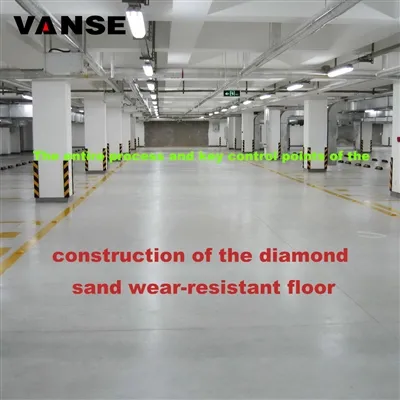
The entire process and key control points of the construction of the diamond sand wear-resistant floor
There are various methods for basement floor construction. Among them, the construction of diamond sand floor and diamond sand floor with curing agent is favored by many real estate projects due to its economic, wear-resistant, pressure-resistant, anti-pollution and easy-to-clean features. However, improper manufacturing processes can also lead to quality issues and potential risks. This article will respectively introduce the diamond sand wear-resistant floor from the perspective of technology and the prevention and control of common problems. 1. Diamond sand floor Compared with ordinary concrete floors, diamond sand floors have better wear resistance, compressive strength and impact resistance, and have a longer service life. However, from the perspective of microstructure, the surface of the diamond sand floor is relatively rough, and the capillary structure of concrete has a low resistance to the penetration, pollution and corrosion of substances such as acids, alkalis and oils. 2. Corundum + cured floor The construction of adding curing agent to the diamond sand floor. When the diamond sand floor is applied with a curing agent, it better makes up for the above deficiencies. Moreover, as the curing agent penetrates and forms a film, it enhances the integrity of the original surface, significantly improving its surface strength and wear resistance. After long-term use, it is obviously superior to the ordinary diamond sand floor in terms of cracking, powdering, and dusting, and is also easier to clean. It has extremely strong wear resistance, pressure resistance and impact resistance The diamond sand floor itself has excellent wear resistance. After adding a curing agent, the strength and hardness of the floor are further enhanced, and its wear resistance, pressure resistance and impact resistance are also significantly improved, and the durability of the floor is greatly enhanced. 2) Prevent sanding and dusting The main advantage of the diamond sand reinforced floor is its ability to prevent sanding and dusting. After the application of the curing agent, the surface hardness (indicated by the diameter of the indentation) and wear resistance (indicated by the length of the grinding pit) can be effectively enhanced. The surface becomes denser and has better integrity, which can effectively prevent sanding and dusting. 3) Waterproof, oil-proof and anti-corrosion The surface of a common diamond sand floor has pores that are hard to see with the naked eye. Water, oil and other corrosive liquids can seep into the interior of the floor through these holes and gaps. The most notable feature of the curing agent is its excellent sealing property, just like coating the floor with a film to prevent erosion. 1. The surface of the floor is firmly combined with the base layer, without any hollowing or sanding phenomena. 2. Surface layer quality: Uniform color, no obvious color difference, no scratches, no slag inclusions. The surface must not have cracks and hollowing is not allowed. 3. Gloss requirements: Achieve medium to high brightness, and the lamp should have a reflective effect when illuminated. 4. Joint: Uniform width, and the inside of the joint should be thoroughly cleaned. 5. The hardness of the floor should reach above 6.5 on the Mohs scale (tested by a hardness tester). 6. The trachoma rate shall not exceed 3 per square meter. 1. The strength of the concrete shall not be lower than C25. 2. The smallest possible water-cement ratio. A water-cement ratio that is too high can cause bleeding on the concrete surface and reduce the compressive strength of the concrete surface. Therefore, the water-cement ratio should be as small as possible, generally controlled below 0.5. 3. Commercial concrete should be used as much as possible. If on-site mixed concrete is used, its slump should be controlled at 1 to 3cm. The slump of commercial concrete is between 12 and 14cm. The diameter of the larger crushed stones shall not exceed 30mm. 4. When the concrete thickness is greater than 8cm, ordinary concrete should be used for pouring; when the concrete thickness is less than 8cm, fine aggregate concrete should be used for pouring. 5. Concrete should be leveled immediately after pouring, with a flatness of no more than 2mm within a 2-meter range. 6. Before the surface layer construction, the base concrete and vibration slurry should be sufficient (not less than 5mm). 7. The mud content of sand and gravel in concrete shall not exceed 2%. 8. After vibration grouting, the bleeding of the concrete should be uniform. If there are water pits, they must be removed and the surface leveled again; otherwise, the flatness of the diamond sand floor construction cannot be guaranteed. 1. Construction of diamond sand floor 1) The ground concrete is poured in sections and leveled immediately after pouring. When multiple locations are being poured simultaneously, pay attention to the construction sequence being carried out in one direction and consider the consistency of the mating surfaces. ② Concrete should be leveled with a long roller or a long straightedge after being pushed flat. Three to five hours after the concrete is poured, it should be observed that there is no bleeding on the surface and it has reached the initial setting state. 2) Use a mechanical trowel to tap the slurry in a round motion. For fine areas, use a wooden trowel to trim the edges. The main purpose is to smooth the concrete surface and reduce the floating slurry. Pay attention to troweling in the same direction as pouring. 3) Sprinkle the wear-resistant aggregate in two batches. In the first batch, evenly spread two-thirds of the wear-resistant material on the already troweled cement floor. 4) For the second time, evenly spread the remaining 1/3 of the wear-resistant material on the surface of the concrete, and use a mechanical trowel with a disc installed to work crisscross and cross at least twice. 5) Use a mechanical trowel (metal disc) to smooth it out multiple times back and forth. For the fine corners and edges, use a manual trowel in coordination with the construction. The time for the next process should be determined based on the temperature and humidity. 6) When the surface of the floor begins to harden, use a mechanical trowel with a metal blade to grind and smooth it, and repeat this operation 3 to 4 times. (Construction workers must wear soft flat shoes to avoid damaging the surface. The fine corners and edges should be polished by hand.) 7) Water curing should be carried out on the polished wear-resistant floor (mainly to prevent the evaporation of surface moisture and ensure the stable growth of the wear-resistant material's strength). The curing period is 7 days. 8) After the surface has cured for a certain period of time (5 to 6 hours after the completion of the wear-resistant material floor), use a mechanical trowel equipped with a metal blade for the final polishing and leveling. 9) Mold and compartment cutting (this can be done according to the actual situation on site and the owner's needs). Mold removal can be carried out the day after the completion of the diamond sand floor. During the operation, be careful not to damage the edge of the floor. The size of the compartments shall be determined by Party A on the third day after the completion of the diamond sand floor. 2. Application of penetrating liquid hardener (commonly known as curing agent) The original color of the diamond sand floor should be cured for more than 14 days, while the colored diamond sand floor usually needs to be cured for 28 days. Only after the color has matured can the penetrating liquid hardener be applied. The specific measures are as follows: Before construction, clean and remove debris, oil stains, paints, curing agents, etc. from the ground. If there are any pits or cracks, they should be repaired in advance with cement-based jointing mortar and maintained for 3 days. If no repair is needed, proceed with the construction directly. 2) Sprinkle water on the base layer until it is fully moistened. Do not sprinkle too much. 3) Use a 50-mesh resin grinding disc to grind the base layer, removing the floating slurry and stains on the base layer to make it free of roughness and gradually smooth. 4) After the 50-mesh grinding is completed, use a 150-mesh resin grinding disc for grinding. After grinding, use a high-power vacuum cleaner to suck up the mud and sewage on the surface of the base layer. 5) Sprinkle water on the surface of the base layer and grind it with a 300-mesh resin grinding disc (the ground should be ground evenly in a grid pattern, and the machine's pushing speed should be one step per second to grind off the remaining materials and fine scratches on the ground). After grinding, grind it with a 500-mesh grinding disc. Then, use a vacuum cleaner to suck up the wastewater and ventilate to dry the base layer. 6) After the base layer is dry, if the surface turns slightly white, apply the concrete sealant and hardener. Sprinkle the material evenly and spread it evenly with a mop. Keep the base layer surface moist for 30 minutes. If there is rapid penetration in some areas and it has dried, sprinkle the material again and use a mop to evenly moisten the base layer. 7) After 30 minutes, the surface of the concrete sealant and hardener begins to thicken. Water should be sprinkled on its surface and pushed back and forth with a long-bristled brush or floor scrubber to dilute the excess hardener and better penetrate into the base layer. After one hour, the excess material and water should be sucked dry with a vacuum cleaner to ensure that the base layer is dry for more than 12 hours. 8) After 12 hours, sprinkle water on the base surface of the completed construction material, and grind it with a 500-mesh resin grinding disc to remove the excess material. Then, grind it with a 1000-mesh grinding process. After grinding, use a vacuum cleaner to suck up the wastewater. 9) After 12 hours, the base layer has basically dried. Then, it is ground and polished with a 2000-mesh resin grinding disc to gradually give its surface a lustrous appearance. 10) For each mesh size, the grinding discs should be cross-ground 3 to 5 times in both the longitudinal and transverse directions. 11) Special treatment ① Corner and edge treatment: Large machinery can only be used for large-scale grinding. For corner and edge positions, a portable Angle grinder should be used for grinding and polishing, following the same method as for large-scale construction. When the base layer has poor strength and severe sanding, it is necessary to reinforce the base layer first, and then proceed with the normal construction process. First, use a 300-mesh resin grinding disc to remove the floating slurry on the surface of the base layer. Then, evenly sprinkle the concrete sealant and hardener to ensure it fully wets and penetrates into the base layer. After 12 hours, when the concrete sealant and hardener has cured and the strength of the base layer has improved, follow the normal process: 50-mesh grinding (water grinding) → 150-mesh grinding (water grinding) → 300-mesh grinding (water grinding) → construction materials → 12-hour drying and curing → 500-mesh grinding (water grinding) → 1000-mesh grinding (water grinding) → 2000-mesh grinding (dry grinding). The aesthetic effect of the floor cannot be achieved without meticulous control during the construction process. Besides strictly adhering to the corresponding techniques and methods, the prevention of common quality problems also requires attention. If the construction is not done properly, many problems will occur during later use. Now let's talk about the common quality problems of the diamond sand wear-resistant floor and how to prevent them. There are mainly three reasons for the color difference of corundum: 1) Material selection issues; 2) The materials were not spread in several portions, the amount of materials used was insufficient, and the thickness was uneven. 3) Maintenance issues: The use of covering with plastic film for maintenance led to uneven evaporation of ground moisture. The area where the film comes into contact with the floor is whitish, while the area where it does not touch the floor is normal in color. Preventive measures Choose a manufacturer with stable and reliable product quality and a good reputation. 2) The spreading of materials should be carried out strictly in accordance with the requirements of the briefing in several portions, with a usage of no less than 5kg/m². 3) Plastic film curing is strictly prohibited. During summer construction, water spraying curing can be adopted in several batches (with an interval of 2 to 3 hours). The allowable deviation of ground flatness is ≤2.5mm/2m in both longitudinal and transverse directions. The reasons for the deviation during construction are: 1) The template setup is out of tolerance; 2) The concrete part was not leveled in accordance with the standard. 3) The wear-resistant material is not evenly spread. Preventive measures 1) Strictly calibrate the elevation lines. Set up steel rods every 2 meters or so. The elevation of the steel rods should be the same as that on the longitudinal seam formwork. Check with a level. 2) The joints should be roughened and leveled in advance. When pouring new concrete, the levelness should be consistent with that of the already poured ground. Any low-lying areas should be replenished and filled in a timely manner. 3) Wear-resistant aggregates should be spread in two portions. The first dosage should be two-thirds of the total dosage. Ensure that the mixture falls evenly. Do not throw it forcefully to avoid the separation of aggregates and cement. After the wear-resistant material has absorbed a certain amount of moisture, it is ground and dispersed with a grinding machine and then combined with the base concrete slurry. For the second spreading, apply the remaining one-third in a direction perpendicular to that of the first spreading. When spreading, first use a straightedge or a straight scraper to measure the levelness, and adjust the uneven areas of the first spreading. After spreading, immediately smooth and polish it, and repeat the grinding machine operation at least twice. When the grinding machine is in operation, it should be carried out alternately in the longitudinal and transverse directions, evenly and orderly, to prevent material accumulation. The third time mainly involves repair treatment. For low-lying areas, materials are replenished and leveled. For corners and edges that cannot be covered by the grinding machine, manual flattening and smoothing are adopted. There are the following situations regarding ground cracks: If the initial setting time of concrete is not well controlled and the diamond sand wear-resistant aggregate is scattered when the moisture content of the concrete is relatively low, it is easy to cause cracks after the construction is completed. 2) Improper construction methods, insufficient thickness of the wear-resistant layer (corundum layer), rapid water loss (such as excessive construction environment atmosphere, etc.), resulting in volume shrinkage and linear shrinkage, causing cracks or hollowing. 3) Improper maintenance: After the completion of construction, the ground was not maintained within the prescribed time or was not adequately watered for maintenance. When the concrete temperature is relatively high, pouring cold water for curing can also cause cracks. Note: When using only the diamond sand floor, it is recommended to use a maintenance agent (oily and film-forming effect) to maintain the floor. If the corundum is reinforced (or epoxy), water curing can be directly adopted. 4) The contraction joint was cut late, and cracks appeared due to thermal expansion and contraction. Under normal circumstances, it is advisable to cut the expansion joints 24 to 48 hours after the completion of the construction of the corundum floor. If it is too late, as the hardness of the floor gradually increases, the floor is prone to "cracking" and developing cracks during the cutting process. 5) If the spacing of the division joints is too large, cracks may also occur. Preventive measures 1) Strictly control the time of the first sprinkling of materials; 2) The concrete layer and the wear-resistant layer (corundum) are constructed simultaneously. 3) The curing time shall be no less than 14 days; 4) Reasonably control the cutting time; The spacing of the division joints should generally not exceed 6m*6m. Cause of formation 1) The roughening and polishing processes are rough. 2) Inadequate maintenance and insufficient maintenance time; 3) The spreading time of wear-resistant aggregates is not well controlled. Preventive measures 1) Use a grinding machine to thoroughly smooth, compact and roughen the ground for no less than three times, and use a floor trowel to thoroughly smooth and level the ground for no less than three times. 2) The curing time shall be no less than 14 days; 3) Strictly control the spreading time of wear-resistant materials. The timing of spreading wear-resistant materials varies as needed, depending on factors such as climate, temperature, and concrete mix ratio. Spreading too early will cause the wear-resistant material to sink into the concrete and lose its effect. If it is spread too late, the concrete will gradually lose its adhesive force due to solidification, preventing the wear-resistant material from fully bonding with it. The most convenient way to determine the time for spreading wear-resistant materials is to let your feet sink about 5mm when stepping on the ground, and then you can start the first spreading work. The moisture at the edges of walls, columns, doors and formwork disappears more quickly. It is advisable to prioritize the application of water to prevent the effect from being reduced due to water loss. 1. Local damage: Clean the damaged area thoroughly, soak it in water to moisten it, then repair it with a putty made of styrene-butadiene latex mixed with water and a hardener material that has screened out the aggregates. Finally, apply the styrene-butadiene latex mixed with water emulsion. 2. Large-scale damage: According to actual needs, lines can be drawn and sawn on the damaged area, the surface layer and part of the base layer can be chiseled off, then the area can be cleaned and moistened, the plain cement slurry can be swept, concrete can be poured, and finally the surface layer of the diamond sand hardener can be applied. 3. Floor peeling: The surface of the wear-resistant diamond sand floor curls and peels. Remedial measures: Cut and chisel off the peeling area (chiseling it into a pitted surface), spray water on the pitted area to moisten it, then apply repair mortar of the same grade as the concrete and press it down to level the ground. Finally, apply a curing agent. 4. Remedial measures for cracks in diamond sand floor: 1) Cracks in areas with requirements for anti-seepage, impact resistance and wear resistance on the surface should undergo surface treatment. 2) For cracks that can affect the integrity, strength, impermeability and steel bar corrosion of the structure, grouting treatment should be carried out. 3) For cracks that endanger the safe operation of buildings, in addition to grouting treatment, other reinforcement measures should also be taken when necessary. 4) Cracks that are sensitive to temperature should be treated when the crack opening is relatively large in the later stage of the low-temperature season. 5) Flexible materials must be used to treat active cracks. Note: The parameters provided in this document are for reference only and are not mandatory. Due to differences in technical characteristics between different brands and models of laser levelers, please consult the manufacturer for a suitable solution before actual operation. This reference document assumes no responsibility for any issues arising from failure to follow the manufacturer's instructions.Laser leveling machine components
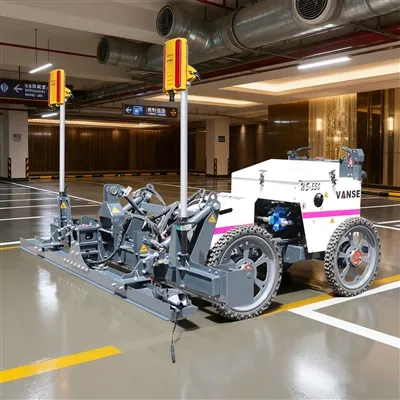
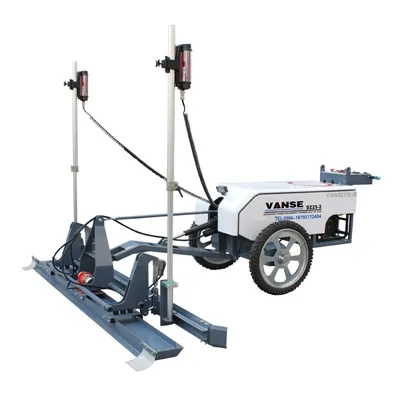
This is the core component of the laser leveling machine, responsible for generating high-quality laser beams. Its quality directly affects the working effect and stability of the leveling machine.Leak inspection: Carefully inspect the entire hydraulic system, including: This system is responsible for positioning the laser beam to the surface of the object to be measured for scanning and reflection. It is generally composed of rotating mirrors, oscillators, optical devices, etc. Its accuracy and speed have a direct impact on the leveling accuracy of the leveling machine. This is the part that performs leveling actions. It is usually made of wear-resistant materials and can complete paving, scraping, tamping and other actions. Its one-time forming width can reach 2.5 meters (depending on the machine itself, 2.5m, 3m, 4m, etc.). In addition, the rotating auger can discharge materials in forward and reverse directions, and it discharges materials in the forward direction during normal operation. It is mainly used for lifting and angle adjustment of the leveling mechanism. There are two self-aligning spherical bearings at the hinge of the lifting frame. The nut at the adjusting screw rod can adjust the angle of the leveling mechanism to adapt to different concrete. 2 high-pressure double-rod lifting cylinders are used to fix the leveling head and level it up and down. A front guard is installed in front to secure and protect electrical components such as lamps and aviation plugs. Used to fix the laser receiver. During the construction process, the bracket and the receiver cannot be moved at will, otherwise it will affect the leveling accuracy. This stand can be turned upside down during transportation to reduce the overall height. Including high-strength frame, power part, hydraulic system, electrical system, cleaning system, etc. The high-strength overall frame is the main frame of the laser leveling machine and fixes all components. During transportation, the safety lifting lugs on the frame can be used for lifting. The overall frame makes the machine safer and more reliable. In addition, there are also components such as a leveling feedback system. For more information about laser leveling machines, please speak to our sales manager. Note: The parameters provided in this document are for reference only and are not mandatory. Due to differences in technical characteristics between different brands and models of laser levelers, please consult the manufacturer for a suitable solution before actual operation. This reference document assumes no responsibility for any issues arising from failure to follow the manufacturer's instructions.How to deal with the existing cracks in the diamond wear-resistant floor?
How to deal with existing cracks in diamond wear-resistant flooring Diamond wear-resistant flooring has been widely used in industrial plants, warehouses, parking lots and other places due to its high wear resistance, high strength and beautiful appearance. However, during use, cracks may appear in the floor due to the influence of various factors such as materials, construction, and environment. Cracks not only affect the aesthetics of the floor, but also the durability and performance of the floor. Therefore, for cracks in diamond wear-resistant flooring that have already appeared, appropriate treatment methods must be adopted. This article will combine actual cases to explore how to deal with cracks in diamond wear-resistant flooring that have already appeared. 1. Crack type and cause analysis Before dealing with cracks in diamond wear-resistant flooring, it is necessary to first analyze the types and causes of cracks. Crack types mainly include transverse cracks, longitudinal cracks, mesh cracks and irregular cracks. The causes of these cracks are varied, and may involve various factors such as material quality, construction technology, temperature changes, humidity changes, foundation settlement, etc. Therefore, different treatment methods are needed for cracks of different types and causes. 2. Preparation before crack treatment Before treating the cracks in the diamond wear-resistant floor, a series of preparations need to be carried out. First, the cracks need to be inspected and recorded in detail, including the length, width, depth and distribution of the cracks. Secondly, it is necessary to clean up the debris and oil in the cracks to ensure that the surface of the cracks is clean and dry. Finally, according to the type and cause of the cracks, a suitable treatment plan is formulated. 3. Crack treatment method ☑ Filling method For cracks with smaller width and shallower depth, the filling method can be used for treatment. First, select the filling material suitable for the floor material, such as elastic caulking agent, polyurethane sealant, etc. Then, apply the filling material evenly on the crack surface to ensure that the filling material fully fills the crack. Finally, use a sharp plate to level the excess filling material so that it is flush with the floor surface. The filling method is simple to operate and low in cost, and is suitable for treating minor cracks. ☑ Expansion method For cracks with larger width and deeper depth, the filling method may not be effective. At this time, the expansion method can be used for treatment. First, use a cutting machine or a drilling machine to widen and deepen the profile joint so that the profile joint forms a V-shaped groove. Then, fill the special floor repair material into the V-shaped groove to ensure that the repair material fully fills the entire crack. Finally, use a scraper to scrape off the excess repair material and maintain it until the repair material is completely solidified. The crack expansion method can effectively improve the quality of crack repair, but the operation is relatively complicated and the cost is high. ☑ Pressure grouting method For cracks with larger width and deeper depth, the crack position is more special, and it is difficult to expand the crack, the pressure grouting method can be used. First, set a grouting hole at one end of the crack and an exhaust hole at the other end. Then, use a grouting machine to inject special grouting materials (such as epoxy resin, polyurethane, etc.) into the crack through the grouting hole. During the grouting process, the grouting pressure and grouting speed are controlled to make the grouting material fully fill the crack. Finally, after the grouting material is solidified, the crack surface is polished and processed. Pressure grouting can effectively improve the density and strength of crack repair, but the operation is difficult and requires professional equipment and personnel. 4. Maintenance and precautions after crack treatment ☑ Maintenance After the crack treatment is completed, the repaired part needs to be maintained. During the maintenance period, heavy objects should be avoided from rolling over and sharp objects should be avoided from scratching the repaired part to avoid affecting the repair effect. At the same time, the repaired part should be kept dry and clean to avoid water or other liquids from penetrating into the repaired part. The maintenance time is generally determined by the curing time of the repair material and environmental conditions. ☑ Precautions (1) When dealing with cracks, the appropriate treatment method should be selected according to the type and cause of the cracks. Avoid blind treatment or inappropriate treatment methods that may cause crack expansion or poor repair effect. (2) When selecting repair materials, ensure that the performance of the repair materials matches the original floor materials. Avoid using inferior or incompatible repair materials that may cause problems such as falling off and cracking at the repaired part. (3) When dealing with cracks, safety protection measures should be taken. Avoid dust and splashes generated during the treatment process that may cause harm to personnel and the environment. At the same time, relevant safety operating procedures must be followed to ensure the safety and stability of the construction process. 5. Case Analysis After a period of use, the diamond wear-resistant floor of a large industrial plant had multiple horizontal cracks and mesh cracks. After a detailed inspection and cause analysis of the cracks, it was found that the cracks were mainly caused by factors such as temperature changes, humidity changes and foundation settlement. In response to this situation, the expansion method was adopted for treatment. First, the cracks were widened and deepened to form a V-shaped groove. Then, a special floor repair material was used to fill the V-shaped groove to ensure that the repair material fully filled the entire crack. Finally, the repaired part was maintained and polished. After treatment, the cracks were effectively repaired, and the flatness and aesthetics of the floor were restored. 6. Summary and Outlook The treatment of diamond wear-resistant floor cracks is a complex and important task. By analyzing the types and causes of cracks and selecting appropriate treatment methods, the quality of crack repair and the performance of the floor can be effectively improved. At the same time, attention should be paid to safety protection and maintenance work during the crack treatment process to ensure the safety of the construction process and the durability of the repair effect. With the continuous advancement of science and technology and the emergence of new materials, the crack treatment technology of diamond wear-resistant floor will be more mature and perfect in the future. For example, advanced non-destructive testing technology can be used to accurately measure and locate cracks to improve the accuracy and efficiency of treatment: more excellent repair materials can be developed to improve the strength and durability of the repaired parts: more environmentally friendly and energy-saving crack treatment methods can be explored to reduce the impact on the environment during the treatment process. In addition, in addition to crack treatment, daily maintenance and care are also the key to keeping diamond wear-resistant floor in good condition. The floor should be cleaned and maintained regularly, and small cracks and damage should be discovered and treated in time to prevent them from expanding and deteriorating. At the same time, care should be taken to avoid collisions with heavy objects and scratches with sharp objects to avoid damage to the floor. In summary, the treatment of diamond wear-resistant floor cracks is a systematic project, which requires comprehensive consideration of the types, causes, treatment methods and daily maintenance of cracks. Only by scientific analysis, reasonable treatment and careful maintenance can the long-term use effect and aesthetics of diamond wear-resistant floor be ensured. In practical applications, we also need to constantly sum up experience and lessons, combine specific engineering practices, and explore crack treatment methods that are more suitable for different environments and needs. At the same time, strengthening the training and education of relevant personnel and improving their professional skills and operation level are also important measures to ensure the quality and effect of crack treatment. In the future, with the continuous advancement of science and technology and the continuous development of floor materials, we have reason to believe that the treatment of diamond wear-resistant floor cracks will become simpler, more efficient and more reliable. This will provide safer, more beautiful and more durable floor solutions for industrial plants, warehouses, parking lots and other places, and provide a more comfortable and convenient environment for people's production and life. In the process of crack treatment, in addition to the traditional methods such as the expansion method and pressure grouting method mentioned above, some new technical means can also be tried. For example, using drones or robots to automatically detect and identify cracks, accurately determine the location and size of cracks through image recognition technology, and improve processing efficiency and accuracy. In addition, it is possible to consider the use of new self-healing materials that can automatically fill and repair cracks when they occur, thereby extending the service life of the floor. At the same time, with the continuous improvement of environmental awareness, attention should also be paid to environmental protection and sustainable development in the process of crack treatment. Select repair materials with excellent environmental performance, reduce waste and pollutants generated during the treatment process, and ensure that the impact of the treatment process on the environment is minimized. In addition, energy-saving technologies should be actively promoted and applied to reduce energy consumption in the treatment process and improve resource utilization efficiency. In short, the treatment of cracks in diamond wear-resistant floor is a field that is constantly developing and improving. Through continuous exploration of new technical means, improving treatment efficiency and accuracy, and focusing on environmental protection and sustainable development, we are expected to provide more high-quality, efficient and environmentally friendly solutions for the treatment of cracks in diamond wear-resistant floor. This will bring a better experience to industrial production and people's daily life. Before ending this article, it should be emphasized that for the treatment of cracks in diamond wear-resistant floor, prevention is always better than treatment. Therefore, in the design and construction stages, factors such as material selection, construction technology, and foundation treatment should be fully considered to avoid the occurrence of cracks as much as possible. At the same time, during use, the maintenance and care of the floor should be strengthened, potential problems should be discovered and dealt with in a timely manner, and the long-term stable operation of the floor should be ensured. Looking to the future, with the advancement of science and technology and the development of floor materials, we look forward to seeing more innovative solutions applied to the treatment of cracks in diamond wear-resistant floor. This will bring a broader development prospect to the flooring industry and make greater contributions to the sustainable development of society. In summary, the treatment of diamond wear-resistant flooring is a complex process that requires comprehensive consideration of multiple factors. Through scientific analysis, reasonable treatment methods and careful maintenance, we can effectively solve this problem and ensure the long-term stable operation and aesthetics of the floor. At the same time, we should also pay attention to the application of new technologies and new materials to promote the continuous innovation and development of the flooring industry. This article discusses in detail the treatment methods, precautions, case analysis and future prospects of diamond wear-resistant floor cracks, and strives to provide readers with a comprehensive and in-depth understanding. It is hoped that this article can provide certain reference and reference value for practitioners and researchers in related fields, and jointly promote the continuous progress and development of diamond wear-resistant floor crack treatment technology.