Technical Knowledge
How to ensure the construction effect and ground flatness of concrete laser leveling machine?
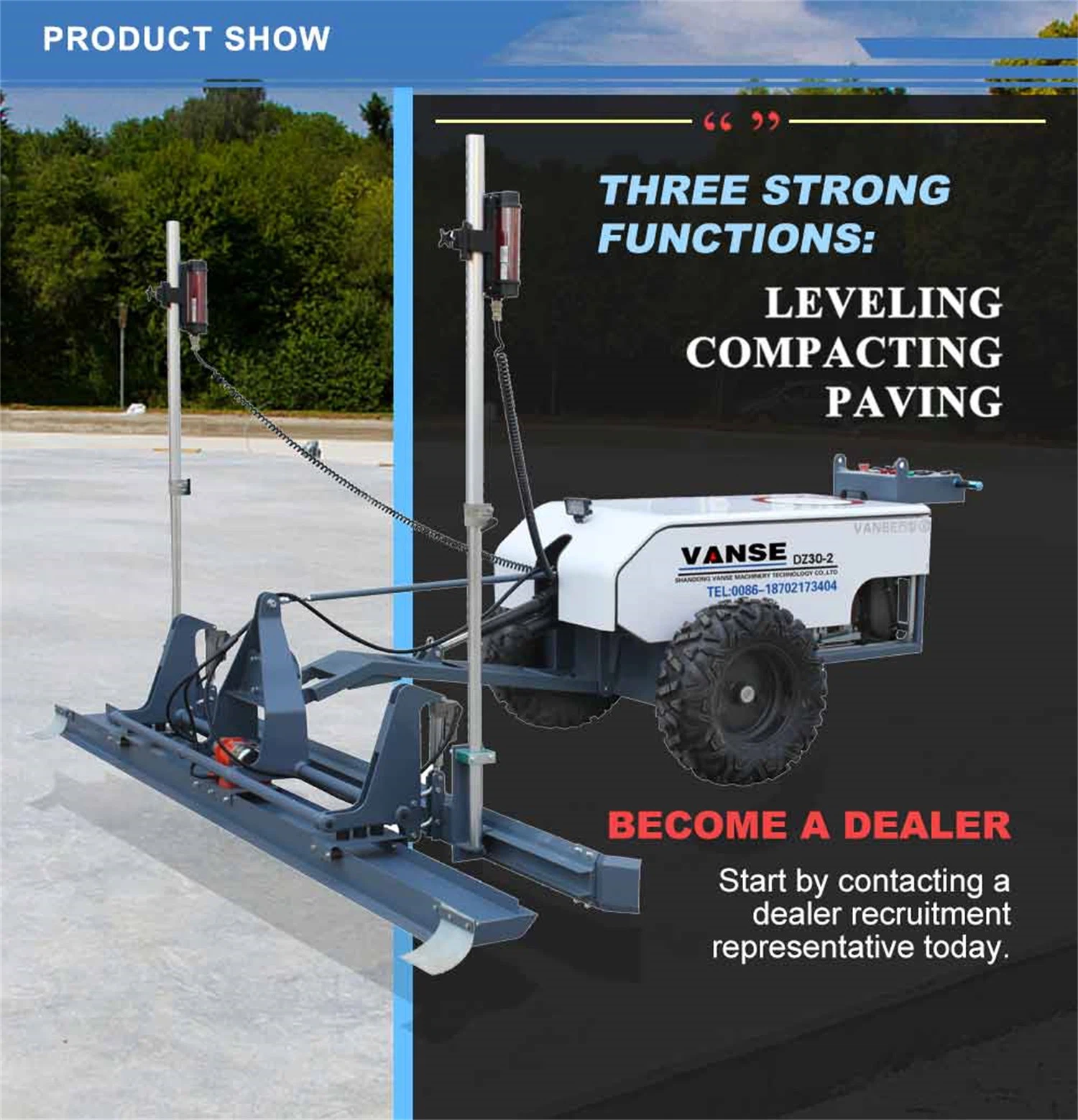
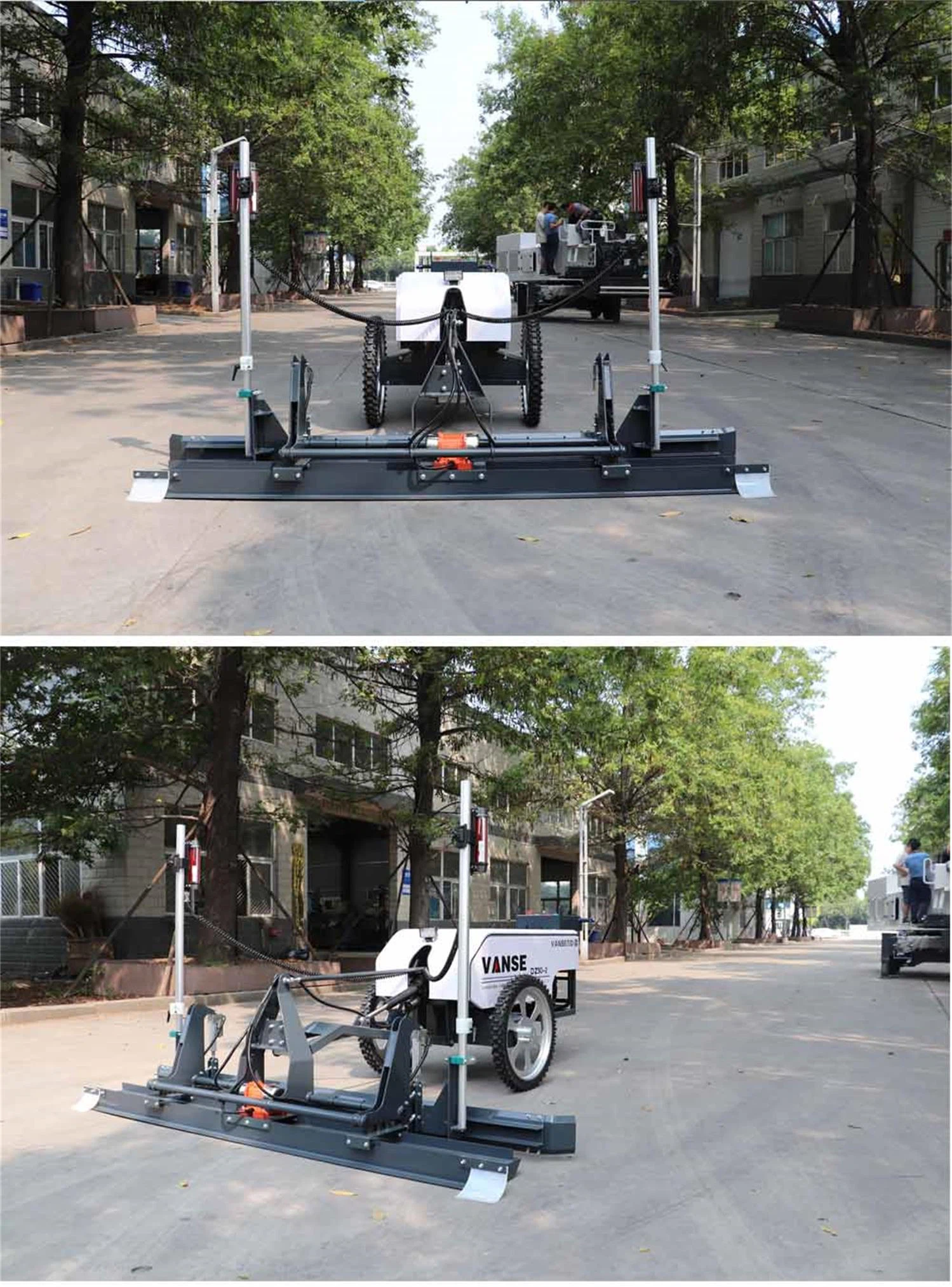
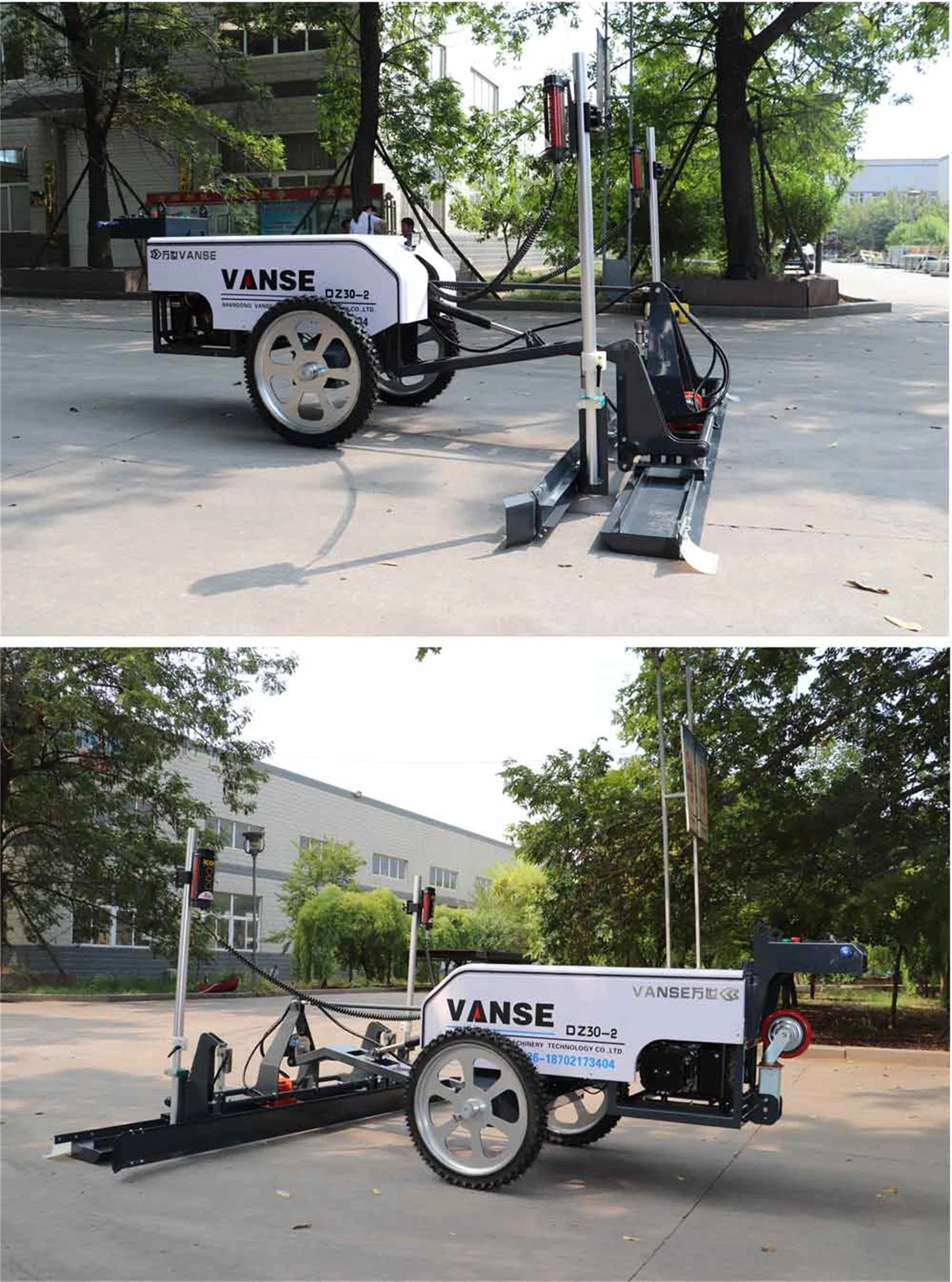
Ensuring the construction effect of the concrete laser leveling machine and the smoothness of the ground are key. Here are some suggestions and measures:
1. Choose the right equipment:
Choose a concrete laser leveler with advanced technology and good reputation, which can better cope with various construction conditions and ensure smoothness.
2. Operator training:
Provide professional training to operators to ensure that they are familiar with the performance, operating skills and safety procedures of the equipment. Trained operators can control equipment more accurately, improving construction results and smoothness.
3. Preparation work before construction:
Before construction, the ground should be cleaned and leveled, foreign objects should be removed, potholes should be filled, and the ground should be smooth. In addition, checking the mix proportion and quality of concrete materials is also key to ensure that the performance of the concrete meets the construction requirements.
4. Adjust equipment parameters:
According to construction conditions and requirements, reasonably adjust various parameters of the concrete laser leveling, such as working height, vibration frequency, paving speed, etc. Appropriate parameter settings can better control the paving and leveling of concrete, thereby improving smoothness.
5. Real-time monitoring and control:
Use advanced sensors and control systems to monitor the flatness and height of the ground in real time, and adjust the equipment automatically or manually to ensure that the laying of concrete meets the design requirements. Real-time data feedback and analysis can help operators find and solve flatness problems in time.
6. Repeated leveling:
For some special or demanding floors, repeated leveling can be carried out multiple times to further improve the flatness of the ground. After each leveling, quality inspection should be carried out and parts that do not meet the requirements should be re-leveled.
7. Strengthen quality control and acceptance:
During the construction process, quality inspections should be carried out regularly, including the density, thickness and flatness of the concrete. After the construction is completed, strict acceptance procedures are carried out to ensure that the design requirements and flatness standards are met. If necessary, a third party can be entrusted to conduct quality testing and evaluation.
8. Maintenance and maintenance:
Carry out regular maintenance and upkeep on the concrete laser leveling to ensure the normal operation and use of the equipment. Timely replacement of worn parts, inspection of key parts, and lubrication of key parts can extend the service life of equipment and improve construction results.
9. Technological innovation and application:
Pay attention to industry trends and technological innovation results, and continuously introduce advanced processes and technologies. New concrete laser leveling machines and technologies can better improve construction efficiency and smoothness.
10. Experience summary and feedback:
During the actual construction process, experience and lessons are constantly summarized and feedback is given to relevant departments or teams in a timely manner. Through experience sharing and improvement measures, we will continue to optimize construction processes and methods to improve flatness and construction effects.
To sum up, ensuring the construction effect and ground flatness of the concrete laser leveling requires comprehensive consideration of many aspects. From equipment selection, personnel training to pre-construction preparation, real-time monitoring and control of parameter adjustment, quality control and acceptance, management needs to be strengthened. At the same time, measures such as technological innovation and application, experience summary and feedback are constantly optimized and improved to improve construction effects and flatness. Through these comprehensive measures, the construction quality and efficiency of concrete laser levelings can be effectively improved.
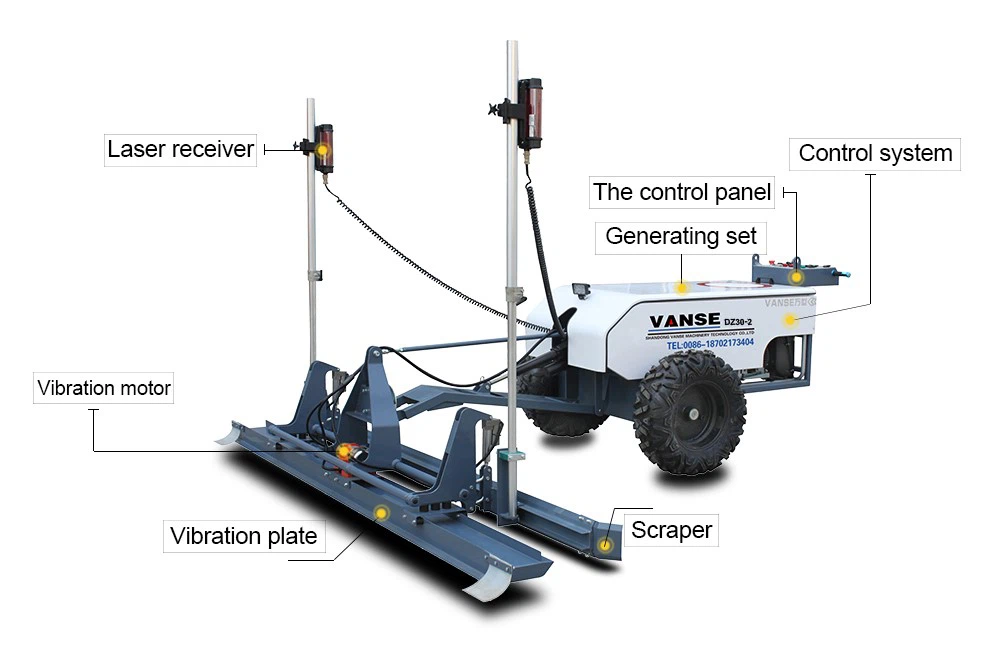
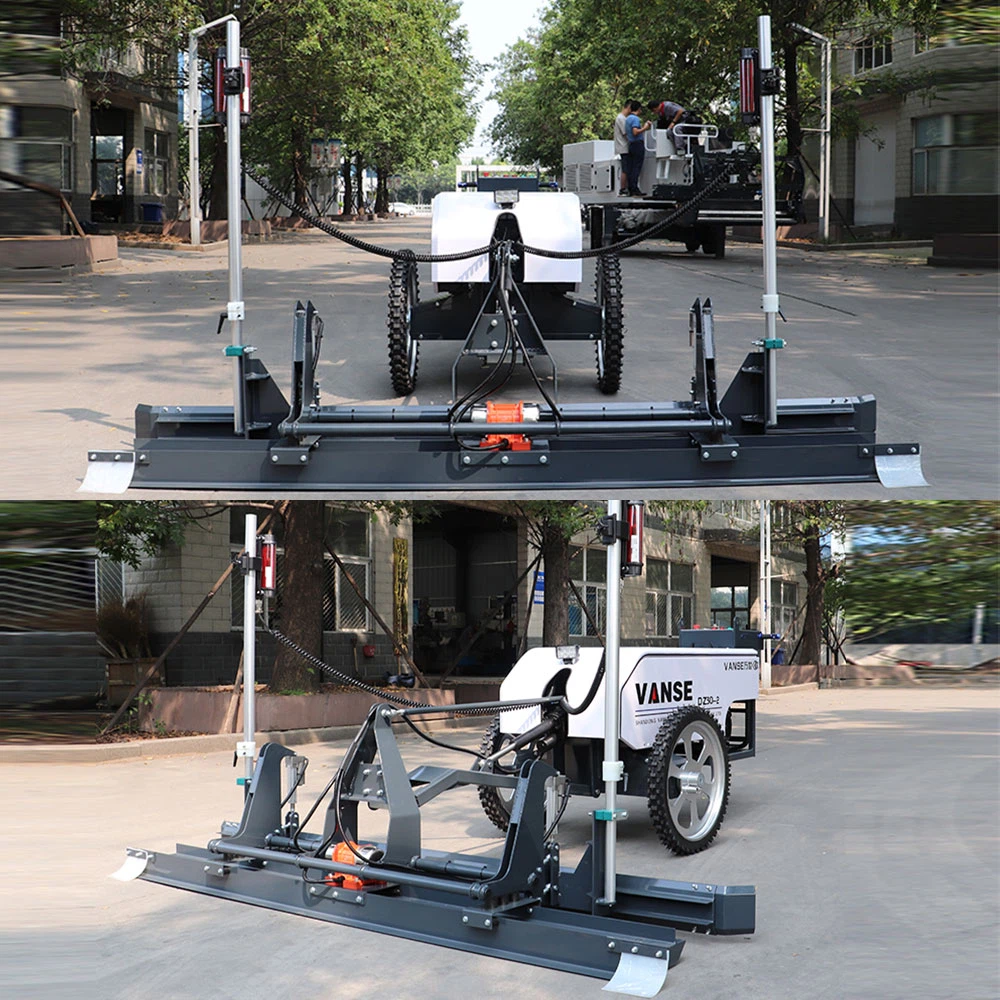
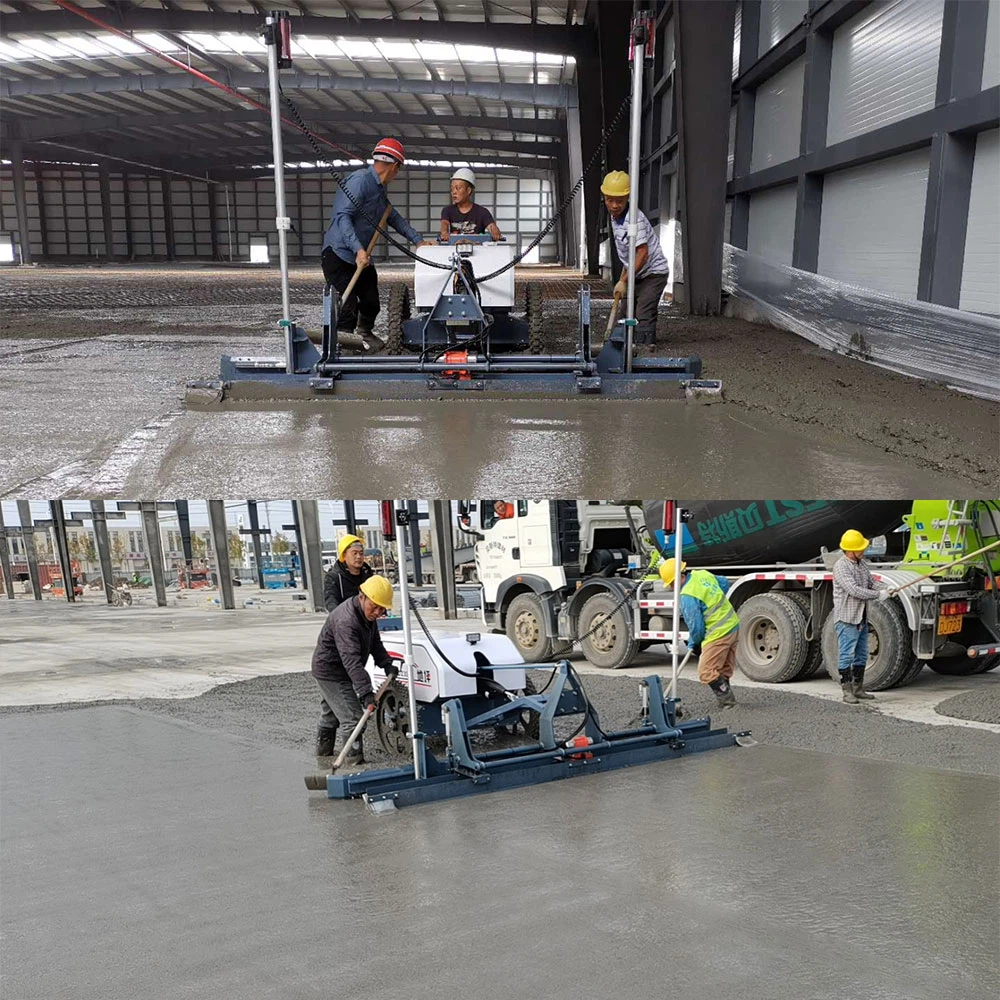
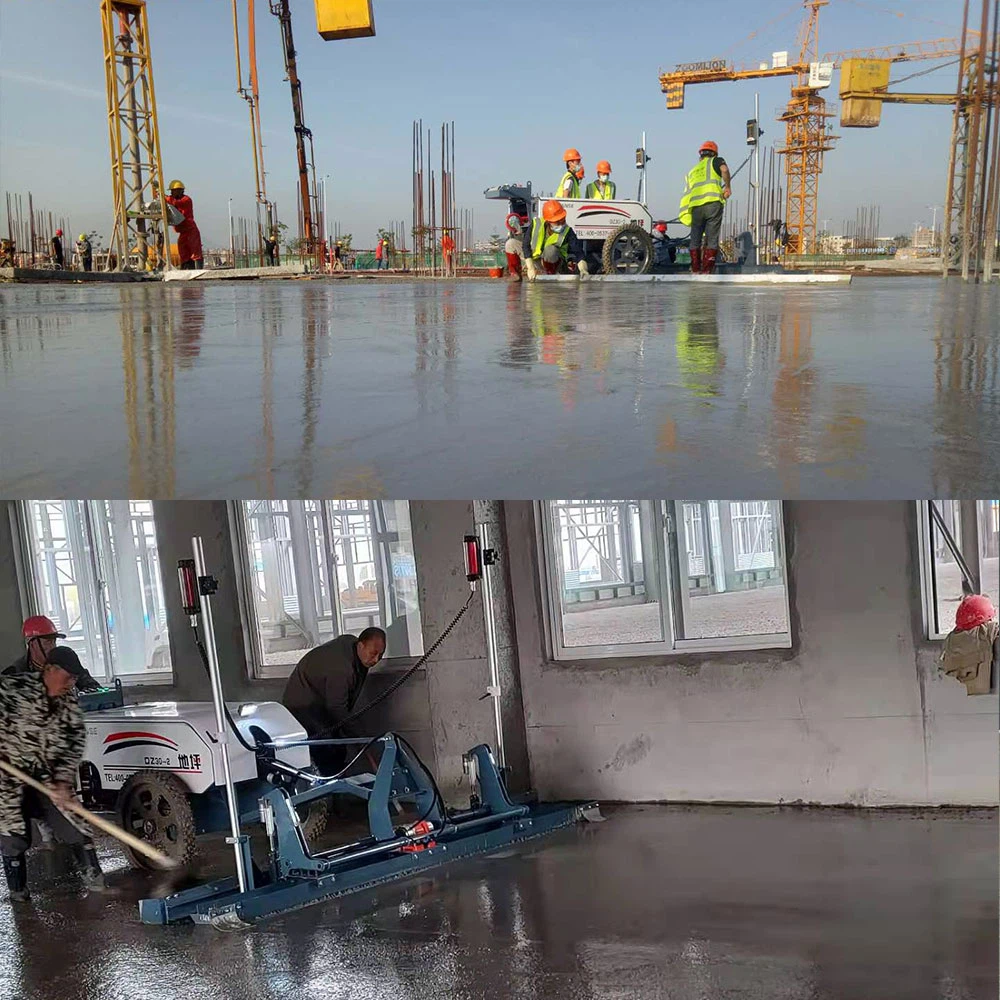
Thanks to All the Friends Who Support and Trust Shandong Vanse Machinery Technology Co., Ltd.
If you want to know more about Shandong Vanse Machinery Technology Co., Ltd. or have any questions, please feel free to contact us:
Our Factory
Shandong Vanse Machinery Technology Co., Ltd.








Share this article

About the Author: Shandong Vanse Machinery Technology Co., Ltd.
Shandong Vanse Machinery Technology Co., Ltd. is a high-tech manufacturer specializing in concrete construction machinery, including laser screeds and related equipment. The company integrates R&D, production, and global sales, with products exported to over 60 countries and widely used in infrastructure projects worldwide.
Previous Post
Next Post
Related Articles
You Might Also Like
Two hours after the laser leveling machine construction, it started raining: How to quickly cover without damaging the fresh surface?
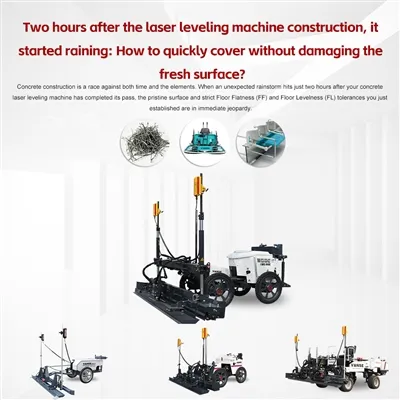
Concrete construction is a race against both time and the elements. When an unexpected rainstorm hits just two hours after your concrete laser leveling machine has completed its pass, the pristine surface and strict Floor Flatness (FF) and Floor Levelness (FL) tolerances you just established are in immediate jeopardy. Two hours post-pour is a highly vulnerable stage: the concrete has likely stopped bleeding, but it has not reached its final set. Heavy rain can wash away the critical cement paste (creating a weak, dusting surface) and cause severe pitting. At the two-hour mark, the slab is typically in the "initial set" phase. The Risk: The surface cannot support human weight without leaving deep footprints, yet it is soft enough that heavy raindrops will physically punch holes in the cream (cement paste). The Goal: You must create a waterproof barrier that floats lightly on the surface or hovers just above it, without dragging or scraping the concrete texture. Do not use heavy canvas tarpaulins or thick, rigid construction blankets. They are too heavy and will leave permanent drag marks and wrinkles in the slab. The Solution: Use 4-mil to 6-mil clear or white polyethylene sheeting (plastic visqueen). It is entirely waterproof, incredibly lightweight, and can be pulled taut over wide expanses. To maintain the precise FF/FL metrics established by your laser Leveling, no worker can step onto the concrete. You must deploy the sheeting from the perimeter. Step 1: The PVC Roller Method. Wrap the roll of poly sheeting around a long, lightweight PVC pipe (or a straight, light aluminum Leveling board). Step 2: Perimeter Deployment. Position workers on opposite sides of the slab (off the concrete, on the formwork, or on pre-existing adjacent slabs). Step 3: Unroll in Mid-Air. Pull the plastic sheeting across the slab, keeping it elevated. Once the sheet is pulled taut across the designated area, gently lower it straight down onto the wet concrete. Step 4: Secure the Edges. Weight down the edges of the plastic with lumber, sandbags, or excess rebar resting outside the formwork so the wind does not lift it. Do not attempt to smooth out minor wrinkles in the middle of the slab; the pressure will cause more damage than the wrinkle itself. Once the rain passes and the ambient temperature begins to dry the slab, carefully peel back the plastic sheeting. If the deployment was successful, the concrete paste will still be intact, though there may be minor surface blemishes or wrinkles from the plastic. This is where the right finishing equipment salvages the project. As engineered by Shandong Vanse Machinery Technology Co., Ltd. (www.vansemac.com), achieving a seamless industrial floor requires a synergistic equipment ecosystem. Preserving the Grade: By deploying the plastic correctly, you protected the macro-levelness achieved by your Vanse YZ30-4E or YZ40-4E telescopic boom laser Leveling. Mechanical Correction: To erase the minor wrinkles or light rain pitting left behind by the plastic, deploy a heavy-duty ride-on power trowel (such as the Vanse VS836/ VS1046). The high-speed, dual-rotor mechanical compaction will aggressively knead the surface paste, burnishing out the superficial rain/plastic marks and restoring the dense, highly wear-resistant finish required for commercial floors. A sudden downpour does not have to be a disaster. By stocking lightweight poly sheeting on every job site and utilizing a "no-step" deployment method, contractors can protect the fresh paste. Relying on advanced, heavy-duty finishing equipment afterward ensures that the final floor still meets rigorous international specifications. Note: The parameters provided in this document are for reference only and are not mandatory. Due to differences in technical characteristics between different brands and models of laser levelers, please consult the manufacturer for a suitable solution before actual operation. This reference document assumes no responsibility for any issues arising from failure to follow the manufacturer's instructions.Best laser leveling models for narrow warehouse aisles Drop your picks!
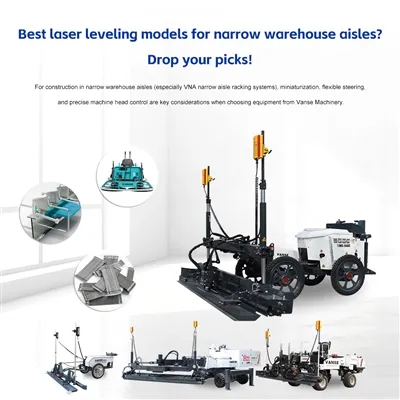
For construction in narrow warehouse aisles (especially VNA narrow aisle racking systems), miniaturization, flexible steering, and precise machine head control are key considerations when choosing equipment from Vanse Machinery. Based on Vanse's latest product line, the following are some recommended models for narrow space construction: This is the most classic small walk-behind screed from Vanse, ideal for use in warehouses where some shelving has already been installed or space is extremely limited. Reasons for recommendation: Its small size (width approximately 2.5m to 2.8m) and light weight allow it to easily enter elevators or operate on the second floor or multiple levels of a warehouse without worrying about load capacity issues. Narrow aisle performance: With manual operation, it has a very small turning radius, allowing it to flexibly maneuver around columns and embedded structures. Key parameters: The flatness error is controlled within approximately ±1.5mm, perfectly meeting your requirements for ultra-flat floors. If you find walk-behind models a bit slow, but your workspace doesn't accommodate large telescopic boom machines, the YZ28-4S is the perfect balance. Reasons for Recommendation: Compared to walk-behind models, it features ride-on operation and an automatic cruise control system, ensuring a constant travel speed, which is crucial for consistent floor flatness. Performance in Narrow Passages: The four-wheel drive design provides strong traction, and the intelligent steering system allows for much faster turning and positioning in confined areas compared to traditional machines. Key Parameters: Paving width: 2.5m. It integrates screw spreading, vibration, and leveling into one machine, resulting in a high one-time molding rate and reducing the need for manual assistance. This model belongs to Vanse's high-end series, mimicking advanced international miniaturized structures and specifically developed for high-standard indoor logistics and warehousing. Reasons for Recommendation: Its compact structure and low center of gravity design ensure exceptional stability when paving high-viscosity (low-slump) concrete, minimizing the formation of surface waves. Narrow Aisle Performance: It features four-wheel steering, even allowing for a degree of "crab steering," providing extremely high positioning accuracy between narrow racking aisles. Key Parameters: Equipped with an imported laser system, it can be controlled in conjunction with a 3D total station. If you need to construct dedicated narrow-aisle tracks for VNA racking (i.e., Fmin floor slabs), this machine offers the best system compatibility. Application Scenarios Recommended models Advantages Operating method Ultra-narrow spaces / Multi-story buildings DZ25-2 Most lightweight and easiest to deploy Hand-held type Standard warehouse aisles / High efficiency YZ28-4S Automatic movement and constant pressure Riding type Super flat floors (SF) / VNA (Very Narrow Aisle) WS-550/940C Extremely high laser accuracy and good stability Riding type Machine head width: Vanse's standard leveling heads are typically 2.5m or 3m wide. Before purchasing or renting, please confirm the spacing of the warehouse columns. If the spacing is exactly 3m, it is recommended to choose a 2.5m machine head to allow for clearance. Laser transmitter position: During narrow aisle construction, the signal is easily blocked by shelves or walls. It is recommended to use Vanse's matching high-sensitivity Leica receiver and position the transmitter as close as possible to the center line of the aisle. Are you planning a renovation of an existing warehouse or construction of a new one? I can analyze your specific situation to determine if a 3D control system is necessary. Contact us NOW Note: The parameters provided in this document are for reference only and are not mandatory. Due to differences in technical characteristics between different brands and models of laser levelers, please consult the manufacturer for a suitable solution before actual operation. This reference document assumes no responsibility for any issues arising from failure to follow the manufacturer's instructions.Emergency handling and repair procedures for a power trowel after being soaked in water
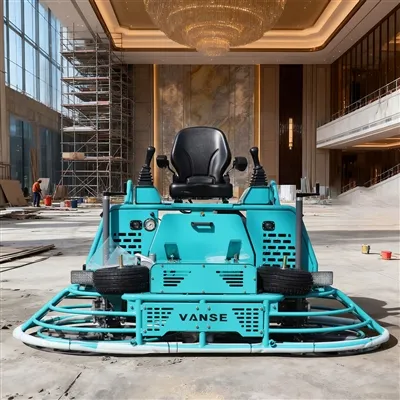
Soaking a power trowel in water is a serious accident, but proper emergency handling can save the equipment to the greatest extent and prevent secondary damage. Please be sure to follow the following "Golden 24 Hours" emergency handling and repair procedures. Core principles: Power off, drainage, cleaning, and drying. Speed comes first! The most crucial step! Under no circumstances should you attempt to start the engine or connect the power supply (if it is an electric power trowel). Starting with water will directly lead to short circuits in the circuit and motor burnout, causing irreversible damage and extremely high maintenance costs. Engine/electric power trowel: Immediately turn off the ignition switch and remove the key. For the electric model, unplug the battery connection wire (pay attention to insulation). Battery: Disconnect the battery connection wires. First, remove the negative terminal, then the positive terminal. Posture adjustment: Tilt the power trowel to allow as much water inside the gearbox, engine air intake, radiator and other parts to flow out as possible. External cleaning: Use low-pressure clean water to quickly rinse off the mud and dirt on the machine surface to prevent lumps that are difficult to clean after drying. Note: Avoid directly flushing electrical components, bearing seals and other parts with high-pressure water guns. Remove the base/disc of the power trowel: This is the part where sand and mud are most likely to accumulate. Check the air filter: Immediately remove the air filter and check if water has entered. If water gets in, it must be replaced! Under no circumstances should it be used after being dried. Otherwise, sand and dust will enter the engine and cause cylinder pulling. Check the engine oil: Pull out the oil dipstick and check if the oil has turned white (milky white). This is a clear sign that water has entered the engine oil. If water gets in, it must be replaced immediately. Physical drying: Use a clean lint-free cloth or towel to dry all visible moisture, especially around the circuit interfaces, sensors, and spark plugs. Use compressed air (the pressure should not be too high) to dry all hard-to-reach areas such as crevices, circuit joints, engine heat sinks, and gearbox vent holes. You can also use the cold setting of a hair dryer to dry it. Natural ventilation: Place the equipment in a dry and well-ventilated area, open all openable covers (such as the engine hood), and let it air dry naturally. It is strictly prohibited to directly bake with hot air or open flame, as this will damage the circuits and seals. Core principle: Systematic inspection, from the outside in, and handling by modules. Spark plug: Remove the spark plug, check the electrode condition and dry it. You can pull the starter in the air several times to drain any possible accumulated water in the cylinder. Fuel system Fuel tank: Drain all fuel. Even if it seems that no water has entered, condensate water may still be present. Carburetor: Remove the carburetor and perform a thorough cleaning. Water will sink to the bottom of the carburetor, causing it to fail to start or operate unstably. This is a very crucial step. Engine oil: Regardless of the previous inspection results, new engine oil and oil filter must be replaced at this time. Ensure the purity of the oil circuit system. Ignition system and wiring harness: Check all wire joints and high-voltage packs for signs of corrosion or oxidation, and clean and dry them. Gearbox Check the lubricating oil of the gearbox. If water enters (the oil will become cloudy and milky white), it must be completely drained. Clean the interior of the gearbox with diesel or a special cleaning agent to remove moisture and impurities. Refill with brand new gear oil that meets the specifications. Bearings: The grease in the bearings of the main shaft, traveling wheels and other parts will fail if water gets into them. Although it may still be able to rotate in the short term, its lifespan has been severely damaged. It is strongly recommended to remove and replace all the main bearings and add new grease. Clutch and throttle cable: Check for rust or jamming, and add special lubricating oil to maintain its flexibility. Motor: If water has entered the interior of the motor, it must be opened by professional maintenance personnel for cleaning, drying and re-impregnation with insulating varnish; otherwise, it is very likely to burn out. Do not handle it by yourself! Switches and controllers: Carefully inspect all electrical components to ensure they are completely dry and free from corrosion. If you have any doubts, it is recommended to replace it. Cable: Check whether the insulation layer of the cable is damaged. Reassembly: Reinstall all the cleaned, dried and replaced components in sequence. Pre-startup inspection: Reconfirm that the fuel, engine oil and gear oil have been filled in place and all connecting parts have been tightened. Start the engine/motor under no-load conditions and observe whether it runs smoothly and if there are any abnormal noises. Then slowly increase the throttle and check whether the clutch and transmission system are working properly. Finally, conduct a short trial run on the leveled waste mortar or land to check if the smoothing function is normal. If handled promptly and correctly: It may only cost the expenses of replacing the air filter, engine oil, gear oil, spark plugs and cleaning the carburetor (several hundred yuan), and the equipment can return to normal. If not handled properly or delayed, it may lead to serious consequences such as engine cylinder pulling, connecting rod bending, motor burnout, bearing seizing, gear damage, etc. The maintenance cost may be as high as several thousand yuan, and even result in the direct scrapping of the equipment. Finally, it is recommended that if you are not familiar with the internal structure or if the equipment still fails to work properly after following the above steps, please immediately send it to a professional maintenance service station. Explain to the maintenance technician that the equipment has been soaked in water so that they can carry out targeted inspections. Time is money. Correct emergency handling can win precious opportunities for subsequent repairs! Note: The parameters provided in this document are for reference only and are not mandatory. Due to differences in technical characteristics between different brands and models of laser levelers, please consult the manufacturer for a suitable solution before actual operation. This reference document assumes no responsibility for any issues arising from failure to follow the manufacturer's instructions.