Technical Knowledge
How to clean a laser/ leveling/ leveled oil tank ?
July 11, 2023

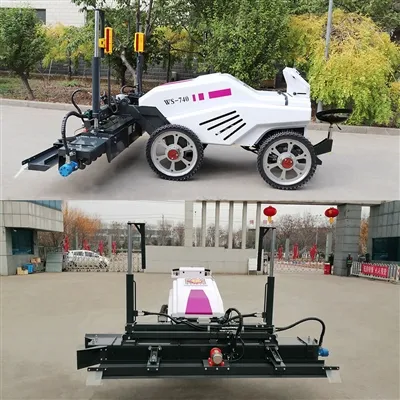
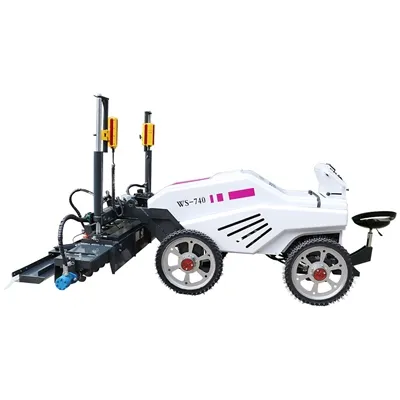
The fuel tank of the laser leveling machine is also an important part. It is used to support the action of the equipment. If there is no fuel tank, the equipment still cannot move normally. It is as important as the engine. Many users will be concerned about the fuel tank when using it. There are a lot of questions about cleaning. When cleaning, we should be careful not to wash off the protective film in the fuel tank, which will affect the normal use of the equipment.
1. Why should the oil tank of the laser leveling machine be cleaned regularly?
As the laser leveling machine is used longer, the precipitated impurities in gasoline will accumulate more and more in the fuel tank. These impurities first settle at the bottom of the fuel tank. When there are too many sediments, they will enter the car engine along with the fuel. severe wear and tear on the engine,
As long as you clean the fuel tank once, the owners will find how necessary it is to clean the fuel tank regularly. During the cleaning process, not only particles, colloids, but even tin foil, plastic sheets and other incredible things will be washed out. The owner of the machine does not know how many things get into the fuel tank. If these wastes are not cleaned up in time, the impact on the engine of the laser leveling machine can be imagined.
2. How to clean the fuel tank of the concrete laser leveling machine?
Fuel tank cleaning is divided into two steps, internal and external. When cleaning the engine fuel system, use the engine non-disassembly cleaning agent, because the non-disassembly cleaning agent does not need to disassemble the fuel system. On the one hand, it can start to clean the fuel system thoroughly. , On the other hand, it is beneficial to protect the fuel system of the engine. When cleaning, you can use a clean cloth to block the nozzle of the fuel pipe, and then change the position and direction of the plastic pipe to avoid rubbing the oil level sensor as much as possible. , to release gasoline, at this time the impurities in the gasoline will flow out together. It should be noted that the fuel released from the fuel tank should be used after 72 hours of precipitation. When cleaning the outside of the fuel tank of the laser leveling machine, it is necessary to check whether there is any depression or oil leakage in the fuel tank, oil pipes, joints, etc. Also check whether the fixing screws of the fuel tank bracket are tightened. When cleaning the inside, open the fuel tank port, take out the filter barrel, suck the oil out, and then insert the cleaned plastic pipe from the fuel filler port to the bottom of the fuel tank, and gently blow the bottom of the fuel tank gasoline, make it tumble to achieve the cleaning effect.
The above are many questions about cleaning the laser leveling machine. You can learn more about it and it will help you. Secondly, you should pay attention to regular maintenance and maintenance when using it. This can also reduce the occurrence of equipment failures. Thank you Your attention and support all the time.
Thanks to All the Friends Who Support and Trust Shandong Vanse Machinery Technology Co., Ltd.
If you want to know more about Shandong Vanse Machinery Technology Co., Ltd. or have any questions, please feel free to contact us:
Our Factory
Shandong Vanse Machinery Technology Co., Ltd.


About the Author: Shandong Vanse Machinery Technology Co., Ltd.

Shandong Vanse Machinery Technology Co., Ltd. is a high-tech manufacturer specializing in concrete construction machinery, including laser screeds and related equipment. The company integrates R&D, production, and global sales, with products exported to over 60 countries and widely used in infrastructure projects worldwide.

Shandong Vanse Machinery
Leading manufacturer specializing in high-performance concrete laser screeds, telescopic arm flatwork handlers, and mechanical ride-on power trowels.
Post overview
Main PRODUCT Categories
Need Machine Guidance?
Speak directly with Shandong Vanse field specialists for tailored equipment quotes and site planning.
Contact Us TodayRelated Articles
You Might Also Like
September 23, 2025
Cement Floor Cracks: Cause Analysis and Prevention
Cracks in cement floors (typically referring to cement concrete surfaces, such as indoor floors, outdoor plazas, and parking lots) not only affect appearance but can also reduce durability and even hinder functionality due to water seepage and debris accumulation. The following detailed analysis covers common crack symptoms, core causes, and targeted prevention and control measures to help accurately identify and effectively resolve the problem. The form, width, and distribution of cement floor cracks directly reflect their causes and can be categorized as follows: Crack Types Appearance Characteristics Common Locations Hazard Level Surface Cracks Cracks are short and thin (<0.1mm wide), forming an irregular network with no discernible depth, mostly concentrated in the surface layer (1-3mm deep). Large indoor floors and outdoor plazas Low (appearance only, no structural risk) Vertical/Horizontal Cracks Cracks are long (several to tens of meters long), straight, 0.1-0.5mm wide, and can penetrate the surface layer (5-10mm deep). Along the length/width of the floor, or along both sides of a partition joint Medium (easy to seep, accelerating surface degradation) Cracks at the Edges and Corners of Plates Cracks extend from the corners of the slab (such as the corners of a square floor) toward the center, forming an L-shaped or diagonal pattern, with a width of 0.2-0.8mm. At the joints of indoor and outdoor floor panels, near wall corners High (likely to cause edge peeling, affecting pedestrian safety) Through-Breaking Cracks Cracks extend through the entire cement surface layer (even penetrating the base layer), are >0.5mm wide, and are sometimes accompanied by slight ground subsidence or sanding. Highly loaded areas (such as parking lots and warehouses), and areas with uneven subgrades Extremely High (may cause floor damage and water accumulation, requiring urgent attention) The root cause of cement floor cracking is "internal stress in the surface layer exceeding its tensile strength." The sources of this stress are related to five key factors: material, base layer, construction, environment, and usage. The details are as follows: Improper material selection or proportioning directly leads to insufficient crack resistance in the surface layer: Incorrect cement selection: Using cement with a high heat of hydration (such as P.O. 42.5R rapid-hardening cement) to cast large surfaces releases a large amount of heat during hydration, raising the internal temperature of the surface layer. Contraction upon cooling creates "temperature stress," which can cause longitudinal and transverse cracks. Using expired cement (which has reduced strength) can also lead to insufficient tensile strength in the surface layer, making it more susceptible to cracking. Poor aggregate grading: If the fine aggregate (sand) is too fine (fineness modulus <2.3) or the mud content is too high (>3%), the cement requirement will increase (more cement paste is needed to coat the aggregate), leading to increased shrinkage of the surface layer. If the coarse aggregate (stone) is too small (<5mm) or missing, it will not form a "skeletal support," resulting in unrestrained shrinkage of the surface layer and prone to network cracking. If the water-cement ratio is too high: In pursuit of fluidity during construction, water usage is often blindly increased (water-cement ratio > 0.55). After the surface layer hardens, excess water evaporates, creating internal voids and reducing density. This significantly increases shrinkage (approximately 20% increase in shrinkage for every 0.1 increase in water-cement ratio), which can easily lead to surface cracking and edge cracking. Improper admixtures/admixtures: Failure to add or incorrect addition of admixtures (e.g., failure to add a retarder in summer, resulting in rapid initial setting of the surface layer and inability to grout after surface water evaporates; failure to add an antifreeze in winter, resulting in internal structural damage after freezing); and failure to add admixtures such as fly ash and mineral powder (key to reducing hydration heat and shrinkage) result in poor crack resistance in the surface layer. Cement floor surfaces rely on the stable support of a base layer (such as a lime soil base, crushed stone base, or concrete base). Base layer problems can directly affect the surface layer: Uneven base layer settlement: If the base layer is not compacted layer by layer during construction (e.g., a lime soil base with a compaction level less than 95%), or if there is a weak soil layer beneath the base layer (e.g., uncompacted backfill), the surface layer can experience partial subsidence during use, subjecting it to tensile stress and causing through-hole cracks or cracks at the edges and corners of the slabs. Uneven/contaminated base layer surface: The base layer surface has a height difference greater than 5mm (not leveled). The surface layer has uneven thickness after pouring, with thinner areas shrinking faster than thicker areas, creating "temperature differential stress." Oil and loose dust on the base layer surface have not been cleaned, resulting in insufficient adhesion between the surface layer and the base layer. After hardening, the two separate, and the surface layer shrinks independently, causing cracks. No isolation layer is provided for the base layer: When the base layer is concrete or a rigid material, without an insulating layer such as polyethylene film, the surface layer adheres too tightly to the base layer. During shrinkage, it is constrained by the base layer and cannot deform freely, causing cracks in areas of stress concentration (such as corners and joints). Construction operation is critical to crack control. Common mistakes include: Improper pouring and vibration: Failure to follow the "staged pouring, gradual progress" principle during pouring (e.g., large areas of ground are not divided into blocks, with individual blocks >20 m2), resulting in no channels for the surface layer to shrink as a whole; insufficient vibration during vibration (low density in some areas of the surface layer, insufficient tensile strength) or over-vibration (aggregate sinks, cement slurry floats, forming a "floating slurry layer" on the surface. After hardening, the floating slurry shrinks and cracks, known as crazing). Incorrect timing of surface calendering: Calendering too early (the surface layer has not yet set and the cement slurry has not yet developed strength) can easily cause sanding on the surface; calendering too late (the surface layer has already set and a crust has formed on the surface) can damage the surface structure, forming microcracks that later expand into cracks. Inadequate or improper sizing of the slurry: Large areas of flooring (single floor area >15 m2) are not provided with standardized expansion joints (spacing: ≤6 m vertically, ≤8 m horizontally). This lack of "stress relief" during surface shrinkage can lead to vertical/transverse cracks along weak areas (such as the center). Insufficient expansion joint depth (<1/3 of the surface layer thickness) or inadequate filler (such as asphalt mortar) can cause cracks to extend along both sides of the expansion joints. Untimely/inadequate curing: Failure to cover and cure the surface layer within 12 hours of pouring (e.g., exposure to direct sunlight in summer or wind in winter) allows surface moisture to evaporate rapidly, preventing internal moisture from being replenished. This results in "shrinkage stress" and causes surface cracking. Insufficient curing time (<7 days) prevents the surface layer from reaching its designed strength (typically ≥70% strength), leading to premature loading (e.g., pedestrians or vehicles), which can easily lead to corner cracks or through-hole cracks. Ambient temperature and humidity fluctuations can exacerbate stress in the surface layer and induce cracks: Severe Temperature Fluctuations: In summer, during daytime pouring (ambient temperature 35°C), the temperature drops sharply at night (15°C). The surface layer cools and contracts rapidly, while the interior cools and contracts slowly. This internal constraint creates "temperature stress" on the surface, leading to longitudinal, straight cracks. In winter, if the surface layer freezes before reaching its frost resistance (≥70% of design strength), the internal moisture freezes and expands, and upon thawing, the volume contracts, forming "freeze-thaw cracks" (mostly cracks at the edges and corners of the slabs, accompanied by surface spalling). Chronic and unstable humidity: In humid environments (such as bathrooms and underground garages), the surface layer absorbs moisture over time, softening the cement paste and reducing its tensile strength. In dry environments (such as heated rooms and warehouses in northern China), moisture from the surface layer continuously evaporates, accumulating shrinkage stress. The alternating effects of these two factors can easily lead to surface cracking or through-hole cracks. Improper load or maintenance during use can accelerate the development of cracks: Premature loading or overloading: Heavy objects (such as furniture and building materials) are piled on the surface before it reaches its design strength (28 days), or vehicles are driven on it (for example, a parking lot is opened to traffic without proper maintenance). This causes the surface to be subjected to loads exceeding its tensile strength, leading to through-cracks or cracks along the edges of the slabs. Lack of routine maintenance: Failure to promptly seal small cracks in the surface allows rainwater and oil to seep in, eroding the surface's internal structure. Furthermore, in winter, the water that seeps in freezes and expands, causing cracks to widen. Prolonged exposure to heavy loads (such as frequent forklift traffic in a warehouse) can lead to localized stress concentrations, causing longitudinal cracks. The core of prevention and control lies in "source control (materials + base layer), process control (construction), and post-maintenance (environment + use)." It is divided into two parts: "preventive measures" and "crack repair measures": Precise Material Selection: Prioritize cement with low hydration heat (such as P.O. 42.5 ordinary cement or slag Portland cement); use well-graded medium sand (fineness modulus 2.3-3.0, mud content ≤3%) and 5-10mm continuously graded crushed stone (mud content ≤1%) as aggregates; add Grade I fly ash (15%-20%) or mineral powder (20%-25%) to reduce hydration heat and shrinkage. Strictly control the water-cement ratio: The water-cement ratio should be ≤ 0.5 (for standard floors) and ≤ 0.45 (for impermeable floors). If necessary, add a retarding water reducer (at a dosage of 0.5%-1%) to maintain fluidity while reducing water consumption and minimizing shrinkage risk. Ensure the base layer is compacted and leveled: The base layer (lime soil/gravel) should be constructed in layers, with each layer ≤30cm thick and a compaction level ≥95% (tested using the knife ring method). The base layer surface should be leveled with cement mortar, with a height difference ≤3mm and cleaned (free of oil stains and loose dust). Apply a primer if necessary (to enhance adhesion between the surface layer and the base layer). Installing Isolation Layers and Expansion Joints: For rigid base layers (such as concrete), lay a 0.1mm thick polyethylene film isolation layer. For base layers >10m long, install expansion joints every 6-8m along the length (20mm wide and filled with asphalt hemp) to prevent base layer shrinkage from transferring to the surface layer. Scientific pouring and vibrating: For large floor areas, pour in blocks, with each block ≤15 m2 (rectangular blocks, aspect ratio ≤1.5). Leave 20 mm wide joints between blocks (the joint depth should be 1/3-1/2 the surface layer thickness). Vibrate with a flat vibrator (at a speed of 1-1.5 m/min) until the surface is free of bubbles and slurry. Avoid missed or over-vibration. Choose the right timing for calendering: Calender in three steps: ① Before initial setting (after the surface layer has absorbed water), smooth it with a wooden trowel; ② After initial setting (no visible finger marks remain), perform initial compaction with an iron trowel; ③ Before final setting (when the surface is nearly hardened), perform final compaction with an iron trowel to ensure a smooth surface without any marks. Strengthened maintenance management: Cover the surface with geotextile or plastic film (add a shade net in summer and a thermal blanket in winter) within 12 hours after pouring to keep the surface moist. Curing time for ordinary surfaces is ≥7 days, and for impermeable/load-bearing surfaces is ≥14 days. Pedestrians and vehicles are prohibited from entering during the curing period. Temperature Control: In summer, avoid pouring at noon (select morning and evening temperatures between 25-30°C). Cover the surface to maintain moisture. In winter, preheat the aggregate (≥5°C) before pouring, ensure the surface is at least 10°C before pouring, and maintain an ambient temperature of ≥5°C during curing (use heating if necessary). Usage and Management: The surface should be cured for 28 days before use. Premature stacking of heavy objects is prohibited. In areas such as parking lots and warehouses, limit vehicle/cargo weight to the designed load capacity to avoid local overloading. Regularly inspect the floor surface and seal any minor cracks with epoxy resin glue. If cracks have already appeared, first clean them (remove debris and dust, and flush with a high-pressure water gun), then repair them as follows: Crack Types: Repair methods Material Selection Key Points: Surface cracks Surface sealing method Epoxy sealer, cement-based penetrating crystallization coating (CCCW) Use a brush to evenly apply the glue/paint to the crack surface and a 5cm area on either side. Repeat 2-3 times. Cure for 24 hours. Vertical/horizontal cracks (width < 0.5mm) Low-pressure grouting method Cement slurry (water-cement ratio 0.45), epoxy slurry Drill an 8mm diameter hole (5mm deep) every 20cm along the crack. Insert a grouting tube and inject grout using a low-pressure pump (0.2-0.3MPa) until the grout overflows. Cure for 7 days. Cracks along edges and corners (width 0.2-0.8mm) Painting mortar filling method Polymer cement mortar (cement: sand: latex = 1:2:0.15) Chisel away the loose surface layer on both sides of the crack (5-10cm wide, 3-5mm deep). Clean and apply a primer. Fill with mortar and compact. Cure for 7 days. Through cracks (width > 0.5mm) Grouting + reinforcement method High-strength epoxy slurry, carbon fiber cloth First, fill the crack with high-pressure grouting (1.0-1.5MPa). Then, apply carbon fiber cloth (15cm wide, along the crack). Apply a topcoat. Cure for 14 days. The key to preventing and controlling cracks in cement floors is "prevention is better than cure": By optimizing the material mix (controlling the water-cement ratio and adding admixtures), stabilizing the base layer (compacting, leveling, and insulating layers), and standardizing construction (block-by-block pouring, timely maintenance, and appropriate gridding), stress can be reduced at the source. If cracks have already occurred, appropriate repair methods should be selected based on the crack morphology (width, depth, and location) to prevent further crack expansion. Paying attention to load control and regular maintenance during daily use can significantly extend the service life of cement floors. Note: The parameters provided in this document are for reference only and are not mandatory. Due to differences in technical characteristics between different brands and models of laser levelers, please consult the manufacturer for a suitable solution before actual operation. This reference document assumes no responsibility for any issues arising from failure to follow the manufacturer's instructions.Read More
May 16, 2024
Industry Standards And Specification Requirements For Concrete Laser Leveling Machines
Industry standards and specification requirements for concrete laser leveling machines 1. Introduction With the rapid development of the construction industry and the continuous progress of technological innovation, the importance and role of concrete laser leveling machines as key equipment in modern building construction have become increasingly prominent. In order to ensure the stable performance, safe operation and convenient maintenance of concrete laser leveling machines, the industry has formulated a series of industry standards and regulatory requirements. This article aims to deeply discuss the industry standards and specification requirements for concrete laser leveling machines and provide clear guidance and reference for relevant practitioners. 2. Industry background and current situation As a high-precision and high-efficiency ground leveling equipment, concrete laser leveling machine is widely used in infrastructure construction fields such as roads, bridges, airports, and squares. With the continuous innovation of technology and the continuous expansion of application fields, the concrete laser leveling machine industry shows the following characteristics: ※Equipment technology continues to be upgraded, making performance more stable and reliable. ※Application fields continue to expand and market demand continues to grow. ※Competition in the industry is becoming increasingly fierce, and the requirements for product quality and service are constantly increasing. In this context, it is particularly important to formulate and implement industry standards and regulatory requirements. They not only help improve the overall quality of concrete laser leveling machines and ensure construction safety, but also promote the healthy development of the industry and enhance international competitiveness. 3. Overview of industry standards The industry standards for concrete laser levelings mainly include the following aspects: ※Technical performance standards: Specifies the technical performance indicators of concrete laser levelings, such as flatness, accuracy, efficiency, etc., to ensure that the equipment can meet the needs of different projects. ※Safety standards: stipulate the safety performance of equipment, including electrical safety, mechanical safety, operational safety, etc., to ensure the life safety of construction personnel and the stable operation of equipment. ※Environmental standards: Limit environmental indicators such as noise, vibration, and exhaust emissions of equipment to reduce environmental pollution. ※Repair and maintenance standards: Specify maintenance requirements and troubleshooting methods for equipment to ensure long-term stable operation of the equipment. 4. Analysis of specification requirements The specification requirements for concrete laser levelinging machines mainly include the following aspects: ※Design and manufacturing requirements: The equipment is required to be reasonably designed, well manufactured, and comply with relevant technical specifications and standards. At the same time, the equipment is required to be easy to maintain and operate, and can meet the needs of different projects. ※Performance requirements: Clearly define the performance of the equipment, such as flatness, accuracy, efficiency, etc. The equipment is required to complete the leveling task within the specified time and achieve the specified leveling effect. ※Safety requirements: Equipment is required to strictly abide by safety regulations during design, manufacturing, and use to ensure the safety of operators. At the same time, the equi pment is required to have complete safety protection measures and fault alarm functions. ※Environmental protection requir ements: Environmental protection indicators such as noise, vibration, and exhaust emissions of equipment are required to comply with relevant standards and regulations to reduce the impact on the environment. 5. Design and manufacturing requirements The design and manufacture of concrete laser leveling machines should comply with the following requirements: ※Structural rationality: The equip ment structure should be reasonably designed, with uniform stress, to reduce stress concentration, so as to improve the stability and durability of the equipment. ※Material selection: High-quality materials that meet standards should be selected to ensure the strength and stiffness of the equipment. At the same time, the corrosion resistance and wear resistance of the material should be considered to adapt to different construction environments. ※Processing technology: Adopt advanced processing technology and equipment to ensure the manufacturing accuracy and surface quality of the equipment. Special treatment is performed on key components, such as heat treatment, spraying, etc., to improve their service life and performance. ※Inspection and testing: Strict inspection and testing should be carried out during the equipment manufacturing process to ensure that various performance indicators of the equipment meet standard requirements. At the same time, long-term durability tests are conducted on the equipment to evaluate its performance in actual use. 6. Performance testing and evaluation The performance testing and evaluation of concrete laser leveling machines is a key link to ensure stable and reliable performance of the equipment. During the test process, the performance indicators such as flatness, accuracy, efficiency and so on of the equipment should be comprehensively tested. At the same time, the actual construction environment is simulated and long-term continuous operation tests are conducted on the equipment to evaluate its stability and reliability in actual use. In addition, the ease of operation and subsequent maintenance of the equipment should also be evaluated to meet the user's needs. 7. Operation and maintenance specifications In order to ensure the safe use and long-term stable operation of the concrete laser leveling, detailed operation and maintenance specifications should be formulated. The operating specifications should include operating steps and precautions such as starting, stopping, running, and adjusting the equipment. At the same time, clear requirements are placed on the quality and skills of operators to ensure that they can operate the equipment skillfully and accurately. Maintenance specifications should include daily inspection, maintenance, and repair of equipment. Operators are required to perform regular maintenance on the equipment, discover and deal with hidden faults in a timely manner, and ensure the long-term stable operation of the equipment. 8. Safe use and warnings The safe use of warm concrete laser levelings is a top priority. During use, safety regulations should be strictly followed to ensure the safety of operators. The equipment should be equipped with complete safety protection measures, such as emergency stop buttons, protective devices, etc. At the same time, warning signs and operating procedures instructions are set up in conspicuous locations on the equipment to remind operators to pay attention to safety matters and operating procedures. In addition, regular safety training and education are provided to operators to improve their safety awareness and operating skills and ensure the safe use of equipment. 9. Training and Certification To ensure the safe and efficient use of concrete laser levelings, operator training and certification are crucial. Manufacturers or relevant industry associations should provide specialized training courses, covering the basic principles of equipment, operating procedures, safety regulations, maintenance and other aspects. After the training, the sample operators should pass theoretical examinations and practical assessments. Conduct a comprehensive assessment. Only certified operators can work to ensure the safe and efficient operation of the equipment. 10. Market Supervision and Regulation In order to ensure the healthy development of the concrete laser leveling machine industry, government departments should strengthen market supervision and supervision. Develop strict industry standards and regulations and impose penalties on products and companies that do not meet the standards. At the same time, we will strengthen the random inspection and evaluation of equipment quality to ensure that the concrete laser leveling machines sold on the market meet relevant standards and requirements. In addition, enterprises should be encouraged to increase investment in research and development, promote technological innovation and industrial upgrading, and improve the competitiveness and international influence of the entire industry. 11. Future Outlook With the continuous advancement of science and technology and the continuous expansion of application fields, the concrete laser leveling machine industry will face more development opportunities and challenges. In the future, the industry will develop in the direction of intelligence, efficiency, and environmental protection. The application of intelligent technology will improve the automation and ease of operation of the equipment; efficient design will further improve the leveling efficiency and quality of the equipment; environmental protection requirements will prompt the equipment to pay more attention to environmental protection and sustainability during the manufacturing and use processes. develop. At the same time, with the continuous advancement of global infrastructure construction and the increasingly frequent international trade, the concrete laser leveling machine industry will face a broader market space and a more intense competitive environment. Therefore, relevant enterprises should continuously improve their own strength and innovation capabilities to adapt to market changes and demand development. Summarize Through a comprehensive discussion of the industry standards and regulatory requirements for mixed soil laser leveling machines, we can see that the industry has achieved remarkable results in technological innovation, market expansion, and safe use. However, in the face of future development opportunities and challenges, it is still necessary to strengthen industry supervision and market supervision, promote technological innovation and industrial upgrading, and improve the competitiveness and international influence of the entire industry. At the same time, relevant practitioners should continue to improve their own quality and capabilities to adapt to market changes and demand development. Only in this way can the concrete laser leveling machine industry usher in a better future.Read More
May 20, 2025
How to evaluate the flatness of concrete pavement through quality inspection?
The quality inspection of the flatness of concrete pavement is the core link in evaluating the construction effect, and the application of Concrete Laser Leveling Machine can not only improve the construction accuracy, but also provide data support for the inspection through its supporting digital functions. The following is an analysis from the aspects of inspection indicators, methods, equipment and data application, focusing on the relevant role of laser leveling machine in inspection: Standard Flatness tolerance Detection tool Applicable scenarios China GB 50666-2011 ≤3mm/3m (measured with a 3m ruler) 3m ruler, feeler gauge Municipal roads and highway surface US ASTM E1155 ≤2mm/m (measured by laser profiler) Laser profiler, inertial profiler Airport runway, industrial floor European Union EN 13036-1 International Roughness Index (IRI) ≤2.5m/km Laser flatness meter Expressways, urban trunk roads – The flatness error of the road surface constructed by laser leveling machine can usually be controlled within ±2mm/3m, which is better than the ±5mm/3m of traditional technology, and the international flatness index (IRI) can be as low as 1.5-2.0m/km, meeting the requirements of high-grade road surface. 🎨1. Traditional detection method: combination of manual and mechanical – 3m ruler method: – Operation: Place the 3m ruler perpendicular to the driving direction on the road surface, and use a feeler gauge to measure the maximum gap between the ruler and the road surface, measuring 2 places × 10 feet every 200m. – Limitations: Only reflects local flatness, cannot cover the entire section, and is greatly affected by human operation. – Laser leveling machine association: During construction, the real-time elevation data of the leveling machine can be used to predict the key areas of ruler detection (such as equipment joints and corner filling areas) and make corrections in advance. – Continuous Smoothness Tester Method: – Equipment: A trailer-type instrument with a sensor, which continuously measures at a speed of 5km/h, and calculates the standard deviation (σ) to evaluate the smoothness (the smaller the σ, the better the smoothness). – Data Comparison: The σ value of the road section constructed by the laser leveling machine is usually ≤1.2mm, while the σ value of the traditional process is ≥1.8mm, which is a significant difference. – Laser Profiler: – Principle: The laser transmitter emits multiple laser beams (such as 16), scans the longitudinal profile of the road surface, generates 3D elevation data, and calculates IRI, σ and other indicators (as shown in Figure 1). – Detection efficiency: 5-10km can be detected per hour, the data sampling interval is ≤10cm, and the accuracy is ±1mm. – Laser leveling machine data linkage: – The per square meter elevation data recorded during the leveling machine construction (stored in the equipment control system) can be directly imported into the detection software and compared with the measured data. The area with an error of more than ±3mm is automatically marked as "needing re-inspection". – For example: After a laser leveling machine was used for construction in an industrial plant, two elevation deviations (+5mm and -4mm) were found through the profiler detection. The construction record of the leveling machine was traced back to confirm that it was caused by the temporary occlusion of the sensor when the equipment turned, and it was repaired in time to meet the standard. – Inertial navigation flatness inspection vehicle: – Application scenarios: Suitable for long-distance inspections such as highways, integrating laser sensors and inertial navigation systems, driving at a speed of 60-80km/h, and generating real-time flatness cloud maps of the entire road section. – Pre-control value of laser leveling machine: Before construction, the inspection vehicle scans the old road surface and imports the data into the automatic leveling system of the laser leveling machine to achieve "feedforward control" – that is, adjust the leveling beam height in advance according to the deformation characteristics of the old road to reduce the impact of differential settlement in the later stage. – Linkage between laser transmitter and receiver: When the leveling machine is operating, the receiver continuously receives laser signals and updates the leveling beam height ≥10 times per second. If the local elevation deviation is detected to exceed ±4mm (preset threshold), the equipment automatically sounds and lights an alarm and stops moving, prompting the operator to check the concrete slump or foreign matter in the base. Case: During the construction of an airport runway, the receiver detected that the elevation of a continuous 3-meter area was 5mm lower. After the shutdown, it was found that there was loose backfill soil in the base that was not compacted. After timely rework, large-scale rectification was avoided in the later stage. – Intelligent construction report: Some high-end laser levelers (such as a German brand) can generate flatness process control reports, including: – Average elevation and maximum deviation value of each construction zone; – Correlation analysis between leveler travel speed and elevation fluctuation (as shown in Figure 2, the deviation rate increases by 20% when the speed is greater than 1.2m/min); – Comparison of concrete consumption with design value (flatness is more stable when the error is ≤±2%). – Preliminary detection of base layer flatness: Before construction, use the empty machine scanning function of the laser leveler (without paving concrete), drive at a speed of 0.5m/s, collect base layer surface data through the leveling beam sensor, generate a base layer flatness chromatogram (the red area indicates a deviation of >8mm), and guide base layer repair (as shown in Figure 3). – Data comparison: After the base layer flatness σ dropped from 5.0mm to 2.0mm, the surface layer flatness σ dropped from 2.5mm to 1.8mm, indicating that the base layer treatment has a significant impact on the final effect. – Use BIM+GIS technology to integrate test data, mark unqualified areas (such as sections with IRI>3.0m/km) in the 3D model, associate the construction trajectory of the laser screed machine, and analyze the causes of errors (such as vibration leakage in the overlapping area at the equipment handover). – Example: A municipal road inspection found that the IRI of a continuous 100m section was 3.2m/km. Tracing the screed machine data found that the slump in this area changed suddenly during construction (from 140mm to 180mm), resulting in the failure to adjust the screed machine speed in time and local accumulation of concrete. – Local repair: For areas with deviation ≤5mm, use a handheld laser leveler (small equipment, paving width 1-2m) with fine stone concrete for repair, and use built-in sensors to ensure that the elevation after repair is consistent with the original road surface. – Large area rework: If the deviation is greater than 8mm or IRI is greater than 4.0m/km, the original road surface needs to be milled and removed, and the laser leveler is used again for paving to avoid the "patch effect" caused by manual leveling. Advantages Dimensions Traditional technology Laser leveling machine technology Data traceability No data record of the construction process Traceable 10+ parameters including elevation per square meter, speed, slump, etc. Detection efficiency Manual sampling coverage ≤ 20% Process detection coverage is 100%, and finished product detection efficiency is increased by 3 times Error prediction capability Post-testing is the main method Real-time warning during construction, reducing the rate of defective products by more than 80% Cost-effectiveness Corrective cost accounts for 5-10% Corrective cost accounts for ≤2% The coordinate system of the testing instrument must be consistent with the positioning system of the laser leveling machine (such as GPS or total station) to avoid data distortion due to coordinate deviation. Testing should be avoided in high temperature (>35℃) or strong wind (>5 level) weather. At this time, the concrete surface evaporates too quickly and plastic cracks are easily generated, affecting the flatness test results. Technicians operating laser leveling machines need to master basic detection principles (such as IRI calculation logic) so that they can actively adjust parameters to match the detection standards during construction. The inspection and evaluation of the flatness of concrete pavement needs to run through the whole process of "pre-construction base pre-control – dynamic monitoring during construction – comprehensive inspection after construction", and the laser leveling machine has become the core link between construction and inspection through digital construction data and high-precision control capabilities. It is recommended to give priority to the use of advanced equipment such as laser profilers for full-section inspection, and make full use of the process data of the leveling machine for error tracing, to achieve the closed-loop management of "inspection-analysis-rectification", and ultimately ensure that the road surface flatness meets the design requirements and extends the service life. Click the below to jump immediately!!! ARMOUR JOINT LASER LEVELING MACHINE LIGHT TOWER POWER TROWEL SLIPFORM MACHINE STEEL FIBER TOPPING SPREADER TRACKED MINI DUMPERRead More