Technical Knowledge
How does a laser leveling machine achieve smoothing and compaction of concrete?
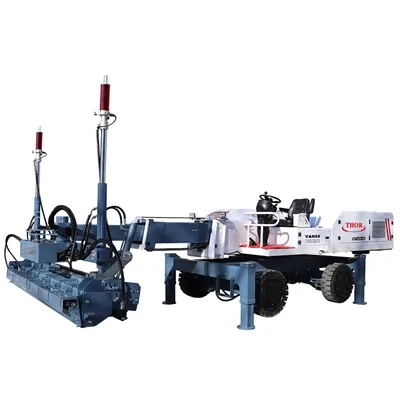
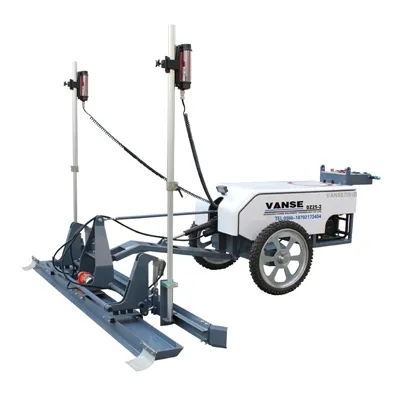
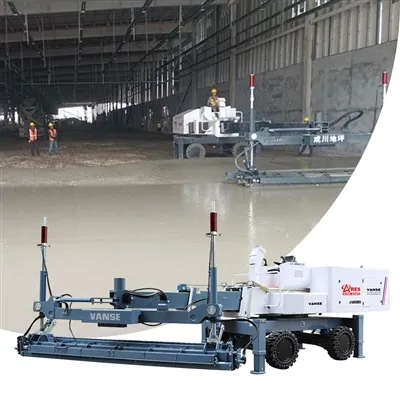
The leveling and compaction of concrete by the laser leveler mainly relies on the following key links:
1. Laser control technology:
The laser leveling machine uses high-precision laser control technology to control the operation of the leveling machine through computer adjustment. Laser control technology provides the machine with precise position and height information, allowing the leveling to accurately control the surface flatness of the concrete.
2. Power system:
The power generated by the leveling machine makes the leveling head of the laser machine move, and combined with the guidance of the computer and laser, it automatically levels and performs leveling work. There is a scraper in the leveling head part and an instrument capable of vibrating. These designs help complete most procedures in the project and ensure one-time pass, improving work efficiency.
3. Accurate hydraulic system:
The accuracy of the hydraulic system is crucial to the smoothing process of concrete. The hydraulic system can adjust pressure and height based on data fed back by the laser, ensuring that the concrete achieves the desired flatness in different areas.
4. Real-time feedback and adjustment:
During the leveling process, the computer system can change the height standard ten times per second, and the number of vibrations per minute can reach about 4,000 times. These digital control technologies allow the machine to continuously adjust itself during work to achieve optimal compaction and smoothing of concrete.
5. Automation and intelligence:
Through automation and intelligent technology, the laser leveling machine can quickly and accurately complete the leveling and compaction work, greatly saving labor and material costs, and also improving the smoothness of the ground.
In summary, the laser leveling machine fully combines a variety of advanced technologies in the process of concrete smoothing and compaction to achieve efficient and precise construction results. For more information, it is recommended to consult our business manager or consult relevant industry information.


Thanks to All the Friends Who Support and Trust Shandong Vanse Machinery Technology Co., Ltd.
If you want to know more about Shandong Vanse Machinery Technology Co., Ltd. or have any questions, please feel free to contact us:
Our Factory
Shandong Vanse Machinery Technology Co., Ltd.








Share this article

About the Author: Shandong Vanse Machinery Technology Co., Ltd.
Shandong Vanse Machinery Technology Co., Ltd. is a high-tech manufacturer specializing in concrete construction machinery, including laser screeds and related equipment. The company integrates R&D, production, and global sales, with products exported to over 60 countries and widely used in infrastructure projects worldwide.
Previous Post
Next Post
Related Articles
You Might Also Like
Concrete Laser Levelings Machine User Manual And Operating Guide
♢ • ♢ • ♢ • ☆ Equipment Overview ☆ • ♢ • ♢ • ♢ The concrete laser leveling machine is an efficient and accurate ground leveling equipment that is widely used in various construction projects. It combines modern laser technology and mechanical engineering technology, captures the signal from the laser transmitter through the laser receiver, controls the scraper height of the leveling machine, and realizes automatic leveling of newly poured concrete, greatly improving work efficiency and leveling quality. . This equipment is suitable for large-area, high-precision concrete ground construction, such as commercial complexes, parking lots, warehouses and other places. ♢ • ♢ • ♢ • ☆ Equipment composition ☆ • ♢ • ♢ • ♢ The concrete laser leveling machine mainly consists of the following parts: 1. Main machine: including core components such as engine, traveling system, leveling system, control system, etc., it is the main working mechanism of the leveling machine. 2. Laser transmitter: used to emit laser signals to provide a reference plane for the leveling machine. 3. Laser receiver: installed on the leveling machine, used to capture laser signals and convert them into mechanical control signals. 4. Water source and water spray system: Provide an appropriate amount of moisture to the concrete during the leveling process to ensure that the concrete surface is flat and smooth. 5. Accessories: including various to ols, measuring tools, etc., used to assist the use and maintenance of the leveling machine ♢ • ♢ • ♢ • ☆ Safety Instructions ☆ • ♢ • ♢ • ♢ When operating a concrete laser leveling, the following safety regulations must be strictly observed: 1. Operators must receive professional training, be familiar with the equipment structure and operating points, and must obtain operating qualifications before taking up their posts. 2. Before starting the equipment, you must check whe ther all components are intact and whether the fasteners are firm and reliable to ensure that the equipment is in good working condition. 3. During operation, overloading, overspeeding, and over-range use are strictly prohibited to avoid equipment damage due to overload. 4. At the construction site, obvious safety war ning signs must be set up to ensure that non-workers stay away from the work area. 5. When the equipment has a fault or abnormality, it should be stopped immediately for inspection and the fault can be eliminated before continued use. 6. Operators must wear complete safety protective equipment, such as hard hats, protective glasses, gloves, etc., to ensure personal safety. ♢ • ♢ • ♢ • ☆ Preparation ☆ • ♢ • ♢ • ♢ Before operating the concrete laser leveling machine, you need to make the following preparations: 1. Check whether the appearance of the equipment is intact and whether there is any obvious damage or deformation. 2. Check whether the engine oil, water tank water level, etc. are within the specified range to ensure that the equipment lubrication and cooling systems are working properly. 3. Check whether each connection part is fastened reliably to prevent the equipment from loosening or falling off during work. 4. Check whether the laser transmitter and receiver are installed correctly to ensure that the laser signal can be transmitted and received normally. 5. According to the conditions of the construction site, reasonably arrange the position of the laser transmitter to ensure that the leveler can receive stable laser signals. 6. Prepare the water source and water spray system to ensure that the concrete surface can be fully moistened during the leveling process. ♢ • ♢ • ♢ • ☆ Operational procedures ☆ • ♢ • ♢ • ♢ The operation process of the concrete laser leveling is as follows: 1. Start the engine, preheat the equipment, and check whether each system is working properly. 2. Set the parameters of the laser transmitter according to the construction drawings and site conditions to ensure that the laser signal emitted meets the leveling requirements. 3. Connect the laser receiver to the leveling machine to ensure stable and reliable signal transmission. 4. Adjust the height and angle of the scraper of the leveling machine to maintain an appropriate distance and angle from the laser signal. 5. Turn on the water spray system to provide the appropriate amount of moisture to the concrete surface. 6. Start the leveling operation. According to the construction progress and the initial setting time of the concrete, reasonably control the walking speed of the leveling machine and the lifting frequency of the scraper. 7. During the leveling process, always observe the flatness and wetness of the concrete surface, and adjust the scraper height and water spray volume in a timely manner. 8. After the leveling operation is completed, turn off the engine and water spray system, and disconnect the laser receiver from the leveling machine. 9. Clean the equipment surface and construction site to ensure that the equipment is tidy and the environment is clean. ♢ • ♢ • ♢ • ☆ Care and Maintenance ☆ • ♢ • ♢ • ♢ In order to ensure the long-term stable operation of the concrete laser leveling machine, regular maintenance and upkeep work must be performed, including: 1. Regularly replace the engine oil and clean the oil filter to ensure that the engine lubrication system is clean and effective. 2. Check whether the cooling system components such as water tanks and water pipes are leaking or blocked, and keep the cooling system unimpeded. 3. Check the wear of scrapers, running wheels and other wearing parts, and replace damaged parts in time to ensure stable equipment performance. 4. Clean dust, oil and other debris on the surface and inside of the equipment to keep the equipment clean and tidy. 5. Regularly check the working status of key components such as electrical systems, laser transmitters and receivers to ensure their normal operation. 6. In accordance with the requirements of the equipment instruction manual, conduct regular comprehensive inspections and maintenance of the equipment to ensure long-term stable operation of the equipment. ♢ • ♢ • ♢ • ☆ Troubleshooting ☆ • ♢ • ♢ • ♢ During use, the concrete laser leveling may encounter some malfunctions or abnormal situations. To solve these problems, we can take the following measures to eliminate them: 1. Difficulty starting the engine: Check whether the battery power is sufficient, whether the starter motor is working normally, whether the fuel supply is smooth, etc. If there is any problem, replace the battery, start the motor or clean the fuel system in time. 2. Poor leveling effect: Check whether the laser transmitter and receiver are installed correctly and whether the signal is stable and reliable; check whether the height and angle of the scraper are adjusted appropriately; check whether the concrete surface is even and moist. If there is any problem, adjust or replace relevant parts in time. 3. The equipment is running abnormally: check whether the running wheels are seriously worn, whether the bearings are damaged, whether the transmission chain is loose, etc. If there is any problem, replace the running wheel, bearing or adjust the transmission chain in time. 4. The laser signal is unstable: Check whether the laser transmitter and receiver are interfered, whether the reflective surface is clean, whether the lens is damaged, etc. If there is any problem, promptly eliminate the interference, clean the reflective surface or replace the lens. 5. Electrical system failure: Check whether the cables are damaged, whether the wiring is loose, whether the components are damaged, etc. If there is a problem, repair the cable, tighten the wiring or replace the components in time. When troubleshooting, operators should strictly follow the requirements of the equipment instruction manual and are strictly prohibited from dismantling or repairing the equipment at will. If you encounter a fault that cannot be solved, you should contact professional maintenance personnel in time to handle it. ♢ • ♢ • ♢ • ☆ Transportation and Storage ☆ • ♢ • ♢ • ♢ When transporting and storing the concrete laser leveling, you need to pay attention to the following points: 1. Before transportation, make sure the device is turned off and disconnect the power supply and cables to prevent accidental startup during transportation. 2. During transportation, the equipment should be fixed and protected to prevent the equipment from being collided or damaged during transportation. 3. After arriving at the destination, the equipment should be fully inspected to ensure that the equipment has not been damaged or deformed during transportation. 4. When storing equipment, you should choose a dry, ventilated, and dark place to prevent the equipment from moisture, rust, or other damage. 5. During the storage period, the equipment should be maintained and maintained regularly to ensure that the equipment can work normally the next time it is used. In short, the warm concrete laser leveling machine is an efficient and accurate ground leveling equipment, but during use it needs to strictly abide by safety regulations, make preparations, follow operating procedures, perform regular maintenance and troubleshooting, and troubleshoot in a timely manner , and take necessary protective measures during transportation and storage. Only in this way can the long-term stable operation and service life of the equipment be ensured.How to evaluate and improve the effect of concrete pavement leveling through quality inspection?
Evaluating and improving the smoothing effect of concrete pavement through quality inspection is a systematic work involving multiple links. The following will elaborate on how to evaluate and improve the smoothing effect of concrete pavement through quality inspection. •◆•1•◆◆ Assessment 1. Smoothness test: Smoothness is an important indicator for evaluating the quality of concrete pavement. By using a flatness detector to continuously measure the surface of the concrete pavement, record the unevenness at different locations and generate a pavement flatness index. According to the distribution and value range of the flatness index, the quality of road surface smoothness can be judged. The smaller the value, the better the smoothness. 2. Compaction degree test: Compaction degree is an important parameter to test the strength of concrete pavement. Detecting the compaction of the road surface by coring method or radar wave method can reflect the density of the concrete road surface. The higher the degree of compaction, the denser and more durable the pavement material is. 3. Anti-skid performance test: Anti-skid performance is an important indicator of the safety of concrete pavement. Use a pendulum friction meter to measure the friction coefficient of the road surface to understand the anti-skid ability of the road surface. The larger the friction coefficient, the better the anti-skid performance. 4. Damage detection: Regularly conduct damage surveys on concrete pavement, record various cracks, pits, looseness and other damage conditions, analyze the causes of damage, and provide basis for pavement repair and maintenance. •◆•2•◆◆ Improvement 1. Material control: Strengthen the quality testing of raw materials to ensure that the quality of cement, aggregate and other materials meets the requirements. The use of high-quality raw materials can improve the strength and durability of concrete, thereby improving the smoothness of the road surface. 2. Mix ratio design: Optimize concrete mix ratio design and select appropriate water-cement ratio, sand rate and aggregate gradation. Determine the best mix ratio through experiments to improve the working performance and compactness of the concrete. 3. Construction process optimization: Strengthen quality control during the construction process to ensure adequate concrete mixing, transportation, paving and vibration. The use of advanced construction techniques and technologies, such as slip form paving, three-roller unit paving, etc., can improve the smoothness and compaction of the road surface. 4. Health care and maintenance: Strengthen the early health care and maintenance of concrete pavement, take appropriate moisturizing and health care measures, control traffic load, and repair damaged parts in a timely manner. Health care and maintenance can reduce the occurrence of quality problems such as cracks and potholes, and improve the service life and smoothness of the road surface. 5. Quality inspection standardization: Develop detailed quality inspection standards and operating procedures to ensure the accuracy and reliability of inspection work. Discover existing problems and deficiencies through statistical analysis of quality inspection data, and continuously improve construction technology and quality management systems. 6. Training and awareness improvement: Strengthen training and technical exchanges for construction personnel to improve their understanding of the importance of quality inspection and operational skills. Through training and awareness raising, construction personnel's sense of responsibility and quality awareness can be enhanced to promote continuous quality improvement. 7. Introduce advanced technology: Pay attention to and introduce advanced construction technology and quality inspection instruments to improve construction efficiency and quality inspection levels. For example, a high-precision GPS positioning system is used for measurement and setting out, and an automated flatness detector is used for continuous measurement. The application of these advanced technologies can improve the accuracy of data collection and processing efficiency, providing strong support for quality assessment and improvement. In summary, evaluating and improving the effectiveness of concrete pavement leveling through quality testing is a comprehensive process. In actual work, multiple methods should be adopted for evaluation and improvement based on specific conditions to ensure that the flatness and durability of the concrete pavement meet the expected requirements. At the same time, we will strengthen the construction of quality management systems and technological innovation to continuously improve the quality level of concrete pavement construction.What are the importance of daily equipment maintenance for concrete laser leveling machines?
– Maintain high-precision operation: One of the core advantages of concrete laser leveling machines is its high-precision leveling effect. Through daily maintenance, key components such as laser transmitters and receivers can be cleaned and calibrated to avoid measurement errors caused by dust, dirt or component offset, thereby ensuring leveling accuracy. – Ensure the normal operation of the hydraulic system: The hydraulic system is an important part of the laser leveling machine and is responsible for controlling the lifting and adjustment of the leveling head. Daily maintenance includes checking the oil level and oil quality of the hydraulic oil, as well as the sealing of the hydraulic pipeline, preventing hydraulic oil leakage or contamination, and ensuring that the hydraulic system can work stably and accurately. – Reduce component wear: During the construction process of the laser leveling machine, various components will wear due to friction, vibration, etc. Regular maintenance work such as lubrication and tightening can effectively reduce friction between components, reduce wear rate, and extend the service life of components. – Preventing failures: Through daily inspections, potential equipment failures can be discovered in time, such as loose electrical connections, aging lines, damaged parts, etc., and repaired or replaced to prevent small problems from turning into major failures, reducing equipment downtime and maintenance costs. – Reducing downtime caused by equipment failure: Equipment failure is one of the main reasons for construction interruptions. Doing a good job of daily maintenance can effectively reduce the failure rate and ensure that the equipment can operate continuously and stably during the construction process, thereby improving construction efficiency. – Maintaining equipment in good condition: Maintenance work includes cleaning, adjusting and replacing wearing parts of the equipment. These measures can keep the equipment in good working condition at all times and avoid construction speed reduction or quality problems caused by poor equipment condition. – Ensuring leveling accuracy: The leveling accuracy of the laser leveling machine directly affects the flatness and levelness of the concrete floor. Daily maintenance can ensure the accuracy and stability of the laser system, thereby ensuring that the leveled floor meets the design requirements and improves construction quality. – Reduce construction defects: Through maintenance, construction defects caused by equipment problems, such as uneven ground, large elevation errors, insufficient concrete density, etc., can be avoided, thereby reducing the workload of later repairs and rework. – Reduce maintenance costs: Regular maintenance can promptly detect and solve small problems with the equipment to prevent them from developing into major failures, thereby reducing the high maintenance costs caused by major failures. – Save labor costs: Efficient operation of equipment can reduce construction time and improve construction efficiency, thereby saving labor costs. – Reduce safety risks: Daily maintenance includes checking the electrical system, protective devices, etc. of the equipment to ensure their normal operation, thereby reducing safety risks such as electric shock and mechanical injuries to operators. – Improve operator safety awareness: During daily maintenance, operators can become more familiar with the structure and performance of the equipment, enhance safety awareness, comply with operating procedures, and further ensure operational safety.