Technical Knowledge
What are the rules of use of concrete laser leveling machine?
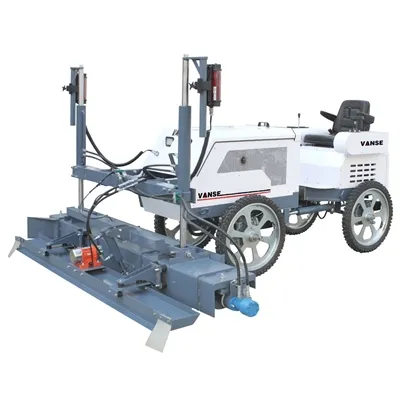
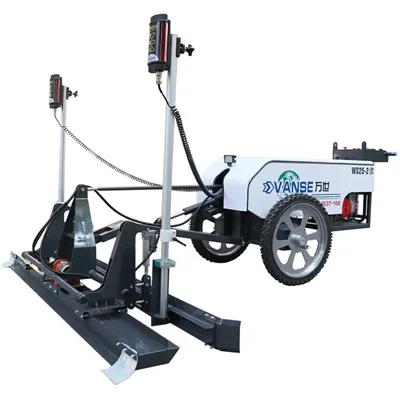
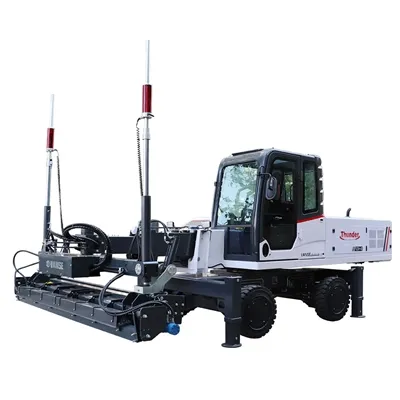
If you want to use the concrete laser leveling machine better, there are some prerequisites. First, you need to be familiar with the structural characteristics of the concrete laser leveling machine, and you must abide by the rules during use, which can effectively guarantee the use of the equipment. In order to allow users to use the leveling machine both to ensure the effect and to rest assured, the staff will lead everyone to look at the rules that need to be followed when operating the concrete laser leveler safely.
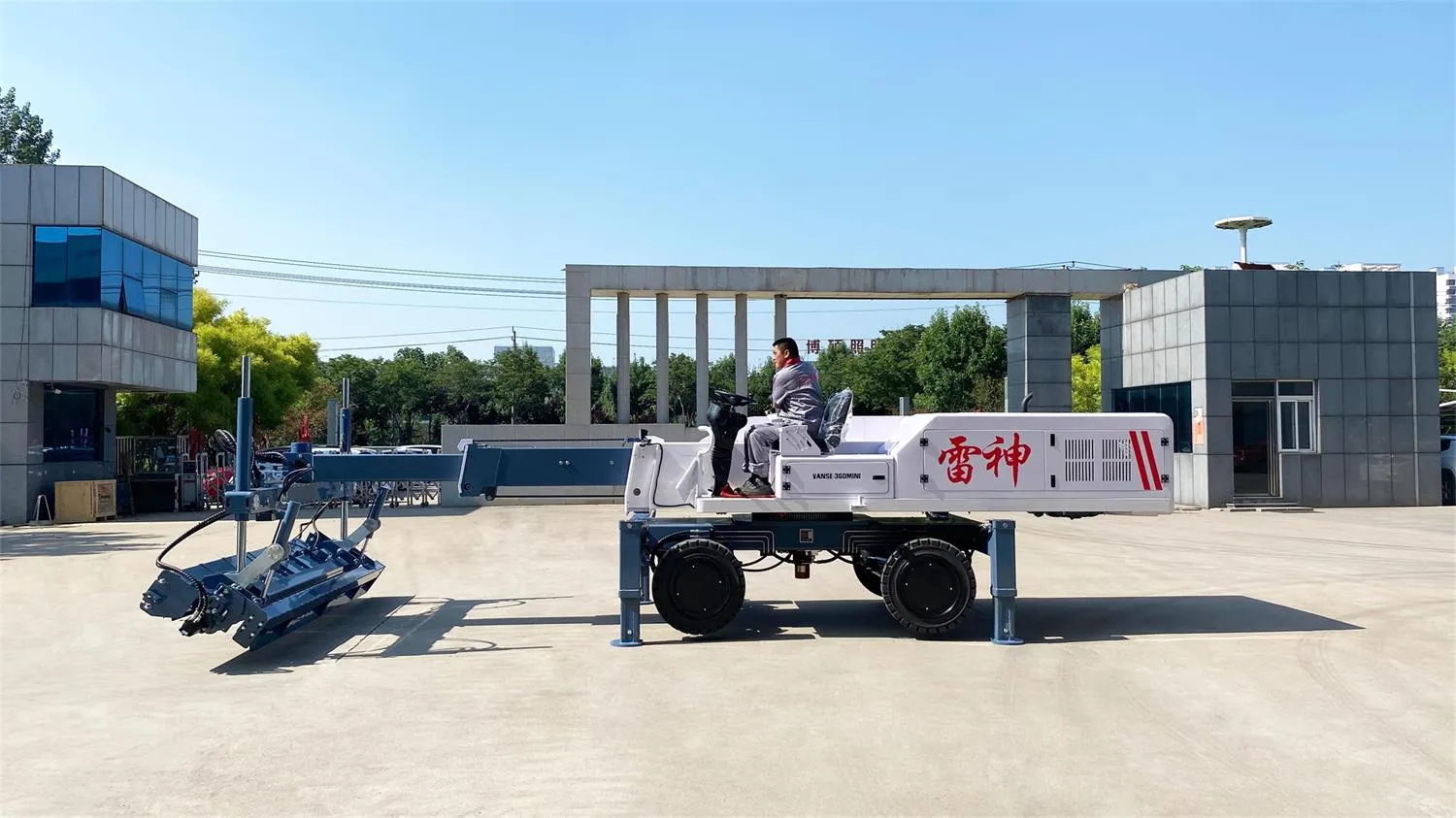
◤First of all, it is necessary to ensure that all parts of the concrete laser leveling machine are connected in good condition without any looseness, so as to prevent problems during the operation;
◤Add enough lubricating oil to the internal combustion frame leveler in advance to improve the flexibility of the controller so as to improve work efficiency;
◤The surface insulation part of the cable must be complete, and a little bit of damage must be treated with caution until it is completely intact. This will not only ensure the safety of construction personnel, but also the safety of passers-by.
◤After turning on the power, you need to check the rotation direction of the motor, and change the wire immediately if there is an error, so as to avoid bigger problems during work.
◤Personnel who operate the leveling machine must undergo professional training, such as not tilting and not holding too tightly during the operation, so as to avoid careless accidents.
◤During the construction process, the concrete laser leveling machine needs dense soil, which can be repeatedly tamped on the spot without moving back and forth, so that even if the result is the same, more energy will be spent on moving, which is uneconomical;
◤So how should the laser leveling machine be used? In fact, this problem will be introduced in great detail in the product manual of the device, such as what is the operating procedure, what safety issues should be paid attention to when switching on and off, etc. There are very detailed step-by-step instructions in the product manual. Therefore, when using the device, the user has nothing to worry about. The only thing to pay attention to is to be familiar with the relevant information in the manual.
From the content of the above-mentioned safe operation rules for concrete laser leveling machines, it can be seen that if you want the production enterprise to develop for a long time, you must not only abide by the operating rules reflected in the above content, but also need to do a good job in the maintenance of equipment on a regular basis. . VANSE Machinery Technology has been engaged in the production and processing of leveling machines for a long time. It has rich experience and can meet the various needs of customers. If you are interested in this equipment, please come to the manufacturer directly for guidance.
Thanks to All the Friends Who Support and Trust Shandong Vanse Machinery Technology Co., Ltd.
If you want to know more about Shandong Vanse Machinery Technology Co., Ltd. or have any questions, please feel free to contact us:
Our Factory
Shandong Vanse Machinery Technology Co., Ltd.








Share this article

About the Author: Shandong Vanse Machinery Technology Co., Ltd.
Shandong Vanse Machinery Technology Co., Ltd. is a high-tech manufacturer specializing in concrete construction machinery, including laser screeds and related equipment. The company integrates R&D, production, and global sales, with products exported to over 60 countries and widely used in infrastructure projects worldwide.
Previous Post
Next Post
Related Articles
You Might Also Like
VANSE leveling machine speaks with quality and service!
VANSE leveling machine speaks with quality and service! The laser transmitter of the concrete laser leveling machine generates a rotating laser. The laser receiver on the laser leveling machine receives the signal and is analyzed by the laser measurement and control system. The deviation will be fed back to the sensitive computer control system on the laser leveling machine. The linear actuator will adjust the height of the scraper to ensure leveling accuracy. Shandong VANSE Machinery, as the earliest and most professional manufacturer of laser leveling machines in China, believes that occasional quality problems are not enough to negate the strength of the entire brand. Does a brand have strength? The key lies in whether the company has a sound after-sales system and whether it can provide high-quality after-sales service in the first place. High-quality products are the theme of long-term development of enterprises, and high-quality services are the key to the sublimation of corporate brand image. Shandong VANSE laser leveling machine manufacturer has been committed to the research and development and production of concrete laser leveling machine products for many years. The product quality has also experienced the test of various working conditions, and the high-quality after-sales service has been recognized by the majority of users. Our service tenet As long as there is a VANSE laser leveling machine, we only need a call from you, and we can always provide you with high-quality services in the first time. We insist on making high-quality products and high-quality services!How to ensure construction quality of the laser leveling machine during construction?
The key to ensuring the quality of construction during the construction process of the laser leveling machine lies in its precise automatic control system and correct construction process. Here are some of the main steps and considerations to ensure the quality of construction: 1. **Site survey and planning**: Before construction, the site should be surveyed in detail to determine the scope of construction, check the ground conditions, assess whether there are potential obstacles or underground facilities, and confirm the type and proportion of concrete. 2. **Equipment calibration**: The laser leveling machine must be calibrated before use to ensure the accuracy of the laser transmitter. This includes horizontal calibration and intensity adjustment of the laser signal to ensure leveling accuracy. 3. **Template and boundary setting**: Set the template according to the design drawings, especially around the wall or equipment foundation, and manually set the boundary in advance to ensure that the areas that the laser leveling machine cannot reach can also meet the design requirements. 4. **Concrete pouring and initial leveling**: When pouring concrete, the pouring speed and amount should be controlled to maintain continuity and avoid cold joints. Before using the laser leveling machine, perform preliminary leveling by manual or small machinery to ensure that the surface is roughly flat. 5. **Laser leveling machine operation**: – **Laser signal reception**: The receiver on the laser leveling machine continuously monitors the laser signal and adjusts the height of the leveling head in real time to ensure that the concrete surface is consistent with the laser plane. – **Automatic adjustment**: The leveling machine automatically adjusts the electric push rod or hydraulic cylinder according to the deviation fed back by the receiver to control the height of the scraper to maintain the required flatness. 6. **Quality monitoring**: During the construction process, the flatness, slope and concrete density should be checked regularly to ensure that they meet the design requirements. If necessary, an independent laser rangefinder can be used for review. 7. **Construction path planning**: Reasonably plan the walking path of the leveling machine to avoid repeated construction and omissions, and ensure that the entire area is evenly stressed and leveled. Post-construction inspection and maintenance 8. **Final inspection**: After the construction is completed, a comprehensive quality inspection is carried out, including flatness and strength tests, to ensure that the specifications are met. 9. **Maintenance and maintenance**: Proper cleaning and maintenance of the laser leveling machine to ensure that the equipment is in good condition and extend its service life. 10. **Environmental adaptability**: Considering the influence of the construction environment (such as temperature and humidity), take corresponding measures, such as increasing the water retention of concrete during summer construction, and insulation measures may be required in winter. By following the above steps and precautions, the laser leveling machine can effectively ensure the construction quality during the construction process and achieve high-precision and efficient ground leveling operations.How to ensure the mix ratio of concrete during construction?
♦♦♦♦♦ Introduction As an indispensable material in construction projects, the quality of concrete is directly related to the safety and durability of the building structure. The mix proportion design of concrete is a key link to ensure the quality of concrete. During the construction process, how to ensure the mix ratio of concrete has become a problem that every construction worker must face and solve. This article will elaborate on how to ensure the mix ratio of concrete during the construction process from the aspects of concrete mix design, control measures during construction, and common problems and treatment methods. ♦♦♦♦♦ Concrete mix design 1. Clarify the project requirements. Before designing the concrete mix ratio, the project requirements for concrete must be clarified, including strength level, durability, impermeability, frost resistance, etc. These requirements will directly determine the various parameters of the concrete mix proportion. Select appropriate raw materials Concrete raw materials include cement, aggregates (sand, stone), admixtures (fly ash, slag powder, etc.) and admixtures. 2. Selecting appropriate raw materials is the basis for ensuring the concrete mix ratio. For example, the selection of cement should consider its strength grade, initial and final setting time and other factors; the selection of aggregate should consider its particle size distribution, mud content and other factors. 3. Carry out mix ratio design. According to the project requirements and raw material properties, parameters such as the water-cement ratio, aggregate dosage, admixture dosage, and admixture dosage of concrete are determined through experiments to obtain the concrete mix ratio. The mix design should follow the principles of economy, rationality, and feasibility, while meeting the project's requirements for concrete performance. ♦♦♦♦♦ Control measures during construction 1. Strictly control the quality of raw materials: During the construction process, the quality of raw materials should be regularly tested to ensure that they meet the design requirements. Unqualified raw materials should be replaced or disposed of in a timely manner. At the same time, the storage and preservation of raw materials should also be done well to prevent changes in the properties of raw materials due to improper storage. 2. Ensure accurate measurement: Various parameters of the concrete mix ratio need to be achieved through accurate measurement. Therefore, during the construction process, calibrated measuring equipment should be used to ensure accurate measurement of various raw materials. At the same time, metering equipment should be maintained and inspected regularly to ensure that it is in good working condition. 3. Strengthen mixing management: Mixing is a key link in concrete production and an important link in ensuring the concrete mix ratio. During the construction process, the management of the mixing station should be strengthened to ensure that mixing time, mixing speed and other parameters meet the design requirements. At the same time, the mixing equipment should be maintained and inspected regularly to ensure its normal operation. 4. Control the transportation and pouring process: During the concrete transportation and pouring process, effective measures should be taken to prevent concrete from segregating, bleeding and other phenomena. For example, during transportation, the vehicle speed should be appropriately slowed down and sharp turns should be reduced; during the pouring process, pouring points should be reasonably arranged and the pouring speed should be controlled. In addition, corresponding insulation or cooling measures should be taken according to weather conditions to ensure that the concrete maintains a suitable temperature during the pouring process. ♦♦♦♦♦ Frequently asked questions and solutions 1. Insufficient strength of concrete Reasons: Improper mix design, unqualified raw material quality, uneven mixing, insufficient maintenance, etc. Treatment method: Re-design the mix ratio, replace qualified raw materials, strengthen mixing management, ensure maintenance time, etc. 2. Concrete has poor workability Reasons: improper water-cement ratio, large changes in aggregate moisture content, improper use of admixtures, etc. Treatment methods: adjust water-cement ratio, control aggregate moisture content, select appropriate admixtures, etc. 3. Concrete segregation and bleeding Reasons: Insufficient mixing time, too long transportation distance, too fast pouring speed, etc. Treatment methods: increase mixing time, reduce transportation distance, control pouring speed, etc. ♦♦♦♦♦ Summary and Outlook Ensuring the mix ratio of concrete is a key link in ensuring concrete quality. During the construction process, measures such as reasonable mix ratio design, strict raw material quality control, accurate measurement management, strengthening mixing management, and controlling the transportation and pouring process should be adopted to ensure that the concrete mix ratio is effectively guaranteed. At the same time, in response to common problems that may arise during the construction process, corresponding measures should be taken in a timely manner to ensure that the quality of the concrete meets the project requirements. With the continuous advancement of science and technology and the continuous emergence of new building materials, the mix design and construction control technology of concrete will continue to be updated and improved in the future.