Technical Knowledge
How is the construction process of concrete pavement with double-layer steel mesh different from that of single-layer steel mesh?
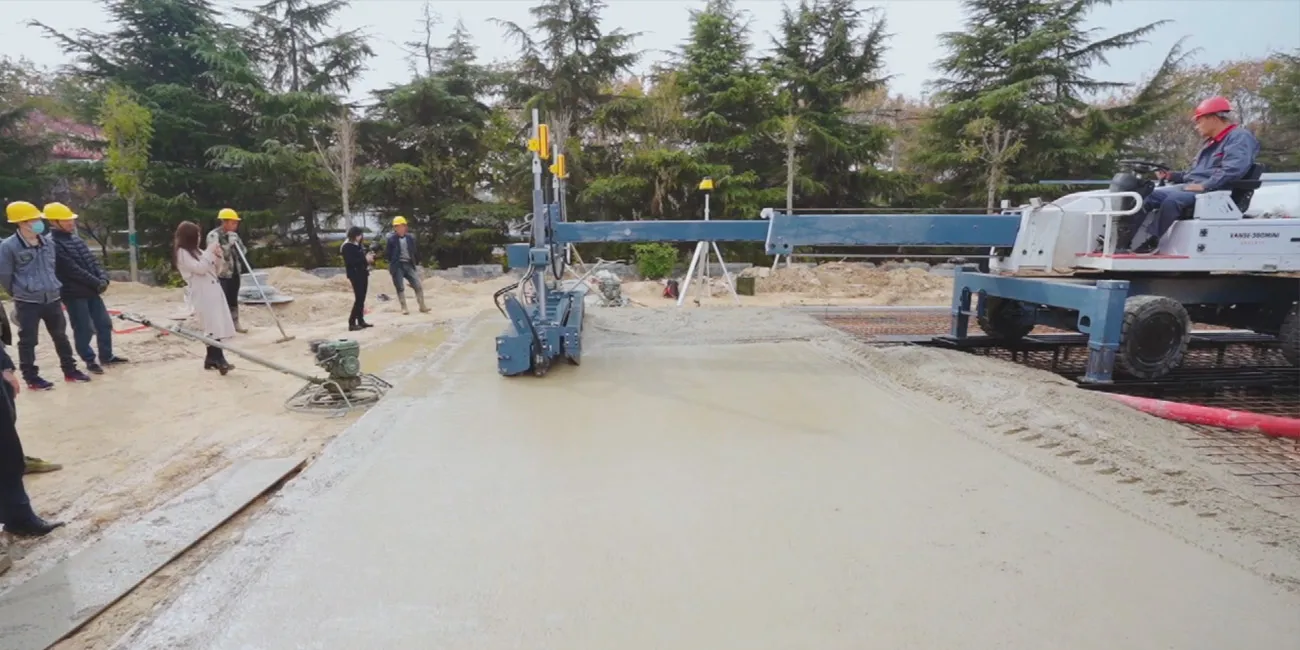
How is the construction process of concrete pavement with double-layer steel mesh different from that of single-layer steel mesh?
The construction process of concrete pavement with double-layer steel mesh differs from that of single-layer steel mesh in the following aspects:
Steel bar processing and installation
– Single-layer steel mesh:
– Steel bar processing mainly involves straightening, cutting, bending, etc. according to design requirements. After the processed steel bars are transported to the construction site, they are laid directly on the base.
– Usually, the steel mesh is placed in the designated position by manual or small machinery, and fixed with iron wire or steel bar horse stool to ensure that there is a certain protective layer thickness between the steel mesh and the base, generally 3-5cm.
– Double-layer steel mesh:
– In addition to basic steel bar processing, for double-layer steel mesh, supporting steel bars or horse stool bars need to be set between the upper and lower steel meshes to ensure that the spacing between the two layers of steel mesh meets the design requirements, generally about 15-30cm.
– First lay the lower steel mesh, and then install the upper steel mesh after fixing it. During the process, the position and spacing of the two layers of steel mesh must be strictly controlled to ensure that they do not shift during the concrete pouring process.
Formwork installation
– Single-layer steel mesh:
– The installation of the formwork is mainly to ensure that its position is accurate and firm, and it can withstand the lateral pressure during concrete pouring. The height of the formwork is generally consistent with the design thickness of the concrete pavement.
– Double-layer steel mesh:
– Due to the existence of double-layer steel mesh, the installation of the formwork requires higher precision. When installing the formwork, it is necessary to consider the position of the steel mesh and the thickness of the protective layer to ensure that the spacing between the formwork and the steel mesh is uniform, and to prevent the formwork from squeezing the steel mesh and causing its position deviation.
Concrete pouring and vibration
– Single-layer steel mesh:
– When pouring concrete, the concrete can be directly poured into the formwork, and the inserted vibrator and the flat vibrator can be used to vibrate to make the concrete dense. During the vibration process, be careful to avoid the vibrator rod directly touching the steel mesh to avoid displacement of the steel mesh.
– Double-layer steel mesh:
– When pouring concrete, in order to avoid the upper steel mesh displacement caused by the impact of concrete falling, a more reasonable pouring method needs to be adopted, such as evenly spreading the concrete along one side of the formwork, allowing the concrete to slowly flow to the other side, or using a layered pouring method.
– When vibrating, in addition to using an insert vibrator and a flat vibrator, for the concrete between the double-layer steel mesh, it may be necessary to use a small vibrating rod or vibrating sheet for auxiliary vibration to ensure that the concrete can be fully compacted between the two layers of steel mesh. At the same time, pay more attention to the operation of the vibrating rod to avoid touching the steel mesh and causing it to deform.
Surface treatment and maintenance
– Single-layer steel mesh:
– After the concrete is vibrated, use a scraper to flatten the surface, and then perform surface treatment procedures such as smoothing, and finally cover with a curing film or sprinkle water for maintenance to keep the concrete surface moist and prevent the surface from losing water and cracking.
– Double-layer steel mesh:
– During surface treatment, due to the restraining effect of the double-layer steel mesh on the concrete surface, more care should be taken during operations such as polishing to avoid uneven surfaces caused by the influence of the steel mesh.
– During the curing process, it is necessary to ensure that the curing measures can fully cure both the interior and surface of the concrete, because the double-layer steel mesh will affect the migration and heat dissipation of the moisture inside the concrete to a certain extent, so the curing time may need to be appropriately extended, generally not less than 7 days.
Click the below to jump immediately!!!

CONCRETE LASER LEVELING MACHINE


TRACKED MINI DUMPER


Thanks to All the Friends Who Support and Trust Shandong Vanse Machinery Technology Co., Ltd.
If you want to know more about Shandong Vanse Machinery Technology Co., Ltd. or have any questions, please feel free to contact us:
Our Factory
Shandong Vanse Machinery Technology Co., Ltd.








Share this article

About the Author: Shandong Vanse Machinery Technology Co., Ltd.
Shandong Vanse Machinery Technology Co., Ltd. is a high-tech manufacturer specializing in concrete construction machinery, including laser screeds and related equipment. The company integrates R&D, production, and global sales, with products exported to over 60 countries and widely used in infrastructure projects worldwide.
Previous Post
Next Post
Related Articles
You Might Also Like
What are the risks in construction safety of laser leveling machines and pavers?
Both laser levelings and pavers present certain risks in terms of construction safety. Here are some of the main security risks they each face: Safety risks of laser leveling machines: 1. Equipment operation errors: Incorrect operation may cause the equipment to lose control and cause an accident. 2. Laser system interference: The accuracy of the laser system is crucial to the leveling quality. If it is interfered with, it may lead to substandard construction or cause an accident. 3. Poor road conditions: Operating on soft, slippery or uneven roads may cause equipment instability or damage. 4. Power supply and electrical safety: The equipment needs to be connected to electricity to work, and there is a risk of electric shock and electrical fire. 5. Improper maintenance and care: Equipment that is not maintained and maintained in a timely manner may increase the risk of failure. Paver safety risks: 1. Equipment overturning: Due to the large weight and complex structure of the paver, if it becomes unstable during operation, it may overturn. 2. High-temperature oil: The paver needs to use high-temperature oil during operation, which may lead to accidents such as fire or burns. 3. Mechanical damage: Rotating parts of the paver, conveyor belts, etc. may cause mechanical damage. 4. Construction environmental risks: Bad weather, road conditions and other factors may increase construction risks. 5. Traffic safety: At the road construction site, the paver may interact with passing vehicles, posing traffic safety risks. In order to reduce these risks, the construction unit should ensure that the operators have received professional training, the equipment is regularly maintained and maintained, and safety is strictly observed operating procedures. In addition, on-site safety management personnel should monitor the entire construction process to promptly discover and correct possible safety hazards.How can we ensure safety during concrete construction?
Safety is a core aspect of concrete construction, encompassing all elements: personnel, machinery, materials, methods, and the environment. Through comprehensive management processes encompassing preventive measures, ongoing control, and post-construction emergency response, we can prevent accidents such as collapses, mechanical injuries, electric shocks, and falls from heights. The following are key implementation points, broken down by construction phase and management dimension: Pre-construction preparation determines the starting point of safety management and must address the four key aspects of "plan, personnel, equipment, and site" to avoid unauthorized adjustments to plans during construction. Concrete projects involve high-risk processes such as formwork support, lifting and hoisting, and working at height. A specific safety plan must be prepared and approved according to regulations (projects exceeding a certain scale require expert review, such as erecting a formwork support system ≥8m high). The plan should clearly define: Risk identification: List the risk points for each process (e.g., formwork collapse, pump truck overturning, cable damage and electric shock), and the corresponding countermeasures; Technical parameters: Formwork support vertical pole spacing, crossbar pitch, sweeping pole configuration, and lifting equipment selection (e.g., tower crane lifting capacity, pump truck outrigger span); Personnel division of labor: Clarify the safety responsibilities of safety officers, technicians, and operators to avoid blind spots in responsibility. Full-staff training: All personnel involved (including concrete workers, scaffolders, crane operators, and general workers) must complete safety training before taking up their posts. Key training focuses on: Specialize d workers (such as scaffolders, crane operators, and electricians) must hold a special operations operator certificate; working without a certificate is strictly prohibited; Common concrete engineering accident cases (such as causes of formwork collapse and first aid for electric shock) and self-protection skills. Detailed briefing: Before construction begins, the team will receive both a written and verbal safety briefing. The content must detail operational details (e.g., "The pump truck's outriggers must be supported on solid ground; operating without a backing plate is strictly prohibited on soft soil"; "The vibrator cable must not be damaged; wet hands must not touch the switch"). These briefings must be signed and recorded by both the person giving the briefing and the person receiving the briefing. Mechanical equipment inspection: Lifting equipment (tower cranes, truck-mounted pumps, concrete placing booms): Check the braking system, wire rope wear, and outrigger stability. Perform a test run with no load to ensure the limit switches (torque limiter and height limiter) are sensitive and effective. Concrete machinery (mixers, vibrators, conveying pumps): Check motor insulation and cable integrity (to avoid damage and leakage). Vibrators must be equipped with a residual current device (RCD) (rated leakage current ≤ 30mA, actuation time ≤ 0.1s). Tools and protective equipment: Check safety helmets (for cracks and expiration), safety belts (double hooks intact and free of aging), and insulating gloves (for damage). Materials and Site Preparation: Formwork support materials (steel pipes and fasteners) must comply with national standards. Bent, rusted, or cracked steel pipes are strictly prohibited. Work Surface Cleaning: Clear debris from the pit/scaffolding. Elevated work platforms must be fully covered with scaffolding. Edges (such as the pit perimeter and floor edges) must be protected by 1.2m-high guardrails and 18cm-high toeboards, and high-mesh safety nets must be installed. Temporary Power Supply: Cables in the concrete work area must be overhead or protected in conduits. Do not roll over or immerse them. Distribution boxes must be locked and posted with "Caution: Electric Shock" warning signs. During concrete construction, there's a lot of cross-functional work (such as collaboration between formwork workers, concrete workers, and crane operators). Real-time risk monitoring is essential to prevent violations. Formwork collapse is the most fatal accident in concrete construction, and the following aspects require key control: Support Erection Monitoring: Erection must strictly follow the specific plan, with safety officers on duty throughout the process. Verify that the vertical poles are vertical, that the sweeping poles are ≤20cm above the ground, and that the crossbars are fully connected to the vertical poles. Arbitrarily increasing the spacing between vertical poles or reducing the number of crossbar layers is strictly prohibited. Load Control: During concrete pouring, it is strictly forbidden to pile excess materials (such as rebar or cement) on the formwork supports to prevent localized overloading. The pouring sequence must be carried out according to the plan (e.g., "from the center to the sides" and "pour in layers, each layer ≤ 50cm thick") to prevent excessive stress on one side of the formwork. Real-time Monitoring: During the pouring process, designated personnel (technicians and safety officers) will monitor the support system. If any abnormalities such as bent uprights, loose fasteners, or formwork deformation are detected, pouring will be stopped immediately, personnel will be evacuated, and work will resume only after satisfactory corrections have been made. Lifting Safety: Before operating a tower crane or pump truck, ensure that no personnel are within the operating radius (establish a warning area and have dedicated personnel on duty). Lifting objects of unknown weight is strictly prohibited. When using a concrete placing boom, it must be secured to a solid foundation. Overloading is strictly prohibited. Operators must wear safety belts and operate from a stable platform. When unloading concrete trucks, the operator must stand in a safe position to prevent the truck's tires from crushing personnel or cables. Concrete pouring safety: When pouring at height (e.g., floors, bridge piers): Operators must stand on scaffolding or operating platforms. Standing on formwork or rebar is strictly prohibited. Safety belts must be hung high and used low (with the attachment point above the work surface). Vibrating operations: Operators of vibrators must wear insulated shoes and gloves. It is strictly prohibited to use the vibrator to pry rebar or formwork. If the cable is damaged, immediately stop using it and replace it. Avoid fatigue during work: Concrete pouring is often a continuous operation (e.g., large volumes of concrete must be poured in one go). Work shifts should be arranged appropriately, with each shift lasting no more than 8 hours to prevent operator errors due to fatigue. Cross-operation Control: If simultaneous work is being carried out on upper and lower levels (e.g., pouring on the upper level while cleaning on the lower level), a "hard barrier" (e.g., scaffolding or safety nets) must be established to prevent tools and concrete blocks from falling and injuring personnel. Workers must wear hard hats and are strictly prohibited from remaining on the lower level. Emergency Response: If an electric shock accident occurs: Immediately disconnect the power supply and use insulated tools to remove the victim; do not drag the victim by hand. If the victim is not breathing, immediately perform CPR and call 120. If a fall occurs: Avoid moving the victim (to prevent spinal injury), contact emergency services immediately, secure the scene, and investigate the cause of the fall. A first aid kit (including tourniquets, bandages, and disinfectants) must be available on site, and emergency telephone numbers (for project safety officers, hospitals, and firefighters) must be posted near the work area. After concrete pouring is complete, a safe finishing touch must be ensured, while lessons learned and subsequent management optimization are also required. Site Cleaning and Equipment Maintenance: Promptly clean concrete debris from the work surface. When dismantling temporary protective structures (such as scaffolding), proceed from top to bottom. Do not throw steel pipes or fasteners at random. Perform maintenance on mechanical equipment (such as cleaning concrete residue from vibrators and inspecting the hydraulic system of pump trucks). Electrical cables should be neatly stored in a dedicated warehouse. Safety Inspection and Corrective Actions: Conduct a secondary inspection of the formwork support system to confirm that the concrete strength meets the design requirements (e.g., beam and slab concrete strength ≥ 75% of the design value). Only then can the supports be removed according to the plan. Premature formwork removal is strictly prohibited. Collate safety records (briefing records, equipment inspection records, and process monitoring records) to form a closed-loop system. Case Review and Training: If minor hazards occur during construction (such as loose fasteners or damaged cables), a full-staff review is conducted to analyze the cause (whether it was an operational issue or an oversight) to prevent recurrence. Safety lessons learned from this construction project will be incorporated into the next training session to continuously enhance safety awareness. Concrete project safety management requires a clear accountability system to avoid a situation where "everyone is responsible, but no one is responsible": Managing production must also manage safety: The project manager is the primary person responsible for project safety and must regularly inspect the implementation of safety measures. Compressing safety preparation time to meet deadlines is strictly prohibited. Managing technology must also manage safety: Technicians must fully consider safety risks when developing plans. Technical briefings must include safety requirements and must not focus solely on process without considering safety. Managing teams must also manage safety: The team leader is the direct on-site safety manager and must supervise team members' adherence to regulations. Any violations (such as not wearing a safety helmet or improper formwork removal) must be immediately stopped. Turning a blind eye is strictly prohibited. In summary, the core of concrete project safety management is "prevention first, process control, and individual accountability." Safety requirements must be integrated into every step, from plan development to personnel operations to emergency response, establishing a comprehensive control chain to minimize safety incidents. Note: The parameters provided in this document are for reference only and are not mandatory. Due to differences in technical characteristics between different brands and models of laser levelers, please consult the manufacturer for a suitable solution before actual operation. This reference document assumes no responsibility for any issues arising from failure to follow the manufacturer's instructions.For narrow spaces like warehouse aisles, which concrete laser leveling machine model is the most suitable?
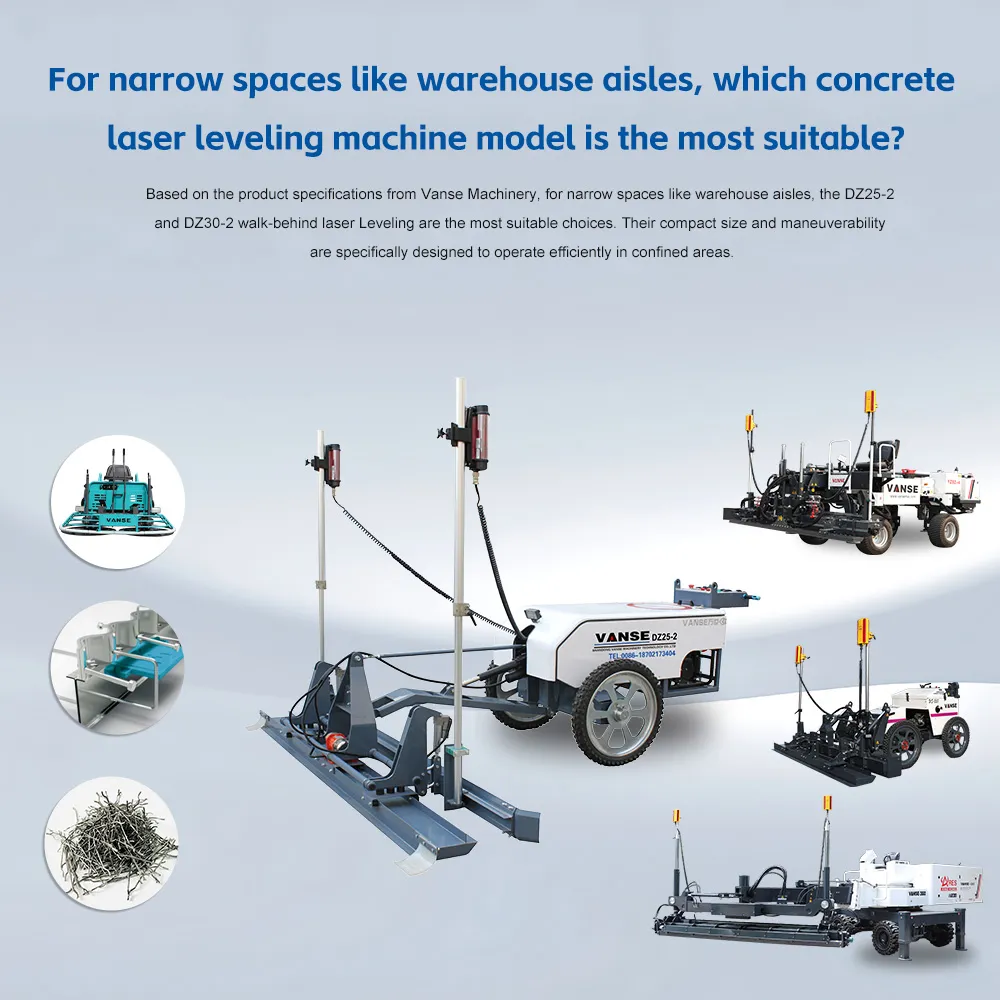
Based on the product specifications from Vanse Machinery, for narrow spaces like warehouse aisles, the DZ25-2 and DZ30-2 walk-behind laser Leveling are the most suitable choices. Their compact size and maneuverability are specifically designed to operate efficiently in confined areas. Model Why It's Suitable for Narrow Aisles Key Advantage Typical Application Efficiency DZ25-2 Light and flexible for performing high-precision leveling in narrow or complex sites. Compact size, ideal for very tight spaces. Small warehouses, indoor workshops, underground garages. Approx. 200㎡/h DZ30-2 Same core design as DZ25-2, with slightly higher power and efficiency. Light and flexible, with a bit more output. Small warehouses, industrial plants with compact space. Approx. 300㎡/h The DZ series are explicitly recommended on the site for "small warehouses" and "underground garages" where you need to maneuver between columns. Choose the DZ25-2 if your aisles are extremely tight (e.g., under 2 meters wide) and you prioritize maximum maneuverability above all else. Choose the DZ30-2 if your aisles offer a bit more space and you want a slightly faster leveling speed (300㎡/h vs. 200㎡/h) to complete the job more quickly. For wider aisles or large open areas within the warehouse, you might consider larger ride-on models like the WS550 or WS940 series, but the DZ25-2 and DZ30-2 are the clear picks for navigating narrow aisles effectively. If you can share the exact width of your warehouse aisles, I can help confirm if these models will fit perfectly. Contact us NOW Note: The parameters provided in this document are for reference only and are not mandatory. Due to differences in technical characteristics between different brands and models of laser levelers, please consult the manufacturer for a suitable solution before actual operation. This reference document assumes no responsibility for any issues arising from failure to follow the manufacturer's instructions.