Technical Knowledge
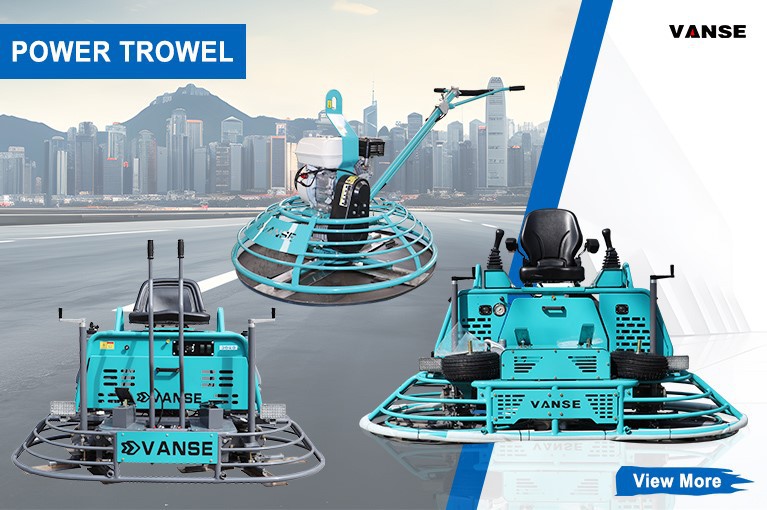
By adjusting the operating parameters of the power trowel, what quality problems of the concrete surface can be solved?
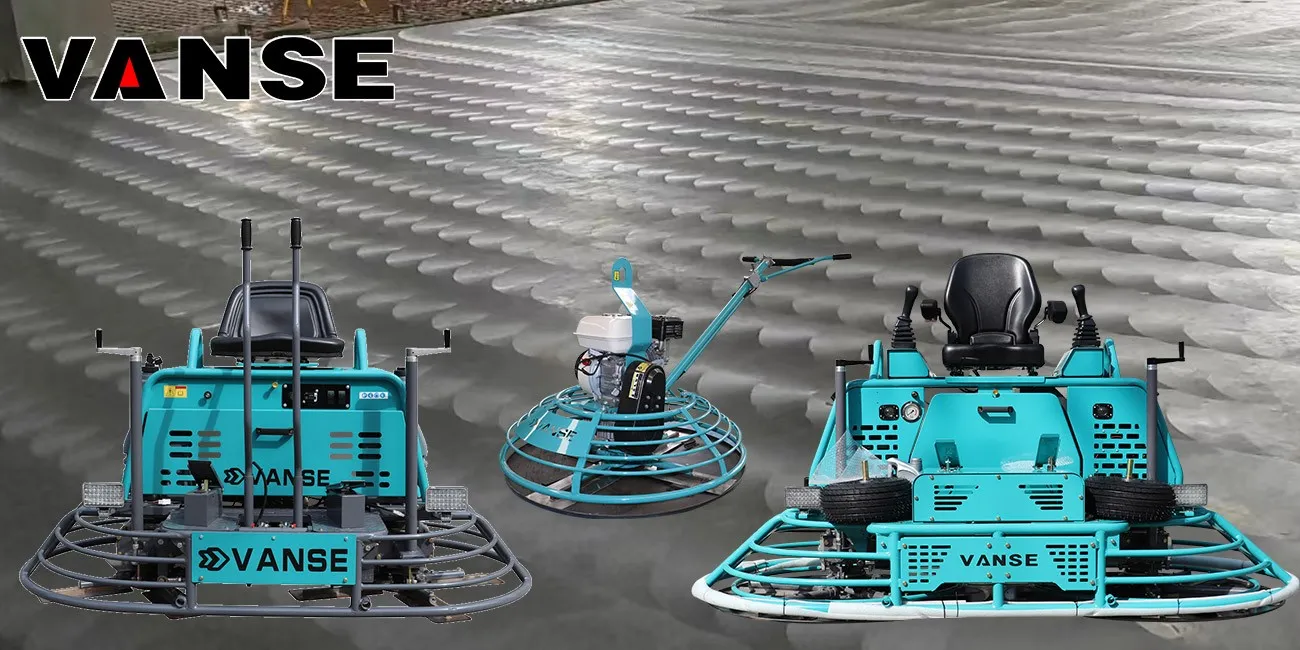
What quality problems of concrete surface can be solved by adjusting the operating parameters of the power trowel
Adjusting the operating parameters of the trowel machine can solve the following quality problems of the concrete surface:
Uneven surface:
Adjust the speed:
The speed of the trowel machine has an important influence on the flatness of the concrete surface. If the speed is too fast, the trowel blade may produce too much cutting force on the concrete surface, resulting in uneven surface; if the speed is too slow, the concrete surface may not be effectively smoothed. By appropriately reducing or increasing the speed of the trowel machine, the blade can act evenly on the concrete surface, which can improve the surface flatness.
Adjust the trowel time:
If the trowel time is too early, the concrete has not reached a certain strength, and it is easy to produce dents or marks during the trowel process; if the trowel time is too late, the concrete strength is too high, and the trowel machine is difficult to effectively trim the surface. According to factors such as the concrete mix ratio and ambient temperature, reasonable adjustment of the trowel time can make the concrete surface achieve better flatness.
Surface sanding:
Adjusting the pressure:
If the pressure applied by the trowel is too high during operation, the cement slurry on the concrete surface will be over-extruded, resulting in a thin cement slurry layer on the surface, which is prone to sanding; if the pressure is too low, the concrete surface cannot be compacted, which will also affect the surface quality. Properly adjusting the pressure of the trowel so that it can make the concrete surface compact while not over-extruding the cement slurry during operation will help solve the problem of surface sanding.
Choose the right blade:
Trowel blades of different materials and shapes have different effects on the concrete surface. For example, a blade with higher hardness and sharper edge may cut off some tiny particles on the concrete surface during troweling, increasing the risk of sanding; while a blade with a softer or blunter edge may not be able to effectively compact the surface. Choosing a blade with moderate material and appropriate edge shape can reduce surface sanding caused by blade factors.
Surface cracks:
Control the troweling speed:
If the water on the concrete surface evaporates quickly, if the trowel speed is too fast, it will accelerate the loss of surface water, causing cracks on the concrete surface due to drying shrinkage. Reduce the operating speed of the trowel machine to allow the concrete surface enough time for water migration and cement hydration reaction, which can reduce cracks caused by drying shrinkage.
Adjust the number of trowel passes:
Too many trowel passes may cause excessive disturbance to the concrete surface, destroy the formed structure, and cause cracks on the surface; too few passes may not make the surface achieve sufficient density and finish. According to the performance and surface condition of the concrete, reasonably adjust the number of trowel passes to ensure surface quality and avoid cracks caused by excessive troweling.
Click the below to jump immediately!!!


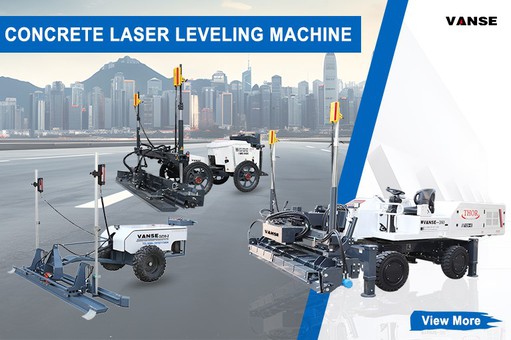
CONCRETE LASER LEVELING MACHINE


Thanks to All the Friends Who Support and Trust Shandong Vanse Machinery Technology Co., Ltd.
If you want to know more about Shandong Vanse Machinery Technology Co., Ltd. or have any questions, please feel free to contact us:
Our Factory
Shandong Vanse Machinery Technology Co., Ltd.

Share this article

About the Author: Shandong Vanse Machinery Technology Co., Ltd.
Shandong Vanse Machinery Technology Co., Ltd. is a high-tech manufacturer specializing in concrete construction machinery, including laser screeds and related equipment. The company integrates R&D, production, and global sales, with products exported to over 60 countries and widely used in infrastructure projects worldwide.
Previous Post
Next Post
Related Articles
You Might Also Like
The influence of the blade configuration of the power trowel machine on the final surface effect of concrete
The configuration of power trowel blades (commonly known as power trowel blades or power trowel discs) directly determines the final flatness, smoothness, strength and wear resistance of the concrete surface. Improper selection and use can lead to various surface defects. The following elaborates in detail on how the configuration of the power trowel machine blades affects the final surface effect of concrete. Shape: Usually wide and thick, with a relatively small number of blades (commonly 3 or 4), and the blades have a large inclination Angle (negative Angle) with the rotating plane. Main functions: Lifting slurry and leveling. Working mode Scraping effect: The larger negative Angle causes the front edge of the blade to "shovel" the concrete surface. It can effectively level the height difference between aggregates (stones), bring the wetter mortar from the lower layer to the surface, and form a "cement slurry layer". Compaction: Through rolling, the surface aggregates are pressed into the interior of the concrete, making the structure more compact. Influence on surface effect: The front side: It provides a relatively smooth base layer rich in cement slurry for subsequent fine plastering. If this step is not taken, direct fine power troweling may bring out the aggregates, resulting in a rough and uneven surface. Negative: If it is used too late (the concrete is too hard), it will loosen the surface, causing cracks or wavy patterns. If used for too long, it will carry out excessive moisture and slurry, resulting in a fragile surface. Shape: Usually thin and narrow, with a large number of blades (commonly 8 to 12), and the Angle between the blades and the rotating plane is small, even close to horizontal (positive Angle or zero Angle). Main functions: Compaction, sealing and polishing. Working mode Patting and smoothing: Numerous and narrow blades pat and smooth the surface of the cement slurry at high speed and frequency to eliminate the marks left by rough smoothing. Sealing the surface: Compact the fine particles in the cement slurry, force the air out, seal the surface capillary pores, and form a dense, pore-free hardened layer. Generating luster: When the concrete is close to final setting, the high-speed rotating precision power trowel rubbing against the surface generates heat, causing the surface of the slurry to "melt" and present a luster. Influence on surface effect: Front: Achieve a dense, smooth, wear-resistant and dust-free surface. The level of glossiness is also determined at this stage. Negative: If used too early, the blade may get stuck in the concrete, creating wavy patterns or even damaging the surface. If used too late, the surface cannot be effectively sealed, which will cause powdering and sanding on the surface. Configuration factors The influence on the surface effect of concrete Applicable scenarios and suggestions Blade Angle This is the most crucial configuration parameter. Rough scraping stage: Use a negative Angle (with the front edge of the blade facing down) to achieve the effect of scraping and lifting the slurry. Fine smoothing stage: Use a small positive Angle or zero Angle (the blade is nearly horizontal) to achieve the effect of patting and smoothing. The larger the Angle, the stronger the cutting force, but the lower the surface finish. The smaller the Angle, the better the polishing effect. Number of blades The more the quantity, the more times each rotation is tapped, and the smoother the smoothing effect will be. Coarse power trowel (3-4 pieces) : Focuses on efficiency and slurry lifting. Fine power trowel (8-12 pieces or more) : Focuses on achieving extremely high flatness and smoothness. The more pieces there are, the finer the final surface will be. Blade material Wear resistance and toughness directly affect lifespan and performance. Spring steel: The most commonly used, it has good toughness, is not easy to break, and offers high cost performance. Tungsten carbide/hard alloy: Extremely wear-resistant, used for treating super-hard concrete or renovating old floors, with an extremely long service life, but expensive. The newness or oldness of the blade Blades that are severely worn cannot function effectively. Old/worn blades: Low efficiency in slurry lifting and polishing can lead to uneven surfaces and poor smoothness. Regular inspection and replacement are necessary. New blade: It can provide the best design Angle and cutting force to ensure the polishing effect. No matter how good the blade is, if it is used wrongly, the opportunity will be wasted. The blade and operation must be switched according to the setting condition of the concrete (the person standing on it should not sink more than 3mm). Phase One: Rough power troweling (Slurry lifting and leveling Timing: After the concrete has initially set, when it sinks by about 5 to 10mm when stepped on. Configuration: Install a coarse power trowel (negative Angle). Operation: The machine runs at a relatively slow speed and mainly focuses on leveling and large-angle scraping. Press the aggregates down and lift the cement slurry up to eliminate the obvious unevenness. Phase Two: Fine Smoothing (Pressing and smoothing) Timing: After the rough plastering is completed, when the concrete further hardens and sinks by about 1-3mm when stepped on. Configuration: Replace with a fine spatula (zero degree or small positive Angle). Operation: The machine speed can be increased and the smoothing can be carried out in a cross direction. At this point, it should be clearly visible that the surface gradually becomes fine and dense, and the rough knife marks are eliminated. Phase Three: Polishing (achieving a bright finish) Timing: When the concrete is close to final setting and there is almost no subsidence when stepped on. Configuration: Continue to use the fine spatula, but you can increase the Angle to a smaller positive Angle (if the blade head is adjustable). Operation: Run at high speed and "drift light" at a small Angle to the ground. The heat generated by friction will slightly liquefy the surface slurry, creating a mirror-like luster. Surface powdering and sanding Reason: The fine power troweling was done too late, and the surface could no longer be effectively compacted and sealed. Or the number of fine power trowel blades is insufficient or the Angle is inappropriate, resulting in poor polishing effect. The surface has wavy patterns and is uneven. Reason: The rough application was done too late, and it was caused by hard scraping and pulling. Or the blade angles are inconsistent (with different degrees of wear); The machine's walking speed is uneven. Exposed aggregates, rough surface The reason is that the coarse coating was skipped or not done thoroughly, and the fine coating was started before a thick enough layer of cement slurry was formed, which brought out the aggregates. Cracks on the surface: Reason: Using a coarse power trowel when the concrete was still too soft (bleeding period) damaged the surface structure. Or the polishing was done too early, causing the blade to sink and the material to be pushed and cracked. The configuration of a power trowel blade is a systematic project that involves using the "right tool" at the "right time" in the "right way". The rough power trowel is the foundation, responsible for creating a smooth and cement-rich working surface. The fine power trowel is the key, responsible for creating a dense, smooth and wear-resistant final surface. The Angle of the blade is the soul, directly determining whether the machine is a "scraper" or a "polishing machine". The timing of construction is the lifeblood. No matter how perfect the configuration is, it cannot play its role if the window period is missed. Only by mastering the relationship among the three proficiently can consistently produce high-quality concrete surfaces. Note: The parameters provided in this document are for reference only and are not mandatory. Due to differences in technical characteristics between different brands and models of laser levelers, please consult the manufacturer for a suitable solution before actual operation. This reference document assumes no responsibility for any issues arising from failure to follow the manufacturer's instructions.What equipment can the concrete laser leveling be used with?
Concrete laser levelings can be used in conjunction with other equipment to achieve a more efficient and convenient construction process. Here's how a concrete laser leveling works with some common equipment: Use with mixing station The mixing station is one of the main equipment in concrete production. It can mix various raw materials together, add water and chemical additives according to a certain proportion, and finally produce concrete that meets the construction requirements. The combination of the concrete laser leveling machine and the mixing station can directly transport the mixed concrete to the leveling machine to achieve continuous production and leveling of concrete, which greatly improves construction efficiency and quality. When used together, the concrete laser leveling machine can adjust the parameters and operating status of the equipment according to the production capacity and construction requirements of the mixing station to ensure continuous production and leveling of concrete. At the same time, the mixing station can adjust the ratio of raw materials and the production volume of concrete according to the construction requirements of the leveler and the amount of concrete to ensure the quality and production efficiency of concrete. Use with pump truck The pump truck is one of the main equipment for concrete transportation and pouring. It can transport concrete from the mixing station or other places to the construction site for pouring and leveling. The combination of the concrete laser leveling machine and the pump truck can directly use the leveling machine to level the concrete surface after the concrete is poured by the pump truck. This avoids the inconvenience and inefficiency of the traditional manual leveling method and improves the leveling efficiency. and quality. When used together, the concrete laser leveler can adjust the parameters and operating status of the equipment according to the amount of concrete poured by the pump truck and construction requirements to ensure the leveling effect and quality of the concrete surface. At the same time, the pump truck can adjust the position and depth of pouring according to the construction requirements of the leveling and the amount of concrete to ensure the quality and pouring effect of the concrete. Use with templates Formwork is one of the important equipment in concrete construction. It can produce formwork of various shapes and sizes according to the design requirements, and the concrete construction can be completed by disassembling and moving the formwork. When the concrete laser leveler is used in conjunction with the formwork, the leveler can be used to level the concrete surface under the formwork before the formwork is disassembled and moved to ensure that the concrete surface under the formwork is flat and dense, and to avoid voids under the formwork. Problems such as drums and honeycombs. When used together, the concrete laser leveling can adjust the parameters and operating status of the equipment according to the shape and size of the formwork to ensure that the concrete surface under the formwork is smooth and dense. At the same time, the formwork can be adjusted according to the construction requirements and positioning of the leveling machine, the disassembly and movement of the formwork, and the design of the formwork, etc. to ensure that the construction quality of the concrete meets the requirements. For use with scrapers and smoothing belts Scrapers and trowels are one of the main equipment for concrete surface treatment. They can scrape or polish the concrete surface manually or mechanically to achieve a certain level of flatness and finish. When the concrete laser leveling machine is used in conjunction with a scraper and a smoothing belt, after the construction of the leveling machine is completed, the concrete surface can be further smoothed and polished with a scraper or smoothing belt to make the surface smoother and smoother. , beautiful. When used together, the scraper or troweling belt can adjust the parameters and operating status of the scraper or troweling belt according to the construction requirements and positioning of the concrete laser leveling to ensure that the flatness and smoothness of the concrete surface meet the requirements. . At the same time, the concrete laser leveling machine can adjust the parameters and operating status of the equipment according to the construction requirements and speed of the scraper or trowel belt to ensure the construction effect and quality of the scraper or trowel belt. In summary, concrete laser levelings can be used in conjunction with other equipment to achieve a more efficient and convenient construction process. When used together, it is necessary to pay attention to factors such as the connection and processing methods between different equipment as well as the skills and professionalism of the construction personnel to ensure that the construction quality and use effect are optimal.How to perform daily maintenance on the concrete laser leveling machine to ensure its long-term stable operation?
– Carefully check whether the appearance of the equipment has signs of damage, such as whether the fuselage has cracks or deformation, especially whether the shell of the laser receiver and transmitter is intact. Because these parts are relatively delicate, damage to the shell may affect their performance. – Check the condition of the tires (if it is a wheeled leveling machine) or the crawler (if it is a crawler leveling machine), check whether the tires have obvious wear and scratches or whether the air pressure is normal (the tire pressure should generally be kept within a certain range as required by the equipment manual, such as 3-4 atmospheres); whether the crawler has loose or broken links, etc. – Check whether the bolts and nuts at each connection are tightened. Focus on checking the connection between the working parts such as scrapers and spiral feeders and the fuselage, because these parts will generate greater vibration and force during work, and loose bolts may cause parts to fall off or work abnormally. You can use a wrench to properly tighten the bolts at key locations. – Check whether the connection between the hydraulic and electrical lines is good. Make sure that there is no leakage in the hydraulic lines and there should be no oil stains on the pipe joints; the plugs and sockets of the electrical lines should be tightly connected, and the wires should not be damaged or aged. – Operate strictly in accordance with the operating manual and avoid sudden acceleration, sudden braking or oversteering. For example, during the movement of the leveler, the speed should be controlled smoothly to avoid sudden changes in speed that cause the machine to vibrate violently, which may damage the internal structure of the machine and the laser calibration system. – Pay attention to the working status of the equipment, including the sound and temperature of the engine (if it is a fuel type) or the motor (if it is an electric type), as well as the operation of each working part (such as scraper, distributor, vibrator, etc.). If abnormal sounds (such as sharp friction sounds, impact sounds) or working parts shake or stagnate, stop the operation immediately and check the cause. – Make sure the lenses of the laser transmitter and receiver are clean. In the case of a bad working environment (such as dust, mortar splashing, etc.), the lens should be cleaned regularly. You can use a clean, soft, wet cloth to gently wipe the lens surface to avoid scratching the lens. – Pay attention to the strength and stability of the laser signal. If the laser signal is found to be interrupted or unstable, it may be due to the position of the transmitter or receiver being offset, the battery being low (for portable laser equipment), or being interfered with by the outside world. The position of the equipment should be adjusted in time, the battery should be replaced, or the interference source should be eliminated. – After each work, use a high-pressure water gun (be careful not to use too high a pressure to avoid damaging the equipment) or a soft brush, wet cloth and other tools to remove concrete residues, dust and other debris from the surface of the equipment. For hardened concrete that is difficult to remove, a special cleaning agent can be used for cleaning. – Focus on cleaning working parts, such as scrapers, blades of spiral feeders, etc., to ensure that there is no concrete residue on these parts to avoid affecting the accuracy and efficiency of the next work. At the same time, clean the bottom of the body to prevent the residual concrete from solidifying during the parking process of the equipment, affecting the normal placement of the equipment and the next start-up. – Lubricate key parts regularly according to the frequency of use and working intensity of the equipment. For example, the bearings, joints, chains (if any), etc. of the equipment should use appropriate lubricants (such as lithium-based grease). Generally, a simple lubrication check is performed every 8-10 working hours, and a comprehensive lubrication is performed every 50-100 working hours. – For the hydraulic system, check the oil level and oil quality of the hydraulic oil. The oil level should be kept within the specified scale range of the hydraulic oil tank. If the oil level is too low, a qualified hydraulic oil of the same model should be added; at the same time, observe the color and transparency of the hydraulic oil. If the hydraulic oil is found to be black, turbid or has a peculiar smell, it may be that the hydraulic oil is contaminated or aged. The hydraulic oil should be replaced in time. It is generally recommended to replace the hydraulic oil every 1000-1500 hours. – Store the equipment in a dry and well-ventilated indoor environment to prevent the equipment from getting damp and rusting. If it can only be stored outdoors, the equipment should be covered with a waterproof cloth to prevent rain, dew, etc. from corroding the equipment. – During the storage period, the scraper, spreader and other working parts of the equipment can be raised to make the tires or tracks a certain distance from the ground (such as using blocks to raise them). This can reduce the pressure of the equipment's own weight on the tires, tracks and chassis and extend the service life of these parts. At the same time, disconnect the power supply of the equipment (if it is an electric equipment) or close the fuel valve (if it is a fuel equipment), and remove the battery (if it is easy to remove) to prevent battery leakage or fuel leakage.