Technical Knowledge
Buy laser leveling machine announcements

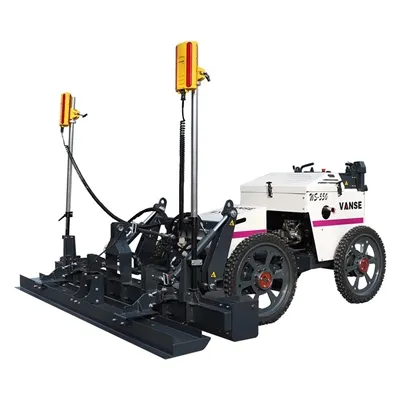
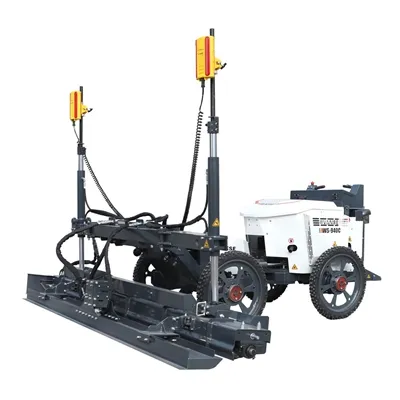
Laser leveling machine of choose and buy, construction effect to buy laser leveling machine to consider an important factor, when purchasing a laser leveling machine to see ahead of the construction, understand the machine performance, the construction effect, at the top of the laser leveling machine design level has laser machine, computer automatic control can guarantee the very high surface roughness, can be directly on the concrete layer to realize precise leveling, surface smoothness is not affected by shock construction template, don't have a template, middle construction joints is also very less.Many customers are because we have seen the machine construction, or through the introduction of a friend to understand the laser leveling machine products, they choose to buy.
For users, when selecting a laser leveling machine should attach importance to quality, the ground construction is the construction of a link, the product quality is bad, if the laser leveling machine on the ground in the process, will lead to the whole construction period delay, the loss is bigger, so when the choose and buy laser leveling machine can not blindly pursue cheap, but should pay attention to the quality of the product, in market competition, often play a spoiler role at a lower price, no profit and after-sales support, there is no quality standards, the core parts of our products are for Germany, the United States, Japan imported, to ensure durable, safe and reliable.According to the area of the intended customer, allide will provide the construction site where the leveller is being used
Buyers also pay special attention to a problem is the after-sales service, in the choose and buy laser leveling machine must look for the normal and professional manufacturer, to the manufacturer's technical capabilities and after verify, only normal manufacturer's products to ensure durable, reliable, safe, supporting services one pace reachs the designated position, the service life of a leveling machine usually have a long term, normal manufacturer of choose and buy, do brand manufacturers, for a long time follow-up service guaranteed.Our after-sales service will follow the goods and instruments to the construction site, and provide 3-day free technical training, one-year warranty and lifelong service.
The strength of the laser leveling machine factory has advanced technology as support, with professional technical personnel guidance, in the purchase of laser leveling machine must choose a well-known production laser leveling machine factory.The company has professional technical personnel, r&d engineers and after-sales service personnel to form an experienced, highly innovative and professional team.With strong professional knowledge and years of research and development experience.Company independent research and development products have their own patents.It is the first domestic laser positioning leveling machine company with its own research and development.
Thanks to All the Friends Who Support and Trust Shandong Vanse Machinery Technology Co., Ltd.
If you want to know more about Shandong Vanse Machinery Technology Co., Ltd. or have any questions, please feel free to contact us:
Our Factory
Shandong Vanse Machinery Technology Co., Ltd.








Share this article

About the Author: Shandong Vanse Machinery Technology Co., Ltd.
Shandong Vanse Machinery Technology Co., Ltd. is a high-tech manufacturer specializing in concrete construction machinery, including laser screeds and related equipment. The company integrates R&D, production, and global sales, with products exported to over 60 countries and widely used in infrastructure projects worldwide.
Previous Post
Next Post
Related Articles
You Might Also Like
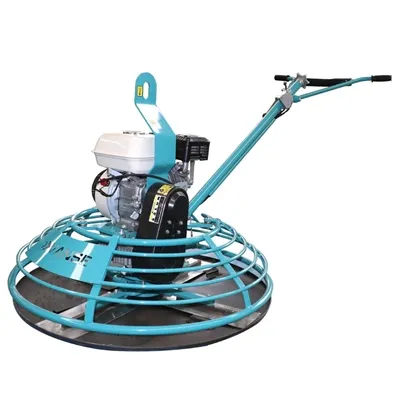
Is there a direct relationship between the power of the trowel machine and the trowel effect?
– Trowels with higher power are usually more powerful. For example, in the concrete floor construction of large-scale construction projects, if a driving trowel with higher power (such as 5.5kW – 7.5kW) is used, its motor can provide enough torque to rotate the trowel blade at a higher speed. In this way, when facing a large area of rough ground, the unevenness of the concrete surface can be quickly smoothed, effectively improving work efficiency. – A high-power trowel has more advantages when dealing with thicker concrete surfaces or ground materials with a certain hardness. Because it can more easily overcome resistance, cut the trowel blade into the material surface to a certain depth, compact and smooth the material, and make the ground smoother. – High-power trowels may have better speed stability. Due to its sufficient power, the speed of the trowel blade can be kept relatively stable during operation, even if the local hardness of the ground changes or it is uneven. This helps to achieve a more uniform trowel effect. For example, when troweling the floor of an industrial plant, a high-power trowel can better deal with the small potholes and bumps that may exist on the ground, making the troweled ground more uniform in gloss and flatness. – The material and design of the trowel blade are crucial to the trowel effect. For example, the use of high-quality alloy steel trowel blades has better hardness and wear resistance. Driven by a trowel of the same power, this trowel blade can better smooth the ground and has a longer service life. – Different types of trowel blades are suitable for different ground materials and construction requirements. For example, for indoor floors with high precision requirements, a trowel blade with fine texture may be required. This trowel blade can achieve a delicate trowel effect at a lower power through its special texture design. – The operator's proficiency in operating the trowel will affect the trowel effect. An experienced operator can reasonably control the trowel's walking speed, trowel angle and other parameters according to the actual situation of the ground. Even if a trowel with a smaller power is used, a better trowel effect can be obtained through reasonable operation, such as multiple cross trowels. – The operator's control over the construction process is also very important. For example, the use requirements of the trowel are different in the initial setting stage and the final setting stage after concrete pouring. If the operator can accurately grasp the timing and choose the appropriate power and trowel method, the ideal trowel effect can be achieved. – The initial flatness and material quality of the ground have a great influence on the trowel effect. If the ground itself is seriously uneven, such as large cracks, potholes or local looseness caused by unreasonable concrete material ratio, then relying solely on the power of the trowel will not be able to obtain a good trowel effect. In this case, the ground foundation needs to be repaired first, and then the trowel is used for troweling.Large area concrete floor laser leveling machine one-time forming construction method
••▶•• Project Overview ••◀•• With the rapid development of the modern construction industry, the requirements for the flatness, levelness and aesthetics of large-area concrete floors are getting higher and higher. Traditional floor and floor construction methods often have problems such as long construction period and unstable quality. Therefore, the use of laser leveling machines for one-time construction of large-area concrete floors has become an efficient and high-quality choice. ••▶•• Construction preparation ••◀•• 1. Construction personnel training: Ensure that the operators are familiar with the operating principles and safety procedures of the laser leveler and have certain construction experience. 2. Equipment inspection: Conduct a comprehensive inspection of the laser leveling machine used in construction to ensure that it is in good working condition. 3. Preparation of construction materials: Select concrete materials that meet the requirements to ensure construction quality. 4. On-site survey: Conduct a detailed survey of the construction site to understand the terrain, climate and other conditions, and formulate corresponding construction plans. ••▶•• Construction process ••◀•• 1. Foundation treatment: Clean the construction site to ensure that the foundation is smooth and free of debris. If necessary, perform foundation leveling 2. Formwork support: According to the design requirements, support the formwork to ensure it is flat and stable. 3. Concrete pouring: Pour concrete evenly on the formwork according to the mix ratio required by the design. 4. Laser leveling: Immediately after the concrete is poured, use a laser leveling machine for leveling. Through the laser control system, it is ensured that the flatness and levelness of the ground meet the design requirements. 5. Surface treatment: Before the initial setting of concrete, use professional tools for surface treatment to eliminate defects such as bubbles and blisters on the surface. 6. Maintenance: After the concrete is finally set, perform timely maintenance to ensure the strength and beauty of the concrete. few, ••▶•• Construction Key Points ••◀•• 1. Ensure the flatness and stability of the formwork to avoid deformation or displacement during construction. 2. Control the pouring speed and amount of concrete to ensure that the concrete can be evenly distributed on the formwork. 3. When using the laser leveling machine, ensure the accuracy of the laser control system and adjust the equipment parameters in a timely manner to ensure the leveling effect. 4. During surface treatment, pay attention to the operating strength and speed to avoid damage to the concrete. 5. D uring the curing process, the moisture of the concrete surface should be maintained to prevent the concrete from drying out or cracking. ••▶•• Quality acceptance ••◀•• After the construction is completed, the quality inspection of the floor of the building will be carried out. Check whether the ground flatness, levelness, aesthetics and other indicators meet the design requirements. If problems are found, deal with them promptly. ••▶•• Conclusion ••◀•• The one-time construction method of laser levelinging for large-area concrete floors has the advantages of short construction period, stable quality, and high aesthetics. Through strict construction preparation and process control, it can be ensured that the construction quality meets the requirements. At the same time, it is necessary to pay attention to the key points of construction and quality acceptance links to ensure the smooth progress of the construction process and the final quality standards.How to ensure the laser transmitter of the concrete laser leveling machine is installed stably?
It is very important to ensure that the laser transmitter of the concrete laser leveler is installed stably. Here are the specific methods: – Select a suitable location: According to the shape, size and obstacle distribution of the construction site, choose an open, flat location that can fully cover the construction area to install the laser transmitter. Generally speaking, it can be placed near the center of the site or at the edge of the site where the terrain is higher, and avoid placing it in places that are susceptible to vibration and collision. – Clean the installation surface: Use cleaning tools such as brooms and rags to thoroughly remove dust, debris, oil and loose particles on the surface of the installation location to ensure that the surface is clean and flat, providing a good foundation for subsequent installation. – Check the appearance of the transmitter: Carefully check whether the laser transmitter has any external damage, such as cracked or deformed shell, and whether the lens has scratches, stains, looseness, etc., to ensure that the laser transmitter itself has no quality problems and damage, so as to avoid affecting its normal operation and installation stability. – Use the level adjustment device: When installing, use the level adjustment foot or level meter that comes with the laser transmitter. By adjusting the height of the level adjustment foot, the level bubble of the laser transmitter is located in the center position to ensure that the transmitter is in a horizontal state. For some high-precision laser transmitters, a high-precision electronic level may also be required for auxiliary calibration. – Fix with a fastening device: After placing the laser transmitter in the selected position, use the matching bolts, nuts, washers and other fastening devices to firmly fix it on the mounting bracket or foundation. When tightening the bolts, operate according to the specified torque value to ensure that the tightening force of each bolt is uniform to prevent the transmitter from tilting or loosening due to uneven force. – Perform angle calibration: According to the construction requirements, use the angle adjustment mechanism on the transmitter to accurately adjust the angle of the laser emission so that it maintains the correct angle relationship with the construction plane or reference plane. During the calibration process, angle measurement tools such as theodolites and total stations can be used for auxiliary measurement to ensure that the angle error is within the allowable range. – Inspect installation stability: After installation, gently shake the laser transmitter to check for looseness or shaking. At the same time, observe whether the horizontal state and angle of the transmitter have changed. If there is any abnormality, readjust and tighten it in time. – Regular maintenance and calibration: During the use of the concrete laser leveling machine, the laser transmitter should be inspected and maintained regularly. At regular intervals of working time or construction mileage, the transmitter's horizontality, angle, and accuracy of the laser beam should be calibrated and debugged to ensure that it always maintains a stable and accurate working state. – Set up protective measures: To prevent the laser transmitter from being disturbed and damaged by external factors, protective devices such as guardrails and protective covers can be set around it. The height and strength of the guardrail should be able to effectively prevent personnel and equipment from colliding with the transmitter, and the protective cover should be able to prevent rain, dust, and sun, providing a good working environment for the transmitter.