Technical Knowledge
How to deal with surface bubbles after concrete pavement construction?
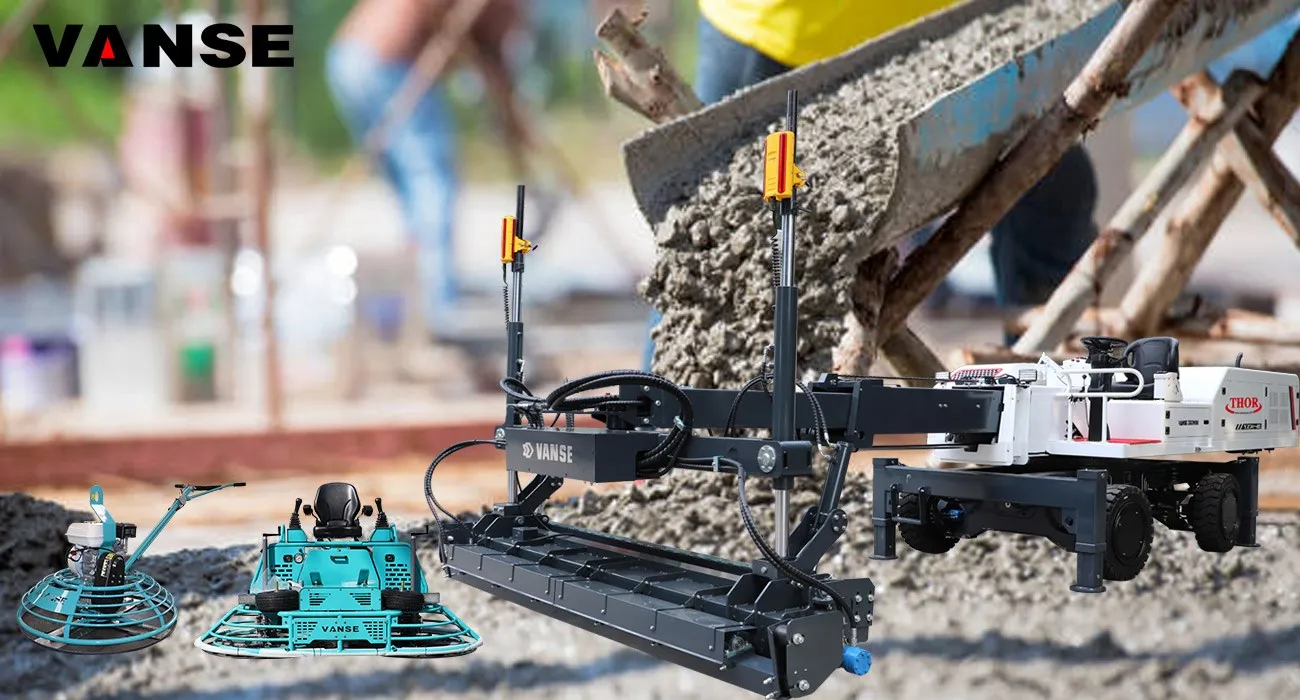
After the concrete pavement is constructed, the following methods can be used to deal with the surface bubbles
Surface treatment
– Mechanical surface treatment:
Use a trowel to smooth the surface before the concrete is initially set. The rotation and extrusion of the trowel make the concrete surface more compact, squeeze out some bubbles from the surface, and make the surface smoother. The speed and pressure of the trowel should be controlled during operation to avoid excessive pressure causing water seepage or segregation on the concrete surface.
– Manual surface treatment:
For corners that are difficult to reach with mechanical surface treatment or areas with many local bubbles, manual surface treatment with a trowel is required. Manual surface treatment can trim the concrete surface more carefully, gently crush the bubbles and evenly cover the bubble marks with surface mortar. During the surface treatment process, pay attention to the angle and strength of the trowel, and try to make the surface treatment smooth and uniform.
Secondary vibration
– After the concrete is poured, when a small amount of water seeps out of the concrete surface and it has not yet set, perform secondary vibration. Use a vibrating rod to vibrate the concrete surface. The vibration time should not be too long. Generally, it is appropriate to stop bubbles from appearing on the concrete surface and to seep out cement slurry. Secondary vibration can further expel the bubbles inside the concrete, while enhancing the compactness of the concrete and improving the quality of the concrete surface. However, be careful to avoid inserting the vibrating rod too deep to damage the formed concrete structure.
Needle puncture exhaust
– For larger bubbles, you can use a steel needle or other sharp tools to puncture the bubbles before the concrete sets to expel the gas. Then use a trowel to gently compact the punctured bubble area so that the surrounding concrete mortar fills the gaps left by the bubbles. Needle puncture exhaust should be performed in time to avoid bubbles from forming obvious holes or defects after the concrete hardens.
Surface repair
– If bubbles on the concrete surface still leave obvious marks or small potholes after finishing, you can repair the surface after the concrete has finally set. First, clean the surface of the repaired area to remove dust, debris, etc. Then, according to the color and mix ratio of the concrete, mix an appropriate amount of repair material, such as cement mortar or a special concrete repair agent. Apply the repair material to the bubble marks and smooth it with a trowel to make it smooth and consistent with the surrounding concrete surface. After repair, pay attention to the maintenance of the repaired area to avoid the repair material from losing water and drying too quickly and causing cracks.
Maintenance treatment
– Reasonable maintenance is also important to reduce the impact of bubbles on the concrete surface. After the concrete is poured, it should be covered with moisturizing materials such as plastic film and geotextile to prevent the water on the concrete surface from evaporating too quickly. At the same time, according to the ambient temperature and humidity, watering maintenance should be carried out in time to keep the concrete surface moist. The maintenance time is generally not less than 7 days. For important concrete pavements or large-volume concrete, the maintenance time should be appropriately extended. Good maintenance can fully hydrate the concrete, improve the strength and density of the concrete, and reduce surface defects caused by water evaporation and concrete shrinkage, including bubble-related problems.
Thanks to All the Friends Who Support and Trust Shandong Vanse Machinery Technology Co., Ltd.
If you want to know more about Shandong Vanse Machinery Technology Co., Ltd. or have any questions, please feel free to contact us:
Our Factory
Shandong Vanse Machinery Technology Co., Ltd.








Share this article

About the Author: Shandong Vanse Machinery Technology Co., Ltd.
Shandong Vanse Machinery Technology Co., Ltd. is a high-tech manufacturer specializing in concrete construction machinery, including laser screeds and related equipment. The company integrates R&D, production, and global sales, with products exported to over 60 countries and widely used in infrastructure projects worldwide.
Previous Post
Next Post
Related Articles
You Might Also Like
During the construction process, how to ensure that the operators of the laser leveling machine can strictly abide by the operating procedures?
Ensuring that laser leveling machine operators strictly follow operating procedures is the key to construction safety and project quality. Here are some effective ways to achieve this goal: 1. **Comprehensive training**: Provide detailed theoretical and practical training to operators before they take up their posts. The training content should cover the working principle, operating steps, safety regulations and emergency handling procedures of the laser leveling machine. 2. **Operation manual and checklist**: Provide operators with clear operation manuals and daily checklists to ensure that they are familiar with each operation process and daily maintenance tasks. 3. **On-site guidance and supervision**: Arrange experienced old employees or supervisors to provide guidance and supervision at the construction site, correct improper operations in a timely manner, and answer operators' questions. 4. **Regular assessment and evaluation**: Implement regular skill assessments and assessments of compliance with operating procedures to ensure that operators' knowledge and skills remain up-to-date and proficient. 5. **Safety awareness education**: Regularly carry out safety awareness education activities to emphasize the importance of complying with operating procedures, including warnings about the consequences of illegal operations. 6. **Clear responsibility and reward and punishment mechanism**: Establish a clear responsibility system and reward and punishment mechanism, reward those who comply with the operating procedures, and punish those who violate the regulations, so as to motivate operators to comply with the regulations. 7. **Equipment maintenance and inspection**: Ensure that the laser leveling machine is regularly maintained and inspected to maintain a good working condition and avoid operating errors caused by equipment failure. 8. **Smooth communication channels**: Establish effective communication channels to encourage operators to report equipment abnormalities or difficulties in operation, solve problems in a timely manner, and prevent small problems from turning into major accidents. 9. **Emergency drills**: Organize regular emergency drills to familiarize operators with the response measures for various possible emergencies. 10. **Technology update and training**: With the development of technology, laser leveling machines may have new functions or operating methods. Operators should be updated and trained in a timely manner to ensure that they master the latest technology. Through these measures, the professional quality and safety awareness of operators can be effectively improved, ensuring that they strictly abide by the operating procedures during the construction process, thereby ensuring construction safety and project quality.What are the advantages of concrete laser leveling machine in terms of material consumption?
Shandong Vanse Machinery Technology Co., Ltd. 1. Introduction In the current construction industry, concrete laser leveling machine has become an indispensable and important equipment for ground construction with its high precision and high efficiency. This paper aims to explore the advantages of concrete laser leveling machine in material consumption, in order to provide valuable reference for improving the efficiency and reducing costs of the construction industry. 2. Principle and application field of concrete laser leveling machine The concrete laser leveling machine uses advanced laser technology to achieve efficient and precise leveling of concrete floors by precisely controlling elevation and flatness. Its application fields are wide, including large industrial plant warehouses, logistics centers, exhibition centers, airport runways, squares, municipal pavements, etc. 3. Analysis of advantages of material consumption 1. Reduce material waste: The high-precision control capability of the laser leveling machine makes ground construction more precise, effectively avoiding material waste caused by human factors in traditional construction. By precisely controlling the thickness and flatness of concrete laying, the laser leveling machine can minimize the use of excess concrete. 2. Improve use efficiency: The efficient operation capability of the laser leveling machine means a shorter construction cycle and faster construction progress. Under the same construction area, the use of laser leveling machines can significantly reduce the use of concrete, thereby reducing material costs. Taking a large logistics center as an example, after using a concrete laser leveling machine for ground construction, the material waste rate was reduced by nearly 20%, and the construction period was shortened by one third, saving a lot of costs for the project. 4. Cost saving and environmental protection significance The application of concrete laser leveling machines not only reduces material costs, but also brings significant environmental benefits. By reducing material waste, the generation of waste concrete is reduced, and the pressure on the environment is reduced. At the same time, a shorter construction period also means less energy consumption and emissions, contributing to the green development of the construction industry. 5. Analysis of adaptability to different construction stages and scenarios In different construction stages and scenarios, the concrete laser leveling machine can play its advantages of saving materials and improving efficiency. In the foundation construction stage, the laser leveling machine can ensure the flatness and strength of the ground foundation; in the surface construction stage, the laser leveling machine can achieve high-precision surface leveling to meet various ground use needs. In addition, for different application scenarios, the laser leveling machine can also be customized according to actual needs to better adapt to different construction requirements. 6. Industry status and challenges At present, concrete laser leveling machines have been widely used in the construction industry, but they still face some challenges. First, some construction workers do not have enough skills in the operation and maintenance of laser leveling machines, which affects the use of the equipment; second, there are many brands and models of laser leveling machines on the market, and the quality is uneven, which brings certain difficulties to the purchase and use. In order to promote and improve this technology, it is recommended to strengthen training and technical guidance to improve the operation level of construction personnel; at the same time, strengthen market supervision, standardize market order, and ensure product quality and after-sales service. 7. Forecast of future development trends With the continuous advancement of science and technology and the improvement of the construction industry's requirements for green, environmentally friendly and efficient construction, concrete laser leveling machines will be more widely used in the future. It is expected that in the next few years, laser leveling machines will develop in the direction of intelligence and automation, and more efficient and accurate ground construction will be achieved by introducing more advanced technologies such as machine learning and artificial intelligence. At the same time, with the continuous improvement of environmental awareness and the support and guidance of policies, concrete laser leveling machines will play a greater role in environmental protection. 8. Conclusion Concrete laser leveling machines have significant advantages in terms of material consumption, can significantly reduce material waste, improve utilization efficiency, and bring environmental benefits. Through the promotion and improvement of measures such as strengthening training and technical guidance and regulating market order, the role of concrete laser leveling machines in the construction industry will be further exerted. Looking to the future, concrete laser leveling machines will achieve greater development in the direction of intelligence and automation, providing strong support for green and efficient construction in the construction industry.How can maintenance of concrete laser leveling machines improve construction efficiency and quality
As a core piece of equipment for concrete surface leveling, the quality of a concrete laser leveling directly impacts construction efficiency and concrete quality. Scientific maintenance can directly and indirectly improve overall construction efficiency by reducing equipment failures, stabilizing operational performance, and extending equipment life. The specific mechanisms are as follows: Concrete construction is highly continuous and time-sensitive (for example, leveling must be completed before initial setting of concrete, otherwise construction joints and reduced strength are likely to occur). A laser leveling failure during construction not only interrupts the current process but can also delay subsequent steps (such as finishing and curing) and even result in wasted concrete material. Scientific maintenance can avoid such problems through "preventive maintenance", which is specifically reflected in: Regularly inspect key components, such as the laser transmitter's calibration accuracy, the hydraulic system's tightness (e.g., leaks in the oil pipes and cylinders), the wear of the travel wheels, and the lubrication status of the motor and reducer. This can proactively identify potential problems (such as insufficient hydraulic oil or laser head misalignment) and prevent sudden equipment downtime during construction. For example, if worn travel wheels are not replaced promptly, the equipment may stall. Leveling an area that normally takes one hour may take two to three hours, directly reducing construction efficiency. Complete maintenance records (recording equipment model, replacement cycles for wearing parts, and historical faults) help maintenance personnel quickly identify the cause of a fault. For example, if the hydraulic filter of a certain laser leveler needs to be replaced every 300 hours, stocking spare parts in advance and replacing them on schedule can avoid long downtime caused by waiting for spare parts. The core function of a laser leveling is to achieve high concrete surface flatness (error is typically required to be ≤3mm/2m) through laser positioning and hydraulic leveling. The stability of the equipment's performance directly determines the leveling quality, and maintenance is key to ensuring stable performance: The laser transmitter is the core benchmark for leveling accuracy. If it's not calibrated for an extended period, the laser line may deviate. Regularly calibrating the laser transmitter and checking its signal strength (for example, before daily construction and every 100 hours) ensures the laser line is always level, preventing uneven concrete surfaces caused by laser deviation. For example, a miscalibrated laser head on a project resulted in a 5mm uneven surface. This required manual grinding to correct the problem, increasing rework costs and potentially affecting the wear resistance and aesthetics of the concrete surface. The hydraulic system controls the lift and pressure of the leveling blades. If the hydraulic oil is contaminated or the oil lines are clogged, uneven lift speed and insufficient pressure can occur, leading to problems like sanding and denting on the leveling surface. Repair, maintenance, or adjustment of working components such as the roller and scraper blades is strictly prohibited while the equipment is operating. Regularly changing the hydraulic oil (usually every 500 hours, as recommended by the manufacturer), cleaning the hydraulic filter, and checking the oil line seals ensures stable hydraulic system pressure. This allows the scrapers to apply uniform pressure, ensuring even distribution of concrete aggregate and consistent surface density, thereby improving the strength and smoothness of the finished concrete. Uneven travel speeds (e.g., faster on one side and slower on the other) can cause inconsistent rubbing force from the leveling blades on the concrete, resulting in surface ripples. Regularly checking the travel motor speed, drive wheel engagement, and track tension will ensure a uniform travel speed and ensure a consistent and smooth surface. High-quality laser leveling machines are expensive (typically tens to hundreds of thousands of yuan). Extending equipment life through effective maintenance can reduce the frequency of equipment upgrades, lowering long-term investment costs and indirectly ensuring construction efficiency (avoiding process continuity issues caused by frequent equipment replacements due to aging). Reduce wear on core components: For example, regularly adding specialized lubricants to motors and reducers can reduce frictional losses in mechanical components. This can extend the lifespan of equipment from five years to seven to eight years through maintenance. Prevent minor problems from becoming major ones: Ignoring minor faults (such as minor oil leaks or unusual noises) can lead to escalating problems (e.g., hydraulic pump damage due to oil depletion), increasing repair costs from a few hundred yuan to tens of thousands of yuan, while also causing extended downtime and impacting the overall project schedule. Maintenance and repair priorities Impact on construction efficiency Impact on construction quality Laser system calibration Avoid rework due to precision issues, shortening construction time Ensures surface leveling tolerances meet specifications Hydraulic system maintenance Reduce downtime, ensuring process continuity Avoids surface dents and sanding, improving density Travel system inspection Ensure consistent equipment operation, improving individual machine efficiency Avoids surface ripples, ensuring flatness Regular replacement of wearing parts Shorten maintenance time, reducing unplanned downtime Maintains stable equipment output and consistent quality In summary, the maintenance of concrete laser leveling machines is not an "extra cost", but directly improves construction efficiency and ensures quality by "preventing failures, stabilizing performance, and extending life". It is an indispensable core link in concrete construction. Note: The parameters provided in this document are for reference only and are not mandatory. Due to differences in technical characteristics between different brands and models of laser levelers, please consult the manufacturer for a suitable solution before actual operation. This reference document assumes no responsibility for any issues arising from failure to follow the manufacturer's instructions.