Technical Knowledge
How to use concrete vibratory leveling to assist laser leveling in small-area super flat floor construction
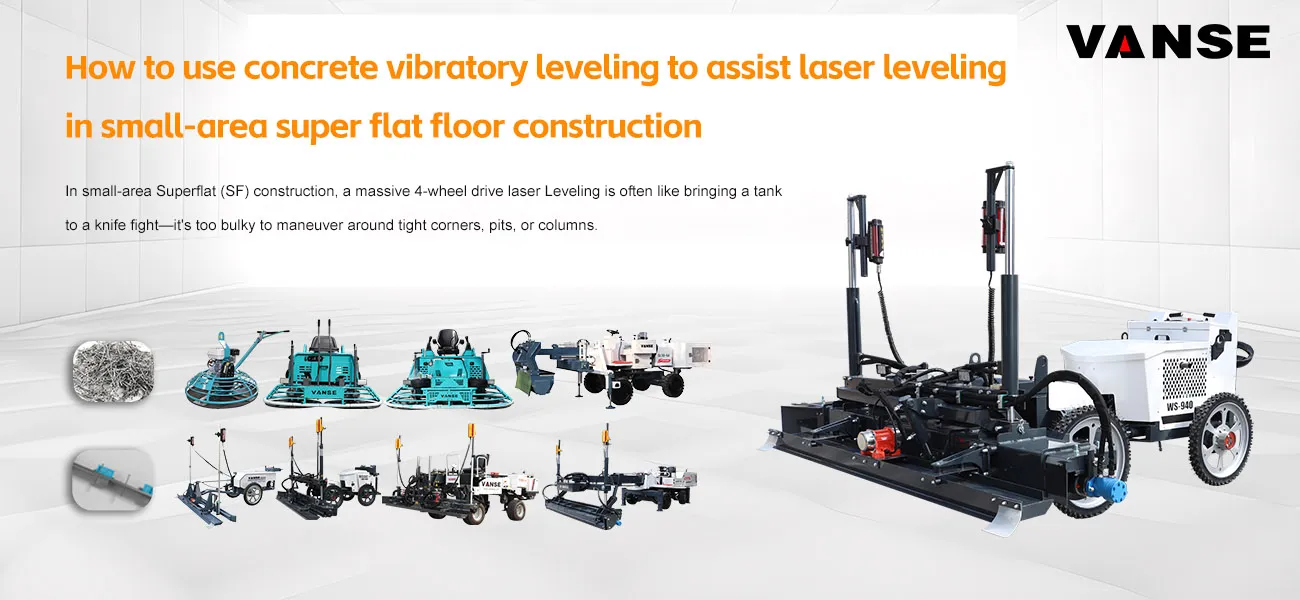
In small-area Superflat (SF) construction, a massive 4-wheel drive laser Leveling is often like bringing a tank to a knife fight-it's too bulky to maneuver around tight corners, pits, or columns.
To achieve Superflat tolerances in these spaces, contractors use a "Hybrid Approach": combining the precision of a Laser Reference System with the agility of Vibratory Leveling (hand-held or truss Levelings).
Here is how to use vibratory leveling to assist the laser process for high-precision results.
1. The Setup: Laser-Guided Manual Levelinging
In small areas, you don't use a laser Leveling machine; you use laser receivers mounted on a vibratory Leveling pole.
The Equipment: A handheld vibratory Leveling (like a "Magic Leveling" or a small "LevelingBot") equipped with a laser receiver.
The Process: The laser transmitter (rotary laser) sends a beam across the room. The receiver on the vibratory Leveling gives the operator real-time "High/Low/Level" feedback via LEDs or an audible tone.
The Benefit: This ensures that even in a 10' x 10' corner, your Levelness (FL) matches the rest of the 50,000 sq. ft. warehouse perfectly.
2. The Step-by-Step "Superflat" Workflow
To hit FF (Flatness) numbers above 50 in small areas, the vibratory Leveling is just the first step. You must follow this sequence:
Phase A: The Vibratory Strike-Off
The vibratory Leveling is pulled across the concrete. The vibration "liquefies" the top 1/2 inch of the slab, bringing enough paste (cream) to the surface to seal the face while the laser receiver ensures the height is correct.
Warning: Do not "over-vibrate." If you stay in one spot too long, the aggregate will sink, leaving a "soup" of weak paste that will shrink and crack later.
Phase B: The "Restraightening" (The MVP Step)
This is where Superflat floors are actually made. Immediately after the vibratory Leveling passes, use a 10-foot Highway Straightedge (also called a Bump Cutter).
The Action: Run the straightedge at a 45-degree angle to the direction of the Levelinging.
The Result: The vibratory Leveling sets the height (FL), but the straightedge cuts the "micro-waves" left by the vibration, ensuring extreme Flatness (FF).
3. Comparing the Roles in Small Areas
| Tool | Role in Superflat | Limitation |
| Laser Transmitter | Provides the "Source of Truth" (The Plane). | Cannot fix a bumpy surface on its own. |
| Vibratory Leveling | Consolidates concrete and sets FL (Levelness). | Often leaves small "rhythmic waves." |
| Highway Straightedge | Refines FF (Flatness) by cutting/filling. | Requires a skilled operator and physical labor. |
4. Key Advantages for Small Areas
Maneuverability: You can work around floor drains, electrical conduits, and stub-ups that a large laser Leveling would destroy.
Lower Risk of "Cold Joints": In tight spaces, big machines often have to wait for manual edges to catch up. Handheld vibratory leveling allows for a continuous, "wet-on-wet" pour.
Edge Precision: Laser Levelings sometimes "dip" at the start or end of a pass. Manual vibratory leveling allows for a slower, more controlled approach at the formwork edges.
5. Technical Requirements for Success
Laser Calibration: In small areas, the laser transmitter must be set to its highest rotation speed (usually 600–1100 RPM). This provides more frequent data "hits" to the receiver on the vibratory Leveling as it moves.
Slump Consistency: If the concrete slump varies by even 1 inch (e.g., from a 5-inch slump to a 6-inch slump), the vibratory Leveling will "sink" differently. For Superflat results, the concrete must be identical truck-to-truck.
Head-to-Head Overlap: When using a handheld vibratory Leveling, ensure each pass overlaps the previous one by 20–30%. This "erases" the line between passes.
Would you like a list of the specific F-number tolerances required for "Category 1" VNA (Very Narrow Aisle) floors versus standard warehouse floors? Contact us NOW
Note: The parameters provided in this document are for reference only and are not mandatory. Due to differences in technical characteristics between different brands and models of laser levelers, please consult the manufacturer for a suitable solution before actual operation. This reference document assumes no responsibility for any issues arising from failure to follow the manufacturer's instructions.
Thanks to All the Friends Who Support and Trust Shandong Vanse Machinery Technology Co., Ltd.
If you want to know more about Shandong Vanse Machinery Technology Co., Ltd. or have any questions, please feel free to contact us:
Our Factory
Shandong Vanse Machinery Technology Co., Ltd.








Share this article

About the Author: Shandong Vanse Machinery Technology Co., Ltd.
Shandong Vanse Machinery Technology Co., Ltd. is a high-tech manufacturer specializing in concrete construction machinery, including laser screeds and related equipment. The company integrates R&D, production, and global sales, with products exported to over 60 countries and widely used in infrastructure projects worldwide.
Previous Post
Next Post
Related Articles
You Might Also Like
What’s the impact of the laying direction of the steel mesh on the building structure?
Relationship with the direction of principal stress: The main function of the steel mesh is to bear the tensile force in the concrete structure. When the structure is stressed, the principal stress will be generated inside the concrete. The laying direction of the steel mesh should be consistent with the principal stress direction as much as possible, so that the tensile strength of the steel bars can be fully exerted and the bearing capacity of the structure can be effectively improved. For example, in a one-way slab, the load is mainly transmitted along the short span direction, and the direction of the principal tensile stress is also roughly along the short span direction. Therefore, the bottom steel mesh is usually arranged along the short span direction to resist the tensile force. Two-way stress situation: For a two-way slab, the spans in both directions are similar, and both bear a large load. The steel mesh in both directions must bear tensile force. At this time, the steel mesh should be arranged in a certain proportion according to the force size in the two directions, and is generally laid perpendicular to each other, so that the structure can have sufficient bearing capacity and good deformation performance in both directions. Control of crack direction: A reasonable laying direction of the steel mesh can guide the development direction of the crack, so that it develops in the direction with less influence on the structural force. For example, in concrete pavement, transverse reinforcement can limit the development of longitudinal cracks, while longitudinal reinforcement can restrain transverse cracks, thereby improving the integrity and durability of the pavement. Improving crack resistance: When the steel mesh is laid along the direction where cracks may occur, it can play a "bridge" role after the concrete cracks, withstand the tension on both sides of the cracks, and prevent the cracks from further expanding. For example, in the wall of a hydraulic structure, the horizontal and vertical steel meshes work together to effectively improve the wall's ability to resist cracks caused by factors such as temperature changes and concrete shrinkage. Protecting steel bars: The correct laying direction of the steel mesh helps to ensure the protective effect of concrete on the steel bars. The steel bars are wrapped in concrete to prevent them from rusting and corroding when exposed to the external environment. If the steel mesh is laid improperly, resulting in deviation in the position of the steel bars or uneven thickness of the protective layer, the steel bars are prone to rust under the action of external corrosive media, thereby reducing the durability of the structure. For example, in the basement structure of a building, the laying of the steel mesh should ensure that there is a sufficient and uniform concrete protective layer to prevent groundwater from corroding the steel bars. Uniform stress: Reasonable laying direction makes the steel mesh evenly stressed in the structure, avoiding premature destruction of concrete due to local stress concentration, thereby providing a stable protective environment for the steel bars and extending the service life of the structure. In short, the laying direction of the steel mesh is an important factor affecting the performance of the building structure. During the construction process, the laying direction of the steel mesh must be reasonably determined according to the stress characteristics and design requirements of the structure to ensure the safety, applicability and durability of the building structure.Concrete laser leveling machine safe operation and maintenance procedures
Concrete laser leveling machine safe operation and maintenance procedures 1. Equipment overview and operating environment As a modern and efficient construction equipment, concrete laser leveling machine is widely used in concrete pavement smoothing operations. It uses laser control technology to achieve high-precision road leveling and improve construction quality and efficiency. In order to ensure the normal operation and safety of the equipment, we need to have a full understanding of the equipment and its operating environment. First of all, the concrete laser leveling machine should be placed on a flat, solid site and avoid use on soft, sloping or uneven ground to prevent the equipment from overturning or being damaged. Good ventilation conditions should be maintained at the work site to avoid overheating of equipment or accumulation of harmful gases. At the same time, obvious safety warning signs should be set up at the work site to remind operators and other personnel to pay attention to safety. 2. Operator qualification requirements The operation of a concrete laser leveling requires professional skills and safety awareness, so the operator should have certain qualifications First of all, operators should hold relevant operating certificates, undergo professional training, and be familiar with the structure, performance, operating methods and safety procedures of the equipment. Secondly, operators should have good physical and psychological qualities to be able to adapt to long-term, high-intensity work requirements. In addition, operators should also have teamwork spirit and emergency response capabilities, and be able to effectively cooperate with other personnel to respond to emergencies in a timely manner. 3. Safe operation procedures In order to ensure the safe operation of the concrete laser leveling, we need to develop and implement a set of standardized operating procedures Before operation, the operator should check whether all parts of the equipment are intact and tight, whether the lubrication system is smooth, and whether the electrical system is normal. At the same time, you should check whether the laser transmitter and receiver are clean and unobstructed to ensure the transmission quality of the laser signal. During the operation, operators should strictly follow the operating procedures and are not allowed to change equipment parameters without authorization or perform illegal operations. A warning signal should be issued before starting the equipment to remind surrounding personnel to pay attention to safety. During the leveling process, operators should always pay attention to the operating status and operating results of the equipment, and adjust equipment parameters and operating methods in a timely manner to ensure leveling quality. After the operation, the operator should turn off the power of the equipment, clean the dust and debris on the surface of the equipment, and perform necessary lubrication and maintenance work. At the same time, the equipment should be parked in a designated location and anti-theft and protective measures should be taken 4. Troubleshooting and emergency handling During use, the concrete laser leveling may encounter various failures or abnormal situations. Operators should have certain troubleshooting capabilities and be able to detect and handle common faults in a timely manner. For simple faults, such as loose electrical connections, insufficient lubrication, etc., operators can troubleshoot and handle them themselves. However, for complex faults or abnormal situations, such as equipment failure to start, abnormal laser signal, etc., operators should stop operations immediately and contact professional maintenance personnel for inspection and repair. In terms of emergency handling, operators should be familiar with the location and operation methods of the equipment's emergency stop button and emergency braking device. In the event of an emergency, such as equipment losing control or personnel being injured, the operator should immediately press the emergency stop button or activate the emergency braking device to ensure the safety of equipment and personnel. 5. Daily maintenance content Routine maintenance is an important measure to ensure the normal operation of the concrete laser leveling and extend its service life. First of all, operators should clean the equipment regularly to remove dust and debris from the surface. At the same time, you should check whether all parts of the equipment are tight and not loose. Secondly, lubrication is an important part of maintenance. Operators should regularly add an appropriate amount of lubricating oil or grease to each lubrication point of the equipment to ensure that the lubrication system of the equipment is smooth. In addition, the maintenance of electrical systems cannot be ignored. Operators should regularly check the connections of electrical lines and electrical components to ensure that the electrical system is working properly. Wearing parts and consumables, such as filter elements, sealing rings, etc., should be replaced in time to avoid affecting the normal operation of the equipment. 6. Regular inspection and maintenance In addition to routine maintenance, the concrete laser leveling should also be inspected and repaired regularly. First of all, all components of the equipment should be inspected regularly, including structural parts, transmission components, hydraulic systems, etc. Seriously worn or damaged parts should be replaced or repaired in time. Second, equipment should be regularly tested and calibrated for accuracy and performance. For example, professional measuring instruments can be used to test the leveling accuracy of the equipment, and corresponding adjustments and maintenance can be made based on the test results. In terms of maintenance, a maintenance unit with professional qualifications and experience should be selected for maintenance. Maintenance personnel should strictly follow maintenance specifications to ensure maintenance quality and equipment safety. 7. Maintenance records and file management In order to better manage the maintenance work of concrete laser leveling machines, a detailed maintenance record and file management system should be established. After each maintenance, the operator should fill in the maintenance record form to record the time, content, personnel and other information of the maintenance. Maintenance record sheets should be kept well and filed regularly. At the same time, a file management system for equipment should also be established to organize the purchase, use, maintenance, repair and other records of equipment into volumes to facilitate inquiry and management. Through maintenance records and file management, we can better understand the operating status and maintenance status of the equipment, and provide a basis for preventive maintenance and troubleshooting of the equipment. At the same time, it can also be used as one of the basis for equipment evaluation and scrapping. 8. Suggestions for improving safety and efficiency In order to ensure the safe operation and efficiency improvement of concrete laser leveling machines, the following are some suggestions: First, strengthen the training and education of operators to improve their safety awareness and operating skills. Regularly organize training courses and operation drills to enable operators to master the operation methods and emergency response measures of the equipment. Secondly, optimize the operation process and management system to reduce unnecessary links and waiting time in the operation. Reasonably arrange work plans and task assignments to improve equipment utilization and work efficiency. In addition, advanced technology and equipment are introduced to upgrade the concrete laser leveling machine. For example, a more accurate laser ranging and control system can be used to improve leveling accuracy and operating efficiency. At the same time, automation and intelligent technology can be considered to realize remote monitoring and intelligent control of equipment, reducing manual intervention and operating difficulty. In addition, establish a sound safety management system and emergency plan to ensure rapid response and handling in emergencies. Conduct regular safety inspections and drills to improve the emergency response capabilities and safety awareness of operators. In summary, the safe operation and maintenance procedures for concrete laser leveling machines cover equipment overview, operator requirements, safe operation procedures, troubleshooting and emergency response, daily maintenance, regular inspection and repair, and maintenance records. and file management as well as safety and efficiency improvement suggestions. By strictly implementing these regulations and recommendations, we can ensure the normal operation and safety of the equipment, improve the quality and efficiency of leveling, and provide a strong guarantee for concrete construction. In practical applications, the implementation of safe operation and maintenance procedures for concrete laser levelings needs to be adjusted and improved according to specific circumstances. At the same time, operators and managers should continue to pay attention to the development of new technologies and new methods, and constantly update and improve the operation and maintenance methods of equipment to adapt to the changing market demands and construction environment. In addition, in order to further improve the efficiency and safety of concrete laser leveling machines, the introduction of digital and intelligent management methods can also be considered. As an example, the Internet of Things technology is used to realize remote monitoring and data analysis of equipment, and the operating parameters and maintenance cycles of the equipment are optimized through big data analysis, thereby improving the efficiency and life of the equipment. In short, the concrete laser leveling is one of the important equipments in modern concrete construction. The formulation and implementation of its safe operation and maintenance procedures are of great significance to ensure the construction quality and operation safety. By continuously improving and optimizing these regulations and suggestions, we can promote the application and development of concrete laser leveling machines in the field of concrete construction and contribute to the progress and development of the industry.Specific examples of how the use of power trowels reduces reliance on manual labor and increases efficiency.
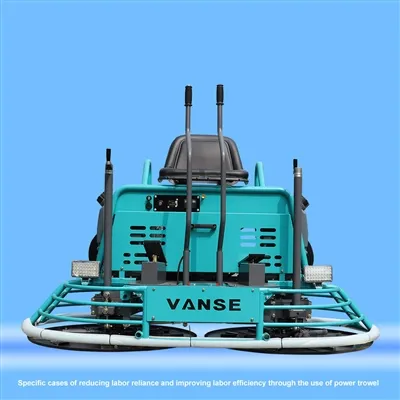
The reduction in labor reliance and the improvement in labor efficiency through the use of power trowel are revolutionary. The following is visually illustrated through a specific comparative case and detailed data dissection. Project area: 10,000 square meters Concrete thickness: 15 centimeters Construction requirements: Meet the industrial standards for flatness (±3mm/2m) and smoothness (finishing). Strong laborers (carrying and preparing) : 4-5 people Plastering workers (responsible for finishing the surface) : 8-10 people (experienced master craftsmen are required) Total number of people: 12 to 15 people working simultaneously. Workers need to wear boots, line up on the initially set concrete, and use tools such as wooden power trowel and iron power trowel, bending over to repeatedly smooth and smooth it out. This is an extremely physically demanding process and a huge test for the workers' waists and arms. Because it involves multiple people working together, it is difficult to ensure even force application and consistent steps, which easily leads to a "wavy" ground. Daily completed area: A skilled team can complete a maximum of 800 to 1,000 square meters in a day (calculated based on 8 to 10 hours). Total construction period: It will take 10 to 12 days to complete 10,000 square meters of ground. Quality risk: Highly dependent on the technical proficiency and physical condition of workers. The construction quality dropped significantly after fatigue in the afternoon, and the joints were prone to unevenness. Extremely high labor costs: Calculated based on 15 people, the daily labor cost is huge. High management costs: It requires an outstanding foreman to coordinate over a dozen people, making management very difficult. Hidden costs: The risk of work-related injuries caused by workers' fatigue work and the cost of rework due to substandard quality. Power trowel operator: 2 (take turns to operate to prevent fatigue) Auxiliary workers (responsible for corner and pipeline handling) : 3-4 people Total number of people: 5 to 6. After the concrete is spread, vibrated and leveled, it is allowed to set initially. The operator drives the power trowel machine into the site to carry out large-scale rough power trowel (installing the disc) and fine power trowel (installing the power trowel). Auxiliary workers simultaneously use small hand-held power trowel or manually handle corners, column bases, and the area around equipment foundations that machines cannot reach. Daily completed area: One power trowel team can easily complete 2,500 to 3,000 square meters in a day. Total construction period: It only takes 3 to 4 days to complete 10,000 square meters of ground. Quality Assurance: The flatness is guaranteed by the machine, uniform and consistent, eliminating fluctuations caused by human factors. The surface density and smoothness are much higher than those of artificial ones. Labor costs have been significantly reduced: the number of employees has decreased by more than 60%. Equipment cost: The rental or depreciation expenses of the power trowel machine need to be borne, but they are far lower than the labor cost savings. The overall cost has significantly decreased: The shortening of the construction period has led to a reduction in management and rental fees, and the one-time excellence in quality has avoided rework. The overall cost-effectiveness is extremely high. Comparison dimension Pure manual operation Mechanized operation Enhance the effect Quantity of labor force 12 to 15 people Five to six people Reduce by approximately 60% to 70% Daily completed area 800-1,000 square meters 2,500-3,000 square meters Increase by approximately 200% to 300% Per capita daily efficiency Approximately 70 square meters per person Approximately 500 square meters per person Increase by more than 600% Total construction period 10 to 12 days Three to four days Shorten by approximately 60% to 70% Quality consistency Dependent on individuals and unstable Guaranteed by machines, it is uniform and stable From "craftsmanship" to "industrial standards" Labor intensity of workers Extremely high (bending over, carrying heavy loads Medium (standing to operate the machine) Significantly reduced occupational health protection Replacing ten with one, directly substituting heavy labor: The working efficiency of one machine is equivalent to that of a dozen skilled workers, directly solving the problems of "labor shortage" and "high labor costs". Technology empowerment lowers the skill threshold: Traditional plasters need several years to master solid skills. A power trowel operator can start working after a short period of training and can produce more stable quality. Transform reliance on "the experience of experienced masters" into replicable "standardized operations". Speed wins, shortening the project cycle: A shorter construction period means faster delivery and use, creating earlier returns for the owner, while saving a significant amount of on-site management costs and equipment rental costs for the construction party. The quality leap achieves dual benefits: higher flatness and better surface strength. It not only meets the strict requirements of modern industrial floors, reduces dust and wear problems during later use, but also completely avoids the rework losses caused by substandard quality. This is a "hidden" efficiency improvement. Conclusion: The use of a power trowel is not merely a simple "machine replacing human", but a comprehensive upgrade of the construction process. It has achieved a deep reduction in reliance on labor and a leapfrog improvement in labor efficiency by significantly reducing the number of workers, greatly enhancing operational efficiency, and fundamentally ensuring construction quality. It is an indispensable core equipment in modern concrete floor construction. Note: The parameters provided in this document are for reference only and are not mandatory. Due to differences in technical characteristics between different brands and models of laser levelers, please consult the manufacturer for a suitable solution before actual operation. This reference document assumes no responsibility for any issues arising from failure to follow the manufacturer's instructions.