Technical Knowledge
How does the concrete laser leveling machine work?
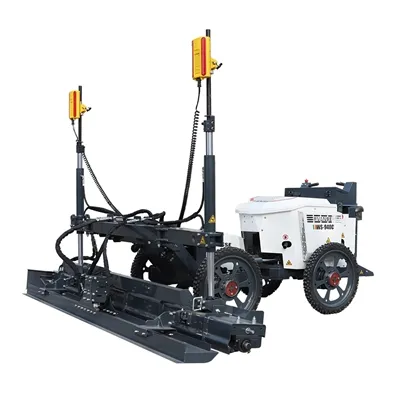
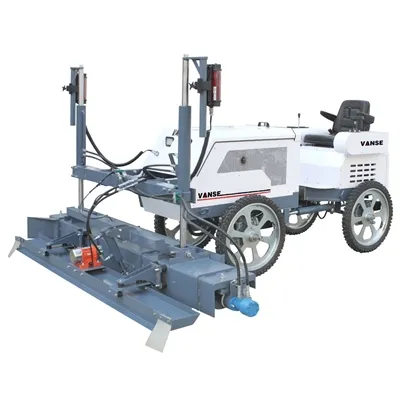
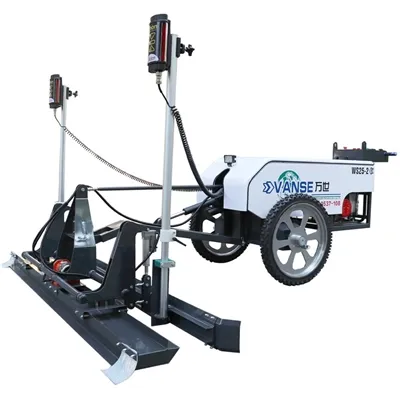
Concrete laser leveling machine is a device that uses laser technology for floor leveling. Its working principle is mainly based on laser measurement and control systems, combined with mechanical automation technology, to achieve high-precision and efficient floor leveling.
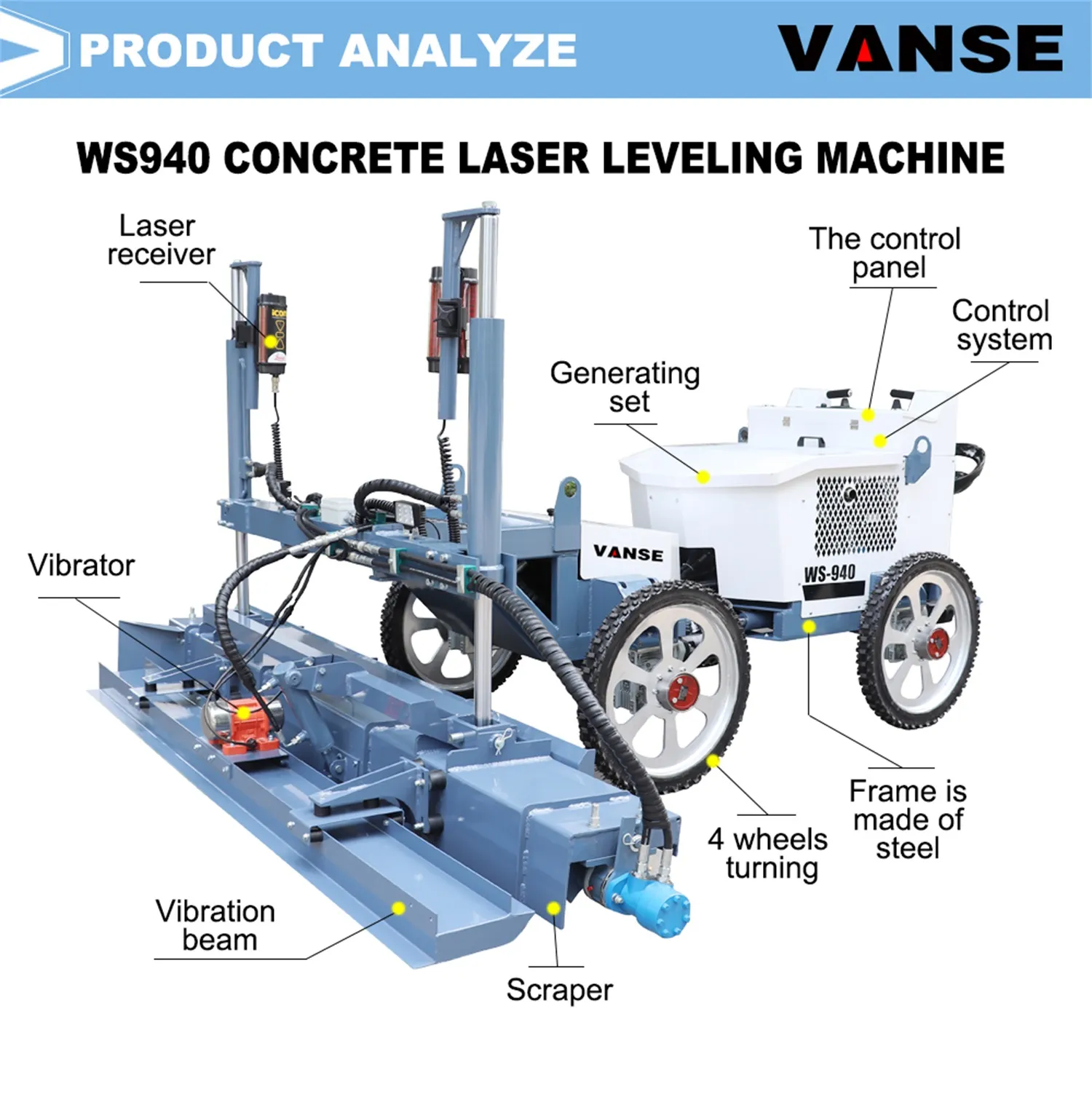
During the specific work process, the laser leveling machine first emits a laser beam through the laser transmitter, which is projected onto the ground to be constructed and received by the laser receiver. The receiver then feeds back the received signal to the control system, and the control system adjusts the position and height of the leveling head based on the feedback signal to ensure that the leveling head always remains at the set elevation position for operation.
The leveling head is the core part of the laser leveling machine. It integrates functional modules such as scraper, spiral and vibrating plate, and can complete the initial leveling, vibration and leveling of concrete at one time. During the leveling process, the role of the scraper and spiral is to evenly distribute the concrete, while the vibrating plate vibrates the concrete to achieve the desired flatness.
At the same time, the laser leveling machine adopts a computer laser control system, which receives and processes laser signals through the laser receiver of the mechanical head to make real-time adjustments at a monitoring frequency of 10 times per second to accurately control the floor elevation. This allows the flatness of the entire floor to be accurately controlled and avoids manual errors and construction joint problems in traditional construction methods.
In addition, in order to achieve large-area construction, laser leveling machines are usually equipped with automatic navigation systems or remote control systems to achieve automated and efficient construction. This construction method can not only improve construction efficiency and shorten the construction cycle, but also reduce manual operating errors and improve construction quality.
To sum up, the working principle of the concrete laser leveling machine is based on the laser measurement and control system. By accurately controlling the floor elevation and flatness, combined with mechanical automation technology, efficient and high-precision floor leveling can be achieved.
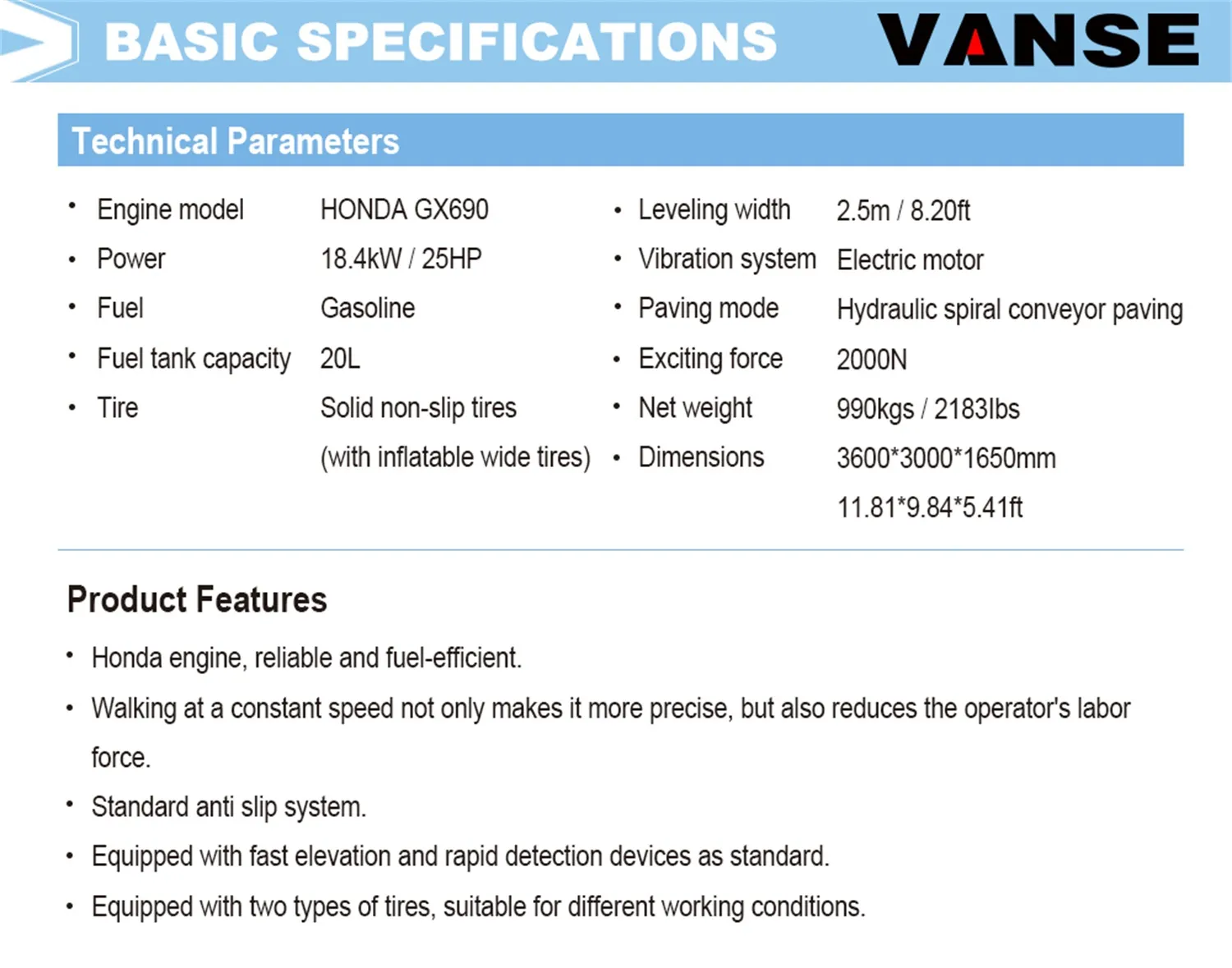
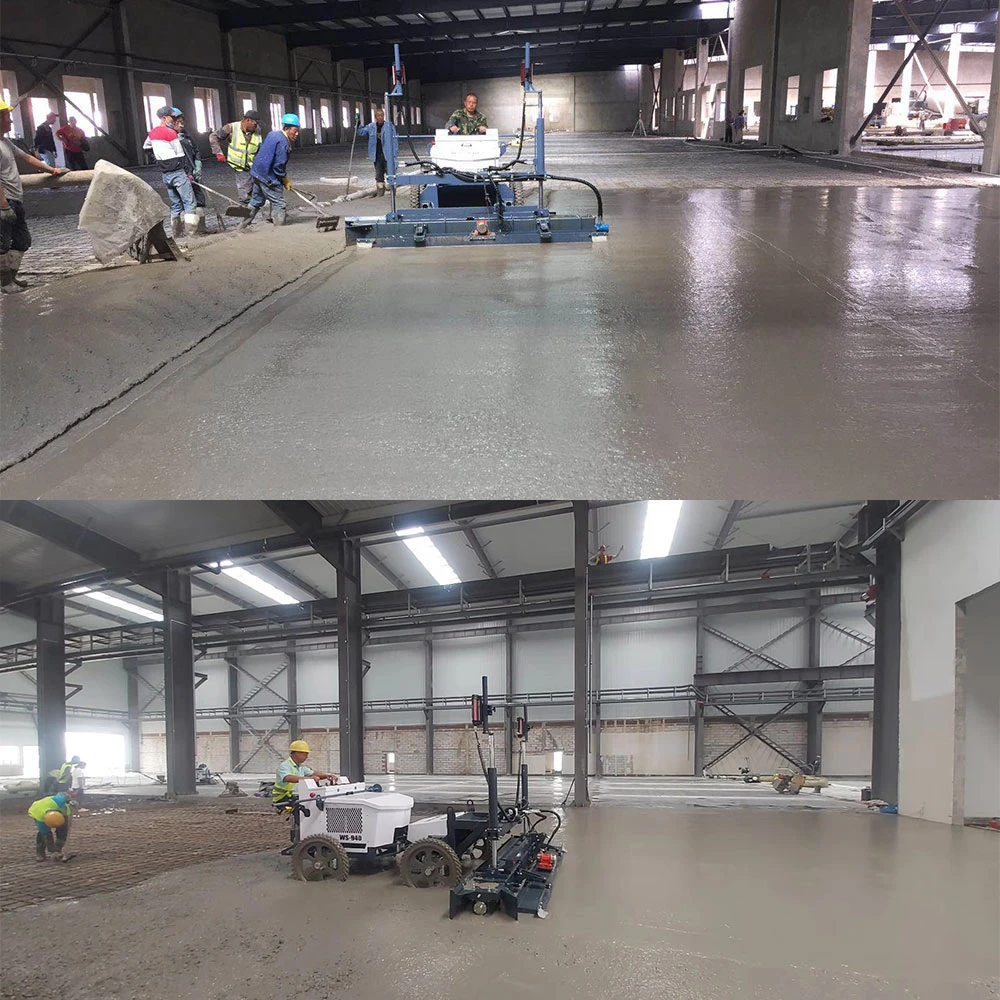
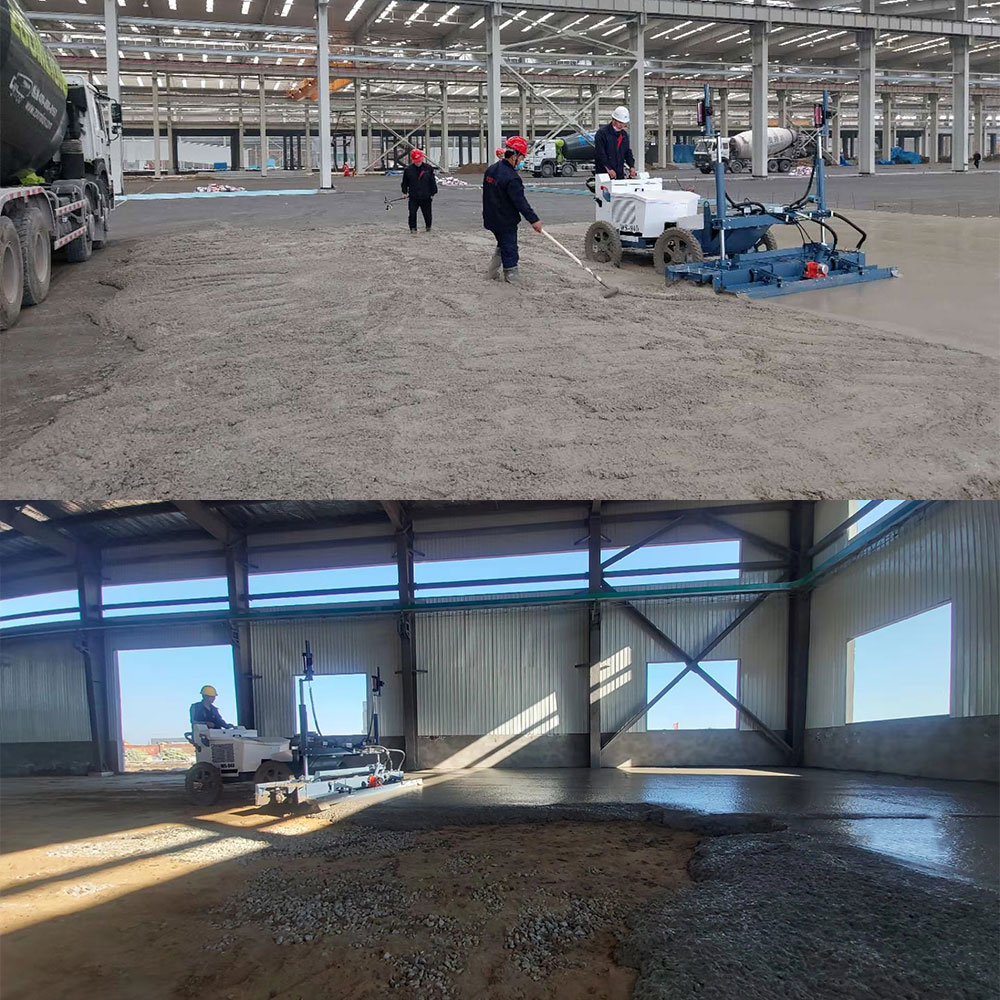
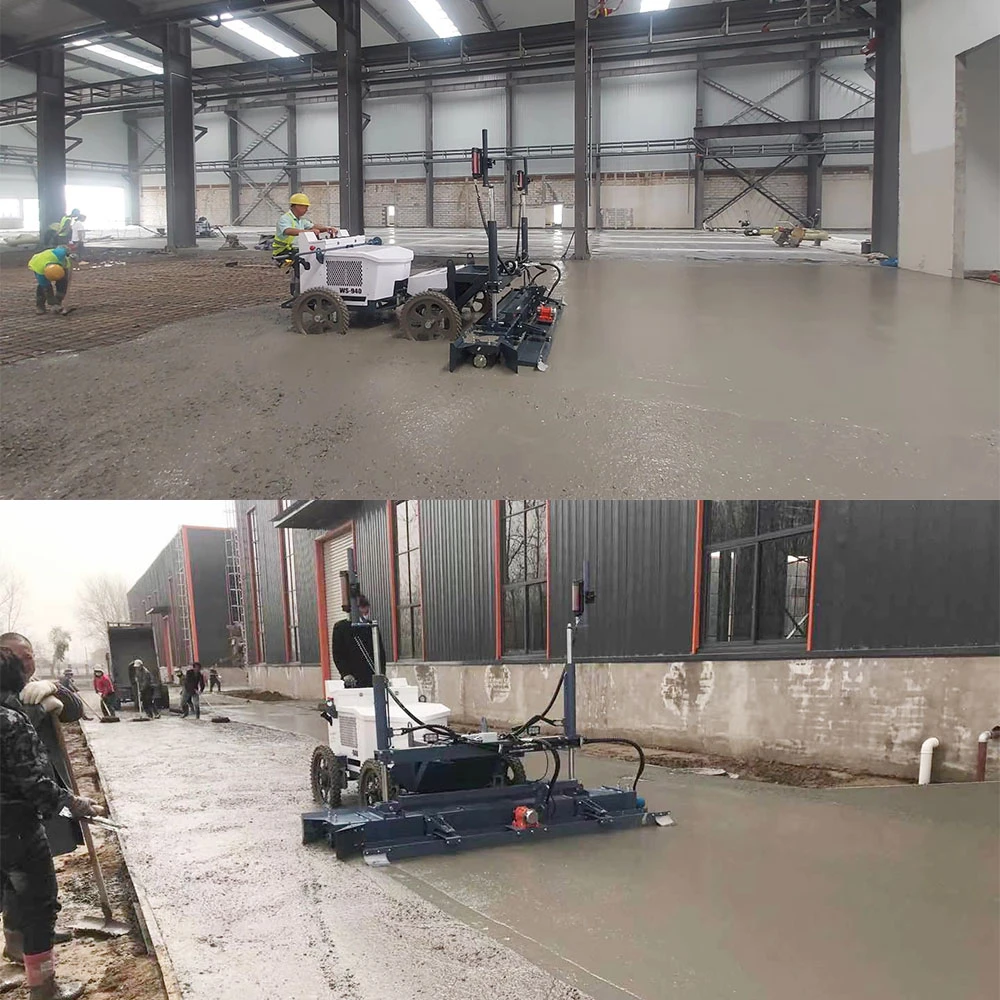
Thanks to All the Friends Who Support and Trust Shandong Vanse Machinery Technology Co., Ltd.
If you want to know more about Shandong Vanse Machinery Technology Co., Ltd. or have any questions, please feel free to contact us:
Our Factory
Shandong Vanse Machinery Technology Co., Ltd.








Share this article

About the Author: Shandong Vanse Machinery Technology Co., Ltd.
Shandong Vanse Machinery Technology Co., Ltd. is a high-tech manufacturer specializing in concrete construction machinery, including laser screeds and related equipment. The company integrates R&D, production, and global sales, with products exported to over 60 countries and widely used in infrastructure projects worldwide.
Previous Post
Next Post
Related Articles
You Might Also Like
How to deal with equipment failures during the construction of concrete laser leveling machines?
As a highly sophisticated construction equipment, concrete laser leveling machine may encounter various equipment failures during the construction process. If these failures are not handled in time, it will not only affect the construction progress, but may also cause safety accidents. Therefore, it is crucial to develop an effective equipment failure handling strategy to ensure the smooth progress of construction. The following is a detailed analysis of how to handle equipment failures that occur during the construction of concrete laser leveling machine. Concrete laser leveling machine may encounter various failures during the construction process, such as laser system failure, control system failure, mechanical failure, etc. These failures need to be diagnosed and handled in a timely and accurate manner to reduce construction delays and potential safety risks. 1. Fault prevention strategy Prevention is better than cure. The probability of equipment failure can be reduced by the following measures: – **Regular maintenance**: Regularly inspect and maintain the equipment according to the manufacturer's recommendations. – **Operation training**: Ensure that the operator receives professional training and understands the correct operation of the equipment. – **Use environment control**: Ensure that the equipment is used in a suitable environment and avoid extreme temperature and humidity conditions. 2. Fault diagnosis method Quickly and accurately diagnosing the fault is the first step in handling the fault: – **Visual inspection**: Check whether there is obvious damage or abnormality on the outside of the equipment. – **Auditory inspection**: Determine whether there is an abnormality by the sound when the equipment is running. – **Performance test**: Determine the scope of the fault by testing the various performance indicators of the equipment. 3. Common fault handling Develop corresponding handling methods for common faults that may occur during the construction of concrete laser leveling machines: – **Laser system failure**: Check the laser transmitter and receiver, clean the lens, check the power supply and connection lines. – **Control system failure**: Restart the control system, check the software settings, update the software or replace the control module if necessary. – **Mechanical failure**: Check the hydraulic system, transmission system, etc., and replace damaged parts. 4. Fault handling process Establish a standardized fault handling process to ensure the efficiency and effectiveness of fault handling: – **Fault report**: The operator reports the fault immediately when it is found, providing the fault phenomenon and occurrence time. – **Fault analysis**: The maintenance team responds quickly, analyzes the cause of the fault, and formulates a handling plan. – **Fault repair**: Repair the fault according to the handling plan to ensure that the equipment resumes operation as soon as possible. 5. Spare parts and tool preparation Prepare necessary spare parts and tools to shorten the troubleshooting time: – **Spare parts inventory**: Reserve vulnerable parts and key parts according to the equipment usage. – **Professional tools**: Prepare professional maintenance tools to improve maintenance efficiency. 6. Technical support and training Provide technical support and training to improve the troubleshooting ability of on-site personnel: – **Manufacturer support**: Establish a good cooperative relationship with equipment manufacturers and obtain technical support. – **Internal training**: Regularly train operators and maintenance personnel to improve fault diagnosis and handling skills. 7. Fault recording and analysis Record and analyze fault cases and continuously optimize the fault handling process: – **Fault recording**: Record the type, cause, handling method and time of each fault in detail. – **Case analysis**: Regularly analyze fault cases, summarize experience, and avoid the recurrence of similar faults. 8. Emergency plan formulation Formulate emergency plans for equipment failures and improve the ability to respond to emergencies: – **Emergency team**: Establish a special emergency maintenance team to be ready to handle equipment failures at any time. – **Emergency supplies**: Prepare necessary emergency supplies, such as spare equipment, quick repair tools, etc. 9. Technology upgrades and improvements Reduce the occurrence of equipment failures through technology upgrades and improvements: – **Software upgrades**: Regularly update the software of the equipment control system and fix known defects. – **Hardware improvements**: Improve the equipment hardware according to the results of fault analysis to improve reliability. 10. Conclusion Dealing with equipment failures during the construction of concrete laser leveling machines requires systematic management strategies and technical support. Through measures such as fault prevention, rapid diagnosis, standardized processing procedures, spare parts and tool preparation, technical support and training, fault recording and analysis, emergency plan formulation, and technology upgrades and improvements, the impact of equipment failures on construction can be effectively reduced and the smooth progress of construction can be ensured. LEARN MOREVanse leveling machine speaks with quality and service!
The laser transmitter of the concrete laser leveler generates a rotating laser. The laser receiver on the laser leveler receives the signal, which is analyzed by the laser measurement and control system. The deviation will be fed back to the sensitive computer control system on the laser leveler. The left and right linear actuators will adjust the height of the scraper to ensure the leveling accuracy. In today's concrete laser leveler industry, the gap between the quality of domestic laser levelers and imported and joint venture brands is getting smaller and smaller, and more and more people pay more attention to the after-sales service of the products. To improve the competitive advantage of products, high-quality products alone are no longer feasible, and more services are needed. The increasingly hot laser leveler industry can be seen at construction sites across the country. As engineering machinery, most of them face harsh working conditions, high labor intensity, long working hours, and different degrees of wear of some parts. Future maintenance problems and accessories problems require manufacturers to provide after-sales service to complete. It can be seen that good after-sales service is the foundation of guaranteeing customer interests. The market demand for domestic laser leveling machines is gradually increasing. In order to improve their competitive advantage, some manufacturers have devoted all their energy to reducing costs and prices, ignoring the quality of after-sales service. As a result, the number of manufacturers with more and more users is relatively weaker, and the after-sales service force is relatively weaker. The user's problems cannot be handled in time or even stranded for a long time. In this way, how can the company last long? The product reputation is getting worse and worse, and even if the price is lower, it will lose its competitive advantage. Shandong Vanse Machinery, as the earliest and most professional manufacturer of laser leveling machines in China, believes that occasional quality problems are not enough to deny the strength of the entire brand. Is a brand strong? The key lies in whether the company has a sound after-sales system and whether it can provide high-quality after-sales service at the first time. High-quality products are the theme of the long-term development of enterprises, and high-quality services are the key to the sublimation of corporate brand image. Shandong Vanse Laser Leveling Machine Manufacturer has been committed to the research and development and production of concrete laser leveling machine products for many years. The product quality has also been tested under various working conditions, and the high-quality after-sales service has been recognized by the majority of users. Our service tenet is that as long as there is a laser leveling machine, you only need to make a phone call, and we can always provide you with high-quality service at the first time. We insist on making high-quality products and excellent services!What special attention should be paid to the maintenance and care of concrete laser leveling machines under different climatic conditions?
– Under high temperature environment, the engine (if it is a fuel laser leveler) and hydraulic system are prone to overheating. For the engine, make sure that the coolant in the radiator is sufficient and clean. The coolant level should be checked regularly, generally every 8-10 hours of work, and the coolant should be replaced regularly according to the requirements of the equipment manual. It is usually recommended to replace it once a year. – Clean the dust and debris on the surface of the radiator, as these will affect the heat dissipation effect. You can use a compressed air can or a soft brush to gently clean it to avoid damaging the radiator fins. – For the hydraulic system, some laser levelers are equipped with a hydraulic oil cooler. Also ensure that its surface is clean and pay attention to the temperature of the hydraulic oil. If the hydraulic oil temperature is too high, it may cause the performance of the hydraulic system to decline or even damage. – Try to avoid using the equipment for a long time when the temperature is highest during the day (usually 12 noon-3 pm). Because during the high temperature period, the operating temperature of each component of the equipment is already high, and long-term continuous operation will further aggravate heat accumulation and increase the risk of equipment failure. – The working time can be adjusted to the early morning or evening, when the ambient temperature is relatively low, which is conducive to the normal operation of the equipment. If it is unavoidable to work during high temperature periods, the rest frequency of the equipment should be increased. After every 1-2 hours of work, the equipment should be allowed to rest for 15-20 minutes to allow the various parts of the equipment to fully dissipate heat. – High temperature will accelerate the evaporation and aging of lubricating oil (grease), so the lubrication of the equipment should be checked more frequently. For example, for the bearings, chains and other parts of the equipment, lubrication may be performed once every 50-100 hours of work. In a high temperature environment, it is necessary to check and add grease every 30-50 hours of work. – At the same time, check the seals of the equipment, such as the seals at the joints of the hydraulic pipes and the engine oil seals. High temperature may cause the seals to age and deform, resulting in leakage. If the seals show signs of damage, they should be replaced in time to avoid leakage of hydraulic oil or coolant, which will affect the normal operation of the equipment. – For fuel-type laser levelers, use fuel suitable for low temperature environments. In cold weather, diesel may wax, which will affect the start and normal operation of the engine. You can add anticoagulants or use low-grade winter diesel to solve this problem. – Battery performance will decrease at low temperatures, so make sure the battery is fully charged. When the equipment is not in use, the battery can be removed and placed in a warm room for charging and storage. In addition, before starting the equipment, the battery can be preheated, such as using a battery heater, which can improve the battery's starting ability. – The engine should be fully preheated before starting. According to the requirements of the equipment manual, use a preheating device to preheat the engine. The preheating time is generally determined by the ambient temperature. For example, in an environment of about minus 10℃, the preheating time may take 10-15 minutes. – For the hydraulic system and working parts, do not let the equipment work at full load immediately after starting. Let the equipment run at no load for 5-10 minutes to gradually heat up the hydraulic oil and various components. After reaching the normal working temperature, start construction. – If the equipment is not used for a long time, it should be stored indoors or in a place with insulation measures to avoid exposure to cold outdoor environments. If it can only be stored outdoors, the equipment should be properly covered to prevent damage to the equipment caused by snow and ice. – Antifreeze can be added to the water tank and hydraulic oil tank of the equipment to prevent the water tank and oil tank from freezing and cracking at low temperatures. The amount of antifreeze added should be in accordance with the requirements of the equipment manual. Generally, the concentration of antifreeze should be ensured to effectively prevent freezing at the expected minimum temperature. – Check the electrical system of the equipment to ensure that all electrical components (such as motors, controllers, sensors, etc.) have good waterproof seals. For wire connectors exposed to the outside, waterproof tape or sealant can be used to wrap them to prevent moisture from entering and causing short circuits. – The laser transmitter and receiver of the laser leveling machine should also be waterproof. In humid weather, if these precision components are damp, it may affect the transmission and reception of laser signals, thereby affecting the construction accuracy. You can use a special waterproof cover to protect it. When the equipment is not in use, store these parts in a dry place. – Humid air can easily cause equipment to rust, especially the metal parts of the equipment. Anti-rust oil or anti-rust paint can be applied to the surface of the equipment, and the parts that are prone to rust (such as chassis, scrapers, screws, etc.) should be protected. – Regularly check whether the equipment has signs of rust. For rusted parts, rust removal should be carried out in time. You can use sandpaper or rust remover to remove the rust, and then apply anti-rust oil or touch-up paint. – After working in humid weather, the equipment should be cleaned and dried in time. Use a clean rag to wipe off the moisture on the surface of the equipment. For parts inside the equipment that may be damp (such as the cab, electrical control cabinet, etc.), a hair dryer or dehumidifier can be used to dry them. – At the same time, the working parts of the equipment (such as scrapers, spiral distributors, etc.) should be cleaned to prevent concrete residues and moisture from mixing and solidifying on the parts, affecting the next use of the equipment.