Technical Knowledge
How does the concrete laser leveling machine ensure smoothness during the construction of airport runways and aprons?
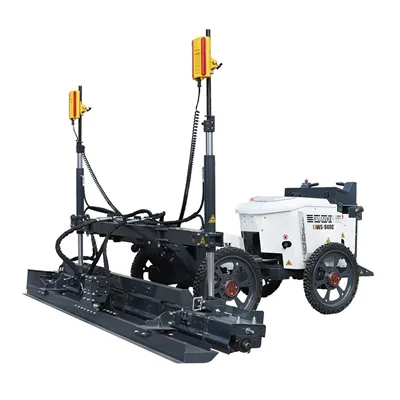
The key to ensuring the flatness of concrete laser leveling machines in the construction of airport runways and aprons lies in the application of its laser measurement and control system. Here are the main steps to ensure flatness:
1. Laser positioning and real-time control:
The concrete laser leveling machine is equipped with a laser measurement and control system, which can control the elevation of the concrete in real time. In the construction of airport runways and aprons, high-precision ground flatness is crucial. Through laser positioning, the leveling machine can accurately work according to the design elevation to ensure the accuracy of ground flatness.
2. No need for traditional control lines:
Compared with traditional construction methods, the concrete laser leveling does not require the establishment of control lines. This means that elevation errors caused by inaccurately set or disturbed control lines during construction can be avoided. This greatly improves construction efficiency and accuracy.
3. Reduce errors caused by vibration of formwork:
In traditional construction methods, vibration of formwork (such as channel steel) may cause elevation errors. However, the Wensu laser leveling machine does not require the use of side formwork during the construction process, thereby avoiding errors caused by vibration of the formwork.
4. Precise control of each layer:
In the construction of multi-layer structures, the concrete laser leveling machine ensures the accuracy of each layer by controlling the baseline of the laser level. For multi-layer structures such as airport runways and aprons, the leveling machine can maintain high-precision leveling during construction of each layer, thereby ensuring that the overall flatness is up to standard.
5. Inspection and adjustment:
During the construction process, regular flatness inspection of the completed ground is necessary. If any unevenness is found, the parameters or operating methods of the leveler can be adjusted in time to ensure that the final flatness meets the requirements.
In short, the concrete laser leveling machine can ensure high-precision ground flatness in the construction of airport runways and aprons through the high-precision positioning and real-time control functions of its laser measurement and control system, as well as the construction method without traditional control lines and side formwork.


Thanks to All the Friends Who Support and Trust Shandong Vanse Machinery Technology Co., Ltd.
If you want to know more about Shandong Vanse Machinery Technology Co., Ltd. or have any questions, please feel free to contact us:
Our Factory
Shandong Vanse Machinery Technology Co., Ltd.








Share this article

About the Author: Shandong Vanse Machinery Technology Co., Ltd.
Shandong Vanse Machinery Technology Co., Ltd. is a high-tech manufacturer specializing in concrete construction machinery, including laser screeds and related equipment. The company integrates R&D, production, and global sales, with products exported to over 60 countries and widely used in infrastructure projects worldwide.
Previous Post
Next Post
Related Articles
You Might Also Like
By adjusting the operating parameters of the power trowel, what quality problems of the concrete surface can be solved?
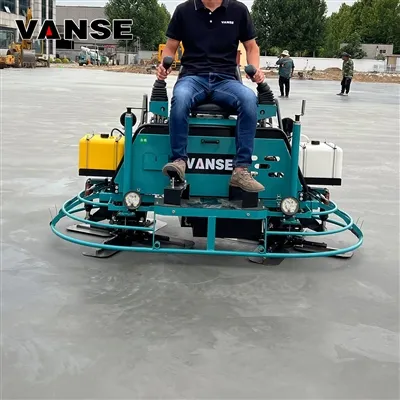
Adjusting the operating parameters of the trowel machine can solve the following quality problems of the concrete surface: Adjust the speed: The speed of the trowel machine has an important influence on the flatness of the concrete surface. If the speed is too fast, the trowel blade may produce too much cutting force on the concrete surface, resulting in uneven surface; if the speed is too slow, the concrete surface may not be effectively smoothed. By appropriately reducing or increasing the speed of the trowel machine, the blade can act evenly on the concrete surface, which can improve the surface flatness. Adjust the trowel time: If the trowel time is too early, the concrete has not reached a certain strength, and it is easy to produce dents or marks during the trowel process; if the trowel time is too late, the concrete strength is too high, and the trowel machine is difficult to effectively trim the surface. According to factors such as the concrete mix ratio and ambient temperature, reasonable adjustment of the trowel time can make the concrete surface achieve better flatness. Adjusting the pressure: If the pressure applied by the trowel is too high during operation, the cement slurry on the concrete surface will be over-extruded, resulting in a thin cement slurry layer on the surface, which is prone to sanding; if the pressure is too low, the concrete surface cannot be compacted, which will also affect the surface quality. Properly adjusting the pressure of the trowel so that it can make the concrete surface compact while not over-extruding the cement slurry during operation will help solve the problem of surface sanding. Choose the right blade: Trowel blades of different materials and shapes have different effects on the concrete surface. For example, a blade with higher hardness and sharper edge may cut off some tiny particles on the concrete surface during troweling, increasing the risk of sanding; while a blade with a softer or blunter edge may not be able to effectively compact the surface. Choosing a blade with moderate material and appropriate edge shape can reduce surface sanding caused by blade factors. Control the troweling speed: If the water on the concrete surface evaporates quickly, if the trowel speed is too fast, it will accelerate the loss of surface water, causing cracks on the concrete surface due to drying shrinkage. Reduce the operating speed of the trowel machine to allow the concrete surface enough time for water migration and cement hydration reaction, which can reduce cracks caused by drying shrinkage. Adjust the number of trowel passes: Too many trowel passes may cause excessive disturbance to the concrete surface, destroy the formed structure, and cause cracks on the surface; too few passes may not make the surface achieve sufficient density and finish. According to the performance and surface condition of the concrete, reasonably adjust the number of trowel passes to ensure surface quality and avoid cracks caused by excessive troweling. AMOUR JOINT CONCRETE LASER LEVELING MACHINE LIGHT TOWER POWER TROWEL STEEL FIBER TRACKED MINI DUMPERHow to improve construction efficiency of concrete laser leveling machine?
Improving the construction efficiency of concrete laser leveling machines is of great significance for reducing construction costs and shortening project cycles. The following is a comprehensive analysis of how to improve the construction efficiency of concrete laser leveling machines. Introduction As a highly efficient construction machine, concrete laser leveling machines are increasingly widely used in the field of construction. However, the improvement of construction efficiency not only depends on the performance of the equipment itself, but also requires comprehensive consideration of construction preparation, operating skills, construction management and other factors. 1. Preparation before construction Sufficient pre-construction preparation is the prerequisite for improving construction efficiency: – **Equipment inspection and maintenance: Ensure that the laser leveling machine is in the best working condition to avoid failures during construction. – **Construction plan optimization: Develop a reasonable construction plan based on the characteristics of the project, including construction process, equipment layout, etc. – **Material preparation: Prepare the required concrete materials in advance to ensure the continuity of material supply during construction. 2. Professional training of construction personnel Professional construction personnel are the key to improving construction efficiency: – **Operation skills training: Regularly conduct skill training for operators to improve their proficiency in operating laser leveling machines. – **Safety education: Strengthen safety education to ensure that construction workers comply with safety regulations while working efficiently. 3. Fine management during the construction process Fine construction process management can effectively improve construction efficiency: – **Construction scheduling: Rationally dispatch construction resources to avoid construction delays caused by waiting for materials or equipment. – **Real-time monitoring: Real-time monitoring of construction progress and equipment status, and quick response to possible problems. 4. Optimal use of construction equipment Optimizing the use of construction equipment can improve construction efficiency: – **Equipment configuration: Rationally configure the laser leveler according to construction needs to avoid excess or insufficient equipment capacity. – **Equipment automation: Use equipment automation functions to reduce manual intervention and increase construction speed. 5. Innovation and improvement of construction technology Innovation and improvement of construction technology is an important way to improve construction efficiency: – **Technology innovation: Explore new construction technologies, such as using premixed concrete, to reduce on-site mixing time. – **Technology integration: Integrate advanced technologies, such as GPS positioning, intelligent control systems, etc., to improve construction accuracy and speed. 6. Optimization of construction environment A good construction environment helps improve construction efficiency: – **Environmental control: Control the temperature, humidity and other conditions of the construction site to ensure a suitable construction environment for concrete. – **Construction site layout: Rationally plan the construction site layout to reduce the time for equipment movement and material transportation. 7. Quality and supply of construction materials High-quality construction materials and stable supply are crucial to improving construction efficiency: – **Material quality control: Ensure the quality of concrete materials and avoid construction interruptions caused by material problems. – **Supply chain management: Optimize supply chain management to ensure the timeliness and stability of material supply. 8. Collection and analysis of construction data Collecting and analyzing construction data helps to find room for efficiency improvement: – **Data collection: Collect various data during the construction process, such as construction speed, equipment utilization, etc. – **Data analysis: Analyze the data, find out the factors that affect construction efficiency, and formulate improvement measures. 9. Maintenance and upgrading of construction machinery Regular maintenance and timely upgrading of construction machinery are the guarantee for maintaining construction efficiency: – **Regular maintenance: Formulate equipment maintenance plans to ensure that the equipment is in good condition. – **Technology upgrade: Pay attention to the development of industry technology and upgrade the technology of equipment in a timely manner. 10. Prevention and control of construction risks Preventing and controlling construction risks can reduce construction interruptions and improve efficiency: – **Risk assessment: Conduct construction risk assessment regularly to identify potential risk factors. – **Emergency plan: Develop an emergency plan to ensure that you can respond quickly when risks occur. 11. Conclusion Improving the construction efficiency of concrete laser leveling machines is a systematic project involving construction preparation, personnel training, process management, equipment use, process innovation, environmental optimization, material supply, data collection, machinery maintenance, risk control and other aspects. Through the comprehensive application of these measures, we can effectively improve construction efficiency, shorten the project cycle and reduce construction costs.How to Verify Laser Leveling Effect through F-number (FF/FL) System?
In the high-stakes world of industrial flooring-especially for VNA (Very Narrow Aisle) warehouses and automated logistics hubs-"flat enough" isn't a measurement. To prove your work meets international standards, you need the F-number system (FF/FL). If you're using a Concrete Laser Leveling Machine and need to verify your results for a client, here is the professional's guide to understanding, measuring, and hitting those high scores. Before you pull out the testing equipment, you need to know what the numbers represent. Global buyers and engineers follow the ACI 117 standard, which breaks down into two parts: FF (Floor Flatness): This measures the "waviness" of the surface. Think of it as the small bumps and dips. High FF numbers mean a smoother ride for forklifts. FL (Floor Levelness): This measures the overall tilt or slope of the slab. It's about how close the floor is to the actual horizontal plane. Timing is everything. To get an accurate reading that reflects the machine's performance, measurements should be taken within 24 to 72 hours after placement. If you wait too long, concrete curling (due to drying) can throw off your FL numbers, even if your laser leveling did a perfect job. You can't verify a high F-number if the machine didn't produce it in the first place. This is where the engineering of your Concrete Laser Leveling Machine comes into play. Vanse Insight: To achieve FF numbers in the 50s or 60s (Superflat), the machine's hydraulic response must be instantaneous. Vanse's YZ series, uses high-speed laser receivers that talk to the leveling head 10 times per second. This constant, automatic correction is what eliminates the "waves" that tank your FF scores. Most international contractors use an F-Meter or a Dipstick® Profiler. Walk the Lines: You don't measure the whole floor randomly. You walk the device in straight lines across the slab. Data Collection: The device records the elevation changes every 12 inches (30cm). The Result: The software calculates a statistical average. If your goal was FF 50 and you hit FF 52, you've verified that your laser leveling machine and your crew executed the plan perfectly. When a buyer asks, "Can your machine hit FM1 standards?" they are asking about reliability. Here's how Vanse Machinery ( www.vansemac.com ) supports those high-spec requirements: Integrated Vibration: A major enemy of FF numbers is uneven concrete density. Vanse machines feature high-frequency vibration integrated directly into the leveling head, ensuring the slab is consolidated uniformly before the final pass. Telescopic Precision: For the highest FL accuracy, the Vanse YZ30-4E telescopic boom allows the machine to stay in one spot while the head extends. This removes the variable of machine weight shifting on the wet concrete, which is a common cause of "dips" in the F-number report. Dual-System Control: By combining top-tier laser transmitters (Leica/Trimble) with Vanse's proprietary hydraulic control, the margin for error is reduced to nearly zero. Note: The parameters provided in this document are for reference only and are not mandatory. Due to differences in technical characteristics between different brands and models of laser levelers, please consult the manufacturer for a suitable solution before actual operation. This reference document assumes no responsibility for any issues arising from failure to follow the manufacturer's instructions.