Technical Knowledge
What are the specific application cases of laser leveling machines in municipal engineering?

There are many specific application cases of laser leveling machines in municipal engineering. Here are some examples:
1. Highway construction: Laser leveling machines are widely used in highway construction, especially in the construction of highways and urban roads. They can help lay the road surface quickly and accurately, ensuring the flatness and stability of the road surface.
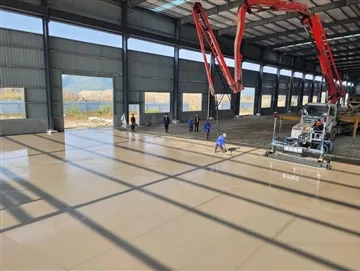
2. Municipal facility construction: Laser leveling machines can also be used in municipal facility construction, such as parking lots, squares, parks, etc. These places require large areas of concrete floors, and laser leveling machines can complete this work quickly and efficiently.
3. Subway construction: Subway construction also requires a large amount of concrete floors, so laser leveling machines are also widely used in this field. They can help lay subway platforms, tunnels and other infrastructure quickly and accurately.
4. Pipeline laying: Laser leveling machines can also be used for pipeline laying, especially the laying of large pipelines. They can help ensure the flatness and stability of pipelines and reduce the cost of subsequent maintenance.
5. Bridge construction: Bridge construction also requires a large amount of concrete floors, so laser leveling machines are also widely used in this field. They can help lay bridge panels and other infrastructure quickly and accurately.
In short, laser leveling machines are widely used in municipal engineering, which can help improve work efficiency and quality, reduce construction costs, and at the same time ensure the safety and stability of project quality.
Thanks to All the Friends Who Support and Trust Shandong Vanse Machinery Technology Co., Ltd.
If you want to know more about Shandong Vanse Machinery Technology Co., Ltd. or have any questions, please feel free to contact us:
Our Factory
Shandong Vanse Machinery Technology Co., Ltd.








Share this article

About the Author: Shandong Vanse Machinery Technology Co., Ltd.
Shandong Vanse Machinery Technology Co., Ltd. is a high-tech manufacturer specializing in concrete construction machinery, including laser screeds and related equipment. The company integrates R&D, production, and global sales, with products exported to over 60 countries and widely used in infrastructure projects worldwide.
Previous Post
Next Post
Related Articles
You Might Also Like
Concrete laser leveling machine winter maintenance tips
The strongest cold wave hits, Wanshi machinery warm reminder you now is the off-season construction, machine maintenance can not slack off oh, here is the winter maintenance of the machine super practical knowledge, the following winter maintenance measures are in the routine maintenance needs special attention to matters, must be completed under the premise of conventional maintenance: Before the onset of winter, replace the winter fuel in advance to avoid the wax accumulation of ordinary diesel in the filter element and pipeline due to low temperature, thus causing the engine to fail to start normally. Choose a standard engine oil. Open the anti-icing device of the compressed air system and check the ether level regularly. Many engines require additional additives in the coolant, known as SCA (Supplemental Coolant Additive). It is usually used in the process of contact between aluminum parts and coolant, so as to prevent metal corrosion, mineral precipitation, cylinder liner cavitation and foaming more effectively. Please refer to the machine's manual for details. Electrical system maintenance: Please start the engine once every half a month, charge the battery, and run all hydraulic actuators, such as rotating hydraulic motor, telescopic cylinder, etc. Do not remove the battery from the machine to prevent the failure of the internal software program of the controller due to the loss of the equipment for a long time. Hydraulic system maintenance: Start the machine regularly and open all hydraulic functions on the machine, so that the hydraulic drive components work regularly, in order to prevent the related seals due to long time parking damage, and cylinder rod and other metal components corrosion and other failures. As far as possible, all cylinder rods are shrunk into the hydraulic cylinder cavity to better protect the surface of the cylinder rod. Maintenance of mechanical parts: Before parking the machine for a long time in winter, lubrication and maintenance of each mechanical hinge point and bearing should be done well. Check the integrity of the dustproof cover of each mechanical component, and replace the damaged seals in time. Metal contact surfaces exposed to air should be treated against rust. Start the engine regularly and run all reduction gear boxes to prevent the shaft seals and rubber seals in the gear boxes from being damaged by long-term parking and bonding with gear oil.Introduction to technical parameters of concrete laser leveling machine
In modern construction projects, as a high-precision and high-efficiency ground construction equipment, concrete laser leveling machine is gradually replacing traditional construction methods and becoming the preferred tool for ground leveling. This article will give a detailed introduction to the technical parameters of concrete laser leveling machine so that readers can have a deeper understanding of it. 1. Equipment models and specifications Concrete laser leveling machines have a variety of models and specifications according to different construction needs and market positioning. In terms of specifications, these machines usually have a wide leveling range and can adapt to the ground construction needs of different areas. The overall structure of the equipment is compact and flexible to operate, making it easy to move and deploy on the construction site. 2. Laser system parameters The laser system is one of the core components of the concrete laser leveling machine, and its performance directly affects the leveling accuracy and efficiency. The main parameters of the laser system include: ✔ Laser transmitter power: The size of the laser transmitter power determines the stability and penetration of the laser beam. Generally, the higher the power of the laser transmitter, the stronger its anti-interference ability is, and it is suitable for use in occasions with complex light conditions or harsh construction environments. ✔ Laser receiver sensitivity: The receiver needs to be able to quickly and accurately capture the laser signal and convert it into a control signal. Highly sensitive receivers can ensure stable operation even when the signal is weak or interfered with. ✔ Laser beam stability: The stability of the laser beam is an important indicator for measuring the performance of the laser system. A stable laser can ensure the accuracy and consistency of the leveling process. 3. Power performance of the whole machine The power performance of the concrete laser leveling machine directly determines its working efficiency and reliability. The main power performance parameters include: ✔ Engine power: The size of the engine power determines the driving force and climbing ability of the equipment. An engine with sufficient power can ensure that the equipment can operate stably under various working conditions. ✔ Hydraulic system performance: The hydraulic system is responsible for driving components such as the leveling head and the vibration plate. Its performance directly affects the leveling effect and construction efficiency. An excellent hydraulic system should have the characteristics of rapid response and smooth movement. ✔ Walking system configuration: The walking system includes components such as tires or tracks, and its configuration will affect the passability and stability of the equipment. Wide tires or tracks can provide better support and grip, ensuring that the equipment can also walk smoothly on uneven ground. 4. Leveling efficiency and accuracy The leveling efficiency and accuracy of the concrete laser leveling machine are important indicators for measuring its performance. In terms of efficiency, the equipment should have a high leveling speed and large-area operation capacity to shorten the construction cycle. In terms of accuracy, the laser leveling machine should be able to achieve millimeter-level flatness requirements to ensure that the ground quality meets the design requirements. In order to achieve high-precision and high-efficiency leveling operations, concrete laser leveling machines usually use advanced control systems and sensor technology. The control system can adjust the height and angle of the leveling knife in real time according to the feedback signal of the laser receiver to ensure the consistency of the leveling effect. Sensor technology is used to monitor the flatness and elevation changes of the ground in real time to provide accurate data support for the control system. 5. Safety protection device At the construction site, safety is always the primary consideration. The concrete laser leveling machine is equipped with complete safety protection devices to ensure the safety of operators and equipment. These devices include: ✔ Emergency braking system: In an emergency, the operator can quickly activate the emergency braking system to stop the equipment immediately to avoid accidents. ✔ Guards and guards: Key components of the equipment such as the engine and transmission system are equipped with guards and guards to prevent operators from accidentally touching or foreign objects from entering and causing damage. ✔ Safety warning signs: Obvious safety warning signs are set on the equipment to remind operators to pay attention to safety matters and operating specifications. 6. Operation control system The operation control system of the concrete laser leveling machine is designed to be intuitive and easy to use to improve operating efficiency and reduce the possibility of misoperation. The control system usually includes: ✔ Operation panel: The panel is equipped with simple and clear control buttons and display screens, through which operators can monitor the equipment status, adjust working parameters and perform fault diagnosis in real time. ✔ Remote control system: Some high-end models of concrete laser leveling machines are also equipped with remote control systems. Operators can remotely control the equipment through wireless remote controls or smart devices within a certain range to improve the flexibility and convenience of operation. ✔ Intelligent functions: Modern concrete laser leveling machines also have some intelligent functions, such as automatic leveling and adaptive adjustment. These functions can automatically adjust the working status of the equipment according to changes in the construction environment to improve the leveling accuracy and efficiency. 7. Maintenance and durability The maintenance and durability of the concrete laser leveling machine are equally important. Good maintenance can extend the service life of the equipment and ensure that the equipment always maintains good working condition during the construction process. The equipment usually uses high-quality materials and manufacturing processes to ensure its good durability and reliability. At the same time, the design of the equipment also takes into account the needs of easy maintenance and upkeep, such as easily removable parts, centralized lubrication points, etc., which facilitate operators to carry out daily cleaning, inspection and replacement of parts. In addition, the equipment is also equipped with a fault self-diagnosis system, which can monitor the operating status of the equipment in real time and provide accurate fault information when a fault occurs, helping operators to quickly locate and solve the problem, reducing maintenance time and cost. 8. Additional functions and technical highlights In addition to the basic functions, the concrete laser leveling machine also has some additional functions and technical highlights, which further enhance the practicality and competitiveness of the equipment. ✔ Automatic leveling function: The high-end concrete laser leveling machine is equipped with an automatic leveling system, which can automatically adjust the height of the leveling knife according to the ground conditions to achieve fast and accurate leveling operations. This function greatly improves construction efficiency, while reducing manual intervention and reducing the difficulty of operation. ✔ Intelligent control system: Modern concrete laser leveling machines use advanced control systems to achieve intelligent operations. Through preset parameters and algorithms, the equipment can automatically adjust the working mode and speed to adapt to different ground conditions and construction requirements. At the same time, the system can also monitor and warn the working status of the equipment in real time, detect potential problems in advance and deal with them. ✔ Energy-saving and environmentally friendly design: With the increasing awareness of environmental protection, concrete laser leveling machines also focus on energy-saving and environmentally friendly designs. The equipment uses an energy-efficient engine and power system to reduce fuel consumption and emissions. At the same time, by optimizing working parameters and reducing noise, the impact on the surrounding environment is reduced. ✔ Multifunctional expansion parts: Some models of concrete laser leveling machines are equipped with multifunctional expansion parts, and other accessories or functional modules can be added according to construction needs. For example, different leveling knives or tools can be equipped to adapt to the construction of concrete of different materials and thicknesses; other auxiliary equipment can also be connected to achieve more complex construction processes. In summary, as an advanced ground construction equipment, the concrete laser leveling machine has many advantages in terms of technical parameters. Its efficient power performance, precise leveling accuracy, perfect safety protection devices and intelligent operation control system have made the equipment widely used in the field of construction engineering. At the same time, the additional functions and technical highlights of the equipment further enhance its practicality and competitiveness, and bring more convenience and benefits to construction. In the future, with the continuous advancement of science and technology and the continuous development of the market, the concrete laser leveling machine will continue to carry out technological innovation and functional upgrades to provide more possibilities for efficient and high-quality construction of construction projects. At the same time, with the continuous improvement of construction requirements and the strengthening of environmental awareness, the performance of equipment in energy saving and environmental protection will be further optimized and improved to adapt to the development trend of the future construction industry.How to choose a suitable concrete laser leveling?
When choosing a suitable concrete laser leveling, you need to consider the following aspects: 1. Demand analysis: First, the construction requirements need to be clarified, including the area of concrete to be processed, flatness requirements, construction efficiency, etc. Choose the appropriate model and power according to your needs. 2. Machine performance: The performance of the machine needs to be considered, including the degree of automation, accuracy, stability, durability, etc. of the leveling machine. Machines with higher performance can provide better construction results and smoothness. 3. Technical parameters: You need to understand the technical parameters of the leveling machine, including engine power, working width, leveling accuracy, etc. These parameters will directly affect the construction effect and efficiency. 4. Reputation and service: Choosing well-known brands and products with good reputation can ensure after-sales service and machine reliability. At the same time, understand the machine's warranty and maintenance policy so that you can receive timely support and assistance during use. 5. Price and cost-effectiveness: Price is one of the factors that need to be considered when choosing a machine, but it is not the only criterion. Factors such as machine performance, technical parameters and after-sales service need to be considered to comprehensively evaluate the cost performance and select the most suitable machine. 6. Convenience of operation: Machines with simple operation and easy maintenance can improve usage efficiency and reduce usage costs. Therefore, when choosing a leveler, you need to consider its ease of operation and maintenance. 7. Cases and actual inspections: If conditions permit, you can conduct on-site inspections of some construction sites where concrete laser leveling machines are used to understand the actual construction effects and flatness so that you can better choose a suitable machine. To sum up, choosing a suitable concrete laser leveling requires comprehensive consideration of many aspects, including demand analysis, machine performance, technical parameters, reputation and service, price and cost-effectiveness, ease of operation, cases and actual inspections, etc. By comprehensively evaluating these factors, you can find the most suitable concrete laser leveling machine to improve the construction effect and smoothness.