Technical Knowledge
What are the components of high-performance laser leveling machine?
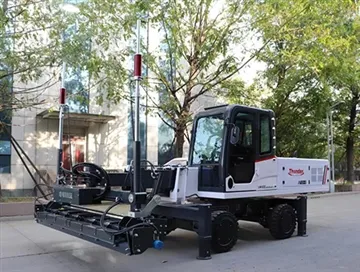
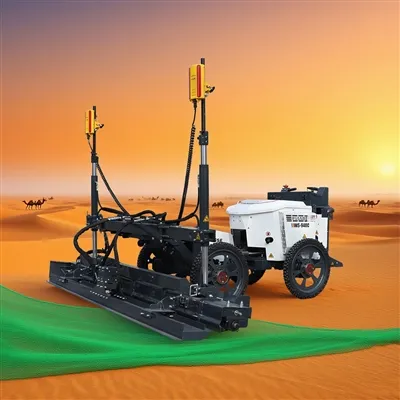
The laser leveling machine can bring us many advantages when using it. I believe that all friends who have used it should have realized it. Although everyone is very handy when operating the leveling machine, many friends are not clear about the components of the laser leveling machine.
The components of the laser leveling machine:
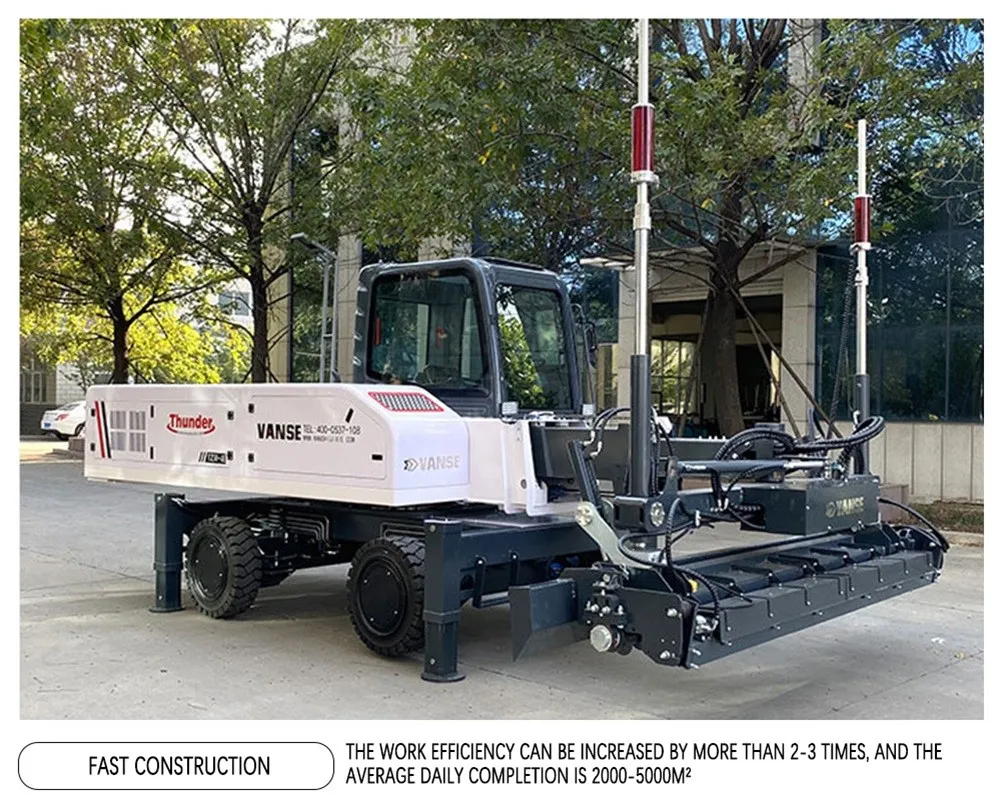
1. Steering system: It is composed of steering wheel, steering gear, steering knuckle, steering knuckle arm, tie rod, straight tie rod, etc., and its function is to turn. Battery: The role of the battery is to supply electricity to the starter, and to supply power to the engine ignition system and other electrical equipment when the engine is started or running at low speed. When the engine is running at high speed, the generator generates enough electricity, and the battery can store excess electricity. Hydraulic brake structure: The hydraulic brake device is composed of brake pedal, brake master cylinder, sub cylinder, drum (wheel) brake and oil pipe and other parts.
2. Motor: The motor is the power device of the laser leveling machine. Its main function is to generate driving torque as a power source for electrical appliances or various machinery. Its main function is to convert mechanical energy into electrical energy. At present, it is more commonly used to use heat energy, water energy, etc. to drive the rotor of the generator to generate electricity.
3. Transmission: It is composed of transmission case, transmission cover, first shaft, second shaft, intermediate shaft, reverse gear shaft, gears, bearings, operating mechanism and other parts, which are used to change speed and output torque of laser leveling machine.
4. Leaf spring and shock absorber: The function of the leaf spring is to maintain an elastic connection between the frame and the body and the wheels or axles. The function of the shock absorber is to ease the vibration when the laser leveling machine is subjected to shock.
5. Transmission system: It is mainly composed of transmission, universal joint, transmission shaft and drive axle.
6. Driving system: It is composed of frame, axle, suspension and wheels. Its basic function is to support the quality of the whole vehicle and ensure the driving of the laser leveling machine.
7. Starter: Its function is to convert electrical energy into mechanical energy, drive the crankshaft to rotate, and start the engine. If the continuous starting time is too long, the battery will be discharged in large quantities and the starter coil will overheat and smoke, which will easily damage the laser leveling machine parts.
Through some understanding of the above content, I believe that you should now have a clearer understanding of the components of the laser leveling machine. If you are interested in this product and want to know more about it, please contact our online customer service directly, and our staff will provide you with sincere service and detailed answers.
Thanks to All the Friends Who Support and Trust Shandong Vanse Machinery Technology Co., Ltd.
If you want to know more about Shandong Vanse Machinery Technology Co., Ltd. or have any questions, please feel free to contact us:
Our Factory
Shandong Vanse Machinery Technology Co., Ltd.








Share this article

About the Author: Shandong Vanse Machinery Technology Co., Ltd.
Shandong Vanse Machinery Technology Co., Ltd. is a high-tech manufacturer specializing in concrete construction machinery, including laser screeds and related equipment. The company integrates R&D, production, and global sales, with products exported to over 60 countries and widely used in infrastructure projects worldwide.
Previous Post
Next Post
Related Articles
You Might Also Like
The cleaning four steps of laser leveling machine
With the addition of concrete laser leveling machines in the construction industry and road construction industries, there has been a qualitative leap in both quality and speed, and it has also saved a lot of costs for users. However, in the face of high-frequency use, users cannot ignore the cleaning of the equipment. This step must not be sloppy. Let's take a look at how to clean the leveling in a few steps! 1 The liquid crystal surface on the laser leveling machine body also needs to be cleaned. You can use organic resin or lens cleaning cloth to wipe off the dirt. If there is too much dirt, it can be removed with a lens cleaning solution. 2 After the laser leveling machine is constructed, there will be a lot of dust and mud. First of all, the dust on the laser leveling machine should be wiped clean, and the dirt and oil stains should be wiped clean with tissue paper or cotton cloth. 3 If the laser signal is lost during the construction of the laser leveling machine, the machine needs to be restarted, and the interval should be more than ten seconds. 4 If there are too many stains, you can use a soft cloth to soak in water diluted with a neutral detergent, wring it out and clean it. The best laser leveling machine manufacturers remind you not to use volatile oil, thinner, gasoline, etc. Chemical cleaning wipe. The laser leveling machine uses a scraper to take away the raised concrete and initially level it to reach the elevation required by the design. The hydraulically driven vibrating motor vibrates at a frequency of 4000 times per minute, driving the entire vibrating plate to vibrate the concrete together. The leveling of the laser paver does not need to pull the control line, nor does it need the side formwork to control the ground elevation, but is controlled by the laser measurement and control system on the laser leveling machine in real time. As long as the laser transmitter is not disturbed, no matter where the laser leveling machine moves Wherever it is, it can be ensured that the overall elevation of the paved ground will not be affected. The concrete ground laser leveling machine is to spread the mixed concrete along the subgrade according to the given thickness, width and road type requirements, and then complete the construction of paving the concrete road surface through the operation procedures of vibrating, leveling and troweling. mechanical. The working device of the concrete floor laser leveling machine generally consists of a distributor, a scraper, a vibrator (including a vibrator and a vibrator), a leveling machine, a trowel and other devices. At the same time, it also requires the organic cooperation of the frame, walking mechanism, manipulation control system and other auxiliary mechanisms. Some models integrate all the devices into one, and some are divided into two or more independent stand-alone machines.Key points for purchasing second-hand power trowel and common methods to avoid pitfalls
Selecting a second-hand polishing machine is a job that requires a lot of experience and skills. It can help you obtain a practical device at a lower cost, but if you make a wrong judgment, the subsequent maintenance and delayed construction period may cause you to lose more than you gain. The following is a detailed list of key points for choosing a second-hand polishing machine and common methods to avoid pitfalls. We hope it can be of great help to you. Fuselage structure Chassis (grinding disc) : This is the most crucial part. Check if it is flat and free of deformation. Slight wear and tear is normal, but if the wear is severe, there are pits or obvious deformation, it will lead to poor polishing effect and higher replacement cost. Blade (scraper) : Check if there is still sufficient thickness. If the metal substrate has been worn out, it needs to be replaced immediately, and this cost should be included in the cost. Protective cover: Check for any damage or severe deformation, as this is related to operational safety. Overall framework: Check for any signs of welding, cracks or repairs, which could be a sign of severe impact or drop. Engine (heart) Brand: Give priority to well-known brands such as Honda, Kohler, Briggs & Stratton, etc. Spare parts are easy to find and maintenance is convenient. Appearance: Check for any cracks in the engine casing, especially in the base and radiator sections. Check for obvious oil stains or carbon deposits. This might be a sign of oil leakage or poor maintenance. Air filter: You can ask to remove the air filter to have a look. If the inside is very dirty or even soaked with oil, it indicates that the previous owner might not have paid much attention to maintenance. Engine oil: You can pull out the oil dipstick to check. If the engine oil is black, viscous or contains metal debris, it indicates that the engine wear may be relatively severe and the maintenance condition is poor. Transmission system Gearbox: Check if there are any signs of oil leakage on the gearbox housing. Rotate the drive shaft by hand to feel if it is smooth, and if there is any jamming or abnormal noise. Belt/chain: Open the protective cover and check if the belt has cracks, wear or looseness. Check if the chain is loose and free of oil and rust. Be sure to ask the seller to start the machine for testing! Startup performance Cold start is the most illustrative. Observe whether the rope pulling is smooth and whether the machine can start smoothly within one to three rope pulls. If it is difficult to start, there may be problems (such as carburetors, spark plugs, insufficient compression, etc.). Engine sound After starting, listen to the sounds of the engine idling and accelerating. The operation should be smooth. A regular "tap-tap" sound is normal (valve sound). If there are loud "clicking" sounds, knocking sounds or irregular noises, it indicates that there is severe wear inside. Transmission system sound Let the trowel run idle and listen for any abnormal "clattering" sounds from the gearbox and transmission parts. The voice should be even and deep. Vibration condition When the machine is running, it should be smooth and the vibration should be within a reasonable range. If the vibration is abnormally severe, it may be due to deformation of the chassis, unbalanced installation of the blades or problems with the engine base Purchase time and source: Inquire about the specific year and channel of purchase of the machine to determine its service life. Usage frequency and scenarios: Is it for occasional household use or long-term high-intensity use by professional teams? The latter naturally wears out more severely. Maintenance and repair history: This is of Paramount importance. Has there been any major overhaul? (Such as engine cylinder opening, gearbox replacement When was the last time the engine oil, air filter and spark plugs were changed? Have there been any accidents (such as tipping over or collision)? A reliable seller will tell the truth, while a evasive one needs to be on guard. If possible, conduct a brief load test (such as grinding it on the ground). Observe after the load is applied: Whether the engine is prone to stall and whether the power is sufficient. Check for any slippage or abnormal noise in the transmission system. Whether the machine moves smoothly and if it deviates. Trap description: Merchants thoroughly clean and paint the machines to make their appearance look as good as new, thereby covering up internal wear and tear and malfunctions. Avoidance methods Pay special attention to the screws and interfaces: It is very difficult for a refurbished machine to have no signs of any screws being turned. Check whether there are any signs of wear on the engine fixing screws, chassis screws, etc. Paint surface consistency: The original factory paint surface is usually uniform. If you find that the paint color of some parts does not match the overall color or the paint layer is too thick, it might be due to later spraying. Don't judge a machine by its appearance: Don't be deceived by a clean exterior. The key is to check its operating status and internal wear. Trap description: The machine was once sold after its chassis and frame were deformed due to a fall or collision. It was sold after simple repairs. Avoidance methods Check the flatness: Place the machine on a flat ground and observe from the side whether the chassis is fully in contact with the ground and if there is any warping. Check the welding points: Carefully inspect each connection point of the rack to see if there are any irregular or rough welding points in the later stage. Running test: During no-load operation, observe whether the machine is stable and if there is any regular swinging. This might be a sign of an uneven chassis. Trap description: Piecing together a complete machine with "good" parts from different scrapped machines, which has poor compatibility and stability. Avoidance methods Brand consistency: Check whether the brand, model and newness of the main components such as the engine and fuselage match. Assembly machines often give the impression of being "mismatched". Check the nameplate: Whether the information on the body nameplate (such as model and production date) is consistent with the seller's description. Poor comprehensive operation: When the assembly machine is in operation, various minor problems may occur frequently, making it feel "not smooth". Trap description: The machine performs okay when it is cold or unloaded, but once it is heated up or loaded, problems become apparent (such as insufficient power, severe abnormal noises, and engine stalling). Avoidance methods Persist in long-term testing: Let the machine run for 10 to 15 minutes and observe whether the state is stable after warming up. Load testing is required: This is the best way to verify the true state of the machine. Check the engine oil: After warming up the machine, stop it immediately and check the engine oil. If there are many small bubbles (emulsions) in the engine oil, it might be that the cylinder gasket is being washed away, which is a big problem. Before deciding to purchase, quickly check the following list: Inspection items Qualification standard Be cautious/give up Fuselage chassis Smooth, evenly worn, and without deformation Deformation, cracks, wear limit Engine Well-known brand, smooth start-up, stable operation, pure sound, no oil leakage Difficult to start, severe abnormal noise, oil leakage, and heavy smoke Transmission system The rotation is smooth without any abnormal noise, and the belt/chain is not aged There is abnormal noise, jamming and oil leakage Seller Description Be honest, answer all questions, and keep clear maintenance records Vague and evasive, concealing history Price In line with market conditions (approximately 30% to 50% of a new model) Far below the market price (" There's no such thing as a free lunch ") Test run situation The hot and cold units start well and operate stably under no-load or load conditions Any test is unqualified Final suggestion: If possible, bring along an experienced master craftsman or mechanic. Their experience can help you discover many problems that beginners fail to notice. When making a purchase, it is best to sign a simple written agreement with the seller, clearly stating the condition of the machine, and keep the payment voucher for unexpected needs. Remember, the primary principle when purchasing second-hand equipment is "It's better to miss out than to buy wrongly." Wish you could find a sturdy and durable good machine! Note: The parameters provided in this document are for reference only and are not mandatory. Due to differences in technical characteristics between different brands and models of laser levelers, please consult the manufacturer for a suitable solution before actual operation. This reference document assumes no responsibility for any issues arising from failure to follow the manufacturer's instructions.How to select the appropriate model of concrete laser leveling machine for large warehouses?
Combining the product line of Vanse Machinery and the typical characteristics of large warehouses (large area, long span, and high flatness requirements), we can conduct the selection and categorization from the following three aspects: Large warehouses are typically divided into "open areas" and "inter-column areas". According to Vanse Machinery's products, the selection suggestions are as follows: Applicable scenarios: Main areas of the warehouse, projects with a daily construction volume exceeding 2000 square meters. Vanse corresponding model: Similar to YZ30-4E or YZ40-4 and other large-sized machines. Reasons for selection: * Extremely efficient: These types of machines are usually equipped with a leveling head that is up to 4-6 meters long, covering a large area at one time. Advantages of telescopic arm: Telescopic arm models (such as those with rotatable/extendable machine heads) can complete large-scale laying without moving, reducing the damage to the base layer caused by the repeated tire pressing on the concrete. This is crucial for ensuring a **superflat floor**. High power: Large warehouses typically use high-strength, low-slump concrete. The vibration frequency and weight of large machinery can better compact the concrete. Applicable scenarios: Warehouses with many columns, construction of second floor floor slabs, parking lots. Corresponding models for Vanse: YZ25-4 or YZ28-4S. Reasons for Selection: Small turning radius: When the internal column grid of the warehouse is dense, large machines cannot turn around, but medium-sized machines can perform flexible operations around the columns. Light weight: If the warehouse is a multi-story structure, the floor load-bearing capacity of floors above the second floor is limited. Medium-sized machines are safer and more convenient for crane transportation. Applicable scenarios: Doorways, corners, auxiliary edge trimming. Vanse corresponding model: DZ25-2. Reasons for selection: As a supplementary means of transportation, it can access areas that large machinery cannot reach, ensuring uniform quality throughout the entire venue. When viewing the specific models on the official website of Vanse Machinery, please pay special attention to comparing the following parameters Leveling width and depth: Large warehouses require as few construction joints as possible. The model with a leveling head width of 2.5m – 3.0m or more should be preferred to reduce the number of trips. Laser system compatibility: Confirm whether an imported (such as American Trimble or Leica) laser control system is equipped. Large warehouses have strict requirements for FF/FL values, and the sensitivity of the laser system is the core. Vibration frequency: The ideal frequency should be between 3000 and 4000 rpm. High-frequency vibration can ensure the compactness of the warehouse floor and prevent the ground from cracking due to frequent forklift operations in the future. Turning method: Does it have the "four-wheel steering" or "crab walking" mode? This is very practical when operating in the corner of the warehouse. Based on the equipment characteristics of Vanse Machinery, we suggest that you ask the salesperson the following three questions when making a purchase: Question 1: Do you support the upgrade of the 3D slope detection system? If your warehouse has outdoor loading/unloading platforms (requiring drainage slope), the machine must be compatible with the 3D control system; otherwise, it can only operate on a horizontal plane. Question 2: Tire configuration. During warehouse construction, double-layer steel mesh is often used. It is recommended to choose solid puncture-resistant vacuum tires or wide tires with anti-slip function to avoid slipping on the steel mesh and affecting the flatness. Question 3: After-sales service and spare parts supply. The construction period of the large warehouse is extremely tight, and the loss will be huge if the machines are shut down. When choosing a domestic major brand like Vanse, it is necessary to confirm its response speed for maintenance in the region and the inventory of key vulnerable parts (such as sensor cables and filter elements). For a standard logistics warehouse with an area of over 20,000 square meters: Main machine: 1 unit YZ30-4 (large vehicle telescopic arm type), responsible for 80% of the large-scale laying work. Auxiliary machine: 1 unit YZ25-4 (medium-sized vehicle-mounted type), responsible for areas between columns and narrow corridors. Cutting machine: 1 unit DZ25-2 (hand-held type), responsible for handling leftover materials. This "large + small" configuration is currently the most mature commercial construction combination for customers of Vanse Machinery Note: The parameters provided in this document are for reference only and are not mandatory. Due to differences in technical characteristics between different brands and models of laser levelers, please consult the manufacturer for a suitable solution before actual operation. This reference document assumes no responsibility for any issues arising from failure to follow the manufacturer's instructions.