Technical Knowledge
What issues should be paid attention to during the construction of concrete pavement with large slump?

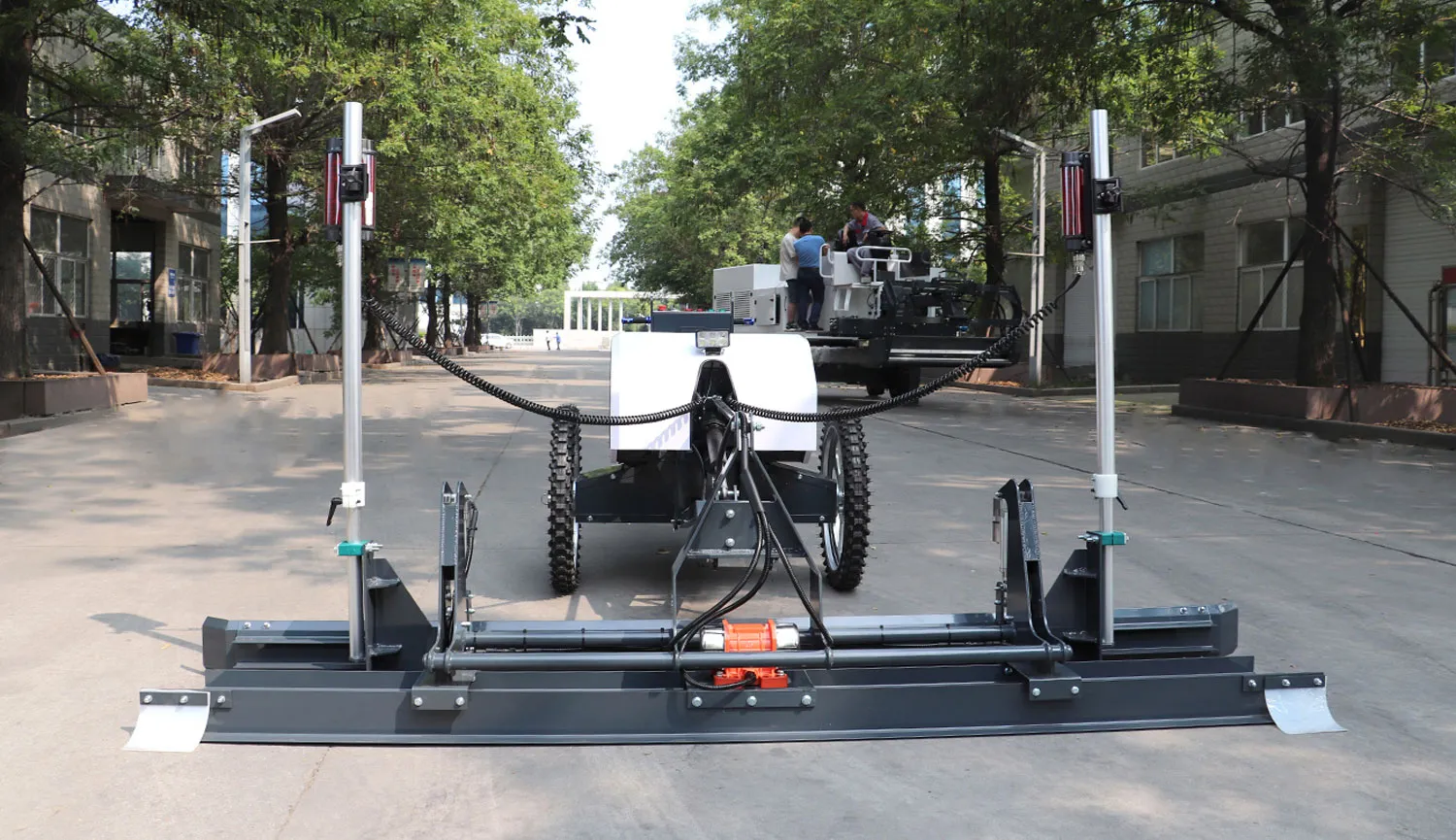
Concrete pavement with large slump needs to pay more attention to the pouring, vibrating, finishing and maintenance during construction to ensure the construction quality, as follows
🎨 Pouring stage
Control the pouring speed:
Since the concrete has a large slump and good fluidity, the pouring speed should not be too fast to prevent the concrete from flowing and accumulating quickly in the formwork, resulting in loose vibration or segregation.
Avoid excessive height difference:
The free fall height of concrete should be controlled within 2m. If it exceeds this height, auxiliary tools such as string tubes and chutes should be used to prevent the concrete from segregating due to large drop and affecting the overall performance of the pavement.
🎨 Vibration stage
Reasonable selection of vibration equipment:
It is advisable to use a low-frequency vibrator, and the vibration frequency is generally 2000-3000 times/minute. Avoid using a high-frequency vibrator to cause over-vibration of the concrete, which will cause the aggregate to sink, the cement slurry to float, and the stratification and segregation.
Control vibration time:
The vibration time should not be too long. The surface of the concrete no longer sinks significantly, bubbles no longer appear, and cement slurry appears on the surface. Generally, the vibration time at each point is controlled within 20-30 seconds.
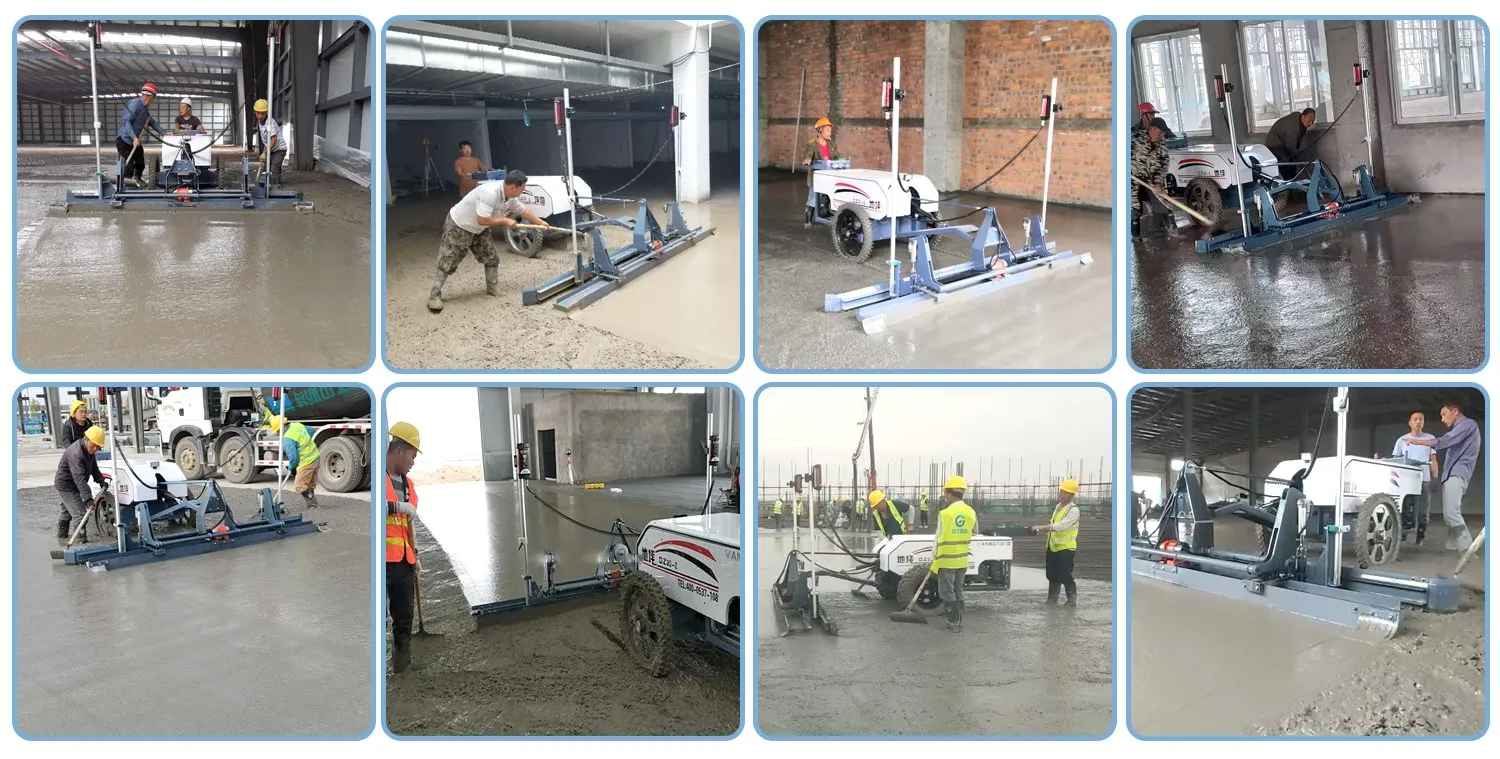
🎨 Surface finishing link
Timely surface finishing:
Since the surface of concrete with large slump has more moisture, it is necessary to wait for the surface moisture to evaporate properly before finishing. Generally, it is 1-2 hours after the concrete pouring is completed. The specific time needs to be determined according to the site environment and the concrete setting conditions. Too early surface finishing will cause surface marks or unevenness, and too late will affect the surface finishing effect.
Multiple surface finishing:
Usually 2-3 surface finishings are required. The first surface finishing is carried out after the concrete surface is initially dehydrated, mainly for rough leveling; the second surface finishing is carried out before the initial setting of the concrete, further slurry lifting and smoothing; the third surface finishing is carried out before the final setting of the concrete, mainly to eliminate fine surface cracks and defects, making the road surface smoother and flatter.
🎨 Maintenance stage
Timely covering:
After the concrete surface is finished, it should be covered with plastic film, geotextile, etc. immediately to prevent the surface from drying out and cracking due to rapid evaporation of water. The covering should be tight to ensure that the concrete surface is always moist.
Extended curing time:
The strength of concrete with large slump increases relatively slowly. The curing time should be appropriately extended, generally not less than 14 days. During the curing period, water should be sprinkled regularly to keep the covering moist, so that the concrete can harden under suitable humidity conditions and improve the strength and durability of the road surface.

Thanks to All the Friends Who Support and Trust Shandong Vanse Machinery Technology Co., Ltd.
If you want to know more about Shandong Vanse Machinery Technology Co., Ltd. or have any questions, please feel free to contact us:
Our Factory
Shandong Vanse Machinery Technology Co., Ltd.








Share this article

About the Author: Shandong Vanse Machinery Technology Co., Ltd.
Shandong Vanse Machinery Technology Co., Ltd. is a high-tech manufacturer specializing in concrete construction machinery, including laser screeds and related equipment. The company integrates R&D, production, and global sales, with products exported to over 60 countries and widely used in infrastructure projects worldwide.
Previous Post
Next Post
Related Articles
You Might Also Like
The impact of the maturity of the rental market on the sales strategies of power trowels and the business models of manufacturers
The maturity of the leasing market is a core variable influencing the construction machinery industry, especially for equipment like power trowels. It will have a fundamental impact on the sales strategies and business models of manufacturers. Let's explore this influence in detail in two parts below. The maturity of the rental market directly changes who the manufacturers' "customers" are and how they deal with them. Target customers: mainly end users, such as construction team leaders, individual contractors, and small and medium-sized construction companies. Core of sales strategy Price-driven: Customers are extremely sensitive to prices, and their purchase decisions are mainly based on the initial purchase cost. Function and durability promotion: Emphasize the basic functions, power and "durability" of the product, as the equipment is used and maintained by the owner themselves, and what they care about is "how long it can be used without recouping the cost". Channel penetration: Relying on a wide network of distributors to cover scattered end customers, providing timely in-stock purchases and basic after-sales services. Marketing methods: mainly offline stores, industry exhibitions, and referrals from acquaintances. Target customers: Professional leasing companies have become core major customers (such as United Leasing, Solar Belt Leasing, etc.), as well as large contractors. Core of sales strategy Value and total cost of ownership driven: Price is no longer the only factor. Leasing companies are more concerned about the total cost of ownership, including: Reliability & Attendance Rate: Does the machine rarely break down? Because idle machines mean a loss of rent. Maintenance convenience & Service Cost: Is it easy to maintain on a daily basis? Are the components cheap and readily available? Residual value: How much can the equipment still be sold for after several years of use? This is directly related to the asset return of the leasing company. Standardization and universality: Leasing companies hope that for products of the same brand or even the same platform, their operation methods, maintenance procedures and components can be as universal as possible to reduce training costs and inventory pressure. Direct sales to major clients and customization: Manufacturers will establish dedicated major client teams to directly connect with large leasing companies, and even provide customized products based on their specific needs (such as special color markings, software interfaces, and security configurations). Data and service support: Remote data monitoring (optional) is provided to assist leasing companies in managing equipment fleets, predicting maintenance times, and optimizing equipment deployment The maturity of the rental market has not only changed "what to sell" and "to whom to sell", but also profoundly promoted the transformation of manufacturers' "who I am". Core model: Production, manufacturing and sales The core of a manufacturer is to produce a product and then sell it. The business chain is basically over at this point. The profits mainly come from the sales of new machines. After-sales service is a cost center, and its main purpose is to support sales and prevent customer complaints. The rise of the rental market has forced manufacturers to transform from mere "equipment manufacturers" to "comprehensive solution providers". Model Evolution One: From selling products to operating assets Manufacturers have realized that their equipment is the "asset" that leasing companies use to make money. Therefore, they need to ensure that this asset can operate efficiently and economically throughout its entire life cycle. This has given rise to an extreme pursuit of reliability, durability and residual value management. Manufacturers will proactively release residual value reports and design products that are easy to refurbish to maintain their brand's value in the second-hand market. Model Evolution Two: Financial Services Become a key pillar Financial companies affiliated with or cooperating with manufacturers have become crucial. They offer to leasing companies: Flexible financial leasing solutions help it expand its fleet. Credit support helps its customers (end tenants) rent equipment more easily. This is not only a tool to boost sales, but also a source of profit in itself. Model Evolution Three: The proportion of after-market and service revenue has increased The new machine sales market fluctuates with the economic cycle, but the large fleet of existing equipment brings stable after-market income. Manufacturers actively sell original factory parts, repair services, extended warranties and maintenance contracts. The profit margins of these businesses are usually higher than those of new machine sales. Services have transformed from a "cost center" to a "profit center". Model Evolution Four: Exploration of Datafication and Service Orientation By installing sensors on the equipment, manufacturers can offer: Remote diagnosis and predictive maintenance can notify the leasing company in advance that the equipment may need repair, reducing unexpected downtime. Fleet management report helps leasing companies understand equipment utilization rate, fuel consumption, working hours, etc., and optimize business decisions. This initiated an upgrade in the business model from "selling hardware" to "selling hardware + services + data". Model Evolution Five: Entering the second-hand equipment and leasing business Some powerful manufacturers (such as Caterpillar) establish official certification and resale channels for used equipment, which helps control residual value and provides customers with full life-cycle options. A few manufacturers may even directly enter the market, operate their own leasing businesses, compete or cooperate with downstream customers, and gain a deeper understanding of market demands. Dimension A low-maturity rental market A highly mature rental market Core customers Scattered end users Large leasing companies, major contractors Competitive focus Price, basic functions TCO (Total Cost of Ownership), reliability, residual value Product Strategy It meets basic needs with a wide variety of models Platform-based, standardized and customizable Sales relationship One-time transaction, through the distributor Strategic cooperation, direct management of major clients Source of profit It mainly relies on the sales of new models New machine sales + after-market services + financial services Service role Cost center, supporting sales Profit center, independent business segment Business model Equipment manufacturer Provider of equipment asset management and solutions The maturity of the leasing market is a key force driving the evolution of the power trowel machine and even the entire construction machinery industry. It forces manufacturers to shift their focus from one-time sales of products to the value of operating equipment throughout its entire life cycle. In mature markets, the competition among manufacturers is no longer a simple price war, but a comprehensive ecological competition concerning brand reputation, service networks, financial support and digital capabilities. For manufacturers who want to enter or establish themselves in mature markets such as North America and Europe, understanding and adapting to these rules of the game is a prerequisite for success. Note: The parameters provided in this document are for reference only and are not mandatory. Due to differences in technical characteristics between different brands and models of laser levelers, please consult the manufacturer for a suitable solution before actual operation. This reference document assumes no responsibility for any issues arising from failure to follow the manufacturer's instructions.Requirements & treatment for laser leveling of concrete base layers before grinding of special floors (such as epoxy floors and curing agent floors)
The quality of the concrete base directly determines the final effect and service life of special floors (such as epoxy and curing agent floors). Laser leveling, as a high-standard process in modern floor construction, lays a solid foundation for subsequent grinding and surface layer construction. The following is a detailed description of the requirements and treatment for laser leveling of concrete base before grinding of special floors: The concrete base layer after laser leveling and treatment should achieve the following core goals to meet the requirements of special floors Extremely high flatness: Eliminate large areas of waves and local height differences, ensure uniform thickness of the floor surface layer, and avoid problems such as uneven coating wear and dust accumulation caused by uneven base surfaces. Excellent levelness: Ensures that the ground meets the designed elevation, especially for large factories, warehouses and other places with strict requirements for ground slope. Solid surface strength: The base concrete must have sufficient compressive strength and surface hardness to prevent sanding, hollowing, and be able to withstand grinding by a grinding machine. Dense and uniform surface: Reduce pores, prevent excessive penetration of floor materials (such as epoxy primer), and provide uniform adhesion for the surface layer at the same time. Controllable cracks: Through reasonable cutting techniques, irregular cracks are guided to the preset shrinkage joints to ensure that no random cracks occur on the surface layer. Laser leveling is the crucial first step to achieving the above goals. Compaction degree: The soil base must be fully compacted, with a density of no less than 90%, to prevent concrete cracking caused by future settlement. Cushion layer: Usually, graded crushed stone is used as the cushion layer, with a thickness of no less than 150mm. It needs to be evenly spread and compacted. The cushion layer serves as the foundation for stress dispersion and drainage. Waterproof and moisture-proof: For floors with a high groundwater level or the first floor, a moisture-proof layer (such as PE film) must be set up to prevent the rise of underground water vapor from causing the epoxy floor to bubble and peel off. Strength: The grade should not be lower than C25. For areas with heavy load requirements, it is recommended to use C30 or higher. The compressive strength should ultimately reach above 25MPa. Mix ratio: The water-cement ratio is crucial and should be strictly controlled below 0.5. A low water-cement ratio is the prerequisite for ensuring the high strength and wear resistance of concrete. Aggregate: Medium and coarse sand and continuously graded crushed stone should be used, with the maximum particle size not exceeding 25mm, to ensure the compactness of the concrete. Additives: Water-reducing agents (ensuring workability while reducing the water-cement ratio), fibers (anti-cracking), etc. can be added as needed. Set control points: Based on the designed elevation, establish an accurate horizontal control network through a laser emitter. Concrete paving: The height of the loose paving should be 2-3cm higher than the designed elevation to prepare for the compaction and leveling by the leveling head. Concrete laser leveling machine operation The concrete laser leveling relies on laser signals to automatically control the height of the scraper, precisely spreading and initially compacting the concrete. Advantages: Compared with traditional techniques, it can achieve extremely high flatness (the height difference within a 2-meter straightedge is ≤3mm) and levelness, with extremely high efficiency and reduced reliance on workers. Synchronous processing: After laser leveling, a large trowel with a diameter of more than 1 meter should be used immediately to lift the slurry and finish the surface, flattening the surface floating slurry and aggregates to prepare for subsequent processing. Laser leveling merely creates a "rough blank". To meet the standard of a base layer that can be ground, a series of fine treatments are still required. Timing control: The mechanical trowel operation should be carried out after the initial setting of the concrete and before the final setting (when the depth of the footprints left by a person standing on it is approximately 2-3mm). The process is usually carried out in 2 to 3 rounds. For the first coat, use a disc to lift the slurry and smooth it out. Subsequently, switch to different trowelers for cross-operation to smooth and polish the surface. High-quality polishing is the core for achieving a hard, dense and uniform surface. Objective: To ensure the full hydration of cement, enhance its strength and prevent cracking. Method Recommendation: Spray the special concrete curing agent to form a sealing film. Traditionally effective: Cover with plastic film or lay non-woven fabric and sprinkle water to keep it moist. Time: At least 7 days. During this period, no load is allowed. Objective: To guide the release of concrete shrinkage stress at the preset position, form neat straight cracks, and avoid irregular cracking. Timing: Usually within 6 to 24 hours after pouring (when the strength reaches 5 to 10MPa), it should be able to cut through the concrete without carrying the aggregates. Requirement Spacing: Generally 20 to 30 times the thickness of the concrete slab, usually 4 to 6 meters. Depth: 1/4 to 1/3 of the plate thickness. Position: Align with the center line of the column and the edge line of the equipment foundation to maintain aesthetics. Before planning the grinding construction, a comprehensive assessment of the concrete base must be conducted: Strength: The compressive strength should be ≥25MPa when tested using a rebound tester or core sampling. Insufficient strength and direct grinding will cause the aggregates to peel off. Flatness: Use a 2-meter straightedge for inspection. The drop at any point should be ≤3mm. Laser-leveled floors can usually be easily achieved. Moisture content: Tested using a CM type moisture content tester. For epoxy flooring, the moisture content of the base layer should be ≤4%. For the curing agent floor, the requirements can be appropriately relaxed, but there must be no standing water. Surface quality: Check for no hollowing (by tapping with a small hammer), no sanding, no cracks (except shrinkage joints), no oil stains or other contaminants. Even after the above processes, some pretreatment may still be required before formal grinding: Cleaning: Thoroughly remove any residual maintenance agent, dust and debris from the ground. Repair: To repair minor defects, cracks or hollows in a local area. Use high-strength epoxy resin or special cement-based repair mortar. Preliminary grinding: If there is a slight amount of floating slurry or hardener residue on the surface, it may be necessary to use a metal grinding disc for a preliminary and light grinding to open up the surface pores and prepare for the subsequent penetration of the curing agent or the adhesion of the epoxy primer. For special floors, the saying "seven parts base layer and three parts surface layer" is no exaggeration. Laser leveling technology makes it possible to achieve high-quality concrete base layers, but it must be combined with strict material control, precise timing of construction, perfect curing and scientific joint treatment. A qualified laser-leveled concrete base layer suitable for grinding should possess: Level: Check with a 2-meter straightedge. The drop should be no more than 3mm. Strong: Compressive strength ≥25MPa, with a hard surface and no sanding. Dry: Moisture content meets the standard (epoxy ≤4%). Clean: The surface is clean, free from contamination and hollowing. Uniform: The surface is dense and uniform with small color differences. Only in this way can the subsequent grinding process be carried out efficiently, and the epoxy or curing agent floor can fully demonstrate its best wear resistance, pressure resistance, aesthetic appeal and long service life. Note: The parameters provided in this document are for reference only and are not mandatory. Due to differences in technical characteristics between different brands and models of laser levelers, please consult the manufacturer for a suitable solution before actual operation. This reference document assumes no responsibility for any issues arising from failure to follow the manufacturer's instructions.How does concrete laser leveling technology improve construction efficiency?
Concrete laser leveling technology is an innovative technology in the field of modern construction. It uses laser as a reference to achieve fast and precise leveling of concrete surfaces. This technology not only improves the efficiency of construction, but also ensures the stability and consistency of construction quality. The following is an in-depth analysis of how concrete laser leveling technology improves construction efficiency. Introduction In traditional concrete construction, ground leveling work usually relies on manual operation, which is not only labor-intensive and inefficient, but also difficult to ensure flatness and accuracy. With the improvement of the construction industry's requirements for construction quality and efficiency, concrete laser leveling technology has emerged, bringing revolutionary changes to construction. 1. Technical Overview Concrete laser leveling technology is a technology that uses laser as a reference to accurately level the concrete surface through automated equipment. The core of this technology lies in the effective coordination of laser transmitters, receivers, control systems and leveling equipment. > Learn more about customlzatlon >> 2. Working Principle The working principle of concrete laser leveling technology mainly includes the following steps: – **Laser transmitter**: emits a stable laser beam to form a horizontal reference plane. – **Receiver**: installed on the leveling machine, receives laser signals and converts them into electrical signals. – **Control system**: According to the received electrical signal, the working state of the leveler is automatically adjusted to ensure that the concrete surface is consistent with the laser plane. – **Leveling equipment**: According to the instructions of the control system, the concrete surface is leveled through vibration and scraping functions. > Learn more about customlzatlon >> 3. Key factors to improve construction efficiency The key factors for improving construction efficiency of concrete laser leveling technology include: – **High degree of automation**: Reduces manual intervention and improves construction speed. – **High construction accuracy**: Ensures the flatness and accuracy of the concrete surface. – **Stable construction quality**: Reduces rework caused by uneven construction quality. – **High material utilization rate**: Reduces material waste by accurately controlling the laying thickness of concrete. > Learn more about customlzatlon >> 4. Construction process optimization The application of laser leveling technology optimizes the construction process, including: – **Site preparation**: Quickly complete site cleaning and leveling. – **Laser transmitter setting**: Quickly and accurately set the laser transmitter. – **Concrete pouring**: With the assistance of the laser leveling machine, the concrete pouring is quickly completed. – **Leveling operation**: The laser leveler automatically completes the leveling of concrete according to the laser signal. – **Surface treatment**: Quickly complete the leveling and calendering of the concrete surface. – **Quality inspection**: Use professional equipment to quickly complete the flatness and levelness inspection of the concrete surface. > Learn more about customlzatlon >> 5. Technical advantages and practical applications Laser leveling technology has shown obvious advantages in practical applications: – **Industrial plant**: Quickly complete the leveling of large areas of ground and improve construction efficiency. – **Commercial facilities**: Ensure the flatness of the ground and improve customer experience. – **Airport runway**: Ensure the flatness and strength of the runway to ensure the safe takeoff and landing of aircraft. – **Roads and bridges**: Improve the flatness and bearing capacity of the road surface and extend its service life. > Learn more about customlzatlon >> 6. Technical challenges and coping strategies Although laser leveling technology has obvious advantages, it also faces some challenges in practical applications: – **Environmental factors**: Wind, temperature changes, etc. may affect the stability of the laser. – **Equipment maintenance**: The laser leveler needs regular maintenance to ensure its performance. – **Training of construction personnel**: Professional knowledge and skills are required to operate the laser leveling machine. Countermeasures include: – Improve the stability of the laser transmitter through technical improvements. – Establish a complete maintenance system and train operators. – Provide professional training courses to improve the operating skills of construction personnel. > Learn more about customlzatlon >> 7. Technological innovation and development trends With the continuous advancement of science and technology, laser leveling technology is also constantly innovating and developing: – **Intelligentization**: Integrate more intelligent sensors and control systems to improve the automation level of the leveling machine. – **Multifunctionality**: Develop a leveling machine that can complete multiple construction tasks at the same time. – **Environmentally friendly materials**: Research and use more environmentally friendly concrete materials to reduce the impact of construction on the environment. > Learn more about customlzatlon >> 8. Conclusion Concrete laser leveling technology has become an indispensable part of modern construction with its advantages of high efficiency, high precision and construction quality. By optimizing the construction process, improving material utilization and reducing rework rate, this technology has significantly improved construction efficiency. With the continuous development and innovation of technology, concrete laser leveling technology will play a greater role in the future and bring more possibilities to the construction industry. > Learn more about customlzatlon >>