Technical Knowledge
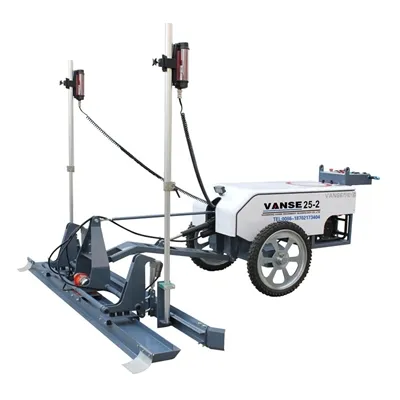
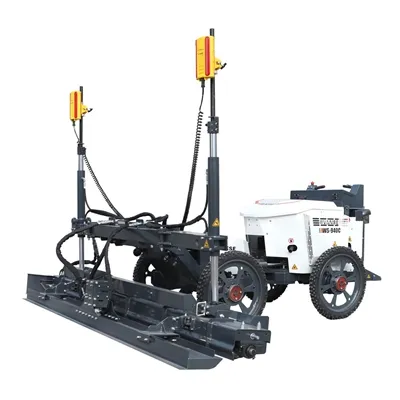
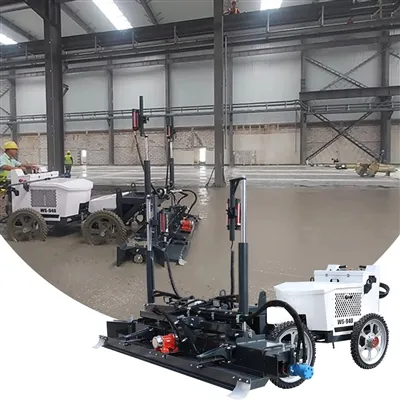
Discussion on floor construction technology using concrete laser leveling machine

☆♦☆ Introduction ☆♦☆
With the continuous development and advancement of floor construction technology, concrete laser levelings have gradually become an important equipment for floor construction. Its high-precision and high-efficiency characteristics significantly improve the quality of floor construction. This article will start from the principles and advantages of the concrete laser leveling machine, and discuss its application and construction technology in floor construction, aiming to provide a useful reference for actual construction.
☆♦☆ Principles and advantages of concrete laser leveling ☆♦☆
1. Principle
The concrete laser leveling machine adopts laser ranging technology and automatic control technology. It emits a laser beam through a laser transmitter and is received by the receiver after being reflected by the reflector. According to the propagation path and time difference of the laser beam, the computer can accurately calculate the height information of each point, and control the lifting and movement of the leveling machine through the control system, thereby achieving high-precision leveling of the ground.
2. Advantages
(1) High precision:
Laser leveling machines can achieve millimeter-level precision, greatly improving the flatness of the floor.
(2) High efficiency:
Compared with traditional manual leveling, laser leveling machines can complete large-area leveling work in a shorter time, significantly improving construction efficiency.
(3) Reduce labor intensity:
The use of laser leveling machines greatly reduces the tediousness of manual operations and reduces the labor intensity of construction personnel.
(4) Improve construction quality:
The laser leveling machine can accurately control the thickness and flatness of concrete laying, significantly improving the construction quality of the floor.
☆♦☆ Application of concrete laser leveling machine in floor construction ☆♦☆
1. Construction preparation
Before
construction, the construction area needs to be cleaned to ensure that the ground is clean and free of debris. At the same time, laser transmitters and receivers need to be set up to ensure that the propagation path of the laser beam is unobstructed. In addition, the laser leveling machine also needs to be inspected and debugged to ensure that it is in good working condition.
2. Concrete pouring.
After preparing the construction area, start pouring concrete. During the pouring process, attention needs to be paid to controlling the pouring speed and thickness of the concrete to ensure that the concrete can be laid evenly on the ground. At the same time, it is also necessary to use a vibrator to vibrate the concrete to eliminate air bubbles and air films in the concrete.
3. Laser leveling
Before the initial setting of concrete, use a laser leveling machine for leveling. During the leveling process, the laser leveling machine automatically adjusts its lifting and movement based on the height information of the laser beam to achieve high-precision leveling of the ground. During the leveling process, attention needs to be paid to controlling the speed and height of the leveling machine to ensure the best leveling effect.
4. Maintenance and surface treatment
After leveling is completed, the floor needs to be cured to ensure that the concrete can be fully hardened and cured. During the maintenance period, it is necessary to keep the floor moist to prevent problems such as cracking of the floor. At the same time, surface treatment of the floor, such as grinding and polishing, is also required to improve the gloss and beauty of the floor.
☆♦☆ Construction process precautions ☆♦☆
1. Ensure equipment accuracy:
Before construction, the laser leveler needs to be accurately calibrated to ensure that it can accurately measure and level the ground. At the same time, during use, the equipment needs to be maintained and maintained regularly to ensure that it is in good working condition.
2. Control the quality of concrete:
The quality of concrete is directly related to the construction quality and service life of the floor. Therefore, during the construction process, it is necessary to strictly control the quality of the mix, such as the type and amount of cement, the particle size and mud content of the aggregate, etc.
3. Pay attention to the construction environment:
The construction environment also has a certain impact on the quality of floor construction. For example, environmental factors such as temperature and humidity can affect the hardening speed and degree of curing of concrete. Therefore, during the construction process, it is necessary to pay attention to changes in the construction environment and take corresponding measures to adjust.
4. Strengthen construction management
Floor construction is a complex project, and construction management needs to be strengthened to ensure the smooth progress of the construction process. During the construction process, it is necessary to clarify the responsibilities and tasks of construction personnel, strengthen the monitoring and management of the construction site, and promptly discover and deal with problems that arise during construction.
☆♦☆ Summary and Outlook ☆♦☆
The application of concrete laser leveling machines in floor construction has greatly improved the accuracy and efficiency of floor construction, reduced the labor intensity of construction personnel, and improved construction quality. With the continuous advancement of science and technology and the continuous development of construction technology, it is believed that laser leveling machines will play a greater role in floor construction in the future.
Thanks to All the Friends Who Support and Trust Shandong Vanse Machinery Technology Co., Ltd.
If you want to know more about Shandong Vanse Machinery Technology Co., Ltd. or have any questions, please feel free to contact us:
Our Factory
Shandong Vanse Machinery Technology Co., Ltd.








Share this article

About the Author: Shandong Vanse Machinery Technology Co., Ltd.
Shandong Vanse Machinery Technology Co., Ltd. is a high-tech manufacturer specializing in concrete construction machinery, including laser screeds and related equipment. The company integrates R&D, production, and global sales, with products exported to over 60 countries and widely used in infrastructure projects worldwide.
Previous Post
Next Post
Related Articles
You Might Also Like
How to check whether the laser receiver of the concrete laser leveling machine is working properly?
– Appearance inspection: Carefully check whether the shell of the laser receiver is damaged or cracked, and whether the connecting line is damaged or loose. If these problems exist, it may cause signal transmission failure, and the damaged parts need to be repaired or replaced in time. – Power supply check: Make sure the receiver is connected to the power supply and the power indicator is on normally. If the indicator light is off, check whether the power socket and power cord are normal, and whether the power switch of the receiver is turned on. – Observe the signal indicator: Most laser receivers have a signal indicator. When receiving a laser signal, the indicator will have a corresponding display, such as lighting up or flashing. When the laser transmitter is turned on, observe the signal indicator of the receiver. If the indicator does not respond, the receiver may not receive the signal and further investigation is required. – Manual blocking test: When the laser transmitter is emitting laser normally, use an opaque object to temporarily block the receiving window of the laser receiver and observe the changes in the signal indicator. If the indicator light goes out or changes state when blocked, it means that the receiver responds to the laser signal, and the initial judgment is that the receiving function is normal; if the indicator light does not change, the receiver may have a fault. – Slope control function test: If the concrete laser leveler has a slope control function, set different slope parameters and observe whether the laser receiver can accurately control the leveler to perform construction according to the set slope. If the leveler cannot work according to the set slope, there may be a problem with the slope control function of the laser receiver. – Flatness detection function test: Run the concrete laser leveler on a test platform or ground with known flatness, let the laser receiver work and record the flatness data it measures. Compare the data with the actual flatness to check whether the measurement result is within the allowable error range. If the deviation is large, it means that the flatness detection function of the laser receiver may be inaccurate and needs to be calibrated or repaired. – Different position test: In the working area of the concrete laser leveler, select multiple different positions, including positions close to, far from, and at different angles from the laser transmitter, and observe whether the laser receiver can receive signals normally and work accurately at these positions. If the signal is lost or works abnormally at certain positions, it means that there is a problem with the receiver's receiving range or angle. – Accuracy calibration test: Use professional measuring tools, such as high-precision levels, to compare with the measurement results of the laser receiver. Perform measurement comparisons at multiple different positions to check whether the measurement accuracy of the laser receiver meets the equipment requirements. If the accuracy deviation is found to exceed the allowable range, the laser receiver needs to be calibrated and debugged. Enter the setting interface of the laser receiver and check whether the software settings and parameters are correct. Make sure that the parameters such as working mode, laser wavelength, sensitivity, etc. match the laser transmitter and the entire leveling machine system. Incorrect parameter settings may cause the receiver to work abnormally, and it is necessary to set it correctly according to the equipment manual. If conditions permit, professional optical detection equipment such as optical power meter, laser interferometer, etc. can be used to perform more accurate detection of the laser receiver. These devices can measure the laser power, wavelength stability, beam quality and other parameters received by the receiver, and compare them with the technical specifications of the receiver to accurately determine whether it is working properly. If there are multiple concrete laser leveling machines of the same model, the suspected problematic laser receiver can be interchanged with the receivers on other machines that are working properly. Then observe the working conditions of the two machines. If the original normal machine has the same problem as before, and the original problematic machine returns to normal, it can be determined that the laser receiver itself is faulty and needs to be repaired or replaced.Two methods and techniques for concrete pavement leveling, how to improve leveling efficiency and quality?
◑◐Construction method: Use a 3-4m light ruler to scrape the concrete surface, remove excess water and slurry, fill the low-lying areas with concrete, vibrate and re-trim, remove and trim the high parts, and then smooth them appropriately. The vibrator rod will also be used to "quickly insert and slowly pull out" to fully vibrate the concrete. The moving distance of each rod is generally not more than 1.5 times its effective radius (can be controlled as 30cm), and the distance from the template is less than 0.5 times the effective radius of the vibration. Vibrate until the slurry overflows on the surface of the concrete mixture, no longer sinks significantly, and no obvious bubbles overflow; then use the vibration beam to walk back and forth 2-3 times to level and raise the slurry to make the surface flat and uniform. ◑◐Applicable scenarios: Applicable to small projects, rural roads with narrow construction sites or relatively low requirements for flatness. For example, some self-built roads in rural areas, internal roads in small factory areas, etc. ◑◐Advantages: The equipment is simple and easy to obtain, the cost is low, the operation is relatively easy, and the technical requirements for operators are relatively low. ◑◐Disadvantages: The construction efficiency is low, the labor intensity of manual operation is high, the flatness control accuracy is limited, and it is difficult to meet the requirements of large-area, high-precision road projects. ◑◐Construction method: The laser emitted by the transmitter is used as the reference plane, and the leveling head is controlled in real time through the laser receiver on the laser leveling machine. Just like the laser leveling machine equipped with a HONDA GX690 engine (power 18.4kW/25HP, fuel tank capacity 19L), the steel bar is tied after the formwork of the civil engineering project. Before pouring concrete, the elevation is set on the column reinforcement and led to the laser leveling control system. When the pouring personnel scrape the elevation, the elevation is controlled to be 5-10mm higher than the design elevation, and then the machine operator uses the equipment to accurately level the concrete surface. The leveling width is 3m (9.84ft), and it adopts hydraulic screw conveying paving mode. The vibration system is hydraulic vibration, with a maximum excitation force of 2000N, which can be automatically calibrated and controlled at a certain frequency. After the water seepage of the concrete pouring surface is completed, the laser leveling instrument is used for re-measurement, the water accumulation is filled, and the 3-meter scraper is used to rotate and level it, and then the single-disc trowel is used to level the slurry. ◑◐Applicable scenarios: It is widely used in large-scale industrial plants, large shopping malls, warehouses, underground garages, airport runways, docks and other large-scale concrete floor projects with high requirements for ground flatness, horizontality and strength. For example, the workshop floor of a large automobile manufacturing plant, the floor of a large logistics storage center, etc. ◑◐Advantages: It can achieve high-precision and fast leveling of concrete, and the flatness and levelness of the ground are more than 3 times higher than conventional methods, and the density and strength are increased by more than 20%; it can improve work efficiency by more than 50% and save about 35% of labor; it can lay high-strength concrete, low-slump concrete and fiber concrete; and it can also automatically control the longitudinal and transverse slopes. The equipment has an all-aluminum body and is light in weight (net weight 835kgs / 1841lbs), which is convenient for operation under various working conditions. It is also equipped with an anti-skid system, a hydraulic brake system and a trailer system, a more precise height adjustment rod, a standard soft landing system for the working head, and switch detection and valve port calibration functions to ensure stable machine performance after long-term use. It is also equipped with two types of tires (inflated narrow tires and inflated wide tires) to adapt to different working conditions. ◑◐Disadvantages: The equipment has high purchase costs, high professional and technical requirements for operators, and requires professional training; the site requirements are relatively high, and it is inconvenient to operate in narrow and complex terrain sites. ◑◐Pre-construction preparation skills: Before construction, ensure that the roadbed is stable, the formwork is strong and installed straight and flat, and set up a support device every 1m. Accurately measure and lay out the construction site to determine the road elevation and slope. At the same time, clean the construction site to ensure that the ground is clean, dust-free, and oil-free. If there are cracks or unevenness on the ground, it needs to be repaired first. In addition, the quality control of raw materials and mechanical debugging must be done well to ensure the quality of concrete and the normal operation of equipment (such as the laser leveling machine equipped with the HONDA engine mentioned above). ◑◐Concrete spreading skills: Spread the material during pouring. When unloading with a dump truck or a mixer truck, it is strictly forbidden to concentrate the material on a few points to prevent concrete accumulation and ensure that the concrete mixture is evenly distributed. ◑◐Vibration operation skills: Use the vibrator to "insert quickly and pull out slowly" to avoid missing vibration and over-vibration. Control the moving distance of the vibrator and the distance from the formwork. For equipment using a hydraulic vibration system (such as the relevant laser leveling machine), the exciting force should be reasonably adjusted according to the characteristics of the concrete and construction requirements. ◑◐Surface treatment skills: Correct minor defects in the leveling process in time; rub the surface with a grinding disc to compact the slurry before the initial setting to eliminate water seepage channels and tiny cracks; complete the finishing and embossing processes before the final setting, and finish 3-4 times. Moisturize in time during hot and windy weather in summer to prevent the surface from evaporating too quickly and forming a hard shell. ◑◐Equipment upgrade and reasonable configuration: When conditions permit, give priority to equipment such as advanced laser leveling machines with the above parameters. Its hydraulic screw conveying paving mode and larger leveling width can improve construction efficiency. At the same time, according to the scale of the project and the conditions of the construction site, reasonably match other auxiliary equipment, such as concrete mixers, pump trucks, etc., to ensure smooth connection between concrete supply and construction. ◑◐Construction process optimization: Scientifically plan the construction sequence and operation area, adopt a segmented flow operation method, and reduce the waiting time between each process. For example, reasonably arrange the connection between concrete pouring, vibration, and leveling with a laser leveler (operated according to its performance parameters) to avoid idle work. ◑◐Personnel training and management: Strengthen the skills training of operators to enable them to master the operation of construction equipment (especially laser levelers) and construction processes, and improve their operating proficiency and accuracy. At the same time, optimize the division of labor, clarify the responsibilities of each position, and improve the efficiency of teamwork. ◑◐Strictly control the quality of raw materials: Select raw materials such as cement, aggregates, and admixtures of qualified quality, control the mix ratio, and ensure that the strength and workability of concrete meet the design requirements. For example, cement should be selected from brands with stable strength and reliable quality, and the particle size and mud content of aggregates should meet the standards. ◑◐Strengthen process quality inspection: During the construction process, use measuring instruments such as levels and theodolites to monitor road elevation, flatness, slope and other indicators in real time, and make timely adjustments when deviations are found. At the same time, do a good job in testing the slump of concrete and the compaction density. For laser leveling machine construction, it is necessary to regularly check whether the laser system and hydraulic system of the equipment (such as checking the accuracy of its height adjustment rod, the performance of the hydraulic brake system, etc.) are normal. ◑◐Protect the finished product: After the concrete pavement construction is completed, timely take maintenance measures such as covering and sprinkling water, and the maintenance time is not less than 14 days. Set up warning signs to restrict the passage of vehicles and pedestrians before the concrete strength reaches the design requirements to prevent damage to the road surface.Analysis of factors causing uneven concrete pavement and measures to improve its smoothness
The factors that cause uneven concrete pavement are quite diverse, including construction materials, machinery, personnel operation, etc. The flatness can be improved by optimizing construction technology, strengthening quality control and other measures. The following is a detailed introduction: – Uneven settlement of roadbed: If the compaction degree of the roadbed is insufficient during the construction process, or there is a weak soil layer in the foundation that has not been effectively treated, after the concrete pavement is constructed, the roadbed will settle unevenly due to factors such as vehicle load, resulting in uneven pavement. – Unreasonable mix ratio: The improper proportion of cement, aggregate, water and other materials in the concrete mix ratio will affect the working performance and strength of the concrete. For example, if the water-cement ratio is too large, the concrete will shrink greatly during the solidification process, resulting in cracks and unevenness on the pavement; if the sand ratio is too high or too low, it will affect the workability of the concrete, making it difficult for the concrete to be evenly flat during the paving process. – Unstable raw material quality: Fluctuations in cement strength, poor aggregate particle size grading, excessive mud content, etc., will affect the performance of concrete. If the aggregate particle size is inconsistent, the coarse and fine aggregates will be unevenly distributed during the vibration process, affecting the smoothness of the road surface. – Concrete mixing and transportation: Insufficient or too long mixing time will cause uneven or over-mixing of concrete, affecting its performance. During transportation, if the concrete segregates or the slump loss is too large, it will also cause difficulties in paving and vibration, resulting in uneven road surface. – Paving and vibration: Uneven travel speed of the paver, inappropriate vibration frequency and amplitude of the vibrator, etc., will affect the density and smoothness of the concrete. Insufficient vibration will cause the concrete to be fully dense and a honeycomb surface will appear; excessive vibration will cause the concrete to be stratified and segregated, the coarse aggregate will sink, and the surface mortar will be too thick, resulting in poor road surface smoothness. – Surface finishing and roughening: Improper surface finishing time. If surface finishing is done too early, the cement mortar on the concrete surface will be squeezed out, affecting the surface strength and wear resistance; if surface finishing is done too late, it will be difficult to smooth the surface. If the depth and uniformity of roughening are not well controlled, it will affect the appearance and smoothness of the road surface. – Construction personnel factors: The technical level and operation proficiency of construction personnel have a direct impact on the smoothness of the road surface. For example, if the paver operator cannot master the operation skills of the paver and cannot adjust the parameters of the paver in time according to the road surface conditions; if the vibrator operator does not operate according to the specifications during vibration, and the vibration points are unevenly distributed, etc., the road surface will be uneven. – Ensure the compaction of roadbed: In roadbed construction, compaction operations should be carried out strictly in accordance with design requirements and construction specifications, and appropriate compaction machinery and compaction technology should be used to control parameters such as the number of compaction passes, compaction speed and water content to ensure that the compaction of the roadbed meets the design standards. – Treatment of weak foundation: For the weak soil layer in the foundation, it is necessary to adopt replacement and reinforcement methods according to the specific situation, such as replacement of ash soil and reinforcement of cement mixing piles, etc., to improve the bearing capacity of the foundation and reduce uneven settlement. – Strict control of raw material quality: Select raw materials such as cement and aggregates with stable quality, and conduct strict inspection and testing of the raw materials entering the site to ensure that their various performance indicators meet the requirements. – Optimization of mix ratio design: According to the design strength grade of concrete, construction environment and other factors, determine the reasonable mix ratio through experiments. Under the premise of ensuring the strength and durability of concrete, optimize parameters such as water-cement ratio and sand ratio to improve the working performance of concrete, make it easy to spread and vibrate, and ensure the flatness of the road surface. – Standardize concrete mixing and transportation: Mix in strict accordance with the concrete mix ratio, control the mixing time and mixing speed, and ensure that the concrete is mixed evenly. During transportation, use appropriate transportation equipment to prevent concrete segregation and slump loss, such as using a concrete mixer truck, and keep the tank rotating at a constant speed during transportation. – Improve the quality of paving and vibration: Select a paver with good performance and have it operated by skilled operators. During the paving process, keep the paver's driving speed uniform and stable, and reasonably adjust the paver's vibration frequency and amplitude according to the slump and paving thickness of the concrete. When vibrating, operate according to the vibration point spacing and vibration time required by the specification to ensure that the concrete is vibrated densely and evenly. – Fine finishing and roughening: Master the finishing time. Generally, finishing is carried out after the concrete surface absorbs water. The method of multiple finishing is used to make the road surface smooth and smooth. When roughening, the depth and uniformity of roughening must be controlled. Special roughening tools can be used, and roughening can be carried out in sections according to the width and length of the road surface to ensure consistent roughening effect. – Strengthen the training and management of construction personnel: Regularly organize technical training for construction personnel to improve their operating skills and quality awareness. For key processes in the construction process, experienced and skilled personnel should be arranged to operate, and on-site supervision and management should be strengthened to ensure that construction personnel strictly follow the specifications and operating procedures. ARMOUR JOINT CONCRETE LASER LEVELING MACHINE POWER TROWEL LIGHT TOWER STEEL FIBER TRACKED MINI DUMPER