Technical Knowledge
Design and manufacture of concrete laser leveling machines
The concrete laser leveling is an efficient and precise concrete construction equipment. Its design and manufacture need to take into account many factors to ensure the performance, stability and durability of the equipment. The design and manufacturing of concrete laser leveling machines will be discussed below from several aspects.
Overall design
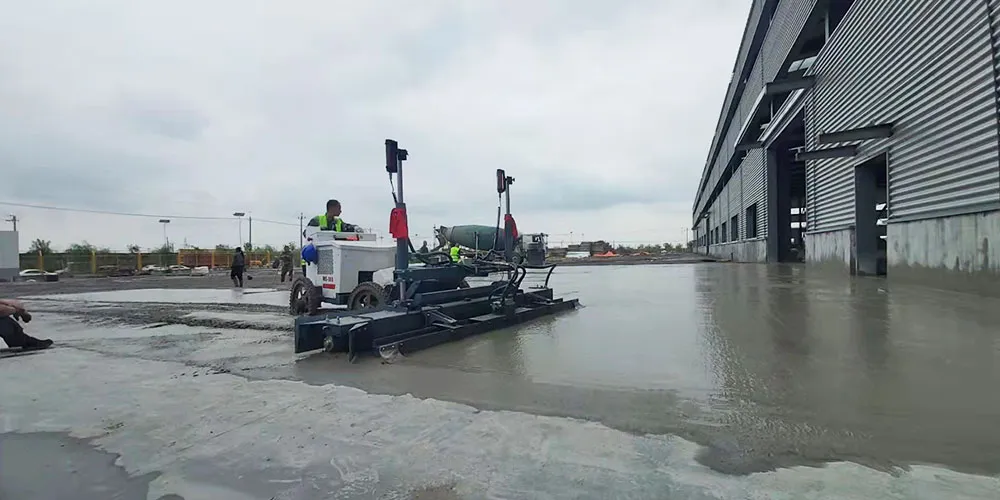
The design of the concrete laser leveling should take into account the environment and construction needs of the construction site. For example, for large-scale construction projects, you need to choose equipment with a larger construction area; for small construction environments, you need to choose compact equipment. In addition, factors such as the equipment's weight, power consumption, noise and emissions must also be taken into consideration during design.
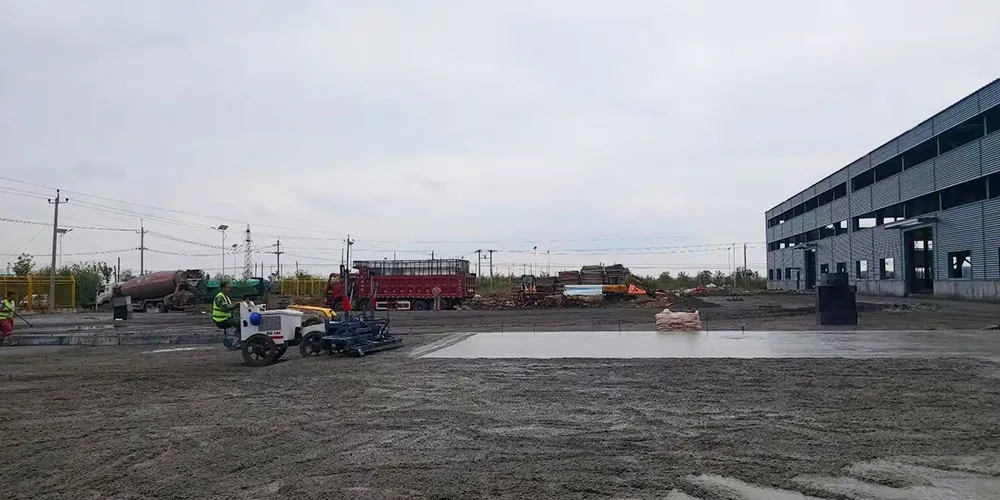
Laser technology
The concrete laser leveling machine uses advanced laser technology to achieve high-precision concrete leveling. Among them, the laser transmitter will emit a laser beam, which will illuminate the receiver to form a reference line. Through the control system, the equipment can monitor and adjust the position and height of the baseline in real time. Therefore, special attention should be paid to the laser and control system during the design and manufacturing process to ensure that its performance is stable and reliable.
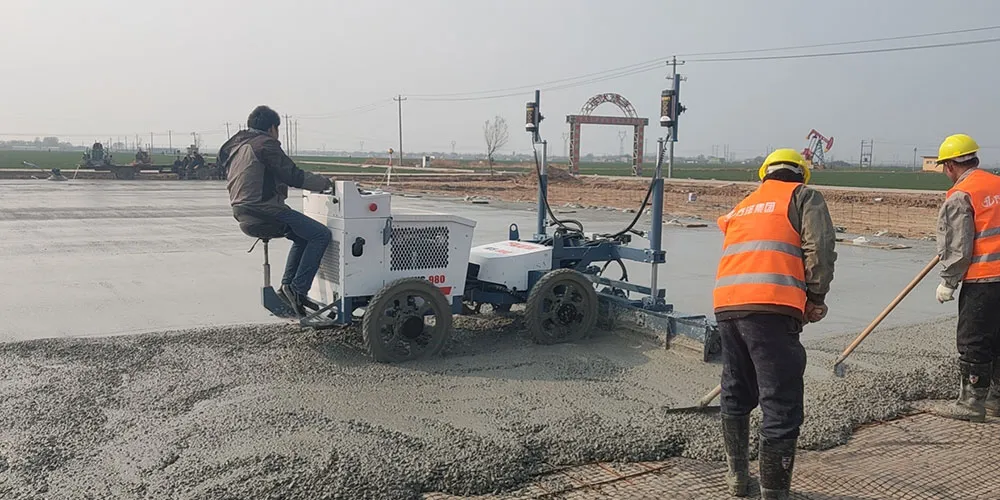
Mechanical structure
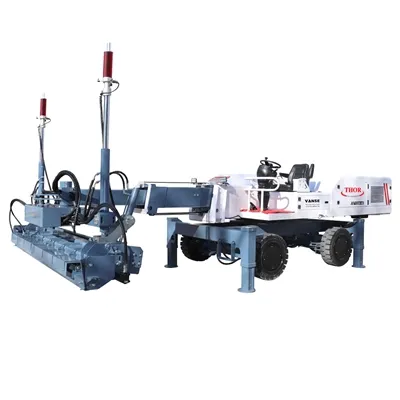
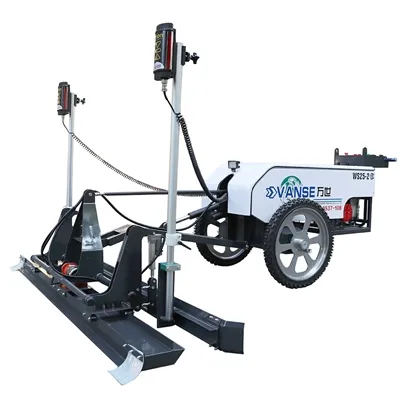
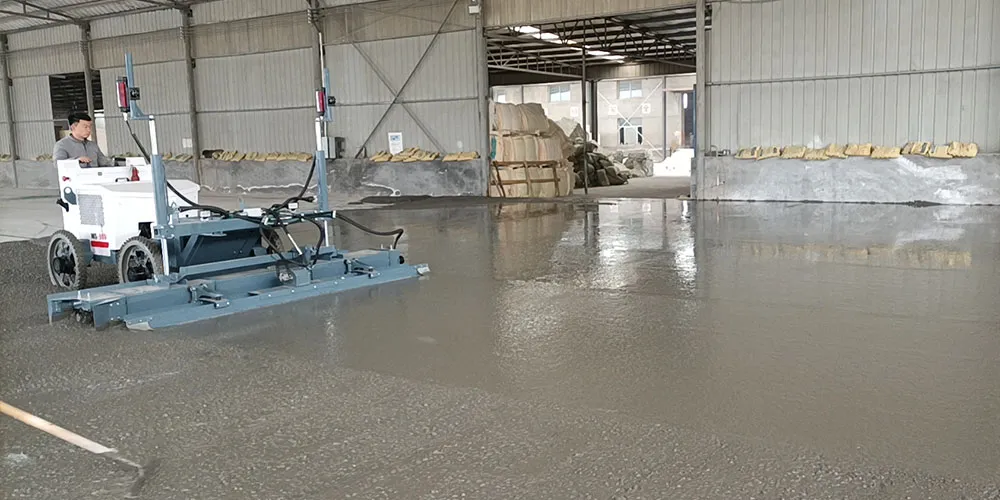
The mechanical structure of the concrete laser leveling machine includes scrapers, driving wheels and driven wheels. The scraper is used to scrape the concrete flat, and the driving wheel drives the scraper to work. Driven wheels are used to support and balance equipment. In addition, it also includes power system, lubrication system and safety protection system. The design and manufacturing of the mechanical structure should ensure stable, safe and reliable operation of the equipment.
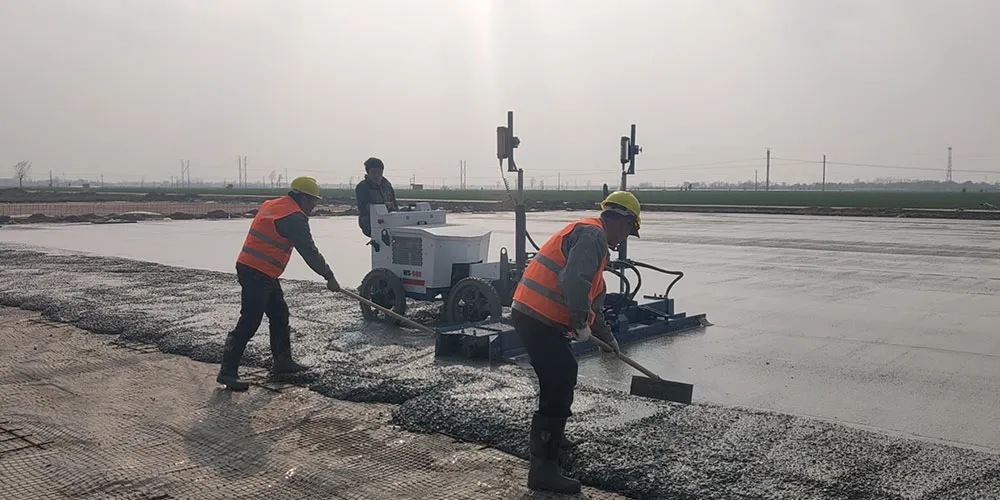
Control System
The control system of the concrete laser leveling machine includes controllers, sensors and operating interfaces. The controller is used to control the operation mode and actions of the equipment, the sensor detects the status and position of the equipment, and the operation interface provides human-computer interaction functions. The design and manufacturing of the control system must ensure precise equipment control and easy operation.
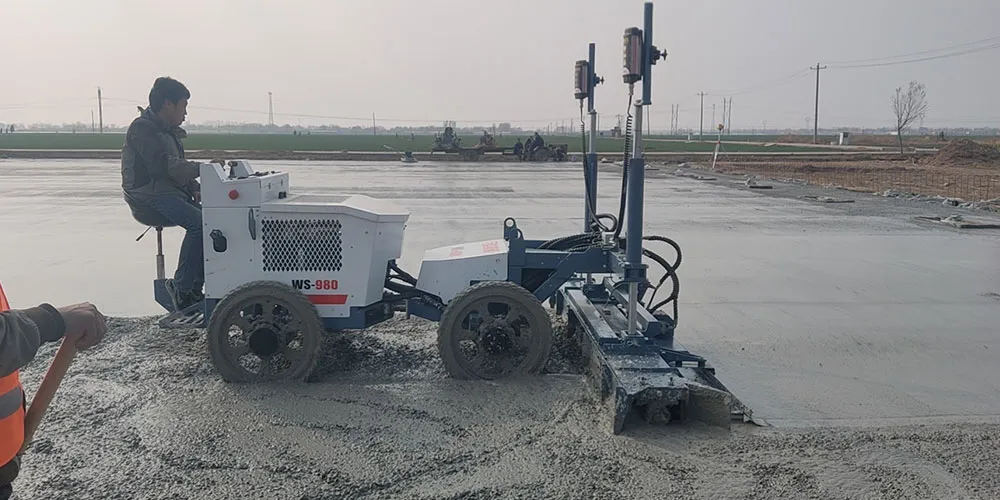
Manufacturing process
The manufacturing process of concrete laser levelinging machine includes casting, processing, welding, assembly and other links. During the casting process, the structure and usage environment of the equipment must be taken into consideration, and appropriate materials and processes must be selected; during the processing process, the accuracy and parallelism of the equipment must be ensured; during the welding process, attention must be paid to welding quality and deformation issues; during the assembly process, the Factors such as equipment operation stability and maintenance convenience. The quality of the manufacturing process directly affects the performance and service life of the equipment, so all aspects of the manufacturing process must be strictly controlled.
Quality inspection
Concrete laser levelings require quality testing during the design and manufacturing process to ensure that the performance and quality of the equipment meet requirements. Quality inspection includes appearance inspection, functional inspection, performance inspection and safety inspection and other aspects. Appearance inspection mainly detects whether the appearance of the equipment is beautiful and has no obvious defects; functional inspection mainly detects whether the functions of the equipment are complete and normal; performance inspection mainly detects whether the performance indicators of the equipment meet the design requirements; safety inspection mainly detects whether the safety protection devices of the equipment are Whether it is effective and whether the safety performance meets the standards, etc. Quality inspection is an important part of ensuring the quality of equipment and must be strictly controlled.
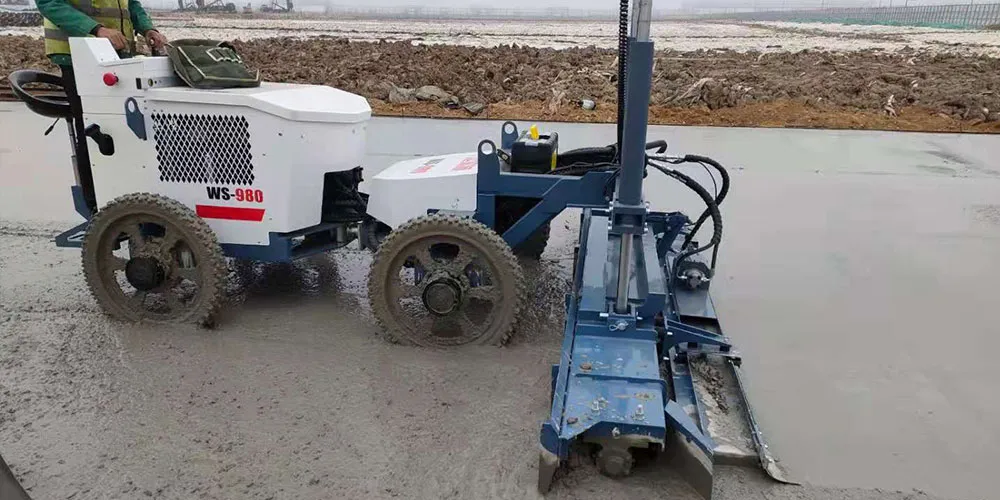
In short, the design and manufacture of concrete laser leveling machines need to take into account many aspects, including overall design, laser technology, mechanical structure, control system, manufacturing process and quality inspection. Only through careful design and strict manufacturing can high-performance, high-quality concrete laser leveling machines be produced to meet different construction environments and construction needs.
Thanks to All the Friends Who Support and Trust Shandong Vanse Machinery Technology Co., Ltd.
If you want to know more about Shandong Vanse Machinery Technology Co., Ltd. or have any questions, please feel free to contact us:
Our Factory
Shandong Vanse Machinery Technology Co., Ltd.








Share this article

About the Author: Shandong Vanse Machinery Technology Co., Ltd.
Shandong Vanse Machinery Technology Co., Ltd. is a high-tech manufacturer specializing in concrete construction machinery, including laser screeds and related equipment. The company integrates R&D, production, and global sales, with products exported to over 60 countries and widely used in infrastructure projects worldwide.
Previous Post
Next Post
Related Articles
You Might Also Like
How to ensure the safety of laser leveling machine during construction?
– Reasonable center of gravity design: The laser leveling machine should be designed to ensure that the center of gravity is low and reasonably distributed, so that it can effectively prevent rollover during operation, especially when working on uneven ground or when the machine is turning. Before the equipment is put into use, it is necessary to check whether its center of gravity related parameters meet the design requirements. For example, for large laser leveling machines, the center of gravity is located in the center area of the bottom of the machine by reasonably arranging the positions of components such as the engine and working device. – Good support device: The support legs or stabilizers of the machine should be able to work normally. Before construction, check whether the support legs are flexible and the locking device is reliable. When the laser leveling machine is working on a slope or does not move for a long time for fixed-point construction, a stable support device can prevent the machine from accidentally sliding or shaking. – Guardrails and protective covers are installed in place: For the rotating parts, transmission parts (such as sprockets, pulleys, etc.) of the machine, and moving parts such as scrapers, sturdy guardrails and protective covers should be installed. These protective devices should be able to withstand certain external impacts and be firmly installed to prevent loosening due to vibration and other reasons during construction. For example, a guardrail should be set at the edge of the scraper, and the height should meet safety standards, which can prevent operators from accidentally touching the scraper without affecting the construction line of sight. – Regularly check the wear of mechanical parts: Mechanical parts will wear after long-term use. For example, excessive wear of the scraper may reduce work efficiency and even cause the risk of breakage. The degree of wear of the parts should be checked regularly, and the parts should be replaced in time according to the wear limit. For example, an inspection plan should be formulated to check key parts such as scrapers and travel wheels every certain working hours (such as 100 hours) and record wear data. – Operation skills training: Operators should receive professional training, be familiar with the functions of various operating buttons and handles of the laser leveling machine, and master the correct operation methods. The training content includes various aspects of the machine's start, stop, travel, and leveling operations. For example, during the training process, operators should practice multiple times in an environment that simulates the construction site to master the operating skills under different ground conditions. – Safety knowledge education: Operators are given comprehensive safety knowledge education, including possible safety risks of the equipment and safety precautions at the construction site. For example, operators are informed that when the laser leveler is working, people around should keep a certain safe distance to prevent being hit by the machine; when the equipment is abnormal, how to properly make an emergency stop and other safety knowledge. At the same time, operators should obtain the corresponding operation qualification certificate to ensure that they have the ability to operate safely. – Safety helmets and protective shoes: Operators must wear safety helmets that meet the standards to prevent being hit on the head by falling objects from heights at the construction site. Protective shoes should have anti-slip and anti-smashing functions. When walking in the working area of the machine, avoid slipping or being hit by heavy objects on the feet. – Earplugs and goggles: The laser leveler will generate noise during operation, and long-term exposure may cause damage to the operator's hearing, so earplugs are required. At the same time, in certain construction environments, such as cutting materials or when there is a possibility of foreign objects splashing, goggles can protect the eyes from injury. – Clearing site debris: Before construction, the construction site should be thoroughly cleaned to remove stones, wood blocks, metal fragments and other debris on the ground. These debris may affect the normal operation of the laser leveler and even damage the parts of the machine. For example, when constructing on a site after the demolition of an old building, carefully clean up the construction waste and ensure that the ground is level before starting construction. – Marking underground obstacles: If there are obstacles such as underground pipelines and cables on the construction site, they should be clearly marked on the ground. Warning stakes, colored markings and other methods can be used to remind operators to avoid them. During the construction process, communicate with relevant departments to obtain detailed location and depth information of underground obstacles to avoid the machine from damaging underground facilities during construction and causing safety accidents. – Setting safety distance: Set a safety distance around the laser leveler. Generally, a safety range of at least 2-3 meters is maintained around the machine. Unrelated personnel are prohibited from entering this range to prevent being hit by the machine or injured by splashing materials during construction. Warning tapes, fences and other facilities can be used for isolation. – Divide the construction area: For large construction sites, divide different construction areas, such as concrete pouring area, leveling area, material stacking area, etc. Maintain reasonable passages between each area to ensure that material transport vehicles and construction equipment can pass safely. At the same time, mark the degree of danger in different areas, such as marking warning information such as "Beware of the collapse of stacked materials" in the material stacking area. – Insulation inspection: Regularly check the insulation performance of the electrical system of the laser leveler, including wires, cables, motors and other components. Use tools such as insulation resistance meters to detect whether the insulation resistance meets safety standards. If the insulation resistance is too low, it may cause leakage and cause electric shock accidents. For example, conduct an insulation inspection once a month, record the inspection data, and repair or replace components with reduced insulation performance in a timely manner. – Grounding protection: Ensure that the electrical equipment of the laser leveler has good grounding protection. The grounding device should be firmly connected and the grounding resistance should meet the specified requirements. In the event of an electrical fault, grounding protection can introduce current into the earth to prevent electric shock to operators and damage to equipment. – Laser radiation limit: The laser radiation intensity of the laser transmitter should comply with national safety standards. When selecting equipment, you should choose a laser transmitter that has been safety certified, and its laser wavelength, power and other parameters should be within the safe range. For example, for a laser leveler used for floor construction, the laser radiation intensity should be controlled within a range that will not cause harm to human eyes and skin. – Laser warning signs: Set up obvious laser warning signs around the laser transmitter and construction area to inform personnel to pay attention to laser radiation. The signs should include information such as laser hazard levels and protective measures. At the same time, operators should be trained in laser safety knowledge, such as not looking directly into the laser beam and avoiding exposure to laser radiation when the laser is working.Introduction to the basics of slipform machine construction
After the concrete is faced with the fixed mold, the sliding mold makes the concrete form. Used for road shoulder synovial film operation, drainage ditch synovial film operation, curb forming operation, etc. This type of machine is based on the carrier that meets the engineering standards, including asphalt products and cement concrete road construction on both sides of the curb and drainage ditches and other facilities The special industry equipment consists of walking mechanism, vibration mechanism, forming mechanism, generator and power distribution, etc. The operation process of the sliding form machine is that the concrete is vibrated and compacted by the vibrating rod, and then formed by the sliding form of the mold, and the continuous operation is carried out while walking. The shaped curb has high impact strength and stability. It can be widely used in: highways, highways, airports and other places. It is fully mechanically operated, saving a lot of labor costs, and is a new type of sliding membrane construction standard.How Does The Concrete Laser Leveler/ Leveling Achieve Such Excellent Leveling Effects?
Laser leveling machines have high requirements and standards for road surface smoothness. When performing road surface smoothing, the requirements for smoothness are still relatively high. This is because the smoothness of the road surface also plays a big role in the beauty of the environment. Generally speaking, if manual leveling is used, the effect will not be very good. Fortunately, there are laser leveling machines now, and many construction units have also chosen laser leveling machines for road smoothing operations. So laser leveling machines How does it achieve such excellent leveling effect? Laser leveling machines have high requirements and standards for road smoothness 1. Control of the laser leveling machine's baseline: When the leveling machine performs automatic leveling, it needs an accurate reference surface. Generally, when the main focus is to control the height, the tightrope method is suitable; when the main focus is to control the thickness, the floating datum beam method is adopted. Generally, tightrope is used for the bottom layer, and floating datum beam method is used for the middle layer and surface layer. The benchmark wire rope method is to install benchmark wire ropes on both sides of the road, but note: the spacing between the pillars and steel bars supporting the steel wire ropes cannot be too large, generally 5-10m; the steel bars should be 1-2mm higher than the design elevation, and the elevation of the steel bars must be ensured when laying Always accurate during the construction process. 2. Paving speed control of laser leveling machine: The leveling machine should work at a constant speed without stopping, and it is strictly forbidden to be fast and slow. During the leveling process, stoppages should be avoided as much as possible, and the necessary daily stoppages should be placed at the location where the contraction joint is scheduled to be made at one end of the structure. In case of shutdown in the middle, the leveling of the leveling should be locked to prevent it from sinking; when the mixture temperature is above 100°C, the pause time should not exceed 10 minutes. When the pause time exceeds 30 minutes or the mixture temperature is below 100°C, Re-seam according to the method of treating cold seams 3. Laser leveling machine operation control measures: Skill ed laser leveling machine operators should be selected and given pre-job training; during the paving process, the material transport truck should stop 10-30m away from the laser leveling machine and In neutral gear, rely on the laser leveler to push forward slowly, and there should be a dedicated person to direct the unloading truck to unload; ensure the continuity of the work of the leveling machine's feeding system, that is, ensure the height of the material level in the casters (conveyor wheels) Stable, uniform and continuous, the material level height should be kept at 2/3 of the blade above the central axis. Before construction, the leveling must be cleaned. After adjusting the height and cross slope of the leveling, preheat the leveling. The preheating temperature of the leveling should be close to the temperature of the asphalt mixture, which can generally be heated to 85°C-90°C.