Technical Knowledge
Comparison of Traditional Technology and Modern Construction Technology of Concrete Laser Leveler
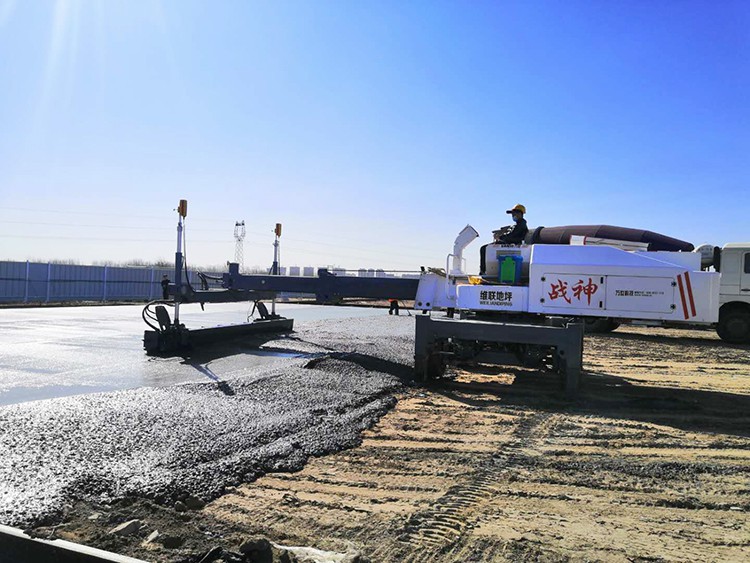
1 to find a flat support template, RBI, red band to the level of laser as the base control surface, so as to ensure the level of the ground
2 single area width 6M area of 2000 square meters within 3000 ㎡ ~ 5000 ㎡ any block construction
3 flatness of less than the national norms exceed the national norms
4 work efficiency 700-800 ㎡ / single class 2500 ~ 3500 ㎡ / single class
5 construction joints how much
6 Uneven density is uniform and dense
7 appearance is not beautiful, stubble more beautiful, stubble less
8 teams about 17 of about 8
9 cost level
10 tool chute, roller, scraper, vibrating bar channel, machine
11 operation complicated operation, the program cumbersome one machine operation, one-time vibration, mention pulp, scratching.
Thanks to All the Friends Who Support and Trust Shandong Vanse Machinery Technology Co., Ltd.
If you want to know more about Shandong Vanse Machinery Technology Co., Ltd. or have any questions, please feel free to contact us:
Our Factory
Shandong Vanse Machinery Technology Co., Ltd.








Share this article

About the Author: Shandong Vanse Machinery Technology Co., Ltd.
Shandong Vanse Machinery Technology Co., Ltd. is a high-tech manufacturer specializing in concrete construction machinery, including laser screeds and related equipment. The company integrates R&D, production, and global sales, with products exported to over 60 countries and widely used in infrastructure projects worldwide.
Previous Post
Next Post
Related Articles
You Might Also Like
Is the concrete laser leveling machine efficient?
The efficiency of concrete laser leveling machines is relatively high. It uses laser measurement technology to complete large-area leveling operations in a short time and achieve high precision and flatness. Here are some factors that can affect the efficiency of a concrete laser leveling: ✈Smoothing area and working environment The efficiency of the concrete laser leveling is closely related to the size of the levelinging area and the working environment. When the leveling area is large or the working environment is complex, the work efficiency of the leveling machine may be affected and it will take longer to complete the leveling operation. ✈Operator skills and experience The skill and experience of the operator also plays a role in the efficiency of the concrete laser leveling. If the operator has rich experience and high skill level, can operate the leveling machine proficiently, and accurately grasps the relevant parameters and routes, then the efficiency of the leveling machine will be relatively high. ✈Automation and control system The level of automation and control system of a concrete laser leveling also affects its efficiency. The higher the degree of automation and the more advanced the control system, the simpler and faster the leveling machine is to operate, allowing the leveling operation to be completed faster. ✈Maintenance and care The maintenance and upkeep of a concrete laser leveling is also one of the factors that affects its efficiency. If the leveler is kept in good working condition and the time for breakdowns and repairs is reduced, the efficiency of the leveler will be relatively high. To sum up, the efficiency of concrete laser leveling machine is relatively high, but it will also be affected by some factors. When choosing to use it, you need to consider the actual situation and choose appropriate machinery and equipment to meet the construction requirements.What are the applicable scenarios for concrete laser leveling machines?
Concrete laser leveling machines are suitable for a variety of scenarios. The following are some common applicable scenarios: 1. Floor construction: Concrete laser leveling machine can be used for various floor construction, such as industrial plants, commercial plazas, parking lots, airport runways, etc. 2. Road construction: Concrete laser leveling machine can be used for the construction of urban roads, highways, bridges and other roads. 3. Bridge construction: Concrete laser leveling machine can be used for bridge construction, such as bridge decks, piers, etc. 4. Airport construction: Concrete laser leveling machine can be used for the construction of airport runways. 5. Others: Concrete laser leveling machines can also be used for construction in underground parking lots, subway platforms, squares and other places. In general, concrete laser leveling machines are suitable for large-area floor construction, such as large industrial plants, workshops, Automated three-dimensional warehouses, clean factories such as electronic appliances, food materials, medicine, etc., large warehouse supermarkets, logistics centers, convention and exhibition centers, etc., as well as outdoor floors such as docks, container yards, freight yards, squares, residential floors, municipal roads, etc. In addition, the concrete laser leveling machine is also suitable for the construction of various roads and bridges. The above information is for reference only. If necessary, you can consult us.Environmental protection standards for concrete laser leveling machine construction sites
🎯 Noise pollution control – **Site boundary noise standard**: Implement the "Environmental noise emission standard for construction site boundaries" (GB12523-2011), the daytime noise limit is 70 decibels, and the night limit is 55 decibels. – **Equipment noise control**: Give priority to low-noise laser levelers and supporting equipment, regularly maintain the equipment to ensure that the equipment is in good operating condition, and reduce abnormal noise caused by equipment failure and other reasons. 🎯 Air pollution prevention and control – **Dust control**: The construction site should be fenced with a height of not less than 2 meters to reduce the spread of dust. Cover the raw materials of concrete such as sand and gravel to avoid dust generated by open-air stacking. In dry weather or when performing operations that are prone to dust, measures such as spray dust reduction should be taken, such as using sprinklers, sprayers and other equipment to spray water and dust reduction on the construction site. – **Exhaust emission**: The exhaust emission of various fuel machinery and equipment used in construction, such as concrete laser leveling machines, transport vehicles, etc., shall comply with the emission standards stipulated by the state and local governments. 🎯 Water pollution prevention and control – **Wastewater treatment**: Sedimentation tanks, sewage wells and other wastewater treatment facilities should be set up at the construction site. The wastewater from the cleaning of the concrete laser leveling machine and the oily wastewater generated by equipment maintenance must be treated and discharged after meeting the standards. – **Water resource utilization**: A rainwater collection system is established. The collected rainwater can be used for concrete maintenance, dust reduction, etc., to improve the utilization rate of water resources. 🎯 Solid waste management – **Classified storage**: Construction waste generated during the construction process, such as concrete scraps, discarded formwork, etc., should be stored in a classified manner. – **Timely removal**: Construction waste should be transported to designated waste disposal sites for treatment on a regular basis. It is strictly forbidden to discard or dump it at will. – **Resource utilization**: Recyclable solid waste, such as scrap steel and wood, should be recycled and reused to improve resource utilization. 🎯 Soil pollution prevention and control – **Oil and chemical management**: Oil and chemicals used in construction should be properly stored to prevent leakage and soil contamination. – **Site cleaning**: After the construction is completed, the construction site will be fully cleaned, and the remaining concrete, oil and other pollutants will be cleaned up, and the contaminated soil will be repaired or replaced. 🎯 Ecological environment protection – **Vegetation protection**: Before construction, the vegetation in the construction area will be evaluated, and the damage to important vegetation will be avoided as much as possible, and transplanted when necessary. – **Ecological restoration**: After the construction is completed, ecological restoration will be carried out in a timely manner, and the construction site will be leveled and greened as required, and local plants will be planted to restore the ecological environment before construction.