Technical Knowledge
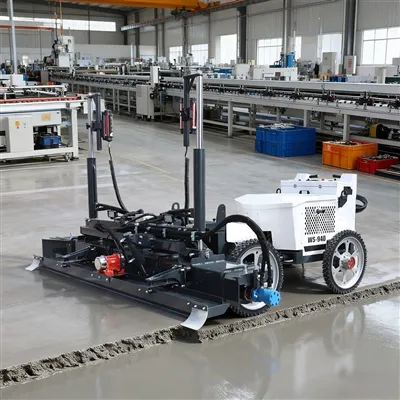
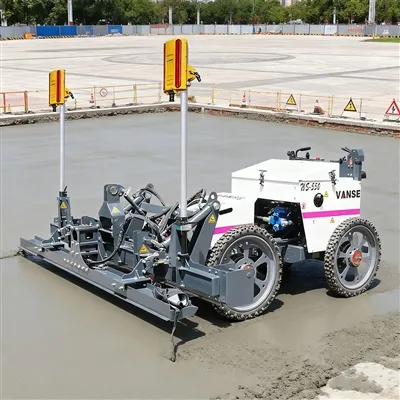
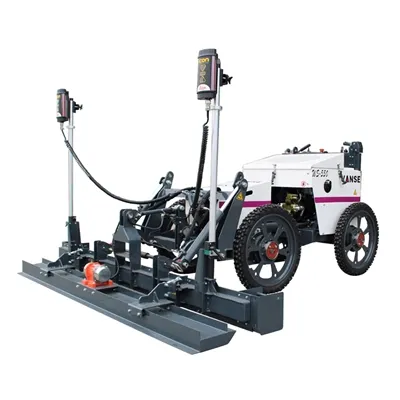
The tunnel concrete pavement adopts the entire construction technology of laser truss split roller paver
Concrete laser leveling: an important tool to improve construction efficiency
☑1. Introduction
In the field of construction engineering, concrete is the main building material widely used in various infrastructures and buildings. However, leveling concrete is a time-consuming and labor-intensive task. In order to improve construction efficiency and reduce labor costs and material waste, concrete laser leveling machines came into being. This advanced leveling equipment uses laser technology to achieve high-precision concrete leveling, providing an efficient and precise construction method for construction projects.
☑2. Precise control, one-time molding
The traditional concrete leveling method relies on the experience and technology of workers, and is prone to problems such as uneven flatness and rework. In contrast, the concrete laser leveling uses a laser transmitter and receiver, which can quickly and accurately detect the height difference on the concrete surface through high-precision laser ranging technology. The leveler adjusts the height of the scraper based on real-time detection data to achieve precise concrete leveling. By forming in one go, the need for rework and repetitive work can be significantly reduced, significantly improving construction efficiency.
☑3. Automated operation, saving manpower
Traditional concrete leveling work requires a lot of manual operations such as scraping, plastering, etc. These jobs are not only labor-intensive, but also require a large amount of manual labor. The concrete laser leveling machine adopts an automated control system to achieve continuous concrete laying and leveling work. Operators only need to make simple monitoring and adjustments during the operation of the equipment, which greatly reduces the need for manpower. Automated operations can not only save labor costs, but also improve the accuracy and consistency of construction, further improving construction efficiency.
☑4. Shorten construction time
Traditional concrete leveling methods take longer to complete the job because they require repeated scraping and plastering. The concrete laser leveling machine can significantly shorten the construction time through the advantage of one-time molding. In addition, since automated operations reduce the need for manual intervention, construction progress is further accelerated. Shortening construction time means faster project delivery and higher productivity, which is of great significance to construction companies.
☑5. Reduce material waste
Traditional concrete leveling methods tend to waste materials because they require multiple scrapings and plasters, resulting in excess concrete being discarded. Concrete laser levelings minimize material waste through precise control and high-precision measurement. It only needs to be laid and leveled once, reducing the need for rework and repetitive work, thus reducing the amount of concrete used. Reducing material waste not only helps reduce costs, but also contributes to environmental protection and sustainable development.
☑6. Conclusion
In summary, concrete laser leveling machines improve construction efficiency by precisely controlling automated operations, shortening construction time, and reducing material waste. As an advanced construction method, it brings many advantages and benefits to the field of construction engineering. With the continuous development and improvement of technology, concrete laser levelings will play a more important role in future construction projects. It not only improves construction efficiency, but also helps reduce costs, improve project quality, and has a positive impact on the development of the construction industry.


Thanks to All the Friends Who Support and Trust Shandong Vanse Machinery Technology Co., Ltd.
If you want to know more about Shandong Vanse Machinery Technology Co., Ltd. or have any questions, please feel free to contact us:
Our Factory
Shandong Vanse Machinery Technology Co., Ltd.








Share this article

About the Author: Shandong Vanse Machinery Technology Co., Ltd.
Shandong Vanse Machinery Technology Co., Ltd. is a high-tech manufacturer specializing in concrete construction machinery, including laser screeds and related equipment. The company integrates R&D, production, and global sales, with products exported to over 60 countries and widely used in infrastructure projects worldwide.
Previous Post
Next Post
Related Articles
You Might Also Like
There are two methods and techniques for leveling concrete pavement, which one is more suitable for actual construction?
Two methods and techniques for concrete pavement leveling: Comparative analysis of manual leveling and mechanical leveling In concrete pavement construction, leveling operations are an important step in ensuring the smoothness of the pavement and improving its performance and aesthetics. Depending on the construction conditions, the leveling operation can take two methods: manual leveling and mechanical leveling. This article will conduct a detailed analysis of these two methods and their techniques, and explore which method is more suitable based on actual construction conditions. Manual leveling mainly relies on the experience and skills of workers, using scrapers, wooden bars and other tools. After the concrete is poured, workers need to quickly and evenly scrape the concrete surface with a scraper, then use a wooden pole to check the flatness, and scrape repeatedly until the requirements are met. (1) Master the initial setting time of concrete to ensure that the leveling work is completed before the concrete begins to harden. (2) The scraper must be used evenly and forcefully to avoid unevenness. (3) The wooden poles should be kept level during inspection to ensure that the road surface is overall smooth. Advantages: The manual leveling method is flexible and convenient for small area or irregular-shaped road construction. Disadvantages: High technical requirements for workers, relatively low leveling efficiency, and difficulty in ensuring the smoothness of large-area road surfaces. Mechanical leveling mainly uses mechanical equipment such as vibrating rollers and plate vibrators. After the concrete is poured, the concrete is first compacted with a vibratory roller and then finely leveled with a plate vibrator. (1) Ensure that the mechanical equipment is in good working condition and adjust the vibration frequency and amplitude. (2) Control the driving speed of the road roller and plate vibrator to maintain uniform operation. (3) For corners and areas that are difficult to level mechanically, manual leveling is required. Advantages: The mechanical leveling method is highly efficient, can quickly complete the leveling of large areas of road surface, and the leveling quality is relatively stable. Disadvantages: It may not be suitable for small-area or irregular-shaped road construction, and requires certain equipment investment and maintenance costs. (1) For large-area, regular-shaped road construction, mechanical leveling method is more suitable because it can significantly improve construction efficiency and ensure leveling quality. (2) For small-area, irregular-shaped pavement construction, manual leveling may be more suitable because it is more flexible. (1) The manual leveling method has high technical requirements for workers and requires experienced workers to ensure the leveling quality. (2) The mechanical square rule is relatively simple but has certain requirements for the operation and maintenance of mechanical equipment. (1) The initial investment cost of manual leveling method is low, but the labor cost may be high, and the leveling efficiency is relatively low (2) The mechanical leveling method requires certain equipment investment and maintenance costs, but in the long run, its construction efficiency and quality advantages may bring higher economic benefits. When selecting a concrete pavement leveling method, factors such as construction conditions, technical requirements, and economic costs need to be comprehensively considered. The manual leveling method is suitable for small-area, irregular-shaped pavement construction, while the mechanical leveling method is more suitable for large-area, regular-shaped pavement construction. In actual construction, two methods can be flexibly used according to specific conditions to achieve the best leveling effect. (1) Strengthen technical training for workers and improve the quality and efficiency of manual leveling. (2) Optimize the configuration and maintenance management of mechanical equipment to ensure the stable progress of mechanical leveling work. (3) In actual construction, manual leveling and mechanical leveling are combined and used flexibly according to specific conditions to improve construction efficiency and quality. (4) Regularly conduct quality inspections and assessments of the construction process, identify problems in a timely manner and take appropriate measures to improve them. Concrete pavement leveling is a key link to ensure pavement quality and performance. When selecting a leveling method, factors such as construction conditions, technical requirements, and economic costs should be fully considered. Through detailed analysis and comparison of the two methods of manual leveling and mechanical leveling, the following conclusions can be drawn: In actual construction, these two methods should be flexibly used according to specific conditions to achieve the best leveling effect. At the same time, strengthening the technical training of workers and the management and maintenance of machinery and equipment are also important ways to improve the quality and efficiency of leveling. Note: The parameters provided in this document are for reference only and are not mandatory. Due to differences in technical characteristics between different brands and models of laser levelers, please consult the manufacturer for a suitable solution before actual operation. This reference document assumes no responsibility for any issues arising from failure to follow the manufacturer's instructions.Construction Precautions for Concrete Laser Leveling Machines in Extreme Temperature Environments
In extreme temperature environments (high or low), the performance of concrete laser Leveling machines and the setting state of concrete are significantly affected. Based on professional guidance from Vanse Machinery, the following are key precautions for construction in extreme temperature environments: In high-temperature environments, rapid water loss from the concrete and overheating of the hydraulic system are the biggest challenges. Oil Selection: High viscosity index hydraulic oil (such as No. 68 hydraulic oil) must be used to prevent the oil from thinning and causing insufficient pressure due to high temperatures. Radiator Cleaning: Inspect and clean the cooling fins of the engine and hydraulic system before daily operation to prevent dust and cement slurry from clogging them and affecting heat dissipation. Intermittent Operation: Under extremely high temperatures, avoid continuous operation of the machine under overload; if necessary, take measures to stop the machine and cool it down. High temperatures cause concrete slump to drop extremely quickly. During construction, the travel speed of the laser Leveling should be strictly controlled to ensure leveling is completed before the concrete initially sets. Substrate Moistening: The substrate (base) must be thoroughly moistened before construction to prevent it from absorbing moisture from the concrete, which could lead to shrinkage cracks in the underlying layer. High temperatures can cause ground-level heat waves (heat waves) to refract the laser beam, resulting in a "drift" phenomenon. Solution: Erect the laser transmitter in the highest and coolest possible location, and minimize the distance between the transmitter and receiver (ideally within 30-40 meters) to ensure accuracy. Low temperatures can affect machine start-up performance and the hardening speed of concrete. Low-viscosity oil: Replace with low-temperature special engine oil (such as 5W-40) and low-pour-point hydraulic oil (such as No. 32 aviation hydraulic oil) to prevent oil solidification that could damage the pump head. Start-up preheating: Do not operate at high speed immediately after starting. Allow the machine to idle for 10-15 minutes until the hydraulic oil temperature rises above 20°C before beginning leveling operations. Batteries experience a significant capacity reduction at low temperatures. After construction is completed, the batteries and laser emitter should be removed and stored in a warm indoor environment to prevent power loss or freezing and cracking of the LCD screen. When using a laser Leveling, ensure the concrete temperature upon placement is not lower than 5°C. Post-screing treatment: After the machine completes the screing, immediately cover the concrete with plastic film and insulating straw mats to prevent freezing and subsequent surface sanding or cracking. Laser Accuracy Verification: Drastic temperature changes can cause thermal expansion and contraction of precision components inside the laser emitter. It is recommended to recalibrate the reference level every 2-3 hours of continuous operation. Seal Inspection: Extreme high temperatures accelerate seal aging, while extreme low temperatures make seals brittle. Special attention should be paid to checking all hydraulic cylinder joints for leaks. Personnel Safety: In extreme environments, heatstroke prevention and frostbite protection for construction personnel are equally important. If you are carrying out special flooring construction (such as cold storage floors or outdoor plazas) in extremely cold regions (such as below -10°C) or tropical regions, it is recommended to contact WanShi Machinery's technical support to obtain an oil change list and parameter setting guidance for specific machine models. Note: The parameters provided in this document are for reference only and are not mandatory. Due to differences in technical characteristics between different brands and models of laser levelers, please consult the manufacturer for a suitable solution before actual operation. This reference document assumes no responsibility for any issues arising from failure to follow the manufacturer's instructions.How to improve the construction efficiency and quality of concrete laser leveling machines under extreme climatic conditions through technological innovation?
– Develop an advanced intelligent temperature control system that can monitor the temperature of the engine, hydraulic system and key electrical components in real time. When the temperature approaches the critical value, the system automatically adjusts the working state of the equipment, such as reducing the engine speed or reducing the load of the hydraulic system to prevent overheating. For example, by installing a high-precision temperature sensor in the engine coolant circulation system, when the temperature reaches 90-95℃ (different equipment may vary slightly), the system automatically adjusts the speed of the cooling fan to speed up and enhance the heat dissipation effect. – The intelligent temperature control system can also be combined with remote monitoring technology to transmit the temperature data of the equipment to the operator's mobile device or control center in real time. In this way, even if the operator is not next to the equipment, he can understand the temperature of the equipment in time and take measures in advance, such as arranging equipment rest or adjusting the construction plan. – Use high temperature resistant sealing materials and lubricants in key parts of the engine and hydraulic system. For example, the use of high temperature resistant sealing materials such as fluororubber can effectively prevent leakage problems caused by aging and deformation of seals at high temperatures. At the same time, choose hydraulic oil with good high-temperature performance, which has a high flash point and oxidation stability, can maintain good performance in high-temperature environments, and reduce system failures caused by the decline of hydraulic oil performance. – For the outer surface of the equipment, use reflective heat-insulating coatings. This coating can reflect infrared and ultraviolet rays in sunlight and reduce the heat absorbed by the equipment. For example, nano-ceramic reflective heat-insulating coatings can effectively reduce the surface temperature of the equipment. In a high-temperature environment, the surface temperature of the equipment can be reduced by about 10-15℃. – Optimize the heat dissipation structure of the equipment and increase the heat dissipation area and ventilation channel of the radiator. For example, a fin-type radiator design is used to increase the contact area with the air and improve the heat dissipation efficiency. At the same time, reasonable vents and air guides are designed on the equipment casing, and the natural wind or forced ventilation devices (such as fans) generated when the equipment is running are used to guide the cold air to flow through the key heating components and take away the heat. – For the hydraulic system, an independent hydraulic oil heat dissipation circuit is designed to dissipate the heat of the hydraulic oil through a special cooler. The cooler can be water-cooled or air-cooled, and can be flexibly selected according to the actual construction environment and equipment requirements. – Develop efficient engine preheating system, such as the combination of electric heating plug and intake preheater. The electric heating plug can directly heat the air in the engine cylinder, while the intake preheater preheats the cold air entering the engine. Before starting, the controller automatically starts the preheating program, which can preheat the engine to the appropriate starting temperature (such as 30-40℃) in a low temperature environment of -20℃ in just 5-8 minutes. – For hydraulic systems and working parts, use oil heating technology. Install heating devices, such as oil heaters, in the lubrication system of hydraulic oil tanks and working parts. Before starting the equipment, heat the hydraulic oil and lubricating oil to achieve the appropriate working viscosity, reduce the resistance when the equipment is started, and improve the starting efficiency of the equipment. – Design the battery for low temperature adaptability, such as using cold-resistant batteries or adding special electrolyte additives inside the battery to improve the discharge performance of the battery at low temperatures. At the same time, optimize the insulation structure of the battery, wrap the battery with insulation materials to reduce heat loss. – Choose tire or track materials suitable for low temperature environment. At low temperatures, ordinary rubber will become hard and brittle, affecting the driving performance and comfort of the equipment. Using cold-resistant rubber materials to make tires or tracks can ensure good elasticity and grip in low temperature environments. – Equip the equipment with automated snow and ice removal devices. For example, heating wires are installed on the working parts of the equipment such as scrapers and spiral spreaders. When the equipment is started, the heating wires automatically work to melt the snow and ice on the working parts to prevent them from affecting the normal operation of the working parts. – Set up a small snow blowing device around the walking device (tires or tracks) of the equipment, and use compressed air or fans to blow the snow away from the walking device to ensure that the equipment can travel normally on snowy or icy roads. – Adopt higher-level waterproof sealing technology, such as IP67 or IP68 level sealing standards (IP level is the international code used to identify the protection level, and the larger the number, the higher the protection level). For key components such as electrical control cabinets and motors, use sealing rubber rings, sealing pads and sealants for multiple sealing to prevent water, dust and moisture from entering. – Develop waterproof and breathable membranes to cover the vents and parts of the equipment that may be flooded. This membrane allows air to circulate but prevents water from entering, balancing the air pressure inside the equipment while keeping the equipment dry. For example, using a waterproof and breathable membrane on the housing of the laser transmitter and receiver can prevent water from entering without affecting the transmission of the signal. – Install a dehumidification and drying system that can dehumidify the air inside the equipment using desiccant or the principle of refrigeration and dehumidification. For example, a small dehumidifier is installed in the cab or electrical control cabinet of the equipment. When the humidity sensor detects that the air humidity exceeds the set value (such as 70% – 80%), the dehumidifier automatically works to reduce the air humidity to an appropriate range. – For hydraulic systems and lubricating oil systems, vacuum drying technology is used. During equipment maintenance, the water in the system is extracted by a vacuum pump to ensure the dryness and purity of the oil and extend the service life of the oil. – Intelligent monitoring and protection against rust: – Develop an intelligent monitoring system for anti-rust, and monitor the rust of components in real time by installing corrosion sensors on key metal components of the equipment. The sensor can detect parameters such as humidity, salinity and pH on the metal surface. When these parameters reach critical values that may cause rust, the system will sound an alarm. – Based on the monitoring data, a device for intelligently spraying rust inhibitors is used. When the system determines that rust prevention treatment is required, it automatically sprays rust inhibitors on the parts that may rust, or protects the metal parts of the equipment through electrochemical protection methods, such as cathodic protection technology, to prevent rust.