Technical Knowledge
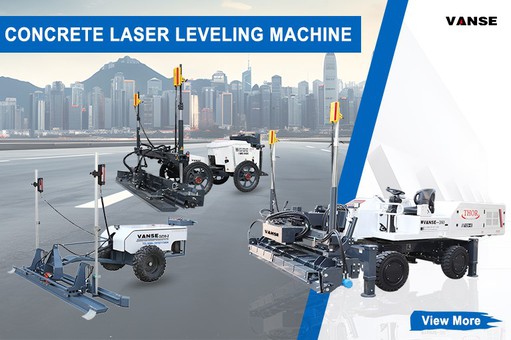
In order to ensure the leveling effect of concrete laser leveling machine, maintenance work must not be neglected

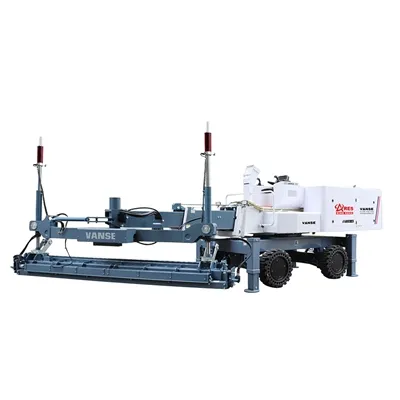
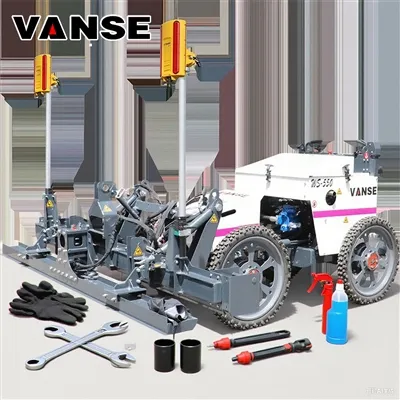
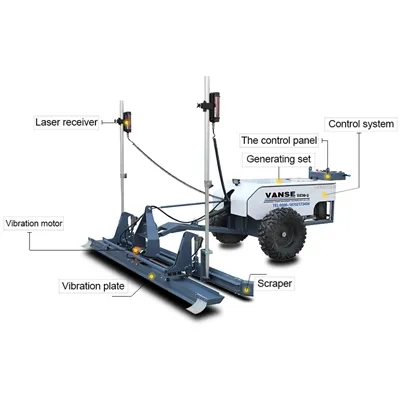
Although the concrete laser leveling machine looks bulky, it is very powerful. Therefore, when using the concrete laser leveling machine, we must pay attention to the requirements and do a good job of maintenance, so as to ensure the construction of the equipment and personal safety. As a manufacturer of leveling machines, Wanshi Machinery will introduce the accumulated experience and methods for many years in detail through the following text. Friends who want to know can watch the following text together.
◈ After completing the leveling operation, perform routine maintenance operations according to the contents of the routine maintenance procedures.
◈ The working devices and motion mechanisms of the concrete laser leveling machine that are in direct contact with the asphalt mixture during the operation are sprayed with diesel after the operation and then run for a period of time to remove the residual asphalt on them, so that they can operate freely and rotate flexibly. It is forbidden to spray diesel on the electronic control system and spiral wire to prevent fire and burning when the power is turned on.
◈ After leveling the fly ash soil operation, flush with water to flush away the white material. After flushing, use waste hydraulic oil to lubricate the active parts of the scraper conveyor chain, and apply anti-rust oil to the piston rod. Be careful not to flush the electrical appliances and bearings with water to prevent short circuits and foreign objects from entering the bearings.
◈ Clean and check the longitudinal slope meter lifting and adjusting device, and apply grease to the lead screw. Apply grease to the floating arm slide rail. Grease each oil filling point until the joints overflow. For levelers with oil filling cups, observe the consumption and fill them up at any time.
◈ After the concrete laser leveler has been used for a long time, each bearing part should be greased once a week, and each chain should also be lubricated frequently to maintain good lubrication. At the same time, care should be taken to avoid sand and other debris getting on the chain to prevent the chain from being damaged prematurely. Generally, the machine should be inspected and maintained in detail once a month or at the end of each construction period. Always pay attention to the tightness of the V-belt and chain. If it is too loose, it should be adjusted in time. Each fastening bolt should also be frequently adjusted to prevent loosening.
◈ When the machine is not used for a long time, the machine should be parked on a flat ground, and the paving roller should be dropped to contact the ground to avoid being suspended in the air to prevent the roller from bending. When the machine is transferred to the work site, if the distance is close and the site is spacious and flat, it can be moved automatically, otherwise, other transportation tools should be used to move it.
Concrete laser leveling machine is a new type of equipment for leveling the ground. Using a leveling machine can improve the quality and quantity of ground leveling. The leveling machine also needs maintenance, so we must pay attention to cleaning it after use. If you encounter any problems during use, you can call us for consultation, and we will solve your problems over the phone.
Thanks to All the Friends Who Support and Trust Shandong Vanse Machinery Technology Co., Ltd.
If you want to know more about Shandong Vanse Machinery Technology Co., Ltd. or have any questions, please feel free to contact us:
Our Factory
Shandong Vanse Machinery Technology Co., Ltd.
Share this article

About the Author: Shandong Vanse Machinery Technology Co., Ltd.
Shandong Vanse Machinery Technology Co., Ltd. is a high-tech manufacturer specializing in concrete construction machinery, including laser screeds and related equipment. The company integrates R&D, production, and global sales, with products exported to over 60 countries and widely used in infrastructure projects worldwide.
Previous Post
Next Post
Related Articles
You Might Also Like
Frequent mistakes in the maintenance of concrete laser leveling machines. Is the wrong method used?
When the concrete laser leveling machine fails, it needs to be repaired. Generally speaking, maintenance is a good way to help the leveling machine to restore health, but some leveling machines still have a lot of small problems after maintenance. What is this ? In fact, because some maintenance personnel in the maintenance of concrete laser leveling machine, the error caused by the error, the following error in the maintenance of concrete laser leveling machine when do not make it again.Key points for daily maintenance of concrete laser leveling machine
Concrete laser leveling machines are crucial for efficient concrete paving and leveling. Daily maintenance directly impacts their accuracy, service life, and construction safety. The following are key points for daily maintenance, covering pre- and post-operation inspections, key component care, fluid management, and storage procedures: A comprehensive inspection before operation is the first line of defense to prevent failures, and the following should be paid special attention to: Inspect the machine body and frame for deformation, cracks, or looseness. Check that connecting bolts (such as those securing the scraper and vibrator) are tight. If loose, tighten them to the specified torque. Check the housings of precision components, such as the laser transmitter and receiver, for integrity and the lenses for stains, scratches, or damage to ensure signal reception is not interfered with. Before starting the engine, check that the fuel, engine oil, and coolant levels are within standard ranges. Use clean diesel fuel of the specified grade to prevent impurities from clogging the fuel lines. Check the quality of the engine oil. If the oil is found to be emulsified, blackened or contains impurities, the oil and oil filter must be replaced in time. Check the hydraulic oil tank level and inspect the hydraulic oil for clarity, foam, impurities, or discoloration (normal hydraulic oil is light yellow or amber). If contamination is severe, replace the hydraulic oil and filter. Inspect the hydraulic lines and joints for leaks and check for aging and wear. If any problems are found, replace seals or lines immediately. Test the transmission components (such as chains and gears) of the travel drive and leveling mechanisms for smooth operation, abnormal noise, and proper chain tension. Add grease if necessary. Check the laser transmitter for sufficient power and stable signal transmission. Calibrate the laser receiver's sensitivity to ensure leveling accuracy meets requirements. Check the control panel buttons and indicators for proper operation, and the wiring harness connections for security and damage or short circuit hazards. Test the emergency stop button to ensure it can immediately shut off power in an emergency, ensuring the safety of equipment and personnel. During operation, it is important to monitor the equipment's operating status in real time to prevent minor faults from escalating into further damage. Operating sound monitoring: During normal operation, the engine, hydraulic pump, and transmission components should produce no abnormal noise. If any unusual noises (such as metallic friction, banging, or high-frequency whistling) are detected, the machine must be immediately stopped for inspection to identify the source of the problem (such as bearing wear, component seizure, or abnormal hydraulic system pressure). Temperature monitoring: Observe the engine water temperature, engine oil temperature, and hydraulic oil temperature to ensure they are within the normal range (generally 80-95°C for engine water and 30-60°C for hydraulic oil). If temperatures are excessively high, the machine must be shut down for cooling and the cooling system must be checked (e.g., whether the radiator is clogged and the fan is functioning properly) to prevent component damage caused by overheating. Performance monitoring: Pay attention to travel speed, whether the leveling mechanism is rising and falling smoothly, and whether the vibration frequency is normal. If movement is sluggish, weak, or irregular, this may indicate a hydraulic system leak, insufficient pressure, or a transmission component failure, requiring prompt shutdown and inspection. After completing a job, thoroughly clean the equipment and perform targeted maintenance to prevent component damage from concrete solidification and impurity accumulation. Use a high-pressure water jet to rinse concrete residue from the machine body, leveling base, vibrator, scraper, and other components. Pay special attention to removing dust and stains from the laser receiver and sensor to ensure proper signal transmission. Clean dust and debris from the engine, hydraulic oil tank, and radiator to maintain proper heat dissipation. Inspect and clean the air filter element. Replace it if severely clogged to prevent insufficient engine air intake, resulting in reduced power or increased wear. According to the equipment manual, add the appropriate type of grease to all lubrication points (such as bearings, pins, chains, gears, and hydraulic cylinder piston rods) to ensure smooth operation of transmission components and reduce wear. Please focus on lubricating the moving joints of the travel mechanism and leveling mechanism. After lubrication, run the operating parts several times to ensure even distribution of the grease. Lower the leveling mechanism to the ground, retract all retractable components, turn off the laser transmitter, and store it properly to avoid damage from collisions. Check the bolts connecting all components for looseness and re-tighten key bolts (such as the leveling mechanism mounting bolts and hydraulic line connectors). Drain the fuel tank for water and sediment. Check the fuel filter for impurities and replace the filter element if necessary. Refill fuel, engine oil, and coolant to standard levels. If hydraulic oil is low, add the same type of hydraulic oil to avoid mixing different grades, which may cause performance degradation. In addition to daily maintenance, regular deep maintenance is required based on the equipment's age or workload. This is generally categorized as weekly, monthly, and quarterly/annual maintenance. Maintenance Cycle Maintenance Details Weekly Maintenance 1. Replace engine oil and oil filter; 2. Check hydraulic system pressure for normal operation and tighten hydraulic line joints; 3. Check chain and belt tension and wear, and adjust or replace if necessary; 4. Test laser system calibration accuracy and recalibrate if deviations are detected. Monthly Maintenance 1. Replace hydraulic oil and hydraulic oil filter, return filter, and suction filter; 2. Inspect hydraulic cylinder piston rod for scratches and deformation, and seals for leakage, and replace if necessary; 3. Check tires and tracks for wear and adjust tire pressure or track tension; 4. Clean or replace the fuel filter and inspect fuel lines for deterioration. Quarterly/Annual Maintenance 1. Thoroughly inspect internal engine components (e.g., valve clearance, piston ring wear), and perform repairs if necessary. 2. Inspect the performance of the hydraulic pump and motor, testing pressure and flow rates to ensure they meet specifications. Repair or replace any degraded performance. 3. Perform a comprehensive flaw detection on structural components, inspecting for cracks and deformation, especially welds, and perform reinforcement if necessary. 4. Calibrate the laser control system and replace any aging sensors, wiring harnesses, and other electrical components. If the equipment needs to be stored for an extended period (over 1 month), the following protective measures must be taken to prevent rust and aging of components: Park the equipment in a dry, ventilated indoor area. If stored outdoors, cover with a tarp to protect it from sunlight and rain. After thoroughly cleaning the equipment, apply anti-rust oil to all exposed metal surfaces (such as piston rods, pins, and chains) to prevent rust. Drain the fuel tank or add fuel stabilizer to prevent fuel deterioration and clogging of the oil lines. Replace the engine oil and hydraulic oil to prevent impurities in the oil from corroding components during storage. Raise the equipment so that the tires and tracks are off the ground to prevent deformation caused by prolonged stress. Raise the leveling mechanism to its highest position and loosen the hydraulic cylinder piston rod to prevent prolonged stress and aging of the seals. Disconnect the negative battery cable or charge the battery regularly to prevent battery damage due to low power. When storing the laser transmitter, remove the battery and store it separately in a dry place. Regularly (monthly) start the equipment and run it for 10-15 minutes to check the operation of all components and ensure that the lubricant is evenly distributed to prevent sticking. Proper Operation: Operators must undergo professional training and strictly follow the equipment manual. Avoid overloading, speeding, and illegal operation (such as forced steering on uneven surfaces or striking the leveling mechanism against hard objects) that may damage the equipment. Parts Management: When replacing parts, use genuine or qualified parts. Avoid using inferior parts that may degrade equipment performance or cause secondary failures. Record and Traceability: Maintain an equipment maintenance log to record the time, content, replaced parts, and troubleshooting of each maintenance session. This facilitates tracking of equipment status, identifies potential issues promptly, and develops targeted maintenance plans. Through the above daily maintenance measures, the failure rate of the concrete laser leveling machine can be effectively reduced, ensuring that the equipment is always in good operating condition, improving construction efficiency and leveling quality, and extending the service life of the equipment. ARMOUR JOINT CONCRETE LASER LEVELING MACHINE POWER TROWEL TOPPING SPREADERAdvantages of super flat floor over ordinary floor?
Super-flat flooring is a roadway area where forklifts are permanently used on the ground. It is usually classified as "super-flat flooring". It uses a high-precision laser leveling machine to pave and level newly poured concrete and combine it with certain floor construction techniques. , a kind of floor that meets certain specific use requirements; super flat floor is the highest specification and highest standard advanced floor in the world. It is designed to improve the flatness and wear resistance of the ground and extend the service life of the ground. . So, what are the advantages of super flat floors compared to ordinary floors? Diyi Construction will introduce it to you from the following three aspects. 1. Different equipment and instruments In order to ensure the flatness of the ground, many factors need to be considered in the design of the super-flat floor process, including the working time of the instruments and equipment and the selection of construction tools. Laser leveling, infrared detection and ultrasonic leveling technologies are generally used in super-flat floor construction, while ordinary floor construction does not require so many equipment and instruments. 2. The flatness of the ground is different. Super-flat floors generally use laser leveling machines to replace traditional manual leveling of concrete. The ground elevation can reach laser-level accuracy. Lasers are used to control the levelness and flatness of the ground, so as to achieve true leveling. super flat floor. The flatness of ordinary concrete floors generally only reaches 5mm/2m, while the flatness of super-flat floors generally refers to the flatness of 3~4mm/2m or higher. It can be seen that the flatness requirements far exceed the general standards of our country's floors. 3. Different construction techniques. Super-flat floors abandon the traditional practice of constructing the concrete base and surface layers separately. They use a special laser leveling machine and polishing technology to process the concrete into a high-density, high-gloss floor. To a large extent, It reduces the problems of cracks and hollows caused by poor combination between the base layer and the surface layer, and also allows the forklift to run more smoothly. Relatively speaking, ordinary floors are relatively poor and can only meet general design requirements. They cannot meet conventional requirements for the maximum bearing capacity of the ground and the smooth operation of forklifts. In addition, ordinary floors are more likely to have cracks, hollows, sand and dust in the future. Because of the special technology of the super flat floor, the surface hardness and flatness of the floor are extremely high, which prolongs its use time. It is widely used in large warehousing centers, logistics centers, comprehensive distribution centers in the retail industry, ultra-narrow lane warehouses, and railway transportation reserves. Centers, cargo terminals, TV program studios, ice rinks, production workshops using precision instruments and equipment, etc. Industrial workshops that require special flatness on the ground, aerospace manufacturing centers, etc.