Technical Knowledge
How to take care your concrete laser leveling when you use it
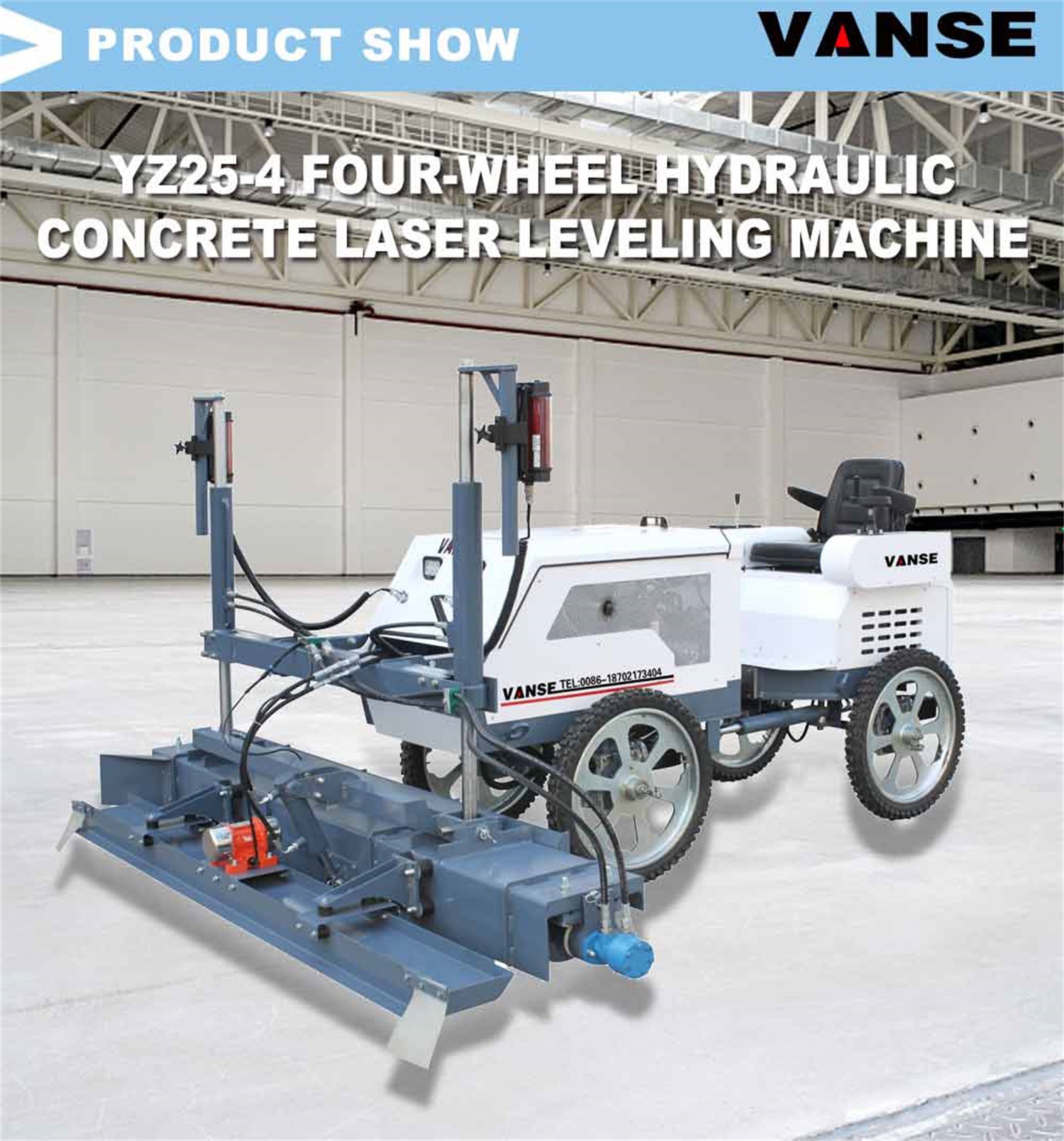
For now, more and more floor constructor using concrete laser leveling to do the work, because concrete laser leveling contact materials are not the same, leading to maintenance methods of the machine is not the same, so we must pay attention to the details in use, after the completion of the work to do well on the machine maintenance work, here we give details about the concrete leveling machine maintenance knowledge.
1. Avoid impurities. For concrete laser leveling working in harsh environment and complex condition places, the first thing is to use high quality, supporting components and lubricating oil and grease, the source block harmful impurities; Second, we should do a good job in the mechanical protection of the work site, to ensure that the corresponding institutions can work normally, and prevent various impurities into the machinery. When mechanical failure occurs, try to go to the regular repair plant to repair it. When repairing in the construction site, the protective measures should be done to prevent the change of the parts from the site to be contaminated by the dust and other impurities before entering the machine.
2. Applicable temperature. During the use of concrete laser leveling, we must prevent overload operation at low temperature, ensure normal operation at low speed preheating stage, and make the machine run or work after the specified temperature. Do not neglect its important role because there is no problem at that time. To prevent machinery from running at high temperature, we should check the values on various thermometers regularly during mechanical operation, find the problem and stopped immediately, check and find out the trouble and eliminate it in time.
3. Corrosion protection. During operation, management and operation personnel should take effective measures according to the local weather and air pollution at that time, so as to reduce the influence of chemical corrosion on machinery. The key is to prevent chemical invasion of rainwater and air from invasion to machinery.
4. Timely maintenance. There will be a variety of failures in the use of the concrete leveling machine. In these failures, the effects of some failures on mechanical equipment may be very small, some are more serious, and even cause casualties. We should try to ensure that the mechanical load is uniformly increased and reduced, so that the machinery can be in a relatively gentle load change. Specifically, it is to increase and decrease the throttle more evenly, to avoid the engine and the working device will suddenly fluctuate dramatically.
If you have any further question, just contact us, I’m pretty sure that your any questions will get a proper respond. VANSE focus on concrete laser leveling.
Thanks to All the Friends Who Support and Trust Shandong Vanse Machinery Technology Co., Ltd.
If you want to know more about Shandong Vanse Machinery Technology Co., Ltd. or have any questions, please feel free to contact us:
Our Factory
Shandong Vanse Machinery Technology Co., Ltd.








Share this article

About the Author: Shandong Vanse Machinery Technology Co., Ltd.
Shandong Vanse Machinery Technology Co., Ltd. is a high-tech manufacturer specializing in concrete construction machinery, including laser screeds and related equipment. The company integrates R&D, production, and global sales, with products exported to over 60 countries and widely used in infrastructure projects worldwide.
Previous Post
Next Post
Related Articles
You Might Also Like
The secret of Shandong Vanse laser leveling machine’s hot sales
According to analysis, in 2017, Shandong Vanse Machinery's concrete laser leveling machine sales market share was four layers, and the turnover ratio was three layers, which is unmatched by any other leveling machine at present. What is the reason why the concrete laser leveling machine is so popular with customers? Today we will analyze the "tellable" secret behind the hot sales of laser leveling machines. Concrete laser leveling machine is used for large-area floor concrete construction. The ground elevation is easy to control and the ground flatness error is extremely small. Because of the use of laser point-to-point, the entire floor only needs 1-2 accurate point elevations, which can reduce the error caused by multiple accurate points; Laser transmitters are arranged independently, and the floor elevation is always controlled by the plane formed by the rotating light beam emitted by the laser transmitter. As long as the laser transmitter is not disturbed, no matter where the concrete laser leveling machine goes, it can ensure that the overall elevation of the paved ground is not affected, so that large-area one-time paving can be achieved in floor construction, and the levelness and flatness of the entire floor can be guaranteed; Concrete laser leveling machine uses laser measurement and control system to control the elevation in real time. There is no need to pull control lines for leveling, and there is no need to support side templates in the middle to control the ground elevation, thus avoiding the elevation error caused by the vibration of the template (channel steel) during the construction process, and also reducing the elevation error caused by traditional manual block support. Concrete laser leveling machine, applied to floor construction, is very easy to achieve one-time overall paving of large-area floor. This paving technology can be divided into blocks as needed, and the whole floor can be completed continuously (see Figure 7 for block construction diagram), making the ground integrity better, which is impossible to achieve with traditional construction technology. Traditional construction technology, one day of formwork and one day of concrete pouring, can only be skipped one by one, which has great limitations, cannot be operated continuously, and has poor integrity, which easily causes cumulative errors in construction joints. When leveling the concrete, the concrete laser leveling machine is always in a uniform speed construction state, with a high-frequency vibrator of 4000 times per minute, so that the vibration plate of the leveling head produces uniform high-frequency vibration, making the concrete floor more dense and uniform. Concrete laser leveling machine is used in large-area floor construction, and the operation efficiency is greatly improved. A construction team of about 6 workers can complete 300 square meters of paving work per hour, and an average of 2500-3500 square meters can be completed in a single shift. It is particularly suitable for projects with tight schedule requirements, large paving areas, and high quality requirements. In large-area floor construction, the number of workers in the traditional manual construction team is about 15, and the workload completed in a single shift is about 700 square meters. Concrete laser leveling machine is a hand-held type that can be operated. It is used in concrete floor construction, which changes heavy physical labor into mechanical paving, vibration, leveling, slurry lifting, and plastering, which greatly reduces the number of operators and greatly reduces labor intensity. The realization of large-area one-time paving construction makes it unnecessary to support the formwork in the middle of the block. While reducing the formwork and channel steel, it also further reduces the construction process and speeds up the construction progress. Concrete laser leveling machine is used in large-area floor construction. While reducing construction joints, it can also effectively solve the problems of hollowing, peeling, cracking and inequality on the ground, greatly reducing the later maintenance cost of the floor. Shandong Vanse Machinery Co., Ltd. has always been committed to the principle of "taking customer interests as the premise, leading in technology, operating with integrity, and creating a well-known brand". It has been highly recognized and praised by customers. The company has been awarded many honorary titles such as contract-abiding and credit-worthy unit and high-tech enterprise. If you need laser leveling machines, please visit our company for negotiation.How does a concrete laser leveling accurately control the thickness and amount of concrete?
The concrete laser leveling machine accurately controls the thickness and amount of concrete in a variety of ways, thereby improving construction quality and reducing material waste. The following are the main methods for precise control of the thickness and amount of concrete laser leveling: 1. Laser positioning and control: The concrete laser leveling machine is equipped with advanced laser technology and sensor system, which can achieve high-precision positioning and measurement. Through the laser transmitter and receiver, the equipment can form a laser beam in the construction area, and monitor and control the height and level of the laser beam in real time through sensors. In this way, the equipment can accurately control the thickness of concrete paving to ensure the flatness and compactness of the floor. 2. Automatic leveling function: The concrete laser leveling machine has an automatic leveling function, which can automatically adjust the height of the equipment according to the preset elevation, thereby controlling the thickness of the concrete paving. Before construction, the operator can set the elevation according to the design drawings, and the equipment will automatically adjust the walking trajectory and concrete paving thickness to ensure that the design requirements are met. 3. Real-time thickness monitoring: The concrete laser leveling machine is equipped with a real-time thickness monitoring system, which can monitor the concrete paving thickness in real time and make adjustments. Through sensors and control systems, the equipment can measure the thickness of the concrete in real time and provide feedback to the operator. If it is found that the thickness does not meet the requirements, the operator can make timely adjustments to ensure construction quality. 4. Material usage calculation and control: Concrete laser leveling machines are usually equipped with a material usage control system, which can calculate the required material usage based on the construction area and concrete ratio. Operators can control the amount of concrete mixed and delivered based on the calculations, allowing precise control of the amount of material used. At the same time, the equipment can also adjust the amount of materials in real time according to the actual construction conditions to avoid waste and shortages. 5. Automated control and adjustment: Concrete laser leveling machines are usually equipped with an automated control system that can automatically adjust the operating status of the equipment according to preset parameters. For example, the equipment can automatically adjust the vibration time and speed based on factors such as the initial and final setting time of the concrete and the ambient temperature to ensure that the concrete is fully dense and does not produce cracks. In addition, the equipment can automatically adjust the walking trajectory and speed according to the actual construction conditions to improve construction efficiency and quality. 6. Cooperate with manual inspection and adjustment: Although the concrete laser leveling machine has a high degree of automation and precise control capabilities, it still requires manual inspection and adjustment. During the construction process, operators should regularly test the thickness, flatness and compactness of the concrete, and make timely adjustments and treatments if problems are found. Through the combination of manual inspection and automatic control, the quality of concrete construction can be better ensured. 7. Equipment maintenance and calibration: In order to maintain the precise control capability of the concrete laser leveling machine, regular maintenance and calibration are required. Equipment should be inspected and cleaned regularly to ensure that sensors, lasers and control systems are in good working order. At the same time, various parameters of the equipment should be calibrated regularly to ensure that the measurement and control accuracy of the equipment meets the requirements. 8. Training and experience accumulation: Operating a concrete laser leveling requires a certain level of skill and experience accumulation. Operators should receive professional training, be familiar with the performance and working principles of the equipment, and master the correct operating methods and parameter settings. At the same time, operators should continue to accumulate experience through practice, make corresponding adjustments and treatments according to different construction conditions and requirements, and improve construction quality and efficiency. To sum up, the concrete laser leveling machine accurately controls the thickness and amount of concrete through a variety of methods, including laser positioning and control, automatic leveling function, real-time thickness monitoring, material amount calculation and control, automated control and adjustment, and coordination. Manual inspection and adjustment, equipment maintenance and calibration, etc. Through the comprehensive application of these methods, the quality and efficiency of concrete construction can be greatly improved, and material waste and labor costs can be reduced. At the same time, it is also necessary to pay attention to the skill training and practical experience accumulation of operators to ensure full utilization and optimal performance principles of the equipment.Technical Parameters And Performance Indicators Of Concrete Laser Leveling Machine
Technical parameters and performance indicators of concrete laser leveling machine 1. Equipment overview Concrete laser leveling machine, as an advanced ground leveling equipment, integrates computer control technology, laser measurement and control technology, server drive technology, electronic measurement and sensor technology. Its high leveling efficiency and precision make it occupy a place in the modern construction industry. This article will provide a detailed analysis of the technical parameters and performance indicators of concrete laser leveling machines. 2. Detailed explanation of technical parameters The technical parameters of the concrete laser leveling mainly cover the following aspects: ★Engine parameters: The engine of the equipment is its power source, and its power, speed and other parameters directly affect the operating efficiency of the leveler. Generally speaking, concrete laser leveling machines use high-performance, low-fuel consumption diesel engines to ensure continuous and stable operation of the equipment. ★Laser measurement and control parameters: The laser measurement and control system is the core component of the leveling machine, and its accuracy and stability directly affect the leveling quality. Parameters such as the power, wavelength, and beam stability of the laser transmitter, as well as parameters such as the sensitivity and resolution of the laser receiver, are all important indicators for evaluating the performance of the laser measurement and control system. ★Leveling parameters: Leveling parameters mainly include the width, height, angle, etc. of the scraper. These parameters determine the adaptability of the leveling machine to the ground and the leveling effect. The width of the scraper should be adapted to construction sites of different widths, and the height and angle adjustment can be fine-tuned according to the undulations and leveling requirements of the ground. ★Hydraulic system parameters: The hydraulic system provides power for the movement of the leveler, lifting and lowering of the scraper, etc. Parameters such as the power, flow, and pressure of the hydraulic pump, as well as parameters such as the stroke and speed of the hydraulic cylinder, are all important indicators for evaluating the performance of the hydraulic system. 3. Performance indicator analysis The performance indicators of the concrete laser leveling can mainly be analyzed from the following aspects: ★Construction efficiency: Construction efficiency is one of the important indicators to measure the performance of the leveler. High-efficiency leveling machines can complete large-area leveling work in a short period of time, thereby improving construction efficiency and reducing construction costs. ★Leveling accuracy: Leveling accuracy is the core indicator for evaluating the performance of a leveling machine. High-precision leveling machines can ensure that the smoothness and flatness of the ground meet design requirements and improve construction quality. ★Adaptability: The adaptability of the leveler to different ground surfaces is also one of its performance indicators. The highly adaptable leveling machine can cope with various complex ground conditions, such as foundation heights and fluctuations, concrete initial setting time, etc., ensuring the leveling quality. ★Stability: The stability of the equipment is the key to ensuring continued stable operation. A leveler with good stability can reduce the failure rate and increase the service life of the equipment. 4. Overview of application areas Concrete laser leveling machines are widely used in engineering construction fields such as roads, bridges, airports, and storage facilities. In these fields, concrete laser leveling machines have become an indispensable tool in the construction process due to their efficient and precise working methods. Especially in large-area floor construction, concrete laser levelings can greatly improve construction efficiency and quality, and reduce labor costs and time costs. 5. Summary of advantages and characteristics The advantages and characteristics of concrete laser leveling machines are mainly reflected in the following aspects: ★High construction efficiency: Using advanced laser measurement and control technology and server driving technology can greatly improve construction efficiency and reduce construction time. ★High leveling accuracy: Th e laser measurement and control system can accurately control the elevation and flatness of the ground to ensure construction quality. ★Strong adaptability: The leveling machine can adapt to various complex ground conditions, such as foundation heights, initial setting time of concrete, etc. ★Easy to operate: The equipment adopts an automated control system, which is simple to operate and easy to master. ★Energy saving and environmental protection: Using advanced laser technology, it can reduce energy consumption and noise pollution, and has less impact on the environment. 6. Market prospects As the modern construction industry continues to develop, the demand for ground leveling equipment is also increasing. As an advanced floor leveling equipment, concrete laser leveling machine has been widely used in the construction industry due to its advantages such as high efficiency, accuracy and environmental protection. With the continuous advancement of technology and the continuous expansion of the market, the market prospects of concrete laser leveling machines are very broad. In the future, with the continuous development of intelligent and automated technology, concrete laser levelings will be more intelligent, efficient and environmentally friendly, providing more powerful support for the development of the construction industry. 7. Maintenance and maintenance suggestions In order to ensure the long-term stable operation and extend the service life of the concrete laser leveling, it is recommended to perform the following maintenance and upkeep work regularly: ★Engine maintenance: Change the engine oil regularly and clean the oil filter to ensure that the engine lubrication system is clean and effective. ★Laser measurement and control system maintenance: Regularly check the working status of the laser transmitter and receiver to ensure their normal operation. Clean the laser lens and reflective surface and keep them clean and dry. ★Hydraulic system maintenance: Regularly check the oil level and quality of hydraulic oil to ensure the normal operation of the hydraulic system. Clean the hydraulic tank and filter to prevent impurities and moisture from entering the hydraulic system. ★Cleaning of the entire machine: Re gularly clean dust, oil and other debris on the surface and inside of the equipment to keep the equipment clean and tidy. 8. Conclusion As an advanced ground leveling equipment, concrete laser leveling machine has been widely used in the construction industry. Its advantages such as high efficiency, precision and environmental protection make it an indispensable and important equipment in modern building construction. With the continuous advancement of technology and the expansion of the market, concrete laser levelings will play a more important role in the future construction industry.