Technical Knowledge
Concrete construction process and control program
The concrete construction process should be familiar to everyone.
In general, the concrete construction process is the preparation (production) of concrete–concrete transportation (transport)–concrete pouring (concrete)–concrete maintenance (conservation), In this chapter, we mainly share the three parts of the concrete pouring process, which is divided into the foundation concrete pouring construction process, the wall column concrete construction process.
And the beam and slab concrete construction process, so that everyone can understand the concrete parts of these important parts in detail. Pouring construction technology and process, in order to master the concrete construction rhythm in the actual concrete pouring process, so that the real-time control in the process, there are inspections and acceptances have been rectified, to ensure the concrete pouring molding effect and beauty, to achieve excellent quality!
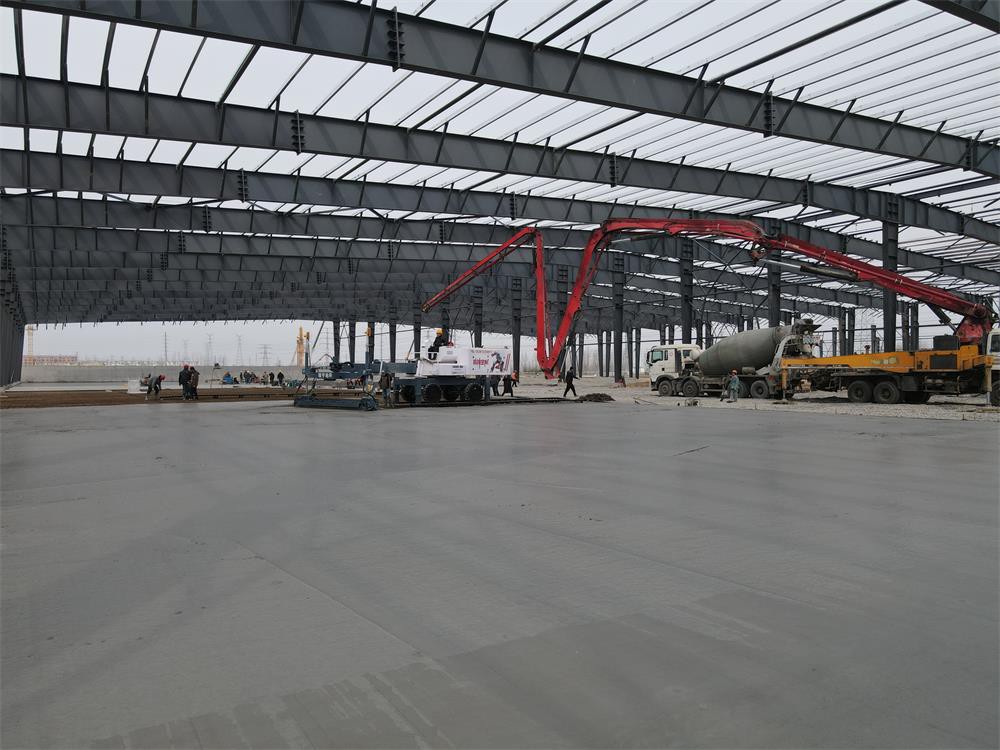
Section 1: Foundation pouring construction technology
In the following chapters, we will introduce the concrete materials and the matters needing attention during transportation. This section will directly introduce the construction process of the foundation rafting. Before the official start, everyone can think about concrete construction from preparation to pouring. Complete, what preparations do we need, what conditions should be provided before pouring, what work needs to be done when pouring, what needs to be done after the pouring is completed, please remember one magic weapon, that is, the man-made method of the master key Ring", as long as the factors are sorted out in order from these factors, it will be ok, then take a look at the basic rafting construction process.
First of all, let's talk about the concrete project quality control program. The basic main line of each project is to use this control program. You can optimize this program according to your own project, better prepare for the event, process control, and follow-up afterwards. Perfect, better to improve the quality of cast-in-place concrete.
Section 2: Construction Deployment
The foundation concrete is made of commodity ready-mixed concrete. According to the construction process and construction schedule, the concrete pouring should be arranged as much as possible during the day. If the concrete pouring amount is large, the construction can be divided into two shifts if the construction can not be completed during the day and the construction joint cannot be left. Class 12h, relevant professional leaders and construction personnel follow the class operation, responsible for inspection, and at the same time do a good job in coordination. (There is no extension of the night construction to disturb the people)
Whether the foundation concrete is cast by the day pump or the ground pump is used together, and the specific conditions are determined according to the actual conditions of the project and the construction period requirements.
The contents of the construction preparation will be shared in the next article.
Thanks to All the Friends Who Support and Trust Shandong Vanse Machinery Technology Co., Ltd.
If you want to know more about Shandong Vanse Machinery Technology Co., Ltd. or have any questions, please feel free to contact us:
Our Factory
Shandong Vanse Machinery Technology Co., Ltd.








Share this article

About the Author: Shandong Vanse Machinery Technology Co., Ltd.
Shandong Vanse Machinery Technology Co., Ltd. is a high-tech manufacturer specializing in concrete construction machinery, including laser screeds and related equipment. The company integrates R&D, production, and global sales, with products exported to over 60 countries and widely used in infrastructure projects worldwide.
Previous Post
Next Post
Related Articles
You Might Also Like
Large area floor laser leveling machine leveling construction method
•◆•◀ Foreword ▶•◆• With the rapid development of the construction industry, more and more attention has been paid to the flatness and construction quality of the floor. Traditional floor leveling methods, such as using hand tools such as scrapers and trowels, are not only inefficient but also difficult to ensure construction quality. In recent years, the emergence of laser leveling machines has brought revolutionary changes to floor leveling construction. This article will introduce in detail the leveling construction methods of large-area floor laser leveling machines, including its construction principles, advantages, and specific construction. Steps and precautions, etc. •◆•◀ Construction Principles ▶•◆• The large-area floor laser leveling machine uses the principle of laser ranging to emit a laser beam through a laser transmitter installed on the equipment. The laser beam is reflected by a reflector and then projected onto the ground to be leveled. After receiving the laser signal returned by the laser receiver, the laser receiver transmits the data to the control system. The control system adjusts the height and position of the leveler to the plate based on the received data, thereby achieving precise leveling of the floor. •◆•◀ Construction advantages of laser leveling machine ▶•◆• 1. High efficiency: The laser leveling machine can operate continuously, greatly shortening the construction period. 2. High precision: The laser leveling machine can ensure that the flatness of the floor meets high precision requirements and reduces the workload of post-processing. 3. Stable construction quality: The laser leveling machine reduces the impact of human factors on construction quality through an automated control system. 4. Wide scope of application: Laser leveling machine is suitable for various types of floor leveling operations, such as concrete, cement mortar, etc. •◆•◀ Specific construction steps ▶•◆• 1. Preparation before construction (1) Clean the construction area to ensure that there is no debris or water on the ground. (2) Check whether all equipment of the laser leveling machine is intact and ensure that the equipment can operate normally. (3) According to the design requirements, mark a horizontal line on the ground for reference in subsequent construction. 2.Construction process (1) Start the laser leveling machine and adjust the position and angle of the laser transmitter to ensure that the laser beam can be accurately projected onto the ground to be leveled. (2) Adjust the height and position of the scraper of the leveler to maintain an appropriate distance and angle from the ground. (3) Turn on the walking system of the leveling machine to make the leveling machine walk along the predetermined path. During walking, the laser receiver will continuously receive laser signals reflected from the ground and transmit the data to the control system. The control system adjusts the height and position of the scraper in real time based on the received data, thereby achieving precise leveling of the floor. (4) During the leveling process, attention should be paid to the leveling effect and the height and angle of the scraper should be adjusted in time to ensure the leveling quality. (5) After leveling is completed, turn off the laser leveling machine and clean the construction site to ensure that the construction area is clean and tidy. •◆•◀ Precautions ▶•◆• 1. During the construction process, the stability of the laser leveler should be ensured to avoid equipment shaking that would affect the leveling quality. 2. When adjusting the height and angle of the scraper, fine-tuning should be made according to the actual situation to avoid excessive adjustments that may cause the ground to appear wavy or uneven. 3. During the construction process, attention should be paid to observing the signal reception of the laser receiver to ensure that the laser signal can be accurately transmitted to the control system. 4. After leveling is completed, the construction site should be cleaned up in time to avoid damage to the floor caused by debris or water accumulation. •◆•◀ Conclusion ▶•◆• The leveling construction method of large-area floor laser leveling machine is an efficient and accurate construction method, which can greatly improve the leveling quality and construction efficiency of the floor. During the actual construction process, the construction unit should strictly follow the construction steps, pay attention to observing the construction effect and adjusting equipment parameters to ensure stable and reliable construction quality. At the same time, construction units should also strengthen safety management and environmental awareness at the construction site to ensure the safety and environmental protection of the construction process. With the continuous advancement of science and technology and the continuous improvement of building construction requirements, it is believed that laser leveling machines will play a more important role in future floor leveling construction.Laser leveling machine components
This is the core component of the laser leveling machine, responsible for generating high-quality laser beams. Its quality directly affects the working effect and stability of the leveling machine.Leak inspection: Carefully inspect the entire hydraulic system, including: This system is responsible for positioning the laser beam to the surface of the object to be measured for scanning and reflection. It is generally composed of rotating mirrors, oscillators, optical devices, etc. Its accuracy and speed have a direct impact on the leveling accuracy of the leveling machine. This is the part that performs leveling actions. It is usually made of wear-resistant materials and can complete paving, scraping, tamping and other actions. Its one-time forming width can reach 2.5 meters (depending on the machine itself, 2.5m, 3m, 4m, etc.). In addition, the rotating auger can discharge materials in forward and reverse directions, and it discharges materials in the forward direction during normal operation. It is mainly used for lifting and angle adjustment of the leveling mechanism. There are two self-aligning spherical bearings at the hinge of the lifting frame. The nut at the adjusting screw rod can adjust the angle of the leveling mechanism to adapt to different concrete. 2 high-pressure double-rod lifting cylinders are used to fix the leveling head and level it up and down. A front guard is installed in front to secure and protect electrical components such as lamps and aviation plugs. Used to fix the laser receiver. During the construction process, the bracket and the receiver cannot be moved at will, otherwise it will affect the leveling accuracy. This stand can be turned upside down during transportation to reduce the overall height. Including high-strength frame, power part, hydraulic system, electrical system, cleaning system, etc. The high-strength overall frame is the main frame of the laser leveling machine and fixes all components. During transportation, the safety lifting lugs on the frame can be used for lifting. The overall frame makes the machine safer and more reliable. In addition, there are also components such as a leveling feedback system. For more information about laser leveling machines, please speak to our sales manager. Note: The parameters provided in this document are for reference only and are not mandatory. Due to differences in technical characteristics between different brands and models of laser levelers, please consult the manufacturer for a suitable solution before actual operation. This reference document assumes no responsibility for any issues arising from failure to follow the manufacturer's instructions.Adjustment Strategies for Concrete Laser leveling Machines Under Different Concrete Slumps
The performance of a concrete laser leveling machine is highly dependent on the slump of the concrete. Slump not only reflects the flowability of the concrete but also directly affects the resistance of the leveling head and the density of the finished product. For concrete with different slumps, operators need to adjust the vibration frequency, paving height, machine travel speed, and the downward pressure of the auger to ensure the quality of the flooring. This mix is typically used for heavy-duty industrial floors or areas requiring high strength. The concrete is relatively "dry" and has poor flowability. Vibration frequency: Requires adjustment to a higher frequency (usually increasing by 10%–20%). Dry, stiff concrete requires stronger vibration to remove air bubbles and allow the slurry to float. Travel speed: Slow. A slow travel speed allows sufficient compaction time for the leveling head, preventing surface "tearing" or honeycomb pitting caused by excessively rapid movement. Auger adjustment: Increase downforce to allow the auger to cut deeper into the concrete, ensuring large aggregate particles are effectively leveled. Plow height: Slightly lower the slow height. Because dry concrete has less rebound after leveling, the initial leveling needs to be closer to the design elevation. This is the ideal working range for laser leveling, balancing pumpability and structural stability. Vibration Frequency: Maintain a medium standard frequency. Travel Speed: Medium speed. Observe the slurry thickness behind the leveling head to ensure a uniform "skin" (slurry layer) on the surface. Overlap: Maintain a standard 200mm–300mm overlap to eliminate seam marks between adjacent passes. Common in projects using high-efficiency water-reducing agents or with high pumping heights. The concrete is extremely fluid and may even exhibit segregation. Vibration Frequency: Adjust to a low frequency or reduce it appropriately. Excessive vibration can cause mortar and aggregate separation (segregation), resulting in a large amount of laitance and potential sandiness on the surface. Travel Speed: Can be appropriately increased. Prevent the machine from remaining stationary in one spot for extended periods, which could lead to excessive subsidence in that area. Auger Adjustment: Reduce the auger pressure or raise its position. High slump concrete is very mobile; the auger only needs to guide the flow slightly. Excessive agitation will disrupt the levelness. Scraper Height: Set the scraper height slightly above the design elevation (approximately 3mm–5mm) to compensate for the slight settling of the high-flowability concrete after compaction. Adjustment items Low slump (dry) High slump (thin) Vibration frequency ↑ High frequency (strong vibration compaction) ↓ Low frequency (prevents segregation) Travel speed ↓ Slow speed (fine grinding) ↑ Relatively fast speed (uniform spreading) Auger depth Deeper (forced material discharge) Relatively shallow (slight guidance) Elevation allowance Less (low rebound) More (significant settlement) Risk points Surface cracking, poor flatness Excessive slurry thickness, later peeling, slope loss On construction sites, the slump of concrete often fluctuates as the mixer trucks arrive. A skilled observer will closely follow the machine, monitoring the cream thickness behind the leveling head. If the cream thickness exceeds 5mm, the concrete is too thin; the speed should be increased or the vibration reduced. If the surface is dry and the aggregate is exposed, it is too dry; the walking speed should be immediately reduced and the vibration increased. Note: The parameters provided in this document are for reference only and are not mandatory. Due to differences in technical characteristics between different brands and models of laser levelers, please consult the manufacturer for a suitable solution before actual operation. This reference document assumes no responsibility for any issues arising from failure to follow the manufacturer's instructions.