Technical Knowledge
The reason why the laser leveling machine is efficient and fast


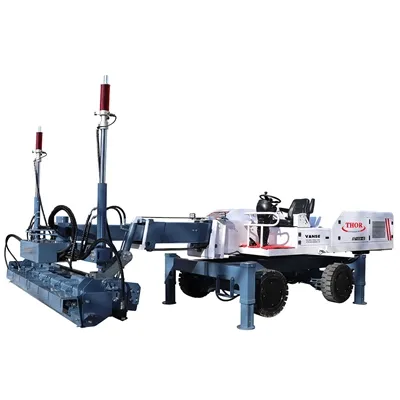
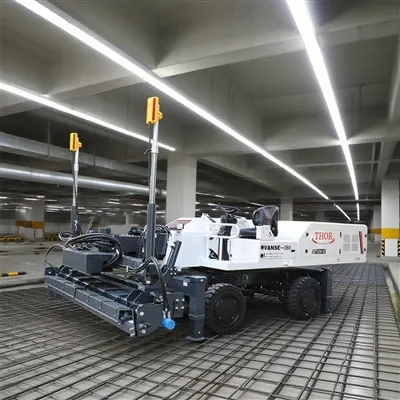
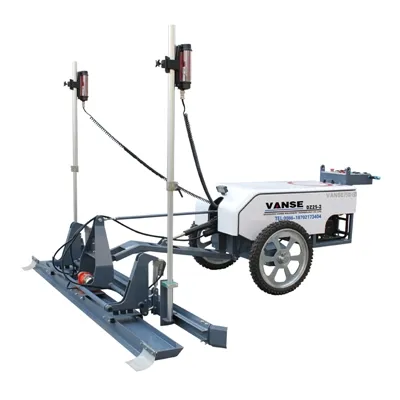
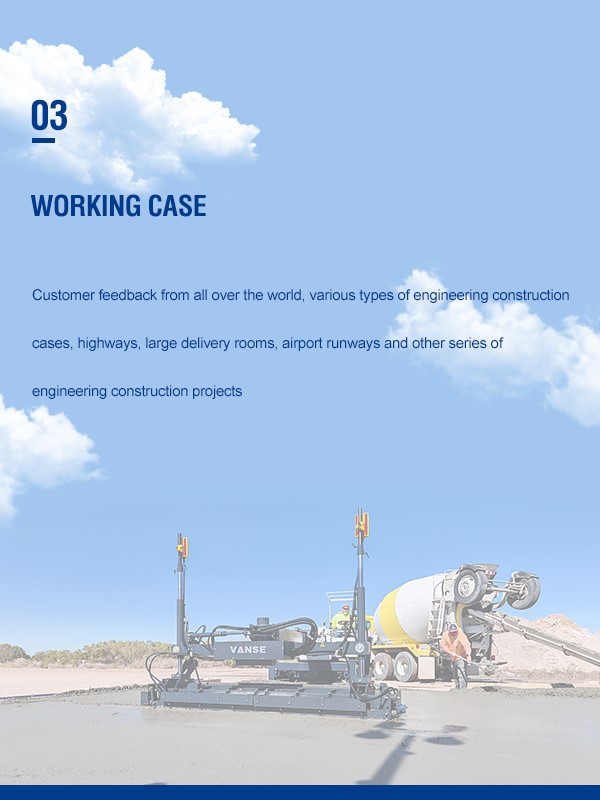
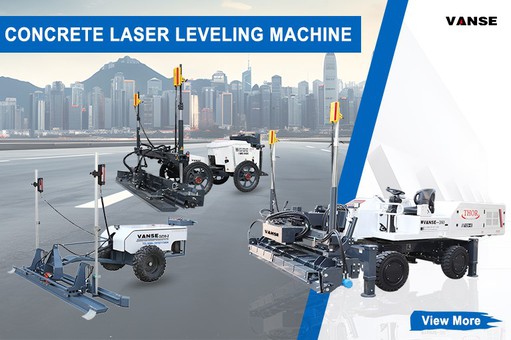
With the gradual improvement of the requirements of modern industrial floors, more and more floor construction equipment began to show their own power, and the laser leveling machine has been loved by the majority of users since it was launched, so it can be used in the leveling machine occupy a place in the market. Laser leveling machine manufacturers have always insisted on providing users with standardized equipment, and are committed to bringing more efficient construction to road construction. Laser leveling machine manufacturers will introduce some performance advantages of the leveling machine from the following, I hope you can understand.
The laser leveling machine laser measurement and control system produced by the laser leveling machine manufacturer automatically controls the elevation. The design elevation of the top surface of the floor with the laser system imported from the United States is automatically controlled by the laser machine computer, which can ensure a very high leveling of the ground, and can directly achieve leveling on the concrete layer. The leveling of the ground is not affected by the vibration of the construction formwork, and no formwork is needed in the middle , Reduce artificial material input, reduce construction procedures, and speed up construction progress. The laser leveling machine is super flat and super economical. Since the 1990s, since the continuous promotion of "clear water concrete" (building) floor and colored wear-resistant (building) floor, after more than ten years of exploration and continuous improvement, through the upgrading of laser leveling machine equipment, the process flow The integration is perfect, so that the "three super" floors in the current "flat" product series have reached the domestic level.
The laser leveling machine produced by the laser leveling machine manufacturer replaces the traditional manual leveling of concrete. The ground elevation can reach laser-level accuracy. Lasers are used to control the levelness and flatness of the ground, so as to achieve a super-flat floor in the sense. So how much is a laser leveling machine, you first understand the performance and then look at the price. The integral floor abandons the traditional method of separate construction of the concrete base and surface, thus eliminating the common quality problems of cracks and hollows caused by poor combination of the base and the surface, and is widely used in factories, warehouses, runways, docks and other projects more and more widely used. Using special leveling and polishing technology to process concrete into high-density and high-gloss floor, and naturally form a 3~5mm thick wear-resistant layer on the surface, without other chemical surface materials, meeting environmental protection requirements. The laser leveling machine is developed according to the increasing demand for ground quality such as strength, compactness, flatness, levelness, etc. of modern industrial plants, large shopping malls, warehouses and other large-area cement concrete floors.
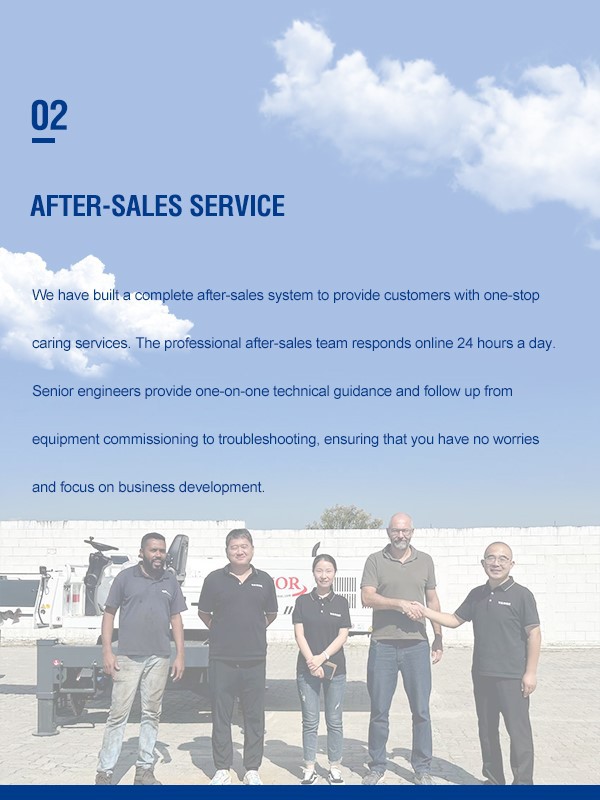
Laser leveling machine manufacturers specialize in the production of various types of leveling machines. The equipment produced is exquisite in craftsmanship, mature in technology, and stable in performance. We will provide customers with good after-sales service, allowing you to enjoy a relaxed and happy purchase process. Customers will use it later Problems encountered can be resolved in time to ensure the normal operation of the production line.
Thanks to All the Friends Who Support and Trust Shandong Vanse Machinery Technology Co., Ltd.
If you want to know more about Shandong Vanse Machinery Technology Co., Ltd. or have any questions, please feel free to contact us:
Our Factory
Shandong Vanse Machinery Technology Co., Ltd.
Share this article

About the Author: Shandong Vanse Machinery Technology Co., Ltd.
Shandong Vanse Machinery Technology Co., Ltd. is a high-tech manufacturer specializing in concrete construction machinery, including laser screeds and related equipment. The company integrates R&D, production, and global sales, with products exported to over 60 countries and widely used in infrastructure projects worldwide.
Previous Post
Next Post
Related Articles
You Might Also Like
Construction quality control and management of concrete laser leveling machine
The construction quality control and management of concrete laser leveling mainly involves the following aspects: 1. Equipment selection and calibration First of all, choosing a qualified concrete laser leveler is the basis for ensuring construction quality. It is necessary to ensure that the selected equipment can meet various requirements of construction, including accuracy, stability, durability, etc. After the equipment arrives at the construction site, it must be carefully unpacked and inspected to ensure that all parts are intact, and preliminary debugging and calibration must be carried out in accordance with the instructions. 2. Operator training Operating a concrete laser leveling requires professional skills and experience, so operators must be rigorously trained. The training content includes the basic principles of equipment, operating procedures, safety precautions, fault diagnosis and troubleshooting, etc. Only operators who have been trained and obtained certificates can perform actual operations. 3. Construction process quality control Pre-construction quality control: This includes inspection of the construction environment to ensure it is dry, ventilated and dust-free. At the same time, concrete raw materials must be strictly controlled to ensure that their quality meets construction requirements. Quality control during construction: This is mainly to control the operation process of the concrete laser leveling machine. Operators are required to strictly abide by operating procedures and carry out construction according to preset parameters. At the same time, a dedicated person must supervise the construction process to ensure correct operation. Post-construction quality control: After the construction is completed, the concrete surface should be inspected for quality, including surface flatness, smoothness, etc. Any areas that do not meet the requirements must be dealt with promptly and leveled again. 4. Acceptance standards Acceptance standards are an important basis for measuring construction quality. For concrete laser leveling machine construction, the acceptance criteria mainly include the following aspects: Concrete surface flatness: This is the most basic acceptance standard, which requires that the concrete surface has no obvious undulations and the overall flatness meets the design requirements. Concrete surface finish: Good finish can reduce friction on the concrete surface and improve performance. The concrete surface is required to be smooth and flawless during acceptance. Construction accuracy: For high-precision construction projects, the accuracy of the concrete laser leveler must meet the design requirements. During acceptance, the construction accuracy should be measured to see whether it meets the design standards. Equipment stability: The stability of the equipment must be checked during acceptance, including the operation stability and working status stability of the equipment. Equipment reliability: During acceptance, the reliability of the equipment should be checked to see whether the equipment is prone to failure and whether each component of the equipment can operate stably. Economy: Th e economy of using the concrete laser leveling is also an important acceptance criterion. Economical use mainly refers to whether the energy, material and other costs consumed by the equipment during the construction process are reasonable. During acceptance, the economics of the equipment should be evaluated to see whether it meets the requirements of economic benefits. Safety: During acceptance, the safety of the equipment must also be checked, including whether the safety protection measures of the equipment are complete and whether the operators have safety awareness. In addition, it should be ensured that the noise and vibration of the equipment are within an acceptable range and will not affect the surrounding environment and personnel. Environmental protection: The environmental performance of the equipment must also be considered during acceptance. Concrete laser levelings may produce pollution such as dust and noise during the construction process. Therefore, it is necessary to ensure that environmental factors are considered during the design process of the equipment to minimize environmental pollution. 5. Quality inspection and maintenance During and after the construction process, the concrete laser leveling machine should be regularly inspected and maintained for quality. Quality inspection mainly includes inspection of the equipment's operating status, working accuracy, concrete quality, etc. Maintenance mainly includes daily maintenance, regular inspection and repair of the equipment. 6. Recording and archiving During the construction process, various construction parameters, operating procedures, problems and solutions should be recorded. These records can provide a basis for acceptance and quality inspection, and are also an important reference for equipment maintenance and improvement. Records should be organized into files and properly preserved for subsequent review and reference. In summary, the construction quality control and management of concrete laser leveling machines need to be comprehensively considered and implemented from multiple aspects such as equipment selection, personnel training, construction process control, acceptance standard formulation, quality inspection and maintenance, and record archiving. Only in this way can the construction quality of the concrete laser leveling be ensured and the overall quality and efficiency of the project improved.Safety and environmental protection measures for concrete engineering construction
Concrete engineering construction needs to take into account both safety control and environmental protection governance, and both should run through the entire process of "construction preparation – process implementation – post-construction closure". Safety measures focus on preventing accidents such as collapses, falls from heights, and mechanical injuries, while environmental protection measures target pollution issues such as noise, dust, wastewater, and solid waste. The specific plans are as follows: Safety measures should revolve around the five elements of "people, machinery, materials, methods, and environment", and formulate control plans for high-risk points in key operation links (mixing, transportation, pouring, and curing). The core contents are as follows: The main risks of collapse come from formwork supports, deep foundation pits, and instability of concrete structures. It is necessary to control the entire chain from "design – erection – monitoring". Preliminary design: For high formwork (height ≥8m) and deep foundation pits (depth ≥5m), a specialized plan must be provided by a professional unit. The bearing capacity of the vertical rods, the spacing of the horizontal rods, and the strength of the support structure should be calculated. The plan can only be implemented after being approved by experts. Installation and control: Wooden pads or steel sections should be placed at the bottom of the support poles (to prevent foundation settlement). The ground clearance poles should be no more than 20cm from the ground, and the verticality deviation of the poles should be no more than 1/1000. The slope of the foundation pit should be laid out according to the plan (in soft soil areas, steel sheet piles and soil nail walls should be used for support). Over-digging or overloading is strictly prohibited (no materials should be piled up within 1.2 meters from the edge of the pit). Pouring and dismantling: Concrete pouring should follow the principle of "layering and symmetry", with the thickness of each layer not exceeding 30cm (for pumped concrete). It is strictly prohibited to pour on one side in a concentrated manner to prevent the support from being biased. Before the formwork is removed, the concrete strength needs to be tested (with test blocks under the same conditions). The beams and slabs can be removed only when they reach 75% of the designed strength and the cantilever components reach 100%. The removal sequence follows the principle of "remove the later supports first and then the later supports". Deformation monitoring: For high formwork and deep foundation pits, daily monitoring of settlement and displacement (using a total station or level) is conducted. The warning values are set as settlement ≥10mm and displacement ≥5mm. Work should be immediately halted for rectification once the warning is exceeded. Standardization of protective facilities: For high-altitude pouring platforms (such as floor slabs and beams), a 1.2-meter-high guardrail (with a crossbar spacing of no more than 60cm) is set up, an 18-cm-high toe board is installed at the bottom, and a close-mesh safety net (flame-retardant type, mesh density ≥2000 mesh / 100cm²) is hung on the outside. Elevator shafts and reserved openings shall be sealed with "tool type" (steel mesh + steel plate cover plate), and it is strictly prohibited to temporarily block them. Personnel operation norms: Workers engaged in high-altitude operations must wear "double-hook safety belts" and use them "high and low" (the hanging point should be higher than the working surface). It is strictly prohibited to walk on the edges of unprotected beams and slabs. The scaffold boards on the working layer should be fully laid, and the probe boards (extending more than 15cm beyond the crossbars) need to be fixed or removed. When performing cross-operation, a horizontal safety protection layer (such as a safety flat net) should be set in the middle, with a spacing of no more than 10 meters. Material management: The stacking volume of materials on the aerial platform should not exceed the load limit (controlled at 50% of the design value). Tools should be placed in dedicated tool bags, and it is strictly prohibited to throw waste materials. When a tower crane is transporting concrete hoppers, the hoppers need to be covered and a warning area (isolated by warning tape) should be set up below. Unrelated personnel are prohibited from entering. Mechanical safety control: Fixed protective covers should be installed on the transmission parts (gears, belts) of concrete mixers and vibration rods. The strength of the protective covers must be impact-resistant. Steel plates (with an area of ≥0.5 square meters) should be placed under the outriggers of the pump truck. Before operation, make sure the outriggers are stable. No one is allowed to stand within the rotation radius of the fabric rod. Equipment operators must hold special operation certificates to work. It is strictly prohibited to operate without a certificate or after drinking alcohol. When cleaning the mixer, it must be "powered off and locked" (with a warning sign), and supervised by a designated person. Temporary power safety: The construction site adopts the "three-phase five-wire system", and follows the principle Concrete construction is prone to generating four types of pollution: noise, dust, wastewater and solid waste. It is necessary to achieve environmental protection compliance through "source reduction, process control and end-of-pipe treatment". The specific measures are as follows: Noise reduction for equipment: The mixing plant is equipped with a sound insulation shed (using color steel plates + sound insulation cotton, with a thickness of ≥10cm), and low-noise vibration rods (noise ≤85dB) are selected. Mufflers are installed on the engines of pump trucks and tank trucks. Construction is prohibited at night (22:00-6:00). If construction is necessary, a night construction permit must be obtained and the surrounding residents must be informed in advance. Operation control: Concrete pouring should be concentrated during the day as much as possible, and vibration operations at night should be reduced. Sound insulation barriers (with a height of ≥2.5m, built with bricks or color steel sandwich panels) are set up at the boundary of the construction site, and the bottom of the barriers is sealed (to prevent noise leakage). After entering the site, the speed limit for transport vehicles should be no more than 5km/h and honking is prohibited (only in emergency situations). Dust prevention in mixing plants: Powder materials such as cement and fly ash are stored in closed tanks, and dust removal devices (such as pulse bag filters) are installed on the top of the tanks. The aggregate storage yard is equipped with a closed material shed (the shed roof is made of steel structure + color steel plate), and a sprinkler system is installed inside the shed (spray once every two hours, each time for 30 minutes) to prevent the aggregates from generating dust. Transportation and pouring dust prevention: When concrete is transported by tank trucks, dust covers should be added to the tank mouth (to prevent slurry from spilling), and the vehicle body should be regularly washed (tires and the vehicle body should be washed before leaving the factory to avoid driving with mud). The main roads at the construction site are hardened (using C20 concrete with a thickness of ≥15cm), and sprinklers or fog cannons are set up on both sides of the roads (spraying once per hour to suppress dust). When pouring concrete, lay colored tarpaulin under the pump truck's material rod to prevent the cement slurry from dripping and polluting the ground. Clean it up in time after the operation. Wastewater collection: The mixing plant is equipped with a sedimentation tank (three-stage sedimentation, with a total volume of ≥50m³). The wastewater used for rinsing the mixer and tank trucks is treated in the sedimentation tank and reused (for aggregate spraying and road watering). Direct discharge is strictly prohibited. Drainage ditches (with a slope of ≥3‰) are set up at the construction site to direct rainwater and pouring wastewater into sedimentation tanks, preventing sewage from overflowing. Treatment and reuse: The sedimentation tank is regularly dredged (once a month), and the dried sludge is disposed of together with construction waste. The water used for concrete curing is treated by spray curing (to avoid water accumulation), and the curing wastewater is recycled to the sedimentation tank through the drainage ditch, achieving "zero discharge". It is strictly prohibited to mix oil stains (such as waste oil from equipment maintenance) into wastewater. Oil stains must be collected separately and handed over to qualified units for treatment. Solid waste classification: Concrete waste residues (such as leftover concrete from pouring and waste from formwork cleaning) are collected separately. The usable parts (such as intact concrete blocks) can be crushed and used as roadbed fillers. The packaging bags (cement bags, admixture bags) are collected centrally and handed over to the waste recycling station for processing. Classified garbage bins (recyclable and non-recyclable) are set up for domestic waste, which are regularly removed by the sanitation department. Reduction measures: Accurately calculate the dosage before concrete mixing and reduce the remaining amount according to the principle of "mixing as needed". The formwork adopts recyclable steel formwork (replacing wooden formwork), reducing wood waste. During construction, optimize the pouring plan to avoid rework due to missed vibration and misalignment of platforms, and reduce the generation of waste residue. Education and training: Personnel entering the site must undergo dual training on "safety and environmental protection", and can only take up their posts after passing the assessment. Special operation personnel (mixers, scaffolders, electricians) need regular refresher training to master the latest safety regulations and environmental protection requirements. On-site inspection: Safety officers and environmental protection officers conduct joint daily inspections, focusing on checking the stability of supports, the integrity of protective facilities, noise and dust monitoring data, and the reuse of wastewater. Any issues found are immediately addressed with rectification notices and followed up for a closed loop. Emergency management: Develop special emergency plans for safety and environmental protection (such as collapse rescue and handling of excessive dust), equip with emergency supplies (such as first aid kits, fog cannons, sandbags), and organize drills every quarter to ensure rapid response to emergencies. Through the above measures, it is possible to achieve "zero safety accidents and zero environmental over-limit" in concrete engineering construction, taking into account both project quality and ecological protection. Note: The parameters provided in this document are for reference only and are not mandatory. Due to differences in technical characteristics between different brands and models of laser levelers, please consult the manufacturer for a suitable solution before actual operation. This reference document assumes no responsibility for any issues arising from failure to follow the manufacturer's instructions.Can self-leveling cement be used directly as a floor?
As a special concrete material, self-leveling cement has the characteristics of strong fluidity, high strength, low shrinkage and high density. It is often used for floor paving in industrial, commercial and residential buildings. In recent years, with the popularity of minimalist style and industrial style, cement self-leveling has gradually become a popular choice for interior decoration. So, can self-leveling cement be used directly as a floor? First of all, it needs to be clear that self-leveling cement is not a floor material in itself, but is used for leveling and laying the ground. However, in some cases, cement self-leveling can be used directly as a floor replacement. For example, in some industrial-style home decorations, self-leveling cement is used as the floor material, and is paired with furniture and decorations made of metal, wood and other materials to create a unique atmosphere. The color of self-leveling cement is relatively single. It is necessary to select the appropriate color before construction, or add an appropriate amount of pigment to the cement for color mixing. At the same time, it is necessary to find professional construction personnel to carry out the construction to ensure the construction quality and effect. As a hard floor material, self-leveling cement requires regular cleaning and maintenance. During use, care must be taken to avoid scratches and wear to avoid affecting the service life and aesthetics. Cement self-leveling is suitable for floor laying in some specific occasions, such as industry, commercial, residential, etc. For some occasions where softness and comfort are required, such as bedrooms, cement self-leveling may not be the best choice. Cement self-leveling can be used directly as a substitute for flooring, but you need to pay attention to issues such as color selection, construction, maintenance and upkeep. When choosing to use cement self-leveling as the floor, comprehensive considerations need to be made based on the actual situation to obtain the best decoration effect and user experience. Note: The parameters provided in this document are for reference only and are not mandatory. Due to differences in technical characteristics between different brands and models of laser levelers, please consult the manufacturer for a suitable solution before actual operation. This reference document assumes no responsibility for any issues arising from failure to follow the manufacturer's instructions.