Technical Knowledge
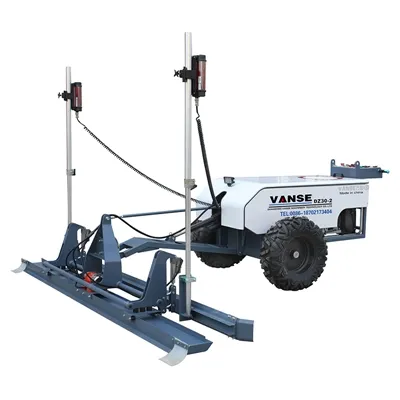
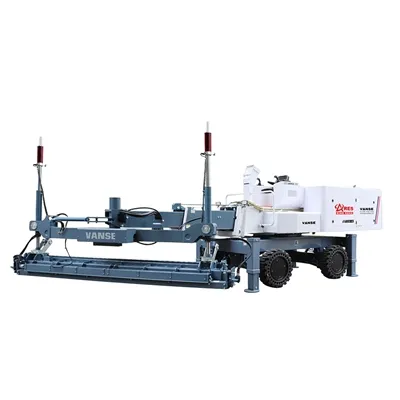
How does the concrete laser leveling machine operate?
Preparation work:
Grind the floor foundation to ensure that the surface is free of debris and dust, and rinse it with water; prepare the required materials and tools, such as cement, sand, interface agent, floor grinding discs, etc.
Interface agent application:
Apply interface agent on the treated floor to increase the adhesion of the floor surface.
Cement mortar laying:
Mix cement and sand according to a certain proportion and stir into cement mortar; lay the cement mortar evenly on the floor surface and use grinding discs for leveling.
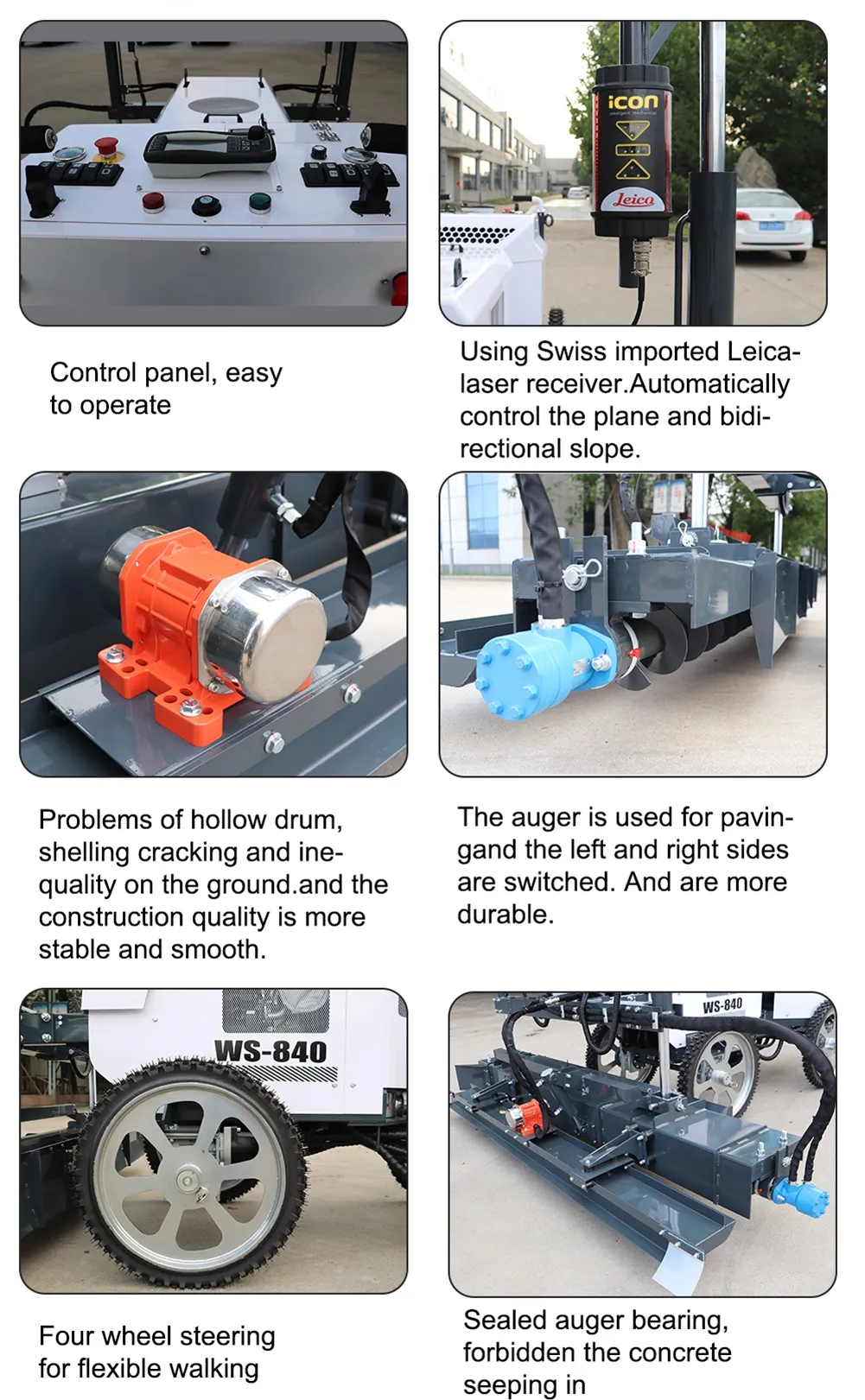
1. Place the laser transmitter and set the height of the laser receivers at both ends of the laser leveling machine head.
2. Drive the machine to the concrete working area where the material has been spread.
3. According to the operator's instructions and with reference to the constant benchmark provided by the laser transmitter, the leveling machine head automatically lowers.
4. Move the machine backward slowly and evenly to compact the concrete to the finished surface of the floor.
5. Drive the laser leveling machine to the right and repeat the above operations, paying attention to sufficient overlap of the previous leveling track.
6. When the laser leveling machine completes the construction of a wide width of the formwork from left to right (depending on the floor design, sufficient concrete transportation, etc., the width of the formwork can range from 20m to 50m), drive the machine to the Remove the concrete to the far left of the pouring area and repeat the process.
Ground polishing:
After the cement mortar is dry, use floor grinding discs to polish the ground until the required smoothness is achieved.
Clean the site:
Clean the construction site to ensure there is no residue and water accumulation.
Acceptance:
Check the floor leveling quality to ensure it meets the construction requirements.
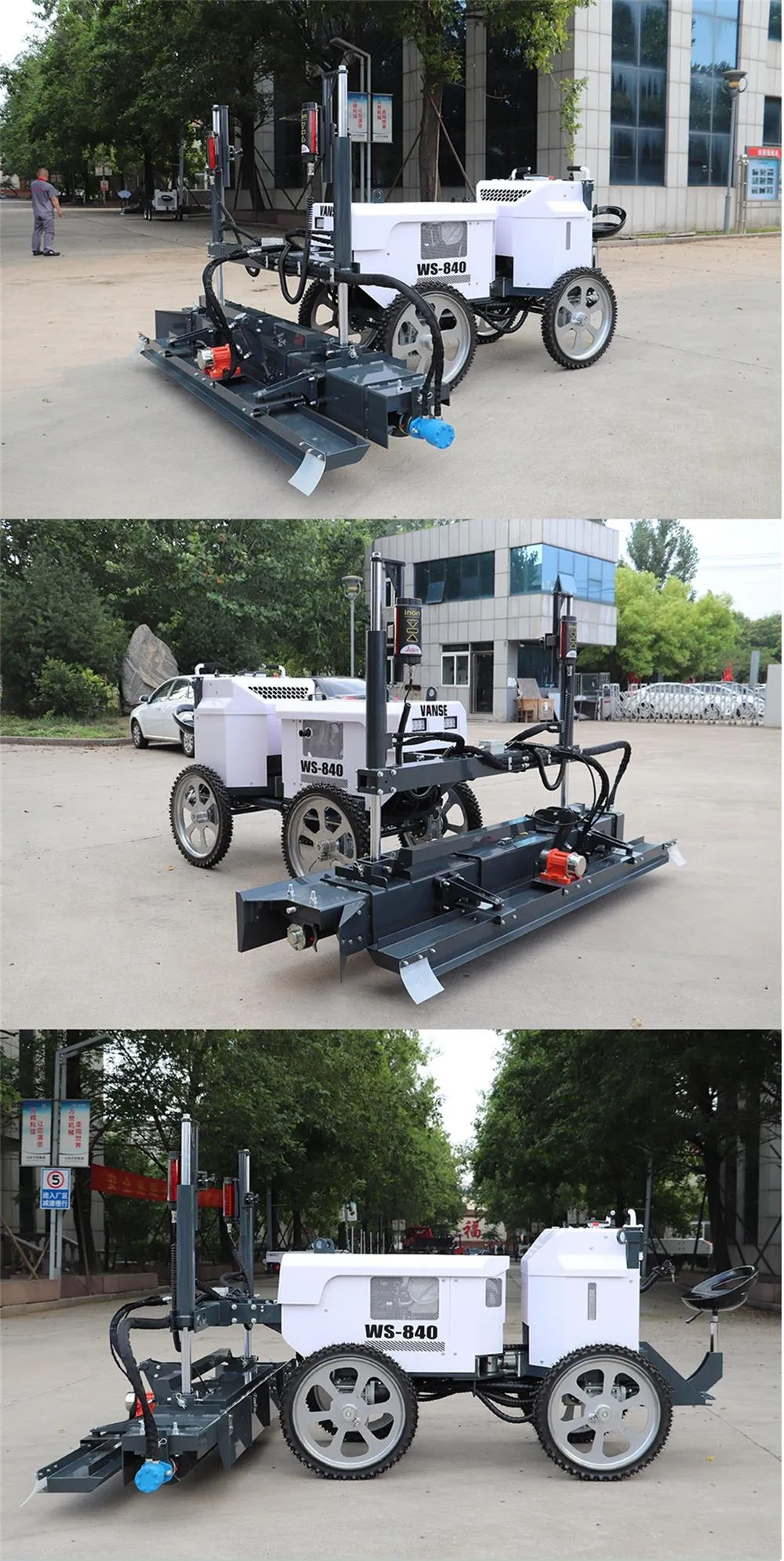
Thanks to All the Friends Who Support and Trust Shandong Vanse Machinery Technology Co., Ltd.
If you want to know more about Shandong Vanse Machinery Technology Co., Ltd. or have any questions, please feel free to contact us:
Our Factory
Shandong Vanse Machinery Technology Co., Ltd.








Share this article

About the Author: Shandong Vanse Machinery Technology Co., Ltd.
Shandong Vanse Machinery Technology Co., Ltd. is a high-tech manufacturer specializing in concrete construction machinery, including laser screeds and related equipment. The company integrates R&D, production, and global sales, with products exported to over 60 countries and widely used in infrastructure projects worldwide.
Previous Post
Next Post
Related Articles
You Might Also Like
How to ensure the construction effect and ground flatness of concrete laser leveling machine?
Ensuring the construction effect of the concrete laser leveling machine and the smoothness of the ground are key. Here are some suggestions and measures: 1. Choose the right equipment: Choose a concrete laser leveler with advanced technology and good reputation, which can better cope with various construction conditions and ensure smoothness. 2. Operator training: Provide professional training to operators to ensure that they are familiar with the performance, operating skills and safety procedures of the equipment. Trained operators can control equipment more accurately, improving construction results and smoothness. 3. Preparation work before construction: Before construction, the ground should be cleaned and leveled, foreign objects should be removed, potholes should be filled, and the ground should be smooth. In addition, checking the mix proportion and quality of concrete materials is also key to ensure that the performance of the concrete meets the construction requirements. 4. Adjust equipment parameters: According to construction conditions and requirements, reasonably adjust various parameters of the concrete laser leveling, such as working height, vibration frequency, paving speed, etc. Appropriate parameter settings can better control the paving and leveling of concrete, thereby improving smoothness. 5. Real-time monitoring and control: Use advanced sensors and control systems to monitor the flatness and height of the ground in real time, and adjust the equipment automatically or manually to ensure that the laying of concrete meets the design requirements. Real-time data feedback and analysis can help operators find and solve flatness problems in time. 6. Repeated leveling: For some special or demanding floors, repeated leveling can be carried out multiple times to further improve the flatness of the ground. After each leveling, quality inspection should be carried out and parts that do not meet the requirements should be re-leveled. 7. Strengthen quality control and acceptance: During the construction process, quality inspections should be carried out regularly, including the density, thickness and flatness of the concrete. After the construction is completed, strict acceptance procedures are carried out to ensure that the design requirements and flatness standards are met. If necessary, a third party can be entrusted to conduct quality testing and evaluation. 8. Maintenance and maintenance: Carry out regular maintenance and upkeep on the concrete laser leveling to ensure the normal operation and use of the equipment. Timely replacement of worn parts, inspection of key parts, and lubrication of key parts can extend the service life of equipment and improve construction results. 9. Technological innovation and application: Pay attention to industry trends and technological innovation results, and continuously introduce advanced processes and technologies. New concrete laser leveling machines and technologies can better improve construction efficiency and smoothness. 10. Experience summary and feedback: During the actual construction process, experience and lessons are constantly summarized and feedback is given to relevant departments or teams in a timely manner. Through experience sharing and improvement measures, we will continue to optimize construction processes and methods to improve flatness and construction effects. To sum up, ensuring the construction effect and ground flatness of the concrete laser leveling requires comprehensive consideration of many aspects. From equipment selection, personnel training to pre-construction preparation, real-time monitoring and control of parameter adjustment, quality control and acceptance, management needs to be strengthened. At the same time, measures such as technological innovation and application, experience summary and feedback are constantly optimized and improved to improve construction effects and flatness. Through these comprehensive measures, the construction quality and efficiency of concrete laser levelings can be effectively improved.What is the impact of wear-resistant emery floor cracks on use?
What is the impact of cracks in diamond wear-resistant floor on use? 1. Analysis of the causes of cracks Diamond wear-resistant floor cracks during use, and the causes are varied. First, the unreasonable water-cement ratio is an important cause of cracks. Too high a water-cement ratio will make the concrete moist and prone to cracks during drying and shrinkage; too low a water-cement ratio will make the concrete too dry, leading to internal stress accumulation, which will cause cracks. Secondly, insufficient concrete strength is also an important factor leading to cracks. If the concrete strength of the diamond floor is not enough to withstand the external force, cracks are likely to occur. In addition, improper temperature and humidity control during construction, non-standard construction technology and other factors will also affect the cracks in the diamond floor. 2. The impact of cracks on aesthetics The cracks in diamond wear-resistant floor will seriously affect its overall aesthetics. The presence of cracks destroys the integrity of the floor, making the originally flat and beautiful floor uneven and reducing the visual value. In a modern, high-standard building environment, aesthetics is an important evaluation indicator, so the presence of cracks will undoubtedly have a negative impact on the overall image of the building. 3. Changes in structural strength The appearance of cracks not only affects the appearance, but also affects the structural strength of the diamond wear-resistant floor. Cracks will destroy the continuity of the floor, making the originally complete concrete structure incomplete, thereby reducing the bearing capacity and stability of the floor. Over time, the cracks may continue to expand, causing the structural strength of the floor to further decrease, and in severe cases may even cause safety accidents. 4. Safety hazards in use The existence of cracks in diamond wear-resistant floors increases the safety hazards in use. Cracks may reduce the anti-slip performance of the floor and increase the risk of slipping during walking and working. Especially in humid or oily environments, cracks are more likely to accumulate moisture and impurities, further exacerbating the risk of slipping. In addition, cracks may also affect the flatness of the floor, causing vehicles or equipment to shake or be unstable when driving or parking, increasing the possibility of accidents. 5. Increased maintenance costs The appearance of cracks in diamond wear-resistant floors will also lead to an increase in maintenance costs. First, the cracks themselves need to be repaired and processed, which requires a certain amount of manpower, material and financial resources. Secondly, the presence of cracks may accelerate the damage and aging of the floor, making the floor need to be repaired and maintained more frequently. These additional maintenance costs not only increase the economic burden of the enterprise, but may also affect the normal operation and production efficiency of the enterprise. 6. Crack prevention measures For the occurrence of cracks in diamond wear-resistant floor, we should take a series of effective preventive measures. First of all, controlling the construction quality is the key. During the construction process, the operation should be carried out strictly in accordance with the prescribed requirements to ensure that the concrete quality is good and the pouring is uniform. Secondly, it is also important to control temperature changes. For places with large temperature changes, suitable materials can be selected or an insulation layer can be added to the ground to reduce the impact of temperature changes on the floor. In addition, the reasonable distribution of the load carried by the floor is also one of the important measures to prevent cracks. Overloading or long-term heavy pressure should be avoided. You can consider increasing the thickness of the floor or using more pressure-resistant materials. 7. Crack repair method When cracks appear in diamond wear-resistant floor, we need to take repair measures in time to prevent the cracks from expanding and the damage from worsening. Common crack repair methods include filler repair method, sealant repair method and adhesive repair method. The filler repair method can effectively fill the cracks and increase the overall strength of the floor by filling the cracks with special fillers. The sealant repair method repairs cracks by applying a special sealant, which has good crack resistance and waterproof properties. The adhesive repair method is suitable for larger and deeper crack repairs. The adhesive is made by mixing the adhesive to be made and fine sand to fill and repair the cracks. During the repair process, it is necessary to pay attention to cleaning the impurities and aging fillers in the cracks to ensure the adhesion between the repair material and the floor concrete. 8. Summary and Suggestions In summary, the cracks in the diamond wear-resistant floor have a negative impact on the use in many aspects. The cracks not only affect the aesthetics of the floor, but also reduce its structural strength and safety of use, and increase the maintenance cost. Therefore, we should attach great importance to the prevention and repair of diamond wear-resistant floor cracks. The risk of cracks can be reduced by strengthening construction quality control, optimizing material selection and construction technology, and taking effective preventive measures. At the same time, when cracks appear, appropriate repair methods should be taken in time to prevent the cracks from expanding and the damage from worsening. In addition, it is recommended to strengthen the daily maintenance and care of diamond wear-resistant floors. Regularly check the integrity of the floor, promptly discover and deal with potential problems; regularly clean the floor surface, remove oil and impurities, and maintain the cleanliness of the floor; for floors that have cracks, regularly observe the changes in the cracks, and take timely repair measures to prevent the cracks from expanding. Finally, it is hoped that relevant departments and enterprises can strengthen the research and development of diamond abrasive wear-resistant floors, and continuously launch more high-quality and durable floor materials and technologies to provide strong support for improving the quality and service life of floors. At the same time, it is also hoped that the majority of users can fully consider the performance and requirements of diamond abrasive wear-resistant floors when selecting and using them, and carry out construction and maintenance in accordance with specifications and requirements to ensure the safety, beauty and durability of the floor.Whether the laser leveling machine should be maintained in time after use
We found that when many users use the laser leveling machine, they often just know how to use it, but the follow-up maintenance and maintenance are basically not done. They don't know that maintenance and maintenance are actually a crucial step for the leveling machine, because the correct maintenance steps are actually an important prerequisite for ensuring the efficient use of the leveling machine. 1. After the work is completed, please use the arm lift button to manually lift the machine head, and then push it out of the construction site. It is forbidden to push the machine when the vibrating leveling part is in contact with the ground to avoid damage to the vibrating plate. 2. After the construction is completed, it is necessary to rinse the laser leveling machine with a high-pressure water gun in time (it is strictly forbidden to flush the water gun directly at the mesh part of the fuselage, so as to prevent water from entering the inside of the fuselage and causing short circuits, etc.). 3. The place where the laser leveling machine is placed must be kept dry, and debris and flammable and explosive materials must not be piled up around it. 4. The battery of the leveler also needs to be paid attention to. If it is not used together for a long time, make sure to remove all batteries from the host and receiver and store them properly. The transmitter comes with a rechargeable battery with a charging time of eight hours. 5. During the use of the laser leveling machine, please try to charge the battery after the battery is fully used. When charging, try to ensure that it is fully charged for 8 hours at a time. The charging time is recommended to be 12 hours, and it is advisable to charge it for 8 hours later. To avoid damage to the battery and the transmitter, please unplug the power plug in time after it is fully charged. 6. If the laser signal is lost during the construction process, the concrete laser leveling machine needs to be restarted, and the interval time needs to be more than ten seconds. 7. If the laser leveling machine is placed on a stable ground when it is not used for a long time, lubricating grease should be added to each bearing part once a week, and lubricating oil should also be added to each chain to maintain good lubrication. At the same time, attention should be paid to avoid sand and other sundries getting into the chain to prevent premature damage to the chain. Generally, at the end of one month or every construction period, the laser leveling machine should be inspected and maintained once. Always pay attention to the tightness of the V-belt and the chain, adjust it in time if it is too loose, and adjust the fastening bolts frequently to prevent loosening. About the maintenance method of the laser leveling machine, I will introduce you here. I believe that you have understood it clearly after reading it. If you want to know more about the leveling machine, you can continue to pay attention to our website. We will provide you with more information in this regard.