Technical Knowledge
Collection of misunderstandings in concrete laser leveling machine maintenance

Small mistake, big crisis! A collection of common mistakes made by beginners in laser leveling machine maintenance!!!
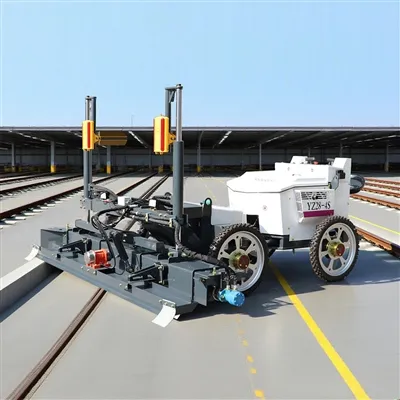
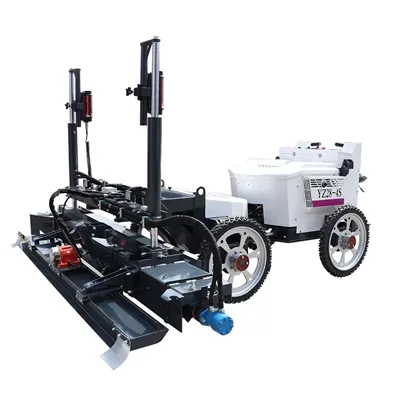
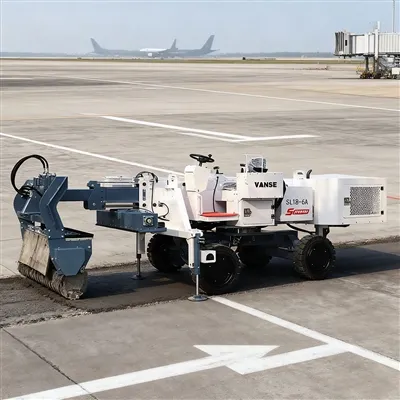
Compared with ordinary leveling machines, laser leveling machines undoubtedly have a series of operational advantages, but as the service life of the leveling machine continues to increase, one or another failure problem will inevitably occur. In order to ensure the normal operation of the laser leveling machine It is particularly important to master the maintenance skills of machine failures in time. In order to further improve the failure maintenance rate of the laser leveling machine and avoid unnecessary economic losses, this article simply lists a few small mistakes that are easy to make when maintaining the leveling machine equipment.
▼There are many phenomena of not paying attention to the detection of the fit clearance of parts
Diesel engine piston and cylinder liner fit clearance, piston ring "three gaps", valve stem and valve guide fit clearance, etc., all kinds of laser leveling machine models have strict requirements, and they should be measured when maintaining the laser leveling machine. Components that do not meet clearance requirements shall be adjusted or replaced.
▼▼The situation of improper bolt tightening method is more serious
Most of the fixing or connecting bolts of the laser leveling machine have tightening torque requirements, such as fuel injector fixing bolts, cylinder head bolts, connecting rod bolts, flywheel bolts, etc., some specify the tightening torque, some specify the tightening angle, and also specify tightening sequence. Some maintenance personnel use the afterburner rod at will and tighten it by feeling, resulting in a large difference in tightening torque. Therefore, when repairing the laser leveling machine, the bolts must be tightened according to the specified torque and sequence to prevent mechanical failure due to excessive tightening torque, too small or improper sequence.
▼▼▼Don't pay attention to the selection of bolts, and the phenomenon of confusion in the use of bolts is more prominent
When repairing the laser leveling machine, the phenomenon of using bolts indiscriminately is still quite prominent, because the performance and quality of the bolts do not meet the technical requirements, resulting in frequent mechanical failures after maintenance. However, in actual maintenance, most of them use ordinary nuts, which are very difficult to disassemble over time. Some technical requirements stipulate that they should be replaced after several times of disassembly and assembly. Because maintenance personnel do not understand these conditions, unqualified bolts are repeatedly used. It is also easy to cause mechanical failure or accidents. Therefore, when repairing the laser leveling machine, when the bolts are damaged or lost, the bolts that meet the requirements should be replaced in time, and the bolts should not be used indiscriminately.
In short, in order to quickly restore the normal operation of the laser leveling machine, ensure the normal progress of the project construction, and avoid unnecessary construction costs and troubles, it is also hoped that the relevant maintenance personnel must avoid the above-mentioned wrong behaviors in time, and strengthen the maintenance of the machine. Management and maintenance after repair.
Thanks to All the Friends Who Support and Trust Shandong Vanse Machinery Technology Co., Ltd.
If you want to know more about Shandong Vanse Machinery Technology Co., Ltd. or have any questions, please feel free to contact us:
Our Factory
Shandong Vanse Machinery Technology Co., Ltd.








Share this article

About the Author: Shandong Vanse Machinery Technology Co., Ltd.
Shandong Vanse Machinery Technology Co., Ltd. is a high-tech manufacturer specializing in concrete construction machinery, including laser screeds and related equipment. The company integrates R&D, production, and global sales, with products exported to over 60 countries and widely used in infrastructure projects worldwide.
Previous Post
Next Post
Related Articles
You Might Also Like
How to troubleshoot the laser signal loss fault of the concrete laser leveling machine? Can I solve it myself or do I need to find professional maintenance personnel?
If the laser signal of the concrete laser leveling is lost, in most cases, you can first check it step by step by yourself. If the problem still cannot be solved after checking, you need to contact professional maintenance personnel. The core troubleshooting logic is "gradually locating from the signal source to the receiving end", first eliminating external interference and simple connection issues, and then determining hardware faults. Troubleshooting in the following order can solve over 80% of signal loss problems without the need for professional tools: Check the status of the laser emitter Confirm whether the transmitter is powered on and whether the power indicator light is on normally (if it is not on, check whether the power cord is plugged in tightly and whether the power adapter is damaged). Observe whether the transmitter is placed horizontally and whether the bottom leveling bubble is in the center (tilting will cause signal deviation, and manual leveling needs to be re-done or the automatic leveling function should be enabled). Investigate signal occlusion and interference Check if there are any obstacles such as steel bars, construction tools, personnel, etc. between the transmitter and the receiving probe of the leveling machine, and clear the straight area between the two. Stay away from other strong light sources or electromagnetic equipment, such as electric welding machines, large frequency converters, and powerful flashlights, as these devices can interfere with the laser signal. Check the connection of the receiving system Check whether the laser receiving probe on the leveling machine is loose or displaced, and whether there is dust or concrete slurry on the probe lens. Wipe the lens with a clean soft cloth. Check the connection cable between the probe and the main unit, and confirm whether the plug is tightly inserted and whether the cable is damaged (if the cable is damaged, it can be temporarily wrapped with insulating tape, and needs to be replaced later). Restart the device and restore factory Settings Turn off the power of the transmitter and the leveler, wait for 1 to 2 minutes, and then restart them. Some temporary signal disorders can be resolved by restarting. If restarting is ineffective, refer to the equipment manual and restore the laser control system to its factory Settings (Note: Record the commonly used parameters before restoring). Test the signal receiving range Move the leveler to a position close to the transmitter (such as within 3 to 5 meters) and observe whether the signal can be received. If it can receive at close range but not at long range, it might be due to insufficient power of the transmitter or a decrease in the sensitivity of the probe. Further hardware testing is required. If the signal is still lost after completing the above troubleshooting, it indicates a hardware fault. It is not recommended to disassemble it by yourself. Please contact the maintenance personnel Transmitter failure: For instance, if the laser tube of the transmitter burns out or the internal circuit board is damaged, it will be manifested as no laser being emitted after power-on, or the laser intensity significantly weakening. The receiving probe is damaged: The internal photosensitive element of the probe is faulty. Even without obstruction, it cannot receive signals. The sensitivity of the probe needs to be tested with a dedicated instrument. Host control system failure: The communication module between the host and the receiving system is damaged, which is manifested as a direct error "signal interruption" after the equipment is turned on. Professional personnel are required to inspect the circuit or replace the module. Note: The parameters provided in this document are for reference only and are not mandatory. Due to differences in technical characteristics between different brands and models of laser levelers, please consult the manufacturer for a suitable solution before actual operation. This reference document assumes no responsibility for any issues arising from failure to follow the manufacturer's instructions.How to prevent flatness problems on concrete pavement?
To prevent the problem of flatness of concrete pavement, it is necessary to strictly control the quality in various links such as construction preparation, concrete pouring, pavement paving and subsequent maintenance. The specific measures are as follows: – Do a good job of roadbed treatment: The roadbed is the foundation of the road surface and must be guaranteed to be solid, stable and uniform. Before construction, the original ground should be carefully cleaned, weeds, tree roots, garbage and other debris should be removed, and the soft soil, silt and other unfavorable geological areas should be replaced and reinforced. Fill and compact the roadbed according to the design requirements, control the moisture content of the fill, fill and compact in layers, ensure that the compaction meets the standard, and avoid uneven settlement of the roadbed in the later stage and affect the flatness of the road surface. – Precise measurement and layout: Use high-precision measuring instruments, such as total stations, levels, etc., to accurately measure and lay out the center line, side line, elevation, etc. of the road surface. During the construction process, the measurement control points should be reviewed regularly to ensure the accuracy of the measurement data. At the same time, according to the measurement results, set the road template or the guide line of the paver to provide an accurate benchmark for road construction. – Check construction equipment: Ensure that the performance of construction equipment such as concrete mixing equipment, transport vehicles, pavers, and rollers is good and can operate normally. Carry out regular maintenance and maintenance of the equipment, and conduct a comprehensive inspection and commissioning of the equipment before construction. For example, check whether the screed of the paver is flat, whether the vibrating device is working properly, whether the roller wheel of the roller is evenly worn, etc., to ensure that the equipment operates stably during the construction process and avoid problems with the flatness of the road surface due to equipment failure. – Control concrete mix ratio: According to the road design requirements and construction conditions, determine the reasonable concrete mix ratio through experiments. Strictly control the quality and amount of raw materials such as cement, sand and gravel, water, and admixtures to ensure that the workability, strength, and durability of the concrete meet the requirements. In particular, attention should be paid to controlling the slump of concrete. The slump should not be too large or too small. If it is too large, it will easily cause concrete segregation and surface water seepage, affecting the smoothness of the road surface; if it is too small, it will make it difficult to spread and vibrate the concrete. – Ensure the quality of concrete mixing: Use a forced mixer to mix to ensure that the concrete is mixed evenly. Strictly control the mixing time. Determine the appropriate mixing time according to the mix ratio of concrete and the performance of the mixer. Generally, it should not be less than 90 seconds to ensure that the various components of the concrete are fully mixed to avoid uneven distribution of cement slurry and stone clumping, which will affect the working performance of the concrete and the smoothness of the road surface. – Reasonably arrange concrete transportation: Choose appropriate transportation vehicles to ensure that concrete does not segregate or leak during transportation. According to the distance and traffic conditions of the construction site, reasonably arrange the number of transportation vehicles and transportation routes to ensure that concrete can be supplied to the construction site in time, avoid waiting for too long during transportation, resulting in excessive slump loss, and affecting the quality of concrete spreading and vibration. – Standardize paving operation: When using a paver for concrete paving, adjust the working parameters of the paver, such as the elevation angle of the screed, vibration frequency, paving speed, etc. The paver should move forward at a uniform speed, and the speed is generally controlled at 2-3m/min to avoid too fast or too slow speed. During the paving process, a special person should be arranged to follow the machine and deal with the leakage and uneven parts on both sides of the paver in time. If manual paving is used, the paving thickness and surface flatness must be strictly controlled. Use tools such as scrapers and shovels to roughly flatten the concrete, and then vibrate it with a vibrating beam or a flat vibrator. – Strengthen vibration control: Vibration is a key link to ensure the density and flatness of concrete. According to the slump and paving thickness of the concrete, choose the appropriate vibration equipment and vibration method. Generally, a combination of an inserted vibrator and an attached vibrator is used for vibration. The inserted vibrator should be inserted vertically into the concrete, and the vibration points should be evenly distributed. The spacing should not be too large, generally about 1.5 times the radius of the vibrator. The vibration time is based on the concrete surface no longer having bubbles, slurry and sinking, generally 20-30 seconds. The attached vibrator should be installed on the formwork to make the concrete dense by vibrating the formwork. During the vibration process, the vibrator should be prevented from colliding with the formwork, steel bars and force transmission rods, so as not to affect the flatness and structural dimensions of the road surface. – Do a good job of finishing: After the concrete is vibrated, the finishing operation should be carried out in time. The finishing is generally done in two times. The first finishing is done after the concrete surface absorbs water. A wooden trowel is used to scrape the surface slurry, gravel, etc. to make the road surface flat. The second finishing is done before the concrete is initially set. An iron trowel is used for fine finishing to make the road surface flatter and smoother. At the same time, attention should be paid to controlling the strength and number of finishing to avoid excessive finishing, which may lead to excessive thickness of cement slurry on the surface, cracks, peeling, etc. – Standard roughening treatment: After finishing, roughening should be done in time to increase the roughness of the road surface and improve driving safety. The depth and spacing of roughening should be uniform. Generally, the depth of roughening is 2-3mm and the spacing is 2-4cm. Roughening can be done with tools such as a roughening machine or a broom. The roughening direction should be consistent with the driving direction of the road surface to ensure uniform and beautiful roughening quality. – Timely maintenance of the road surface: After the concrete road surface is poured, it should be maintained within 12 hours. The maintenance method can be to cover with moisturizing materials such as geotextiles and straw mats, and regularly sprinkle water to keep it moist, or spray curing agents for maintenance. The maintenance time is generally not less than 7 days. For high-strength concrete or concrete constructed in high temperature and dry environments, the maintenance time should be appropriately extended. During the maintenance period, it is necessary to ensure that the concrete surface is always moist to avoid shrinkage cracks caused by water loss in the concrete, which will affect the flatness of the road surface. – Strict traffic control: During the maintenance of the concrete pavement, strict traffic control must be carried out, and all vehicles and pedestrians are prohibited from passing on the road surface until the concrete reaches the design strength. Before the road surface is opened to traffic, the road surface must be inspected and accepted to ensure that the various indicators such as the flatness and strength of the road surface meet the design requirements. At the same time, obvious warning signs should be set up on the road surface to guide vehicles and pedestrians to bypass the construction area to avoid damage to the road surface that has not been fully formed. ARMOUR JOINT CONCRETE LASER LEVELING MACHINE LIGHT TOWER POWER TROWEL STEEL FIBER TRACKED MINI DUMPERStandards for Testing the Bond Strength between Dry-Spread Materials and Concrete Substrates
In anti-corrosion flooring construction, the bond strength between dry-spread materials (such as corundum and acid-resistant aggregates) and the concrete substrate directly determines whether the flooring will peel, flake, or allow anti-corrosion media to penetrate. For this type of "composite structure," the main testing standards and methods are as follows: Currently, the most directly recognized indicator in the industry is tensile strength. International Standard: ASTM D4541 (Standard Test Method for Pull-Off Strength of Coatings Using Portable Adhesion Testers) Domestic Standard: GB/T 5210 "Paints and Varnishes – Pull-Off Adhesion Test" or JGJ/T 70 "Basic Performance Test Methods for Building Mortar". Corrosion Protection Standard: GB 50212 "Code for Construction of Corrosion Protection Engineering for Buildings". Core Drilling/Kernel Cutting: Using a hollow drill bit, cut a ring, typically 50mm in diameter, into the hardened floor surface. The kerf depth should penetrate the dry-spread layer and reach the concrete base layer by approximately 5mm-10mm. Steel Ingot Adhesion: Adhere a standard steel ingot (Dolly) to the surface of the ring using high-strength epoxy resin adhesive. Pressure Pull-Out: Apply tension at a constant rate using a fully automatic or manual pull-out tester until the specimen detaches. Bond strength is not only determined by its numerical value (MPa), but also by the location of fracture, which is crucial for diagnosing construction quality: Location of failure Judgment Result Cause Analysis Concrete base layer failure Pass The adhesion strength is greater than the substrate strength, which is the ideal state. Bond interface failure Fail/Risk This indicates that the material was applied too late, and the aggregate did not enter the concrete hydration system. Dry-spread layer internal failure Requires Evaluation This indicates that the dry-applied material itself lacks strength or the surface was not properly smoothed. Adhesive layer failure Invalid Test The adhesive did not adhere well or the surface was not cleaned properly; retesting is required. Specifications: For high-performance anti-corrosion flooring, a tensile strength of ≥ 1.5 MPa is typically required. For environments subjected to heavy loads and strong chemical corrosion, a strength of ≥ 2.0 MPa is recommended. Besides direct pull-out testing, the following physical indicators indirectly reflect the bonding quality: GB/T 16925 (Indentation Hardness/Impact Test): Tests whether the dry-spread layer will delaminate and detach from the substrate under heavy impact. Hollow Zone Test (Tapping Method): According to GB 50209 "Code for Acceptance of Construction Quality of Building Ground Engineering", tap with a 0.5kg drumstick; there should be no hollow sound. Imperibility Test (ISAT): Measures the amount of water that permeates per unit time. If the bond is not dense, the permeability will be significantly increased. If you are preparing to outsource laboratory testing, it is recommended to reserve at least three representative test sites. Do you need to prepare inspection and certification documents, or is there a localized detachment at the construction site? If it's the latter, I can help you analyze the specific fracture surface characteristics to find the cause. Note: The parameters provided in this document are for reference only and are not mandatory. Due to differences in technical characteristics between different brands and models of laser levelers, please consult the manufacturer for a suitable solution before actual operation. This reference document assumes no responsibility for any issues arising from failure to follow the manufacturer's instructions.