Technical Knowledge
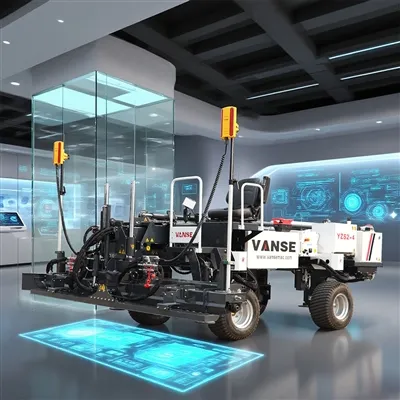
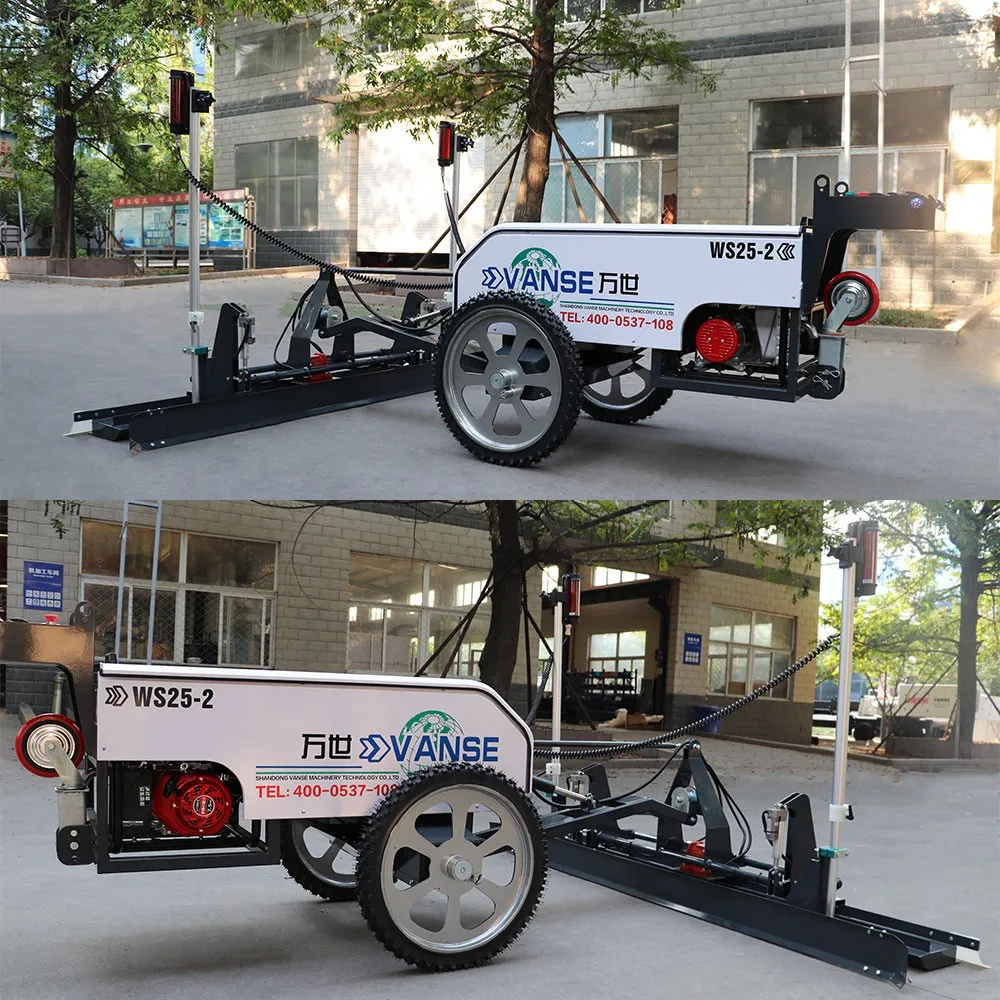
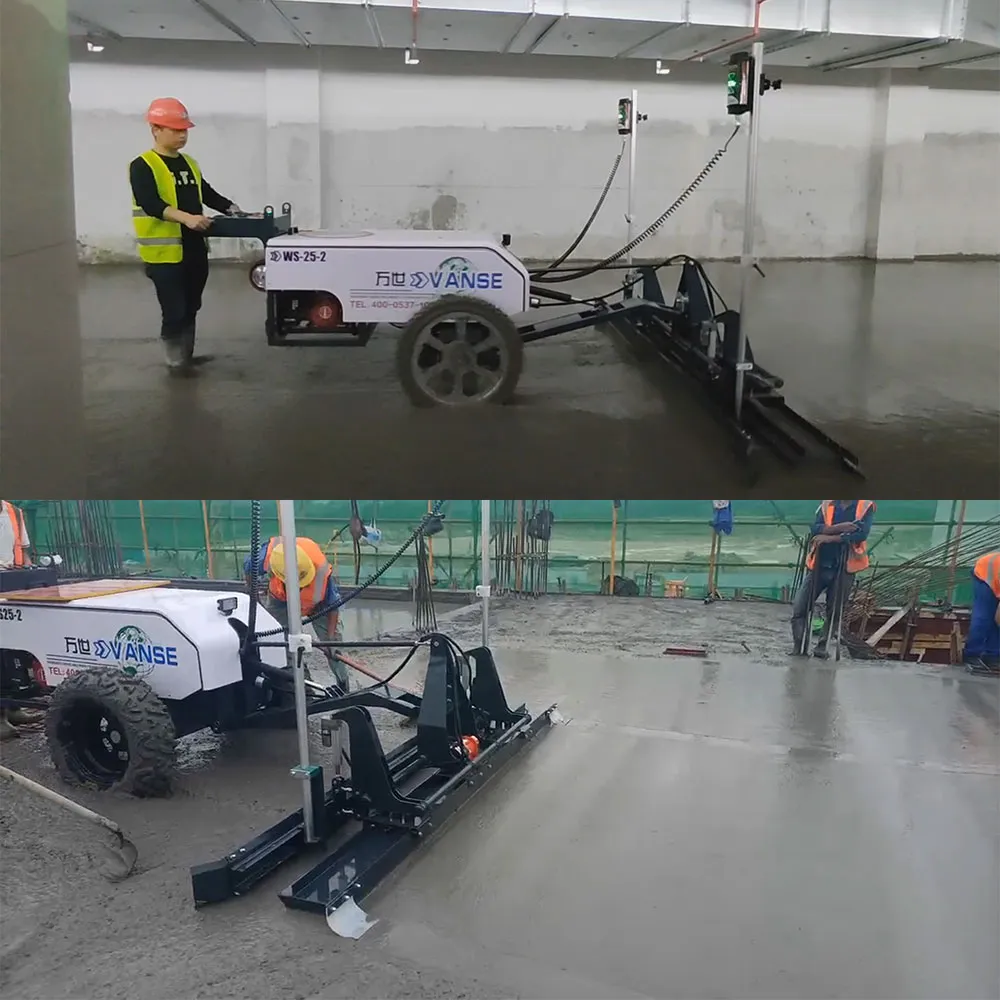
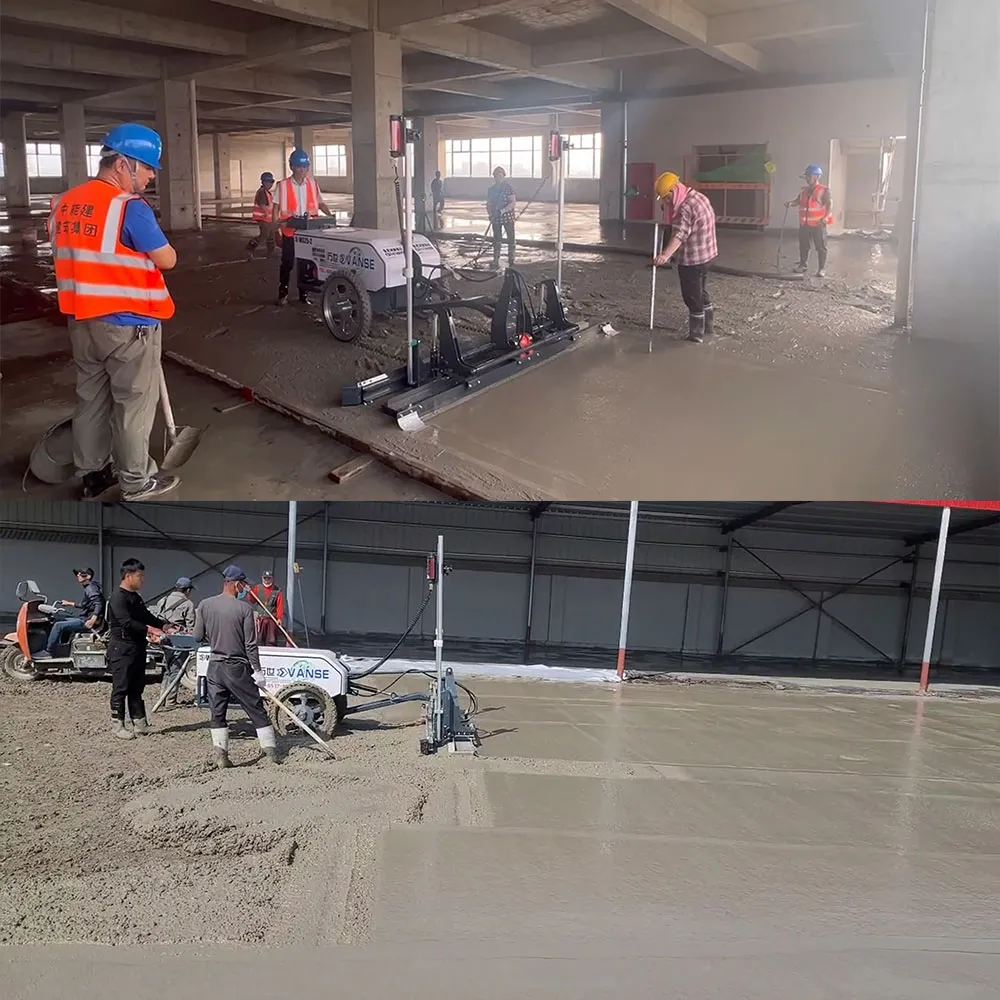
What are the characteristics of concrete laser leveling machine?

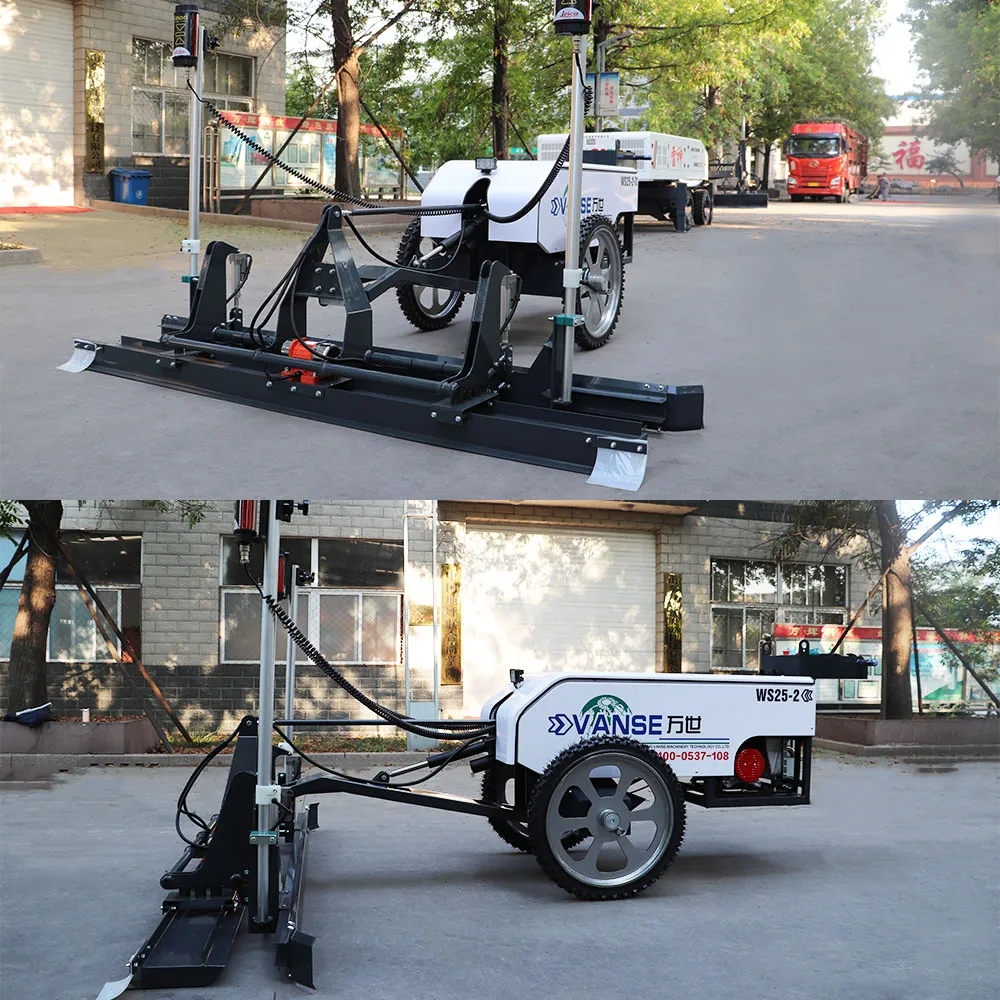
Concrete leveling machine is a kind of equipment widely used in the field of concrete construction. Its main features include the following aspects:
High efficiency and efficient leveling:
The concrete leveling machine can level the concrete surface quickly and efficiently, and can complete a project volume of 200 to 600 square meters per hour, which is more efficient than traditional manual leveling.
Good flatness and high precision:
The concrete leveling machine can provide precise elevation control and level adjustment. The concrete leveling machine can achieve a flatness of 3 mm/3 meters, and the elevation difference within 1000 square meters is less than 20 mm. , smoother than traditional manual leveling, effectively ensuring the quality of construction.
Strong adaptability:
The concrete leveler can level different types of concrete, such as sand, gravel, pebbles, etc., and can quickly complete the leveling work on the leveler.
Reduce costs:
Using a concrete leveler can reduce labor costs and improve construction efficiency. It can also reduce the use of materials, thereby reducing construction costs.
High construction quality and high reliability:
The concrete leveling machine adopts advanced mechanical structure, which has high reliability and can also ensure the quality of construction. It can significantly improve the flatness of the ground. The ground constructed by laser leveling machine and traditional method were tested at 22 points (one point every 5 meters × 4 meters). The average flatness values were 1.3 mm and 4.1 mm respectively. Laser leveling machine, etc. The leveling quality of the equipment is more than three times higher than that of traditional methods. The use of laser leveling machines can reduce a large number of construction joints, reduce concrete slump, and ensure concrete strength, making the ground more integrated and less prone to cracks.
Simplified process and high safety:
The operation of the concrete leveling machine is very simple and safe to use. It can save the formwork process. The concrete leveling machine is equipped with 6 to 10 people in a single shift and can complete a project volume of more than 3,000 square meters. It is more efficient than traditional Manual leveling is more convenient and can greatly reduce safety hazards caused by manual operations.
Easy maintenance:
The maintenance of the concrete levelinger is relatively simple. You only need to regularly check the lubricating oil, clean the machine body, etc.
In short, the concrete leveling is an efficient, precise, adaptable, reliable, safe and easy-to-maintain equipment that has been widely used in the field of concrete construction.
Thanks to All the Friends Who Support and Trust Shandong Vanse Machinery Technology Co., Ltd.
If you want to know more about Shandong Vanse Machinery Technology Co., Ltd. or have any questions, please feel free to contact us:
Our Factory
Shandong Vanse Machinery Technology Co., Ltd.








Share this article

About the Author: Shandong Vanse Machinery Technology Co., Ltd.
Shandong Vanse Machinery Technology Co., Ltd. is a high-tech manufacturer specializing in concrete construction machinery, including laser screeds and related equipment. The company integrates R&D, production, and global sales, with products exported to over 60 countries and widely used in infrastructure projects worldwide.
Previous Post
Next Post
Related Articles
You Might Also Like
Technical guarantee measures for safe production of concrete projects
Technical objective: Through standardized technical management, precise process control, and scientific risk prediction, quality and safety hazards such as collapse, cracking, and leakage in concrete projects are eliminated from the technical level, ensuring the safety of personnel, equipment, and structures during the construction process, and guaranteeing that concrete projects comply with the "Code for Acceptance of Construction Quality of Concrete Structures" (GB50204) and relevant safety production regulations. Scope of application: This measure is applicable to the entire life cycle of concrete engineering, including all links such as the selection of concrete raw materials, mix proportion design, mixing and transportation, pouring and vibration, curing and formwork removal, covering various concrete structure projects such as housing construction, municipal works, Bridges and tunnels. Raw material selection and inspection: Strictly screen raw materials such as cement, sand and gravel, admixtures, and admixtures. Select cement products that meet the design strength grade (such as P.O42.5 and above), and the sand and gravel gradation should comply with the specification requirements (the particle size of the gravel is determined based on the structural dimensions, with the maximum particle size not exceeding 1/4 of the minimum cross-sectional size of the component). After each batch of raw materials arrives at the site, a third-party testing institution is entrusted to conduct performance tests (such as cement strength and stability, mud content and crushing value of sand and gravel, water reduction rate and setting time of admixtures). Only after passing the tests can they be used. Technical requirements for raw material storage: Cement should be stored in a closed warehouse, stacked in zones according to the batches entering the site, and kept at least 30cm above the ground to prevent moisture and caking. The sand and gravel yard is hardened and treated, with rain shelters set up. Sand and gravel of different specifications are stored separately to avoid mixing. Admixtures are stored in dedicated tanks and labeled to prevent confusion with other materials. Customized mix ratio: According to the type of engineering structure (such as beams, slabs, columns, foundations), strength grade (such as C30, C40), construction environment (temperature, humidity) and construction technology (pumping, self-compaction), entrust a qualified laboratory to design a special mix ratio. Clarify key parameters such as water-binder ratio, sand ratio, and admixture dosage (for example, the slump of pumped concrete should be controlled at 120-160mm, and the spread of self-compacting concrete should be ≥550mm). Mix proportion optimization technology: By adding admixtures such as fly ash and mineral powder, the amount of cement is reduced, the heat of hydration is lowered, and temperature cracks in mass concrete are avoided. For winter construction, early-strength admixtures should be added to the mix proportion to ensure the early strength growth of concrete. During summer construction, adjust the dosage of retarder, extend the initial setting time, and prevent the initial setting of concrete during transportation. Plan formulation and review: Prepare a special construction plan for concrete projects, clearly defining the construction process, technical parameters (such as the thickness of each pouring layer, vibration time, and curing period), and quality and safety control points. For special projects such as large-volume concrete (pouring volume ≥1000m³ or thickness ≥1m), ultra-high pumping concrete (pumping height ≥100m), and special-shaped structure concrete, experts are organized to conduct technical arguments on the plans, with a focus on reviewing temperature control, support systems, and distribution methods, etc., to ensure the scientific and feasible nature of the plans. Technical briefing and Training: After the plan is approved, a comprehensive technical briefing will be conducted for technical personnel and construction teams, detailing the mix ratio requirements, pouring sequence, vibration key points, and emergency response measures. Organize technical training for operators, conduct practical exercises on key procedures such as the use of vibrators and the connection of pumps and pipes, and only allow them to take up their posts after passing the assessment. Technical supervision of the mixing process: The mixing plant adopts a fully automatic metering system to ensure that the metering deviation of raw materials complies with the specification requirements (the metering deviation of cement and admixtures is ≤±1%, and that of sand and gravel is ≤±2%). The mixing time should be strictly controlled (for ordinary concrete, the mixing time should be ≥90 seconds; for concrete with admixtures or admixtures, it should be ≥120 seconds). During the mixing process, technicians should be arranged to inspect and observe the workability of the concrete (such as slump, cohesion, and water retention). If problems such as segregation and bleeding occur, the mix proportion should be adjusted immediately or the mixing should be stopped. Technical support during transportation: Special tank trucks are used for concrete transportation. The inner walls of the tank trucks are thoroughly cleaned to prevent residual concrete from affecting the quality of fresh concrete. The transportation route should be planned in advance to avoid congested sections and ensure that the transportation time is ≤ the initial setting time of the concrete (≤2 hours at normal temperature and ≤1.5 hours at high temperature). During transportation, the tanker should maintain a low rotational speed (2-4r/min) to prevent concrete segregation. After the concrete arrives, technicians will test the slump on site. If the deviation exceeds ±20mm, the laboratory will issue an adjustment plan. It is strictly prohibited to add water at will. Pouring sequence technical optimization: Follow the principle of "layered pouring, symmetrical advancement, and continuous operation". The concrete pouring of beams and slabs should be advanced from one end to the other, while the concrete pouring of columns and walls should be done layer by layer, with each layer thickness ≤500mm (when using insert-type vibrators), to avoid local accumulation causing overloading of formwork supports. The "inclined plane layering" pouring method is adopted for mass concrete, with a layering thickness of 300-500mm. The pouring speed is controlled (generally ≤2m/h) to reduce internal temperature stress. Vibration Technical: Specification The type of vibrator should be selected based on the slump of the concrete (high-frequency vibrators should be used for a smaller slump, and medium-frequency vibrators for a larger slump). When using an insertable vibrator for vibration, the spacing between the vibration rods should be no more than 400mm, and the insertion depth should be 50-100mm to the lower layer of concrete. The vibration time should be controlled at 15-30 seconds (until the concrete surface shows slurry and no air bubbles escape). Over-vibration (to prevent aggregate segregation) or missed vibration (to avoid honeycomb and pitted surfaces) is strictly prohibited. During the vibration process, avoid the vibration rod touching the steel bars, formwork and embedded parts to prevent structural deformation or displacement of embedded parts. Temperature control for bulk concrete: The "internal reduction and external protection" technical measure is adopted. Temperature measurement tubes are pre-embedded inside (with one temperature measurement point set every 50-100 square meters) to monitor the internal and surface temperatures of the concrete in real time, with the temperature difference controlled at ≤25℃. Circulating cooling water can be introduced inside to lower the core temperature. The surface is covered with thermal insulation cotton and plastic film to reduce heat loss and prevent temperature cracks. When the temperature difference exceeds the limit, add insulation layers or adjust the flow rate of cooling water. Conventional concrete moisture control: Within 12 hours after the concrete pouring is completed, cover it with moisture-retaining materials (such as gunny bags, geotextiles). During the hot summer, water it in time for maintenance to keep the surface moist. During winter construction, methods such as covering with electric blankets and steam curing should be adopted to ensure that the curing temperature is ≥5℃. The curing time should be carried out in accordance with the specifications (≥7 days for ordinary concrete, ≥14 days for concrete with retarding admixtures or with impermeability requirements) to prevent shrinkage cracks caused by rapid water loss in the concrete. The determination of formwork removal time: The formwork removal time is determined based on the strength of the concrete test blocks under the same curing conditions. For bending members such as beams and slabs, formwork removal can only be carried out when the strength of the test blocks reaches 75% (for spans ≤8m) or 100% (for spans > 8m) of the designed strength. For vertical components such as columns and walls, the side formwork can be removed when the strength of the test block is ≥1.2MPa. Before formwork removal, technicians should issue a formwork removal application, which can be implemented after approval by the supervision unit. It is strictly prohibited to remove formwork in advance, which may cause structural cracking or collapse. Technical Specifications for formwork removal operations: Formwork removal follows the principle of "install first and then remove, install later and then remove first, from top to bottom". Rough formwork removal is strictly prohibited. When removing large formwork, a crane should be used for hoisting, and a dedicated person should be assigned for command. No one is allowed to stand under the formwork. After formwork removal, promptly clean up the residual concrete on the surface of the formwork, check the flatness and deformation of the formwork, and repair the damaged parts before putting it back into use. Structural entity inspection: 28 days after the concrete pouring is completed, a third-party inspection agency is entrusted to conduct structural entity inspection, including concrete strength rebound, steel bar cover thickness inspection, structural dimensional deviation inspection, etc. Conduct core drilling and sampling tests on large-volume concrete and important components (such as frame columns and main beams of Bridges) to ensure that the concrete strength meets the design requirements. For the parts that fail the inspection, a special treatment plan shall be formulated and implemented after being approved by the design unit (such as reinforcement by high-pressure grouting, external concrete coating, etc.). Defect repair technology: For defects such as honeycomb, pitted surface and exposed bars on the concrete surface, the "surface treatment method" is adopted for repair: Clean the loose concrete at the defect area, rinse it clean with a high-pressure water gun, apply an interface agent, and then repair it with fine aggregate concrete or mortar in the same proportion as the original concrete. After repair, cover and maintain it. For crack defects, the repair method should be selected based on the crack width (surface sealing method for width ≤0.2mm, pressure grouting method for width > 0.2mm). During the repair process, technical records should be kept well to ensure the repair quality. Establish technical archives for concrete engineering, collect and organize raw material inspection reports, mix proportion notices, construction logs, temperature measurement records, curing records, formwork removal applications, physical inspection reports and other materials to ensure that the materials are complete, accurate and traceable. Technical archives are filed and preserved in accordance with the prescribed requirements, serving as an important basis for project acceptance and later maintenance. Regularly review and analyze the technical data of concrete engineering, summarize the technical problems during the construction process (such as the optimization effect of mix proportion and the accuracy of temperature control), form a technical summary report, provide technical references for subsequent similar projects, and continuously improve the safety production technology level of concrete engineering. Emergency technology for concrete supply interruption: If the supply of concrete is interrupted due to a malfunction of the mixing plant or traffic congestion, immediately stop pouring, vibrate and compact the surface of the already poured concrete, and cover it with moisture-retaining materials. When the interval time exceeds the initial setting time of the concrete, handle it according to the requirements of the construction joint (set up a vertical construction joint, clean the surface floating slurry and loose aggregates, and apply an interface agent). After the concrete supply is restored, re-pour to ensure that the construction joint is tightly combined. Emergency techniques for structural cracks: If early cracks are found on the concrete surface during the pouring process, stop pouring immediately, check the width and depth of the cracks. If they are surface dry shrinkage cracks, cover them with water in time and strengthen moisture retention and maintenance. If it is a temperature crack, add an insulation layer and adjust the temperature control measures. If the cracks continue to develop, immediately organize the evacuation of personnel, entrust the design unit to formulate a reinforcement plan, and adopt technical measures such as temporary supports and grouting sealing to prevent the cracks from expanding and causing structural safety accidents. Instructions for Use: This plan is a general template. Before the specific implementation of each project, it should be refined and supplemented according to the characteristics of the project (such as super-high, super-heavy, large-span structures, etc.), especially the control measures for major hazard sources.How to care and maintain the concrete power trowel?
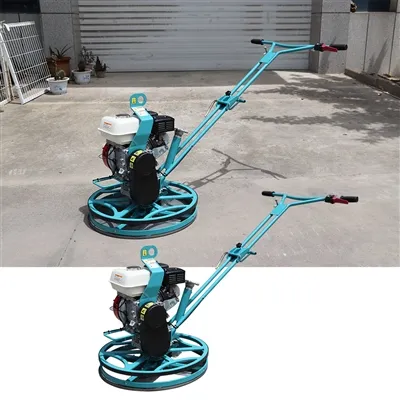
The concrete trowel is a piece of equipment widely used in the field of concrete construction. In order to ensure its long-term stable operation and increase its service life, regular maintenance and upkeep is essential. This article will introduce in detail the care and maintenance methods of concrete trowels, including regular inspection of equipment, cleaning and maintenance of equipment, adjusting equipment parameters, and maintaining equipment safety. 1. Regular inspection of equipment 1.1 Check each component of the equipment Before using the concrete trowel, all its components must be inspected, including the motor, reducer, trowel plate, grinding wheel, etc. Check whether these parts are loose, damaged or worn. If there are any abnormalities, repair or replace them in time. 1.2 Replace worn parts During long-term use, various parts of the concrete trowel will be subject to wear and tear. When some parts are found to be severely worn or damaged, they should be replaced in time to avoid greater damage to the equipment. 2. Cleaning and maintaining equipment 2.1 Clean the surface of the equipment Clean the concrete trowel surface regularly to remove dust, dirt and other impurities. Use a soft cloth or brush to gently wipe the surface of the device and avoid using sharp objects to scratch the surface of the device. 2.2 Clean the inside of the equipment After cleaning the surface of the device, the inside of the device should be opened for cleaning. Use a vacuum cleaner or brush to remove dust and debris from inside to make sure the inside of the device is clean and tidy. At the same time, check whether the internal components are loose or damaged. If there are any abnormalities, repair or replace them in time. 3. Adjust equipment parameters 3.1 Adjust the trowel speed During the construction process, the speed of the trowel should be adjusted according to different concrete strengths and textures. Excessively high rotational speed may cause scratches or damage to the surface of the compacted soil, while too low rotational speed may affect construction efficiency. Therefore, you should pay close attention to the rotation speed of the equipment during use and make adjustments according to the actual situation. 3.2 Adjust the trowel pressure The pressure of the trowel is also one of the important factors affecting the construction effect. Excessive pressure may cause indentations or damage to the concrete surface, while too little pressure may affect the construction effect. Therefore, the pressure of the equipment should be paid close attention to during use and adjusted according to the actual situation. At the same time, when adjusting the pressure, care should be taken not to exceed the maximum bearing capacity of the equipment to avoid damage to the equipment. 4. Maintain equipment safety 4.1 Check equipment safety devices Before using a concrete trowel, its safety devices must be inspected. Including whether the braking system, protective devices, limiters, etc. are intact and effective. If any abnormality or damage to the safety device is found, it should be repaired or replaced in time to ensure the safety of construction workers. 4.2 Comply with safe operating procedures When using a concrete trowel, safe operating procedures must be followed. Operators should wear protective glasses, gloves and other personal protective equipment to avoid accidental injuries caused by improper operation. At the same time, attention should be paid to the safety of the surrounding environment during the construction process to avoid accidents caused by improper construction operations. 5. Summary Through regular inspection, cleaning and maintenance of the concrete trowel, as well as adjusting equipment parameters and maintaining equipment safety, the long-term stable operation of the equipment can be ensured and the service life can be improved. At the same time, operators should also pay attention to observing safe operating procedures and paying attention to the use of personal protective equipment to ensure the safety and smooth progress of the construction process.How to match the spreading speed of concrete spreaders with laser leveling construction progress?
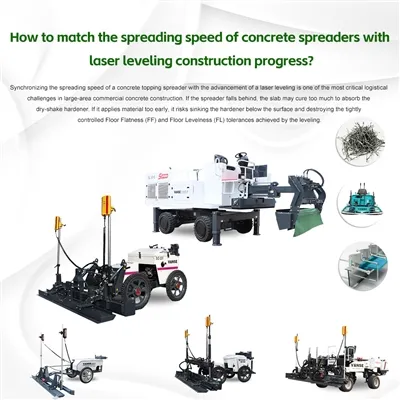
Synchronizing the spreading speed of a concrete topping spreader with the advancement of a laser leveling is one of the most critical logistical challenges in large-area commercial concrete construction. If the spreader falls behind, the slab may cure too much to absorb the dry-shake hardener. If it applies material too early, it risks sinking the hardener below the surface and destroying the tightly controlled Floor Flatness (FF) and Floor Levelness (FL) tolerances achieved by the leveling. Here is the technical framework for matching the operational speeds of these two vital pieces of equipment: The laser leveling dictates the ultimate speed of the pour. High-efficiency telescopic boom laser leveling can level thousands of square meters per day, pulling a wide leveling head (often 3 to 4 meters) continuously. Calculate the leveling's average output in square meters per hour (m²/hr) based on the concrete delivery rate (truck arrivals) and the specific machine's boom extension and retraction cycle time. The topping spreader's theoretical maximum speed must exceed the laser leveling's continuous output. This buffer is required because the spreader operates in intermittent bursts, waiting for specific sections of the slab to reach the correct curing stage. Unlike the laser leveling, which levels wet concrete immediately after placement, the topping spreader cannot follow immediately behind. The Rule of Timing: The spreader must wait until the concrete's initial bleed water has evaporated and the surface can support the weight of the machine and operator (typically when a footprint leaves an indentation of only 3 to 5 mm). Depending on environmental conditions (temperature, humidity, wind) and the concrete mix design, this delay can range from 1 to 3 hours. Therefore, the spreader is not matching the leveling's current position, but rather matching the leveling's output rate from 1 to 3 hours prior. Dry-shake hardeners often require multiple passes. If the project specifies a heavy application (e.g., 5 to 8 kg/m²), it is standard practice to apply 50-60% of the material on the first pass, let it absorb moisture, power-trowel it, and then apply the remaining 40-50% on a second pass. The Math: If a laser leveling levels 2,000 m² in a day, the spreader doesn't just need to cover 2,000 m²; it may need to cover 4,000 m² to accommodate a two-pass application within the same curing window. To match progress, ensure the chosen topping spreader has a variable speed hydrostatic drive and a hopper capacity large enough to minimize reloading downtime. A high-speed topping spreader is useless if it spends half the day driving off the slab to refill its hopper. Strategic Reloading: Position bulk bags of dry-shake hardener at strategic intervals along the edge of the pour or utilize a telehandler to bring material directly to the spreader on the slab. Tire Management: Ensure the spreader is equipped with the correct wide-profile, low-pressure tires. If the machine has to slow down excessively to avoid creating deep ruts that ruin the FL metrics, it will lose pace with the leveling's historical output. By calculating the square-meter-per-hour output of the leveling, factoring in the multi-pass requirements of the hardener, and maintaining a strict staging area for fast material reloading, contractors can ensure their spreading operations perfectly shadow the rapid advancement of modern laser leveling equipment. Note: The parameters provided in this document are for reference only and are not mandatory. Due to differences in technical characteristics between different brands and models of laser levelers, please consult the manufacturer for a suitable solution before actual operation. This reference document assumes no responsibility for any issues arising from failure to follow the manufacturer's instructions.