Technical Knowledge
Can a laser leveler be used to make a ‘three super’ floor?
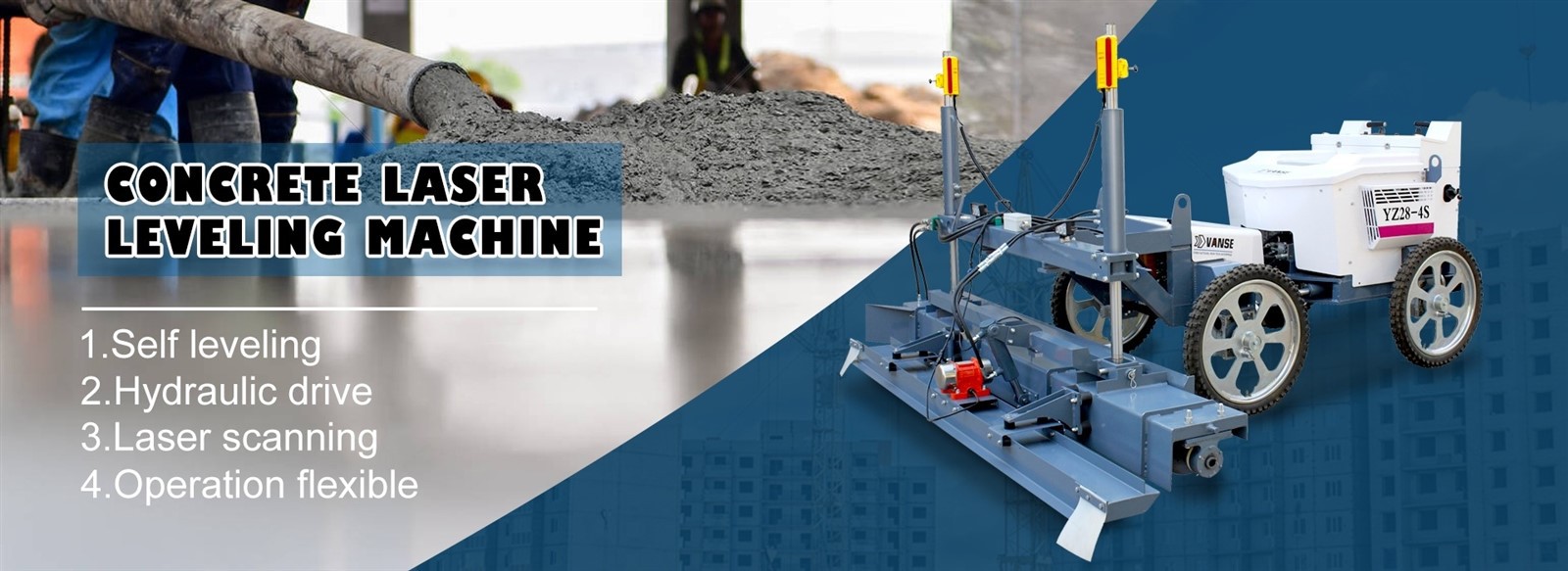
Can a laser leveler be used to make a "three super" floor?
The "three super" floor is the ideal goal we have always wanted to achieve, but there is no way to achieve this standard with traditional operation methods. After all, the continuity of manual operations is not strong and it is very prone to operational errors. Can the laser leveling machine meet the standard of this "three super" floor?
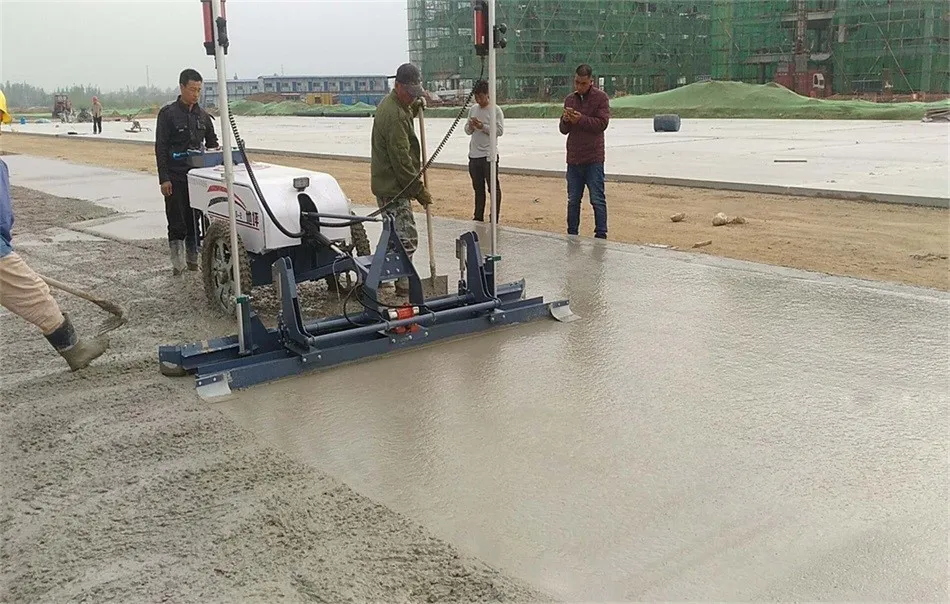
The so-called "three supers" are super flat, super strong and super provincial. Since the 1990s, since the continuous promotion of "clear water concrete" (building) ground and colored wear-resistant (building) ground, after several years of research and exploration and continuous improvement, the process has been integrated through the concrete laser leveling machine. Perfect, the "three super" floors constructed with our company's series of products have reached the domestic or international first-class level.
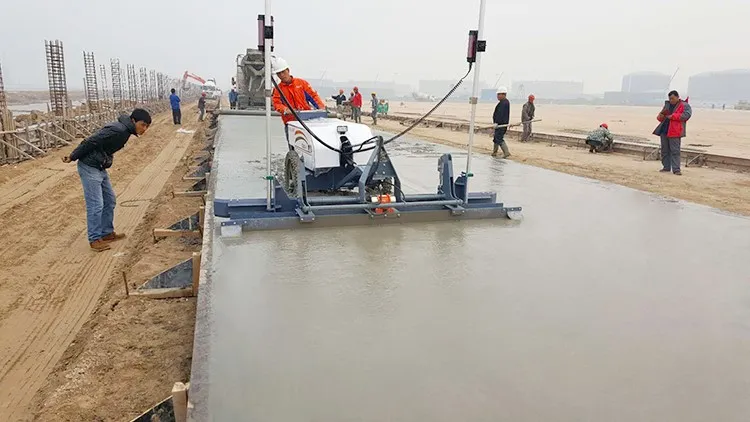
1. Super flatness: Through the combination of concrete laser leveling machine and professional and precise personnel, the flatness level of (floor) ground can be raised from the current specification of 2 meters by 4mm to 2 meters by 2mm. , (Building) The level of the ground can reach within ±5mm/100m through the laser detection control of two laser sweepers and the imported laser leveling machine.
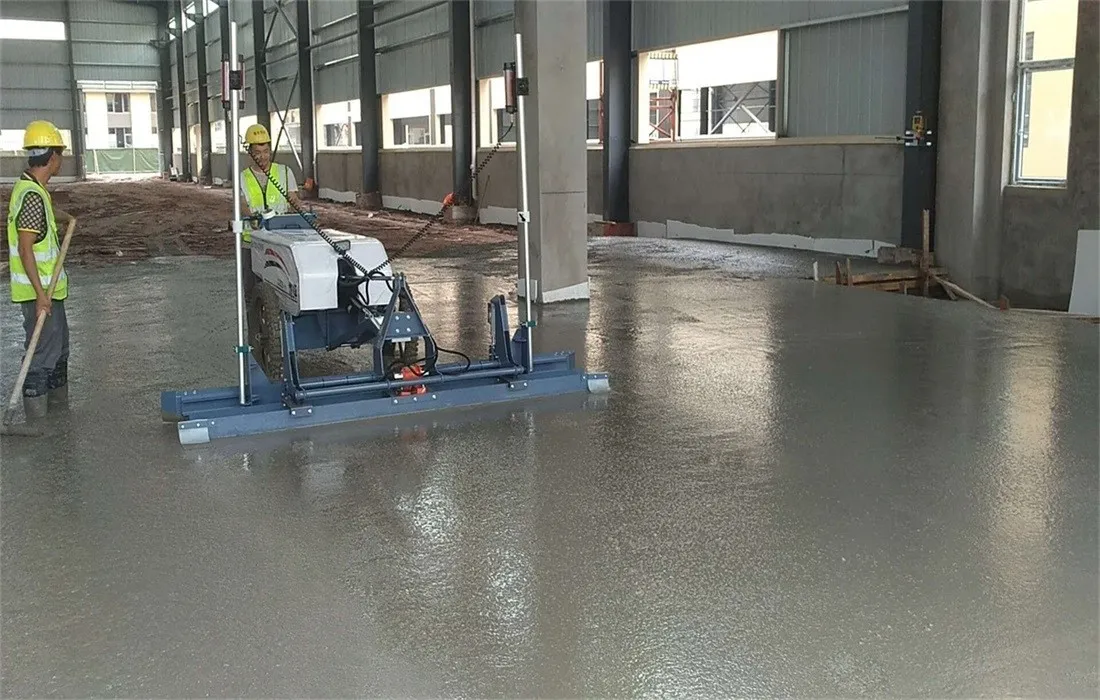
2. Super strength: Through the professional floor treatment equipment-single-disc and double-disc drive troweling machines several times, the (building) ground forms a real "clear water concrete" surface layer. It is also possible to sprinkle and add color hardening agent during surface construction or to brush liquid concrete sealing and curing agent on the surface of the original slurry "clear water concrete" to improve the surface strength again and truly realize the super strong surface.
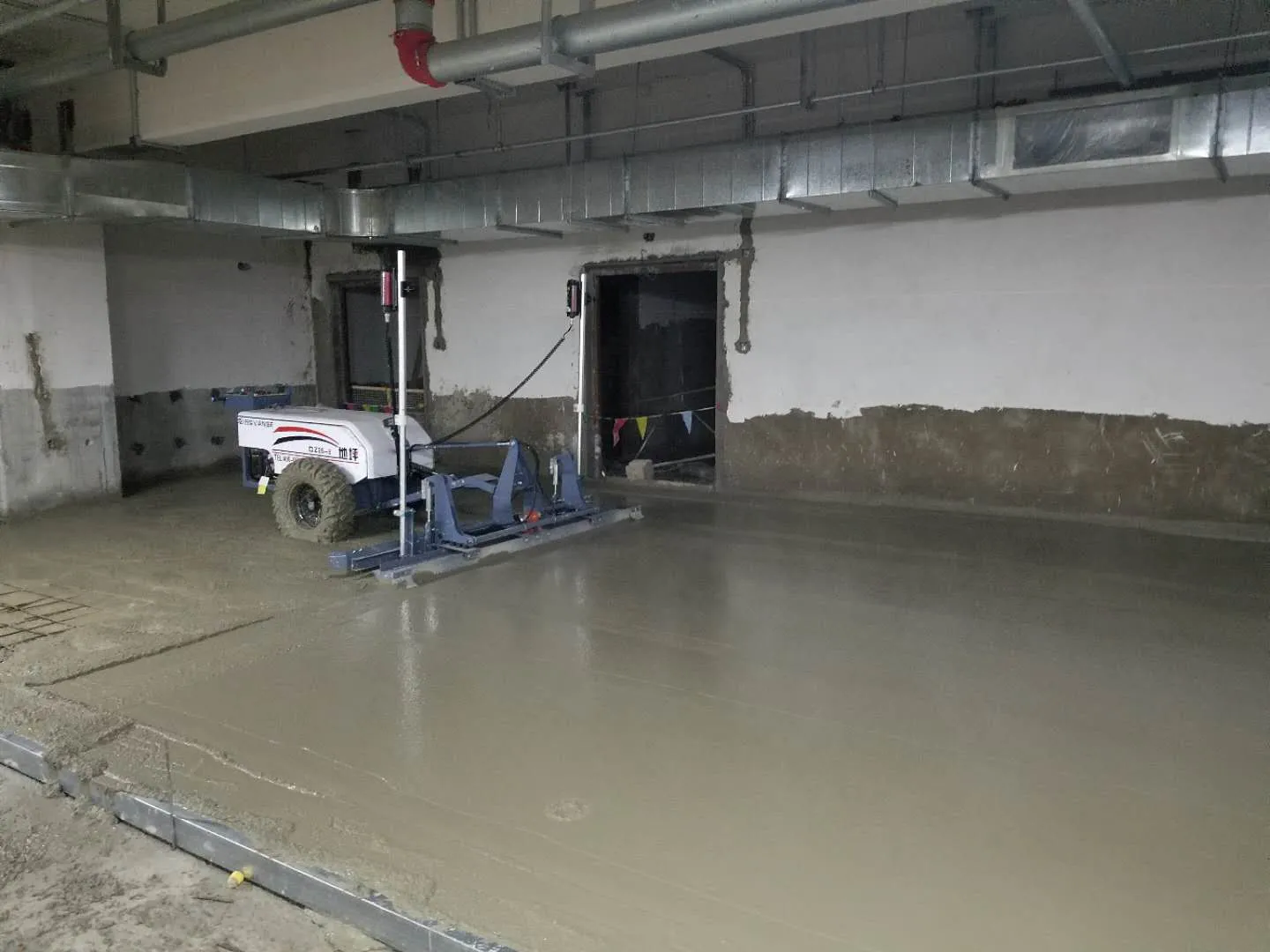
3. Ultra-saving: Through the simultaneous construction of the concrete on the (floor) ground, the floor (ground) method is completed at one time, which not only saves the materials, labor, and machinery of the second method, but also avoids the damage caused by the second method. "Empty drums, cracks, peeling, sanding" and other common quality problems; it also reduces the load generated by the materials used in the secondary method between floors, saves the delay in the construction period caused by the secondary method, and greatly saves the construction period. The rental costs of turnover tools and various equipment caused by the elongation have saved a lot of costs and achieved economic benefits created by super-savings.
After calculation, the secondary method is based on 6-8cm concrete, and the cost of labor, machinery, and materials required should be more than 40 yuan/m², even if the cost of finished product protection is deducted, the cost savings will be more than 30/m². By solving the concrete surface layer at one time, all the "common quality problems" caused by the second method are completely eliminated. The "three super" floor is flat, clean, dense, high-strength, one-layer overall, with reduced cost, shortened construction period, and absolute durability. It should be said that there is no better method to replace it, whether domestic or foreign.
Thanks to All the Friends Who Support and Trust Shandong Vanse Machinery Technology Co., Ltd.
If you want to know more about Shandong Vanse Machinery Technology Co., Ltd. or have any questions, please feel free to contact us:
Our Factory
Shandong Vanse Machinery Technology Co., Ltd.








Share this article

About the Author: Shandong Vanse Machinery Technology Co., Ltd.
Shandong Vanse Machinery Technology Co., Ltd. is a high-tech manufacturer specializing in concrete construction machinery, including laser screeds and related equipment. The company integrates R&D, production, and global sales, with products exported to over 60 countries and widely used in infrastructure projects worldwide.
Previous Post
Next Post
Related Articles
You Might Also Like
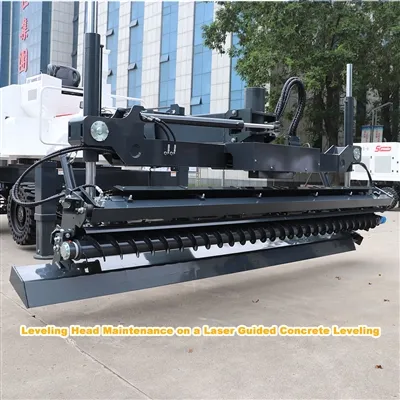
Leveling Head Maintenance on a Laser Guided Concrete Leveling
This is an excellent question and one of the most critical maintenance areas for a laser leveling machine. The leveling head is the component that determines your final floor quality, and it operates directly in the most corrosive environment (wet concrete). Here is the expert guide to maintaining the leveling head on a laser-guided concrete leveling. The bearings on the auger and the vibrator assembly are exposed to water, slurry, and abrasive concrete dust. Failure to service them daily is the fastest way to destroy them. When to Grease: You must grease the bearings every time the machine is used, immediately after cleaning. The "Purge" Principle: The goal of daily greasing is not just to add lubrication, but to force out any water, cement paste, or abrasive sand particles that may have entered the bearing seal during the pour or the wash-down. The Process: Use the manufacturer-specified grease (often NLGI-2 Lithium Base Grease). Continue pumping grease slowly until you see clean, fresh grease pushing out past the seals. This confirms the contamination has been expelled. Spares: Keep spare bearings on hand. They are wear parts and will eventually fail, and having a spare prevents downtime on a tight pour schedule. Hardened concrete on the head is the enemy of flatness and machine function. Immediate Cleaning: Power wash the entire leveling head immediately after the pour. Use a brush (stiff plastic or natural fiber, avoid steel unless scraping dry concrete) to remove all residue from the auger flights, the plow, the vibrator bar, and the finish blade. Why it Matters: Concrete build-up changes the weight and balance of the head, causing the machine's automatic leveling and counter-balance systems to work incorrectly, leading to inaccuracies in your floor. Check Head Geometry: The components (plow, auger, finish blade) must be in a specific geometric relationship for the machine to level correctly. Common Setting : The plow is often set approx 1/4 above the bottom of the auger. Wear Check: The finish blade and auger are high-wear items. If they are worn or bent, they change the geometry, and the head will no longer produce the required flatness. Check the flatness of the finish blade with a level and replace it if necessary. Vibration is essential for consolidation, but it also causes hardware to loosen. Fastener Check: Inspect and tighten every nut and bolt on the leveling head before and after a pour. Pay special attention to the bolts holding the vibrator motors and the auger to the main frame, as these are subject to constant, intense vibration. Structural Inspection: Look for small cracks around the mounting points and welds, especially where the head attaches to the boom. These must be addressed immediately by a certified welder to prevent catastrophic failure. Laser Receivers: Ensure the laser receivers (the "eyes") mounted on the masts are clean and secure. Dirt or buildup on the receiver glass can cause signal "jitter," which transfers to the head as slight, uncontrollable movement. Clean: Pressure wash the entire head until spotless. Purge: Grease all auger and vibrator bearings until clean grease is visible. Inspect: Check all nuts/bolts for tightness and verify the plow/auger/blade geometry. Note: The parameters provided in this document are for reference only and are not mandatory. Due to differences in technical characteristics between different brands and models of laser levelers, please consult the manufacturer for a suitable solution before actual operation. This reference document assumes no responsibility for any issues arising from failure to follow the manufacturer's instructions.How to conduct safety evaluation of concrete laser leveling machine?
Structural stability: Check whether the body structure of the concrete laser leveling machine is strong, whether it can remain stable during driving, vibration and operation, and prevent the equipment from tipping over or parts from loosening and falling due to structural problems, endangering the safety of operators and surrounding personnel. Safety devices: Evaluate whether the equipment is equipped with necessary safety devices, such as emergency stop buttons, overload protection devices, laser transmitter protection devices, etc. The emergency stop button should be easy to operate and set at multiple locations on the equipment so that the operator can quickly cut off the power supply and stop the equipment in case of sudden dangerous situations. Electrical system safety: Check whether the electrical system meets safety standards and whether the wires and cables have good insulation protection to prevent leakage. At the same time, ensure that the electrical equipment has waterproof and moisture-proof properties to avoid electrical failures and safety accidents caused by moisture in the concrete construction environment. Operator qualifications: Confirm whether the operator has received professional training, is familiar with the working principle, operation method and safety precautions of the concrete laser leveling machine, and has obtained the corresponding operation qualification certificate through assessment. Operation process execution: observe whether the operator strictly follows the operating procedures during the construction process, such as inspection before equipment start-up, speed control during operation, and coordination with other construction personnel and equipment. For example, before starting the equipment, the operator should check whether the various parameters of the equipment are set correctly, whether the laser transmitter is working properly, and whether there are obstacles at the construction site. Safety awareness and emergency handling capabilities: examine the safety awareness of the operator, whether the abnormal conditions of the equipment can be discovered and reported in time, and whether the operator has the correct emergency handling capabilities when encountering sudden safety accidents, such as how to use a fire extinguisher correctly to extinguish the fire when the equipment catches fire. Ground conditions: evaluate the safety of the concrete laser leveling machine under different ground conditions, such as whether the equipment can operate stably when operating on uneven, soft or sloping ground, and whether there will be dangerous situations such as slipping and rollover. For ground that is not suitable for equipment operation, the construction unit should take corresponding treatment measures, such as leveling the ground, laying pads, etc. Surrounding environment: Consider the impact of the surrounding environment of the construction site on the safety of the equipment, such as whether the space size of the construction site is sufficient for equipment operation, whether there are obstacles such as overhead wires and buildings, and whether the distance between equipment meets safety requirements when multiple equipment are operating at the same time to prevent collisions between equipment. Daily inspection and maintenance: Understand whether the daily inspection and maintenance system of the equipment is perfect, whether the operator inspects the equipment before and after the operation every day, including checking whether the parts of the equipment are worn or loose, whether the accuracy of the laser receiver and transmitter is accurate, and whether the hydraulic system and lubrication system are normal, and perform maintenance and maintenance in time. Regular maintenance: Confirm whether the equipment is regularly inspected and maintained in accordance with the manufacturer's recommendations and relevant regulations, and professional maintenance personnel will conduct a comprehensive inspection and maintenance of the equipment, replace aging or damaged parts in time, and ensure that the performance and safety of the equipment are in good condition. Construction unit system: Check whether the construction unit has formulated a complete safety production management system and safety operating procedures for concrete laser leveling machine, and ensure that these systems and procedures are effectively implemented at the construction site. Training and briefing: Check whether the construction unit has conducted regular safety training and technical briefing for operators, so that operators understand the safety risks and preventive measures of the equipment. At the same time, whether new operators have received special pre-job training to ensure that they are familiar with the operation and safety requirements of the equipment. On-site supervision: Understand whether there is a dedicated person at the construction site responsible for safety supervision of the concrete laser leveling machine operation, promptly correct the operator's violations, and discover and eliminate safety hazards. Through the comprehensive evaluation of the above aspects, we can fully understand the safety status of the concrete laser leveling machine, promptly discover existing safety problems and take corresponding improvement measures to ensure the safe and reliable operation of the equipment in concrete pavement construction. Click the below to jump immediately!!! ARMOUR JOINT CONCRETE LEVELING MACHINE LIGHT TOWER POWER TROWEL SLIPFORM MACHINE STEEL FIBER TOPPING SPREADER TRACKED MINI DUMPERIn low temperature conditions, besides using heating equipment, what other methods can be used to speed up the setting of concrete?
In low temperature conditions, in addition to using heating equipment, the following are some methods that can speed up the setting of concrete: 1. **Adjust the mix ratio**: Choose an appropriate type of cement, such as early-strength silicate cement, which has a large hydration heat and releases the highest strength at an early stage. Try to reduce the water-cement ratio and slightly increase the amount of cement to increase the hydration heat and shorten the time to reach the age strength. 2. **Use air-entraining agent**: While keeping the concrete mix ratio unchanged, the bubbles generated after adding the air-entraining agent will increase the volume of the cement slurry accordingly, improve the fluidity of the mixture, improve its cohesion and water retention, buffer the water pressure generated by the freezing of water in the concrete, and improve the frost resistance of the concrete. 3. **Add early-strengthening admixture**: Shorten the setting time of concrete and improve the early strength. Commonly used early-strengthening admixtures include sodium sulfate (2% of the amount of cement) and composite early-strength water test agent (5% of the amount of cement). 4. **Select high-quality aggregate**: Select aggregates with high particle hardness and few gaps, so that their thermal expansion coefficient is similar to that of the surrounding mortar to improve the frost resistance of concrete. 5. **Heat storage method**: Mainly used for projects with relatively thick structures at temperatures around -10℃. By heating the raw materials (water, sand, stone), the concrete can still store considerable heat after mixing, transportation and pouring, so that the cement hydration releases heat faster and strengthens the insulation of the concrete. 6. **External heating method**: Mainly used for projects with temperatures above -10℃ and not thick components. By heating the air around the concrete components, the heat is transferred to the concrete, or the concrete is directly heated so that the concrete can harden normally under positive temperature conditions. 7. **Use antifreeze admixture**: In temperatures above -10℃, a chemical that can lower the freezing point of water is added to the concrete mixture, so that the concrete is still in a liquid state at negative temperatures, and the hydration reaction can continue, thereby continuing to increase the strength of the concrete. Commonly used antifreeze agents include single antifreeze agents such as calcium oxide and sodium chloride, and composite antifreeze agents of sodium nitrite and sodium chloride. 8. **Optimize concrete pouring control**: In winter construction, it is necessary to continuously optimize and control the pouring of concrete, and strictly control the quality of materials. Do a good job of review to improve the basic quality of concrete. Through the above method, the setting speed of concrete under low temperature conditions can be accelerated without relying on external heating equipment, thereby improving construction efficiency.