Technical Knowledge
Can Good Maintenance Habits Really Prolong The Service Life Of Laser levelings?
May 1, 2023

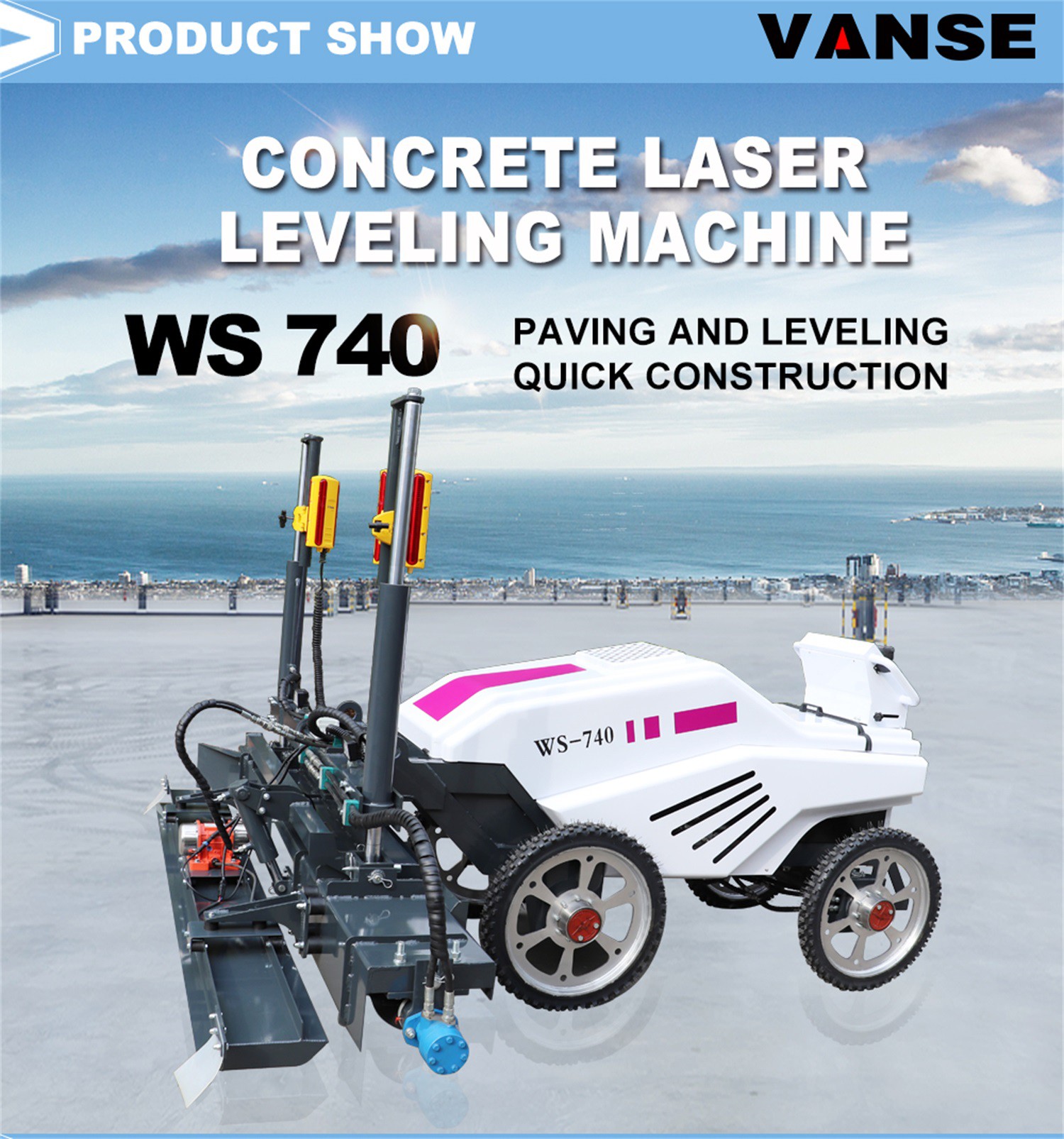
Is it necessary to use a laser leveling machine?
Is it necessary for concrete laser leveling machine to exist in our life? Answer: Of course there is. For some small construction sites, it is not impossible to rely solely on manual work, but once you reach a large shopping mall or a parking lot, you don't need to use machinery for construction, which not only guarantees quality but also saves time.
Laser leveling machine is an important concrete engineering machinery and equipment. It is widely used in the construction of large-area concrete floors such as modern industrial plants, large shopping malls, freight yards, airports, and squares. Levelness requires good construction. In the context of economic globalization, enterprises are under increasing pressure and challenges. Traditional construction has a large amount of labor and low production efficiency, which has always restricted the healthy and rapid development of the flooring industry. Therefore, it is urgent to promote the use of high-efficiency and intelligent laser leveling machine products. This is not only the need for enterprises to adapt to social development, but also the inevitable requirement of the international development trend of the flooring industry.
The use of laser leveling machines to make the ground has a high degree of automation, low labor intensity, saving templates and channel steel, and reducing labor input. Concrete laser leveling machines are divided into walk-behind and car-mounted types, which are very easy to operate and are used in concrete floor construction. The heavy manual labor is changed to mechanical paving, vibrating, leveling, slurry extraction, and surface plastering, which greatly reduces the number of operators and greatly reduces the labor intensity. The realization of one-time paving construction in large-scale blocks makes it unnecessary to support the formwork in the middle of the blocks. While reducing the support formwork and channel steel, it also further reduces the construction process and speeds up the construction progress. Therefore, using laser leveling machine products to make the ground can effectively save labor and reduce long-term operating costs.
In short, with the increase of large-area and high-quality floor projects such as modern industrial plants, convention centers, squares, airports, etc., traditional construction techniques and methods are difficult to meet the requirements. For example, in terms of construction techniques, advanced construction equipment, That is, the concrete laser leveling machine can not only shorten the construction period, but also ensure the construction quality to a large extent. This kind of high-grade ground can guarantee normal use for more than 20 years, which can greatly reduce the use and maintenance costs. The concrete laser leveling machine is in There will be more and more applications in large-area floor construction.
Thanks to All the Friends Who Support and Trust Shandong Vanse Machinery Technology Co., Ltd.
If you want to know more about Shandong Vanse Machinery Technology Co., Ltd. or have any questions, please feel free to contact us:
Our Factory
Shandong Vanse Machinery Technology Co., Ltd.


About the Author: Shandong Vanse Machinery Technology Co., Ltd.

Shandong Vanse Machinery Technology Co., Ltd. is a high-tech manufacturer specializing in concrete construction machinery, including laser screeds and related equipment. The company integrates R&D, production, and global sales, with products exported to over 60 countries and widely used in infrastructure projects worldwide.

Shandong Vanse Machinery
Leading manufacturer specializing in high-performance concrete laser screeds, telescopic arm flatwork handlers, and mechanical ride-on power trowels.
Post overview
Main PRODUCT Categories
Need Machine Guidance?
Speak directly with Shandong Vanse field specialists for tailored equipment quotes and site planning.
Contact Us TodayRelated Articles
You Might Also Like
June 4, 2025
How to evaluate the reliability of concrete laser leveling machine?
In the field of modern concrete construction, concrete laser leveling machine (concrete laser leveling machine or concrete laser leveler) has become the preferred equipment for many large projects due to its high efficiency and precision. With the continuous increase in the industry's requirements for construction quality and efficiency, as well as the continuous development of industries such as infrastructure construction and real estate, the market demand for concrete laser leveling machines is growing. According to relevant reports, the global concrete laser leveling machine market size is expected to reach US$1.76 billion in 2025, with an annual growth rate of approximately 11.4%. In this context, it is particularly important to evaluate the reliability of concrete laser leveling machines, which is not only related to construction quality, but also closely related to the cost and progress of the project. Leveling accuracy is the core performance indicator of concrete laser leveling machines, which directly determines the flatness of the concrete surface after construction. In projects such as airport runways and precision electronic factories that require extremely high ground flatness, high-precision laser leveling machines are indispensable. Some of the internationally renowned brands use advanced 3D laser scanning technology to achieve a flatness accuracy of ±2 mm. Some leading domestic companies, such as Shandong Vanse Machinery Technology Co., Ltd., currently have product accuracy of ±2 mm, of which the WS940C/YZ30-4E uses 3D laser scanning technology. When evaluating the leveling accuracy, you can view the technical parameter description of the equipment and refer to the test data of actual construction cases. At the same time, pay attention to the stability of the laser system. Stable laser signal transmission can ensure continuous and accurate leveling operations. For example, in the floor construction of large shopping malls, the use of high-precision laser leveling machines can ensure that the floor will not cause uneven laying of floor tiles or inconvenience for pedestrians due to flatness problems during long-term use. Work efficiency directly affects the construction progress and cost of the project. Taking the common large-scale industrial plant construction as an example, the traditional manual leveling method not only consumes a lot of manpower, but also has a slow construction speed, while the concrete laser leveling machine shows significant advantages. The concrete laser paving and leveling machine can complete 3,000 square meters of work per day and 350 square meters per hour (depending on the type of machine, the construction area completed varies), greatly shortening the construction cycle. When evaluating work efficiency, it is necessary to comprehensively consider parameters such as the equipment's travel speed, vibration frequency, and scraping width. At the same time, combined with the actual construction environment, such as site size and concrete supply, it is necessary to determine whether the equipment can maintain efficient operation under different working conditions. For example, in the construction of a narrow underground parking lot, the mobility and flexible operation of the equipment have a greater impact on work efficiency. As the "eye" of the concrete laser leveling machine, the stability of the laser system is crucial. A stable laser system can ensure that the equipment continues to provide an accurate elevation benchmark during long-term operation. Some high-end laser leveling machines are equipped with a dual-axis automatic compensation system, which can effectively reduce the interference of the laser signal caused by uneven ground or equipment vibration. When evaluating the stability of the laser system, the performance of the equipment under different ground conditions can be observed, such as whether the laser system can quickly adjust and maintain stable elevation control when constructing on a foundation with large undulations. At the same time, understand the protection level and anti-interference ability of the laser transmitter, as well as whether it has an automatic calibration function. For example, in a dusty construction site, a laser transmitter with a good dustproof design can better maintain signal stability and ensure the accuracy of the leveling operation. Reasonable structural design is the basis for ensuring the stable operation and durability of the concrete laser leveling machine. The overall structure of the equipment should fully consider the stress conditions during operation to ensure that key components such as the frame and vibrating device have sufficient strength and rigidity. Taking the driving laser leveling machine as an example, its frame structure needs to bear the weight of the equipment itself, the weight of the operator, and the vibration impact during operation. Therefore, it is mostly welded with high-strength steel and optimized to disperse stress and prevent deformation or breakage. In addition, the layout of the equipment should be easy to operate and maintain, and the connection and transmission methods between the components should be simple and reliable. For example, some advanced laser leveling machines adopt a modular design, integrating components with different functions into independent modules, which is convenient for quick replacement of faulty modules during maintenance and shortening downtime. The manufacturing process is directly related to the quality and reliability of the equipment. During the manufacturing process of high-quality concrete laser leveling machines, extremely high processing accuracy is required for parts. Taking the scraper of the leveling machine as an example, the surface flatness and straightness errors must be controlled within a very small range to ensure uniformity and high precision when leveling concrete. At the same time, advanced welding technology and surface treatment technology are also the key to improving equipment quality. For example, the use of robot welding technology can ensure uniform and firm welds and improve the stability of welding quality; hot-dip galvanizing or painting of key components can effectively enhance the anti-corrosion ability of the equipment and extend its service life. When evaluating the manufacturing process level, you can check the production qualifications and quality certification system of the equipment manufacturer, as well as understand its reputation and performance in the industry. For example, manufacturers with ISO quality management system certification usually follow stricter quality control standards during the production process. The durability of key components of concrete laser leveling machines, such as engines, hydraulic systems, electrical components, etc., directly affects the overall service life of the equipment. Take the engine as an example. Under the condition of continuous long-term operation, high-quality engines can maintain stable power output, and have good heat dissipation performance and low failure rate. Some laser leveling machines that use well-known brand engines can run for thousands of hours without failure under harsh working conditions after rigorous durability testing. When evaluating the durability of key components, you can check the brand, model and related technical parameters of the components to understand their reputation and actual application cases in the market. At the same time, pay attention to the warranty period of the components provided by the manufacturer. A longer warranty period usually means confidence in the quality of the components. For example, if the oil pump, oil cylinder and other components in the hydraulic system are made of high-quality materials and advanced manufacturing processes, leakage and wear can be effectively reduced, and the reliability and durability of the system can be improved. Equipment that is easy to maintain can reduce the cost of use and improve the availability of the equipment. The concrete laser leveling machine should have a design that is convenient for inspection, cleaning and replacement of parts. For example, the engine hood of the equipment should be easy to open, so as to facilitate daily inspection of oil level, air filter and other components; the installation position of key components should be easy to operate, such as the filter element of the hydraulic system, which should be designed in a position that is easy to disassemble and replace. In addition, the manufacturer should provide a detailed maintenance manual to clarify the maintenance cycle, maintenance items and operation methods, and provide original parts support in a timely manner. Some advanced laser leveling machines are also equipped with a fault diagnosis system that can quickly locate the fault point and provide accurate maintenance instructions for maintenance personnel. For example, when the electrical system of the equipment fails, the fault diagnosis system can prompt the specific fault code through the indicator light or display screen to help maintenance personnel quickly troubleshoot the problem and shorten the maintenance time. By investigating the actual performance of concrete laser leveling machines under different working conditions, we can more intuitively understand its reliability. In the construction of large storage centers, due to the large ground area and high flatness requirements, the laser leveling machine needs to work continuously for a long time, which is a great test for the stability and durability of the equipment. In the construction of some outdoor parking lots with complex terrain, the equipment not only has to deal with the ups and downs of the ground, but may also face the influence of bad weather. At this time, the adaptability and reliability of the equipment are particularly important. By collecting construction feedback from similar projects, we can fully understand the advantages and disadvantages of the equipment under different working conditions. User feedback and word of mouth are important bases for evaluating the reliability of concrete laser leveling machines. In industry forums, social media groups and professional equipment evaluation websites, a large number of users' evaluations of laser leveling machines of different brands and models can be collected. For example, after using a certain brand of laser leveling machine for a period of time, some users reported that the laser system of the equipment had a problem of reduced accuracy after half a year of use, while other users praised a certain equipment for its simple operation and convenient maintenance, and stable performance in multiple projects. In addition, you can communicate with construction companies and engineering contractors who have actually used the equipment to understand the problems they encountered during long-term use and their evaluation of the overall performance of the equipment. By comprehensively analyzing a large number of user feedback, we can have a more accurate understanding of the reliability of concrete laser leveling machines of different brands and models, and provide a strong reference for equipment selection. Click the below to jump immediately!!! ARMOUR JOINT CONCRETE LASER LEVELING MACHINE LIGHT TOWER POWER TROWEL SLIPFORM MACHINE STEEL FIBER TOPPING SPREADER TRACKED MINI DUMPERRead More
November 15, 2023
Advantages of super flat floor over ordinary floor?
Super-flat flooring is a roadway area where forklifts are permanently used on the ground. It is usually classified as "super-flat flooring". It uses a high-precision laser leveling machine to pave and level newly poured concrete and combine it with certain floor construction techniques. , a kind of floor that meets certain specific use requirements; super flat floor is the highest specification and highest standard advanced floor in the world. It is designed to improve the flatness and wear resistance of the ground and extend the service life of the ground. . So, what are the advantages of super flat floors compared to ordinary floors? Diyi Construction will introduce it to you from the following three aspects. 1. Different equipment and instruments In order to ensure the flatness of the ground, many factors need to be considered in the design of the super-flat floor process, including the working time of the instruments and equipment and the selection of construction tools. Laser leveling, infrared detection and ultrasonic leveling technologies are generally used in super-flat floor construction, while ordinary floor construction does not require so many equipment and instruments. 2. The flatness of the ground is different. Super-flat floors generally use laser leveling machines to replace traditional manual leveling of concrete. The ground elevation can reach laser-level accuracy. Lasers are used to control the levelness and flatness of the ground, so as to achieve true leveling. super flat floor. The flatness of ordinary concrete floors generally only reaches 5mm/2m, while the flatness of super-flat floors generally refers to the flatness of 3~4mm/2m or higher. It can be seen that the flatness requirements far exceed the general standards of our country's floors. 3. Different construction techniques. Super-flat floors abandon the traditional practice of constructing the concrete base and surface layers separately. They use a special laser leveling machine and polishing technology to process the concrete into a high-density, high-gloss floor. To a large extent, It reduces the problems of cracks and hollows caused by poor combination between the base layer and the surface layer, and also allows the forklift to run more smoothly. Relatively speaking, ordinary floors are relatively poor and can only meet general design requirements. They cannot meet conventional requirements for the maximum bearing capacity of the ground and the smooth operation of forklifts. In addition, ordinary floors are more likely to have cracks, hollows, sand and dust in the future. Because of the special technology of the super flat floor, the surface hardness and flatness of the floor are extremely high, which prolongs its use time. It is widely used in large warehousing centers, logistics centers, comprehensive distribution centers in the retail industry, ultra-narrow lane warehouses, and railway transportation reserves. Centers, cargo terminals, TV program studios, ice rinks, production workshops using precision instruments and equipment, etc. Industrial workshops that require special flatness on the ground, aerospace manufacturing centers, etc.Read More
August 26, 2025
How environmental factors affect the performance of concrete laser leveling machines
Environmental factors affect the performance of concrete laser levelings across multiple dimensions, including equipment operation, construction accuracy, efficiency, and service life. Different environmental conditions can indirectly or directly cause performance fluctuations by affecting the equipment's mechanical system, laser positioning system, and concrete working conditions. The following details the specific impact mechanisms and countermeasures based on three core categories: climate, geology, and site conditions, and electromagnetic and light environments: Climatic factors (temperature, humidity, precipitation, wind) not only affect the stability of the mechanical components of the laser leveling machine, but also change the initial setting speed and fluidity of the concrete, thereby indirectly affecting the leveling accuracy and efficiency. Climate Type Specific impact Performance differences High temperature environment (≥30℃) 1. Equipment hydraulic system: Hydraulic oil viscosity decreases, seals age faster, and leaks and pressure shortages are more likely to occur. – Increased probability of mechanical failure (e.g., decreased hydraulic pump efficiency, motor overload); 2. Engine/motor: Heat dissipation efficiency decreases, potentially triggering overheat protection and causing shutdown. – Shrinkage cracks are more likely to form on the concrete surface, increasing flatness deviation after leveling; 3. Concrete: Moisture evaporation accelerates, shortening initial setting time and narrowing the leveling window (necessitating faster vibration and leveling). – Work efficiency is forced to increase, which can lead to decreased accuracy due to hasty operation. Low temperature environment (≤5℃) 1. Hydraulic System: Increased hydraulic oil viscosity increases flow resistance in pipelines, slowing equipment response (e.g., delayed raising and lowering of the leveling blade); – Decreased equipment operational sensitivity (laser signal feedback and mechanical movement become out of sync); 2. Batteries/Circuits: Reduced lead-acid battery capacity makes circuit connectors susceptible to oxidation due to condensation, leading to poor contact; – Concrete density after leveling is insufficient, resulting in a lower surface flatness compliance rate; 3. Concrete: Prolonged initial setting time, reduced fluidity, increased difficulty in vibrating, and the tendency to develop honeycombs and rough surfaces. – Equipment startup is difficult, requiring warm-up time, and overall construction efficiency decreases by 30%-50%. High humidity/rainfall environment 1. Laser System: Condensation or water ingress on the laser transmitter/receiver lens can cause laser signal attenuation or scattering, resulting in positioning accuracy drift. – Laser positioning error increases (from ±2mm to over ±5mm), failing to meet high-precision floor requirements; 2. Electrical System: Moisture in the control panel and motor junction box can lead to short circuits or leakage. – The risk of electrical failures (such as motor failure) increases dramatically, potentially causing "faults" on the concrete surface; 3. Concrete: Excessive moisture content can lead to slow strength development and sanding and powdering of the surface after leveling. – Additional rain protection measures (such as temporary sheds) are required, increasing construction costs. Strong wind environment (≥ level 5) 1. Laser Signal: Strong winds can move the laser transmitter bracket (if not securely fixed), causing the laser reference line to shift. – Laser reference line deviation (a single operation can vary by 5-10mm), resulting in a "wavy" surface; 2. Equipment Stability: Small laser levelers (such as hand-push models) can easily tilt due to wind, affecting the leveling trajectory. – Equipment operation becomes more difficult, requiring additional manual stabilization, and accuracy fluctuations due to human intervention; 3. Concrete Surface: Wind erosion can cause rapid moisture loss from the surface, resulting in cracks. – Concrete surface quality deteriorates, requiring secondary repairs later. The geological conditions of the site (hardness, flatness), obstacle distribution and ground bearing capacity directly affect the load of the laser leveling machine's travel system and vibration system, which in turn leads to performance deviation or mechanical damage. Soft soil (e.g., uncompacted soil): The equipment is prone to "sinking" during travel, causing the leveling blade to lose its level position (although the laser positioning is correct, the machine's posture is tilted), resulting in local depressions on the leveling surface. Furthermore, the vibration force of the vibrating system may cause further subsidence, exacerbating flatness errors. Hard soil (e.g., old concrete, rock formations): Wheels/tracks wear faster, increasing the vibration amplitude of the equipment, making precise control difficult for the operator. If the foundation surface has protrusions (e.g., stones, rebar heads), these can get stuck in the leveling blade, causing "skipping" and resulting in scratches or uneven surfaces. Narrow spaces (such as indoor rooms and elevator shafts): Large laser levelings (such as ride-on models) are difficult to steer and require frequent adjustments, causing the laser receiver to frequently deviate from the baseline and reduce accuracy. Furthermore, insufficient heat dissipation space can easily lead to motor overheating. Dense obstacles (such as pre-buried pipelines and pillars): Operation requires frequent starts and stops, as well as detours. This prevents continuous leveling during the initial setting period of the concrete, leading to the appearance of "joints." Accidental collisions with obstacles can cause the laser transmitter to shift, requiring recalibration and delaying the project. If the ground's bearing capacity is lower than the equipment's own weight (e.g., temporary formwork or uncured concrete), the ground will deform as the equipment moves, causing the entire surface to deform accordingly, resulting in "wavy" patterns. In severe cases, this can cause the formwork to collapse and damage the equipment. The core accuracy of the laser leveling machine depends on the signal matching between the laser transmitter and the receiver. Electromagnetic interference, strong light or dust will directly block or distort the signal, resulting in positioning failure. Sources of interference: Strong electromagnetic equipment at the construction site, such as welding machines, tower cranes, high-voltage cables, and walkie-talkies. Mechanism of Impact: Electromagnetic signals can interfere with the laser receiver's circuitry, causing it to misinterpret the laser reference line (e.g., misinterpreting a "horizontal signal" as a "tilt signal"), leading to incorrect control of the leveling blade. Performance: Irregular height differences appear on the leveling surface, with accuracy plummeting from ±2mm to over ±10mm, or even completely disrupting normal operation. High-light environments (such as midday sun or strong spotlights): When direct sunlight shines on the laser receiver lens, the strong light can drown out the laser signal (laser is red or green visible light, and strong light reduces signal contrast). The receiver cannot accurately capture the baseline, resulting in "signal loss," causing the device to automatically shut down or enter "manual mode" (significantly reducing accuracy). High-dust environments (such as dry-mix mortar mixing and earthmoving operations): Dust adhering to the surface of the laser transmitter/receiver lens can scatter or block the laser signal, causing signal attenuation. If dust enters the lens, it can damage the optical components, permanently reducing positioning accuracy over time. In response to the above environmental factors, performance loss can be reduced through "device adaptation + environment optimization + operation adjustment": High Temperature: Use high-temperature resistant hydraulic fluid, install a cooling fan on the engine, and shorten the concrete pouring interval (to prevent initial setting). Low Temperature: Preheat the hydraulic system (e.g., with electric heating), use early-strength concrete, and cover with insulation film after work. Rainfall/High Humidity: Install a rain cover on the laser system, ensure waterproof sealing of electrical components, and clean condensation from the lens after rain. Soft soil foundation: Use a roller to compact the foundation first, or lay steel plates to distribute the load on the equipment. Hard soil foundation: Clean any surface protrusions in advance and replace wear-resistant wheels/tracks. Narrow spaces: Use a small, hand-push laser leveling, or employ a "segmented leveling + secondary finishing" process. Electromagnetic Interference: Keep the laser transmitter away from strong electromagnetic equipment (distance ≥ 10m) and use a shielded cable to connect to the receiver. Strong Light/Dust: Install a polarizing filter (to mitigate strong light) on the lens. Dedicated personnel should be assigned to clean dust from the lens during operation. Set up a dustproof booth if necessary. In summary, environmental factors impact concrete laser levelings in a multi-dimensional and interlinked manner-from the core laser positioning system to the mechanical execution system to the concrete workpiece-all of which can experience performance degradation due to environmental fluctuations. In actual construction, it's crucial to assess environmental conditions in advance and adjust equipment parameters and operating procedures accordingly to maximize the equipment's precision advantages. ARMOUR JOINT CONCRETE LASER LEVELING MACHINE POWER TROWEL SLIPFORM MACHINE STEEL FIBER TOPPING SPREADERRead More