Technical Knowledge
Working principle of concrete leveling machine

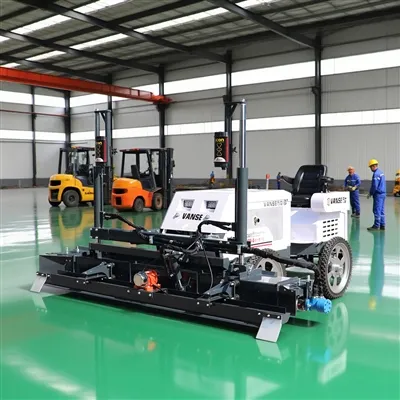
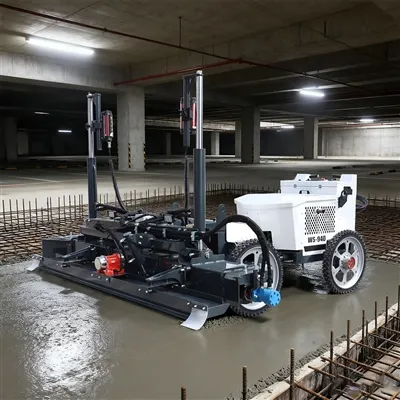
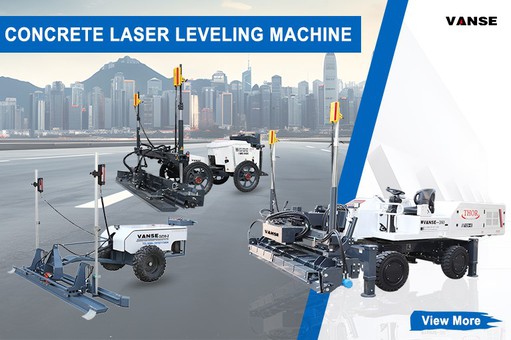
Thanks to the rapid development and prosperity of the flooring industry, laser leveling machines are increasingly used in floor construction. However, because the laser leveling machine industry is still an emerging industry, many people are not familiar with laser leveling. The leveling principle of the floor laser leveling machine is still in a vague state. Today, I will give you a detailed answer based on the principle of the floor laser leveling machine. First of all, we need to clarify what a laser leveling is. A laser leveling is a machine and equipment that is guided by a laser and used to level and level concrete. It can also be understood this way: when constructing large-area concrete floors, a laser leveling machine is used to vibrate, level and control the ground elevation of newly poured concrete.
Let's explain in detail the working principle of the laser leveling machine leveling system. The principle of concrete laser leveling: the laser transmitter produces a rotating laser, and the laser receiver on the leveling machine receives the signal, which is analyzed by the laser measurement and control system. The deviation will be fed back to the sensitive computer control system on the leveling machine. The right electric The push rod will adjust the height of the scraper to ensure leveling accuracy. Paving, scraping, vibrating, and leveling floor concrete, mainly spreading the concrete to an elevation greater than the design requirements, and vibrating and leveling the concrete. The traditional method is: use mortar to punch the pier, find the elevation, lay out the support side formwork, transport alkali with a dump truck, perform preliminary leveling manually, use a flat plate to level the concrete, vibrate the concrete with a vibrator, and then use a special double-row steel pipe to vibrate. The concrete laser leveling machine uses a scraper to take away the elevated concrete and initially scrape it, compact it, and level it back and forth. to the design required elevation. It adopts a two-wheel automatic walking system with a vibration frequency of 3000 times/minute, which drives the entire vibrating plate to vibrate the concrete together. The construction width of the concrete laser leveling is 3 meters.
The leveling of the laser leveling machine does not require a control line or a support side template to control the ground elevation. Instead, it is controlled by the laser measurement and control system on the leveling machine. As long as the laser transmitter is not disturbed, no matter where the leveling machine moves, This can ensure that the overall elevation of the paved ground is not affected.
The use of laser leveling machines can reduce high-intensity labor by about 60%, save about 50% of construction costs, shorten the construction period by about 50%, and increase the strength and compactness of the floor by about 25%.
Thanks to All the Friends Who Support and Trust Shandong Vanse Machinery Technology Co., Ltd.
If you want to know more about Shandong Vanse Machinery Technology Co., Ltd. or have any questions, please feel free to contact us:
Our Factory
Shandong Vanse Machinery Technology Co., Ltd.


Share this article

About the Author: Shandong Vanse Machinery Technology Co., Ltd.
Shandong Vanse Machinery Technology Co., Ltd. is a high-tech manufacturer specializing in concrete construction machinery, including laser screeds and related equipment. The company integrates R&D, production, and global sales, with products exported to over 60 countries and widely used in infrastructure projects worldwide.
Previous Post
Next Post
Related Articles
You Might Also Like
What are the specific safe operation and maintenance procedures for concrete laser leveling machines?
Concrete Laser Leveling Machine Safety Operation and Maintenance Procedures Performance Requirements: Operators must undergo rigorous training and be familiar with the equipment's performance, operating methods, and safety regulations. Unlicensed operators are strictly prohibited. Dress Code: Wear personal protective equipment (PPE), including a hard hat, reflective clothing, puncture-resistant shoes, and protective gloves. On-site Inspection: Survey the construction site, clear any obstructions, and confirm the site's sufficient bearing capacity to prevent equipment from sinking. Set up clear construction cordons and prohibit unauthorized personnel from entering the work area. Equipment Inspection (mandatory before daily startup): Walk around the machine: Check all machine components for damage or cracks, especially the scraper, vibrator, and track. Fastener Inspection: Check for loose bolts and nuts in key areas (such as scraper attachment bolts and vibrator mounting bolts). Leak Check: Check the engine, hydraulic system, and fuel system for oil or water leaks. Lubrication Inspection: Check the lubricating and hydraulic oil levels to ensure they are within normal ranges. Power System: Check the coolant level and engine air filter for cleanliness. Laser System: Check the laser transmitter battery level to ensure the signal is stable; clean the laser receiver sensor lens. Start up: Ensure all control levers are in the neutral or park position. Sound the horn or sound an alarm to alert nearby personnel that the equipment is about to start. Start the engine smoothly and let it idle for 3-5 minutes to warm up, especially in cold weather. Moving and Traveling: Before moving, check your surroundings to ensure there are no people or obstacles. When working in potholes, on slopes, or near edges, exercise extreme caution and maintain a low speed to prevent tipping. When turning, pay attention to the position of accessories such as scrapers to avoid collisions with others or objects. Operation Process: Laser Setup: Properly set up the laser transmitter, ensuring it remains stable and stationary. Regularly check the reference surface for accuracy throughout the application process. Focused Operation: Pay close attention to the front and rear of the machine, as well as the feedback from the laser control system, and keep your hands on the joystick. Keep Out of the Way: While the machine is operating, no one is allowed to stand in the danger zone directly in front of or behind the machine. Abnormal Handling: If the machine experiences unusual noises, vibrations, alarms, or a sudden drop in performance, immediately shut it down for inspection. Operations can only resume after the problem has been corrected. Emergency: Familiarize yourself with the location of the emergency stop button and press it immediately in any emergency. If a fire occurs, immediately use the provided fire extinguisher to extinguish the fire. Shutting Down the Machine: Park the machine on a flat, solid, and safe area. Lower the scraper and ensure it rests flat on the ground. Shutting Down the Engine: Turn off the engine and remove the key for safekeeping. Cleaning: Do this immediately! Before the concrete sets, thoroughly clean any concrete slurry from the equipment, especially any buildup on the scraper, vibrator, and travel mechanism. Never use a sledgehammer to strike precision components. When flushing, avoid splashing the engine exhaust, bearing housing, laser electrical components, and other areas. Handover: Complete the equipment operation log, recording the operating hours, any abnormalities detected, and any maintenance performed during the shift. Maintenance is implemented through a system that combines daily maintenance, scheduled maintenance, and seasonal maintenance. Cleaning: Thoroughly clean the entire machine. Inspection and Tightening: Inspect and tighten all connecting bolts. Lubrication: Fill all lubrication points (such as the cutter head support, lift screw, travel bearings, etc.) with the specified grease according to the instructions in the manual. (Especially important: the scraper lift screw must be lubricated after each use!) Leak Check: Inspect the hydraulic system and engine for leaks. Oil Level Check: Check the engine oil, coolant, and hydraulic oil levels. Cycle Maintenance Details Maintenance Details Every 50 hours 1. Complete all daily maintenance items. 2. Inspect the scraper and vibrator for wear and adjust or replace if necessary. 3. Check the engine belt tension. Every 250 hours 1. Complete all 50-hour maintenance items. 2. Change the engine oil and oil filter. 3. Clean or replace the engine air filter element (requires shorter intervals in dusty environments). 4. Inspect the equipment structure for cracks or deformation. Every 500 hours 1. Complete all 250-hour maintenance items. 2. Replace the hydraulic oil suction and return filters. 3. Inspect the track and tires for wear and tension. 4. Check all electrical connections for tightness and deterioration. Every 1000-2000 hours 1. Complete all 500-hour maintenance items. 2. Completely replace all hydraulic oil. 3. Clean the hydraulic oil tank and breather. 4. Professional service engineers will fully calibrate the laser system accuracy and conduct a comprehensive overhaul of the equipment. Clean the equipment according to regulations. Apply grease to all exposed metal parts (such as scrapers and screws) to prevent rust. Fill the fuel tank with fuel to prevent rust on the inside. Disconnect the negative battery cable. Store the equipment in a dry, flat indoor environment. Safety First, Prevention First: All operations and maintenance must be conducted with safety in mind. Cleanliness is Key: Concrete is extremely difficult to clean after setting, which can severely damage equipment. Immediate cleaning after each shift is paramount. Lubrication Ensures Longevity: Use the specified brand of lubricant/grease strictly in accordance with the manual and refill on schedule. Follow the Manual: This procedure is a general guideline only. For specific operations, be sure to follow the official manual for your equipment. Implementing this procedure in daily operations will greatly ensure personnel safety, extend equipment life, and ensure construction quality. Note: The parameters provided in this document are for reference only and are not mandatory. Due to differences in technical characteristics between different brands and models of laser levelers, please consult the manufacturer for a suitable solution before actual operation. This reference document assumes no responsibility for any issues arising from failure to follow the manufacturer's instructions.What influence does the speed of the power trowel’s disk have on the construction effect?
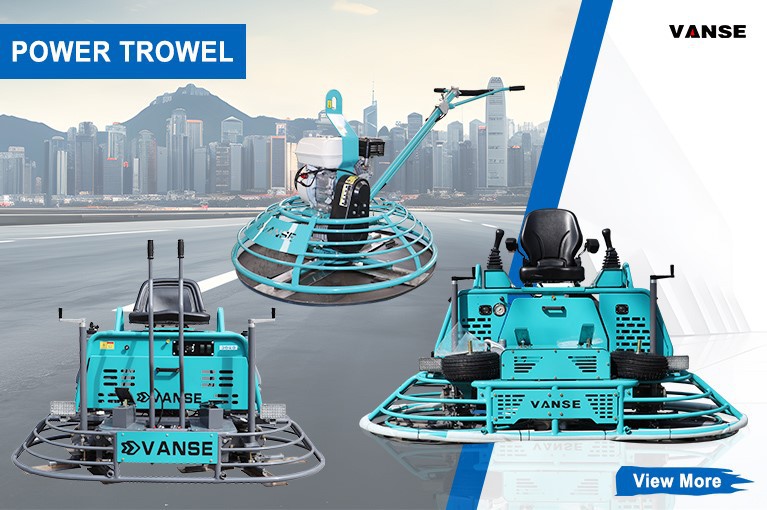
– When the trowel speed is moderate, it can effectively flatten the raised parts of the concrete surface and fill the sunken parts. For example, in general indoor floor construction, if the trowel speed is set in a suitable range, such as 70-100 rpm, the blade on the trowel can initially level the newly poured concrete surface as the trowel moves forward. Because at this speed, the pressure and flattening effect of the blade on the concrete are relatively uniform, and it will not be over-cut due to too fast a speed, nor will it be unable to effectively deal with the unevenness of the surface due to too slow a speed. – When the trowel speed is too high, the cutting force of the trowel blade on the concrete surface is too large. This may cause over-cutting of the concrete surface, destroy the original structure of the concrete, and cause fine cracks or pits on the surface. Especially for concrete whose strength has not yet fully developed, too high a speed may excessively disturb the cement slurry layer on the surface, affecting the final quality of the concrete. – On the contrary, if the trowel speed is too low, the trowel blade will not have enough force on the concrete surface. This will make it impossible to effectively deal with the uneven parts of the concrete surface. For example, on the concrete surface with large stone protrusions or template splicing marks, the trowel at a low speed may not be able to remove these defects, resulting in the ground flatness not meeting the requirements. – Appropriate trowel speed helps to improve the compaction of the concrete surface. When the trowel rotates at a certain speed, the weight of the trowel and the rotation of the blade work together to exert pressure on the concrete surface, so that the particles in the concrete are arranged more closely. For example, in concrete construction with high bearing capacity requirements such as industrial plant floors, the trowel speed is controlled at about 80-120 rpm, which can make the concrete surface better compacted during the troweling process, thereby improving the bearing capacity and wear resistance of the ground. – When the speed is too high, although the surface looks smoother, it may actually make the mortar layer on the concrete surface too loose. Because too high a rotation speed will cause the water in the mortar layer to evaporate too quickly, and excessive rotation will destroy the bonding force between the mortar particles, resulting in insufficient surface compaction, which is prone to quality problems such as sanding and peeling during later use. – If the speed of the trowel is too low, it will not generate enough pressure to compact the concrete surface. This will make the porosity of the concrete surface larger and reduce the compactness of the concrete. Such a concrete surface is easily damaged when there are heavy objects rolling or frequent friction. – A higher trowel speed can make the concrete surface have better gloss. When the speed reaches a certain level, such as 100-150 rpm, the trowel blade can further smooth the mortar layer on the concrete surface during rapid rotation, making the surface more delicate and producing gloss. In some places with high requirements for appearance, such as shopping mall floors and exhibition hall floors, by appropriately increasing the trowel speed, a smooth mirror effect can be created. – However, if the speed is too high, it may cause wavy textures on the concrete surface, affecting the uniformity of gloss. This is because too high a speed will cause the trowel to vibrate during the rotation process, and this vibration is transmitted to the concrete surface, affecting the surface flatness and destroying the uniformity of the gloss. – When the speed is too low, the surface roughness of the concrete is greater and the glossiness is poor. Because the trowel rotating at a low speed cannot fully smooth the microscopic unevenness of the concrete surface, it cannot form a smooth surface, and can only obtain a relatively rough matte effect.Application cases and performance requirements of concrete laser leveling in smart city construction (such as municipal roads and airport runways)
Concrete laser leveling machines have evolved from simple industrial floor construction equipment to indispensable high-precision and high-efficiency key equipment in the construction of smart city infrastructure. The following will elaborate in detail on its specific application cases and performance requirements in the construction of smart cities. The value of the concrete laser leveling lies in its ability to achieve extremely high flatness and levelness in one go and over a wide range, which is crucial for the infrastructure that relies on seamless connection and reliability in smart cities. Application scenarios: Mainly used for the paving and leveling of the base layer (water-stabilized layer) and surface layer of roads. In the "white-to-black" (asphalt overlay on cement pavement) project, an extremely smooth cement concrete base is provided for the asphalt surface layer. The value of smart cities Laying the foundation for intelligent transportation systems: Extremely smooth roads are ideal environments for vehicle-road coordination (V2X) and autonomous driving. It can reduce vehicle jolts, ensure the stability and accuracy of data from on-board sensors (lidar, cameras), and enhance driving safety and comfort. Enhancing road durability: High flatness avoids stress concentration, reduces rutting, pushing and cracking on the road surface, lowers maintenance costs throughout the entire life cycle, and aligns with the concept of "long-term management" in smart cities. Integrated intelligent construction: It can be combined with a 3D digital paving system to directly utilize the BIM model data of the road for construction, without relying on traditional physical pile foundations. This achieves pile-free construction, which is more precise, faster, and reduces human errors. Application scenario: This is one of the fields with the most stringent requirements for flatness. It is used for the new construction and major repair of runways, taxiways and aprons. The value of smart cities Flight safety and comfort: The flatness of the runway directly affects the safety of aircraft takeoff and landing as well as the comfort of passengers. The laser leveling can achieve an extremely high precision of less than 3 millimeters per 4-meter drop, meeting the strict standards of institutions such as the FAA (Federal Aviation Administration of the United States). Ensuring airport operational efficiency: A flat apron can guarantee smooth parking of aircraft, precise connection of jet Bridges, and efficient loading and unloading of goods. At the same time, it reduces the vibration damage to the aircraft on the runway and lowers the maintenance costs for airlines. Supporting the construction of smart airports: It provides an ideal foundation plane for the installation of sensors on airport runways (such as aircraft tracking sensors) and the installation of Internet of Things devices. Application scenarios: railway stations, subway station squares, bus hub stations, port and wharf storage yards, etc. The value of smart cities Seamless connection and accessibility: The flat ground facilitates the rapid gathering and distribution of people, vehicles and goods, especially providing an unobstructed passage environment for the disabled and the elderly. Supporting smart logistics: In ports and logistics parks, a flat storage yard is the foundation for the efficient and safe operation of intelligent equipment such as automated guided vehicles (AGVs) and automated gantry cranes. Even a slight deviation in the slope can cause the equipment to stop working or position wrongly. Enhancing the city's image: Large areas of high-precision flooring are a manifestation of the beauty and practicality of modern urban public Spaces. Application scenarios: It is used for the construction of the bottom cushion layer of pipe galleries and road surfaces. The value of smart cities Provide a platform for inspection robots: A flat bottom surface of the pipe gallery is the prerequisite for the stable operation of automatic inspection robots and the precise collection of data (such as temperature, humidity, and equipment status). Convenient for pipeline installation and maintenance: The flat foundation ensures the accuracy of subsequent pipeline support installation, facilitating standardized construction and rapid maintenance. To be competent for the above-mentioned high-standard application scenarios, the concrete laser leveling machine needs to have the following performance: Flatness and levelness: These are the core indicators. The equipment must be capable of stably achieving values of FF (flatness) ≥ 50, FL (levelness) ≥ 40, or even higher values (such as FF/FL > 100). For special projects such as runways, specific standards must be met (for example, the gap under a 3-meter straight ruler should be ≤3mm). System stability: The laser emission system, control system and hydraulic actuator must possess extremely high anti-interference capabilities and long-term operational stability to prevent drift or malfunction during prolonged and large-scale construction. 3D control system integration: This is an inevitable requirement for the construction of smart construction sites. The leveling machine should be capable of seamless integration with the 3D control system composed of GNSS (Global Navigation Satellite System), total stations, etc. By importing BIM or 3D design models, "form-based construction" can be achieved, completely getting rid of the reliance on traditional layout. Data collection and output: The equipment should be capable of real-time recording of data such as elevation, position, and workload during the construction process, and can transmit the data to the project management platform via the network to achieve digital traceability and quality monitoring of the construction process. High power and high efficiency: To deal with the large-scale concrete pouring in municipal engineering, high-power engines and efficient vibration systems are needed to ensure that the daily construction area can reach several thousand square meters. Complex working condition handling capacity: Capable of adapting to concrete of different grades and slump degrees; Have the ability to handle single and double slope ground. The equipment should be sturdy and durable, capable of adapting to the harsh environment on the construction site. Flexible sizes and models: We offer flat heads of various specifications to meet the needs of projects of different scales, ranging from narrow pipe galleries to wide runways. Core component quality: Core components such as the hydraulic system, laser sensor, and control computer should come from internationally renowned brands to ensure their reliability and lifespan. Structural design: The machine body structure is sturdy and can withstand long-term high-intensity construction operations. Key parts are designed to prevent wear and tear. Simple operation interface: Operators can quickly set parameters and monitor the status of the equipment through an intuitive graphical interface.Excessive bleeding: A large amount of water rises to the surface, forming a layer of cement slurry with an extremely high water-cement ratio. Convenient maintenance and upkeep: The equipment should be designed with channels that facilitate daily inspection, maintenance, and replacement of vulnerable parts, reducing downtime and enhancing equipment utilization. In the construction of smart cities, the concrete laser leveling has evolved from "a tool" to "a data-driven construction node". Through its inherent high-precision characteristics, it provides a precise reference surface of the physical world for the "nerve endings" (sensors, smart devices) and "arteries" (roads, runways) of smart cities. Selecting and applying laser leveling that meet the above performance requirements and integrating them into the BIM-based digital construction process is a key technical path for building high-quality, long-life, perceptible and interconnected smart city infrastructure. This is not only an upgrade in construction technology, but also a manifestation of the transformation of the construction management model towards intelligence and refinement Note: The parameters provided in this document are for reference only and are not mandatory. Due to differences in technical characteristics between different brands and models of laser levelers, please consult the manufacturer for a suitable solution before actual operation. This reference document assumes no responsibility for any issues arising from failure to follow the manufacturer's instructions.