Technical Knowledge
What is the working efficiency of concrete laser leveling machine?

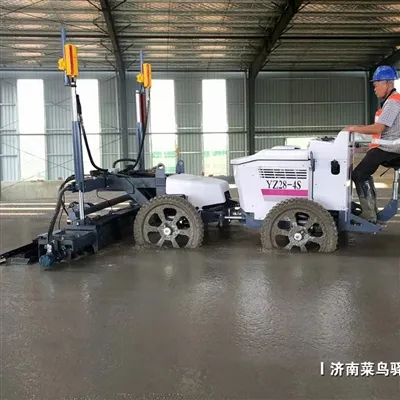
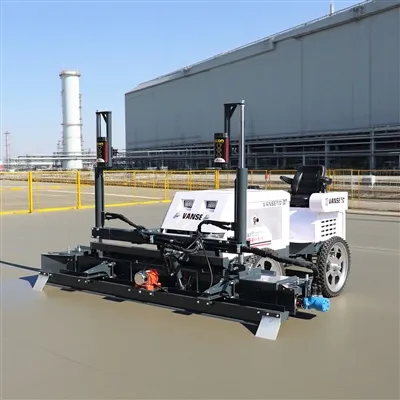
The working efficiency of concrete laser leveling machines varies depending on the specific model and operation method, but in general, its efficiency has been significantly improved compared to traditional manual levelinging methods.
Specifically, an ordinary concrete laser leveling machine can construct 600 to 1,050 square meters per hour at a normal driving speed of 4 to 7 meters per minute. Based on eight hours per shift, one piece of equipment can construct 4,800 to 8,400 square meters in one shift. Depending on the actual working conditions, this value will decrease. However, compared with the efficiency of manual construction within 800 square meters per shift, mechanical construction can undoubtedly greatly shorten the construction period and save construction costs.
Therefore, it can be seen that the concrete laser leveling machine has high working efficiency. For more information, you can ask us for answers.


Thanks to All the Friends Who Support and Trust Shandong Vanse Machinery Technology Co., Ltd.
If you want to know more about Shandong Vanse Machinery Technology Co., Ltd. or have any questions, please feel free to contact us:
Our Factory
Shandong Vanse Machinery Technology Co., Ltd.








Share this article

About the Author: Shandong Vanse Machinery Technology Co., Ltd.
Shandong Vanse Machinery Technology Co., Ltd. is a high-tech manufacturer specializing in concrete construction machinery, including laser screeds and related equipment. The company integrates R&D, production, and global sales, with products exported to over 60 countries and widely used in infrastructure projects worldwide.
Previous Post
Next Post
Related Articles
You Might Also Like
Acceptance Standards And Acceptance Procedures For Concrete Laser Leveling Machines
Acceptance standards and acceptance procedures for concrete laser leveling machines ✔ Introduction As an important equipment for modern floor construction, the concrete laser leveling machine's acceptance work is of great significance to ensure equipment performance and construction quality. This article aims to discuss the acceptance standards and acceptance process of concrete laser leveling machines, combined with specific cases, to provide practical reference for relevant personnel. ✔ Acceptance Criteria for Concrete Laser Leveling Machines 1. Equipment appearance inspection The appearance of the equipment should have no obvious damage, deformation, rust, etc. The connecting fasteners of each part should be in good condition without looseness or falling off. The paint coating on the surface of the equipment should be even and free of peeling, blistering, etc. 2. Equipment performance check The performance inspection of laser leveling machine mainly includes the following aspects: (1) Laser system: The laser transmitter should work normally, the light should be stable, and there should be no obvious drift. The receiver should be able to accurately receive the laser signal and control the leveling machine to operate according to the preset elevation. (2) Leveling system: The scraper, vibrator and other components of the leveling machine should work normally without obvious wear, deformation, etc. The leveled ground should be smooth, without waves, bubbles, etc. (3) Power system: Power systems such as engines and motors should work normally without abnormal noise, vibration, etc. Parameters such as oil pressure and water temperature should be within the normal range. 3. Safety performance check Equipment safety performance inspection mainly includes the following aspects: (1) Safety protection devices: The equipment should be equipped with complete safety protection devices, such as protection devices, emergency stop buttons, etc. These devices should be intact and functioning properly. (2) Electrical system: Electrical circuits should be arranged neatly and without damage or exposure. The grounding of the equipment should be firm and reliable to ensure the safety of electricity. (3) Operation convenience: The operation interface of the equipment should be clear and easy to understand, and the operating handles, switches, etc. should be sensitive and reliable and easy for operators to use. ✔ Acceptance process of concrete laser leveling machine 1.Preparation stage Before acceptance, relevant acceptance tools should be prepared, such as distance meters, spirit levels, vibration testers, etc. At the same time, an acceptance team should be formed to clarify their respective responsibilities and tasks. In addition, you should also be familiar with the equipment's technical specifications, operating procedures and other related documents, and understand the equipment's performance characteristics and operating requirements. 2. Appearance inspection Conduct a comprehensive inspection of the appearance of the equipment in accordance with the equipment appearance inspection requirements in the acceptance standards. If problems are discovered, they should be recorded in time and take photos to facilitate subsequent processing. 3.Performance check In accordance with the equipment performance inspection requirements in the acceptance standards, inspect each performance of the equipment one by one. Such as the calibration of the laser system, the flatness test of the leveling system, the oil pressure and water temperature detection of the power system, etc. During the inspection process, the operating procedures should be strictly followed to ensure the accuracy of the inspection results. 4. Safety performance check Conduct a comprehensive inspection of the safety performance of the equipment in accordance with the safety performance inspection requirements in the acceptance standards. Such as the integrity of safety protection devices, the safety of electrical circuits, the grounding of equipment, etc. During the inspection, special attention should be paid to potential safety hazards and dealt with promptly. 5. Rectification and re-inspection If problems are found during the inspection, the supplier should be notified promptly for rectification. After the rectification is completed, the acceptance team should conduct a re-inspection to ensure that the problem is completely resolved. If the problem is serious and cannot be rectified or the acceptance standards are still not met after rectification, acceptance should be refused and the equipment should be returned or replaced. 6. Preparation and filing of acceptance report After passing the acceptance, the acceptance team should prepare a detailed acceptance report. The report should include the acceptance process, problems discovered and their rectification status, acceptance conclusions, etc. The acceptance report should be true, accurate, complete, and archived for subsequent reference. ✔ Actual case analysis Taking a floor construction project in an industrial park as an example, the project uses a concrete laser leveling machine to perform ground leveling operations. During the project acceptance phase, the acceptance team conducted strict checks in accordance with the above acceptance standards and processes. 1. During the appearance inspection, the acceptance team found minor scratches and paint peeling on the surface of the equipment. After communication and negotiation with the supplier, the supplier agreed to repair and repaint the equipment. 2. During the performance inspection, the acceptance team found that there was a deviation in the calibration of the laser system, resulting in the flatness of the ground being substandard. After inspection, it was found that the problem was caused by the improper installation position of the laser transmitter. The supplier promptly reinstalled and calibrated the laser transmitter, and the problem was resolved. 3. During the safety performance inspection, the acceptance team found that the electrical circuits of the equipment were exposed, posing safety hazards. The supplier immediately insulated the exposed parts and strengthened safety protection measures. After rectification and re-inspection, all indicators of the equipment met the acceptance standards. The acceptance team finally issued a detailed acceptance report and archived it. ✔ Conclusion Through a detailed discussion of the acceptance criteria and acceptance process of concrete laser leveling machines and analysis of actual cases, we can see that strict acceptance work is of great significance to ensure equipment performance and construction quality. In the future, with the advancement of technology and the continuous development of the market, we look forward to more innovations and breakthroughs in performance and safety of concrete laser leveling machines, bringing more convenience and value to the floor construction industry. At the same time, we also call on relevant departments and enterprises to strengthen their understanding of the importance and necessity of equipment acceptance work, improve the scientificity and standardization of acceptance standards and processes, and provide a strong guarantee for the healthy development of the industry.What impact does poor laser signal reception stability of a concrete laser screed have on construction?
The poor stability of laser signal reception in concrete laser levelings is a serious construction quality issue. It can trigger a series of negative chain reactions like a "domino effect". The following are the specific impacts it has on construction, ranging from direct effects to long-term consequences: Manifestation: The ground shows "wavy" undulations, local depressions or protrusions. The reason is that the receiver signal is intermittent or fluctuating, causing the lifting cylinder of the leveling machine to constantly perform incorrect correction actions, and the scraper cannot maintain a constant height. Performance: It is impossible to achieve the absolute level of the design (such as high-standard warehouses) or precise slope (such as ground with drainage requirements). Reason: The laser emitter establishes an accurate reference plane. An unstable receiver means that the leveling has lost this reliable reference and is unable to spread the concrete to the designed height Performance: Frequent shutdowns are required to inspect the laser transmitter, receiver or circuit. The reason is that in order to ensure quality, the operator has to stop the construction for investigation once any abnormality is found in the process of flattening the head, which seriously slows down the progress. Performance: More experienced workers are needed for manual remediation. The reason is that for uneven ground, a large number of workers need to use handheld trowels to "make up" in the later stage. This is not only time-consuming and labor-intensive, but also the accuracy of manual leveling is far lower than that of machines. Manifestation: Inaccurate control of concrete usage. Reason: Uncontrolled elevation may lead to local concrete being too thick (wasting materials) or too thin (requiring replenishment and affecting strength). Manifestation: Irregular cracks appear on the ground after use. The reason is that poor flatness leads to uneven thickness of the concrete surface layer in subsequent pouring. Under the action of load and shrinkage, stress concentration is prone to occur at the junction of thin and thick layers, thus causing cracking. Symptoms: Dust, sand and aggregates appear on the ground too early. The reason is that high places are prone to wear and tear, while low places are likely to accumulate dirt and get damaged. At the same time, subsequent hardeners or sealants are also difficult to apply evenly, further reducing the overall durability of the ground. Performance: High-standard industrial floors (such as VNA ultra-flat warehouses), epoxy floors, PVC roll material laying, etc. cannot be carried out or the cost has increased sharply. The reason is that these processes have extremely high requirements for the flatness of the base layer (such as FF/FL values). If the base is uneven, either construction cannot be carried out or a huge cost needs to be spent on grinding or self-leveling to level it. Performance: Difficult installation of high-rack shelves and questionable stability; Automated equipment such as automatic guided vehicles (AGVs) and stackers operate unstably, have poor precision and a high failure rate. Reason: These devices are extremely sensitive to the flatness of the ground. Even the slightest unevenness can cause the devices to shift, vibrate or stop rotating. After understanding the impact, it is also necessary to know the root cause of the problem in order to solve it in a targeted manner Problems with the laser emitter itself: insufficient battery power, self-accuracy drift, or displacement or vibration caused by human or equipment collision. Receiver and sensor issues: Receiver damage, photosensitive element blocked by dirt, poor contact of signal lines. Environmental interference Obstruction: Construction workers, equipment, and building materials temporarily blocked the laser beam. Vibration: Heavy equipment is in operation nearby, or the tripod of the transmitter is not stable, causing the transmitter to shake. Temperature and air flow: In extreme environments, heat waves can cause changes in air density, leading to slight refraction of laser beams (" mirage "effect), which affects the stability of long-distance signals. Operational issue: When the transmitter is set up at a height that exceeds its effective range, or when the ground has a significant slope, the Angle between the laser line and the receiver is too large, resulting in poor signal reception. Conclusion The stability of laser signal reception is the "lifeline" of concrete laser leveling machine construction. Once a problem occurs, it is by no means just a minor issue of "a slightly uneven ground", but will have a serious impact on the project from multiple dimensions such as quality, efficiency, cost and safety. Before and during construction, ensuring the stability and reliability of the laser system must be regarded as a core task for inspection and management. Note: The parameters provided in this document are for reference only and are not mandatory. Due to differences in technical characteristics between different brands and models of laser levelers, please consult the manufacturer for a suitable solution before actual operation. This reference document assumes no responsibility for any issues arising from failure to follow the manufacturer's instructions.Economic analysis of ride-on power trowels and walk-behind power trowels in Projects of different scales
The economic choice between ride-on and walk-behind power trowels is far more than just about the unit price of the equipment; it is a systematic decision based on the scale of the project, overall cost and efficiency. The following is the economic analysis of the two in projects of different scales. Walk-behind power trowel: Low initial investment, strong flexibility, but high labor cost per unit area and low efficiency. Its economy is reflected in small-scale, complex-shaped or projects that require a large amount of edge work. Ride-on power trowel: High initial investment, but extremely low construction cost per unit area and high efficiency. Its economy has an overwhelming advantage in large-scale and large-scale projects. Comparison dimension Walk-behind power trowel Ride-on power trowel Economic analysis Initial purchase cost Low (unit price only tens of thousands of yuan) High (Unit price of hundreds of thousands of yuan, more than 5 to 10 times that of the hand-held type) The hand-holding style wins. This is the primary consideration for contractors with tight budgets and unstable sources of work. 2. Labor costs High (Requires 1 experienced operator +1 assistant worker, with extremely high labor intensity) Extremely low (only one operator is needed, with low labor intensity) The riding style wins. In the long term, the savings in labor costs are the greatest economic advantage of ride-on vehicles, especially against the backdrop of rising labor costs. 3. Work efficiency Low (about 100-200 square meters per hour, relying on the physical strength of the workers) Extremely high (reaching over 1,000 to 2,000 square meters per hour) The riding style wins. The efficiency gap can reach 5 to 10 times, directly affecting the construction period. 4. Construction quality and consistency Relying on the skills and experience of the operators, it is difficult to ensure complete flatness during large-scale construction. Guaranteed by machines, the flatness and smoothness are extremely high and uniform. The riding style wins. High quality reduces the risks and costs of subsequent repairs, which is particularly crucial for high-standard floors such as warehouses and logistics centers. 5. Applicability and flexibility High (capable of handling complex areas such as corners, column bases, and small rooms) Low (Unable to handle edges and narrow areas, usually needs to be used in conjunction with a hand-held type) The hand-holding style wins. The vehicle-mounted type cannot completely replace the walk-behind type in edge processing. 6. Operator requirements and fatigue levels Workers with high skills and abundant physical strength are prone to fatigue and their efficiency will decline over time. It has low physical requirements. Ordinary people can operate it after training and can maintain high efficiency for a long time. The riding style wins. The reliance on workers with special skills has been reduced, and the personnel are more stable. 7. Maintenance and operation costs Low (simple structure, low maintenance cost) Higher (Complex structure, higher maintenance costs for hydraulic systems, etc.) The hand-holding style wins. However, compared with the labor costs it saves, this increase is usually acceptable. Recommended equipment: walk-behind power trowel Economic analysis Sufficient efficiency: For small areas, the hand-held type can be completed within a reasonable time. Flexibility is essential: Such projects usually have many partitions and corners, making it impossible to carry them out in a ride-on style. Optimal cost: The high initial investment in a car cannot be diluted through this small project, and renting a car may not be cost-effective either. Using the hand-held type is the solution with the lowest total cost. Economic analysis Combination strategy: Use the ride-on type to handle the rapid slurry lifting, compaction and finishing of large areas, and use 1-2 walk-behind types to handle areas such as edges and column roots that machines cannot reach. The way of balance: This combination can not only take advantage of the high efficiency of the ride-on type in large areas, but also make up for the lack of flexibility of the hand-held type. It is the golden combination for achieving the best economic benefits and construction progress. At this point, the return on investment in the form of a vehicle begins to become very significant. Recommended equipment: Multiple ride-on power trowels and walk-behind power trowels working in formation Economic analysis Only efficiency can meet the construction period: Only vehicle-like high efficiency can complete the work within the required construction period of such projects. Economies of scale are reflected in the fact that the initial investment in a ride-on vehicle is diluted by the vast area, and the depreciation cost per unit area of equipment becomes very low. Meanwhile, the labor cost savings and the construction period advantage it brings are extremely significant. Quality Assurance: For the extremely demanding flatness of the floor, only the ride-on type can ensure the uniformity of quality and avoid huge repair costs caused by quality issues. Project scale Recommended plan Core economic logic Small and complex shapes Walk-behind type Control the initial investment and leverage the advantage of flexibility. Medium-sized, regular large-area 1 Ride-on power trowel + walk-behind type Reduce equipment investment through efficiency improvement to achieve the optimal total cost. Large and extra-large ride-on power trowel team + walk-behind type Efficiency is the only option, maximizing economies of scale and achieving the highest return on investment. The final decision should also take into account: Business model: If you have been undertaking large-scale floor projects for many years, investing in ride-on flooring is an inevitable choice. If the projects are scattered and mainly small in scale, walk-behind or rental vehicle types are more economical choices. Schedule pressure: Tight schedules often force you to choose more efficient equipment, even if the initial investment is higher. Trend of labor costs: In the long run, labor costs will only keep rising. Investing in mechanized and automated equipment is an inevitable trend for cost reduction and efficiency improvement. Therefore, choosing which equipment to use is essentially a precise financial calculation of your business type, project scale and long-term development strategy. Note: The parameters provided in this document are for reference only and are not mandatory. Due to differences in technical characteristics between different brands and models of laser levelers, please consult the manufacturer for a suitable solution before actual operation. This reference document assumes no responsibility for any issues arising from failure to follow the manufacturer's instructions.