Technical Knowledge
Application cases and effect display of concrete laser leveling machine
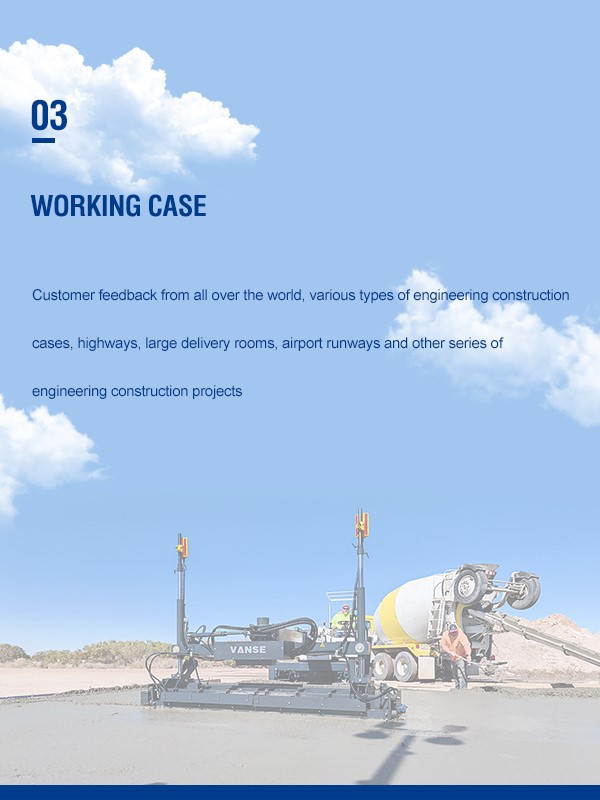
The concrete laser leveling is a piece of equipment widely used in the field of concrete construction. Its appearance has greatly improved the efficiency and accuracy of concrete construction. The application cases and effect demonstrations of concrete laser leveling machines will be introduced below.
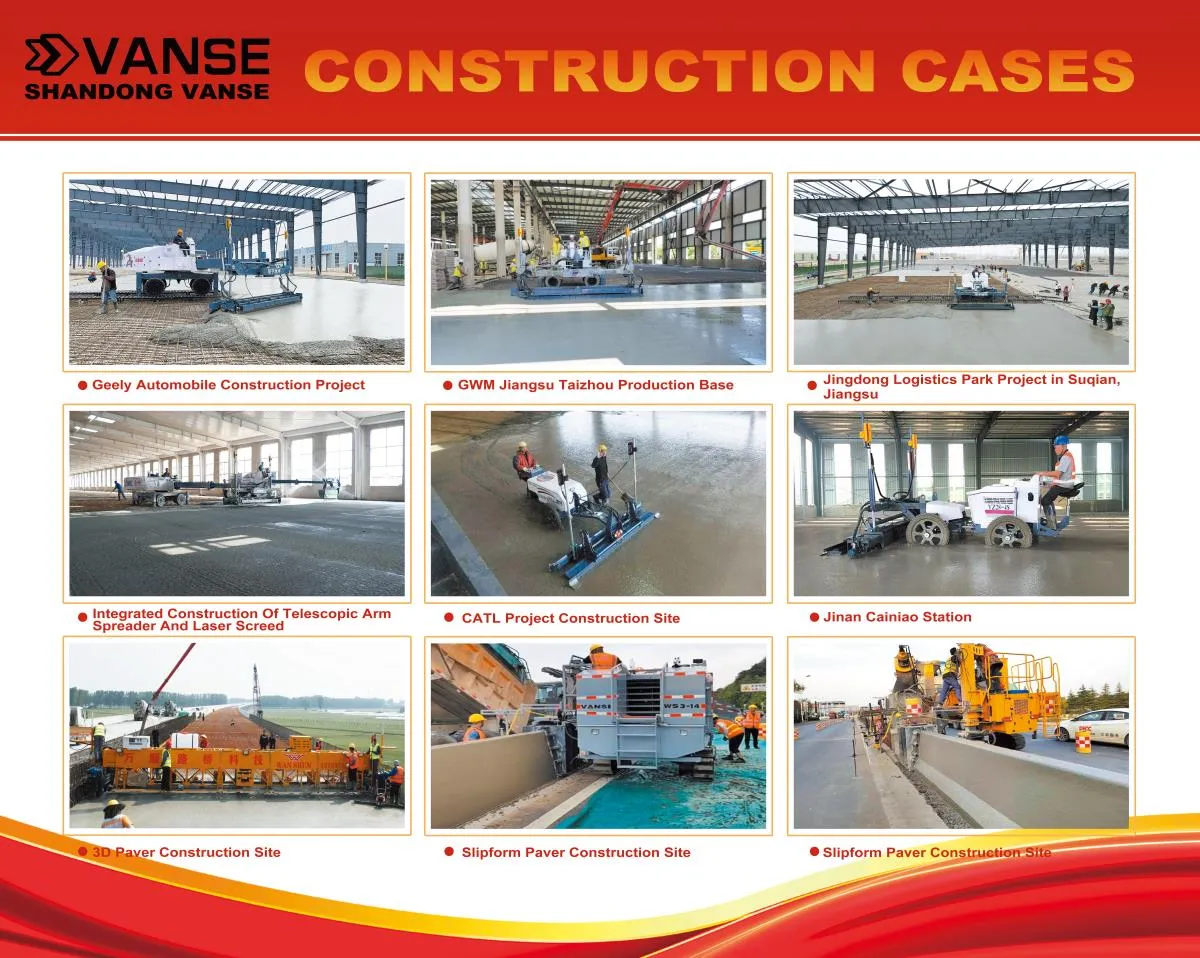
Case 1: Highway construction
A highway construction project requires the laying of a large amount of concrete pavement. The traditional manual construction method is inefficient and difficult to ensure the smoothness and quality of the pavement. After using the concrete laser leveling, the equipment completed the laying of large areas of concrete in a short time, and the smoothness and quality of the road surface were greatly improved. After using a concrete laser leveler, the construction efficiency can be increased several times, and unevenness and quality problems caused by human factors are avoided.
Case 2: Bridge construction
During the construction of a certain bridge, a layer of high-quality concrete needs to be laid on the bridge deck. Due to the complex shape of the bridge deck, traditional manual construction methods are difficult to ensure the quality and flatness of the concrete. After using the concrete laser leveling machine, the equipment can complete the laying of bridge deck concrete in a short time and ensure the quality and flatness of the concrete. Using a concrete laser leveling can greatly improve the efficiency and safety of bridge construction.
Case 3: Large workshop floor construction
In the ground construction of a large workshop, a large area of concrete needs to be laid, and the flatness and precision of the ground are required to be very high. Traditional manual construction methods are difficult to meet the requirements. After using the concrete laser leveling machine, the equipment completed the laying of large areas of concrete in a short time, and the flatness and accuracy of the ground were greatly improved. Using a concrete laser leveling can improve construction efficiency and quality, while also improving workshop safety and productivity.
Show results
Concrete laser leveling machine has the following effects in application:
Improve construction efficiency:
Using a concrete laser leveling machine can quickly complete large-area concrete laying, which is more efficient than traditional manual construction methods.
Improve construction quality: The concrete laser leveling can ensure the flatness and precision of concrete, avoid unevenness and quality problems caused by human factors, and improve construction quality.
Improve economic benefits:
The use of concrete laser leveling machines can shorten the construction cycle, reduce labor costs, improve construction efficiency, and also reduce rework and maintenance costs caused by quality problems.
Improve production safety:
The use of concrete laser levelinging machines can reduce the time and frequency of personnel exposure to hazardous environments, reducing workers’ labor intensity and the risk of safety accidents.
In summary, concrete laser levelings have broad application prospects and advantages in construction projects in highways, bridges, large workshop floors and other fields. Its emergence can not only improve construction efficiency and quality, but also improve economic benefits and production safety. Therefore, it is very necessary to choose a suitable concrete laser leveler for various concrete construction projects.
Thanks to All the Friends Who Support and Trust Shandong Vanse Machinery Technology Co., Ltd.
If you want to know more about Shandong Vanse Machinery Technology Co., Ltd. or have any questions, please feel free to contact us:
Our Factory
Shandong Vanse Machinery Technology Co., Ltd.


Share this article

About the Author: Shandong Vanse Machinery Technology Co., Ltd.
Shandong Vanse Machinery Technology Co., Ltd. is a high-tech manufacturer specializing in concrete construction machinery, including laser screeds and related equipment. The company integrates R&D, production, and global sales, with products exported to over 60 countries and widely used in infrastructure projects worldwide.
Previous Post
Next Post
Related Articles
You Might Also Like
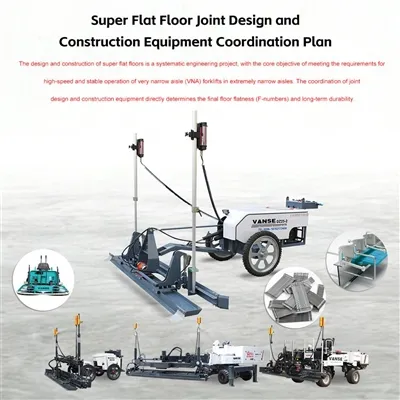
Super Flat Floor Joint Design and Construction Equipment Coordination Plan
The design and construction of super flat floors is a systematic engineering project, with the core objective of meeting the requirements for high-speed and stable operation of very narrow aisle (VNA) forklifts in extremely narrow aisles. The coordination of joint design and construction equipment directly determines the final floor flatness (F-numbers) and long-term durability. The following is a professional plan for super flat floor joint design and equipment coordination: Ultra-flat floor slabs typically follow the principle of "large slab spans and fewer joints" to reduce the impact of forklift wheels on the joints. Load Transfer Bar Design: Square load transfer bars or armored joints must be used. Armored joints consist of two cold-drawn flat steel bars, which effectively protect the concrete edges from being crushed by the hard wheels of forklifts. Placement: Avoid placing joints in the main forklift traffic areas as much as possible. In VNA (Very Narrow Aisle) areas, construction joints should be parallel to the aisles and ideally located under the racking rather than in the center of the aisle. Timing of cutting the joints: The joints should be cut after the concrete has initially set and reached a strength of 5-10 MPa, usually 6-12 hours after pouring. Spacing control: It is recommended to keep the spacing within 6m x 6m to prevent the formation of irregular, random cracks. The joints must be filled with **high-hardness polyurea** or semi-rigid epoxy resin to support the edges of the joint. The filler should slightly overflow during application, and after curing, the excess should be trimmed flush with a blade to ensure the joint is perfectly level with the floor surface. Achieving a super-flat floor relies not only on manual work but also on high-precision automated equipment. This is the core of super-flat floor construction. Equipment Selection: A telescopic-arm laser leveling machine with automatic leveling function is used. Coordination Key Points: The laser transmitter should be installed at a high location unaffected by vibrations. The leveling machine automatically adjusts the height of the leveling head at a frequency of 10 times per second to ensure the accuracy of the initial floor elevation. In some special tunnels requiring a flatness level of F min, the laser leveling process still needs to be supplemented with a side form guide rail system. Process: Precision channel steel or I-beams are used as guide rails, combined with manual verification using a Leveling bar, to ensure extremely high accuracy in both the transverse and longitudinal directions. Double-drive ride-on power trowel: Used for large-area concrete finishing and compaction. Recommended procedure: Must be used in conjunction with a **long-handled straightedge** for repeated leveling. After each pass with the power trowel, use a 3-4 meter long straightedge to level the surface in both longitudinal and transverse directions, eliminating any waves left by the trowel. Stages Core Equipment Key points for implementation Spreading and leveling Laser leveling machine + laser control system Ensure continuous material supply to prevent machine stoppages that could cause indentations. Initial leveling Long-handled aluminum-magnesium alloy Leveling (Check Rod) Before the concrete begins to set, manually smooth out any minor unevenness left by the leveling machine through repeated scraping. Grouting and finishing Ride-on power trowel + floating disc Strictly control the finishing time, adjusting the blade angle according to the concrete's hardening degree. Joint treatment Automatic self-propelled concrete saw + polyurea joint filling machine The cutting depth is typically 1/3 to 1/4 of the slab thickness. After construction is complete, the floor must be inspected using a professional **floor flatness testing instrument (such as Dipstick or FloorPro)**. FF (Floor Flatness): Reflects the flatness of the floor (small-scale undulations). FL (Floor Levelness): Reflects the levelness of the floor (large-scale inclination). Key reminder: The success of a super-flat floor depends 50% on equipment precision and 50% on controlling the concrete mix design (slump variation needs to be controlled within ± 20 mm). Note: The parameters provided in this document are for reference only and are not mandatory. Due to differences in technical characteristics between different brands and models of laser levelers, please consult the manufacturer for a suitable solution before actual operation. This reference document assumes no responsibility for any issues arising from failure to follow the manufacturer's instructions.Safety measures in concrete floor construction
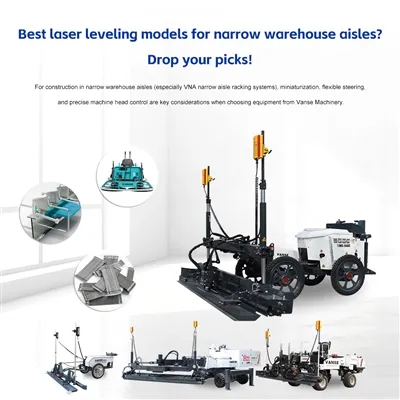
Safety measures in concrete floor construction Concrete floor construction is a complex project involving many links, among which safety issues are particularly critical. From safety preparation before construction to management of the construction site, to the operation of mechanical equipment, personal protection and equipment, high-altitude operations and protection, electrical safety and fire prevention, as well as emergency handling and rescue, each link is directly related to the life safety of construction personnel and the smooth progress of the project. Therefore, this article will focus on these aspects and discuss in detail the safety measures in concrete floor construction: 1. Safety preparation before construction Safety preparation before construction is the basis for ensuring the smooth progress of concrete floor construction. First of all, the construction unit should formulate a detailed safety construction plan, clarify the safety construction goals, responsible persons and safety measures, and conduct safety technical briefings for construction personnel so that they can fully understand the safety risks and countermeasures that may be encountered during construction. Secondly, a comprehensive inspection should be carried out on the construction site to eliminate safety hazards, such as checking whether the construction power lines are intact and whether the mechanical equipment is operating normally. At the same time, according to the needs of the construction, the construction area should be reasonably arranged, and obvious safety warning signs should be set up to ensure that construction personnel can clearly identify dangerous areas. 2. Construction site management Construction site management is an important link to ensure the safety of concrete floor construction. The construction unit should establish a sound construction site management system and clarify various safety management regulations, such as prohibiting smoking at the construction site and prohibiting the random discarding of construction waste. At the same time, a dedicated person should be set up to be responsible for on-site safety management, regularly inspect the construction site, and promptly correct violations. In addition, the construction site should be kept clean and orderly, and construction materials and equipment should be stored in categories to avoid confusion and misoperation. 3. Safety of mechanical equipment operation Concrete floor construction involves a large number of mechanical equipment, such as mixers, rollers, pumping equipment, etc. In order to ensure the safety of mechanical equipment operation, first of all, it should be ensured that the operator has the corresponding operating qualifications and skills, and is familiar with the working principle and operating procedures of mechanical equipment. Secondly, mechanical equipment should be regularly maintained to ensure that it is in good working condition. At the same time, when operating mechanical equipment, it should be strictly carried out in accordance with the operating procedures, and overload operation or illegal operation is prohibited. 4. Personal protection and equipment Construction workers in concrete floor construction need to wear appropriate personal protective equipment to reduce the risk of injury. First of all, construction workers should wear basic protective equipment such as safety helmets, safety shoes and protective glasses. To deal with possible injuries such as falling objects and splashes. Secondly, depending on the construction environment, construction workers should also wear specific protective equipment such as dustproof mouthpieces and anti-noise earplugs to deal with occupational hazards such as dust and noise. In addition, construction units should regularly check and replace personal protective equipment to ensure that it is always in an effective state. 5. High-altitude work and protection In the construction of concrete floors, high-altitude work is inevitable. In order to ensure the safety of high-altitude work, construction units should set up special safety nets, safety fibers and other protective facilities to prevent construction workers from falling and causing accidents. At the same time, construction workers should wear safety belts when working at heights, and ensure that the connection between the safety belts and the fixed points is firm and reliable. In addition, construction units should also regularly inspect the high-altitude work areas to eliminate potential safety hazards in a timely manner. 6. Electrical safety and fire prevention Electrical safety and fire prevention are safety issues that require special attention in the construction of concrete floors. Construction units should strictly abide by the relevant national regulations on electrical safety and fire prevention to ensure that the electrical equipment and lines at the construction site are safe and reliable. At the same time, the construction site should be equipped with a sufficient number of fire-fighting equipment and facilities, such as fire extinguishers, fire hydrants, etc., to deal with possible fire accidents. In addition, construction workers should master basic firefighting knowledge and skills, and be able to quickly take effective countermeasures when a fire occurs. 7. Emergency handling and rescue Although we can take various preventive measures to reduce the safety risks in concrete floor construction, accidents may still occur. Therefore, it is crucial to establish a sound emergency handling and rescue mechanism. The construction unit should formulate a detailed emergency plan to clarify the response measures and rescue procedures for various accidents. At the same time, emergency drills should be organized regularly to improve the emergency handling capabilities and rescue skills of construction personnel. In the event of an accident, the construction unit should immediately activate the emergency plan and quickly organize rescue forces to deal with it, minimizing the losses caused by the accident. In summary, safety measures in concrete floor construction involve many aspects, which require the joint efforts of construction units and construction personnel. By strengthening pre-construction safety preparation, construction site management, mechanical equipment operation safety, personal protection and equipment, high-altitude operations and protection, electrical safety and fire prevention, and emergency handling and rescue, we can effectively reduce the safety risks in concrete floor construction and ensure the life safety of construction personnel and the smooth progress of the project. At the same time, construction units and construction personnel should continue to learn new knowledge and master new technologies to adapt to the ever-changing safety needs and challenges in concrete floor construction.Best laser leveling models for narrow warehouse aisles Drop your picks!
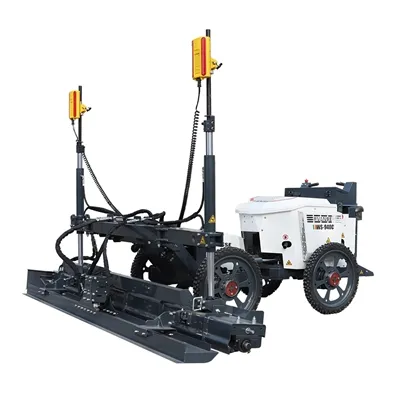
For construction in narrow warehouse aisles (especially VNA narrow aisle racking systems), miniaturization, flexible steering, and precise machine head control are key considerations when choosing equipment from Vanse Machinery. Based on Vanse's latest product line, the following are some recommended models for narrow space construction: This is the most classic small walk-behind screed from Vanse, ideal for use in warehouses where some shelving has already been installed or space is extremely limited. Reasons for recommendation: Its small size (width approximately 2.5m to 2.8m) and light weight allow it to easily enter elevators or operate on the second floor or multiple levels of a warehouse without worrying about load capacity issues. Narrow aisle performance: With manual operation, it has a very small turning radius, allowing it to flexibly maneuver around columns and embedded structures. Key parameters: The flatness error is controlled within approximately ±1.5mm, perfectly meeting your requirements for ultra-flat floors. If you find walk-behind models a bit slow, but your workspace doesn't accommodate large telescopic boom machines, the YZ28-4S is the perfect balance. Reasons for Recommendation: Compared to walk-behind models, it features ride-on operation and an automatic cruise control system, ensuring a constant travel speed, which is crucial for consistent floor flatness. Performance in Narrow Passages: The four-wheel drive design provides strong traction, and the intelligent steering system allows for much faster turning and positioning in confined areas compared to traditional machines. Key Parameters: Paving width: 2.5m. It integrates screw spreading, vibration, and leveling into one machine, resulting in a high one-time molding rate and reducing the need for manual assistance. This model belongs to Vanse's high-end series, mimicking advanced international miniaturized structures and specifically developed for high-standard indoor logistics and warehousing. Reasons for Recommendation: Its compact structure and low center of gravity design ensure exceptional stability when paving high-viscosity (low-slump) concrete, minimizing the formation of surface waves. Narrow Aisle Performance: It features four-wheel steering, even allowing for a degree of "crab steering," providing extremely high positioning accuracy between narrow racking aisles. Key Parameters: Equipped with an imported laser system, it can be controlled in conjunction with a 3D total station. If you need to construct dedicated narrow-aisle tracks for VNA racking (i.e., Fmin floor slabs), this machine offers the best system compatibility. Application Scenarios Recommended models Advantages Operating method Ultra-narrow spaces / Multi-story buildings DZ25-2 Most lightweight and easiest to deploy Hand-held type Standard warehouse aisles / High efficiency YZ28-4S Automatic movement and constant pressure Riding type Super flat floors (SF) / VNA (Very Narrow Aisle) WS-550/940C Extremely high laser accuracy and good stability Riding type Machine head width: Vanse's standard leveling heads are typically 2.5m or 3m wide. Before purchasing or renting, please confirm the spacing of the warehouse columns. If the spacing is exactly 3m, it is recommended to choose a 2.5m machine head to allow for clearance. Laser transmitter position: During narrow aisle construction, the signal is easily blocked by shelves or walls. It is recommended to use Vanse's matching high-sensitivity Leica receiver and position the transmitter as close as possible to the center line of the aisle. Are you planning a renovation of an existing warehouse or construction of a new one? I can analyze your specific situation to determine if a 3D control system is necessary. Contact us NOW Note: The parameters provided in this document are for reference only and are not mandatory. Due to differences in technical characteristics between different brands and models of laser levelers, please consult the manufacturer for a suitable solution before actual operation. This reference document assumes no responsibility for any issues arising from failure to follow the manufacturer's instructions.