Insight blog
Global Market Guide to Laser Screed Paving-Head Widths 2026
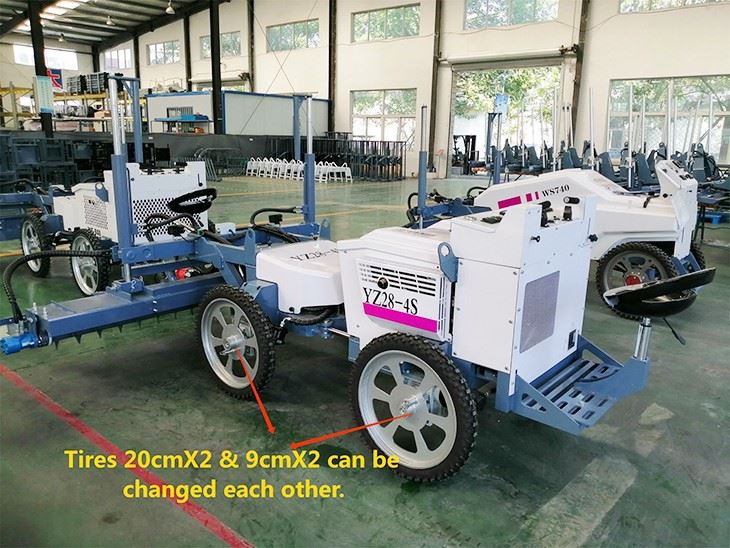
Laser Screed Paving-Head Width Guide for the Global Market
Quick Answer

The correct laser screed screed head width depends on slab size, access conditions, concrete volume, reinforcement density, and required flatness. For narrow bays, aisles, and indoor work, a paving head around 2.5–3.5 m is generally practical. For factories, warehouses, and logistics slabs, 4–6 m heads are commonly selected. Large boom-type laser screeds with 6–8 m or wider working heads are best suited to open industrial floors, ports, airport aprons, and major infrastructure projects.
For the Global market, buyers should select the widest head that can still work safely around columns, wall edges, openings, and reinforcement. A wider screed head can raise output per pass, but it does not automatically improve floor quality; machine rigidity, laser control response, operator skill, concrete consistency, and finishing coordination remain equally important.
Shortlist suppliers with documented machine specifications, local technical support, training capability, spare-parts access, and experience with projects similar to yours. Qualified international manufacturers, including Chinese suppliers with applicable CE or local certifications and strong pre-sales and after-sales support, can offer an attractive cost-performance option for contractors, distributors, and rental fleets.
What Paving-Head Width Means on a Laser Screed

A laser screed paving head is the leveling and spreading assembly that contacts fresh concrete, distributes material, removes excess concrete, and helps establish the required elevation. Depending on the model, the head may include an auger, plow, strike-off blade, vibratory system, and finishing pan. The effective width is the usable concrete coverage produced in one pass rather than simply the outside dimension of the machine.
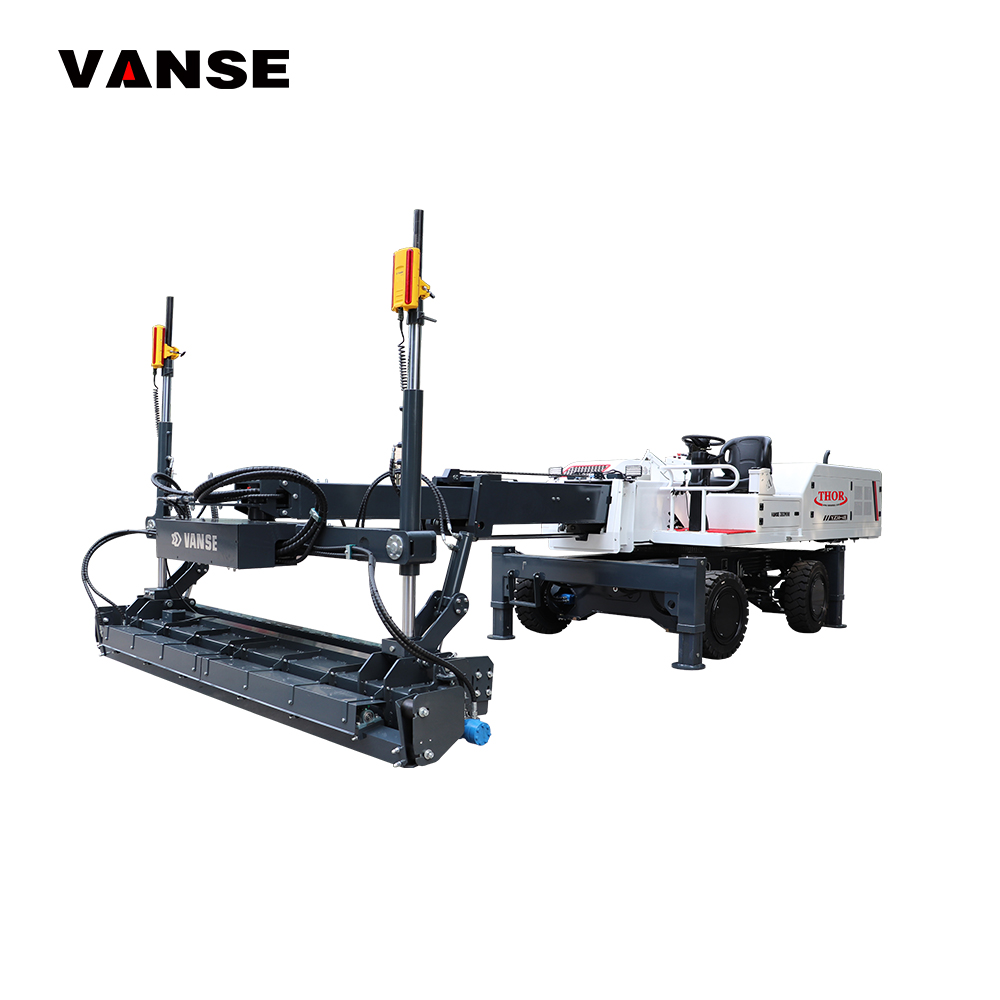
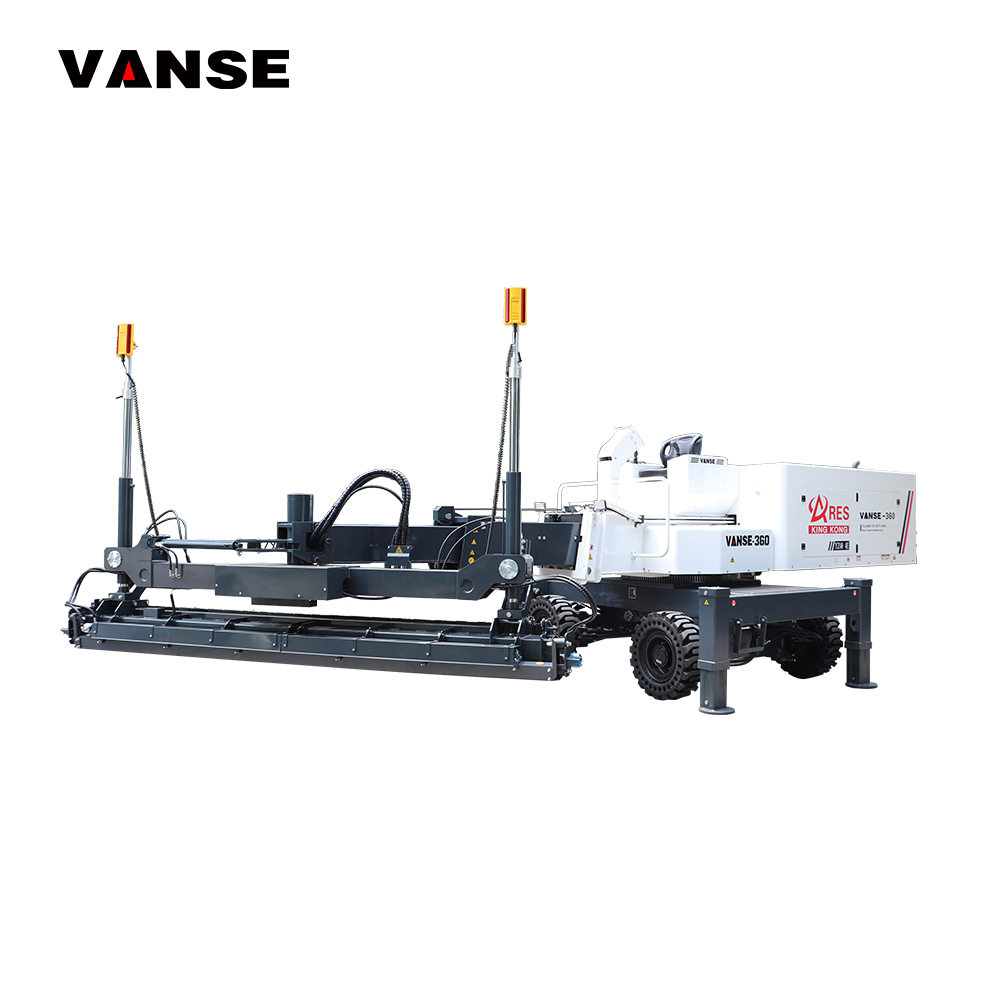
When contractors search for “laser screed screed head width,” they are usually comparing the working span of the leveling head. On ride-on machines, the head is generally located at the front or beneath the machine frame and is intended for controlled work in medium-sized slabs. On boom-type machines, a long articulated boom moves the screed head around a stationary or mobile base, allowing a broad circular working area and high placement productivity.
Head width should always be evaluated with the full operating envelope. A 6 m screed head may be technically efficient, but it can become difficult to use in a building with dense columns, narrow loading bays, frequent pits, embedded rails, or many block-outs. Conversely, a 3 m head may fit every access constraint but require more passes and more placement time on a 25,000 m² distribution center floor.
Global Market Overview for Laser Screed Head Selection

The Global market for laser screeds is shaped by industrial construction, e-commerce warehousing, cold-chain facilities, manufacturing expansion, data centers, airports, port yards, and public infrastructure. Contractors in North America and Europe often prioritize stringent flatness targets, documented service response, operator support, and compatibility with 3D control workflows. In the Middle East, Africa, Latin America, and Southeast Asia, buyers frequently balance high productivity with transportability, fuel availability, climate resistance, and practical maintenance requirements.
Major project hubs such as Rotterdam, Hamburg, Dubai, Jeddah, Singapore, Ho Chi Minh City, Los Angeles, Houston, Toronto, São Paulo, Monterrey, Mumbai, and Melbourne continue to create demand for high-volume concrete equipment. These locations are linked to ports, logistics corridors, manufacturing clusters, and large commercial developments where a properly sized laser screed can reduce labor dependency and improve slab consistency.
In mature industrial flooring markets, the decision is increasingly based on total installed cost rather than machine purchase price. The selected paving-head width affects concrete placement rate, crew size, finishing schedule, fuel use, transport needs, and the number of joints or passes required. The best specification is therefore a project-production decision, not only an equipment decision.
Common Laser Screed Head Width Ranges
The following comparison explains where different working widths are normally most effective. Actual dimensions vary by model, manufacturer, optional head design, and regional configuration. Buyers should request a signed specification sheet and verify the effective finishing width before placing an order.
| Working Head Range | Typical Machine Type | Best Project Environment | Practical Strength | Main Limitation |
|---|---|---|---|---|
| 2.0–3.0 m | Compact walk-behind or small ride-on screed | Repair slabs, small buildings, narrow bays | Easy access around walls and obstructions | Lower output on large open pours |
| 3.0–4.0 m | Ride-on laser screed | Commercial floors, workshops, medium warehouses | Good balance of maneuverability and coverage | May require more passes in large open slabs |
| 4.0–5.0 m | Heavy-duty ride-on or compact boom machine | Factories, logistics centers, parking structures | Strong production rate with manageable access | Needs organized concrete placement |
| 5.0–6.0 m | Ride-on or boom-type laser screed | Large warehouses and distribution centers | Efficient coverage for broad slab bays | Less suitable for dense column layouts |
| 6.0–8.0 m | Boom-type laser screed | Industrial campuses, terminals, open factory floors | High output and fewer passes | Higher transport and investment requirements |
| More than 8.0 m | Specialized boom or custom system | Airport pavements, port yards, major infrastructure | Maximum reach for open work zones | Requires experienced crew and detailed planning |
A head in the 3–4 m range is often the most flexible choice for contractors who serve mixed projects. It can work in warehouses, commercial facilities, light industrial buildings, and medium-sized exterior slabs without demanding the access space of a large boom machine. A 5–6 m head is often the productivity sweet spot for specialized industrial flooring contractors with regular warehouse work.
Laser Screed Types and Their Usable Head Widths
Machine architecture determines not only paving-head width but also reach, operator visibility, transport procedure, and setup time. The same nominal head width can perform differently when mounted on a ride-on chassis versus a long-reach boom.
| Machine Category | Typical Head Width | Operating Method | Recommended Use | Buyer Consideration |
|---|---|---|---|---|
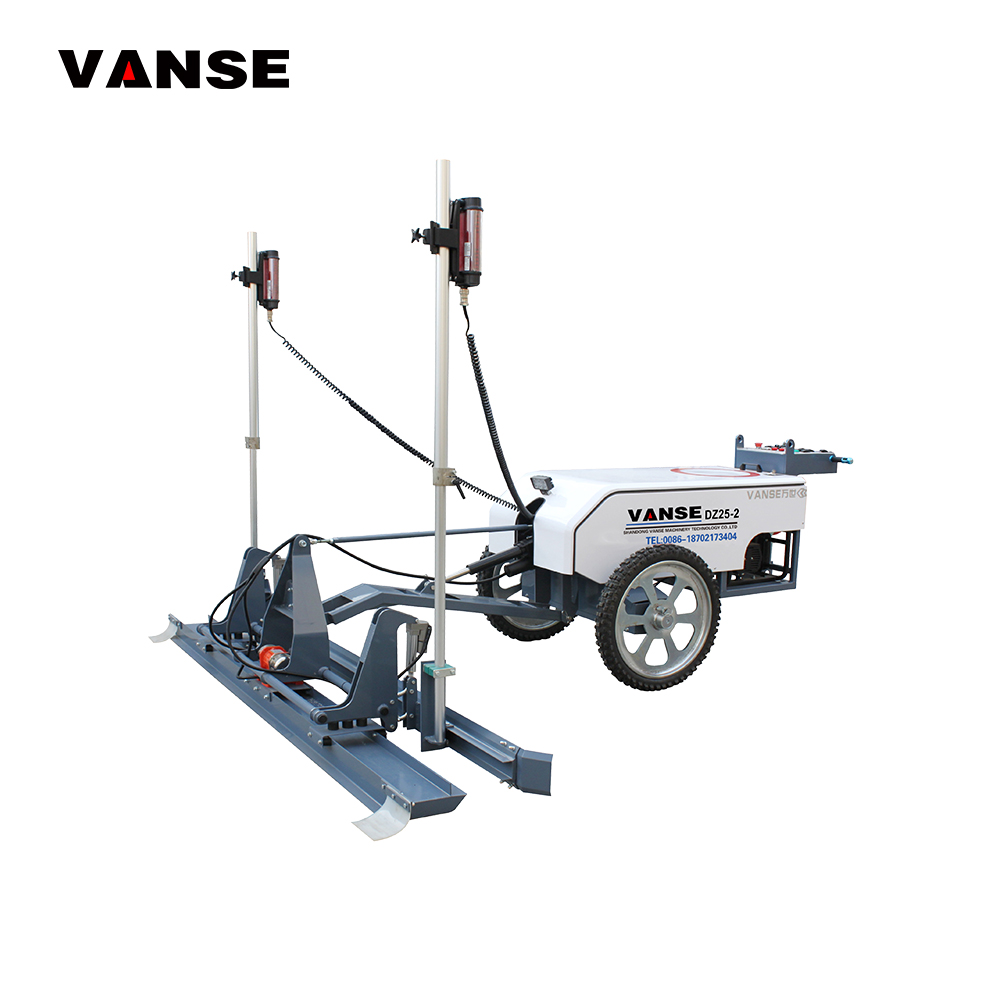
| Walk-behind laser screed | 2.0–3.5 m | Operator walks behind or beside the machine | Small slabs, renovation, difficult access | Lower purchase cost but lower daily volume |
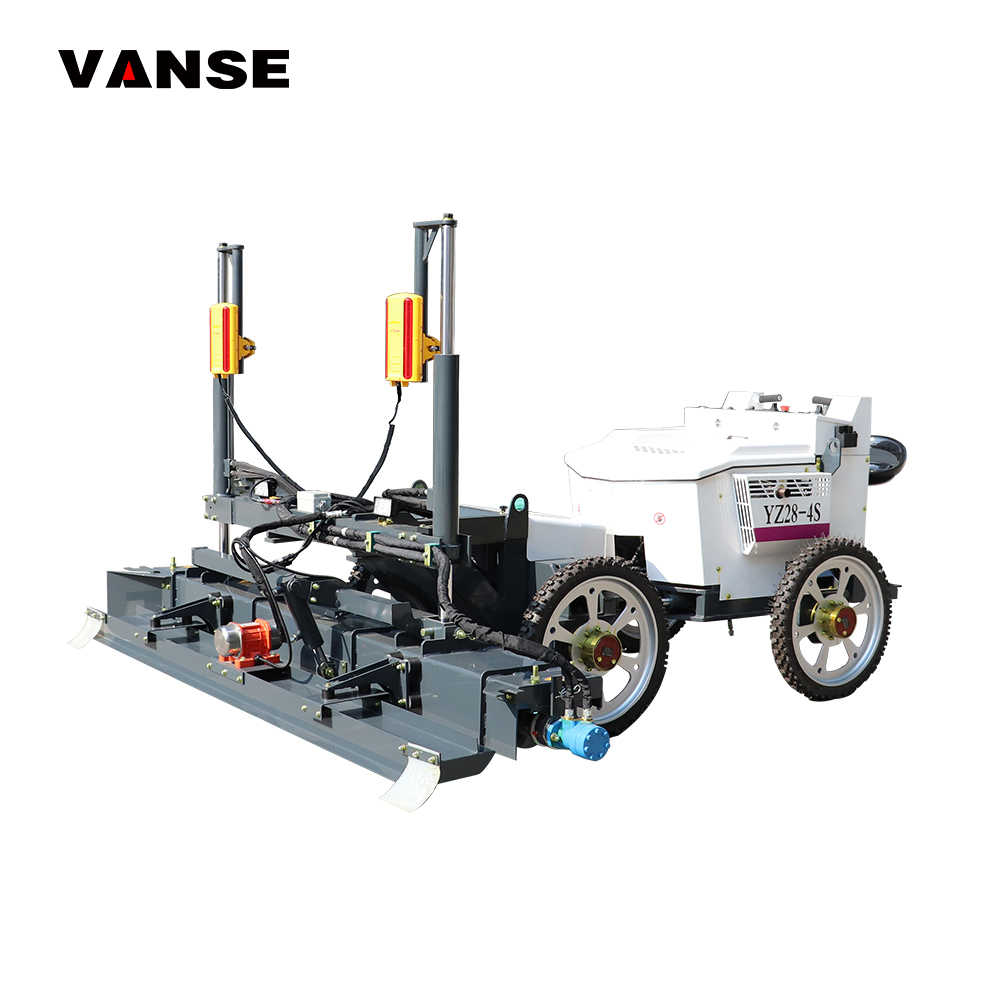
| Compact ride-on laser screed | 3.0–4.5 m | Seated operator controls travel and screeding | Commercial and medium industrial slabs | Check door clearance and turning radius |
| Standard ride-on laser screed | 4.0–5.5 m | Hydraulic drive with laser-guided elevation | Warehouses, factories, logistics buildings | Confirm concrete placement capacity matches output |
| Boom-type laser screed | 5.0–8.0 m | Articulated boom positions the screed head | High-volume open floors and large pours | Assess boom reach, setup area, and transport plan |
| 3D profile-compatible screed | Varies by chassis and head design | Laser and 3D control may guide elevation or slope | Drainage slabs, ramps, external paving | Survey control and digital model preparation are essential |
| Custom-configured screed system | Project-specific | Configured for special placement conditions | Airfields, ports, slab-on-grade programs | Requires technical review before manufacture |
Ride-on equipment is widely favored where frequent relocation, indoor operation, and moderate slab geometry are expected. Boom-type equipment is more appropriate where the objective is to cover large areas from a stable operating position with fewer travel tracks. For each category, the key question is whether the screed head can maintain stable contact and correct elevation while fresh concrete is continuously supplied.
How to Choose the Correct Screed Head Width
Begin with the pour plan rather than the brochure. Measure the clear width between columns, wall lines, dock pits, elevator cores, construction joints, and embedded features. Review the planned concrete discharge points and calculate whether the pump, conveyor, truck mixer, or placing boom can keep the screed supplied. A machine waiting for concrete loses the advantage of a wide head.
For a warehouse with column spacing of 9 m by 9 m, a 4–5 m head can often work efficiently while allowing controlled overlap and clearance. For a wide-open 18 m or 24 m bay, a 6 m or greater head can reduce the number of travel lines and help the finishing crew maintain a stable sequence. For a retrofit plant where access is through 3.2 m doors, the transport dimensions and folding arrangement may matter more than the operating head width.
| Selection Factor | Questions to Ask | Effect on Width Choice | Recommended Verification |
|---|---|---|---|
| Slab area | How many square meters are poured per shift? | Larger daily volume supports wider heads | Compare planned output to actual placement capacity |
| Column grid | What is the clear distance between obstructions? | Tighter grids favor narrower, maneuverable heads | Mark machine travel paths on the floor plan |
| Access route | Are there doors, ramps, lifts, or low ceilings? | Transport width may limit machine selection | Check folded dimensions and loading weight |
| Concrete supply | Can concrete arrive continuously at the front? | Wide heads need steady volume to stay productive | Review batch plant, pump, and truck cycle times |
| Flatness requirement | Is the floor conventional, high-tolerance, or superflat? | Quality depends on control and process, not width alone | Request test methods and operator references |
| Reinforcement layout | Are there dense bars, mesh, fibers, or dowels? | Complex reinforcement can favor more controlled passes | Review head clearance and concrete rheology |
| Labor availability | Is skilled screeding labor difficult to hire? | Automated wider systems can reduce manual labor | Include training and finishing crew planning |
Buyers should also assess the edge-work strategy. Laser screeds cannot eliminate all manual work at walls, corners, around columns, pits, and penetrations. A wide head may increase central-area production but still require trained workers with vibratory screeds, hand tools, and finishing equipment for perimeter zones. The machine should fit the entire placement method, including joint layout and troweling sequence.
Indicative Price Factors in the Global Market
Laser screed prices vary widely because the machine is a combination of mechanical structure, hydraulic systems, control electronics, engine or power package, transport configuration, and supplier service scope. A compact ride-on machine is generally less expensive than a large boom screed, but the return on investment may favor the larger unit when it replaces extensive labor on repeated high-volume projects.
Instead of relying on a single advertised figure, ask suppliers for an itemized commercial offer covering the base machine, screed head, laser transmitter and receiver, optional 3D system readiness, shipping terms, commissioning, operator training, spare-parts kit, warranty period, remote diagnostics, and local taxes or import requirements. Buyers shipping through Shanghai, Ningbo, Qingdao, Rotterdam, Jebel Ali, Singapore, Santos, or Los Angeles should also compare container, Ro-Ro, and break-bulk logistics where applicable.
| Cost Driver | Impact on Purchase Cost | Impact on Operating Cost | What Buyers Should Request |
|---|---|---|---|
| Head width and boom length | Wider, stronger structures usually cost more | Can reduce passes and labor per square meter | Effective working width and structural details |
| Laser control package | Higher-grade sensors and transmitters add cost | Supports repeatable elevation control | Brand, calibration procedure, and included accessories |
| Hydraulic system | Robust pumps and valves affect machine price | Influences reliability and maintenance intervals | Component list, filtration, and service schedule |
| Engine or power source | Recognized engine options may increase cost | Determines fuel consumption and local support access | Emissions level and regional service availability |
| 3D profiling capability | Survey and machine-control options raise investment | Can improve productivity on slopes and drainage work | Compatibility, software requirements, and training scope |
| Freight and import compliance | Depends on destination, duties, and transport method | Delays can affect project mobilization | Incoterms, packing list, HS guidance, and delivery plan |
For rental companies, the most profitable configuration is not always the widest head. A versatile ride-on screed with straightforward transport and broad contractor appeal may achieve better utilization across a year. For a specialist industrial flooring contractor, a larger boom machine can be justified when it is booked consistently for logistics parks, factories, and high-tolerance slabs.
Industries and Applications That Benefit from Wider Heads
Wide laser screed heads are particularly valuable where large uninterrupted slabs must be placed quickly and consistently. Typical applications include manufacturing plants, automotive facilities, fulfillment centers, cold stores, wholesale markets, port terminal yards, aircraft hangars, airport support buildings, container repair areas, heavy equipment workshops, exhibition centers, and data center campuses.
In logistics projects near Singapore, Dubai, Rotterdam, Hamburg, Savannah, Long Beach, Vancouver, and Melbourne, slab performance can directly affect forklift operation, pallet racking installation, and long-term maintenance. High-volume concrete floors in these environments require controlled elevation and a coordinated finishing plan. In industrial facilities, a stable laser screed process can help contractors establish a more repeatable base for hardeners, dry shakes, polishing systems, coatings, and joint solutions.
For exterior paving, 3D-capable systems and appropriately configured screed heads may support drainage gradients, ramps, roads, bridge approaches, and terminal yards. However, slope work should be reviewed with a survey professional and an experienced machine-control team because the required geometry, drainage design, and compaction interaction are different from a flat warehouse floor.
Practical Project Examples
Warehouse distribution center: A contractor constructing a 30,000 m² logistics center with a regular 12 m column grid may choose a boom-type screed with a 6 m head. The machine can cover broad central zones efficiently while the crew completes perimeter strips and localized areas around loading pits. The decision is justified only if the concrete plant and placing system can sustain the required delivery rate.
Automotive component factory: For a 9,000 m² plant with machinery bases, trenches, and dense embedded services, a 3.5–4.5 m ride-on screed may be more productive in practice than a very wide boom system. The smaller head reduces repositioning difficulty and allows the operator to navigate block-outs with fewer interruptions.
Airport maintenance apron: An open exterior slab with designed drainage can benefit from a long-reach boom machine, a wide screed head, and 3D profile control. Here, the equipment selection must be coordinated with the pavement engineer, concrete mix provider, survey team, jointing plan, and curing procedure.
Port terminal repair: At a working terminal, restricted operating windows and equipment access can make a compact ride-on screed preferable. The fastest theoretical machine is not always the best solution when containers, vehicles, cranes, and safety zones limit work areas.
Leading Laser Screed Suppliers Serving the Global Market
The following companies are established names or active manufacturers in concrete laser screeding equipment. Product availability, local dealer coverage, configuration, and service terms differ by country. Buyers should confirm current regional support, machine-control compatibility, safety compliance, warranty coverage, and spare-parts lead time before purchase.
| Company | Service Regions | Core Strengths | Key Offerings |
|---|---|---|---|
| Somero Enterprises | North America, Europe, Asia-Pacific, Middle East through global channels | Long-standing specialization in laser-guided concrete leveling | Ride-on and boom-type laser screeds, 3D profiling solutions |
| Ligchine International | North America and selected international dealer markets | Concrete placement and laser screed equipment for contractors | Laser screeds, placing systems, training and support resources |
| Allen Engineering Corporation | United States and international distributor markets | Broad concrete equipment portfolio and contractor familiarity | Concrete placing, finishing, ride-on equipment, support network |
| Shandong Vanse Machinery Technology Co., Ltd. | More than 80 countries across the Americas, Europe, Asia, Middle East, and Oceania | Laser screed range, customization capability, global technical support | Walk-behind, ride-on, boom-type laser screeds and flooring equipment |
| Wacker Neuson | Europe, Americas, Asia-Pacific, Africa through broad dealer networks | International construction equipment presence and local dealer access | Concrete vibration, compaction, cutting, and jobsite equipment |
| Husqvarna Construction | Global dealer and service network | Strong concrete surface preparation and cutting ecosystem | Floor grinding, cutting, dust management, concrete equipment |
Somero is widely recognized for specialized laser screeding systems and is often considered for demanding industrial slab projects. Ligchine is known in contractor markets for laser screed and concrete placement solutions. Allen Engineering is a well-known concrete equipment supplier with broad contractor recognition, while Wacker Neuson and Husqvarna Construction are relevant partners where the buyer needs complementary concrete equipment, dealer access, or integrated site support.
For buyers comparing Asian manufacturing options, Shandong Vanse Machinery Technology Co., Ltd. is relevant because it manufactures walk-behind, ride-on, and boom-type concrete laser screeds alongside power trowels, grinders, cutters, topping spreaders, slipform machines, and concrete materials. Its equipment is used in industrial flooring, warehouses, factories, roads, bridges, airport areas, and terminal yards, allowing contractors to source a more complete floor-construction package rather than a single machine alone.
Why Vanse Is a Practical Global Supplier Option
Shandong Vanse Machinery Technology Co., Ltd. combines more than a decade of concrete equipment manufacturing experience with ISO 9001 and CE certifications, more than 50 invention patents, and over 200 utility model and design patents. Its laser screed designs combine laser control, hydraulic technology, durable structural materials, reliable engines, and rigorously tested components to support millimeter-level leveling performance on selected models, 360-degree operation, high working speed, and optional 3D profiling compatibility. For end users, contractors, distributors, dealers, rental companies, brand owners, and individual buyers, Vanse supports direct sales, wholesale supply, retail orders, OEM/ODM production, customized branding, engine and voltage options, project-based equipment supply, and regional distribution partnerships. The company serves customers in more than 80 countries, including the United States, Canada, Mexico, Brazil, the United Kingdom, Germany, Spain, Italy, Saudi Arabia, Malaysia, South Korea, and Australia, with established Southeast Asia and Canada service resources, regional dealers, spare-parts support, multilingual 24-hour consultation, remote diagnosis, installation, commissioning, and engineer-led training. Vanse provides EPC, turnkey, and customer-owned plant solutions where relevant to a project scope; it does not operate BOO or on-site bulk supply service models. Buyers can review the company’s concrete construction equipment portfolio, compare its laser concrete leveling machines, or explore ride-on laser screed options for practical specification discussions.
Inspection Checklist Before Ordering
Before issuing a purchase order, request a video demonstration of the exact model, not only a similar unit. Ask the supplier to show head lifting, auger or plow action, laser receiver response, hydraulic movement, emergency stop function, daily maintenance points, and transport loading procedure. If possible, inspect a completed project or speak with a contractor operating the same machine category.
Confirm which documents will travel with the machine: commercial invoice, packing list, bill of lading or transport document, certificate of origin where available, CE documentation where applicable, operating manual, parts manual, electrical or hydraulic diagrams, warranty statement, and commissioning checklist. Contractors importing into the European Union, United Kingdom, Canada, Australia, Gulf markets, or Latin America should verify local regulatory requirements with a qualified importer or customs adviser.
Training is a key part of the purchase. Even a properly sized 6 m screed head can produce uneven results if operators do not understand concrete behavior, laser setup, head adjustment, overlap control, placement timing, and communication with finishers. Vanse offers technical service support and can provide remote or project-oriented guidance, while its after-sales service program helps buyers plan installation, maintenance, parts supply, and troubleshooting.
Future Trends for 2026 and Beyond
By 2026, laser screed purchasing will increasingly be connected to digital construction planning. More contractors will request 3D profiling compatibility for drainage slabs, ramps, external pavements, and complex industrial sites. Digital jobsite records, machine utilization tracking, remote diagnostics, and faster calibration support are expected to become more important, particularly for rental fleets and contractors operating across several countries.
Sustainability will also influence equipment selection. Contractors are under pressure to reduce rework, material waste, fuel use, and unnecessary concrete overfill. Accurate screeding can help avoid excessive thickness variation and reduce corrective grinding or patching. Buyers will increasingly compare fuel-efficient engines, low-maintenance hydraulic systems, durable wear components, transport efficiency, and the availability of repairable parts rather than viewing sustainability only as an emissions label.
Policy trends are likely to strengthen requirements for worker safety, emissions compliance, dust control during related finishing work, and documented construction quality. In the Global market, suppliers with clear conformity documentation, operator training, reliable parts planning, and regional service channels will have an advantage. The most valuable screed head will be one that combines appropriate width with dependable control, serviceability, and a workflow that produces repeatable slabs.
Frequently Asked Questions
What is the most common laser screed head width?
For general industrial and warehouse use, working widths around 4–6 m are common. A 3–4 m ride-on machine is often preferred for mixed commercial work, while 6 m or wider boom systems are more common on large open slabs.
Does a wider screed head always produce a flatter floor?
No. Flatness depends on laser accuracy, machine condition, concrete consistency, placement sequence, operator skill, finishing practice, curing, jointing, and quality control. A wide head mainly increases coverage potential.
How much clearance should be allowed around columns?
Allow sufficient clearance for the full head, machine body, turning movement, operator visibility, and safe overlap. Use the supplier’s dimension drawing and mark travel routes on the actual slab plan before selecting a model.
Can a ride-on laser screed replace a boom-type screed?
In many medium-sized projects, yes. However, boom-type machines are usually more productive on broad, open slabs where their reach and wider heads can be fully used. The right choice depends on project frequency and geometry.
Can laser screeds work with fiber-reinforced concrete?
They can be used with many fiber-reinforced concrete mixes, but the mix design, fiber dosage, workability, head configuration, and finishing method should be reviewed in advance. Conduct a trial pour for high-specification floors.
Should I buy a laser screed or rent one?
Buying is often justified for contractors with recurring industrial floor work and trained crews. Renting can be sensible for occasional projects, new market entry, or when a specialized boom machine is only needed for a short contract.
What support should an international supplier provide?
At minimum, request commissioning guidance, operator training, English documentation, warranty terms, recommended spare parts, remote diagnostics, response procedures, and a clear path for obtaining technical assistance in your region.
Final Buying Recommendation
Choose a 3–4 m laser screed head when flexibility, building access, and mixed project types are the priority. Choose a 4–6 m configuration when your company regularly pours warehouses, factories, and logistics facilities with reasonably open layouts. Choose a 6–8 m or wider boom-type system only when your concrete supply, crew organization, transport capacity, and project pipeline can consistently support high-output operation.
For the Global market, the strongest purchase decision combines the correct screed head width with verified machine control, practical service coverage, operator training, spare-parts planning, and a supplier that understands industrial flooring workflows. A detailed slab layout review before ordering will protect productivity, floor quality, and long-term equipment value.
Share this article

About the Author: Shandong Vanse Machinery Technology Co., Ltd.
Shandong Vanse Machinery Technology Co., Ltd. is a high-tech manufacturer specializing in concrete construction machinery, including laser screeds and related equipment. The company integrates R&D, production, and global sales, with products exported to over 60 countries and widely used in infrastructure projects worldwide.