Insight blog
Laser Screed Vibration Settings for Global Market Buyers
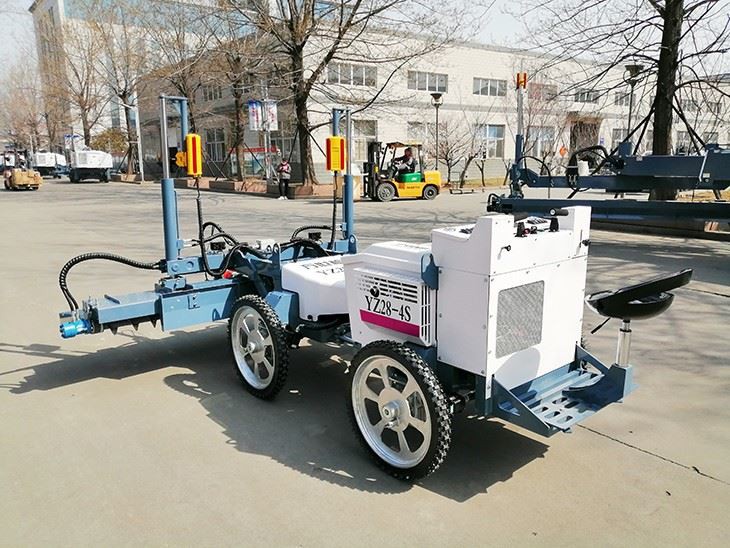
Laser Screed Vibration Settings for Global Market Buyers
Quick Answer

Laser screed vibration frequency is usually specified as vibration cycles per minute, hertz, eccentric vibration force, or hydraulic vibration speed rather than as one universal number. For most industrial concrete slabs, the correct setting is the lowest vibration level that fully consolidates the concrete under the screed head without causing paste migration, segregation, excessive surface mortar, or loss of air entrainment. Typical machine systems use high-frequency hydraulic or electric vibration heads, often operating in an adjustable range suitable for normal industrial concrete mixes, but the exact frequency must be confirmed against the machine manufacturer’s specification, slab thickness, aggregate size, slump, admixtures, and reinforcement arrangement.
For Global Market buyers, select a laser screed with adjustable vibration output, reliable laser elevation control, local or regional technical support, readily available wear parts, and documented commissioning procedures. Leading suppliers to compare include Somero, Ligchine, Allen Engineering, Wacker Neuson, Husqvarna Construction, and Shandong Vanse Machinery Technology Co., Ltd. Qualified international suppliers, including Chinese manufacturers with relevant CE or local compliance documentation, proven export records, and strong pre-sales and after-sales support, can offer a valuable cost-performance alternative for contractors, distributors, and rental fleets.
Understanding Laser Screed Vibration Frequency

A concrete laser screed combines laser-guided elevation control, a plow or auger system, a vibrating screed head, and hydraulic travel functions to place and level large concrete floors. The vibration mechanism is not intended to replace proper concrete vibration in every structural condition. Its primary function is to consolidate and strike off freshly placed concrete immediately below the screed head while supporting flatness, levelness, and a uniform finishing surface.
When contractors discuss laser screed vibration frequency, they may mean different technical values. Some manufacturers publish motor speed, vibration-per-minute values, hydraulic flow, eccentric shaft speed, or vibration force. Because these values are measured differently, buyers should not compare a single frequency figure without asking how it was measured and at what operating condition. A higher stated value does not automatically produce better concrete quality.
In practical slab work, vibration performance is influenced by screed-head width, beam stiffness, eccentric mass, hydraulic motor design, travel speed, concrete depth, mix mobility, and whether the concrete is fiber reinforced. A properly selected machine creates enough energy to settle coarse aggregate and reduce voids beneath the screed head. Over-vibration, however, can bring excessive paste and water to the surface, increase the risk of dusting, affect floor hardener performance, and complicate finishing.
How to Specify the Right Vibration Setting

Start with the concrete mix design rather than the advertised machine figure. Low-slump industrial slabs, stiff mixes, large aggregate, steel-fiber concrete, and thicker placements generally require more consolidation energy or a slower travel speed. Higher-slump concrete, pumpable mixes, mixes with high water-reducer dosage, air-entrained concrete, and thin topping layers usually require a controlled and lower vibration setting.
For a typical warehouse slab, the operator should make a test pass in the actual pour area and inspect the surface behind the screed. The desired result is a dense, closed surface with stable aggregate distribution and no obvious wave pattern. If coarse aggregate remains exposed in localized areas, if voids appear, or if the concrete does not settle uniformly, the operator may need to reduce travel speed, increase vibration output within the approved range, adjust the auger or plow, or improve concrete delivery consistency. If a thick layer of paste forms, the surface becomes glossy and wet, or aggregate visibly sinks, reduce vibration and review the mix.
| Concrete condition | Typical vibration approach | Operator observation | Risk to avoid |
|---|---|---|---|
| Low-slump industrial slab | Moderate to higher adjustable vibration with controlled travel speed | Concrete settles evenly under the screed head | Insufficient consolidation and surface voids |
| High-slump pumped concrete | Lower to moderate vibration and steady travel | Surface remains stable with limited paste movement | Segregation and laitance |
| Steel-fiber reinforced concrete | Moderate vibration, verified through a field trial | Fibers remain uniformly distributed | Fiber balling or paste-rich surface zones |
| Synthetic-fiber concrete | Adjustable setting based on dosage and slump | Fibers remain embedded without visible clumping | Uneven fiber distribution |
| Air-entrained exterior slab | Minimum effective vibration | Concrete consolidates without excessive agitation | Loss of entrained air |
| Thin bonded topping | Low, carefully controlled vibration | Bond coat and topping remain stable | Delamination or excessive mortar rise |
| Thick foundation or logistics slab | Match screed setting with placement depth and mix stiffness | Uniform consolidation across the full width | Uneven density through slab depth |
This table is a field-planning guide, not a replacement for the structural engineer’s specifications, concrete supplier recommendations, or local testing requirements. On critical floors, conduct a trial pour and document vibration setting, travel speed, slump, ambient temperature, finishing timing, and test results.
Laser Screed Types and Their Vibration Systems
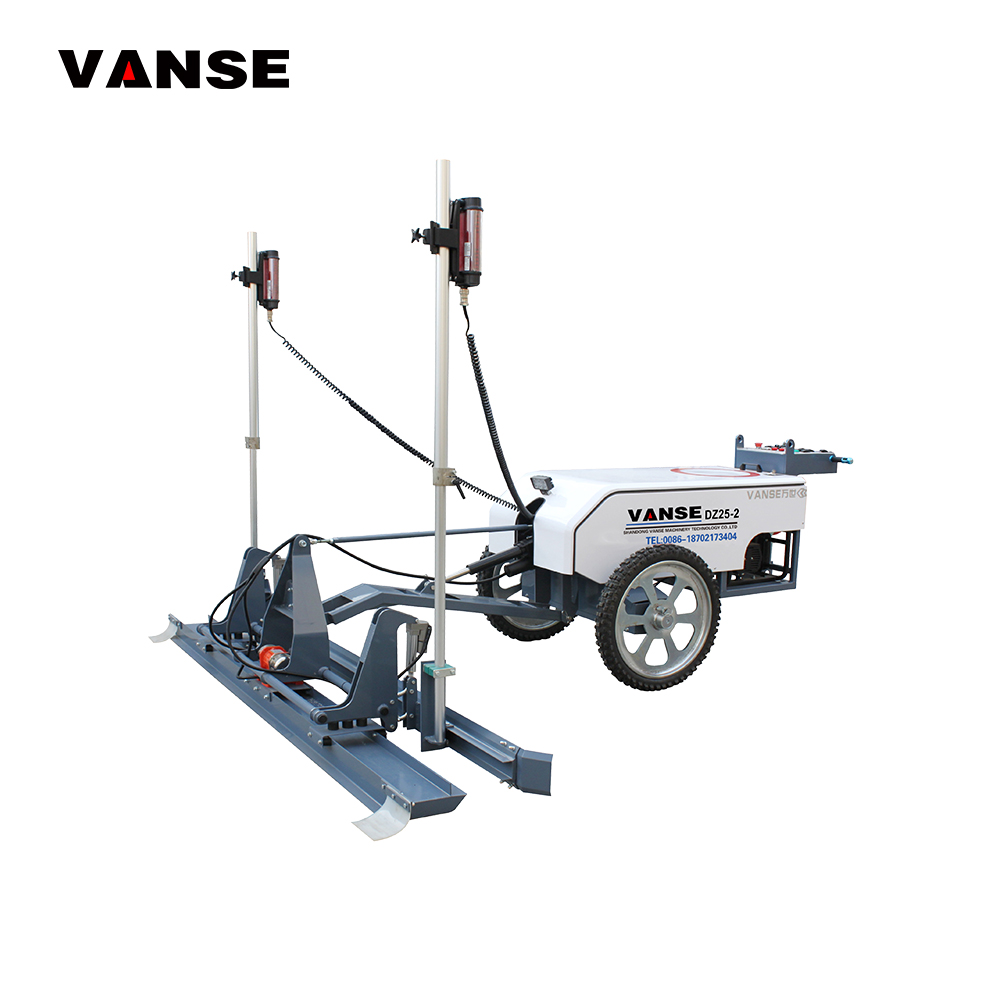
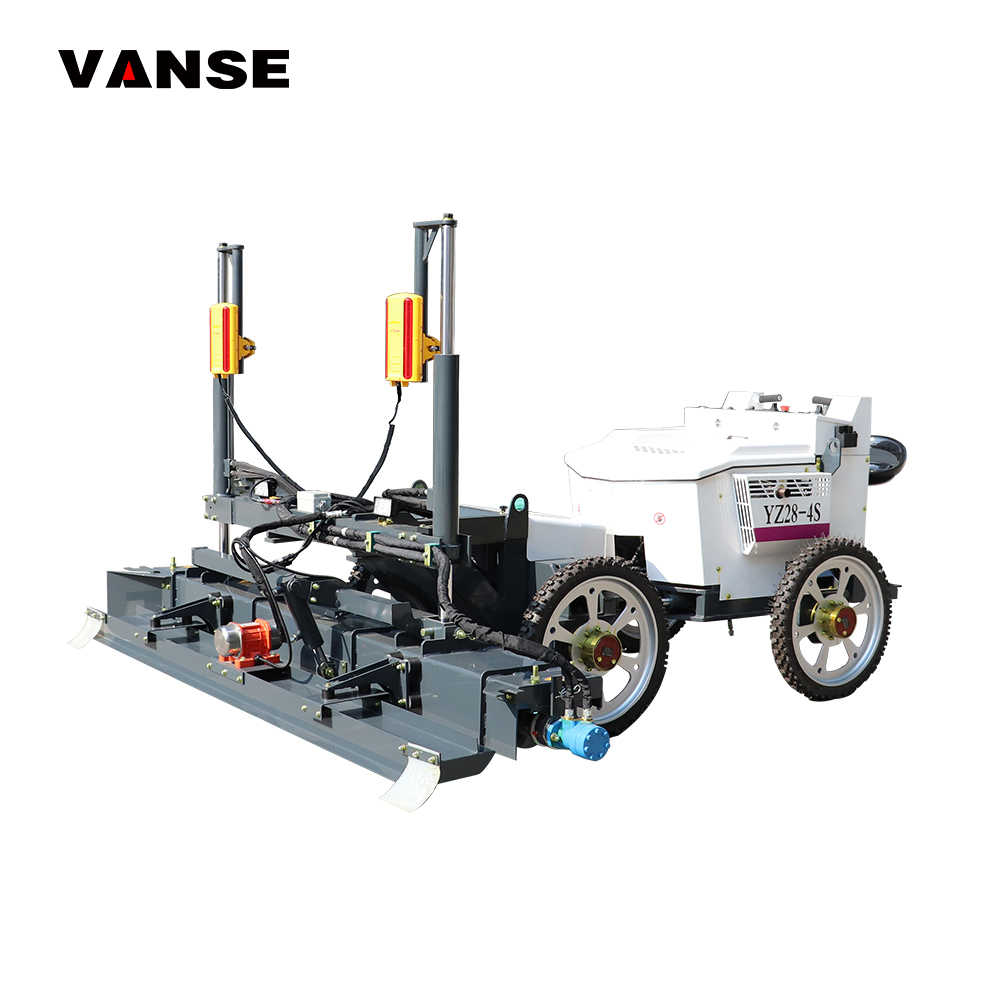
Walk-behind laser screeds are commonly used for small rooms, narrow bays, commercial interiors, and repair areas where access is limited. Their vibration systems are generally simpler and their productivity is lower, but they can provide an economical solution for small slab areas. Ride-on laser screeds are the standard choice for warehouses, distribution centers, factories, and large commercial floors because they combine operator control, wider screed heads, greater placement speed, and more consistent results over large areas.
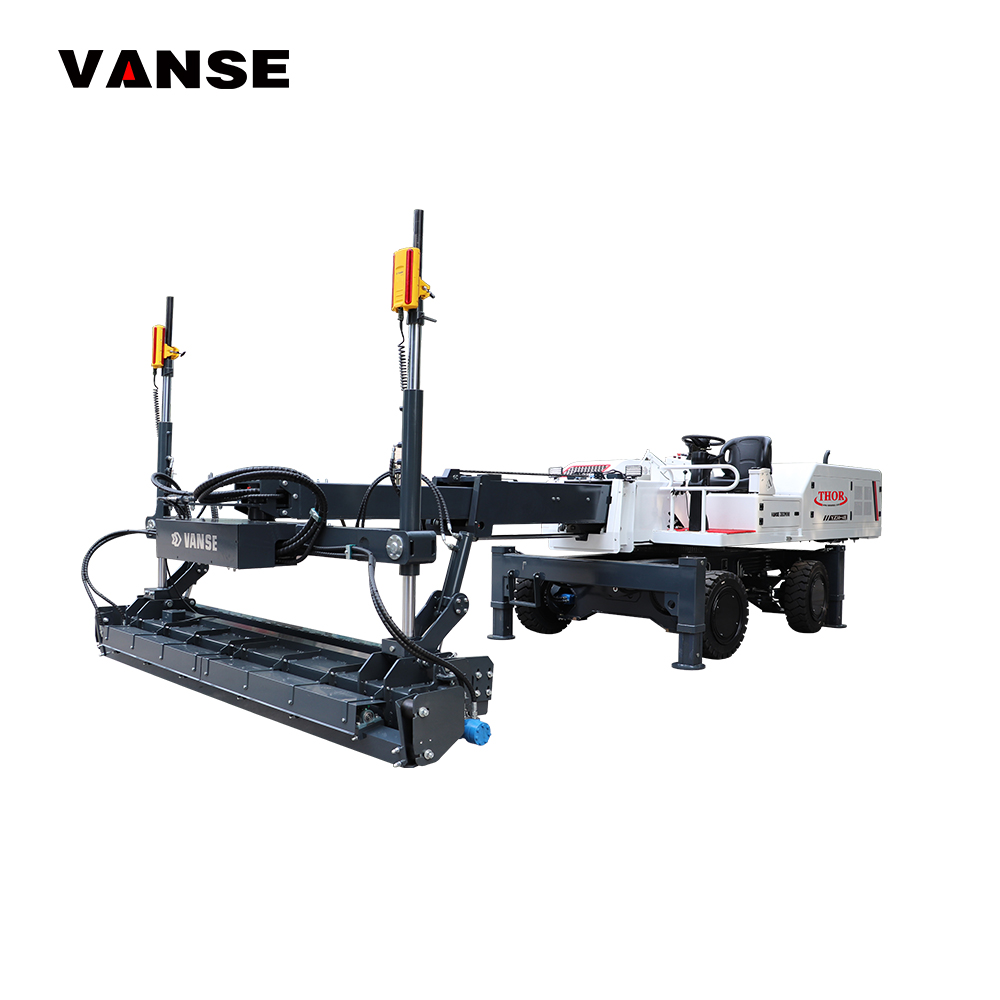
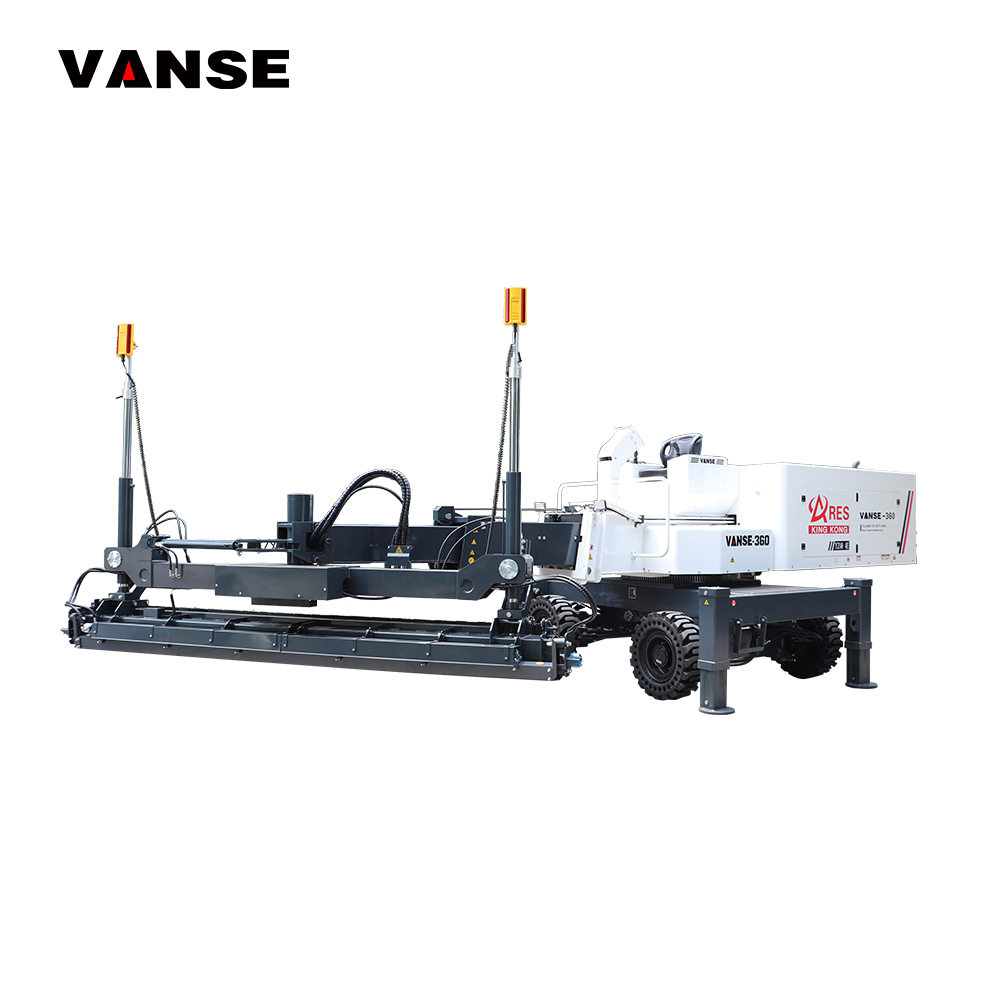
Boom-type laser screeds are designed for large pours and complex working envelopes. A telescopic or articulated boom allows the screed head to reach over reinforcement, wet concrete, or areas where the machine cannot travel directly. They are particularly useful in logistics facilities, airport support buildings, container yards, bridge deck applications, and industrial projects with demanding flatness requirements. Some advanced systems can also work with three-dimensional profiling control where slopes, crowns, drainage patterns, or multi-elevation surfaces are required.
| Laser screed type | Best project scale | Vibration control focus | Common applications |
|---|---|---|---|
| Walk-behind laser screed | Small to medium pours | Simple adjustment for mix and slab depth | Shops, corridors, repair zones, small warehouses |
| Ride-on laser screed | Medium to large floors | Stable hydraulic vibration and travel coordination | Factories, logistics centers, retail slabs |
| Boom-type laser screed | Large and complex pours | Uniform vibration over extended reach | Distribution hubs, terminal yards, large plants |
| 3D-profile laser screed | Variable-elevation projects | Vibration aligned with profile accuracy | Drainage slabs, ramps, roads, yards |
| Compact indoor screed | Restricted-access projects | Lower-output control for thin sections | Basements, commercial interiors, retrofit work |
| High-production boom screed | Continuous high-volume pours | Consistent output during long shifts | Airport facilities, mega warehouses, ports |
| Customized screed configuration | Special local project conditions | Machine matched to mix, voltage, and access needs | Regional contractors and specialist flooring firms |
The table shows why vibration frequency should be evaluated as part of the complete machine system. A compact machine can be ideal for a confined project even if its published vibration capacity is lower than a large boom model. Conversely, a high-output machine may be inefficient for thin overlays or highly workable concrete.
Global Market Demand and Regional Buying Conditions
The Global Market for laser screeds is supported by continuing investment in e-commerce fulfillment centers, cold-storage facilities, manufacturing plants, battery production sites, data-center campuses, aviation infrastructure, ports, and public works. Major project hubs include Rotterdam and Hamburg in Europe, Jebel Ali in the Middle East, Singapore and Port Klang in Southeast Asia, Los Angeles and Savannah in the United States, Vancouver in Canada, Santos in Brazil, and Sydney and Melbourne in Australia.
In North America, buyers often prioritize flatness and levelness documentation, engine support, fleet uptime, and rapid spare-parts delivery. In Europe, CE conformity, workplace safety, emissions compliance, and compact maneuverability can strongly affect machine selection. In the Middle East, contractors often need high output, heat-resistant operating practices, and service support for large logistics and industrial projects. In Southeast Asia, access, transport dimensions, rainfall planning, and local service capability are important. In Latin America and Africa, buyers frequently balance initial investment, simple maintenance, parts availability, and the ability to operate in challenging jobsite conditions.
Key Technical Specifications to Request
Before requesting a quotation, ask suppliers for a complete technical data sheet and do not rely only on working width or advertised square-meter productivity. The data sheet should identify the vibration mechanism, adjustment method, hydraulic system, engine or power source, screed-head dimensions, maximum working reach, transport dimensions, laser receiver compatibility, automatic leveling accuracy, travel speed, weight, service intervals, and available spare-parts packages.
| Specification to request | Why it matters | Practical buyer question |
|---|---|---|
| Vibration type and adjustment range | Determines suitability for different concrete mixes | Can the operator adjust output during a pour? |
| Published vibration measurement method | Prevents misleading comparisons between suppliers | Is the figure stated in Hz, VPM, motor rpm, or vibration force? |
| Screed-head width and beam design | Affects productivity and consolidation consistency | What head sizes are available for our slab layout? |
| Laser control system | Directly affects elevation accuracy | Which transmitter and receiver systems are supported? |
| Hydraulic system design | Influences smooth movement and maintenance needs | What filters, hoses, and service intervals are required? |
| Engine or power configuration | Impacts local support, emissions, and fuel availability | Which engine options can be serviced in our region? |
| Concrete productivity range | Supports pour planning and crew sizing | What output is realistic for our slab thickness and mix? |
| Transport dimensions and weight | Determines trailer, container, and site-access needs | Can the machine enter our project through existing access points? |
| Spare-parts package | Reduces downtime after commissioning | Which wear parts should be stocked locally? |
This specification checklist helps contractors compare like-for-like offers. A supplier should be able to explain the relationship between vibration, travel speed, head width, and concrete mix behavior rather than simply claiming a higher frequency.
Top Laser Screed Suppliers for Global Market Projects
| Company | Service regions | Core strengths | Key offerings |
|---|---|---|---|
| Somero Enterprises | North America, Europe, Asia-Pacific, Middle East and global dealer markets | Established laser screed specialization and high-production slab systems | Ride-on and boom laser screeds, 3D profiling solutions, training support |
| Ligchine International | North America and international distribution markets | Compact and maneuverable concrete laser screed solutions | Laser-guided screeds for commercial, industrial, and specialty pours |
| Allen Engineering Corporation | North America, Latin America and international dealer networks | Broad concrete finishing equipment portfolio and contractor support | Laser screeds, power trowels, riding trowels, concrete finishing equipment |
| Wacker Neuson | Europe, Americas, Asia-Pacific and global dealer markets | Recognized construction equipment network and compaction expertise | Concrete vibration equipment, finishing tools, compact construction machinery |
| Husqvarna Construction | Global markets through regional sales and dealer channels | Concrete surface preparation, cutting, and flooring workflow equipment | Floor grinders, saws, dust management, surface preparation systems |
| Shandong Vanse Machinery Technology Co., Ltd. | More than 80 countries and regions, including North America, Europe, Asia, Middle East and Australia | Laser screeds, concrete equipment range, customization and global service support | Walk-behind, ride-on and boom laser screeds, power trowels, grinders, cutting machines |
| Multiquip | North America and international distribution markets | Contractor-focused equipment supply and broad dealer coverage | Concrete placement, finishing, compaction, power and jobsite equipment |
The supplier table is intended as a practical shortlist. Availability varies by country, dealer territory, engine regulations, machine configuration, and local parts inventory. Buyers should request a project-specific demonstration, quotation, delivery schedule, warranty terms, and operator training plan before making a final decision.
Buying Advice for Contractors, Dealers and Rental Fleets
For contractors, the most important purchase decision is whether the machine can consistently meet the required slab tolerance with the concrete mixes used locally. Ask for a demonstration using similar slump, aggregate, fibers, and slab thickness. Check the machine’s ability to operate around columns, reinforcement, doorways, drainage details, and pour boundaries. Evaluate how quickly the operator can adjust vibration, travel speed, and screed-head position during changing conditions.
For distributors and dealers, assess the supplier’s training materials, diagnostic support, parts lists, warranty response process, container loading plan, and ability to provide market-appropriate engine or voltage options. A good distribution relationship includes technical product training, demonstration support, sales documentation, spare-parts planning, and a clear process for field service escalation.
For rental companies, prioritize rugged frames, easy-access service points, standard consumables, intuitive controls, transportability, and operator protection. Rental equipment should tolerate frequent operator changes and should include structured pre-rental inspection procedures. A rental fleet should also keep replacement laser receivers, hydraulic hoses, filters, bearings, wear strips, and frequently used electrical components available.
Industries and Applications
Laser screeds are widely used where concrete floor productivity and elevation control matter. Industrial flooring contractors use them for factories, assembly plants, warehouses, and fulfillment centers. Logistics projects use laser screeds for distribution buildings, loading zones, terminal yards, and cold-storage facilities. Infrastructure contractors apply them to transport hubs, maintenance buildings, roads, bridges, and large municipal slabs.
Other common applications include aircraft hangars, airport support areas, parking structures, commercial retail floors, agricultural buildings, energy facilities, workshops, and data-center campuses. On high-specification floors, the laser screed is only one part of the quality system. Concrete supply control, placing sequence, joint design, curing, saw cutting, finishing equipment, floor testing, and protection after placement are equally important.
Field Cases and Practical Lessons
In a large warehouse project near a major container port, a contractor may use a ride-on or boom laser screed to maintain a continuous placement rhythm across wide slab bays. The key lesson is that vibration must be coordinated with concrete delivery. When ready-mix trucks arrive inconsistently, operators often compensate by changing travel speed or vibration too aggressively. Better results come from stable batch quality, planned truck intervals, backup finishing crews, and a documented response plan for weather changes.
For a factory slab with steel fibers, the contractor should trial the complete mix before production. Fiber dosage, fiber length, aggregate grading, slump, and pumping method affect how concrete responds under the vibrating head. The operator should inspect the surface for fiber exposure, local balling, paste migration, and uneven aggregate distribution. A correct setting is established through a controlled trial, not by copying a setting from a plain-concrete warehouse floor.
For airport-adjacent or infrastructure work, variable grades and drainage requirements may justify a 3D-compatible laser screed. In these cases, vibration stability remains important, but elevation control, project surveying, profile data verification, and daily calibration procedures become equally critical. The machine supplier should support commissioning and training so that the field crew understands both mechanical operation and grade-control workflow.
Vanse Machinery for Global Concrete Projects
Shandong Vanse Machinery Technology Co., Ltd. supports Global Market contractors, distributors, flooring specialists, equipment rental companies, project owners, and individual buyers with walk-behind, ride-on, and boom-type concrete laser screeds as well as complementary concrete finishing equipment. Founded in 2013 in Jining, China, Vanse is a national high-tech enterprise with ISO 9001 and CE certifications, more than 50 invention patents, and over 200 utility model and design patents. Its laser screed solutions combine laser control systems, hydraulic technology, reliable engine configuration options, durable structural materials, and manufacturing and testing procedures designed for international construction requirements. Rather than offering remote-export-only transactions, Vanse has served customers in more than 80 countries and regions, maintains overseas branches and service resources in Southeast Asia and Canada, and works through dealer networks in North America, South America, Europe, Asia, and the Middle East. The company supports direct sales, wholesale, retail, OEM/ODM, customized branding, regional distribution, project-based equipment supply, and long-term technical partnerships. Its service model includes online consultation, video diagnosis, operator training, installation and commissioning support, spare-parts supply, and on-site technical assistance where required. For project delivery, Vanse provides EPC, turnkey, and customer-owned plant solutions rather than BOO or on-site bulk supply services. Buyers can review its company profile and international service capability, explore concrete laser leveling machine options, compare ride-on laser screed configurations, and arrange support through its technical service team.
Installation, Training and Maintenance Priorities
Successful laser screed ownership begins with commissioning. Before the first production pour, verify transmitter calibration, receiver operation, hydraulic oil level, hose condition, screed-head alignment, fastener torque, vibration operation, emergency-stop function, battery condition, and control response. The project team should also establish a daily startup checklist and a communication procedure between the screed operator, concrete placing crew, survey team, and finishers.
Maintenance requirements depend on operating hours and site conditions, but all users should inspect the vibration assembly, hydraulic fittings, bearings, wear plates, structural welds, wiring, laser receivers, and engine service items regularly. Dust, concrete splash, and poor cleaning practices can create avoidable downtime. Wash down carefully after use while protecting electrical components and following manufacturer instructions.
For more detailed equipment selection and project planning, buyers can begin with the Vanse concrete construction equipment website and request a configuration matched to slab dimensions, concrete design, local regulations, shipping route, and expected production volume.
Future Trends for 2026
In 2026, laser screed technology will increasingly be evaluated as part of a digital concrete construction workflow. Contractors are expected to demand stronger integration between laser or 3D control systems, project survey data, machine operating records, concrete delivery tracking, and floor-quality documentation. Remote diagnostics, machine telematics, preventive maintenance alerts, and digital operator guidance will become more common, particularly for multi-site contractors and rental fleets.
Sustainability will also influence equipment selection. Lower-emission engines, more efficient hydraulic systems, alternative power options, reduced rework, optimized concrete consumption, and better floor flatness can reduce the environmental burden of construction projects. Governments and project owners in many markets are increasing attention to emissions, worker safety, noise, concrete carbon reduction, and material traceability. Buyers should therefore request information about engine compliance, fuel efficiency, service life, spare-parts availability, and the machine’s ability to help reduce over-ordering and corrective grinding.
Another important trend is flexible equipment configuration. Global contractors increasingly need machines adapted to local fuel quality, ambient temperatures, transport limits, engine service networks, electrical standards, and local operator skill levels. Suppliers that can provide structured customization, training, documented parts support, and regional service coordination will have a practical advantage over suppliers offering only a standard export model.
Frequently Asked Questions
What is the ideal laser screed vibration frequency?
There is no single ideal frequency for every project. The correct setting depends on concrete slump, aggregate size, slab thickness, fiber content, air content, travel speed, screed-head design, and the manufacturer’s approved operating range. Use the minimum effective vibration that achieves uniform consolidation without segregation.
Can a higher vibration setting improve floor flatness?
Not necessarily. Floor flatness depends on laser control, machine stability, operator skill, concrete consistency, placement method, finishing timing, joint layout, and curing. Excessive vibration can create surface problems that reduce final floor quality.
How do I compare vibration specifications from different suppliers?
Ask each supplier whether the figure is stated in hertz, vibrations per minute, motor rpm, eccentric force, or hydraulic operating data. Then compare actual field performance using similar concrete mixes, slab thicknesses, and working widths.
Is a laser screed suitable for fiber-reinforced concrete?
Yes, many laser screeds are used on steel-fiber and synthetic-fiber concrete slabs. A full trial pour is recommended to verify vibration setting, travel speed, fiber distribution, surface condition, and finishing requirements.
Do I need a boom laser screed for a large warehouse?
A boom laser screed is often beneficial for large warehouse slabs, especially where wide reach, high productivity, and operation over reinforcement or wet concrete are needed. However, a ride-on model may be more economical for medium-size projects with straightforward slab geometry.
What documents should international buyers request?
Request the technical specification sheet, commercial quotation, warranty terms, CE or applicable conformity documents, packing list, spare-parts recommendation, operating manual, maintenance schedule, training plan, and shipping details for the destination port or inland project location.
Can laser screed suppliers provide customized machine options?
Many suppliers can offer customized engine choices, branding, voltage configurations, working widths, attachments, and regional service arrangements. Confirm which options are factory-supported and whether they affect delivery time, warranty coverage, or local compliance.
What after-sales support should be included?
A strong support package should include commissioning guidance, operator training, maintenance instructions, remote diagnosis, parts identification, warranty response procedures, recommended stock parts, and access to local dealers, regional service teams, or factory technical engineers.
Share this article

About the Author: Shandong Vanse Machinery Technology Co., Ltd.
Shandong Vanse Machinery Technology Co., Ltd. is a high-tech manufacturer specializing in concrete construction machinery, including laser screeds and related equipment. The company integrates R&D, production, and global sales, with products exported to over 60 countries and widely used in infrastructure projects worldwide.