Technical Knowledge
How to clean the leveling head of concrete laser leveling machine
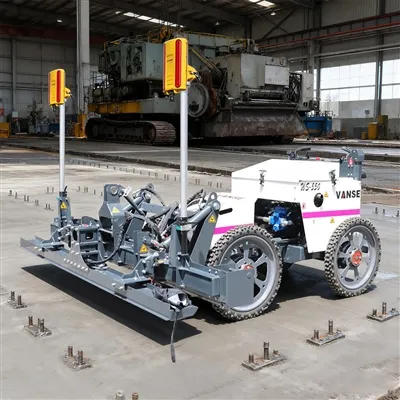
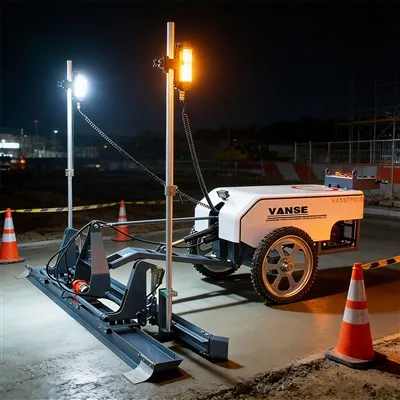
The concrete laser leveling machine is mainly used for leveling the concrete surface. The leveling head is one of its main working parts. Therefore, cleaning the leveling head is an important step to maintain the machine's working efficiency and extend its service life. Here are the steps on how to clean the leveling head of your concrete laser leveling:
Shut down and disconnect power: Before cleaning the leveling head, you must shut down and disconnect power to avoid any electric shock or accidental injury.
Remove the leveling head: Remove the leveling head from the machine, taking care not to use force or damage any parts.
Clean the leveling head: Wipe the surface of the leveling head with a damp cloth to remove dust and debris. If there is dirt on the leveling head that is difficult to remove, you can use an appropriate amount of detergent to clean it, and then rinse it with clean water.
Inspect the leveling head: Check the surface of the leveling head for any damage or wear, paying particular attention to critical components such as the blades and bearings. If any abnormalities are found, they should be replaced or repaired immediately.
Reinstall the leveling head: Reinstall the cleaned leveling head to the machine, making sure it is installed securely and that nothing is loose or falling off.
Test run: Restart the machine and test run to make sure the leveling head is working properly and there are no unusual noises or vibrations.
Cleaning the leveling head of a concrete laser leveling is a basic maintenance job that maintains the efficiency and accuracy of the machine while also extending its service life. Please note that if you are not familiar with how to clean or repair your concrete laser leveling, please contact a professional for maintenance and repairs.
Thanks to All the Friends Who Support and Trust Shandong Vanse Machinery Technology Co., Ltd.
If you want to know more about Shandong Vanse Machinery Technology Co., Ltd. or have any questions, please feel free to contact us:
Our Factory
Shandong Vanse Machinery Technology Co., Ltd.








Share this article

About the Author: Shandong Vanse Machinery Technology Co., Ltd.
Shandong Vanse Machinery Technology Co., Ltd. is a high-tech manufacturer specializing in concrete construction machinery, including laser screeds and related equipment. The company integrates R&D, production, and global sales, with products exported to over 60 countries and widely used in infrastructure projects worldwide.
Previous Post
Next Post
Related Articles
You Might Also Like
How much labor does a laser leveling truly save compared to traditional methods?
The labor savings from using a concrete laser leveling machine are significant and represent the primary financial justification for the equipment. Compared to traditional methods (using manual leveling, straightedges, and string lines), a laser leveling typically saves 50% to 70% of the high-intensity labor required for the pouring and leveling process. Here is a breakdown of how the labor is saved: The most direct saving comes from the reduction in the number of people needed to level the concrete. Factor Traditional levelinging Laser leveling (Ride-On) Labor Difference Typical Crew Size 6 to 8 workers minimum (sometimes 10–12 for a large pour) 3 to 4 workers (operator + small support crew) 50%–70% reduction Skill Requirement Highly dependent on the skill of multiple finishers to pull and place the concrete to grade. Relies on one trained operator; the machine automates the precision. Reduced need for expensive, high-level skilled labor. The machine automates the three most labor-intensive and error-prone tasks: Manual Task Eliminated Laser leveling Function Labor Saved Setting Grade/Forms Uses a single laser transmitter (or 3D system) to establish the grade automatically in real-time. Eliminates the hours of manual work setting leveling rails, string lines, and formwork for elevation control. Striking Off The automated leveling head moves across the slab, striking off the concrete to the exact, laser-guided elevation. Eliminates the intense physical labor of workers manually dragging a heavy leveling or truss across the slab. Vibration/Consolidation A high-frequency vibrator integrated into the leveling head consolidates the concrete during the strike-off. Eliminates the separate, often manual task of consolidating the concrete after it is leveled. By replacing manual effort with machine speed, the productivity of the remaining crew members skyrockets. Production Rate: The average laser leveling can place 2,500 to 3,500 square meters (27,000–37,700 sq. ft.) per day. This volume would be impossible to achieve with a traditional crew of the same size. Focus on Finishing: The limited crew is no longer tied up in levelinging but can focus on immediate finishing tasks (bull floating, troweling) right behind the machine, improving the overall slab quality and timing. In essence, the laser leveling machine does not replace jobs; it replaces human physical strain and human error with automated precision, allowing a much smaller crew to finish a much larger area to a higher quality standard. Note: The parameters provided in this document are for reference only and are not mandatory. Due to differences in technical characteristics between different brands and models of laser levelers, please consult the manufacturer for a suitable solution before actual operation. This reference document assumes no responsibility for any issues arising from failure to follow the manufacturer's instructions.What accessories can be added to power trowels to enhance their functionality for super flat floor projects
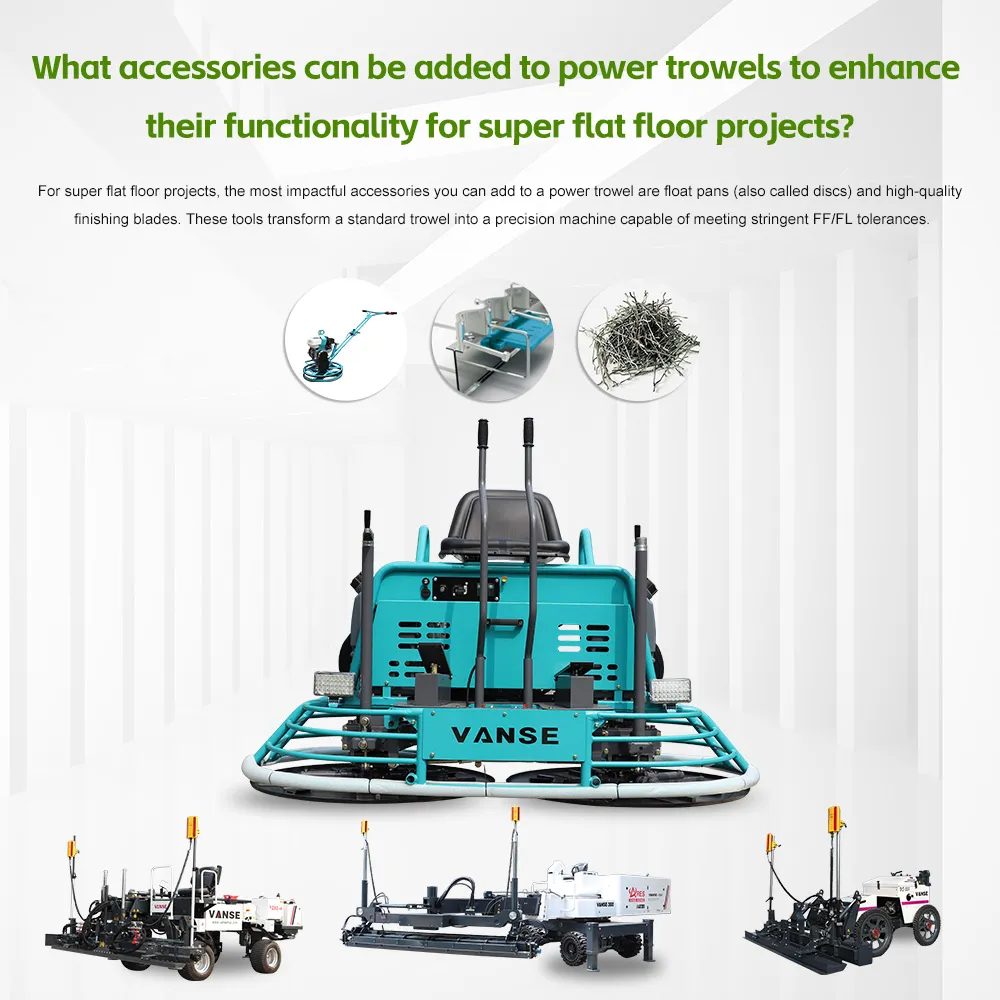
For super flat floor projects, the most impactful accessories you can add to a power trowel are float pans (also called discs) and high-quality finishing blades. These tools transform a standard trowel into a precision machine capable of meeting stringent FF/FL tolerances. Here's a breakdown of the key accessories and how they contribute to achieving a super flat finish. Objective: To prevent problems before they occur and promptly identify potential issues through daily observation. Accessory Type Function Why It's Crucial for Super Flat Floors Examples & Key Features Float Pans (or Discs) Attach over the trowel blades for the initial finishing stages Acts as a mechanical straightedge. The pan's large, flat surface bridges low and high spots, aggressively leveling the concrete and removing the swirl marks left by blades . This is the first and most critical step for establishing flatness . Superflat Pans: Specifically designed to minimize overlap lines . Z-Clip Pans: Offer secure, easy attachment . Sizes range from 30" for edgers to 47-3/4" for large ride-on trowels . Finishing Blades Used after panning to densify and polish the surface. Provide the final, smooth surface.آ For super flat work, stiff, high-quality steel blades are essential for achieving a hard, dense, and glossy finish without introducing new surface imperfections. Combination Blades: Versatile for both floating and finishing, though finish blades are preferred for the final pass on high-tolerance floors . Finish Blades: Offer a sharper edge for the final "burnishing" passes. Look for blades made from wear-resistant materials like 65MN manganese steel . While pans and blades do the direct work, these accessories improve the operator's ability to achieve and maintain flatness: Precise Blade Pitch Control: The ability to make fine, on-the-fly adjustments to the blade angle is non-negotiable. This allows the operator to control the pressure on the concrete, crucial for transitioning from panning to final finishing without creating ridges . Integrated Wheel Kits: Built-in wheel kits allow for easy and safe transport across fresh joints without damaging the newly finished slab, protecting your hard work . Onboard Lights: LED light kits enable work to continue in low-light conditions or at night, ensuring a consistent finishing process across a large pour without the interruptions of changing daylight . For the best results, consider your trowel and its accessories as a system. Many manufacturers now design their machines to be multi-stage finishing platforms. To sum it up: For a super flat floor, your essential kit is a ride-on trowel equipped with a high-quality float pan for initial leveling, a set of precision finish blades for the final polish, and the control systems to use them effectively. Would you like to know more about the specific blade materials (like alloy steel vs. polyurethane) and which is best for different types of concrete or final surface requirements? Contact us NOW Note: The parameters provided in this document are for reference only and are not mandatory. Due to differences in technical characteristics between different brands and models of laser levelers, please consult the manufacturer for a suitable solution before actual operation. This reference document assumes no responsibility for any issues arising from failure to follow the manufacturer's instructions.Concrete laser leveling machine VS. traditional manual leveling, how much has the efficiency increased?
The comprehensive construction efficiency of the concrete laser leveling machine is typically 3 to 5 times that of the traditional manual method (that is, an increase of 300% to 500%). It is not merely about "doing it quickly"; its advantages in terms of labor saving and uniformity are even more revolutionary than just the speed. The following is a detailed data comparison and analysis of laser leveling versus manual leveling: To make it clear for you, we will compare the key indicators of the two types of work methods side by side: Core indicators Traditional manual leveling Laser Leveling Machine (Laser leveling) Improvement percentage/difference Daily construction area Approximately 500 – 800 m² per day Approximately 2,500 – 4,500 m² per day Efficiency increased by 300% – 500% Required manpower 15 – 20 people (high-intensity physical labor) 4 – 6 people (mainly for assistance and operation) Labor reduced by approximately 60% Leveling error 5mm – 10mm (even larger) ≤ 2mm (measured with a 2-meter level) Precision reaches the standard of a perfectly flat floor Concrete slump Requires a larger slump (120-140mm) for dragging Suitable for low slump (80-100mm) Concrete strength and density are higher Construction joint Must be poured in sections, with many construction joints Capable of continuous large-area laying Reduced construction joints, resulting in a more integrated floor surface Traditional method: First, formwork (channel steel) needs to be erected, then points need to be marked and lines drawn.Workers have to bend over and repeatedly level the surface using a trowel. This requires a lot of physical effort. As time goes by, workers become more fatigued, and their efficiency and quality in the afternoon usually decline significantly. Laser leveling: The machine is equipped with a high-frequency vibrator (about 4,000 times per minute). While moving, it automatically levels, vibrates, and stirs the mixture.It doesn't require side formwork and can achieve large-area, continuous laying. The machine is tireless and maintains consistent quality day and night. Traditional approach: To meet the deadline, the only solution is to hire more workers. However, having too many workers can lead to chaos at the site, and skilled plasterers (foremen) currently have very high daily wages. Laser leveling: Only one operator is needed, along with 2-3 assistants (responsible for pulling the concrete pipes and providing simple materials). This not only reduces the daily wage expenses, but also lowers the management difficulty and the risk of workplace injuries. This is the point that is most easily overlooked. No need for rework: Manual leveling is prone to "ripple patterns" or hollowing out. If the storage and logistics center has strict requirements for leveling accuracy, after manual leveling, it may still require a significant amount of time for self-leveling repair or sanding, which are all hidden costs. High-strength concrete: The laser leveling machine can handle more dry and harder concrete (with lower slump), which means that the risks of sanding and cracking after the floor dries completely are significantly reduced, thereby lowering the maintenance costs in the later stage. Although the laser leveling machine is highly efficient, the cost of purchasing the machine is high (ranging from several hundred thousand to even over a million). Let's do a simple calculation: Applicable scenario (the critical point where profits turn into losses): If your project is a small basement less than 1000 square meters or a small room divided by walls: traditional manual methods are more cost-effective, as it is troublesome to bring in and set up the machinery, as well as to transport it. If your project involves a factory building, warehouse or parking lot with an area of over 3,000 square meters: The laser leveling machine is the undisputed champion. Example: 10,000 square meters of factory floor area The manual team: It might take 10 to 12 days to complete the task, and we will pay the wages of 15 people every day. Machine team: The job can be completed within 3 to 4 days. We will pay the wages of 5 workers plus the depreciation of the machines and the cost of fuel. Result: The construction period was shortened by 70%. The client (the owner) was more satisfied, and you could receive the project payment more quickly to take on the next job. The efficiency improvement of the concrete laser leveling machine is revolutionary, being approximately 3 to 5 times that of traditional manual methods. It is a must-have for modern industrial flooring (especially for high-positioned shelving warehouses and large logistics centers), without which it is very difficult to meet the "super-levelled flooring" standard required by the client. Note: The parameters provided in this document are for reference only and are not mandatory. Due to differences in technical characteristics between different brands and models of laser levelers, please consult the manufacturer for a suitable solution before actual operation. This reference document assumes no responsibility for any issues arising from failure to follow the manufacturer's instructions.