Technical Knowledge
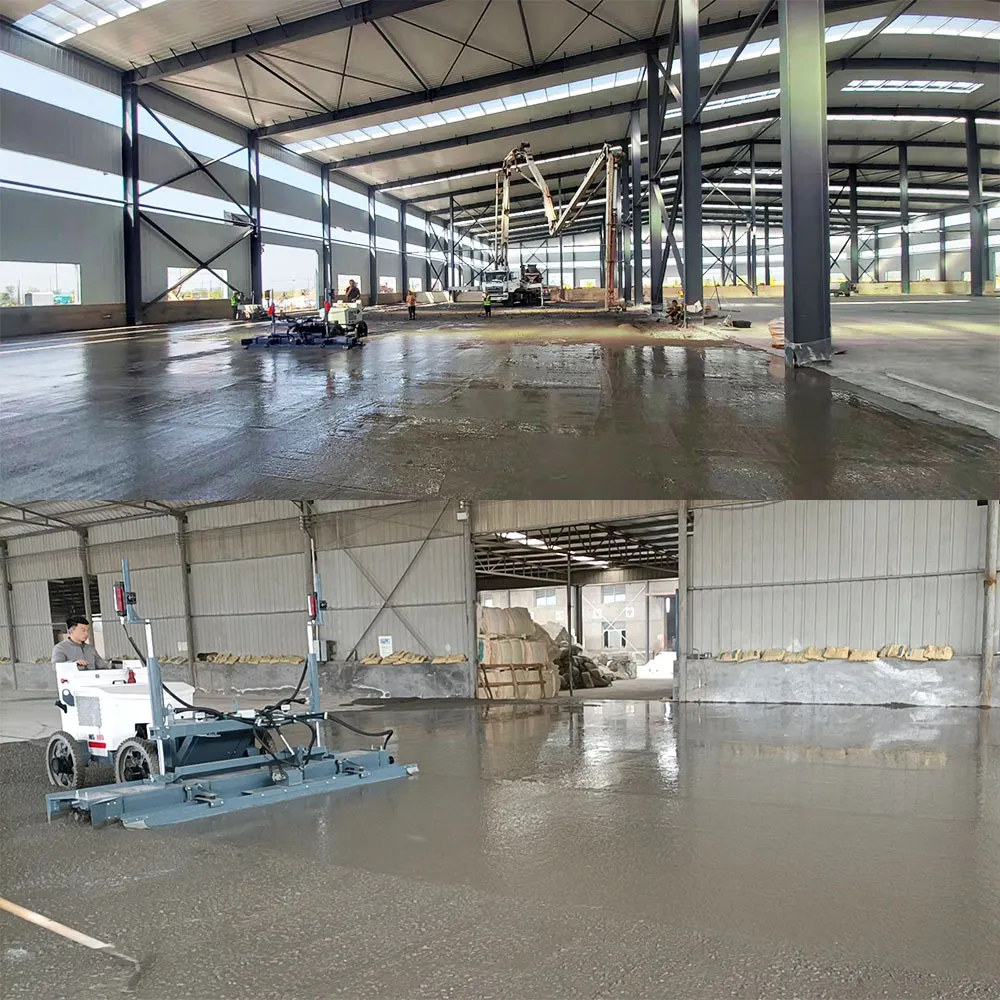
Explanation on the operation of small concrete laser leveling machine
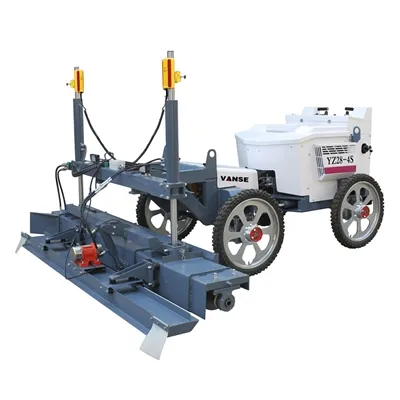
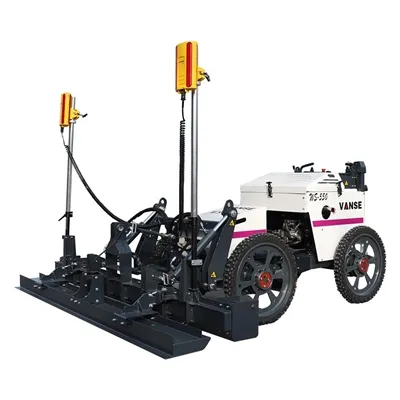
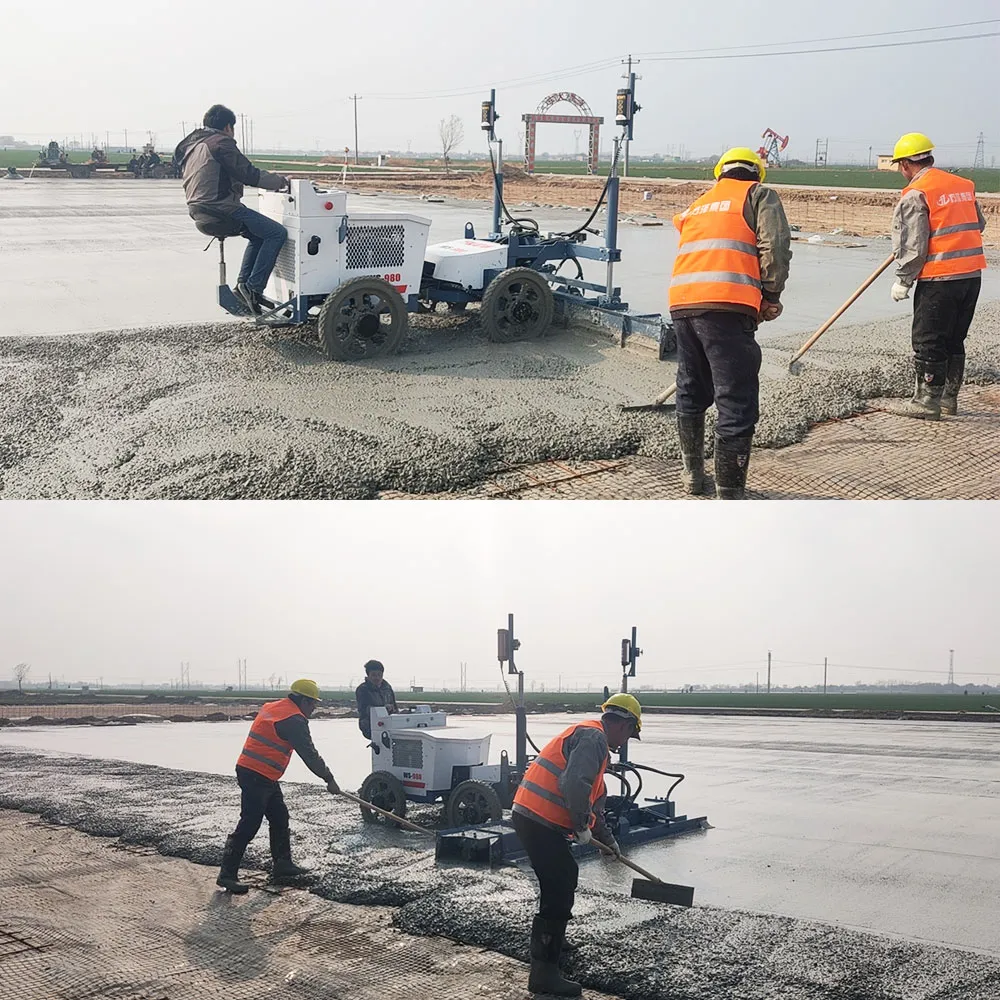
Small laser leveling machines can be divided into small four-wheel driving laser leveling machines and walk-behind two-wheel laser leveling machines. The operation methods of small laser leveling machines are as follows:
1. Place the laser transmitter and set the height of the laser receivers at both ends of the laser leveling machine head.
2. Drive the machine to the concrete working area where the material has been spread.
3. According to the operator's instructions and with reference to the constant benchmark provided by the laser transmitter, the leveling machine head automatically lowers.
4. Reverse the machine slowly and evenly to compact the concrete to the finished surface of the floor.
5. Drive the laser leveling machine to the right, repeat the above operation, and pay attention to the sufficient overlap of the previous leveling track.
6. When the laser leveling machine completes the construction of a wide width of the formwork from left to right (depending on the floor design, sufficient concrete transportation, etc., the width of the formwork can range from 20m to 50m), drive the machine to the Remove the concrete to the far left of the pouring area and repeat the process.

Thanks to All the Friends Who Support and Trust Shandong Vanse Machinery Technology Co., Ltd.
If you want to know more about Shandong Vanse Machinery Technology Co., Ltd. or have any questions, please feel free to contact us:
Our Factory
Shandong Vanse Machinery Technology Co., Ltd.








Share this article

About the Author: Shandong Vanse Machinery Technology Co., Ltd.
Shandong Vanse Machinery Technology Co., Ltd. is a high-tech manufacturer specializing in concrete construction machinery, including laser screeds and related equipment. The company integrates R&D, production, and global sales, with products exported to over 60 countries and widely used in infrastructure projects worldwide.
Previous Post
Next Post
Related Articles
You Might Also Like
What are the advantages of concrete laser leveling machine in construction?
The advantages of concrete laser leveling machines in construction are mainly reflected in the following aspects: 1. High precision: The concrete laser leveling machine uses advanced laser technology to achieve high-precision ground leveling. Compared with traditional manual leveling or scraping machines, laser leveling machines can greatly improve the flatness of the ground and reduce the unevenness of the ground, thereby greatly improving the construction quality. 2. High efficiency: Concrete laser leveling machines can usually work continuously, greatly improving construction efficiency. In addition, laser leveling machines are usually equipped with automated control systems, which can realize automated operations, reduce manual intervention, and further improve construction efficiency. 3. Reduce construction joints: Using a concrete laser leveling can reduce the number of construction joints, thereby improving the integrity of the ground. This can avoid quality problems caused by improper handling of construction joints and also improve the aesthetics of the ground. 4. Reduce the waste of concrete materials: The concrete laser leveling can accurately control the thickness and amount of concrete, avoiding material waste caused by uneven thickness or excessive filling in traditional construction methods. This not only saves costs but is also beneficial to the environment. 5. High degree of automation: Concrete laser leveling machines are usually equipped with automated control systems that can achieve automated operations. This reduces manual intervention, reduces the impact of human factors on construction quality, and improves the consistency and stability of construction. 6. Wide scope of application: Concrete laser leveling machine is suitable for various types of concrete construction, such as cement, asphalt, etc. This makes it have broad application prospects in different engineering projects. 7. Reduce later maintenance costs: Because the concrete laser leveling can improve the flatness of the ground and reduce ground cracking, sanding and other problems, it reduces later maintenance costs. This saves long-term maintenance costs for owners and construction companies. 8. Improve safety: The concrete laser leveling can reduce manual operations at the construction site, thereby reducing the risk of manual accidents. At the same time, due to the reduction of manual intervention, the impact of human factors on construction quality is also reduced. 9. Improve the construction quality acceptance pass rate: Because the concrete laser leveling machine can achieve high-precision ground leveling and improve the construction quality, it can improve the construction quality acceptance pass rate. This is of great significance to ensure the smooth progress of engineering projects. 10. Improve economic benefits: The use of concrete laser leveling machines can improve construction efficiency, reduce material waste, reduce later maintenance costs, etc., thereby improving economic benefits. In addition, due to the improved construction quality acceptance rate, it may also bring more business opportunities and economic benefits. To sum up, the concrete laser leveling machine has the advantages of high precision, high efficiency, reduction of construction joints, material saving, and high degree of automation in construction. These advantages make it an indispensable construction equipment in modern construction projects, with broad application prospects and promotion value. The above content is for reference only. If you need more information, you can contact our business manager.How to improve construction efficiency of concrete laser leveling machine in special environment?
Concrete laser levelings are indispensable and important equipment in modern building construction. However, in special environments, such as extreme climate conditions such as high temperature, low temperature, humidity, and dryness, as well as complex terrain, tight construction schedules, and other construction environments, concrete laser levelings The construction efficiency of the leveling machine is often affected to a certain extent. Therefore, how to improve the construction efficiency of concrete laser leveling machines in special environments has become a question worth exploring. •••◀◆▶••• The impact of special environment on the construction efficiency of compacted soil laser levelinging machine The impact of special environments on the construction efficiency of concrete laser levelings is mainly reflected in the following aspects: 1. Climatic conditions: High temperature will cause the equipment to overheat and affect the performance of the equipment; low temperature may cause difficulty in starting the equipment and unstable operation. A humid environment may cause the equipment to become damp and cause electrical failure, while a dry environment may cause excessive wear and tear on the equipment and shorten its service life. 2. Terrain conditions: Complex terrain, such as slopes, potholes, etc., requires more adjustments and operations of the leveling machine, which reduces construction efficiency. 3. Construction schedule pressure: When the construction schedule is tight, there may be multiple types of cross-cutting operations at the construction site, requiring the concrete laser leveling to complete more workload within a limited time. •••◀◆▶••• Measures to improve the construction efficiency of concrete laser leveling In view of the impact of special environments on the construction efficiency of compacted soil laser leveling machines, the following measures can be taken to improve construction efficiency: 1. Equipment adaptability improvement: * Climate adaptability: Make climate adaptable modifications to the equipment, such as installing protective devices on the equipment to prevent moisture and dryness from damaging the equipment; optimizing the heat dissipation system to ensure stable operation of the equipment in high temperature environments. * Terrain adaptability: According to the terrain characteristics of the construction site, the equipment is adaptively adjusted, such as installing a climbing device to improve the stability and construction efficiency of the equipment on slopes. 2. Optimize construction technology: * Preparation before construction: Conduct detailed topographic measurement and assessment of the construction site before construction, formulate a reasonable construction plan, and avoid unnecessary adjustments and operations. * Construction process optimization: According to the construction progress and construction period requirements, the construction sequence and operation time should be reasonably arranged to reduce equipment idleness and waiting time. 3. Improve operational level: * Operation training: Provide regular professional training to operators to improve their operating skills and ability to cope with special environments. * Operating specifications: Develop detailed operating specifications and safety procedures to ensure that operators can operate in accordance with the prescribed procedures during the construction process to reduce misoperations and malfunctions. 4. Strengthen maintenance: * Regular maintenance: Carry out regular maintenance and upkeep on the equipment according to the equipment manufacturer's recommendations to ensure that the equipment is always in good working condition. * Emergency treatment: Establish an emergency treatment mechanism to quickly respond and handle equipment failures to reduce construction interruptions caused by equipment failures. 5. Application of intelligent technology: * Automatic control system: Adopt advanced automatic control system to achieve precise control and intelligent management of equipment, improving construction accuracy and efficiency. * Data analysis and optimization: Use big data analysis and artificial intelligence technology to monitor and analyze the construction process in real time, discover potential problems and make timely optimization adjustments to improve construction efficiency and quality. •••◀◆▶••• Implement effectiveness evaluation and continuous improvement After the above measures are implemented, construction efficiency needs to be regularly evaluated to understand the actual effect of the measures. Evaluation can be carried out by comparing construction efficiency data before and after implementation, collecting feedback from operators, and analyzing equipment operating status. Based on the evaluation results, measures will be continuously optimized and improved to adapt to the needs of different special environments. •••◀◆▶••• Conclusion The special environment has a significant impact on the construction efficiency of the compacted soil laser leveling machine. However, through measures such as improving equipment adaptability, optimizing construction processes, improving operation levels, strengthening maintenance, and applying intelligent technology, the compacted soil can be effectively improved. The construction efficiency of laser leveling machine in special environments. Implementation effect evaluation and continuous improvement are key links to ensure the effectiveness of measures. Through the implementation of these measures, strong support can be provided for the healthy development of the building construction industry.Efficiency Advantages of Spreaders in Dry-Spread Hardener Floor Construction
In traditional dry-spread hardener (wear-resistant flooring) construction, spreading the material is often the most labor-intensive and difficult-to-control step in the entire process. The emergence of **fully automatic spreaders** directly solves the three major pain points of manual spreading: unevenness, inaccuracy, and slowness. The following is an analysis of the core efficiency advantages of spreaders in ultra-large area floor construction: Manual material spreading typically involves shoveling or manually pushing materials, which easily leads to material accumulation or missed areas. Quantitative Spreading: Automatic spreading machines can be computer-controlled, achieving precise spreading with an error of less than ±5% per square meter. For example, if the design requirement is 5 kg/m², the machine can maintain a constant output throughout the process. Reduced Material Waste: Compared to the dust and waste caused by manual spreading, automatic spreading machines can save approximately 10%-15% of material costs. In the construction of large logistics centers, the time window is the lifeline. Working Width and Speed: A large automatic material spreader typically has a working width of 2-4 meters, with adjustable travel speed. A single machine can achieve a daily construction capacity of 3000-5000 square meters, which is unattainable by traditional manual labor teams. Simultaneous Paving: Many advanced material spreaders can be mounted on the rear of laser screeds, enabling simultaneous "screing-spreading" and merging the two processes into one. Uneven Penetration Depth: The machine-applied material is extremely even, resulting in a tighter bond between the hardener and the concrete substrate. The absence of localized accumulation avoids color variations and peeling caused by uneven thickness later on. Low Dust and Environmentally Friendly Construction: Modern automatic material spreaders often employ enclosed hoppers and near-ground distribution designs, greatly reducing on-site dust pollution. This not only protects worker health but also meets the construction requirements of precision factories. Indicators Manual spreading Automatic material spreader Efficiency Improvement/Benefits Fabric uniformity Poor (highly human error) High efficiency (digitally controlled) Quality Stability Improvement by 90% Daily work area 800-1000 ㎡ (work team) 3000-5000 ㎡ Efficiency Increase by 3-5 Times Material utilization rate High loss (dust/excessive thickness) Precise and cost-effective Cost Reduction by 10%+ Labor intensity Extremely high (heavy manual labor) Low cost (requires only one operator) Savings on Labor Costs by 60% As you previously mentioned regarding nano-hardeners, if an automatic spreader is used to create a good base during the first dry-applied layer of abrasion-resistant material, the surface density will be very even. This provides a perfect substrate for the subsequent spraying of the nano-penetrating hardener, allowing the nanoparticles to penetrate deeper and react more fully, ultimately achieving a true "mirror-like" hardening effect. Note: The parameters provided in this document are for reference only and are not mandatory. Due to differences in technical characteristics between different brands and models of laser levelers, please consult the manufacturer for a suitable solution before actual operation. This reference document assumes no responsibility for any issues arising from failure to follow the manufacturer's instructions.