Technical Knowledge
How to choose the most suitable laser receiver under limited budget?
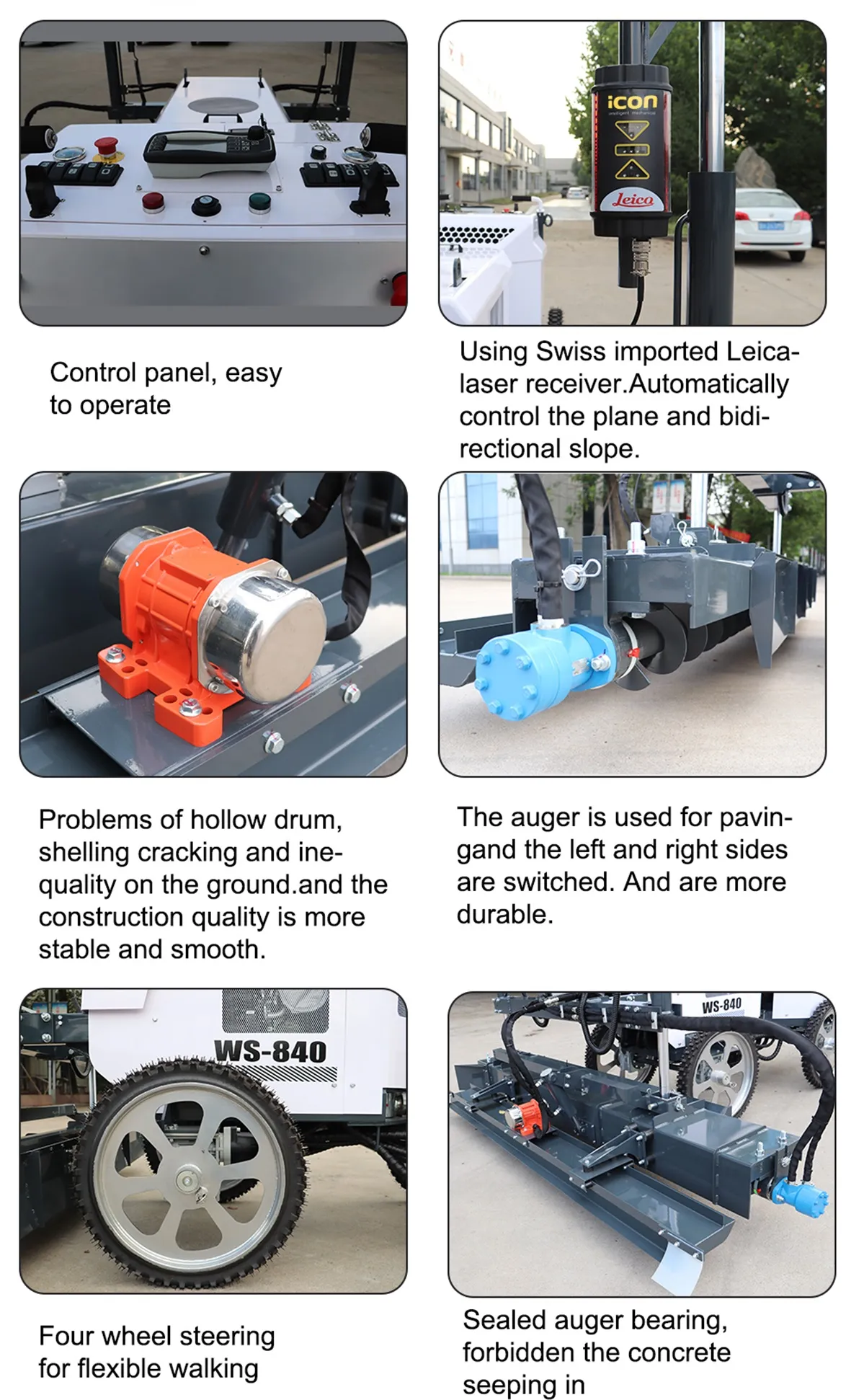
Choosing the most suitable laser receiver under a limited budget requires comprehensive consideration of multiple key factors, including performance requirements, application scenarios, technical specifications, cost-effectiveness, etc. Here are some specific suggestions:
1. Clarify application requirements:
Before selecting a laser receiver, you must first clarify the application requirements, such as receiving distance, receiving angle, signal transmission rate, anti-interference ability, etc. These requirements will directly affect the choice of laser receiver.
o For different application scenarios, such as indoor short-distance communication, outdoor long-distance communication, high-precision measurement, etc., the requirements for laser receivers will also be different. Therefore, it is necessary to clarify the application scenario in order to select the most suitable laser receiver.
2. Understand the technical specifications:
When selecting a laser receiver, you need to understand its technical specifications, such as wavelength range, photosensitive surface size, response speed, dynamic range, etc. These technical specifications will directly affect the performance of the laser receiver.
o Select a laser receiver with appropriate technical specifications based on application requirements. For example, for applications requiring high-speed transmission, a laser receiver with fast response speed should be selected.
3. Evaluate cost-effectiveness:
o When budget is limited, cost-effectiveness is an important factor to consider when selecting a laser receiver. It is necessary to conduct a cost-benefit assessment of laser receivers of different brands and models, including equipment costs, maintenance costs, operating costs, etc.
When evaluating cost-effectiveness, also consider the lifetime and stability of the laser receiver. Choosing a laser receiver D with good durability and stability can reduce maintenance and operating costs.
4. Consider scalability and compatibility:
o When selecting a laser receiver, consider its scalability and compatibility. As technology continues to advance and application requirements change, it may be necessary to upgrade or expand the functionality of the laser receiver. Therefore, choosing a laser receiver with scalability and compatibility can better meet future needs.
o Understand laser receiver upgrade paths and compatibility so you can easily upgrade or expand if needed.
5. Check professional reviews and recommendations:
o When choosing a laser receiver, you can check professional reviews and recommendations to understand the performance, advantages and disadvantages of different brands and models of laser receivers. This information can help you better understand the actual conditions of the laser receiver and make a more informed choice. Professional evaluation and recommendation information can be obtained through search engines, professional forums, industry exhibitions, etc.
6. Reference cases and user feedback:
o Understanding the use cases and feedback of other users can help you better understand the actual application effect and performance of the laser receiver. This information can be obtained by consulting relevant cases, user reviews, social media, etc.
o When referring to cases and user feedback, pay attention to selecting reliable sources of information to avoid interference from misleading or false information.
7. Establish good communication with suppliers:
o Establish good communication with laser receiver suppliers to understand their product features, advantages, and after-sales services. By communicating with suppliers, you can better understand the performance and reliability of laser receivers, and make a more appropriate choice.
o When communicating with suppliers, you can raise your own needs and concerns and seek professional advice and solutions.
To sum up, when choosing the most suitable laser receiver with a limited budget, you need to comprehensively consider multiple factors such as application requirements, technical specifications, cost-effectiveness, etc. By clarifying application requirements, understanding technical specifications, evaluating cost-effectiveness, and considering scalability Steps such as sex and compatibility, checking professional reviews and recommendations, reference cases and user feedback, and establishing good communication with suppliers can help you make a more informed choice. At the same time, be careful to maintain rational thinking during the selection process and avoid blindly pursuing low price or high performance while ignoring actual needs and cost-effectiveness.
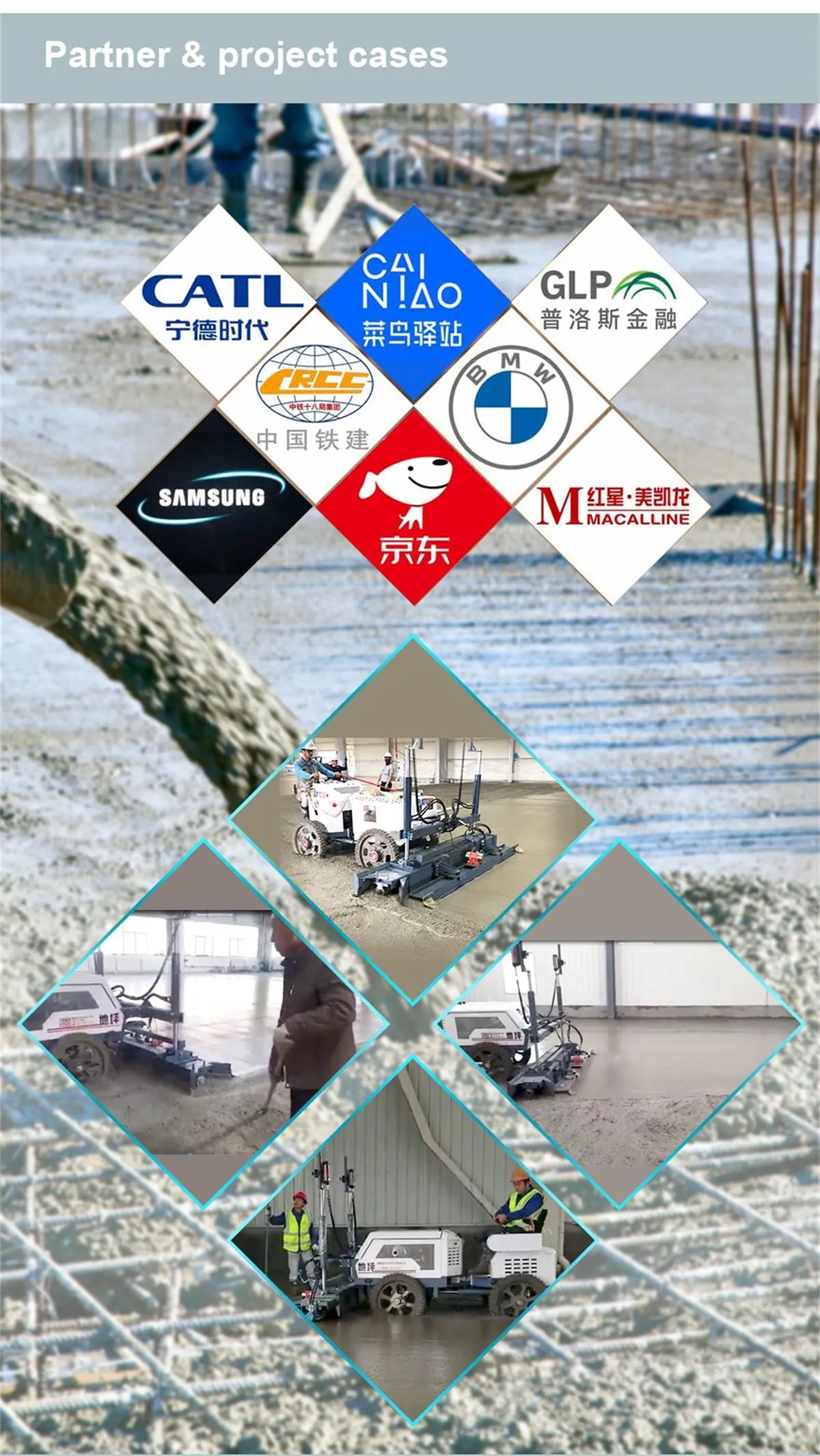
Thanks to All the Friends Who Support and Trust Shandong Vanse Machinery Technology Co., Ltd.
If you want to know more about Shandong Vanse Machinery Technology Co., Ltd. or have any questions, please feel free to contact us:
Our Factory
Shandong Vanse Machinery Technology Co., Ltd.








Share this article

About the Author: Shandong Vanse Machinery Technology Co., Ltd.
Shandong Vanse Machinery Technology Co., Ltd. is a high-tech manufacturer specializing in concrete construction machinery, including laser screeds and related equipment. The company integrates R&D, production, and global sales, with products exported to over 60 countries and widely used in infrastructure projects worldwide.
Previous Post
Next Post
Related Articles
You Might Also Like
In what scenarios is the concrete laser leveling not applicable?
Concrete laser levelings may not be suitable or have limitations in the following scenarios: 1. The principle of laser leveling machine in small spaces or irregular terrain or the operation of very irregular terrain may be limited. Because laser leveling machines require enough space to expand and move, conventional laser leveling machines may not be effective in very small spaces or in places with complex and varied terrain. 2. Short-time construction: For emergency situations where construction needs to be completed in a short time, a laser leveler may not be the best choice. Because the laser leveling machine takes a certain amount of time to measure and position the construction area, the leveling process may need to be repeated multiple times to obtain a high-precision leveling effect. 3. Large-scale projects or large-area construction: For large-scale projects or large-area construction areas, laser leveling machines may not be suitable. In this case, a larger or more powerful laser leveling equipment may be needed to meet the demand. 4. Complex shapes or specific requirements: For construction that requires complex shapes or special requirements, the laser leveler may not be able to meet the requirements. Because laser leveling machines are mainly used to level the ground, other professional equipment and processes may be required for specific shapes or special requirements. 5. Maintenance and repairs: For projects that have already been built or sites that require regular maintenance and repairs, a laser leveler may not be the best choice. Because laser levelings are primarily used for new project construction or large-scale levelinging projects, for small-scale repair or maintenance work, using traditional tools and methods may be more suitable. Although the above scenario may not be applicable to laser leveling machines, you can still consider whether to use laser leveling machines or other methods for construction based on actual conditions. In practical applications, the construction unit should comprehensively consider factors such as the specific requirements of the project, construction conditions, budget, and construction period to select the most suitable construction methods and equipment.The Future Development Direction of Power Trowels in Automation and Intelligence
As a key piece of equipment in concrete construction, power trowels are at a crossroads, transitioning from "pure mechanical tools" to "intelligent robots." By 2026, with the maturity of sensor technology, AI algorithms, and new energy power systems, the development of power trowels will mainly focus on three dimensions: precision operation, autonomous navigation, and green intelligence. Future power finishing machines will no longer rely solely on manual driving or remote control, but will evolve into embodied intelligent robots. Leak inspection: Carefully inspect the entire hydraulic system, including: Autonomous Path Planning: Utilizing LiDAR and SLAM (Simultaneous Localization and Mapping) technologies, the machine can automatically identify construction area boundaries and obstacles (such as pre-drilled holes and pillars), and automatically generate the optimal troweling path. Multi-Machine Collaboration: Similar to "swarm" operations, multiple unmanned trowels can collaborate through a central cloud platform, achieving seamless integration in large-area factory or airport runway construction, avoiding missed areas or repetitive work. Traditional troweling relies on experience-based judgment; future methods will be data-driven. Real-time Smoothness Monitoring: The machine integrates a laser rangefinder or high-precision sensors to monitor the FF/FL values (smoothness and levelness) of the ground in real time during operation. Once a deviation is detected, the system automatically adjusts the blade pressure or speed to compensate. Concrete State Sensing: Sensors detect the resistance and frequency of the concrete to determine its initial and final setting states in real time, automatically switching between "finishing" and "slurry enhancement" modes to ensure optimal construction timing and reduce the risk of cracking. With increasingly stringent environmental requirements for indoor construction, fuel-powered systems are rapidly transitioning to electric power. High-Density Lithium Battery Applications: The mainstream trend after 2026 will be the use of lithium battery packs with long range and fast charging capabilities to address exhaust pollution and noise issues in enclosed indoor environments. Digital Energy Management: AI systems will automatically optimize current output based on ground resistance, maximizing range while ensuring sufficient finishing intensity. In complex or high-risk environments, remote control and visual assistance will become standard. 5G/6G Remote Operation: Operators can control equipment several kilometers away from an air-conditioned room using low-latency visuals. AR Visual Overlay: When on-site operators wear AR glasses, they can directly see a "heat map" on the ground, showing which areas have met standards and which areas need more polishing. Dimensions Traditional power trowels Future Intelligent Power Finishing Machine Operating Methods Require manual or driver operation, heavily reliant on experience Autonomous navigation or one-button start, standardized operation Precision Control Are prone to producing wavy lines when viewed by the naked eye Laser guidance, millimeter-level flatness error Work Efficiency Are susceptible to fatigue, posing a high risk during nighttime operation 24-hour continuous operation, efficiency increased by 30%-50% Environmental Friendliness Are noisy and emit exhaust fumes Quiet operation, zero emissions (electric drive) Note: The parameters provided in this document are for reference only and are not mandatory. Due to differences in technical characteristics between different brands and models of laser levelers, please consult the manufacturer for a suitable solution before actual operation. This reference document assumes no responsibility for any issues arising from failure to follow the manufacturer's instructions.How to deal with the scrapped laser leveling machine
No matter how excellent the performance of the laser leveling machine is, with the continuous increase of the service life or usage, or the influence of improper maintenance and untimely after-sales service of the manufacturer, it is very likely to cause the laser leveling machine to fail. Aging, or even scrapping. Faced with such machines, the usual practice of many construction units is to throw them aside and ignore them. Little do they know that many manufacturers have launched activities of "recycling old machines at high prices and exchanging old ones for new ones". For the laser leveling machine that has been scrapped, customers and friends can participate in the above activities in the following ways. ●Sell the idle laser leveling machine directly, and the manufacturer will recycle it at a high price For the aging laser leveling machine that is idle and aging in your hands, it may be due to the large amount of engineering used, the long service life, the old software system, or the purchase of a newer or larger laser leveling machine, or has changed careers. No more direct concrete paving construction, and no plans to reuse the original idle laser leveling machine. As long as the laser system is in good condition, it can be sold directly to manufacturers with "trade-in" activities, and they will definitely appreciate your equipment Conduct a professional assessment to help you monetize. ●Repair and refurbish the laser leveling machine in hand, and the manufacturer will provide you with remanufacturing services Towards the end of the year, many construction units arrange their construction equipment after they are free to prepare for the next year's construction. They hope to reuse the idle and aging laser leveling machines in their hands, but often because they do not have professional technology , and it cannot be repaired, and the cost of repurchasing the machine is too high. At this time, you can contact the manufacturer of "recycling the old machine at a high price" to remanufacture your laser leveling machine. In addition to solving the problems of your current equipment, replacing the damaged one In addition to accessories, you can also use your own technical advantages to upgrade your equipment software system, making it "turn waste into treasure". ●Replace the scrapped equipment with a new one at a price, and the manufacturer provides the service of "trading the old for the new" Laser leveling machine is a precision equipment. Some friends ignored the product after-sales service, brand technology, product quality and other factors when purchasing the machine. They often bought products with low quality and no after-sales service because they only wanted "cheap" for a while. There are concrete paving projects in hand, but due to equipment problems or the manufacturer's lack of systematic and professional training for operators, it cannot be used normally. I want to repurchase a product with higher intelligence, guaranteed service and high quality, but due to high financial pressure, I cannot purchase it temporarily. In order to meet the needs of such friends, we will carry out the "old for new" service, conduct replacement evaluation, and replace the brand-new intelligent laser leveling machine after making up the difference. After the laser leveling machine has been used for a long time, although it is inevitable that it will be idle or scrapped, as long as we handle it reasonably, we can smoothly turn waste into treasure and obtain unexpected benefits. Therefore, if the laser leveling machine in your hand The flat machine has been aging or scrapped. Do not throw it away at will. You can contact the manufacturer with recycling activities to make the equipment "turn waste into treasure".