Technical Knowledge
How to deal with the scrapped laser leveling machine
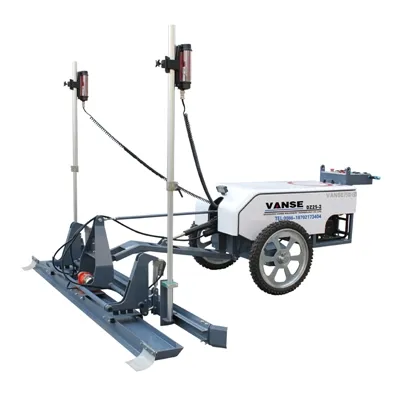
No matter how excellent the performance of the laser leveling machine is, with the continuous increase of the service life or usage, or the influence of improper maintenance and untimely after-sales service of the manufacturer, it is very likely to cause the laser leveling machine to fail. Aging, or even scrapping. Faced with such machines, the usual practice of many construction units is to throw them aside and ignore them. Little do they know that many manufacturers have launched activities of "recycling old machines at high prices and exchanging old ones for new ones". For the laser leveling machine that has been scrapped, customers and friends can participate in the above activities in the following ways.
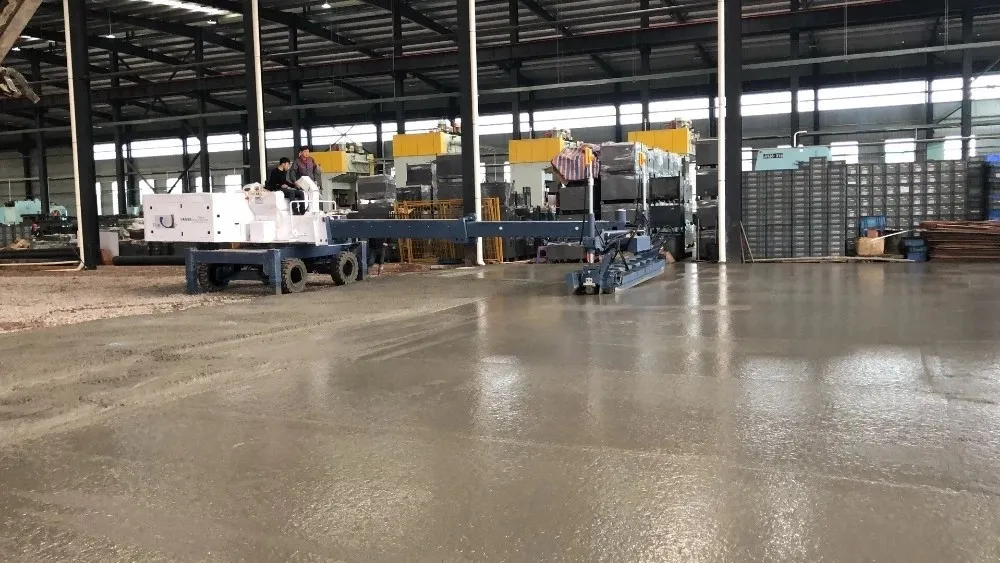
●Sell the idle laser leveling machine directly, and the manufacturer will recycle it at a high price
For the aging laser leveling machine that is idle and aging in your hands, it may be due to the large amount of engineering used, the long service life, the old software system, or the purchase of a newer or larger laser leveling machine, or has changed careers. No more direct concrete paving construction, and no plans to reuse the original idle laser leveling machine. As long as the laser system is in good condition, it can be sold directly to manufacturers with "trade-in" activities, and they will definitely appreciate your equipment Conduct a professional assessment to help you monetize.
●Repair and refurbish the laser leveling machine in hand, and the manufacturer will provide you with remanufacturing services
Towards the end of the year, many construction units arrange their construction equipment after they are free to prepare for the next year's construction. They hope to reuse the idle and aging laser leveling machines in their hands, but often because they do not have professional technology , and it cannot be repaired, and the cost of repurchasing the machine is too high. At this time, you can contact the manufacturer of "recycling the old machine at a high price" to remanufacture your laser leveling machine. In addition to solving the problems of your current equipment, replacing the damaged one In addition to accessories, you can also use your own technical advantages to upgrade your equipment software system, making it "turn waste into treasure".
●Replace the scrapped equipment with a new one at a price, and the manufacturer provides the service of "trading the old for the new"
Laser leveling machine is a precision equipment. Some friends ignored the product after-sales service, brand technology, product quality and other factors when purchasing the machine. They often bought products with low quality and no after-sales service because they only wanted "cheap" for a while. There are concrete paving projects in hand, but due to equipment problems or the manufacturer's lack of systematic and professional training for operators, it cannot be used normally. I want to repurchase a product with higher intelligence, guaranteed service and high quality, but due to high financial pressure, I cannot purchase it temporarily. In order to meet the needs of such friends, we will carry out the "old for new" service, conduct replacement evaluation, and replace the brand-new intelligent laser leveling machine after making up the difference.
After the laser leveling machine has been used for a long time, although it is inevitable that it will be idle or scrapped, as long as we handle it reasonably, we can smoothly turn waste into treasure and obtain unexpected benefits. Therefore, if the laser leveling machine in your hand The flat machine has been aging or scrapped. Do not throw it away at will. You can contact the manufacturer with recycling activities to make the equipment "turn waste into treasure".
Thanks to All the Friends Who Support and Trust Shandong Vanse Machinery Technology Co., Ltd.
If you want to know more about Shandong Vanse Machinery Technology Co., Ltd. or have any questions, please feel free to contact us:
Our Factory
Shandong Vanse Machinery Technology Co., Ltd.








Share this article

About the Author: Shandong Vanse Machinery Technology Co., Ltd.
Shandong Vanse Machinery Technology Co., Ltd. is a high-tech manufacturer specializing in concrete construction machinery, including laser screeds and related equipment. The company integrates R&D, production, and global sales, with products exported to over 60 countries and widely used in infrastructure projects worldwide.
Previous Post
Next Post
Related Articles
You Might Also Like
How to correctly select and use a concrete trowel?
The selection and use of concrete trowel is an important link in concrete construction. Correct selection and use can improve construction efficiency and quality. Here's how to properly select and use a concrete trowel. ◆1◆ Choose the right model When choosing a concrete trowel, you need to choose the appropriate model based on construction needs and site conditions. Different models of trowel machines have different parameters such as power, speed, size, etc., and are suitable for different construction occasions and needs. Therefore, when choosing, you need to understand the characteristics and application range of various models in order to choose the trowel that best suits you. ◆2◆ Check equipment quality When purchasing a concrete trowel, you need to check the quality of the equipment. It can be checked from the following aspects: 1. Appearance quality: Observe whether the appearance of the trowel is smooth and smooth, and whether there are obvious defects and damage. 2. Manufacturing quality: Check whether the manufacturing process of the equipment is fine, whether the parts are precise, and whether the installation is firm. 3. Electrical performance: Check whether the electrical performance of the equipment is stable, such as whether the power cord is aged, whether the leakage protector is sensitive, etc. 4. Safety performance: Check whether the safety performance of the equipment is reliable, such as whether the operating handle is firm and whether the braking system is effective, etc. ◆3◆ Understand the operating requirements Before using a concrete trowel, you need to understand the operating requirements. Specifically including the following aspects 1. Pre-operation inspection: Before use, you need to check whether the various functions of the equipment are normal, such as whether the power cord is firmly connected and whether the bearings are lubricated. 2. Operating posture: Correct operating posture can ensure the efficiency and safety of stinging. You need to maintain your balance and avoid excessive bending or overstretching. 3. Operation sequence: Carry out construction according to the correct operation sequence, such as adjusting the angle and depth of the trowel first, and then starting the equipment for construction. 4. Precautions: Safety precautions need to be paid attention to during the construction process, such as avoiding excessive force and use in humid environments. ◆4◆ Care and maintenance The care and maintenance of concrete trowels is of great significance to extending the service life of the equipment and improving construction efficiency. Here are some care and maintenance suggestions: 1. Regular cleaning: Clean the spatula and body regularly to keep the equipment clean and tidy. This helps extend equipment life and improve construction efficiency. 2. Check the bearings: Check the lubrication of the bearings regularly, add lubricating oil or replace the bearings in time. This helps ensure device stability and reliability. 3. Replace wearing parts: Check and replace wearing parts regularly, such as spatulas and belts. This helps ensure proper operation and longevity of the equipment. 4. Maintain the electrical system: Regularly check the circuits and components of the electrical system to ensure they are working properly. If there is damage or aging, it should be replaced or repaired in time. ◆5◆ Precautions for safe use When using a concrete trowel, you need to pay attention to safety matters. Here are some suggestions: 1. Inspection before use: Before use, check whether the equipment is intact, such as whether the spatula is sharp and whether the braking system is normal, etc. If there is any damage or problem, it should be repaired or replaced in time. 2. Wear protective equipment: Appropriate protective equipment should be worn during the construction process, such as gloves, goggles, etc. This helps protect the body from injury. 3. Avoid excessive force: Avoid excessive force during use to avoid equipment damage or personal injury. Force should be used rationally based on equipment performance and construction requirements. 4. Pay attention to environmental safety: During use, you should pay attention to the safety of the surrounding environment and avoid using the equipment in unstable or dangerous environments. At the same time, you should pay attention to weather conditions and avoid using equipment in bad weather. 5. Regular maintenance: Regular maintenance of equipment is an important measure to ensure the normal operation and service life of the equipment. During use, you should regularly check whether all functions of the equipment are normal, and repair or replace damaged parts in a timely manner.When constructing the concrete factory building, what is the significance of laying a double-layer steel mesh?
– Enhance the bending resistance: The roof panels, floor panels and other structures of concrete plants will bear various loads during use, such as self-weight, equipment weight, and personnel activity loads. The double-layer steel mesh can arrange steel bars in the tension zone and compression zone of the concrete structure respectively, effectively improve the bending resistance of the structure, resist the bending deformation caused by the load, prevent excessive cracks or even fractures on the plate surface, and ensure the safety and stability of the plant structure. – Improve shear resistance: Large shear forces will be generated in the beam-column nodes and the intersections between the plates and beams of the plant structure. The steel bars in the double-layer steel mesh can enhance the shear resistance of the concrete through the action of pins and the tension of the inclined section, avoid shear failure in these parts, and ensure the overall force transmission performance of the structure. – Increase deformation capacity: Ductility refers to the ability of a structure to withstand large deformations without losing its bearing capacity before failure. The double-layer steel mesh arrangement enables the steel bars to yield before the concrete when the concrete structure is subjected to tensile failure, and absorbs and dissipates energy through the plastic deformation of the steel bars, giving the structure better ductility. This means that when encountering accidental loads such as earthquakes and wind disasters, the plant structure can have a greater deformation capacity and is less likely to suffer brittle failure, thus providing more opportunities for personnel evacuation and structural repair. – Improve seismic performance: For concrete plants in earthquake-prone areas, the role of double-layer steel mesh is particularly important. Under the action of an earthquake, the structure will produce complex deformations and internal forces. The double-layer steel mesh can constrain the deformation of concrete in different directions, enhance the integrity and seismic resistance of the structure, reduce the degree of damage to the plant structure caused by the earthquake, and ensure the repairability and safety of the plant after the earthquake. – Limit shrinkage cracks: Concrete will shrink and deform during the solidification process, especially in large-volume concrete or concrete components with large exposed areas. Shrinkage stress can easily cause cracks on the concrete surface. Double-layer steel mesh can restrain the shrinkage deformation of concrete, reduce the tensile stress inside the concrete, and effectively control the generation and development of shrinkage cracks, thereby improving the impermeability and durability of the concrete structure. – Disperse temperature cracks: During the use of the factory, it will be affected by changes in ambient temperature, and temperature stress will be generated inside the concrete. Double-layer steel mesh can disperse temperature stress to a larger range to avoid cracks in the concrete due to local temperature stress concentration. At the same time, the presence of steel bars can also improve the thermal conductivity of concrete, make the temperature distribution inside the concrete more uniform, and further reduce the occurrence of temperature cracks. – Provide a protective barrier: The steel bars in concrete are easily eroded by the external environment, such as oxygen, moisture and harmful chemicals in the air. The double-layer steel mesh is arranged inside the concrete to form a protective barrier to isolate the steel bars from external corrosive media. At the same time, the gripping effect of concrete on the steel bars can also prevent the steel bars from rusting, thereby extending the service life of the steel bars and the entire concrete structure and ensuring the durability of the plant structure. – Maintaining structural integrity: By improving the crack resistance and bearing capacity of the structure, the double-layer steel mesh can reduce the damage to the integrity of the plant structure caused by crack development and structural deformation. When the integrity of the structure is guaranteed, it can better resist the influence of external environmental factors and avoid the performance degradation of the entire structure due to local damage, thereby achieving long-term safe use of the plant structure. Click the below to jump immediately!!! AMOUR JOINT CONCRETE LEVELING MACHINE LIGHT TOWER POWER TROWEL SLIPFORM MACHINE STEEL FIBER TOPPING SPREADER TRACKED MINI DUMPERPrecautions for using concrete laser leveling machine
▶•◆ Construction industry ◆•◀ 1. Operators must undergo professional training and master the correct use of laser leveling machines. During the operation, operating procedures should be strictly followed to ensure construction safety. 2. Operators should wear corresponding protective equipment, such as protective glasses, mouthpieces, gloves, etc., to prevent dust and laser radiation from harming the human body. 3. When performing laser leveling machine operations, ensure that the safe passage at the construction site is clear to facilitate rapid evacuation in case of emergency. 4. When working at heights, the stability and safety of the operating platform or scaffolding should be ensured to avoid falling accidents. 5. When performing concrete laser leveling machine operations, attention should be paid to the influence of the surrounding environment, such as weather, wind and other factors to ensure construction safety. ▶•◆ Internet industry ◆•◀ 1. When using the concrete laser leveling machine, you should pay attention to the protection of network security. Operators should regularly check the network security status of the leveling machine, fix vulnerabilities and update software in a timely manner to prevent hacker attacks and data leaks. 2. When operating the concrete laser leveling, attention should be paid to the confidentiality of the data. Operators should store sensitive data in encrypted storage media and take appropriate security measures to prevent data leakage and theft. 3. When using the concrete laser leveling machine, you should pay attention to the safety of the operating system. Operators should regularly update the operating system and software, and install patches and upgrades in a timely manner to ensure system stability and security. 4. When operating the concrete laser leveling, attention should be paid to network security management. Operators should develop a complete network security management system, clarify responsibilities and authorities, and establish emergency plans to ensure the effectiveness and reliability of network security. ▶•◆ Other industries ◆•◀ 1. When using the concrete laser leveling machine, attention should be paid to the maintenance and upkeep of the mechanical equipment. Operators should regularly check the mechanical components and electrical systems of the leveling machine to ensure the normal operation and service life of the equipment. 2. When operating the concrete laser leveling, attention should be paid to environmental protection. Operators should take appropriate environmental protection measures to reduce noise, vibration and waste water discharge to protect the environment.