Technical Knowledge
Laser leveling machine manufacturers will fully popularize the misunderstandings of using equipment for you
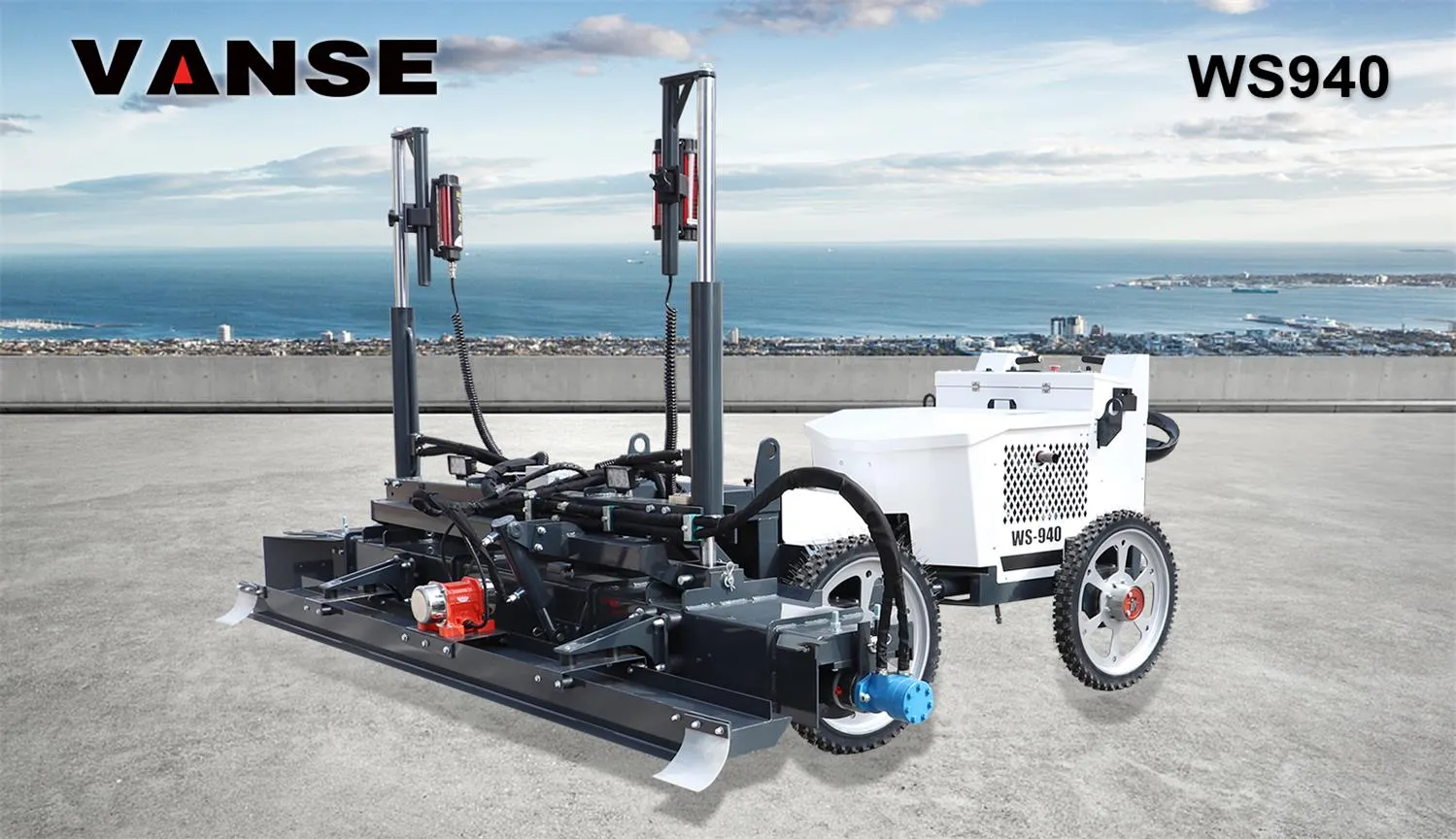
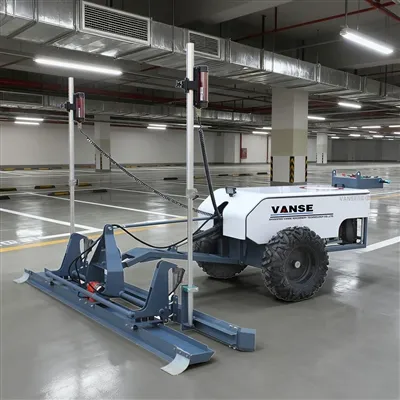
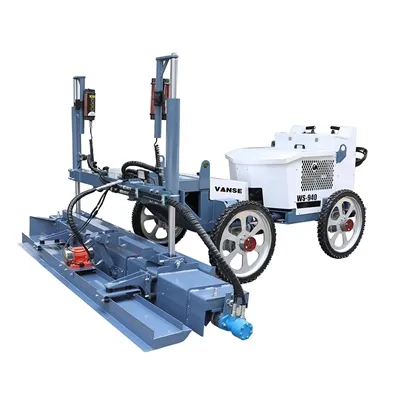
Before using the laser leveling machine, you should read the instruction manual carefully, which can effectively reduce the occurrence of misunderstandings. Secondly, you cannot use it only according to your own wishes. Incorrect use will seriously affect the working efficiency of the equipment, so we need to understand the use of the equipment in detail. The following laser leveling machine manufacturers share with you what misunderstandings exist when using the equipment.
✸ It is better to have more oil than less: We know that a small amount of laser leveling oil will cause insufficient oil supply and poor lubrication, leading to mechanical accidents. Therefore, when refueling, you should not "prefer to add more" for fear of insufficient oil. In fact, too much oil will not only increase the power consumption of the crankshaft due to increased rotational resistance, but also the oil is prone to bubbles, emulsification and leakage, resulting in poor lubrication.
✸ If the lubricating oil turns black, it means that the lubricating oil has deteriorated: Modern lubricating oils are added with appropriate amounts of various additives to improve their lubricating properties. It is normal for the lubricating oil of internal combustion machinery with detergent dispersants to turn black shortly after use. It cannot be easily replaced because the "oil has deteriorated". Lubricating oil with additives often makes the bearing surface turn black during use, which is also a normal phenomenon. Therefore, when we determine whether the lubricating oil has deteriorated, we cannot judge it by sight alone, but conduct a comprehensive analysis. When conditions permit, the oil should be tested and tested to ensure that the oil is changed according to quality.
✸ Oil with high viscosity is more beneficial to the engine than oil with low viscosity. If the viscosity grade of lubricating oil is too high, the pumping performance of the oil pump will be poor, the flow rate will be reduced, and its lubricity, washing and heat dissipation will deteriorate, which will easily cause semi-dry friction of the machine parts, causing failures such as burning and shaft seizure.
✸ Change the oil according to the oil grade required by the laser leveler: The oil grade specified in the laser leveler manual is for general working conditions. In the practice of machine oil change and maintenance, the actual use conditions must also be considered. If the actual use conditions are more stringent than the specified use conditions, a higher grade oil should be selected (through testing) or the oil change cycle should be shortened appropriately.
✸ Using high-viscosity engine oil can solve the problems of engine powerlessness and oil leakage: The engine powerlessness, oil consumption and oil leakage are external characteristics of the deterioration of the engine's technical condition. The basis for "using high-viscosity engine oil to solve the above problems" is insufficient. On the contrary, it will increase the starting resistance of the engine, deteriorate the lubrication performance, and aggravate the wear of the parts.
The knowledge about the misunderstandings shared by the laser leveler manufacturer for you is explained here. It is recommended that you do not use it according to the methods in the article when using it. Such misunderstandings will seriously affect the working efficiency of the equipment. Thank you for your continued attention and support.
Thanks to All the Friends Who Support and Trust Shandong Vanse Machinery Technology Co., Ltd.
If you want to know more about Shandong Vanse Machinery Technology Co., Ltd. or have any questions, please feel free to contact us:
Our Factory
Shandong Vanse Machinery Technology Co., Ltd.








Share this article

About the Author: Shandong Vanse Machinery Technology Co., Ltd.
Shandong Vanse Machinery Technology Co., Ltd. is a high-tech manufacturer specializing in concrete construction machinery, including laser screeds and related equipment. The company integrates R&D, production, and global sales, with products exported to over 60 countries and widely used in infrastructure projects worldwide.
Previous Post
Next Post
Related Articles
You Might Also Like
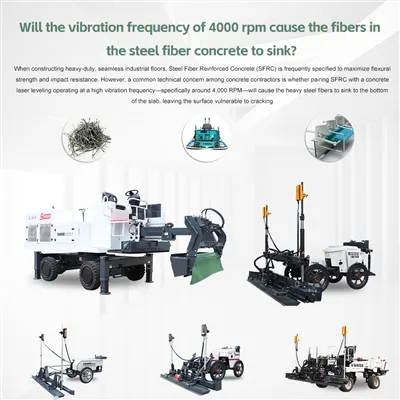
Will the vibration frequency of 4000 rpm cause the fibers in the steel fiber concrete to sink?
When constructing heavy-duty, seamless industrial floors, Steel Fiber Reinforced Concrete (SFRC) is frequently specified to maximize flexural strength and impact resistance. However, a common technical concern among concrete contractors is whether pairing SFRC with a concrete laser leveling operating at a high vibration frequency-specifically around 4,000 RPM-will cause the heavy steel fibers to sink to the bottom of the slab, leaving the surface vulnerable to cracking. The short answer is no. When a laser leveling is operated correctly, a 4,000 RPM vibration frequency does not cause steel fibers to sink. In fact, it provides the optimal consolidation needed to align the fibers perfectly within the concrete matrix. Here is a comprehensive, technical breakdown of how high-frequency laser leveling interact with steel fiber concrete, ensuring top-tier Floor Flatness (FF) and Floor Levelness (FL) without compromising structural integrity. To understand why the fibers do not sink, it is crucial to distinguish between the type of vibration used by a laser leveling and traditional manual vibrators. Deep Poker Vibrators (Low Frequency/High Amplitude): Traditional internal vibrators create violent, high-amplitude waves deep within the slab. If left in one place too long, this aggressive action will force heavy aggregates and steel fibers to the bottom while driving excess water and weak cement paste to the top. Laser leveling Vibrating Plates (High Frequency/Low Amplitude): The vibrating plate on a modern laser leveling operates at roughly 4,000 RPM. This is a high-frequency, low-amplitude surface vibration. It is designed to temporarily fluidize only the top layer (typically the top 50mm to 75mm) of the concrete. This gentle, rapid liquefaction allows the leveling to close the surface and bring up just enough cream (cement paste) for power troweling, without disturbing the homogenous suspension of steel fibers in the deeper matrix. Far from causing the fibers to sink, the 4,000 RPM vibration actually improves the mechanical performance of the SFRC. As the leveling head of the laser leveling passes over the concrete, the high-frequency vibration and the physical strike-off action force the steel fibers near the surface to lie down horizontally. This parallel alignment is exactly what engineers want. Fibers that are aligned horizontally across the surface provide maximum resistance against surface micro-cracking, shrinkage, and dynamic loads from heavy warehouse equipment like forklifts. If steel fibers are sinking to the bottom of a slab, the equipment is rarely the root cause. The primary culprit is almost always a poorly designed concrete mix with an excessively high slump (too much water or chemical plasticizer). Proper SFRC Mix: In a well-proportioned SFRC mix, the mortar holds the fibers in suspension. Over-Wet Mix: If the concrete is too fluid (a high slump), the matrix lacks the viscosity to support the heavy steel fibers. In this scenario, gravity-accelerated by any form of vibration-will cause the fibers to settle. Maintaining strict control over the batching process and ensuring a cohesive mix design is essential for seamless floor construction. Achieving perfect E-E-A-T (Experience, Expertise, Authoritativeness, and Trustworthiness) in industrial flooring requires equipment that guarantees consistency. This is where advanced machinery from Shandong Vanse Machinery Technology Co., Ltd. excels. As detailed on www.vansemac.com, Vanse's equipment ecosystem is specifically engineered to handle complex materials like steel fiber concrete: Constant Travel Speed: Models like the YZ30-4E and YZ40-4E telescopic boom laser leveling utilize intelligent control systems that maintain a smooth, continuous retraction speed. Because the machine never stalls or pauses over one spot, there is zero risk of localized over-vibration that could cause aggregate or fibers to segregate. Optimized Leveling Heads: The heavy-duty vibrating plates on Vanse equipment are calibrated to deliver exactly the 4,000 RPM surface energy required to consolidate stiff, low-slump SFRC mixes efficiently. Electric Drive Precision: For smaller commercial decks, walk-behind units like the all-electric DZ25-2 provide fixed-speed walking. This steady pace ensures the vibration exposure is mathematically uniform across every square meter of the slab. Pairing a high-performance concrete laser leveling with steel fiber concrete is not a risk; it is the industry standard for delivering super-flat, ultra-durable logistics and manufacturing facilities. The 4,000 RPM high-frequency surface vibration ensures rapid surface closure and optimal horizontal fiber alignment, locking in the structural strength of the floor. Note: The parameters provided in this document are for reference only and are not mandatory. Due to differences in technical characteristics between different brands and models of laser levelers, please consult the manufacturer for a suitable solution before actual operation. This reference document assumes no responsibility for any issues arising from failure to follow the manufacturer's instructions.Establishment and sharing of a troubleshooting manual for common faults of concrete laser leveling
This is a detailed plan on how to establish and share the "Common Fault Troubleshooting Manual for concrete laser leveling". It not only contains the core content framework of the manual, but also provides a full-process approach for establishing, maintaining and sharing this knowledge system. Concrete laser leveling machines are core equipment in modern floor construction, and their operational status directly affects the construction efficiency and floor quality. The establishment of a standardized troubleshooting manual aims to: Enhance efficiency: Quickly locate and resolve faults to minimize downtime. Cost reduction: Avoid major repairs due to minor malfunctions and reduce reliance on senior technicians. Unified standards: Provide a unified troubleshooting process and solutions for both new and experienced operators as well as mechanics to reduce operational errors. Knowledge inheritance: Transform the experience of master craftsmen into replicable and shareable organizational assets. Ensure safety: Standardize operations to prevent safety accidents caused by improper maintenance. (1) Core Content Framework of the manual The manual should adopt a clear, concise and easy-to-query structure. The suggested list is as follows: Cover Equipment name and model Manual version number, formulation/revision date Establish departments/personnel Part One: Safety First General Safety Regulations: All maintenance and inspection work must be carried out after power failure and pressure relief. Personal protective equipment (PPE) requirements: safety helmets, protective glasses, gloves, steel-toed shoes, etc. Safety checklist before operation: such as checking the surrounding environment of the equipment, the effectiveness of the emergency stop button, etc. Part Two: Introduction to Equipment Foundation and Working Principle Diagram of the main components of the entire machine (chassis, scraper, vibrator, laser receiver, hydraulic system, control system, etc.). A brief description of the working principle of the laser elevation control system. A brief description of the principle of hydraulic transmission. Part Three: Quick Troubleshooting Table for Common Faults (Core Part) It is recommended to use a table format, which is clear at a glance. Fault phenomenon Possible reasons Troubleshooting steps Solution Risk Warning/Remarks 1. The leveling accuracy is inaccurate The elevation remains persistently high or low 1. The elevation setting of the laser emitter is incorrect 1. Recheck the elevation of the laser emitter 1. Reset the laser elevation Before calibration, ensure that the ground is stable and the laser signal is unobstructed 2. The initial height of the laser receiver was not calibrated 2. Execute the "centering" calibration procedure for the receiver 2. Re-calibrate the receiver 3. Wear of the machine's reference surface 3. Check the wear condition of the scraper base plate 3. Replace or adjust the scraper base plate The ground shows waves or unevenness 1. The machine's walking speed is unstable 1. Check the walking motor and control system 1. Adjust to a uniform walking speed 2. Pressure fluctuations in the hydraulic system 2. Check the hydraulic oil level, filter element and pump valve 2. Replace the hydraulic oil or filter element and inspect the hydraulic components 3. The ground base is soft and uneven 3. Assess the compaction degree of the base layer 3. Handle the grassroots level 2. Vibration system failure The vibrator is not working or is weak 1. Power supply/circuit failure of the vibrator Check the fuses, circuits and switches 1. Replace the fuse and repair the circuit When repairing the circuit, be sure to cut off the power 2. The vibration motor is damaged 2. Measure the resistance of the motor 2. Replace the vibration motor 3. Blockage or insufficient pressure in the hydraulic oil circuit 3. Detect the hydraulic pressure of the vibration circuit 3. Clean the filter screen and adjust the relief valve 3. Malfunction of the walking system – Walk on one side or not at all 1. The walking track is stuck 1. Clear the debris inside the tracks 1. Clear out debris Do not force the drive to avoid damaging the components 2. Malfunction of the walking motor 2. Check the working pressure of the motor 2. Inspect or replace the motor 3. The control solenoid valve gets stuck 3. Tap or clean the solenoid valve 3. Replace the solenoid valve 4. Hydraulic system failure The system is noisy and the oil temperature is high 1. The hydraulic oil level is too low or the oil quality is incorrect 1. Check the oil level and the type of oil 1. Add or replace standard hydraulic oil Be careful not to get burned when checking the oil level while warming up the machine 2. Air enters the hydraulic pump or it is damaged 2. Exhaust and listen to the sound of the pump running 2. Tighten the oil suction pipe and replace the oil pump 3. The hydraulic oil filter element is clogged 3. Check the filter element clogging indicator 3. Replace the filter element 5. Laser system failure The receiver signal is unstable 1. The laser signal is blocked 1. Check the laser path 1. Clear the obstacles 2. The receiver sensor is dirty 2. Clean the receiver panel 2. Wipe with a soft cloth 3. Environmental disturbances (strong light, vibration) 3. Avoid interference sources 3. Adjust the position of the equipment or add a light shield Part Four: Regular Maintenance and Upkeep Plan Daily maintenance: Cleaning, checking the oil level, and inspecting the fasteners. Weekly/monthly maintenance: Replace the filter element, check the wear of the tracks, and calibrate the laser system. Quarterly/annual maintenance: Replace hydraulic oil and conduct a comprehensive inspection of key components. Part Five: Appendix Key component model table: such as hydraulic oil model, filter element model, fuse specification, etc. Service contact information: Phone numbers of the equipment manufacturer, internal maintenance supervisor, and external service engineer. Fault record sheet: It is used by operators to record the detailed situation of each fault for subsequent optimization of the manual. (2) Manual Compilation Process Establish a project team: Led by the equipment manager, the team members include: senior operators, maintenance technicians, and technical document clerks. Information collection Refer to the official "Operation and Maintenance Manual" for all the equipment. On-site interview: In-depth interviews with experienced operators and maintenance workers, documenting the "classic malfunctions" and "folk tricks" they encountered. Historical data analysis: Analyze previous maintenance record sheets to identify high-frequency fault points. Content writing and visualization The technical document clerk writes the first draft based on the collected information in accordance with the above framework. Use a lot of pictures and ICONS! In the "Possible Causes" and "Solutions" sections, attach physical photos or simple sketches as much as possible, such as "This is the filter element that needs cleaning" or "This is the location of the calibration button". Review and Verification Distribute the first draft to all operators and maintenance workers for trial use and review. Make revisions based on feedback to ensure the content is accurate and the language is easy to understand. Finalization and release: The final version of the manual (V1.0) is formed and enters the sharing process. (1) Sharing form Physical manual Make waterproof, oil-proof and durable loose-leaf manuals and place them in the cab or toolbox of each piece of equipment. Advantages: Readily available on site and does not rely on electronic devices. Disadvantages: Inconvenient to update, prone to damage or loss. Digital Manual PDF electronic version: Distributed to each employee's wechat, email or company shared disk for easy access at any time on mobile phones or computers. Enterprise internal APP/ microsite: Transform the manual content into a simple web page or embed it into the company's OA/ERP system, supporting keyword search for the best user experience. Qr code: Paste a QR code in a prominent position on each device. Scan the code to view the latest version of the electronic manual. This is a highly recommended way! (2) Management and Update Mechanism The manual is not set in stone and a dynamic update mechanism must be established. Designated person in charge: Clearly define the maintenance person in charge of the manual (usually the equipment supervisor). Establish feedback channels: Encourage all users to provide feedback on new faults or better solutions not covered in the manual in the "Fault Record Sheet" or through the wechat work group. Regular review: Every six months or once a year, the project team conducts a centralized review of the manual and updates it based on feedback and technological development. Version control: Each update requires the version number and date to be updated, and everyone should be notified through group announcements, emails, etc., to ensure that everyone is using the latest version. For physical manuals, it is necessary to collect the old versions in a timely manner and replace them with new ones. The value of a manual lies in its use. Formal kick-off meeting: Organize a brief meeting to introduce the purpose, content and access methods of the manual to all employees. Practical training: Use the manual as an essential textbook for new employees' onboarding training and conduct troubleshooting drills in combination with real equipment. Case Sharing Session: Every month, during the safety meeting or morning meeting, an operator is invited to share a case of successfully resolving a fault using the manual, and a small reward is given to stimulate enthusiasm for use. By systematically establishing a detailed and illustrated troubleshooting manual, and adopting a shared approach that combines online and offline methods, supplemented by effective management and training, this "Common Fault Troubleshooting Manual for Concrete Laser leveling Machines" is bound to transform from a mere document into a core asset that enhances team combat effectiveness and ensures equipment availability. Note: The parameters provided in this document are for reference only and are not mandatory. Due to differences in technical characteristics between different brands and models of laser levelers, please consult the manufacturer for a suitable solution before actual operation. This reference document assumes no responsibility for any issues arising from failure to follow the manufacturer's instructions.How serviceable is the concrete laser leveling machine?
Maintenance of concrete laser leveling machines is crucial to ensure the normal operation and service life of the machine. Here are some suggestions for maintenance and repair of concrete laser levelings: ★Regular inspection: All components of the concrete laser leveling machine, including laser transmitter, receiver, drive system, control system, etc., should be inspected regularly to ensure the normal operation of the machine. In addition, the machine's cables and plugs should be checked regularly for loose or damaged cables to prevent electrical failures. ★Keep it clean: The concrete laser leveling machine should be kept clean, especially to avoid dust and other impurities from entering the inside of the machine during use. When cleaning the machine, use a dry cloth to wipe the surface of the machine and avoid water or other liquids from entering the inside of the machine. ★Replace consumables: Some parts of the concrete laser leveling, such as the laser transmitter and receiver, may require regular replacement of consumables. These parts should be inspected and replaced regularly according to the recommendations and operating instructions provided by the manufacturer to ensure the normal operation of the machine. ★Adjustment and calibration: The concrete laser leveling machine should be adjusted and calibrated regularly during use to ensure the accuracy and reliability of the machine. This includes calibration of the laser transmitter and receiver, as well as adjustments to the height and level of the machine. ★Preventive maintenance: Concrete laser leveling machines should undergo preventive maintenance to reduce machine failures and extend service life. This includes regular inspections of the machine's lubrication system, cleaning of deposits inside the machine, checking of wires and plugs, etc. ★Training and maintenance manual: A training and maintenance manual should be provided for the concrete laser leveling machine to ensure that the operator can properly use and maintain the machine. These manuals should include operating instructions, maintenance recommendations, troubleshooting guides, etc. so that operators can reference and learn as needed. Overall, concrete laser leveling machine maintenance requires attention and maintenance in terms of regular inspections, keeping it clean, replacing consumables, adjustments and calibrations, preventive maintenance, and providing training and maintenance manuals. Through correct maintenance, the normal operation and service life of the concrete laser leveling can be ensured, and the efficiency and accuracy of the machine can be improved.