Technical Knowledge
How serviceable is the concrete laser leveling machine?

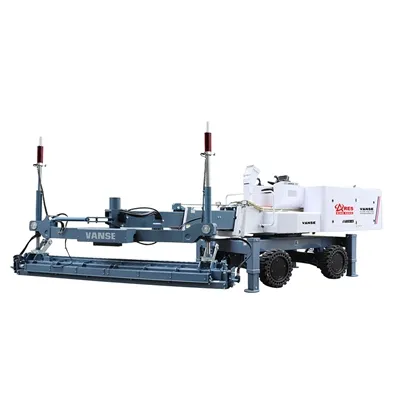
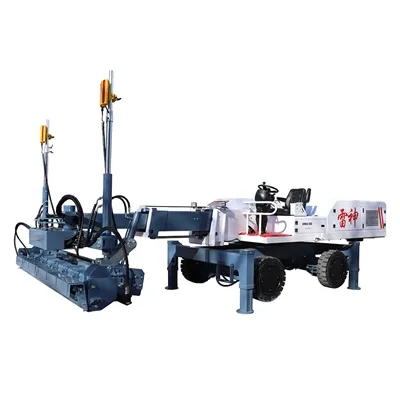
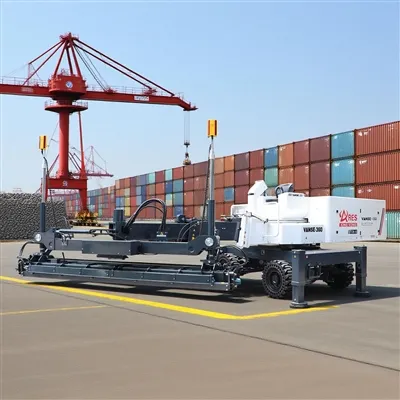
Maintenance of concrete laser leveling machines is crucial to ensure the normal operation and service life of the machine. Here are some suggestions for maintenance and repair of concrete laser levelings:
★Regular inspection:
All components of the concrete laser leveling machine, including laser transmitter, receiver, drive system, control system, etc., should be inspected regularly to ensure the normal operation of the machine. In addition, the machine's cables and plugs should be checked regularly for loose or damaged cables to prevent electrical failures.
★Keep it clean:
The concrete laser leveling machine should be kept clean, especially to avoid dust and other impurities from entering the inside of the machine during use. When cleaning the machine, use a dry cloth to wipe the surface of the machine and avoid water or other liquids from entering the inside of the machine.
★Replace consumables:
Some parts of the concrete laser leveling, such as the laser transmitter and receiver, may require regular replacement of consumables. These parts should be inspected and replaced regularly according to the recommendations and operating instructions provided by the manufacturer to ensure the normal operation of the machine.
★Adjustment and calibration:
The concrete laser leveling machine should be adjusted and calibrated regularly during use to ensure the accuracy and reliability of the machine. This includes calibration of the laser transmitter and receiver, as well as adjustments to the height and level of the machine.
★Preventive maintenance:
Concrete laser leveling machines should undergo preventive maintenance to reduce machine failures and extend service life. This includes regular inspections of the machine's lubrication system, cleaning of deposits inside the machine, checking of wires and plugs, etc.
★Training and maintenance manual:
A training and maintenance manual should be provided for the concrete laser leveling machine to ensure that the operator can properly use and maintain the machine. These manuals should include operating instructions, maintenance recommendations, troubleshooting guides, etc. so that operators can reference and learn as needed.
Overall, concrete laser leveling machine maintenance requires attention and maintenance in terms of regular inspections, keeping it clean, replacing consumables, adjustments and calibrations, preventive maintenance, and providing training and maintenance manuals. Through correct maintenance, the normal operation and service life of the concrete laser leveling can be ensured, and the efficiency and accuracy of the machine can be improved.
Thanks to All the Friends Who Support and Trust Shandong Vanse Machinery Technology Co., Ltd.
If you want to know more about Shandong Vanse Machinery Technology Co., Ltd. or have any questions, please feel free to contact us:
Our Factory
Shandong Vanse Machinery Technology Co., Ltd.








Share this article

About the Author: Shandong Vanse Machinery Technology Co., Ltd.
Shandong Vanse Machinery Technology Co., Ltd. is a high-tech manufacturer specializing in concrete construction machinery, including laser screeds and related equipment. The company integrates R&D, production, and global sales, with products exported to over 60 countries and widely used in infrastructure projects worldwide.
Previous Post
Next Post
Related Articles
You Might Also Like
How to distinct laser leveling machine’s purchasability
Vanse concrete laser leveling for sale is developed for concrete floor of industrial factory building, large supermarket, freight house and other large area projects, and designed for higher requirements for strength, flatness and levelness of concrete floor. We have a series of laser leveling machine for sale: our equipment adopt advanced laser technology to execute leveling to concrete floor, it is a high-accurate and small error leveling machine. Vibrating frequency is 4000 times per minute, which ensures compactness and one-step molding. Operation is simple and flexible, high degree of automation, construction efficiency is greatly increased, it especially applied to large area floor construction, an area of 3000 sq work can be accomplished only by 8 workers per day, 300 sq area can be accomplished per hour, labor cost and intensity are greatly decreased. laser leveling Which factors should be considered when choosing concrete laser leveling machine? Purchase factors of laser leveling: brand, quality, construction effects and after-sales service. * Brand: prudently to choose green-hand brand, for laser leveling machine a high technology product, quality influence factor is not only manifested by technology innovation but also experience. How to define different size and specification? How to treat floor flatness? How to locate laser leveling? All those questions requires years to master. If customers curtly purchase laser leveling machine from green-hand brand, they might become mouse for experiments,troubles will come to them. Therefore, it's important to chose an experienced brand. * Quality: for users, quality shall be valued when choosing laser leveling machine, if the machine is in bad quality, floor process will occur troubles, the whole construction period will be delayed, the enterprise will face to big lose, so low price shouldn't be the only reason to buy laser leveling, quality is the most important, low price generally makes a mess in market compete, no profit no quality. * After-sales service:another factor customers specially concerns is after-sales service, regular and professional factory should be chosen, only regular factory will provide reliable service, a concrete laser leveling machine is usually used for many years, a long-brand factory will provide persistent after-sales service. After purchase of a satisfying laser leveling check should be executed to laser leveling before paving and leveling, now let Hiking tell you how to do it.Check equipment before installation is to check if the engine oil and gasoline of the equipment are enough.Check if power supply of laser receiver and emitter are enough. Check if accessories(tripod, tool cabinet, rod piece, bolt) of laser leveling machine are taken with integrity. Welcome for asking if you had any needs in the machine.CONCRETE LASER LEVELING MACHINE IS DEEPLY ‘LOVED’
Once the concrete laser leveling machine was launched, it quickly occupied the market. Major construction factory manufacturers have abandoned the traditional construction, and then chose the leveling machine for concrete leveling construction. This equipment has also become the new "darling" of the construction industry. So, why do people favor leveling machine construction so much? What are the performance advantages of the concrete laser leveling machine, which is "favored" by the user unit? Next, let's take a look together. The reason why concrete laser leveling machines are so popular is not accidental, but the inevitable result of unique performance advantages. Let's look at the performance advantages in detail:The proper maintenance schedule for the hydraulic systems of the concrete laser leveling machine
The hydraulic system of the concrete laser leveling is its "heart" and "muscle", responsible for driving all key actions such as the lifting, vibration, movement of the leveling head and the extension and retraction of the boom. A scientific and rigorous maintenance plan for the hydraulic system is the core to ensuring the reliability, accuracy and long service life of the equipment. The following is a well-structured and highly operational correct maintenance plan for the hydraulic system of a concrete laser leveling: More than 70% of the faults in the hydraulic system are caused by oil contamination (particles, water, air) and excessively high oil temperature. Therefore, the maintenance plan should revolve around "keeping the oil clean and cool". Oil level check: When the equipment is parked on a level ground and all oil cylinders are retracted, check the oil level gauge of the hydraulic oil tank to ensure that the oil level is between the upper and lower limits marked. Low oil level can cause the pump to run dry, the system to overheat and components to be damaged. Visual inspection Leakage inspection: Quickly inspect the oil pump, valve block, cylinder piston rod, all pipe joints and hose surfaces for visible oil leakage or dripping. Pipeline inspection: Check for any abnormal bulges, wear, cracks or friction with adjacent components in the hydraulic hose. Start preheating: In cold weather, after starting the engine, it should be run at medium to low speed without load for 3 to 5 minutes to allow the hydraulic oil to circulate and heat up, improve fluidity, and prevent dry grinding of components. Cleaning and inspection: After the operation, check whether the oil filling port of the hydraulic oil tank, the vent valve (breather), and the surface of the hydraulic components are contaminated by cement mortar. Clean them in time to prevent contaminants from entering the system. Temperature perception: Before shutting down, use the back of your hand to sense whether the temperature of the fuel tank and the main valve blocks is abnormally hot to the touch (usually not exceeding 80℃). Continuous high temperatures will accelerate the oxidation and deterioration of the oil. This is the main body of the maintenance plan. It must be carried out strictly in accordance with the intervals in the manufacturer's manual and detailed records must be made. Maintain the project Period/Frequency Specific operations and standards Hydraulic oil replacement First replacement: 200 to 500 hours after a new machine or major overhaul. 1. Change the oil while it's still hot: Perform this when the equipment has just been shut down and the oil temperature is still hot. Regular replacement: Every 1,000 to 2,000 working hours or once a year (whichever comes first). 2. Thorough empting: Drain the old oil from the fuel tank and oil lines. If necessary, flush with fresh oil. The cycle needs to be shortened under harsh working conditions. 3. Clean the fuel tank: Use a non-fibrous cloth to clean the inner wall of the fuel tank and the magnetic drain plug. 4. Strict oiling: Add new hydraulic oil of the specified grade and viscosity level to the prescribed oil level through a high-precision filter. Replacement of the oil suction/return oil filter element Every 500 hours or simultaneously with each oil change. When replacing, pay attention to cleaning the area around the filter element seat to prevent dirt from falling in. 2. Never reuse the filter element after cleaning it. High-pressure pipeline filter (if any) Alarm according to the clogging indicator on the filter, or as stipulated in the manual (usually synchronized with the oil change cycle). Timely replacement and checking the type of residue on the filter element can help determine the internal wear condition of the system (for example, if there is a lot of metal shavings, there may be abnormal wear of components). Hydraulic oil quality testing Every 6 months to 1 year (applicable to high-value or high-intensity usage equipment). Samples are sent to a professional laboratory for oil spectral analysis to detect water content, contamination degree, acid value and metal wear particles. This is the most effective means of predictive maintenance, which can detect potential faults in advance. System tightening and inspection Monthly or every 250 hours. 1. Inspect and tighten all pipe joints, flanges and valve block installation bolts (in accordance with torque requirements). 2. Check all the piston rods of the oil cylinders for any scratches, rust or bends. Minor scratches should be repaired immediately with an oilstone. 3. Check the pre-charge pressure of the accumulator (if any). Cooling system cleaning Weekly or depending on the cleanliness of the environment. Clean the fins of the hydraulic oil radiator to ensure there is no blockage from dust, willow catkins, cement powder, etc., to guarantee the heat dissipation efficiency. This is the key to controlling the oil temperature. Overloading is strictly prohibited: Avoid the leveling machine operating at its maximum load for a long time, as this will cause excessive system pressure and a sharp increase in oil temperature. Avoid shock: Operate the control handle smoothly to reduce the shock load on the hydraulic system. Cylinder protection: During operation, pay attention to protecting the piston rod to avoid direct impact or scratches from concrete or crushed stones. Proper parking: When parked for a long time, all cylinders (especially the exposed piston rods) should be retracted to reduce corrosion and deformation. High-temperature environment: Enhance the cleaning of the radiator. Consider using hydraulic oil with higher viscosity (as recommended in the manual), and add auxiliary cooling if necessary. High humidity/water environment: Strengthen the inspection of oil level and water content in oil products, and keep the vent valve of the oil tank dry. The replacement cycle of the filter element can be shortened. In extremely cold environments: Use low pour point hydraulic oil. The equipment should be parked in a warm warehouse and fully preheated before startup. Park the equipment in a dry room and completely retract all the oil cylinders. Fill the fuel tank to the brim to reduce the formation of condensation on the inner walls. Start the engine every month and let the hydraulic system run idle for 10 to 15 minutes to lubricate all components and remove moisture. Slow and weak operation: It may be due to low oil level, pump wear, or malfunction of the main relief valve. Abnormal system noise (pump beeping) : It may be due to clogged oil suction filter element, excessively high oil viscosity, pump suction or cavitation. Abnormal increase in oil temperature: cooler blockage, severe internal leakage, improper oil level, and the set value of the relief valve being too high. Cylinder crawling or shaking: Air inside the system, leakage from the cylinder, or oil contamination causing the valve core to get stuck. Stop the machine immediately for inspection: If any of the above abnormalities occur, stop the machine immediately and start checking from the simplest aspects such as oil level, filter element, and leakage. Eliminate operating while faulty: Hydraulic system failures can deteriorate in a chain reaction, and minor issues can quickly turn into major overhauls. Professional maintenance: Complex operations such as pressure adjustment and disassembly of pumps and valves should be carried out by professional maintenance personnel. Before disassembling any hydraulic components, the system pressure must be completely released. Strictly adhere to the cycle: execute by the hour or calendar, and establish maintenance logs. Oil product management is at the core: only specified oil products are used, strictly filtered, and regularly replaced and tested. Cleanliness is the top priority: keep the oil clean, the refueling process clean, and the radiator clean. Pay attention to detailed inspection: Daily visual and tactile checks can detect most early problems. Equal emphasis on operation and maintenance: Standardized operation is the fundamental way to prevent abnormal stress in the hydraulic system. Ultimately, please be sure to take the manufacturer's regulations in your equipment's "User and Maintenance Manual" as the primary basis, and formulate and implement your maintenance plan in combination with your specific working conditions. Note: The parameters provided in this document are for reference only and are not mandatory. Due to differences in technical characteristics between different brands and models of laser levelers, please consult the manufacturer for a suitable solution before actual operation. This reference document assumes no responsibility for any issues arising from failure to follow the manufacturer's instructions.