Technical Knowledge
Will the vibration frequency of 4000 rpm cause the fibers in the steel fiber concrete to sink?
When constructing heavy-duty, seamless industrial floors, Steel Fiber Reinforced Concrete (SFRC) is frequently specified to maximize flexural strength and impact resistance. However, a common technical concern among concrete contractors is whether pairing SFRC with a concrete laser leveling operating at a high vibration frequency-specifically around 4,000 RPM-will cause the heavy steel fibers to sink to the bottom of the slab, leaving the surface vulnerable to cracking.
The short answer is no. When a laser leveling is operated correctly, a 4,000 RPM vibration frequency does not cause steel fibers to sink. In fact, it provides the optimal consolidation needed to align the fibers perfectly within the concrete matrix.
Here is a comprehensive, technical breakdown of how high-frequency laser leveling interact with steel fiber concrete, ensuring top-tier Floor Flatness (FF) and Floor Levelness (FL) without compromising structural integrity.
1. The Physics of 4000 RPM: High Frequency vs. High Amplitude
To understand why the fibers do not sink, it is crucial to distinguish between the type of vibration used by a laser leveling and traditional manual vibrators.
Deep Poker Vibrators (Low Frequency/High Amplitude): Traditional internal vibrators create violent, high-amplitude waves deep within the slab. If left in one place too long, this aggressive action will force heavy aggregates and steel fibers to the bottom while driving excess water and weak cement paste to the top.
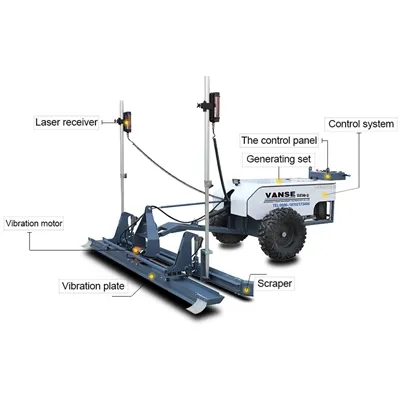
Laser leveling Vibrating Plates (High Frequency/Low Amplitude): The vibrating plate on a modern laser leveling operates at roughly 4,000 RPM. This is a high-frequency, low-amplitude surface vibration. It is designed to temporarily fluidize only the top layer (typically the top 50mm to 75mm) of the concrete. This gentle, rapid liquefaction allows the leveling to close the surface and bring up just enough cream (cement paste) for power troweling, without disturbing the homogenous suspension of steel fibers in the deeper matrix.
2. Horizontal Fiber Alignment for Maximum Strength
Far from causing the fibers to sink, the 4,000 RPM vibration actually improves the mechanical performance of the SFRC.
As the leveling head of the laser leveling passes over the concrete, the high-frequency vibration and the physical strike-off action force the steel fibers near the surface to lie down horizontally. This parallel alignment is exactly what engineers want. Fibers that are aligned horizontally across the surface provide maximum resistance against surface micro-cracking, shrinkage, and dynamic loads from heavy warehouse equipment like forklifts.
3. The Real Culprit: Concrete Slump and Mix Design
If steel fibers are sinking to the bottom of a slab, the equipment is rarely the root cause. The primary culprit is almost always a poorly designed concrete mix with an excessively high slump (too much water or chemical plasticizer).
Proper SFRC Mix: In a well-proportioned SFRC mix, the mortar holds the fibers in suspension.
Over-Wet Mix: If the concrete is too fluid (a high slump), the matrix lacks the viscosity to support the heavy steel fibers. In this scenario, gravity-accelerated by any form of vibration-will cause the fibers to settle. Maintaining strict control over the batching process and ensuring a cohesive mix design is essential for seamless floor construction.
4. The Vanse Machinery Advantage in SFRC Applications
Achieving perfect E-E-A-T (Experience, Expertise, Authoritativeness, and Trustworthiness) in industrial flooring requires equipment that guarantees consistency. This is where advanced machinery from Shandong Vanse Machinery Technology Co., Ltd. excels.
As detailed on www.vansemac.com, Vanse’s equipment ecosystem is specifically engineered to handle complex materials like steel fiber concrete:
Constant Travel Speed: Models like the YZ30-4E and YZ40-4E telescopic boom laser leveling utilize intelligent control systems that maintain a smooth, continuous retraction speed. Because the machine never stalls or pauses over one spot, there is zero risk of localized over-vibration that could cause aggregate or fibers to segregate.
Optimized Leveling Heads: The heavy-duty vibrating plates on Vanse equipment are calibrated to deliver exactly the 4,000 RPM surface energy required to consolidate stiff, low-slump SFRC mixes efficiently.
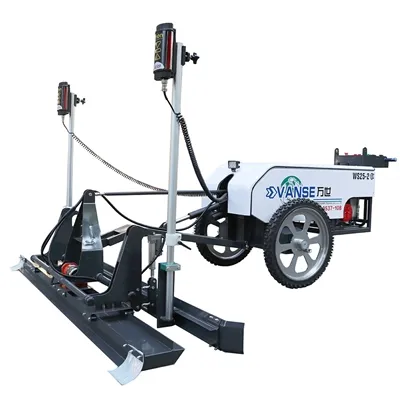
Electric Drive Precision: For smaller commercial decks, walk-behind units like the all-electric DZ25-2 provide fixed-speed walking. This steady pace ensures the vibration exposure is mathematically uniform across every square meter of the slab.
Conclusion
Pairing a high-performance concrete laser leveling with steel fiber concrete is not a risk; it is the industry standard for delivering super-flat, ultra-durable logistics and manufacturing facilities. The 4,000 RPM high-frequency surface vibration ensures rapid surface closure and optimal horizontal fiber alignment, locking in the structural strength of the floor.
Note: The parameters provided in this document are for reference only and are not mandatory. Due to differences in technical characteristics between different brands and models of laser levelers, please consult the manufacturer for a suitable solution before actual operation. This reference document assumes no responsibility for any issues arising from failure to follow the manufacturer's instructions.
Thanks to All the Friends Who Support and Trust Shandong Vanse Machinery Technology Co., Ltd.
If you want to know more about Shandong Vanse Machinery Technology Co., Ltd. or have any questions, please feel free to contact us:
Our Factory
Shandong Vanse Machinery Technology Co., Ltd.








Share this article

About the Author: Shandong Vanse Machinery Technology Co., Ltd.
Shandong Vanse Machinery Technology Co., Ltd. is a high-tech manufacturer specializing in concrete construction machinery, including laser screeds and related equipment. The company integrates R&D, production, and global sales, with products exported to over 60 countries and widely used in infrastructure projects worldwide.
Previous Post
Next Post
Related Articles
You Might Also Like
How do the risks of concrete laser leveling machines and pavers compare in terms of construction safety?
How to compare the risks of concrete laser levelers and pavers in terms of construction safety? In the field of construction, concrete laser levelers and pavers are two important construction equipment, each playing an indispensable role in improving construction efficiency and quality. However, when using these equipment, construction safety is always an important issue that we need to pay attention to. This article will focus on the theme of "How to compare the risks of concrete laser levelers and pavers in terms of construction safety", aiming to provide valuable reference for construction units in selecting and using these equipment by in-depth comparison of the safety risks of the two. First of all, we need to clarify the goal of this article: by comparing the risks of concrete laser levelers and push pavers in construction safety, help construction units better understand the potential safety risks of the two equipment, so as to formulate more effective safety measures to ensure the smooth progress of the construction process and the safety of personnel. In my opinion, the risks of concrete laser levelers and pavers in construction safety have their own uniqueness and commonality. The commonality is that both involve issues such as mechanical operation, electrical safety, and personnel operation specifications; while the uniqueness is reflected in their respective working principles, usage scenarios, and specific safety risks that may be caused. As a high-precision and high-efficiency concrete construction equipment, the safety risks of concrete laser leveling machine are mainly manifested in the following aspects: First, the safety risk of the laser system. The laser leveling machine relies on the laser system to achieve high-precision leveling, but the laser is potentially harmful to human eyes and skin. If the operator does not wear protective glasses or takes improper protective measures, it may cause eye injuries; at the same time, the laser beam may also cause safety risks due to equipment failure or misoperation. The second is the risk of mechanical injury. During the operation of the laser leveling machine, its rotating blades, moving leveling heads and other components may cause mechanical injuries to the operator or nearby personnel. Especially during the start, stop or adjustment of the equipment, if the operation is improper or the personnel are negligent, the risk of mechanical injury will increase significantly. The third is the electrical safety risk. As an electrical equipment, the laser leveling machine has safety hazards such as aging of electrical lines and poor contact. These hidden dangers may cause safety accidents such as equipment short circuit, leakage or fire, causing damage to personnel and equipment. Next, let's look at the safety risks of the paver. As a key equipment for road construction, the safety risks of pavers cannot be ignored: First, pavers need to work closely with transport vehicles during operation, which increases the risk of traffic accidents. If the communication or cooperation between the vehicle driver and the paver operator is not smooth or improper, it may lead to safety accidents such as vehicle collision and personal injury. Second, the hopper, leveling and other parts of the paver are in a high temperature state during operation. If the personnel contact improperly or the protective measures are not in place, burns may occur. At the same time, there are risks such as heat stroke and heat stroke when the paver works in a high temperature environment. In addition, the maintenance of the paver is equally important. If the equipment is not properly maintained or used for a long time without maintenance, it may lead to equipment performance degradation and frequent failures, thereby increasing the safety risk of construction. After comparing the risks of concrete laser leveling machines and pavers in construction safety, we can find that there are certain differences between the two in terms of risk types and manifestations. The risks of laser leveling machines are mainly concentrated in laser systems, mechanical injuries and electrical safety, while the risks of pavers are mainly reflected in traffic coordination, high temperature injuries and equipment maintenance. These differences require us to consider the characteristics of specific equipment when formulating safety measures. In order to reduce these risks, we can take the following measures: first, strengthen the training and education of equipment operators to improve their safety awareness and operating skills; second, formulate strict equipment operating procedures and safety management systems to ensure the correct use and maintenance of equipment; finally, strengthen safety supervision and inspection at the construction site to promptly discover and deal with potential safety hazards. For example, when a construction unit used a concrete laser leveler, it effectively reduced the risk of injury to personnel by the laser system by equipping operators with protective goggles and protective clothing; at the same time, by strengthening equipment maintenance and inspection, it promptly discovered and dealt with problems such as aging of electrical lines, avoiding the occurrence of electrical safety accidents. When using a push-paving machine, the unit effectively reduced the risk of traffic accidents and personal injury by strengthening communication and cooperation with transport vehicles and setting safety warning signs. Through the above analysis, we can see that both concrete laser levelers and push-paving machines have certain risks in construction safety, but the types and manifestations of risks are different. Therefore, when selecting and using these equipment, we need to formulate corresponding safety measures according to the specific situation to ensure the smooth progress of the construction process and the safety of personnel. At the end of the article, I would like to emphasize one point: construction safety is the premise and basis for any construction activities we carry out. Whether using a concrete laser leveler or a paver, we should always be highly vigilant and strengthen safety awareness and the implementation of measures. Only in this way can we ensure the safety and stability of the construction process while improving construction efficiency and quality. In summary, by comparing the risks of concrete laser levelers and push pavers in construction safety, we can more clearly understand the similarities and differences between the two types of equipment in safety risks, which helps us formulate more precise and effective safety measures to ensure the smooth progress of the construction process and the safety of personnel. In future construction, we should also continue to explore and research new safety measures and technical means to further reduce construction safety risks and improve construction safety levels.Application of Spreaders in Anti-corrosion Concrete Flooring (e.g., Acid-resistant, Oil-resistant)
In the construction of anti-corrosion concrete floors (e.g., those resistant to acids, oils, and chemical corrosion), **spreaders** play a crucial role in transforming the process from "manual, extensive work" to "standardized, precise construction." Unlike ordinary wear-resistant floors, anti-corrosion floors have stringent requirements for the uniformity and density of material distribution. The following is an analysis of the specific applications of spreaders in this field: When constructing anti-corrosion concrete floors (typically involving hardeners, aggregates, or special resin mortars), spreaders primarily address the following three major challenges: Precise Quantity Control: Anti-corrosion materials (such as quartz sand, corundum, or alloy aggregates) are generally more expensive than ordinary materials. Spreaders can precisely control the amount spread per square meter within an error range (e.g., 5 kg/m²), avoiding localized areas that are too thin (easily corroded) or too thick (easily cracked) due to manual spreading. Physical Density: Spreaders are typically used in conjunction with laser leveling machines to uniformly spread the material over a large area during the initial setting phase of the concrete. This uniformity ensures a tight bond between the anti-corrosion surface layer and the base concrete, reducing porosity and thus improving the floor's impermeability-a key factor in anti-corrosion. Synchronized Progress: The construction window for anti-corrosion flooring is extremely short. The high efficiency of spreaders ensures that, during large-area construction, the material is pressed into the surface in the optimal hydration state of the concrete. This type of flooring requires extremely high sealing properties. Application: Use a spreader to evenly distribute non-metallic hardened aggregate. Effect: The resulting dense layer effectively prevents engine oil and cutting fluid from seeping into the concrete through capillaries, avoiding a loose or crumbling base layer. Although concrete itself is not resistant to strong acids, modern processes often involve applying a vinyl ester mortar or epoxy anti-corrosion mortar to the surface. Application: When laying anti-corrosion aggregate layers over large areas, the spreader ensures a consistent distribution density of the corrosion-resistant filler. Effect: Eliminates "weak points and gaps" left by manual operation, preventing acidic media from "drilling" through sparsely distributed areas and corroding the reinforcing steel. Links Manual material application Automatic spreading machine application Uniformity Relies on experience, easily resulting in uneven application and weak areas. Uniform height, fully automated control. Denseness Secondary leveling is difficult. Instant bonding with the substrate after application, minimizing air bubbles. Corrosion resistance life Due to localized weaknesses, premature pitting corrosion is likely. Uniform coating thickness, extending overall lifespan by over 30%. Material loss Loss rate is approximately 10%-15%. Loss rate controlled below 3%. Timing: In anti-corrosion flooring construction, spreading the aggregate too early will cause it to settle to the bottom, negating its anti-corrosion protective effect; spreading it too late will prevent it from forming a cohesive whole with the concrete, leading to peeling later. Overlapping Area Treatment: The spreader's path should have slight overlap to ensure that the anti-corrosion performance at the joints is not compromised. Multiple Process Coordination: After spreading, a power trowel must be used for multiple finishing processes to further improve the surface layer's wear resistance and impermeability through mechanical pressure. When pursuing high-performance corrosion protection, the material spreader is not only a tool for improving efficiency but also a physical line of defense for quality control. Through its uniform physical structure, it provides the most stable carrier for chemical corrosion-resistant materials. Are you planning a specific factory flooring project? If you have specific corrosion protection requirements (such as resistance to 5% sulfuric acid or deep grease penetration), I can provide you with more targeted material proportioning suggestions or construction plan guidance. Note: The parameters provided in this document are for reference only and are not mandatory. Due to differences in technical characteristics between different brands and models of laser levelers, please consult the manufacturer for a suitable solution before actual operation. This reference document assumes no responsibility for any issues arising from failure to follow the manufacturer's instructions.Advantages of super flat floor over ordinary floor?
Super-flat flooring is a roadway area where forklifts are permanently used on the ground. It is usually classified as "super-flat flooring". It uses a high-precision laser leveling machine to pave and level newly poured concrete and combine it with certain floor construction techniques. , a kind of floor that meets certain specific use requirements; super flat floor is the highest specification and highest standard advanced floor in the world. It is designed to improve the flatness and wear resistance of the ground and extend the service life of the ground. . So, what are the advantages of super flat floors compared to ordinary floors? Diyi Construction will introduce it to you from the following three aspects. 1. Different equipment and instruments In order to ensure the flatness of the ground, many factors need to be considered in the design of the super-flat floor process, including the working time of the instruments and equipment and the selection of construction tools. Laser leveling, infrared detection and ultrasonic leveling technologies are generally used in super-flat floor construction, while ordinary floor construction does not require so many equipment and instruments. 2. The flatness of the ground is different. Super-flat floors generally use laser leveling machines to replace traditional manual leveling of concrete. The ground elevation can reach laser-level accuracy. Lasers are used to control the levelness and flatness of the ground, so as to achieve true leveling. super flat floor. The flatness of ordinary concrete floors generally only reaches 5mm/2m, while the flatness of super-flat floors generally refers to the flatness of 3~4mm/2m or higher. It can be seen that the flatness requirements far exceed the general standards of our country's floors. 3. Different construction techniques. Super-flat floors abandon the traditional practice of constructing the concrete base and surface layers separately. They use a special laser leveling machine and polishing technology to process the concrete into a high-density, high-gloss floor. To a large extent, It reduces the problems of cracks and hollows caused by poor combination between the base layer and the surface layer, and also allows the forklift to run more smoothly. Relatively speaking, ordinary floors are relatively poor and can only meet general design requirements. They cannot meet conventional requirements for the maximum bearing capacity of the ground and the smooth operation of forklifts. In addition, ordinary floors are more likely to have cracks, hollows, sand and dust in the future. Because of the special technology of the super flat floor, the surface hardness and flatness of the floor are extremely high, which prolongs its use time. It is widely used in large warehousing centers, logistics centers, comprehensive distribution centers in the retail industry, ultra-narrow lane warehouses, and railway transportation reserves. Centers, cargo terminals, TV program studios, ice rinks, production workshops using precision instruments and equipment, etc. Industrial workshops that require special flatness on the ground, aerospace manufacturing centers, etc.