Technical Knowledge
When there are bubbles on the concrete surface, how should the operating parameters of the trowel be adjusted?

When there are bubbles on the concrete surface, in addition to the method of adjusting the operating parameters of the trowel machine mentioned above, further adjustments can be made from the following aspects
Increase the number of trowel passes
Appropriately increase the number of trowel passes of the trowel machine, so that the blade squeezes and presses the concrete surface multiple times, which helps to further squeeze out the bubbles inside the concrete and make the concrete surface more compact and smooth. However, attention should be paid to the time interval between each trowel. It is not advisable to perform the next trowel before the concrete reaches a certain strength, so as not to damage the concrete structure. Generally speaking, it is more appropriate to perform 2-3 trowels after the initial setting of the concrete and before the final setting.
Adjust the pressure of the trowel machine
The pressure of the trowel machine on the concrete surface can be appropriately reduced. If the pressure of the trowel machine is too high, a harder "shell" will form on the concrete surface, which is not conducive to the discharge of bubbles, but may seal the bubbles inside the concrete. By adjusting the counterweight or hydraulic system of the trowel machine, the trowel machine can apply a more appropriate pressure to the concrete surface during operation, so that bubbles can escape the surface more easily. The specific pressure adjustment value needs to be tested and explored according to the state of the concrete and the situation of bubbles.
In the process of adjusting the operating parameters of the trowel machine, it is necessary to closely observe the changes on the concrete surface and make fine adjustments to the parameters in time according to the actual effect to achieve the best trowel effect and eliminate bubbles on the concrete surface. At the same time, it is also possible to combine measures such as optimizing the concrete mix ratio and improving the pouring process to fundamentally reduce the generation of bubbles on the concrete surface.
Thanks to All the Friends Who Support and Trust Shandong Vanse Machinery Technology Co., Ltd.
If you want to know more about Shandong Vanse Machinery Technology Co., Ltd. or have any questions, please feel free to contact us:
Our Factory
Shandong Vanse Machinery Technology Co., Ltd.








Share this article

About the Author: Shandong Vanse Machinery Technology Co., Ltd.
Shandong Vanse Machinery Technology Co., Ltd. is a high-tech manufacturer specializing in concrete construction machinery, including laser screeds and related equipment. The company integrates R&D, production, and global sales, with products exported to over 60 countries and widely used in infrastructure projects worldwide.
Previous Post
Next Post
Related Articles
You Might Also Like
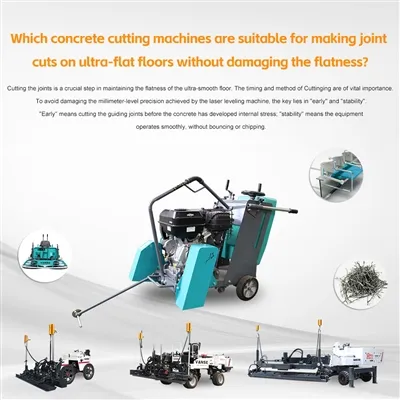
Which concrete cutting machines are suitable for making joint cuts on ultra-flat floors without damaging the flatness?
Cutting the joints is a crucial step in maintaining the flatness of the ultra-smooth floor. The timing and method of Cuttinging are of vital importance. To avoid damaging the millimeter-level precision achieved by the laser leveling machine, the key lies in "early" and "stability". "Early" means cutting the guiding joints before the concrete has developed internal stress; "stability" means the equipment operates smoothly, without bouncing or chipping. Based on this principle, there are mainly two types of equipment available on the market that are suitable for cutting joints in ultra-smooth floors. The core difference between them lies in the time window for cutting. To make it easier for you to compare, I have listed their features as follows: Comparison dimension Early-Entry Cutting Conventional Cutting The timing of the cut Within 1-4 hours after the concrete has been polished (commonly known as the "initial setting" stage) After 6-12 hours or longer of concrete curing (usually overnight waiting) Core Strengths Prevent cracks from forming at their source: Cut the joints before the concrete begins to contract, guiding the cracks to develop in a regular pattern. This is the best way to protect the flatness of the super-level floor. High flexibility: Suitable for all types of concrete, including hardened floors. Smooth cuts: Special blades and patented sliding plates are used, resulting in almost no chipping during cutting, and the joints are aesthetically pleasing. Adjustable depth and width: Capable of cutting deeper and wider joints. Potential risks The time window is narrow, and high requirements are placed on construction organization. Special cutting blades must be equipped. May cause random cracks: If the cutting is done too late, the internal stress of the concrete may have already caused micro-cracks or warping on the floor before the joint is made, thus damaging the flatness. The key to the decision lies in your ultimate pursuit of flatness and the scheduling of the project. Preferred solution: Early Cutting If your project aims for a super-flat floor with FF/FL 35 or above, or if the floor will be used in high-shelf warehouses or precision instrument workshops, then the early Cutting is the only recommended option. It actively guides the cracks before stress is formed, maximizing the protection of the perfect foundation created by the laser leveling machine. Alternative solution: Traditional precision joint Cutting If your project requires a slightly lower level of flatness (such as for ordinary commercial floors), or if you missed the early Cutting window due to construction schedule reasons, then choosing a high-precision, smooth-running traditional joint Cutting is necessary. The key lies in the stability of the equipment. No matter which equipment you choose, there are two points to keep in mind: Special blades: For the initial cutting, you must use the blades specifically designed for this purpose. The blade head connection and formula are specially tailored for un-hardened concrete, which can prevent the blade head from falling off and ensure the cutting quality. Smooth operation: The weight balance of the equipment and the design of the blade guard (such as whether it has a stabilizing slide) will directly affect the stability during cutting, and thereby influence the final flatness. I hope the above information can help you make a clearer choice. If you want to know more about how to select the appropriate blade type based on the specific concrete mix ratio (such as whether fibers are added), I can help you organize more detailed information for you. Contact us NOW Note: The parameters provided in this document are for reference only and are not mandatory. Due to differences in technical characteristics between different brands and models of laser levelers, please consult the manufacturer for a suitable solution before actual operation. This reference document assumes no responsibility for any issues arising from failure to follow the manufacturer's instructions.How to ensure the safety and reliability of concrete laser leveling machine during construction?
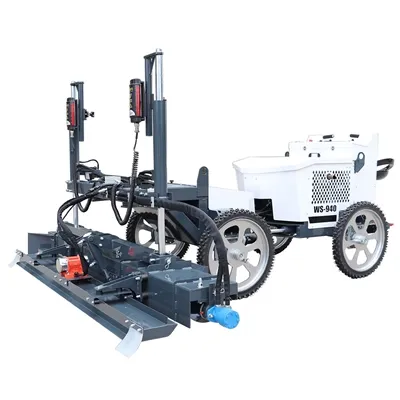
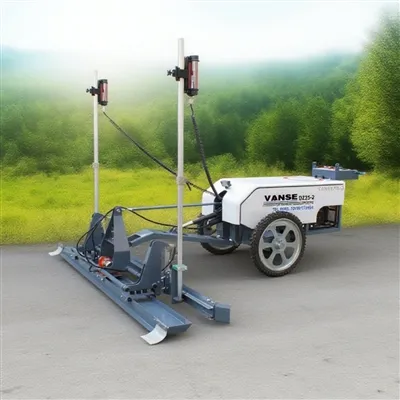
It is very important to ensure the safety and reliability of the concrete laser leveling machine during the construction process. This is not only related to the quality of the project, but also directly affects the safety of the operator. Here are some key steps and suggestions to ensure the safe and reliable operation of the concrete laser leveling machine: 1. Training and certification: Ensure that all operators have received appropriate operation training and are familiar with all functions and emergency stop procedures of the equipment. 2. Equipment inspection: Before starting work every day, perform a comprehensive visual inspection of the leveling machine, including checking tires, fuel levels, oil, coolant, and all controls. 3. Laser calibration: Ensure that the laser transmitter is properly installed and calibrated to provide an accurate height reference. 4. Safety protection: Ensure that all safety devices such as emergency brake buttons, safety guardrails, etc. are in good condition. 1. Site leveling: Before using the laser leveling machine, properly prepare the construction site to ensure that the ground is relatively flat and free of large debris. 2. Traffic control: Set up warning signs and fences to restrict unauthorized personnel from entering the work area. 3. Material supply: Rationally arrange the supply speed of concrete to avoid idling of equipment or pouring too quickly due to waiting for concrete, resulting in quality degradation. 4. Smooth communication: Ensure good communication means within the construction site to facilitate command and dispatch and emergency response. 1. Smooth driving: The operator should maintain a constant speed and avoid sharp turns or sudden braking, which can improve flatness and reduce the risk of equipment damage. 2. Monitoring laser signals: Keep an eye on the working conditions of the laser receiver to ensure that a stable signal is received. 3. Timely adjustment: Adjust the scraper angle and vibration frequency according to the actual construction conditions to achieve the best effect. 4. Rest and inspection: Let the machine rest regularly and check the equipment condition again during this period. 1. Regular maintenance: Perform routine maintenance tasks according to the manufacturer's recommended schedule, such as changing the engine oil and cleaning the filter. 2. Record keeping: Keeping detailed records of each maintenance helps track the historical performance of the equipment and predict possible problems in the future. 3. Professional repair: When encountering complex failures, please contact professional repair services instead of trying to repair them yourself. The above measures can greatly improve the safety and reliability of concrete laser leveling machines on the construction site. It is important to always follow the guidelines in the user manual provided by the manufacturer and comply with relevant local safety regulationsHow do the concrete laser leveling machines improve the flatness?
The ability of the concrete laser leveler to improve flatness is its core advantage. It fundamentally changes the traditional way of concrete leveling by combining modern laser technology, hydraulic systems and precision mechanical control. To improve the smoothness of construction,Equipment principles, pre-construction preparation, construction process control and post-construction maintenanceThe following is a detailed explanation of the key measures and principles: Erect alaser transmitter, it will produce a very thin, constantly rotating laser plane (360°). This laser plane is the entire field. Absolute horizontal reference, its accuracy is very high (usually up to ±1mm/10m). On the leveling machineLaser receiver, This laser signal will be captured in real time. The receiver transmits the signal to the leveler in real time.Vehicle control system (computer). The control system compares the actual height received with the preset design elevation and calculates the height difference within milliseconds. The control system immediately passes the calculated dropHydraulic valvesdrive. Hydraulic cylinder, to precisely adjust the height of the scraper. This process is Continuous automatic, the machine is always leveling dynamically and in real time, replacing reliance on human judgment and manual operation and eliminating human errors. Foundation treatment: The compaction and smoothness of the base layer (usually crushed stone or stabilized soil) are crucial. While a laser machine can compensate for minor undulations in the base layer, large undulations can significantly impact the concrete usage and overall quality. The base layer should be evenly compacted with no noticeable bumps or indentations. Laser transmitter installation: The laser transmitter must be firmly installed in a place with minimal interference from construction. Use a precise level to ensure it is absolutely level. Input and verification of elevation: Accurately input the design elevation into the control system. Before construction, the site should be tested at multiple points (especially corners and center) withLaser receiving poleVerify the accuracy of the laser signal to ensure that the entire construction surface is within the effective laser scanning range. Formwork (formwork) control: The top surface elevation and rigidity of the template must meet the requirements. Large errors in template elevation or deformation during pouring will directly affect the operating benchmark of the laser leveling machine. Slump: This is a key metric. The slump of each truckload of concrete must be uniform. Excessive slump variation can lead to varying degrees of aggregate segregation after paving, with some areas being too thin and others too dry. Laser leveling cannot effectively treat this uniformly, resulting in poor flatness after hardening. The ideal slump should be determined based on the floor thickness and reinforcement. Generally, a slump of 140-160mm is recommended for pumped concrete. Adequate concrete supply: Ensure the continuous supply of concrete to avoid the situation where the first poured concrete has initially set due to long waiting time, resulting in cold joints between the concrete and the later poured concrete, thus affecting the overall flatness. Paving thickness: The initial paving concrete material should be 2-3 cm higher than the design elevation to leave operating margin for the leveling machine. Routing method: The operator should be experienced and control the leveling machine to move forward smoothly and at a constant speed, avoiding sudden stops and sudden movements. The paths of adjacent milling discs (scrapers) should overlap to avoid missing parts. Bleeding water treatment: If the concrete bleeds severely, the surface water should be scraped off in time before leveling, otherwise a weak layer will be formed on the surface, affecting the final surface strength and flatness. Timely grinding (milling): For floors with ultra-high flatness requirements (such as ultra-flat floors), after the laser leveling machine completes the operation and the concrete reaches the initial setting (people step on it and there is a footprint about 3-5mm deep), it will be used. Double disc driving trowel. Perform overall grinding (milling). This step can eliminate the tiny marks left by the laser leveling machine scraper and the unevenness caused by individual aggregates. It is a key step in achieving extremely high flatness. Slit: Expansion joints must be cut in time within the specified time (when the concrete strength reaches 25-30% of the design strength) to avoid irregular cracking that damages the flatness. Maintenance: Use plastic film to fully cover or spray curing agent to provide sufficient moisturizing maintenance to prevent shrinkage cracks and peeling due to rapid water loss on the surface, there by protecting the flatness that has been achieved. Characteristic Concrete laser leveling machine Traditional manual leveling Benchmark Fixed absolute laser plane (precise) Moving channel steel, rulers, or workers' sight lines (prone to error accumulation) Control method Computer real-time calculation, automatic hydraulic adjustment (intelligent, continuous) Human judgment based on experience and manual operation (subjective, intermittent) Flatness Very high, can reach±2mm within 2 meters Even higher Low, usually only reach4-5mm/2m Efficiency Extremely high, 10-20 times that of manual labor Low, depends on the number and skill of workers Artificial Dependency Low, 1 operator and a few assistants High, requires a large number of skilled workers In short, to improve the flatness of the concrete laser leveling machine, it must be recognized that it is a systematic project: Relying on its high-tech "brain" (control system) and "eyes" (laser system) is a prerequisite, but the final effect also depends on a qualified "foundation" (base and formwork), uniform and stable "ingredients" (concrete), standardized "cooking techniques" (operating technology) and proper "post-processing" (polishing and maintenance).Only when every link is done well can the highest standard of flat floor be produced.