Technical Knowledge
What is the frequency of daily maintenance for concrete laser leveling machines?
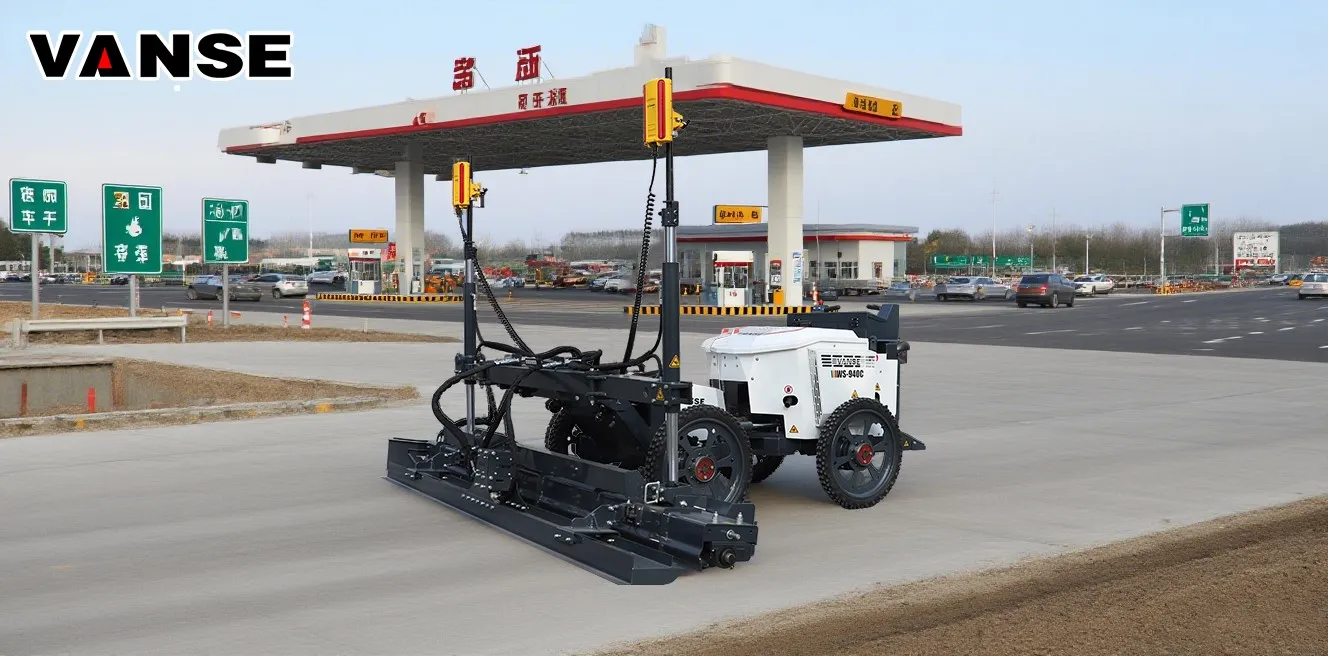
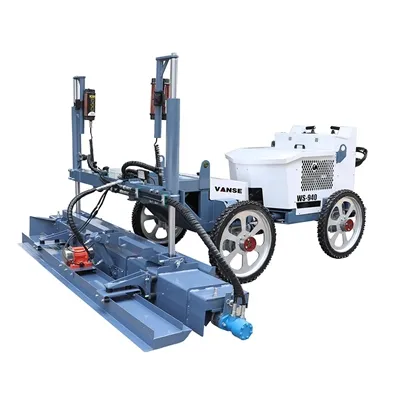
The frequency of daily maintenance for concrete laser screeds should be determined based on the intensity of use and the frequency of use
This includes:
Daily maintenance: Before and after operation, check the laser system, screed head, tires/tracks, fuel/battery level, and lubrication status, and clean concrete debris from the equipment surface.
Weekly maintenance: Check the vibration system bolt tightness, hydraulic oil level, and cleanliness, replace the air filter element, and lubricate key joints.
Monthly maintenance: Thoroughly inspect the hydraulic line seals and electrical connections, test the laser transmitter accuracy, and inspect the screed head for wear.
Quarterly/every 500 hours: Replace the hydraulic oil, engine oil, and filter element, perform a thorough overhaul of core components such as the engine and vibration motor, and calibrate the laser control system.
Regular maintenance can extend the life of the equipment and ensure construction accuracy. It is recommended to adjust the frequency based on the equipment manual and actual operating conditions.
Also, be sure to carefully read the manufacturer's product manual and consult with the manufacturer's professional technicians to accurately understand the maintenance frequency and intensity required for your specific equipment model, so that you can perform professional and standardized maintenance on your concrete laser screed. This process ensures that the maintenance plan is highly compatible with the equipment characteristics, minimizes the risk of failure due to improper maintenance, and provides reliable protection for the long-term stable operation of the equipment.
Click the below to jump immediately!!!


CONCRETE LASER LEVELING MACHINE


SLIPFORM MACHINE


TOPPING SPREADER

Thanks to All the Friends Who Support and Trust Shandong Vanse Machinery Technology Co., Ltd.
If you want to know more about Shandong Vanse Machinery Technology Co., Ltd. or have any questions, please feel free to contact us:
Our Factory
Shandong Vanse Machinery Technology Co., Ltd.








Share this article

About the Author: Shandong Vanse Machinery Technology Co., Ltd.
Shandong Vanse Machinery Technology Co., Ltd. is a high-tech manufacturer specializing in concrete construction machinery, including laser screeds and related equipment. The company integrates R&D, production, and global sales, with products exported to over 60 countries and widely used in infrastructure projects worldwide.
Previous Post
Next Post
Related Articles
You Might Also Like
How is the construction efficiency of a concrete laser leveling machine affected by its model and operation method?
The construction efficiency of the concrete laser leveling machine is affected by its model and operation method, which is mainly reflected in the following aspects: 1. Equipment model: Different models of concrete laser levelings may have different designs, functions and performance. A large or heavy-duty leveling may be more suitable for large areas or complex floor construction, while a small or light-duty leveling may be better suited for smaller areas or simpler construction. Generally speaking, large or advanced leveling machines may have higher construction efficiency and accuracy, but the specific selection needs to be based on actual construction needs and conditions. 2. Operation method: The impact of operation method on construction efficiency is mainly reflected in the operator's skill level, experience and operating habits. Skilled operators can better grasp the performance and characteristics of the leveling and complete construction tasks more quickly and accurately. At the same time, reasonable operating methods and parameter settings can also improve the construction efficiency and quality of the leveling. 3. Equipment maintenance and upkeep: The maintenance and upkeep status of the concrete laser leveling also has a certain impact on its construction efficiency. Regular maintenance and inspections can ensure that equipment is in good working condition, reduce breakdowns and downtime, and thus improve construction efficiency. 4. Auxiliary equipment: Some auxiliary equipment such as concrete transfer pumps, vibrators, etc. can be used in conjunction with the leveling machine to improve construction efficiency. For example, concrete delivery pumps can be used to deliver concrete to construction sites quickly and accurately, while vibrators can make concrete more dense and reduce rework and repetitive work. 5. Construction conditions: The construction efficiency of the concrete laser leveler is also affected by the construction conditions. For example, the layout, terrain, climate and other conditions of the construction site may affect the movement and operating speed of equipment. In addition, the proportion, quality and mix ratio of concrete will also affect construction efficiency and quality. To sum up, the construction efficiency of concrete laser leveling machines is affected by many factors, including equipment model, operation method, maintenance, auxiliary equipment and construction conditions. In actual construction, it is necessary to select appropriate equipment models and operating methods according to specific conditions, and strengthen equipment maintenance and cooperation to improve construction efficiency and quality. At the same time, it is also necessary to pay attention to the restrictions and requirements of construction conditions to ensure the smooth progress of construction. The above content is for reference only. If you need more information, you can contact our business manager.The impact of power trowel operation time on the final glossiness of concrete floors
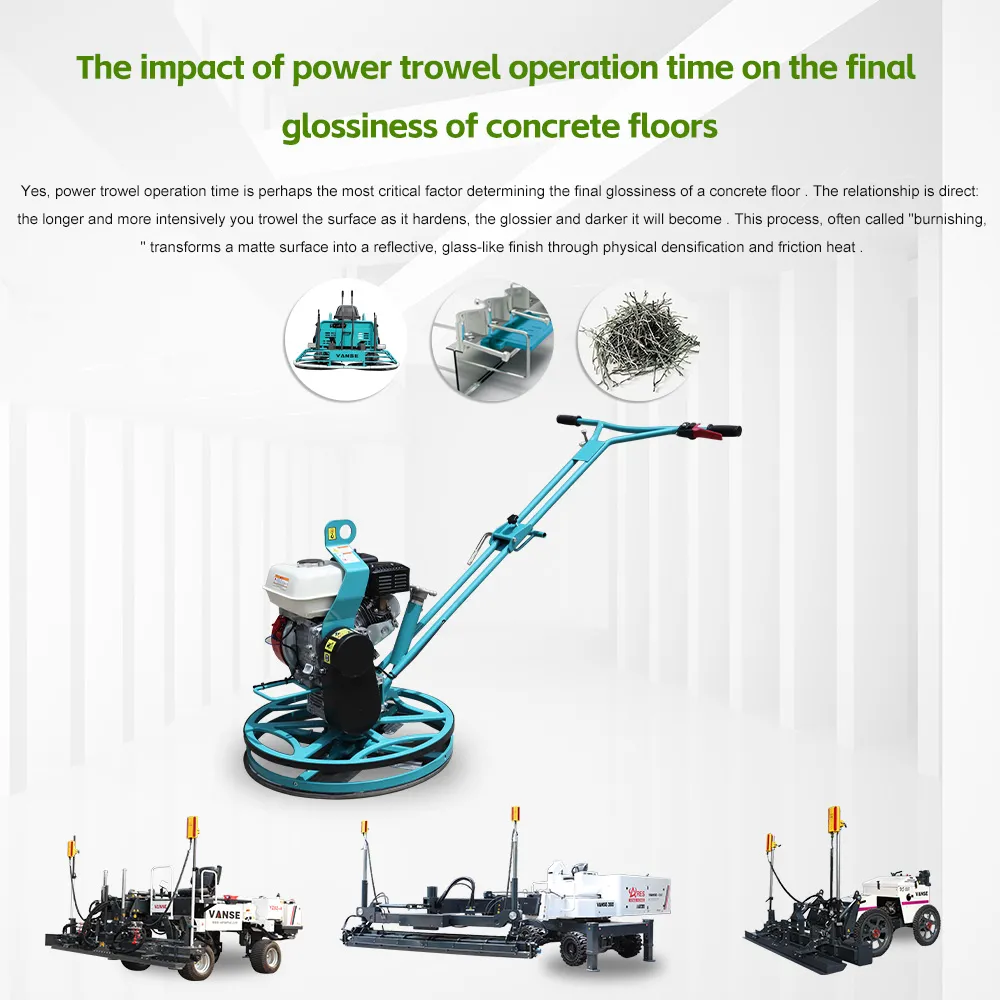
Yes, power trowel operation time is perhaps the most critical factor determining the final glossiness of a concrete floor . The relationship is direct: the longer and more intensively you trowel the surface as it hardens, the glossier and darker it will become . This process, often called "burnishing," transforms a matte surface into a reflective, glass-like finish through physical densification and friction heat . The following table outlines how the timing and technique of each pass build towards the final gloss level: Stage Timing (Approx.) Concrete State Action & Settings Resulting Gloss Key Goal 1. Initial Float 1–2 hours after pour Initial set, footprint depth ~5mm Use float pans at low speed, blades flat . Matte / Dull Press in aggregate, bring up "cream," eliminate waviness . 2. Intermediate 3–4 hours after pour Surface moisture disappears, becomes firmer Switch to finish blades at slight pitch (5-10°) . Low Sheen (Satin) Compact the surface, close capillaries. Repeat passes every 30-60 mins . 3. Burnishing "The Window" Hard, walkable with almost no imprint Max blade pitch (20-30°) & high RPM . Continue even when surface looks "done" . High Gloss (Mirror) Generate friction heat to physically densify and "melt" the surface into a reflective layer . Glossiness isn't just a visual effect; it's a physical change in the surface. As you make repeated passes with steel blades, you are physically forcing the fine cement particles closer together, closing up microscopic pores . This is densification. In the final "burnishing" stage, high-speed troweling generates significant friction heat . This heat slightly "buff" the surface paste, creating a reflective, burnished finish . You will often observe the surface instantly transform from a dull matte to a dark, almost metallic sheen during this phase . While chasing a high gloss, it's crucial to respect the concrete's setting process. Over-troweling or poor timing can cause significant problems: Surface Burning: Excessive troweling at the very end, especially with too high an angle or speed, can leave dark, blackish "burn" marks on the surface . Sealing in Moisture: If you achieve a high-gloss finish too quickly, you can "seal" the surface. This traps residual water inside the slab, which can later lead to delamination (the top layer peeling off) or surface blisters . Loss of Breathability: A highly burnished surface is nearly waterproof. While great for spill resistance, this can make it difficult for the slab to dry out if you plan to install certain types of flooring, like glue-down vinyl or carpet, soon after . You have direct control over the outcome by managing the machine and your passes: To Increase Gloss: Increase the blade pitch, increase the rotor speed (RPM), and continue making passes even after the surface looks "done" . Ensure you are using brand-new or minimally worn high-quality steel blades; damaged blades will create scratches that ruin the mirror effect . To Decrease Gloss (Maintain Matte): Keep the blade pitch low, use lower RPMs, and stop troweling once the surface is flat and the pores are closed . Your question perfectly captures the essence of high-end concrete finishing. Would you like to know how using a concrete densifier during the troweling process can make that gloss even more durable and intense? Contact us NOW Note: The parameters provided in this document are for reference only and are not mandatory. Due to differences in technical characteristics between different brands and models of laser levelers, please consult the manufacturer for a suitable solution before actual operation. This reference document assumes no responsibility for any issues arising from failure to follow the manufacturer's instructions.What are the key points to keep in mind when using a concrete laser leveling machine?
The key points to pay attention to when using a concrete laser leveler are crucial, as they directly determine the flatness, quality, and service life of the floor. The following is a detailed summary of the key points to pay attention to in each step, from pre-construction preparation to post-construction maintenance: This phase is the foundation for a smooth construction process. Inadequate preparation will lead to numerous subsequent problems. Base treatment is key: Strength and Density: The base layer (usually crushed stone or stabilized layer) must be compacted to meet the specified bearing capacity requirements (usually ≥1.5 MPa) to prevent cracking caused by base subsidence. Elevation and Flatness: The base layer elevation must be strictly controlled to allow sufficient thickness for the surface concrete. Flatness should not be too poor, otherwise excessive concrete consumption will occur. Cleanliness and Moisture: The base layer surface must be thoroughly cleaned and free of loose dust, oil, and debris. Before pouring concrete, it should be thoroughly moistened with water, but no visible water should be allowed. This is to prevent the base layer from absorbing moisture from the concrete, which could lead to plastic shrinkage and cracking. Precise Formwork Installation: The top elevation of the formwork must align with the designed floor elevation, which is one of the benchmarks for laser leveling. The formwork must be securely supported to prevent displacement or deformation caused by the leveling's movement and concrete compression. The formwork is typically constructed of channel steel, which must possess sufficient rigidity and straightness. Laser transmitter installation and calibration: Location Selection: The transmitter should be mounted in the center or at a high point within the construction area to ensure signal coverage across the entire work surface and avoid signal blind spots. Secure Installation: The transmitter tripod must be securely mounted on solid ground, away from sources of vibration, and monitored during construction to prevent movement. Precise Calibration: The height and level of the laser transmitter must be precisely calibrated according to the design elevation. This is the "brain" of the entire automated leveling system; any error can lead to a complete breakdown. Repeated verification is essential. Equipment Inspection and Debugging: Check the leveling's hydraulic system, engine, scraper, vibrator, and other components for proper operation. Install and inspect the laser receiver, sensor, and control panel to ensure they can properly receive and process laser signals. As the saying goes, "A good cook cannot cook without rice." The quality of the concrete itself is crucial. Mix Design: Commercial concrete should be used, with a strength generally not lower than C25. Slump should be strictly controlled, generally recommended to be between 120mm and 140mm. Excessive slump can lead to segregation, significant shrinkage, and low strength; too little slump can result in poor fluidity and difficulty leveling. Aggregate Selection: The maximum aggregate particle size should be moderate (generally ≤25mm), with good gradation and a standard mud content. Transportation and Placement: The time from unloading to completion of placement should be short to prevent initial setting of the concrete. Segregation should be prevented during transportation. This is the core process and directly demonstrates the advantages of the laser leveling. Concrete pouring and initial paving: Discharge should be even, avoiding concentrated unloading to form large piles to prevent aggregate segregation. Preliminary paving can be performed using small equipment or manually, with the height slightly above the designed elevation (the virtual paving height). Key Points for Laser leveling Operation: Travel Direction: Typically, the paving is performed at a constant speed along the longitudinal direction. Coordination between the scraper and vibrating plate: The scraper is responsible for scraping away excess concrete and providing initial leveling; the vibrating plate uses high-frequency vibration to compact and fine-tune the concrete. The leveling's travel speed must be carefully controlled to ensure sufficient vibration time to achieve a compacting effect, but avoid excessive vibration that may cause concrete segregation. Real-time Adjustment: The operator must closely monitor the data on the control panel. The laser receiver monitors the elevation in real time and automatically adjusts the scraper's height via the hydraulic system, achieving unmanned, automatic leveling. The operator's primary responsibilities are to control movement and monitor equipment status. Critical Process Connection – Gun-Smoothing: After the laser leveling completes an area, but before the concrete begins to set (when a person steps on it and the concrete sinks approximately 3-5mm), gun-smoothing should be performed immediately using a double-disc ride-on trowel. Purpose: Removes minor blade marks left by the laser leveling, smoothes any excess cement slurry, seals surface pores, and prepares for subsequent finishing. This step is crucial to the final surface quality. Laser leveling only completes the "leveling" process. To achieve a high-strength, wear-resistant floor, finishing and maintenance are essential. Finishing (Slurry Calendering): After the concrete has initially set but before final set (when slight footprints remain), use a double or triple trowel with metal discs for rough grinding. Once the surface has further hardened and no visible water is visible, replace the trowel blade and perform a smooth finish. The frequency and timing of smoothing must be carefully controlled. Excessive or premature smoothing can cause surface bleeding and peeling. Smoothing further densifies the surface, improving wear resistance and impermeability. Slotting (Seam Cutting): Timing is critical: The concrete must reach a certain strength (usually 6-10 MPa compressive strength) but still be able to be cut smoothly by the cutter without causing edge cracking. This is generally done within 24-48 hours after pouring (the time varies depending on the temperature). Function: Guides concrete shrinkage cracks to develop in predetermined, uniform locations, avoiding random, irregular cracking. Joint Depth: Typically 1/4-1/3 of the slab thickness. Spacing: Generally determined by the concrete mix ratio and slab thickness, typically 24-36 times the slab thickness. Curing: Curing should begin immediately after the concrete has fully set (after finishing is complete). Recommended Method: Spraying a curing agent or covering with plastic sheeting. The curing agent should be evenly applied to form a dense film; the film should be tightly sealed to prevent evaporation. Time: Curing should last no less than 7 days, with the first 3 days being crucial. Purpose: Provide sufficient moisture for cement hydration to prevent rapid surface water loss, which can lead to cracking and reduced strength. A solid and level base: A weak foundation is destabilizing. Precise laser calibration: This is the system benchmark, and no mistakes can be made. Concrete slump control: Materials are fundamental, and 120-140mm is the optimal range. Timing of leveling and blasting: Mechanized, streamlined operations, seamlessly linked. Timing of finishing and slitting: Rely on experience; applying too early or too late can lead to problems. Timely and adequate curing: The final step that determines ultimate strength and cracking. Strict control of each of these steps can fully leverage the technical advantages of laser levelings to create high-strength, high-flatness, crack-free, high-quality concrete floors. Note: The parameters provided in this document are for reference only and are not mandatory. Due to differences in technical characteristics between different brands and models of laser levelers, please consult the manufacturer for a suitable solution before actual operation. This reference document assumes no responsibility for any issues arising from failure to follow the manufacturer's instructions.