Technical Knowledge
How is the construction efficiency of a concrete laser leveling machine affected by its model and operation method?


The construction efficiency of the concrete laser leveling machine is affected by its model and operation method, which is mainly reflected in the following aspects:
1. Equipment model:
Different models of concrete laser levelings may have different designs, functions and performance. A large or heavy-duty leveling may be more suitable for large areas or complex floor construction, while a small or light-duty leveling may be better suited for smaller areas or simpler construction. Generally speaking, large or advanced leveling machines may have higher construction efficiency and accuracy, but the specific selection needs to be based on actual construction needs and conditions.
2. Operation method:
The impact of operation method on construction efficiency is mainly reflected in the operator's skill level, experience and operating habits. Skilled operators can better grasp the performance and characteristics of the leveling and complete construction tasks more quickly and accurately. At the same time, reasonable operating methods and parameter settings can also improve the construction efficiency and quality of the leveling.
3. Equipment maintenance and upkeep:
The maintenance and upkeep status of the concrete laser leveling also has a certain impact on its construction efficiency. Regular maintenance and inspections can ensure that equipment is in good working condition, reduce breakdowns and downtime, and thus improve construction efficiency.
4. Auxiliary equipment:
Some auxiliary equipment such as concrete transfer pumps, vibrators, etc. can be used in conjunction with the leveling machine to improve construction efficiency. For example, concrete delivery pumps can be used to deliver concrete to construction sites quickly and accurately, while vibrators can make concrete more dense and reduce rework and repetitive work.
5. Construction conditions:
The construction efficiency of the concrete laser leveler is also affected by the construction conditions. For example, the layout, terrain, climate and other conditions of the construction site may affect the movement and operating speed of equipment. In addition, the proportion, quality and mix ratio of concrete will also affect construction efficiency and quality.
To sum up, the construction efficiency of concrete laser leveling machines is affected by many factors, including equipment model, operation method, maintenance, auxiliary equipment and construction conditions. In actual construction, it is necessary to select appropriate equipment models and operating methods according to specific conditions, and strengthen equipment maintenance and cooperation to improve construction efficiency and quality. At the same time, it is also necessary to pay attention to the restrictions and requirements of construction conditions to ensure the smooth progress of construction.
The above content is for reference only. If you need more information, you can contact our business manager.


Thanks to All the Friends Who Support and Trust Shandong Vanse Machinery Technology Co., Ltd.
If you want to know more about Shandong Vanse Machinery Technology Co., Ltd. or have any questions, please feel free to contact us:
Our Factory
Shandong Vanse Machinery Technology Co., Ltd.








Share this article

About the Author: Shandong Vanse Machinery Technology Co., Ltd.
Shandong Vanse Machinery Technology Co., Ltd. is a high-tech manufacturer specializing in concrete construction machinery, including laser screeds and related equipment. The company integrates R&D, production, and global sales, with products exported to over 60 countries and widely used in infrastructure projects worldwide.
Previous Post
Next Post
Related Articles
You Might Also Like
Requirements and treatment for troweling the concrete base layer before grinding special floors (such as epoxy floors and curing agent floors)
The success of special floors (such as epoxy floors and curing agent floors) is "70% dependent on the base layer and 30% on the materials". The quality and treatment of the base concrete's smoothing are the key prerequisites for determining the final floor effect and lifespan. The following are the detailed requirements and treatment procedures for the concrete base layer before grinding. The objective of the base concrete is to provide a "canvas" that is of high strength, dense and smooth, dry and clean, and free of defects. This refers to the operation carried out using a mechanical trowel during the period from the initial setting to the final setting of concrete. The requirements are far higher than those for ordinary concrete floors. The strength should not be lower than C25, and it is recommended to be above C30. The water-cement ratio should be low (generally ≤0.5) to reduce bleeding, enhance surface strength and wear resistance. The aggregate (sand and gravel) particle size is moderate and the mud content is low, ensuring a fine surface. It is necessary to vibrate thoroughly to expel air bubbles and ensure that the concrete is dense, free of voids and honeycombs. Preliminary leveling: After the concrete is laid, a laser screed or a scraper is used for initial leveling. Bleeding treatment: Allow the free water on the surface to fully evaporate. Start the operation before the initial setting (when the depth of the human footprint is about 2-3mm). The first coat of troweling (lifting the slurry) : Use a circular troweling machine to run at low speed to lift and smooth the surface slurry, filling in local unevenness. The second coat of smoothing (compaction) : When the surface moisture has further evaporated (and the footprints left by a person standing on it are very shallow), switch to a trowel blade (iron plate), run at medium speed, and apply in a cross direction to compact and smooth the surface. The third coat of polishing (fine polishing) : Before the concrete has finally set (with no standing water on the surface and slight marks when pressed by fingers), use a trowel blade to finely grind at high speed. This step is of vital importance as it can significantly enhance the surface density and flatness, resulting in a smooth and uniform hardened surface. When using a 2-meter straightedge for inspection, the gap should not exceed 3mm. The high-standard project requirement is ≤2mm. The overall slope should comply with the design requirements and there should be no water accumulation areas. After the smoothing is completed, full curing must be carried out immediately (it is recommended to cover with plastic film or spray a special curing agent) to prevent cracking due to excessive evaporation of water. The curing period should be no less than 7 days, with 14 to 28 days being the best. Even a well-polished floor must undergo strict inspection and targeted treatment before grinding. This stage is usually carried out after the concrete pouring and curing are completed (at least 28 days after the strength meets the standard). Strength: Tested by a rebound tester, the surface compressive strength is ≥ 25MPa. For curing agent floors, the higher the strength of the base layer, the better the final effect. Moisture content: Detected using an electronic hygrometer. Epoxy flooring has strict requirements (the moisture content of the base layer should be ≤ 4%, or as per the requirements of the material supplier). The curing agent floor has a relatively high tolerance for moisture, but it must not have standing water either. Flatness: Check again with a 2-meter straightedge and mark the areas that exceed the standard. Defect inspection: Carefully examine for hollowing (by tapping with a small hammer), cracks, oil stains, floating slurry, cement lumps, exposed steel bar ends, etc. Cleaning: Thoroughly sweep the floor and use an industrial vacuum cleaner to suck up all dust and sand particles. Hollowing and Defect repair Remove all hollow and loose parts. V-shaped grooves should be made for non-structural cracks, and they should be filled and repaired with high-strength non-shrinking epoxy resin or polymer cement mortar. The exposed ends of the steel bars on the ground should be cut to at least 3mm below the surface, then treated with anti-rust paint and filled with repair mortar. For local pits or height differences, they should be leveled with a professional grinding machine or milling machine and then filled with matching repair materials. Oil stain treatment: For oil stains, they must be thoroughly removed. Light oil stains can be wiped with special cleaning agents or solvents. Severely penetrating oil stains should be treated with fire roasting, milling or special degreasing agents. If necessary, the contaminated concrete should be knocked off and re-poured. Floating slurry and weak layer treatment: This is one of the core purposes of grinding. Even on a well-polished floor, there may still be a layer of cement slurry film (floating slurry) with relatively low strength formed due to bleeding on the surface. The primary task of the grinding machine is to remove this layer of floating Stage Key requirements for epoxy flooring Key requirements for concrete hardener flooring Polishing requirements Extremely high. The denser and flatter the surface is, the better the adhesion of the epoxy coating will be and the brighter and smoother the coating effect will be. It needs to be polished to perfection. High. The surface density directly affects the uniformity of the curing agent's penetration and the final hardening effect, and it also requires a fine finish. Strength requirements High (≥C25). The base layer is solid, and the coating is not prone to cracking due to base layer cracking. Very high (it is recommended to be ≥C30). The strength of the base layer is the foundation of the final strength, and the curing agent is an addition reaction. Moisture content requirement Extremely strict (≤4%). Moisture can cause the epoxy coating to bubble and delaminate. It should be relatively loose, but the ground must be dry and free of standing water. The curing agent can react with the hydration products of cement. Pretreatment before grinding The key points are absolute dryness, dust-free, oil-free and high flatness. The floating slurry layer must be removed to ensure adhesion. The key points are to remove the floating slurry, open the pores, deal with the defects and ensure the surface is smooth. Grinding opens up channels for the penetration of curing agents. Grinding particle size Usually, grinding to 80-120 mesh is sufficient to provide adequate roughness (anchor texture) for the epoxy primer. Usually, a coarser finish (such as starting at 30-40 mesh) is required to open up the surface, followed by multiple grinding processes to a higher mesh count (such as 1000-3000 mesh) for a brighter finish. Communication in advance: Before the concrete pouring, the floor construction unit should conduct a detailed technical briefing with the general contractor of the civil engineering, clearly defining the plastering standards and curing requirements. On-site supervision: The floor construction party should send personnel to supervise and guide during the concrete smoothing stage. System treatment: Regard the base treatment as a systematic project, from pouring to curing, and then to the inspection and repair before grinding, each step is interlinked and no step can be omitted. Professional assessment: For the renovation of old floors, a comprehensive assessment must be conducted by professionals before grinding, and a detailed treatment plan should be formulated. Only by following the above requirements and procedures can a perfect foundation be laid for the subsequent epoxy resin coating or concrete sealant and hardener construction, thereby creating a high-performance and long-life high-quality floor. Note: The parameters provided in this document are for reference only and are not mandatory. Due to differences in technical characteristics between different brands and models of laser levelers, please consult the manufacturer for a suitable solution before actual operation. This reference document assumes no responsibility for any issues arising from failure to follow the manufacturer's instructions.How to control power trowel blades speed to avoid super flat floor cracks?
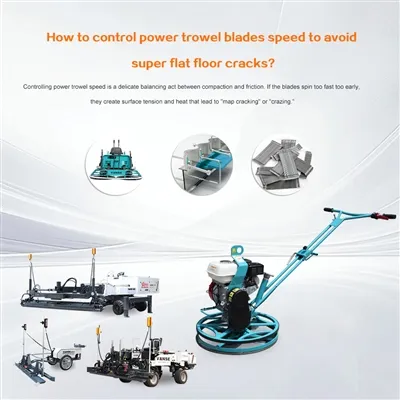
Controlling power trowel speed is a delicate balancing act between compaction and friction. If the blades spin too fast too early, they create surface tension and heat that lead to "map cracking" or "crazing." To maintain an ultra-flat (FF) rating while preventing cracks, follow these speed and pitch protocols: The goal here is to break down the ridges left by the laser leveling and consolidate the surface without sealing it prematurely. Speed Setting: Low to Medium (50–80 RPM). * Why: High speeds at this stage can create "rotational shear," where the top layer of concrete is moved faster than the base, causing delamination or plastic shrinkage cracks. Technique: Use float pans (large metal disks) attached to the blades. Keep the blades completely flat. If you spin too fast with pans, you risk "throwing" the machine or creating a wavy surface that ruins your flatness. Once the bleed water has disappeared and the concrete can support the weight of the operator with only a 1/8" footprint, you move to the first "finishing" passes. Speed Setting: Medium (80–110 RPM). The "Crack Prevention" Fix: As you increase speed, you must slightly increase the pitch (angle) of the blades. This reduces the surface area of the blade in contact with the concrete, which lowers the friction-generated heat. Observation: If you see the surface "tearing" or small "chicken-wire" cracks appearing, your RPM is too high for the current moisture content. Slow down immediately. This is where you achieve that "mirror" finish. However, this is also the highest risk zone for "burnish cracks." Speed Setting: High (120+ RPM). Setting the Blades: Tilt the blades to a sharp angle. This puts maximum pressure on a small area to densify the surface. The Danger: If the blades are spinning at high RPM on a surface that is getting too dry, the friction generates localized heat. This causes the top 1/16" of the slab to expand and then rapidly contract, leading to thermal cracking. The Correction: If the concrete is "ringing" (making a high-pitched metallic sound) and looks scorched, ease off the throttle. Stage Blade Pitch Recommended RPM Goal Floating (Panning) Flat (0°) 50 – 80 Remove ridges; Consolidate Initial Finish Slight (5° – 10°) 80 – 110 Close the pores Final Burnish High (20°+) 120 – 150 Densify and shine The biggest mistake is staying at high RPM for too long on a "hot" (fast-setting) day. As the concrete loses moisture, it becomes more abrasive. Abrasive concrete + High RPM = Blistering and Cracking. Quick Correction: If you notice the surface drying too fast for your machine speed, apply a finishing aid (evaporation retardant). This lubricates the blades and allows you to maintain higher speeds without tearing the surface. Would you like me to explain how to coordinate the laser leveling passes with the trowel timing to ensure the edges don't dry out before the center? Contact us NOW Note: The parameters provided in this document are for reference only and are not mandatory. Due to differences in technical characteristics between different brands and models of laser levelers, please consult the manufacturer for a suitable solution before actual operation. This reference document assumes no responsibility for any issues arising from failure to follow the manufacturer's instructions.VANSE Ride-On Laser Concrete leveling For Sale
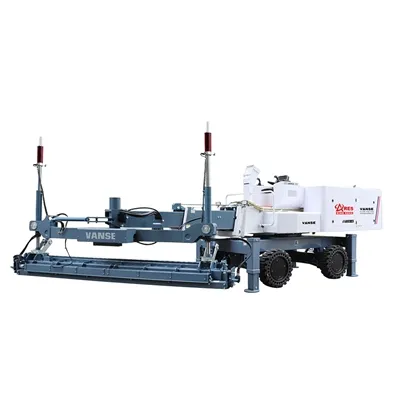
The laser leveling machine is a kind of equipment that takes the laser emitted by the transmitter as the reference plane, and controls the leveling head in real time through the laser receiver on the laser leveling machine, so as to achieve high-precision and rapid leveling of concrete. It is indeed a time-saving and labor-saving way to use a concrete laser leveling machine to pave the ground. It is not only fast and effective, but also can save labor to the greatest extent. After the equipment is started, it will level itself according to the height of the ground or after manual leveling. For compaction, both methods can be applied. Main construction process: Civil engineering formwork support (bottom formwork) → steel bar tie-up → concrete pouring and laser leveling device elevation control → laser leveling machine for concrete leveling → professional technicians use scraper bars to level accurately → single-disc troweling machine to lift slurry and smooth → Professionals use scraper bars to accurately level → professional operation of double-disc driving trowel → surface finish → finished product protection 1. Civil engineering formwork (bottom formwork): Civil engineering formwork support (bottom formwork) is strictly controlled in elevation as in normal drawing design and construction specification acceptance standards, and the scaffolding is firmly supported. It should be noted that the "clear water concrete" building (ground) Surface and concrete pouring shall be constructed at the same time. In order to facilitate mechanical construction, there shall be no formwork or supporting elements higher than the building (ground) level, except for the reserved and pre-embedded levels. 2. Reinforcement tie-up: Because the surface layer is a building (ground) surface formed at one time by using the protective layer of reinforced concrete, the reinforcement must ensure that the concrete protective layer is sufficient, and no reinforcement, stirrups or weldments are allowed to be placed The concrete pouring surface layer is exposed, causing the machine to hit the steel bar, which not only destroys the machine but also destroys the surface layer of the building (ground). 3. Laser leveling instrument controls concrete pouring: set the elevation on the column reinforcement before concrete pouring, and lead the accurate elevation to the laser leveling instrument control system, and the concrete pouring personnel will control the elevation to be 5 times higher than the design elevation when scraping – Within the range of 10mm, lay a solid foundation for the leveling of the next laser leveling machine. 4. VANSE laser leveling machine leveling: In the case of accurate elevation setting by professional technicians, mechanical operators will accurately level the concrete surface under the control of the laser sweeper, and VANSE leveling machine will automatically level the surface The machine is calibrated and controlled to ensure the accuracy of the entire plane. 5. Leveling by professionals: This process is to re-measure the puddles with a laser sweeper when the bleeding of the concrete pouring surface is completed, fill the puddles with concrete, and use a scraper bar to rotate the opposite layer 360° to achieve a comprehensive level. Control the flatness and smooth the edge details of the column root formwork, and use the laser sweeper to repeatedly detect until the requirements are met. 6. Single-disk troweling machine for smoothing and lifting slurry: while the concrete is poured in an orderly manner according to the specifications, the concrete poured earlier will reach the initial setting earlier by using the time difference of the concrete construction. 2-3mm footprint), it is convenient to use single-disc troweling machine and troweling disc to perform cross-breaking troweling to ensure the smooth control of the mechanical operation process. facebook linkedin pinterest twitter whatsapp youtube instagram