Technical Knowledge
How to choose a concrete laser leveling machine suitable for your project
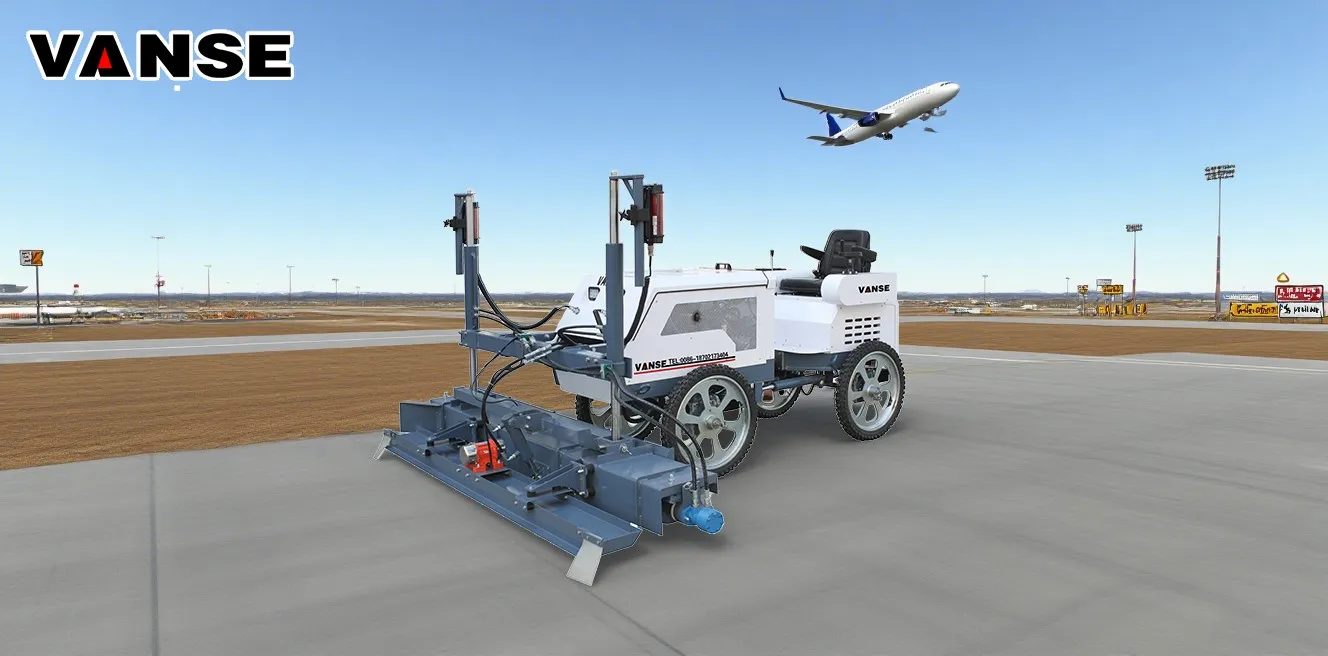
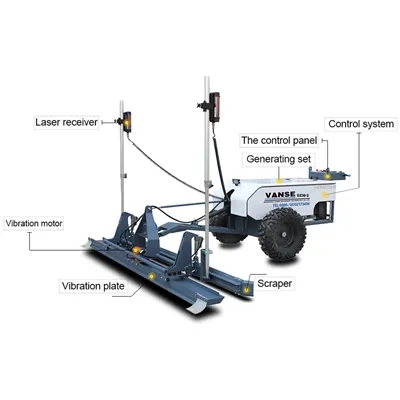
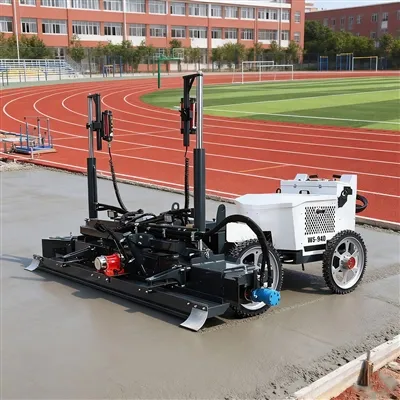
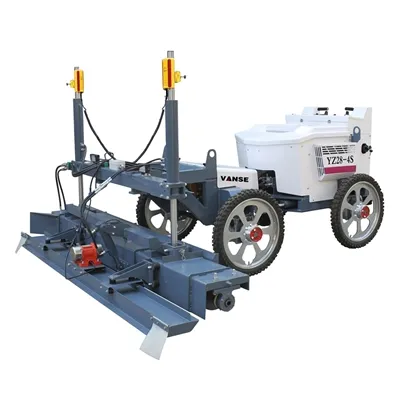
When choosing the right concrete laser leveling for your project, you need to consider a variety of factors, including construction requirements, equipment performance, quality, and after-sales service. The following are key points:
Consider construction conditions and requirements
Construction area:
For smaller areas, such as small indoor flooring, a small walk-behind laser leveling can be selected. These are compact, flexible, lightweight, and cost-effective. For larger areas, such as large factories, plazas, and airport runways, a ride-on or large telescopic-arm leveling should be selected. These machines offer high efficiency and can significantly shorten construction cycles.
Surface flatness requirements:
For projects requiring extremely high flatness, such as precision instrument workshops and electronics factories, select equipment with high leveling accuracy. Check the equipment's flatness tolerance parameters. High-precision levelings generally maintain a relatively small flatness tolerance.
Construction environment:
For narrow construction sites with complex terrain or numerous obstacles, a leveling with good maneuverability and a small turning radius should be selected. If working outdoors, consider the equipment's sun protection, waterproofing, and dustproofing, as well as its adaptability to varying weather conditions.
Focus on Equipment Performance
Productivity: Productivity is a key metric, typically measured in terms of area leveled per unit time. Choose equipment that meets your project schedule. Refer to the manufacturer's theoretical productivity data and, based on actual project examples, understand the equipment's actual efficiency under different working conditions.
Reliability and Accuracy: Reliability includes the equipment's trouble-free uptime and construction accuracy. Choose equipment from a well-known brand with a good reputation for greater assurance of quality and reliability. Also, check the accuracy of the equipment's laser system and the stability of the leveling head. High-precision equipment ensures that the surface is flat to the required level.
Energy Efficiency: Energy consumption is a significant cost over long-term use. Choose equipment with low energy consumption. Compare parameters such as power and fuel consumption across different models to select a leveling with the highest energy efficiency.
Consider Equipment Quality and Construction
Leveling Head Material:
The leveling head directly contacts the concrete, and its material affects the leveling effect and equipment lifespan. Choose materials that are wear-resistant, pressure-resistant, and non-deformable for a longer service life.
Vibration System:
The vibration system determines the efficiency and density of concrete construction. A high-quality vibration system should have sufficient excitation force and operate stably. Some equipment currently on the market has a vibration motor with an excitation force of up to 2000N, which effectively compacts concrete and improves floor quality.
Electrical Control System:
Advanced electrical control systems improve operational convenience and equipment stability. For example, equipment using PLC control offers plug-and-play components and remote fault diagnosis, facilitating maintenance, reducing downtime, and improving construction efficiency.
Evaluating Manufacturers and After-Sales Service
Manufacturer Strength:
Choose a manufacturer with strong technical capabilities and extensive production experience. This can be assessed by examining the manufacturer's production scale, R&D team, and patented technologies. Strong manufacturers offer greater assurance of product quality and ongoing upgrade services.
After-Sales Service:
Concrete laser levelings are large machines, and malfunctions are inevitable during use. Excellent after-sales service can promptly resolve equipment issues and minimize disruptions to construction. Choose a manufacturer with a comprehensive after-sales service network and a fast response time. Be aware of their after-sales commitments, including details on maintenance personnel arrival times and spare parts availability.
Shandong VANSE Machinery boasts a robust and comprehensive service system: a professional team of over 100 provides one-on-one training and one-stop solutions, with case studies covering Saudi Arabia, Russia, and other countries. With a branch in Malaysia , regional response time is shortened to 24 hours, and a global dealer network collaborates with customers. Patented technology and imported core components guarantee a solid after-sales service foundation. 24/7 multilingual online support ensures rapid on-site response in emergencies. Choose VANSE for professional service throughout the entire process, ensuring a more efficient and worry-free project!
Click the below to jump immediately!!!


CONCRETE LASER LEVELING MACHINE


TRACKED MINI DUMPER
Thanks to All the Friends Who Support and Trust Shandong Vanse Machinery Technology Co., Ltd.
If you want to know more about Shandong Vanse Machinery Technology Co., Ltd. or have any questions, please feel free to contact us:
Our Factory
Shandong Vanse Machinery Technology Co., Ltd.








Share this article

About the Author: Shandong Vanse Machinery Technology Co., Ltd.
Shandong Vanse Machinery Technology Co., Ltd. is a high-tech manufacturer specializing in concrete construction machinery, including laser screeds and related equipment. The company integrates R&D, production, and global sales, with products exported to over 60 countries and widely used in infrastructure projects worldwide.
Previous Post
Next Post
Related Articles
You Might Also Like
How scalable is a concrete laser leveling machine?
Concrete laser leveling machine upgradeability With the continuous advancement of science and technology and the continuous development of the construction industry, the technology of concrete laser levelings is also constantly updated and improved. In order to meet the ever-increasing construction requirements and adapt to the complex and ever-changing market environment, the upgradeability of concrete laser levelings has become increasingly important. This article will take an in-depth look at the upgradeability of concrete laser leveling machines and its impact on equipment performance and market competition. ✈Development Trend of Concrete Laser Leveling Machine With the advancement of science and technology, concrete laser leveling machines are developing in the following directions: ★High precision: In order to meet the construction requirements of high-rise buildings and large-scale infrastructure, the precision of concrete laser leveling machines continues to improve. High-precision equipment can reduce construction errors and improve project quality. ★Intelligence: Intelligence is an important development direction of current mechanical equipment. By introducing artificial intelligence, the Internet of Things and big data technology, the concrete laser leveling can realize functions such as automation, remote control and fault diagnosis, improving the operational convenience and safety of the equipment. ★Integration: In order to meet the compact construction space and efficient construction requirements, concrete laser leveling machines are developing in the direction of integration. All-in-one devices integrate multiple functions to reduce the size and weight of the device and improve its flexibility and portability. ★Green and environmental protection: With the improvement of environmental awareness, concrete laser leveling machines pay more attention to environmental protection and energy saving in the design and manufacturing process. For example, low-energy motors and energy-saving technology are used to reduce the energy consumption of equipment; low-noise design and shock-absorbing technology are used to reduce equipment noise and vibration. ✈The importance of upgradability Upgradeability means that equipment can achieve higher performance and functionality after being modified or updated. For concrete laser levelings, scalability is very important because it can extend the service life of the equipment and improve its performance and competitiveness. ★Improved performance: Through upgrades, the accuracy, efficiency and stability of concrete laser levelings can be significantly improved. This helps improve project quality and reduce construction costs. ★Adapt to market demand: With the development of the construction industry and the constant changes in market demand, concrete laser leveling machines need to be constantly updated and upgraded to adapt to market demand. Through upgrading and transformation, new functions and features can be added to improve the market competitiveness of the equipment. ★Reducing costs: Upgrading is less expensive than purchasing new equipment. Through upgrading and transformation, the materials and infrastructure of existing equipment can be fully utilized to reduce upgrade costs. Meet sustainable development: Through upgrading and transformation, the service life of the concrete laser leveling can be extended, the generation of waste can be reduced, and it meets the requirements of sustainable development. ✈How to achieve upgradability In order to achieve the upgradeability of the concrete laser leveling, the following aspects can be considered: ★Standardized design: Using standardized design and interfaces, concrete laser leveling machines of different models and brands can be upgraded and transformed. This helps improve the versatility and interchangeability of upgrades. ★Modular design: The main components of the concrete laser leveling are designed into modules for easy upgrade and replacement. This helps shorten the time and cost of upgrades. ★Scalability design: Scalability should be considered when designing and manufacturing concrete laser leveling machines. This allows the equipment to adapt to new needs and technological changes that may arise in the future. ★Training and technical support: Provide relevant training and technical support to help users upgrade and transform. This helps improve the technical level of users and ensure the quality of upgrades. ★Cooperation and exchanges: Strengthen cooperation and exchanges with equipment manufacturers, scientific research institutions and industry associations to jointly promote the development and application of upgrading and transformation technologies for concrete laser leveling machines. in conclusion The upgradeability of concrete laser leveling machines is an important means to improve equipment performance, adapt to market demand and reduce costs. The upgradability of concrete laser levelings can be achieved through methods such as standardized design, modular design, scalability design, training and technical support, and cooperation and communication. This will help improve the competitiveness and market share of equipment and promote the sustainable development of the construction industry.Application Techniques of Concrete Laser Leveling Machine in Slope Ground Construction
In the routine application of concrete laser leveling machines (Laser leveling), 90% of the cases are for creating "horizontal" surfaces. However, when dealing with slope conditions such as parking lot ramps, drainage slope finding, and outdoor squares with slopes, many construction teams tend to encounter problems and "go off track". When using a laser leveling machine on a slope, the key lies in **"deceiving the machine's reference point"** and **"controlling the flow of concrete"**. Here are some advanced application techniques for slope construction: The machine itself only recognizes laser planes. To create a slope, it is necessary to first have the laser emitter emit a "tilted reference surface". Alignment: The Y-axis (or X-axis, depending on the brand) of the laser emitter must be precisely parallel to the direction of the slope. If the axis is off, the resulting slope will be crooked (like the blades of a propeller). Input slope: Directly enter the slope percentage (%) on the transmitter. Formula: Slope % = (Height Difference / Length) × 10 Example: The length is 100 meters. The height of the top is 2 meters higher than the bottom, and the slope is 2.00%. If the slope change is complex (such as a funnel-shaped drainage), ordinary single/double slope laser emitters cannot handle it. At this point, a 3D spreading system (3D Profiler System) must be used. It does not rely on a single laser plane but instead tracks the machine's position in real time using a total station (Total Station), and adjusts the scraper height in real time based on the CAD topographic map in the computer. ⚠️ Important blind spot: After setting the slope laser, it is essential to use the handheld receiver to verify the elevation at the bottom, middle, and top of the slope. Even if the machine is "blind", it won't tell you if it's off; only a person can do the verification. On the slope, the greatest enemy is not the precision of the machinery, but gravity. The concrete is too thin. As soon as the machine finishes leveling it, the concrete starts to flow down, causing the top of the slope to become thinner and the bottom to become thicker. Gold slump value: The slump value of concrete during slope construction must be lower (more dry) than that on flat ground. Recommended value: 100mm – 120mm. If the slope exceeds 2% (that is, a 100-meter drop of 2 meters), the recommended slump range is 80mm – 100mm. Admixtures: Avoid using formulations with excessive retarders, as the concrete needs to "lose its fluidity" and set up as soon as possible. The driving logic of the operator on the slope is completely different from that on the flat ground. Operation steps Tips and Precautions Direction of movement Recommendation: Walk vertically in the direction of the slope (horizontally) (if the width of the site allows it). This way, the machine will always work in a relatively horizontal state, the tire grip will be more stable, and the pressure on both sides of the scraper will be balanced. Alternative: Retreat from the lower position to the higher position. If you must work along the slope, try to have the front of the machine facing upwards and back up to level it out. This way, the scraper can "support" the concrete, preventing it from flowing. It is strictly prohibited to level from a higher position to a lower position; otherwise, the concrete will flow over the scraper like an avalanche and cannot be scraped at all. Leveling Head floating Many machines have "floating mode" or "tilt compensation for machine head". On slopes, the vehicle body is inclined, but the scraper must be parallel to the laser surface. Ensure that the hydraulic system can sensitively compensate for the errors caused by the vehicle body's inclination. Fabric quantity The spreading here must be "eat less, more frequently" than on flat ground. If the accumulated material in front of the scraper is too heavy, it will drag the machine and cause it to slip (especially for tire-type machines). Solution: Use a crawler-type laser leveling machine, or install anti-skid chains on the tires (if they are rubber wheels). Beyond this slope, the hydraulic oil may tilt in the tank, causing it to be depleted, or the engine may not be adequately lubricated. If the slope is greater than 6%, it is recommended to use a **roller leveling** or to combine manual work with vibration-reducing beams for construction. If your project involves a spiral ramp in an underground garage, a laser leveling machine is usually not applicable (because it is curved and has a narrow space). However, if it is a large-scale logistics park unloading ramp, then a laser leveling machine would be an ideal solution. We suggest that before conducting a large-scale formal construction, you should first create a "test section" measuring 5 meters by 5 meters, specifically to test whether the concrete you ordered will "flow" under this slope condition. Note: The parameters provided in this document are for reference only and are not mandatory. Due to differences in technical characteristics between different brands and models of laser levelers, please consult the manufacturer for a suitable solution before actual operation. This reference document assumes no responsibility for any issues arising from failure to follow the manufacturer's instructions.Small laser leveling machine pouring leveling construction and control matters
The LCD on the body of the small laser leveler also needs to be cleaned. You can use organic resin or lens cleaning cloth to wipe off the dirt. If there is too much dirt, it can be removed with a lens cleaning solution. The small laser leveling machine is a kind of equipment that takes the laser as the reference plane, adopts the original imported receiving and sending system, and controls the leveling head in real time to achieve high-precision and fast leveling of concrete. The leveling machine has a certain understanding, so how to maintain the small laser leveling machine after normal use? The small laser leveling machine manufacturer will explain to you how to maintain the small laser leveling machine after use. 1. The LCD on the body of the small laser leveler also needs to be cleaned. You can use organic resin or lens cleaning cloth to wipe off the dirt. If there is too much dirt, it can be removed with a lens cleaning solution. 2. There will be a lot of dust and mud on the small laser leveling machine after construction. First, wipe off the dust on the small laser leveling machine, and wipe off the dirt and oil stains with tissue paper or cotton cloth. 3. If the laser signal is lost during the construction of the small laser leveling machine, the machine needs to be restarted, and the interval should be more than ten seconds. 4. If there are too many stains, you can use a soft cloth to soak in water diluted with a neutral detergent, and then wring it out for cleaning. Small laser leveling machine manufacturers remind everyone not to use volatile oil, thinner, gasoline and other chemicals Clean and wipe. Small laser leveling machine pouring leveling construction and control items: 1. Preparation ①. After the base layer is processed, the small laser leveling machine is debugged, and the fixed reference level is drawn according to the original level; the non-woven fabric is laid, the side mold is supported, the laser transmitter is erected, and the ground is leveled according to the original level. Elevation introduced a small laser leveling machine. Small laser leveling machine manufacturer ②, conveying concrete Commercial concrete is used, and the commercial concrete is transported to the entrance and exit of the garage by tank truck, and then transported to the construction site by a three-wheel dump truck. ③, standard college verification Use a handheld laser receiver to check the level of the floor, introduce the level into a small laser leveler, and adjust the reference point (±0.00) on the leveler. 2. Concrete pouring Pouring steps: ① After the formwork is supported, the warehouse should be cleaned one day in advance and rinsed and soaked with water before pouring concrete. When pouring is approaching, drain the open water and sweep the cement slurry or interface agent. At this time, no obvious water accumulation is strictly prohibited. If there is, it must be resolutely removed before paving concrete. Small laser leveling machine manufacturer ②. After the concrete is put down, it should be preliminarily leveled, and the leveling height should be 3 cm thicker than the elevation. Then level it with a small laser leveler. The corners that cannot be leveled can be leveled with a gasoline leveler or manually. ③ When the warehouse near the wall is being poured, after the leveling machine walks over, it must be scraped with a scraper in time. and so on. ④. For areas where concrete mixer trucks cannot be driven to the site, tractors must be used to transfer concrete. After the pouring is completed, the floor finishing construction begins when the concrete is initially set. 3. Receiver signal adjustment during construction The laser signal (frequency of 10 times/second) received by the receiver of the small and medium-sized laser leveling machine in construction automatically adjusts the elevation in real time to ensure that the construction elevation is always at the set standard. Because the laser transmitter is fixed after being set up, it can ensure that the construction of a large area of ground does not produce cumulative errors. During construction, the operator uses a hand-held laser receiver to detect the ground after the construction of the machine to ensure that the flatness error is within the controllable range.